Hang Up And …Live!

“The only time you ever have in which to learn anything or see anything or feel anything, or express any feeling or emotion, or respond to an event, or grow, or heal, is this moment … You’re only here now; you’re only alive in this moment.”   Jon Kabat-Zinn


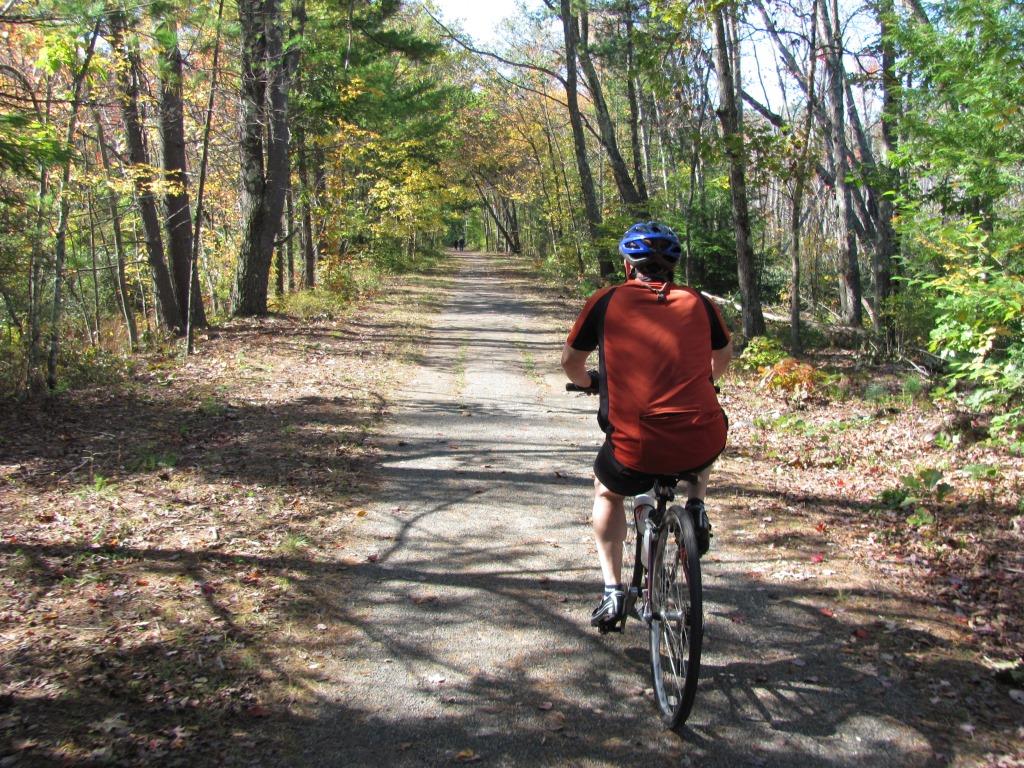
I’m lucky to live in a state that has over 300 miles of rail-trails, so when I’m done with the morning’s writing (and it’s not January), I often go for a bike ride. Lose the tension in my shoulders. Let go of whatever problems my characters have posed for me that day (and those pesky people can cause real trouble when they choose).

My favorite loop, about ten miles out and back, takes me to Look Park, a vast oasis of  green lawn and blue ponds. The trail there mostly goes through wooded areas. At one spot, chickens and ducks waddle along the verge, scouring the long grasses and wildflowers for a snack to supplement their caregiver’s feed. The first time I saw them, I worried for their safety—so many bicyclists whizzing by—but over the years, I’ve come to realize they are proof of Darwin’s law:  Adapt or perish. They are obviously smart fowl.

At another spot, the land falls sharply away from the trail, and I glimpse the skeleton of a 1940s truck, blue in the patches that rust hasn’t eaten. Time. It’s always there, at some moments shouting, at others whispering.

No matter how scorching or muggy the day, a breeze lifts my hair, cools my skin, empties my busy brain, and I tune into the birdsong, tranquil. Which is what makes it all the more jarring when I pass a woman, walking with her toddler and talking into her cell phone. Seconds later, I cycle past another walker, this one with ear buds connecting her to an iPod while she texts on her phone, fingers flying over the keyboard. There’s even a bicyclist—and I’m not making this up—pedaling along while texting two-handed.

It’s lovely that all these folks are out here enjoying the rail-trail, but my question is: Are they actually enjoying the rail-trail?

Selfie Madness

We’ve all seen the absorbed texter (maybe even bumped into them!) walking through the airport, oblivious to others and their luggage or, like an errant pinball, caroming down a crowded city sidewalk only to step off the curb into traffic, unaware.

CAMERA cellphone user on busy sidewalk caminar-mirando-el-celular3People speak of life passing you by, but our digital addictions are causing us to pass by life without pausing to register its pulse. Texting. Tweeting. And then there’s selfie-madness.

In June, I was at a Yankees-Red Sox game with my husband. Since we only go once a year, we treated ourselves to field level tickets along the first base line. These seats aren’t cheap, so I was surprised at how many people around us spent the entire game taking selfies, their backs to the ball field. They seemed to prefer snapping photos of themselves attending a Yankees-Red Sox game to actually watching the play on the field. And it was a great game. Tense. The lead bouncing back and forth. Close score. But it often felt like my husband and I were the only ones following the action, a task not made easier by the bodies hurtling through our line of sight in search of the perfect location/angle/backdrop for a selfie.

The Digital Invasion

I first glimpsed signs of what would become our digital mania in 2003 while vacationing in Florence, Italy. We were visiting Il Duomo (Santa Maria del Fiore) when I noticed a man walking about with a video camera, filming, his wife and kids doggedly trotting after. Although camcorders still used videotape at this time, they had shrunk considerably in size from their dinosaur predecessors of the mid-1980s. And this man was determined to make use of their newfound mobility.

He continued filming as we strolled about the piazza, admiring Ghiberti’s Gates of Paradise—ten dramatic bronze reliefs that depict Old Testament scenes on the doors of the Baptistery—and Giotto’s polychromatic marble-faced campanile with its della Robbia panels.

The camera remained glued to his face when we entered Il Duomo beneath the clock designed by Uccello, and traveled up, up, up the 463 steps to stand amazed beneath Brunelleschi’s architectural miracle of a dome, its interior graced with Vasari’s frescoes of the Last Judgment.

I never saw his face that day. In my mind, he remains a figure ambling about with a large camera where his head should be. I’ve often wondered if he and the family ever got around to watching the hundreds of hours I’m guessing he filmed during his Italian vacation. Or did he just move on to the next destination, camera at the ready, missing more moments of his life amid the wonders of the world? Perhaps he morphed into the guy I saw a decade later during another trip to Florence, a selfie stick strapped to his forehead, a camcorder suspended from its top, dutifully recording everything he was walking away from in the Piazza della Signoria, his face in the foreground.

Ain’t Nothing Like the Real Thing

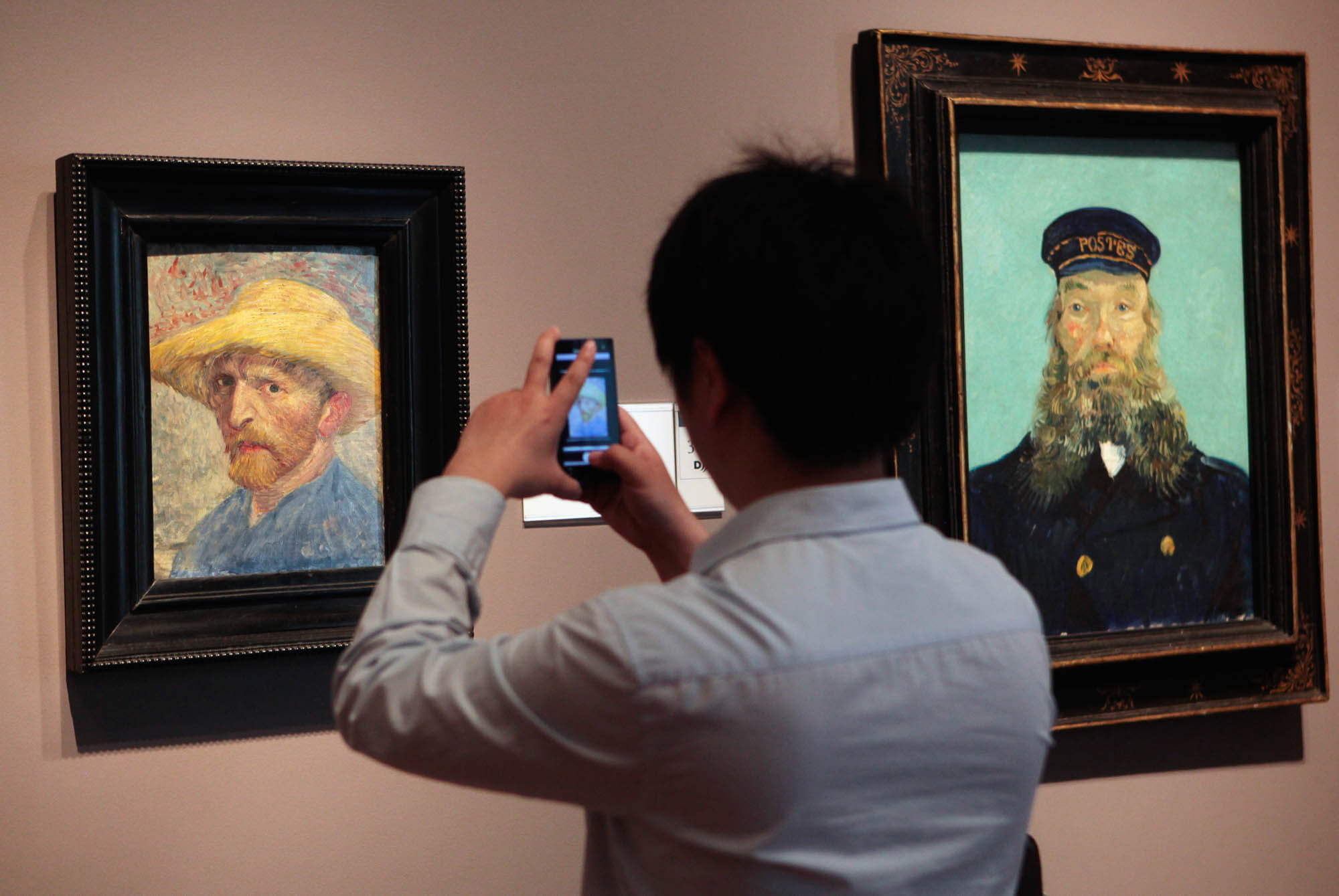
With smartphones, the capture of every moment is only a click away. On the same trip that took us to Yankee Stadium, we spent a morning in the Metropolitan Museum of Art. We were hanging out in European Paintings 1250-1800, soaking up the dark mysteries of Rembrandt, the pink fulsome flesh of Rubens, the broad Flemish landscapes of Bruegel. Darting all about us, like a gnat you can’t seem to lose, was a woman snapping photos of every painting. And not only the paintings, but the little description cards that accompanied each work. Snap. Snap. Snap. She paused only a nanosecond to capture Vermeer’s Young Woman with a Water Pitcher before buzzing off to give Franz Hals’s Portrait of a Bearded Man with a Ruff the same blink of her camera.

I can report she missed not a single painting, but in another, more significant way she missed them all. If that seems an exaggeration, pick up a postcard of Van Gogh’s extraordinary painting of a chair, called reasonably enough Van Gogh’s Chair, and compare it to the original that hangs in London’s National Gallery. A picture may be worth a thousand words, but an amateur photo of a major artwork is… squat.

Patti LuPone Takes On The Texters

And when we’re not filming, we’re texting. Two years ago, while starring in Shows for Days, actress Patti LuPone grabbed the cell phone of an audience member in the front row who had been texting through the entire first act. The cast and audience had already endured four separate cell phone rings during that day’s show, so tempers were somewhat frayed.

“She was sitting in the light, so everyone could see her texting. It’s ridiculous,” LuPone said.

Lupone returned the phone after the performance was over, but gave vent to her distress. “I’m defeated by this. It’s not changing, it’s only getting worse … If something isn’t done, I will think twice before I get back on a stage again.

“It’s not [about] theater etiquette,” she explained. “It’s human etiquette. We’re living in an isolated society, the phone controls our every move, and we’ve lost sight of our neighbor, the people surrounding us.”

One of the great ironies of our cell phone addiction is that it was preceded by an innovation that freed us from our phones: the answering machine. They were a revelation, a revolution. No longer did you have to worry about missing an important call. It would be there on the little cassette when you got home. You were free to go about your day, or travel the world, without once thinking of your phone. It was a golden time, however short-lived.

Surprise: Pop Quiz!

Okay, I’ve had my moment on the soapbox. Now it’s time for you to play along.

When did you last:

  1. Take an evening off Facebook and Twitter to hang out with friends and neighbors?

2. Visit an art gallery or museum using only your eyes, no camera (photos of you and loved ones in front of the museum don’t count here)?

3. Pick a dining spot in a city not your own by walking along the streets “window shopping” restaurants and cafes rather than googling TripAdvisor or Yelp?

4. Enjoy a cup of coffee or a glass of wine at a café with your significant other and no cell phones in sight?

5. Browse a brick-and-mortar bookstore—with actual shelves and real books you can open and read—rather than surf Goodreads for recommendations, then order from Amazon?

6. Go for a hike or a bicycle ride naked—no iPod, no earbuds, no smartphone?

If you can’t recall the last time for any or (yikes!) all of the above, I suggest you get out into the world immediately. Talk to real people. Listen to the sounds of summer—the buzz of bees, kids laughing, birds trilling, the lap of water at the beach. Literally, stop and smell the roses.

And give your texting thumbs a rest. For there are more things in heaven and earth, Horatio, than are dreamt of in your mobile apps.

The Art of Sitting and Being

“Rest is not idleness, and to lie sometimes on the grass on a summer day listening to the murmur of water, or watching the clouds float across the sky, is hardly a waste of time.”  (Sir John Lubbock)

[Author’s note: I think of this as the ultimate summer post, which is my way of saying it first appeared on May 31, 2016. Even writers need to pry themselves loose from their laptops and kick back once in a while. If you see me on my deck, give a wave. Enjoy the fine weather.]

Some years ago, after a day of rambling through the 300+ booths of the Paradise City Arts Festival, I suggested to my husband Ed that we sit and be for a while. This was one of our early excursions together, and he had yet to master the lingo of his beloved. “Sit and be?” he echoed. “What’s that?” Somewhat taken aback—how do you reduce the irreducible?—I stammered, “Well, you just sit … and you be.”

Most of us feel keenly the press of time. Deadlines lurk around every corner. The rent is due. Taxes are due. Biological clocks are ticking. Careers must be launched and once launched, must be advanced. Running through it all, like a Greek chorus whose role it is to underscore the message, are advertisements exhorting us to Act Now. Don’t Waste Another Minute. Hurry! Be The First To …

timmybrister.com
timmybrister.com

The MO of modern life is constant motion. There must be something to show for every moment. Like some throwback to the 16th century, we have an almost Calvinistic need to justify our existence through keeping busy. What were you accomplishing on the night of June 6? Woe to the person without an answer. When did you last hear someone confess to doing nothing?

Sleep Bah, Humbug!

As a kid, I was horrified when I learned that fish lack eyelids and so cannot sleep in the sense that mammals do. I walked about for weeks trying to imagine what it would be like to be awake 24/7, unable to take a break from the demands of the onrushing world.

Yet, by an extension of logic, if no moment of life must be “wasted,” then we waste 6-8 good hours every night sleeping. Totally unconscious. Not producing one damn thing. (Note: I just googled “guilt about wasting time sleeping” and a whole slew of forums on the topic popped up. People worrying they are wasting their lives by sleeping. People worrying they are wasting their lives over worrying about sleeping. Even one insomniac who confessed to suffering guilt about trying and failing to sleep. People, get a grip.)

But we know we need sleep. Without it, the systems that power all that frantic waking activity break down. Our brains turn sludgy and after a while, we know not what we do. So, we accept (some of us grudgingly) that some portion of every 24 hours will be sacrificed to catching ZZZs. SIT BE CROP deadlines magnet

We have a harder time with the concept of resting when we’re awake. And yet, there is a powerful body of research that suggests we accomplish more when we take frequent breaks. Barreling through our to-do list like automatons on speed stresses virtually every system in our bodies, lowering our mental capacity and performance.

We pretty much know this, that our brains are in danger of frying from the endless rush and craziness, so we seek various compromises. We meditate while jogging. Strap music to our heads while raking leaves or cleaning the kitchen. Keep up with Facebook and Twitter while (ostensibly) vegging with a movie.

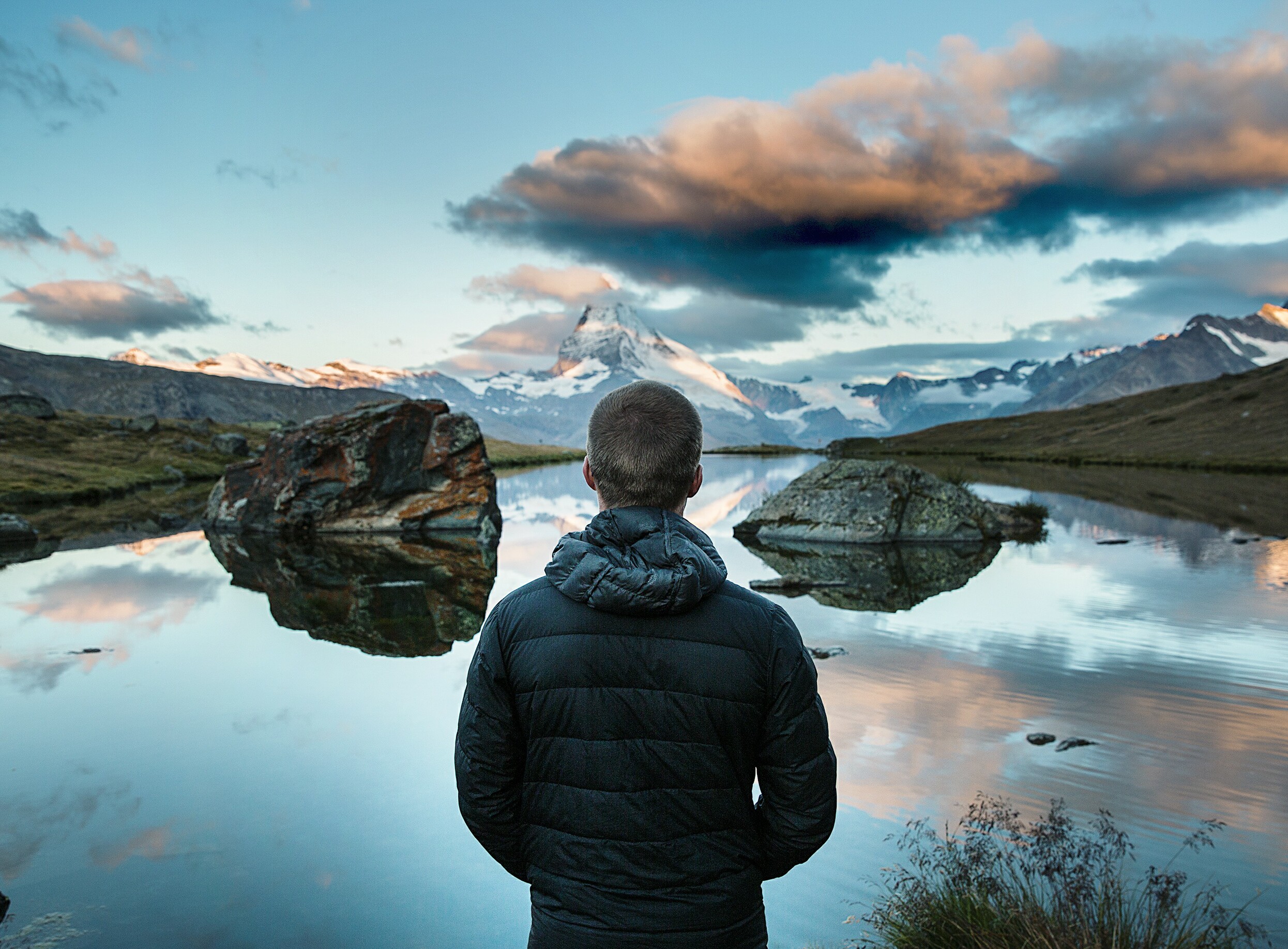
But stopping, truly coming to a FULL STOP—we hardly know what to do with ourselves. How can we sit and be? Wouldn’t we go nuts with the boredom?

What’s So Great About Doing Nothing

Calvinist hustle aside, history offers us some compelling examples of the riches to be mined from sitting and being:

SIT BE Newton_appleNewton was not “busy” searching for gravity when he first got the idea of it. No, he was just sitting under an apple tree, doing nothing in particular, when the notion of gravity hit him on the head, so to speak.

In the summer of 1916, Mary Gordon and her future husband, poet Percy Bysshe Shelley were just hanging out watching a thunderstorm with their friends, the poet Lord Byron and author John Polidori, in Geneva, Switzerland, when one of them proposed a contest to see who could write the best horror story. Mary Gordon Shelley won with her little gothic tale Frankenstein: Or, the Modern Prometheus.

I would argue that just sitting and being has inspired more discoveries and literature than any outburst of manic energy. It simply opens up your head once you shut off the distractions.

But what if you plunk your derrière down and nothing genius comes to mind? The workable design for a teletransporter is not revealed to you, nor the plot for a sequel to War and Peace. That’s okay. In fact, that’s really the point of sitting and being. It doesn’t require you to do anything.CROP LEAP NET charybdis and scylla

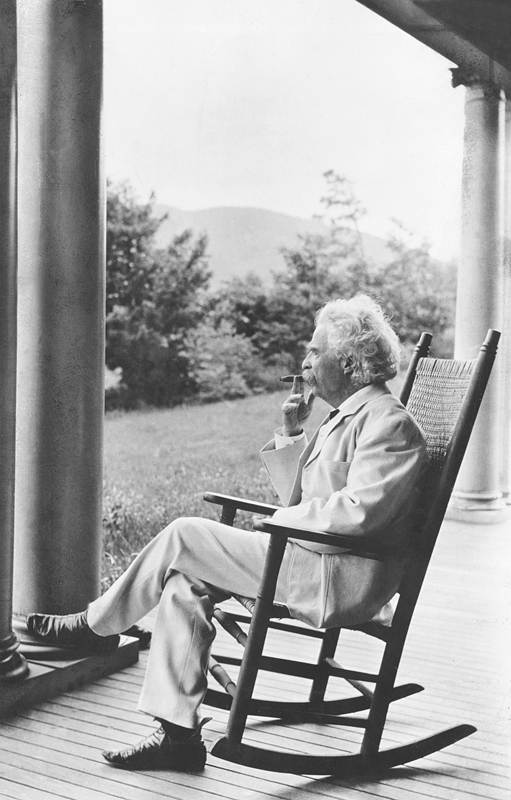
We used to be a nation of porch sitters. People would hang out on their stoop or veranda and just be. If there were two of them on the same porch, the conversation might go like this:

Person #1: Stars are out tonight.

(Minutes tick by.)

Person #2: Yep.

What I recall most clearly from that crafts fair with Ed is nothing about the fair itself—not the sprawling warehouses crammed with hundreds of booths, nor the vast selection of foods, not even the band. My memory of that day centers on the 15 or 20 minutes (we weren’t checking our watches) we sat together on a bench outside the exhibition buildings, relishing the early October sunshine, letting the hum of a busy world pass us by. Maybe we exchanged a few words. Laughed at something.

What I know for sure is this: We were completely at peace.

Dare To Bare Yourself

“So let it out and let it in, hey Jude, begin
You’re waiting for someone to perform with
And don’t you know that it’s just you, hey Jude, you’ll do
The movement you need is on your shoulder.”
                                           (Lennon/McCartney)

A few months back, I was watching an episode from the first televised season of This American Life. In one part, Dr. Brad Blanton, a psychotherapist, talked about his self-improvement program “Radical Honesty.” He mentioned a group workshop where participants disrobe and discuss how they feel about their bodies. It struck me that stripping down before an audience of our peers is the perfect analogy for being one’s true self in the world.

While most of us would not relish going the “full monty” in a roomful of strangers, it can be just as intimidating to bare our soul to the unsparing judgment of others. What if they don’t approve of us or reject us? Find us foolish, or unsophisticated, or just too weird?

Well, sometimes, some people will. But trying to psyche out what others want or expect of us, and then act that role is draining. It’s like living in permanent interview mode. The part when you’re asked where you see yourself in five years, and though your honest answer might be Sitting in Barbados, sipping rum and having sex on the beach (the activity, not the cocktail), you spout some corporate-babble about rising through the ranks, assuming ever more responsibility, and increasing company profits.

It’s a great recipe for depression and self-loathing, but not for happiness and health.

So Why Do We Do It?

Why do we hide who we are when the most natural thing in the world is to be exactly ourself?

As a species, we’re not innately, purposefully self-destructive. A considerable number of theories argue that we do things—even seemingly outlandish things—because we perceive a benefit. So, what are the perceived benefits of traveling in disguise?

1. Popularity. We all want to be liked. By aping the opinions and values of people we aspire to connect with, we hope to win their approval and friendship. Ironic though it is in this context, imitation is often thought the sincerest form of flattery.

2. Validation of our own worth. Some people look no further than themselves for confirmation of their own worth. Others look to a partner, a parent, or a few close friends for the occasional ego boost. But many people allow a wide array of strangers to adjudge their value.

3. Enhanced economic status. Money. Power. Fame. These siren songs of our material culture lure us to ditch who we are in order to pursue the acclaim of the high and mighty. Look at me. Look at me. I must be important. I’m a hedge fund manager.

4. Safety. To be our true selves is to risk others discovering our weaknesses and flaws. To be laughed or jeered at for our choices: clothing, pursuits, opinions, music. By adopting what is popular, we hope to escape the censure of others.

 The High Cost of Faking It

If everything comes with a price, the highest price may be the one we pay to win the approval of others.

1. Relentless suppression of own feelings, ideas, likes and dislikes. Not all of us are extroverts or leaders by nature, but each of us knows whether she’d rather eat Chinese or pizza tonight, watch La La Land or the latest episode of Black Mirror, go dancing or read a book. When we always defer to other people’s opinions or preferences, we lose touch with how we really feel. We fade. Compromise may be the bedrock of all good relationships and world peace, but true compromise is both give-and-take, and eternal compromise is never being who you are or doing what you love.

2. Misery of being self-conscious. When we’re faking it for others, we never get to relax; we’re always on high alert. It’s exhausting. And self-defeating, in every sense. Self-conscious people make everyone uncomfortable.

3. Wind up chained to a job, social network, or lifestyle that feels like a straitjacket. Years ago, I was struck by the fact that I have the skills to be an accountant. I’m good with numbers, organized, detail-oriented, responsible to a fault. But I have no love for the job. In fact, there are few things I can imagine loathing more. My temperament’s all wrong for it. I’d make more money but I’d be thoroughly miserable.

Just because we can do something, or act a part, doesn’t mean we should, whatever it gets us.

4. Danger of becoming someone the real you would actually loathe. It happens.

Who Has The Power?

The cost/benefit analysis of concealing our true self begs two questions: Who are these people we’re performing for? And why do we give them so much power?

The answer, in part, is found in our hardwiring. Acceptance by the group meant life or death in the ancient nomadic world where humans were prey as often as predators. Survival rather than happiness trumped all considerations.

But that world is far behind us. The depression, anxiety, and emotional stress that can zap us when we suppress our real self are far greater threats to our well-being than a saber-tooth tiger. As for chopping and changing oneself to fit in, the greatest loneliness often occurs in a crowd. If you’ve ever found yourself in a group wondering who are these people and what am I doing here, you know what I’m talking about.

And those people we think we have to impress, we’re the ones giving them power. A casual acquaintance of some years recently gave me the brush-off at a social event. Although this person had never struck me as a soul sister, her warmth and regard had seemed genuine on the occasions we met. So when she curtly cut me dead in public, it was not only a shock but a sting in that first moment, and then an anger, and finally a shrug. I had given her too much credit. Obviously, she was far less secure than I’d guessed if she felt her social stock would rise or fall on talking to me.

A good rule for us all: Anyone who doesn’t respect me for who I am gets zero power in my life.

Toward More Genuine Interactions

Of course, it’s difficult to be our true self with people who are false with us, and there’s a lot of pretense out there. But someone has to take the risk, break the chain. Be the change we wish to see.

If we want a culture that is more accepting, we can start by refusing to boost our own egos or cement group bonds by making fun of or excluding others based on their appearance, occupation, education, economic status, or preferences in films, books, and music. And we can refuse to “go along” when others do so.

Many years ago, I saw a video of an assisted living community. People in their 70s, 80s, 90s at a dance. They were having a great time talking and laughing. No one was sitting on the sidelines. No one seemed worried about their clothes or their dance moves. One of the beauties of old people is that they are DONE with all that. The posturing. The pretense. They just are.

How wonderful it would be not to waste all those decades before, hiding, worrying.

On a planet of more than 7,000,000,000 people, none of us needs to abandon our true self to find acceptance. There are many people who will share our passions, appreciate our strengths, value our love. How will we find them? By pursuing the things we honestly care about, and living in a way that speaks to who we are. If we do that, one by one those kindred souls will appear.


From One Moment to the Next: Turning Points

“There is only one you for all time. Fearlessly be yourself.”  

(Anthony Rapp)

Recently, I was having lunch with my husband at Uno Pizzeria. As we exited the restaurant, a large wall poster caught my eye. A bright, stylized train in a bucolic setting, the bulbous nose of its engine speeding toward the viewer, promising at any moment to break past the frame and emerge in real life: The City of New Orleans. Illinois Central Railroad.

Lawrence and David Barera

Decades dropped as I stood, transfixed, gazing at the embodiment of this thing that had changed my life. That moment when I understood what I could never be, would never be, and said yes to everything that I am.

Turning points. We all have them. They are the revelations that open our eyes to a truth right before us, the moments when the road forks, and trusting solely in our gut, we plunge forward and never look back.

I’ve had my share of revelations and forked roads, but I would choose two above the rest as life-defining moments—all the past on one side, all the future ahead, only awaiting which way I would leap. The first occurred at the beginning of 8th grade.

A Fool for Cool

Is there anyone alive who would wish to be back in middle school? Thirteen. It’s not just an unlucky number. It’s an abominable age, and I was no exception. Painfully shy and self-conscious (and at 5’8”, taller than all the boys), I was, to boot, a good student in an era when girls were advised to play dumb because “boys don’t date girls who are smarter than them.”

Peggy Lipton, the ultimate cool girl.

Mine was not an auspicious résumé for someone who longed to be popular. And I did yearn to be one of the chosen few. All through 7th grade, I rolled my (uncool) wavy hair on Coke cans to straighten it like The Mod Squad’s Peggy Lipton. I bought my clothes at Terri’s, the local teen shop where the cool kids bought their clothes. Finally, in desperation, I cut my long hair super short after they all bobbed theirs.

This last effort (regretted immediately) actually won me my trial spot. On a warm October afternoon, one of the golden girls, Julie, took notice of my slavish devotion to all things cool, and invited me to go to the 8th grade football game with her and three other Cools. As we trooped across autumn fields on our way to the game, they babbled on about some “cute” clothes they’d seen and the “cute” things Doug (class hottie, captain of the football team, 5’2”) said at lunch, and the “cute” shade of lipstick Donna was wearing.

Halfway there, I knew: I HAD NEVER BEEN SO BORED IN MY LIFE. Imagine the worst cocktail party you’ve ever endured, multiply it by a power of 1000, and you’ve got the picture.

I never saw the game. I left them before we even got to the football grounds, mumbling something about suddenly feeling unwell. But as I ran back across the fields, I’d never felt looser, freer, happier. A light bulb had come on: I didn’t need to win these people. There were better people for me out there. And I began to find them. I also began to say what I thought, to laugh out loud when something struck me as funny. To write my own stories. Sing my own songs. I grew my hair long again and let the curls fall where they would.

Graduation Daze

Nearly a decade later, after a heady semester abroad studying Shakespeare and contemporary British theatre in London, I returned to college with two trimesters left. I loved college. My crazy, wonderful friends. The all-night confabs about life. Discussing Borges or Faulkner in seminar on spring afternoons, a lazy breeze wafting through the open windows (yes, I was a lit geek, still am). But as the days dwindled to graduation, I wondered: What would happen next?

I couldn’t really picture a life “after.” For the better part of four years, I’d read literature and history. Studied psychology and comparative religions. Written reams of short fiction, essays, analyses. Even a few one-act plays. Once again, I found myself with a CV that wasn’t quite what the moment demanded, the moment being one where I turned my 180 college credits into a rent-paying job that would launch me on some sort of brilliant career.

I sat up late into the night, every night, and scribbled reams of poetry. I offer sample verses from two here to give you a flavor of that time:

(1)

3 ayem, the suicide hour

You can’t go back to yesterday

Can’t hang on until tomorrow

The bars are all closed

And the cupboard is bare  

(2)

So that you will know my face

The next time we meet

I was the one with the epic visions

And a few loose nickels in my worn jacket pocket

WHAT was I going to do with my life? All around me, it seemed, were people who had majored in marketing or advertising or some other field where you line up for interviews with the big companies who visit campus to fill their work cubicles.

I could write mighty anything (distress-poetry excerpts aside). I had a good sense of humor. And I knew the lyrics to virtually every song written since 1964.

It seemed highly unlikely that any enterprise cutting paychecks would beat a path to my door in the immediate future.

Besides, the thought of “suiting up” made me cringe. I loathed the idea of making widgets, of becoming a widget.

So there I was, full circle back to the beginning: What was I going to do?

Moment of Truth

There are moments you don’t expect. You didn’t see them coming. Didn’t set them up. But they arrive anyway.

Days before graduation, I went to my neighborhood pizza pub with my roommate Lorna. Weekend nights, they had folk singers, and I knew most of the musicians. There was a group of us who hung out after hours, along with the bartenders, just talking and laughing.

On that Saturday, my friend Dennis was playing, Lorna and I were sharing a pizza, and I was hoping a beer or two would take the edge off my near-paralyzing fear of the future.

And then Dennis played City of New Orleans, a song made famous by Arlo Guthrie but actually written by Steve Goodman. That song, that night, changed my life.

Steve Goodman

Riding on the city of New Orleans
Illinois Central Monday morning rail
There are fifteen cars and fifteen restless riders
Three conductors and twenty-five sacks of mail

There all out on this southbound odyssey
And the train pulls out of Kankakee
Rolls past the houses, farms and fields
Passin’ towns that have no names
And freight yards full of old black men
And the graveyards of rusted automobiles

Singin’ good morning America, how are ya
Saying don’t ya know me I’m your native son
Yes I’m the train they call the City of New Orleans
And I’ll be gone 500 miles when day is done…

I can’t point to a line or a verse. There’s no one thing that explains the moment I knew, but I did know. That I would never be a suit, never climb “the ladder.” That, faced with the choice, I would always choose freedom over security. And that, one way or another, I would land on my feet.

Maybe it’s like tea leaves. We see clearly at some crossroads the blunt truth in our gut, and give ourselves permission to go with that truth. It seemed to me in that moment that if I didn’t follow my heart, I would silence it. That what I loved most in myself would be lost forever. So I followed.

The Shape of a Life

To pay the rent, I got a job waiting tables. I began writing articles for a local political/arts rag The Lansing Star. No money, just a bunch of young writers enthusiastic about reporting on what was happening in the world and eager to get their words down in print. The editor soon gave me a weekly column and I started writing theatre reviews for the arts section. I also volunteered as a counselor at the women’s shelter, helping women who’d suffered domestic violence to break free of their abusers and build a new, independent life. Everything I was doing felt like me.

There was some blowback. My parents thought I was throwing my education away: “If we’d known you wanted to be a waitress, we wouldn’t have wasted the money sending you to college.”  But you can’t throw a thing like education away. You can’t make what has enriched you un-enrich you.

In the years since then, I’ve cobbled together a living, writing and editing and teaching. Not a grandiose living, but I have a roof and food and more consumer junk than I really need. I travel widely, rummage through used bookstores, and root for the Yankees, all with a husband I love dearly. I have a son and a daughter I cherish. I write novels.

What City of New Orleans gave me on that long ago night, when I really needed it, was courage. What I made of it is a life.

John Prine called City of New Orleans “the best damn train song I ever heard.” When Arlo Guthrie recorded it in 1972, its popularity made songwriter Steve Goodman enough money to fulfill his dream—a fulltime career in music. Goodman died at age 36 after a long struggle with leukemia. He left behind something like a dozen albums.

I wish I could have thanked him for … everything.

Remembering Our Mother: The Beauty of Earth

As we prepare to celebrate the 48th annual Earth Day, I’m reminded of a line from John Keats: “The poetry of earth is never dead.”   

I grew up along Lake Michigan, a mile as the crow flies from its shore. It was a rare summer day when one mother or another did not gather up the kids of our block and head for the beach. I remember the burn of hot sand on bare feet as we raced to the water’s edge, then plunged into its blue chill with the whoop of the saved. On a breezy day, white caps formed. You could hear the roar of them rolling, thundering, breaking before the shore. We loved white caps. We leapt like wild frogs, jumping high to avoid their slap, then sputtered, laughing when they knocked us over anyway. It was a real shock, when I went off to a landlocked college, to realize not everyone grew up on a lake.

When we weren’t at the beach, my friends and I often roamed the vacant wooded lot at the end of our street. Among its prodigious Queen Anne’s lace, honeysuckle, and grape vines, butterflies darted and swooped. Monarchs, Little Yellows, Swallowtails. We chased their flight, eager to see where they’d land next, and checked plant stalks for their cocoons. Vulnerable caterpillars found edging across the footpath or along the road were offered a stick or broad leaf as transport back to safety. As summer faded, we ate the wild Concord grapes straight from the vine. Of all grapes, Concords are the “grapiest.”

“Nature is not a place to visit. It is home.” (Gary Snyder)

My dad spent part of his childhood in North Carolina. As a young boy, he used to go camping for weeks on end with his older brother. Just the two of them living in the summer wilderness of the Smoky Mountains. In his teens, he built a boat with a friend and they sailed the 300 miles from St. Pete to Havana. I loved hearing those stories, imagining those experiences. The vastness. The freedom.

One of the indelible memories of my life occurred during a two-week stay at the Girl Scouts’ Camp Shawadasee when I was ten. After dinner one evening, the counselors told us to fetch our sleeping bags. We were going to spend the night on the beach. On arrival, we scavenged for wood and built a sizable bonfire. As the summer dusk turned to a dark shot through with stars, we told ghost stories and sang songs.

The ash grove how graceful, how plainly ’tis speaking
The harp through it playing has language for me.
Whenever the light through its branches is breaking,
A host of kind faces is gazing at me.

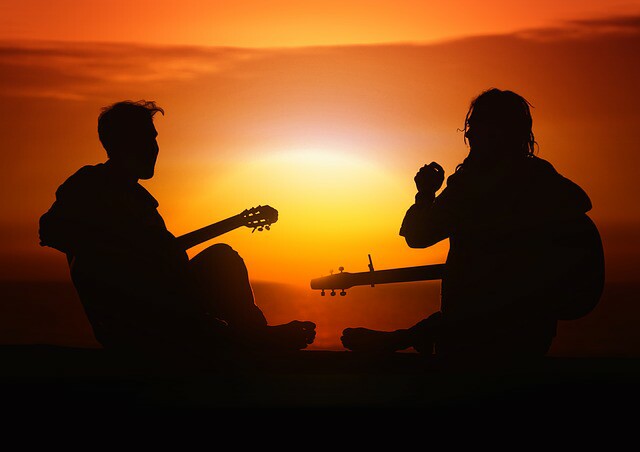
Sometime before midnight, we unrolled our sleeping bags in a circle around the dying fire and fell asleep to the gentle slap-suck of water on sand. At the edge of our dreams, a counselor strummed her guitar and sang.

If you were to ask me the definition of peace, I would recount that story. When I moved to the East Coast, I went down to Boston’s North End the very first day to dip my hand in the Atlantic and breathe in the expanse of that ocean. Echoes of a night on a beach almost 20 years earlier.

“If we surrendered to earth’s intelligence we could rise up rooted, like trees.”
(Rainer Maria Rilke)

The family vacations of my childhood took us to historical places and natural wonders. I guess my parents thought they had a duty to improve our understanding of the world.

So, as a kid, I wandered through Kentucky’s Mammoth Cave. It was my first venture underground and it started with the kingpin of them all. To call Mammoth Cave impressive is like saying Reese’s Peanut Butter Cups are “pretty good.” With passageways totaling 405 miles, it’s beyond enormous. It’s also OLD. The original part of the cave began forming about 10 million years ago. But the sea that made it happen, the sea that laid down the soluble limestone, then sandstone and shale, that sea covered the central U.S. 325 million years ago. Those are some serious numbers, even for an 11-year-old. Mammoth Cave gave me my first understanding of my puny self in relation to nature.

I was reminded of that years later when I took my own kids to hike the Flume Gorge in Franconia Notch State Park, one of several vacations spent in the White Mountains of New Hampshire. The Gorge got its start almost 200 million years ago, at the beginning of the Jurassic period. Molten rock formed The Flume’s granite walls. As the granite cooled, it fractured vertically, allowing liquid Basalt to rise up in the cracks with a pressure that pushed the granite apart. Over time, erosion exposed these Basalt dikes, fissures formed, and water flowed in between the rock layers. Softer than granite, the Basalt eroded leaving a deep valley where the Gorge is now.

And this all happened before the Ice Age.

 “The earth has its music for those who will listen.”  (George Santayana)

The Flume Gorge hike occurred on our last trip to Franconia Notch. The first visit took place when my kids were 5 and 3. That week, we hiked the park’s easier trails. Autumn comes early in the mountains. The first fallen leaves carpeted our path, crunching underfoot as we walked. Its magic invited poetry, and I recited Robert Frost, Wordsworth. I wandered lonely as a cloud that floats on high o’er vales and hills… We rested on rocks to watch a waterfall. In truth, you hear a waterfall more than see it. The rush of so much water, tumbling from such a height. Close your eyes and it is the only sound on earth.    

If you have kids or can borrow a kid, take them outdoors. Throw some old boots and a couple of water bottles in the car, and head out. I used to hike the Quabbin Reservoir with my kids. As a water supply for Boston that caused the Swift River to be diverted and four towns dismantled, the Quabbin was a source of tragedy for its former residents, many of whom had lived there all their lives. But its generous watershed continues to protect 56,000 acres of woods and fields from suburban sprawl development. In the Quabbin, we spotted tree frogs, encountered wild turkeys, watched bald eagles soar. Hiking in the wild, there’s time to talk, the space to listen, permission to just shut up and breathe in the view.

“There is something infinitely healing in the repeated refrains of nature — the assurance that dawn comes after night, and spring after winter.”
(Rachel Carson)

When I taught first grade, I frequently took the kids into the woods behind our school. There, we looked for nests, counted the rings on tree stumps, examined seed pods. But what really got them cranked up were the snags (standing dead or dying trees) and rotting logs. From the moment Nicole peeked inside a snag to find a nuthatch nest, we left no dying tree unexamined. The kids figured out that all the insects feeding on the tree, in turn served as dinner for the birds who nested there. They also found caches of food that mice, chipmunks, and squirrels had wedged in the crevices, and were amazed by an outcropping of mushrooms, growing straight from the rotting bark. Together, we witnessed the way a tree breaks down completely at its end, returning to the earth as fertile soil for new plants and trees. The cycle of life, the connectedness of everything.

“If you cut down a forest, it doesn’t matter how many sawmills you have if there are no more trees.” (Susan George)

The statistics aren’t good.

More than 34 billion gallons of raw sewage was dumped into Lake Michigan from 2000 to 2013. Some 50 beaches tested positive in 2012 for mercury, E. Coli, and polychlorinated biphenyls used in coolant fluid.

The Monarch butterfly population has dropped by 90 percent over the past 20 years.

More than 30 percent of Honeybees, so critical to our food chain, have died off in the last half decade, largely due to climate change and neonicotinoids, a class of pesticides.

Camp Shawadasee was auctioned off in parcels in 2011, most of them touted as “potential building sites.”

Almost half of the world’s forests have been cleared. Each year, another 32 million acres disappears. In particular, the ever-increasing demand for cheap palm oil is decimating our rainforests, upping carbon emissions, and threatening many species with extinction.

The natural world is under fire in all directions. And with it, our own survival. I don’t particularly feel like dying so that fossil fuel magnates can make another hundred billion, or companies that use non-sustainable palm oil practices can pocket a bigger profit.

On one of those educational vacations, my parents took us to Gettysburg. Standing in that green and peaceful place, I tried to imagine the Civil War battlefield that Lincoln spoke of so movingly in his most famous address. The dead and dying, close to 50,000 men and boys, their life’s blood, their final moments, spilling out among the muddy carnage. In that instant, so silent and serene, I understood that whatever befalls us, Earth will continue, heal up, perhaps to start over with some less contentious species.

For now, I am turning over the earth in my garden, feeding the soil, coaxing green shoots from last year’s dead brown. This season, I’ll plant Orange Milkweed, because milkweed is the only caterpillar host plant for Monarch butterflies. In summer, I’ll sit on the deck in the evening and marvel at the stars splayed across the heavens. What a miracle the world is.

And how lucky I am to be a part of it.