[Yours truly has been taking a much-needed break, wandering the art galleries, medieval ruins, vineyards, and open-air markets of Aix-en-Provence, so this month’s post is a rerun, first published in September 2025. I hope it will serve as a timely reminder to reflect on all you have accomplished in this past year. We tend to be too tough on ourselves while fearing we’re not being tough enough. So, take stock, give yourself a pat on the back, and I’ll see you next month with a brand new post.]
A new day breaks. You rise, your head full of plans—the project(s) you’ll (hopefully) start, or (finally) finish: the new fitness routine that will (hopefully) get you into trim shape; that attic space you’ll (hopefully) clear up and reclaim for much-needed bookshelves; the invites you’ll send to a half-dozen good friends, setting a firm date (finally) for that informal drinks-and-chat get-together you’ve been talking about forever on Facebook. The morning’s sunny. The sky’s blue. It’s a day to savor and act!
… By nightfall, you’re beating yourself up with all you had hoped to accomplish, but didn’t finish, or maybe didn’t even get to start. The water pipe in the basement broke and you spent the morning scrambling for a plumber. Then there was the incorrect medical bill that took ninety minutes to straighten out as you were bounced from one AI-powered bot to another—oh, for a real person to talk to! And when you started dinner, you realized you didn’t have the carrots the recipe required, so you took a quick run to the grocery, but that still devoured a half hour…
The day feels a failure. Like too many days perhaps. You woke up looking forward to the day. You fall asleep castigating yourself for not doing more.
We humans are very forward-looking creatures. Always making plans. Dreaming BIG. Certain we’re about to overcome those hurdles blocking our path. And just as easily shattered when those plans and dreams don’t materialize as expected. Trust me, I am writing about this because I know this struggle so well.
Yes, it’s easy to look at all you haven’t done, but perhaps we might do better to pause regularly and consider everything we have accomplished.
The Daily Check-Up
You planned to finish mulching the front and backs gardens today but you’ve used up the four bags of red cedar you bought last month, so you run out to the garden center to buy two more bags. Now, you don’t have the time to lay down the mulch. And it’s almost August!
You hoped to finish another chapter on the rough draft of your novel, but it turned out to involve more research than you expected, so by the time you did your googling, arranged your notes and jotted a rough outline, it was 3:30. Time to pick up the kids from school.
You were determined that today you would finally finish painting that dining room wall—the one that’s been sporting large swaths of mesh tape and joint compound since the carpenter repaired all those hairline cracks (“tired plaster” they call it—ah, the joys of an 1890s house!) …but that tooth that’s been signaling distress off and on the past two weeks? Today, distress turned to unignorable AGONY which led to an hour at the dentist, which led to an emergency root canal at the endodontist—an inconvenient half-hour drive from the dentist. Nothing got done.
In each of these scenarios, you’re left feeling bummed. Nothing accomplished. But hold on a minute.
That’s not quite true.
In the case of your garden, you now have the mulch you need to control weeds, conserve ground moisture, prevent erosion, and—time saver!—reduce maintenance.
Regarding your novel, you can’t proceed on the writing until you do the research, and now you have! All systems go. That’s progress. And perhaps the research even inspired an idea for a new character, a wonderful, dastardly villainy-villain!
The plan to paint the dining room wall that was scrapped by the emergency root canal, yes that day is kaput. Over. But you can rest happy tonight knowing the tooth is taken care of—it won’t mess up tomorrow.
Gaining a Better Perspective: The Have-Done List
We tend to set ourselves up for disappointment and distress by planning days that make no allowance for the frequent intrusions of real life. But life has always contained a large quantity of must-do-nows, can’t-avoid-any-longers, and oh crap! surprises. During the 1,500 years it took to build Stonehenge, surely there were numerous days when boggy weather put the kibosh on moving those gigantic Sarsen stones, via rolling logs, through the muck and mud.
Our dreams and projects must take into account the mundane and the unexpected. We do have to accept reality and go with the flow, but that doesn’t mean we have to drown in despair and frustration.
Instead of focusing on what you didn’t accomplish on your wish list today, jot down—as you go—each thing you did achieve. A Have Done list. As with all projects, it’s the accrual that counts. That “tired plaster” repair I mentioned? That’s one from my own list. As I write, it’s a third-done (it actually involved three rooms, a hallway and a ceiling). It wasn’t a broken pipe or root canal that stopped me—temporarily. It was climate change. Painting in 95-degree weather, not advisable. But the temps are starting to cool now. I’ll soon be up on that step ladder, paintbrush in hand. Meanwhile, the world continues to spin. The sky hasn’t fallen in.
Tracking in real time the progress you make on each of your projects and goals sets you up for a sense of success and well-being at the annual reckoning.
The Annual Reckoning
This end-of-year review—and that year might run from June to June or September to September, whatever—is when you get a better sense of all you truly have accomplished despite the pesky disruptions of real life.
Remember that novel you were convinced would never get written? Now, the rough draft is long done and you’re well into the second revision. A final polish after that and you’re ready to write a synopsis and search for an agent. Or skip the agent and approach indie presses. Or self-publish. Or simply write another novel if that’s what makes you happy.
Perhaps you updated and improved your resume this past year. Maybe started interviews for a job you hope will use more of your talents, challenge your creativity. You might even have found the perfect gig!
Possibly, you made all the arrangements for your dream trip and it’s about to happen—literally, you are going to circle the globe! New York to Italy where you’ll sail the canals of Venice in a gondola, visit the Sistine Chapel in Rome, and marvel at the art in Florence’s Uffizi Gallery before flying on to enjoy the beaches of Goa and the grandeur of the Taj Mahal in India. Then it’s off to Japan to see the shrines and temples of Kyoto and the Peace Memorial Park and Museum in Hiroshima, followed by a long weekend with old college friends in San Francisco before returning to the East Coast. You thought you’d never get it all put together—the flights, the accommodations—but you have. Bon vogage!
A year is a long time. Three-hundred and sixty-five days to make progress on those projects and dreams. That old trope—life is like a river, it just keeps moving—is true, so we must go with the flow. There’s really no deadline (other than the one nature finally imposes on us all). So, when you’re feeling frustrated or overwhelmed, put that distress on pause for a moment, step back, and consider all you have accomplished in life so far.
The Tally of a Life So Far
You artwork isn’t (yet) hanging in The Metropolitan Museum of Art or The National Gallery or The Louvre, but you’ve participated in dozens of local and regional shows, sold over a hundred paintings, and received some very positive reviews in the media.
You’ve taught first grade for a decade now, in which time more than 250 children learned to read and write because of your skill, dedication and patience. Thank you. America needs all the thoughtful, educated citizens it can get.
You never had the time or money to get your law degree, but through your work as a paralegal for the ACLU, you’ve made vital contributions assisting attorneys in critical cases regarding voting rights, free speech and gender discrimination. You’ve helped to protect our constitutional rights and made life better for thousands, perhaps millions of your fellow human beings.
You haven’t (yet) found an agent for your novels, but literary magazines have grabbed up every short story you’ve submitted.
You raised a child, or two, or three. And given those children the belief that they are worth loving and the assurance that they are truly cherished. This is no small thing.
As I said upfront, we humans are a forward-looking bunch. Too often taking for granted all we’ve accomplished and focusing solely on what we haven’t yet achieved. But true perspective involves taking the long view. And those days when everything seems to conspire against your hopes and dreams? On those days, take a cue from songwriter/singer Jimmy Buffett: “Breathe in, breathe out, move on.”
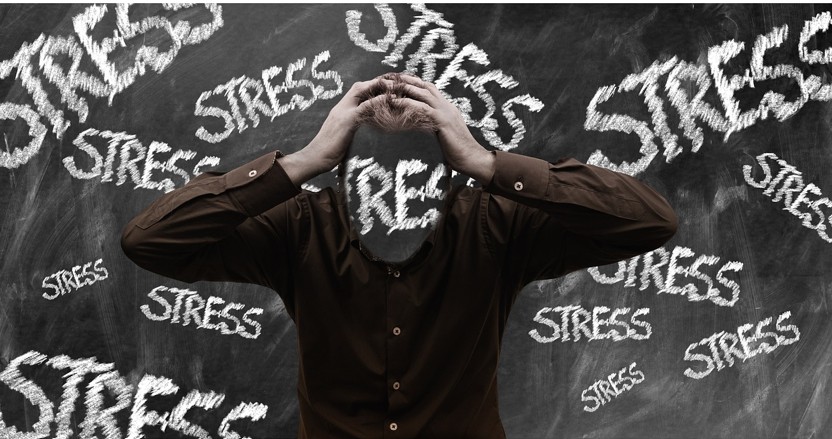
If you’re not a billionaire with a luxury bunker in some remote corner of the planet—all prepared for your comfort during “end-times”, or a fist-pumping fascist doing your best to bring about that nightmare, or brain dead, you’re probably feeling a tad stressed out at the state of things in the world. And since billionaires make up just 0.00004 percent of the world’s population, and it’s doubtful you’d read my posts if you’re a fascist, and it’s certain you’re not reading them if you’re brain dead, well, let’s just proceed with the assumption that the current situation is driving you bonkers!
So, what are we going to do? Stress is not only not helpful, it’s harmful to both our spirit and body. The very last thing we need right now is to be hurting ourselves. Plenty of people already out there eager for the chance to do just that to us.
When I was drafting this post in my head, I jotted down a list of stress busters I go to in moments like this. (Who am I kidding? In my lifetime, there has never been a moment like this.) Checked them against recommendations from both the Mayo Clinic and the American Psychological Association. Bingo! I’ve included them at the conclusion of this post for you to peruse and see what works for you, but it was another source that stopped me in my tracks—Jon Kabat-Zinn’s revised and updated edition of his international bestseller Full Catastrophe Living: How to Cope with Stress, Pain and Illness Using Mindfulness Meditation. The book’s Chapter One title, to be exact: “You Have Only Moments to Live.” The words were spoken by an 85-year-old woman from Kentucky who admits she has had her moments, but if she had it to do over, she’d have more of them. More in-the-now moments—“One after another,” she said—instead of spending life wondering and worrying about what lies ahead.
Her words brought to mind an old saying by Danish philosopher Søren Kierkegaard: Life can only be understood backwards, but it must be lived forwards [my emphasis]. So, maybe we can take a cue from this 85-year-old woman and save ourselves some useless and, indeed, potentially harmful fretting and grief now. I know my usual MO is to try to get out in front of impending—or what I fear to be impending— disasters to head them off, but let’s face it, the present scale of possible perils is too large for that. The stress count too high.
You have only moments to live.
Living in the moment. It has a sort of “stop and smell the roses” vibe. Like when you put on a favorite CD and find yourself bopping around the kitchen to it as you prepare dinner. Or a day of predicted rain turns out sunny and clear, so you grab your soulmate/kids/a friend and head for the beach, picking up a basket of lunch goodies on the way. Maybe you walk by the live music venue downtown and see they’ve got a great band performing tonight. You get tix and dance the night away with your partner or besties laughing, singing. Or you simply set aside the after-dinner chores (those pots and pans can wait) and enjoy a beautiful sunset on the back deck solo or with a loved one.
Unsplash Leo_Visions
Living each of these magic moments, being fully present in them, is I believe a recipe far greater than any other for sanity, health, and happiness.
None of this means there are no concerns, be they personal or worldwide in scope. It simply means you’re not letting what has not yet happened—and may not happen—destroy your happiness in the now. And now is the only moment we ever have. A succession of zillions of moments, hopefully, until our time stops, so do we want to spend them agonizing over the darker possibilities of a future that has not yet come about or do we want to live them fully in the present? And use the healthy energy those moments create to make the world a better place.
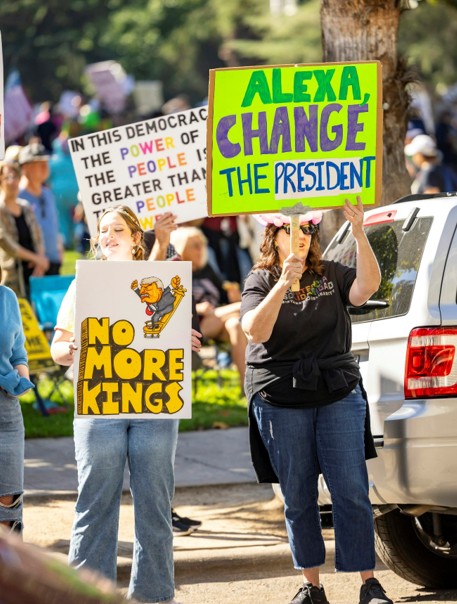
And speaking of that, active participation in marches and protests like the No Kings rallies is an excellent stress buster. Surrounded by thousands of other people, good people who believe we must raise our collective voice for democracy, the Constitution, the health of our planet, and kindness to our fellow human beings—well, you just can’t help but feel hope and strength and that most essential of all things: the knowledge you are not alone.
When Fears Become Reality: ACT!
But what if something has already happened to you? You’re one of the five million Americans who lost your healthcare thanks to the current Congress allowing Biden’s Affordable Care Act subsidies to expire.
Or your Medicaid was gutted in Trump’s 2025 “One Big Beautiful Bill” (oh, it was a beauty all right!).
Or maybe you’ve got three kids and you’ve lost your food stamps thanks again to…the One Big Beautiful Bill!
These are real stressors, not something we fear may occur in the future, but losses that hurt us in the present. In such a case, it’s imperative to our mental and physical well-being that we act now, investigate what resources exist to provide aid. To that end, I’m listing a few orgs I uncovered in my research for this post. You may come upon others in your community or state.
First of all, know that in an emergency—any severe or life-threatening situation, or imminent childbirth for a pregnant woman—hospital emergency rooms must admit and treat you without reference to whether you are insured or can pay.
Although you will still be expected to pay for non-emergency care, there are orgs out there ready and willing to help. Earlier this year, the Patient Advocate Foundation and PAN Foundation merged to launch TotalAssist, a program to get underinsured people the treatment they need—new or ongoing—for a variety of illnesses, including cancer. To talk with a TA representative, call (866)512-3861, Monday-Friday 8:30am-5:30pm ET. Because the need is great and phone wait times can often be long, TotalAssist also offers online chats at http://totalassist.org/contact/ . No password required.
If you lose your SNAP benefits, you can get free food right away by visiting local food pantries, soup kitchens, or regional food banks. You can find sources in your area at Feeding America https://www.feedingamerica.org/find-your-local-foodbank . Just enter your zip code and they will provide a list of foodbanks in your area. I tried this and close to 100 places within an hour’s drive of my home popped up. Another resource: Call Project Bread’s Food Source Hotline at 1-800-645-8333.
Also, contact your state representative and senator as well as your U.S. rep and senators and let them know how you’ve been impacted by the reductions in healthcare and/or food programs. My state rep, Lindsay Sabadosa, is a wonder of a public servant and a force of nature! When my car inspection failed during COVID because my license plate was a bit worn (but still readable) and there was no way to get a new one in that moment, she got right on the phone and made it clear: They had to pass my car! Wonder of wonders, they did that same day. Nota Bene: These are the kind of public servants you want to vote for.
Keep Walking
Stress. It’s a miserable state to dwell in. And though it’s not possible to experience life without encountering its dark threats, it is possible to refuse to let it poison the precious moments that make up our time on Earth. Many years ago, a friend introduced me to Rumi, a 13th century poet and Sufi mystic whose works figure prominently in Persian literature. I bought a volume of his writings, one of which I copied out and posted by my desk where I am daily reminded of its universal truth. I leave you now with his timeless words of wisdom and comfort:
Keep walking, though there’s no place to get to.Don’t try to see through the distances.That’s not for human beings. Move within,but don’t move the way fear makes you move.
Wishing you inner peace and happy moments beyond counting.
More Stress Busters
Music: Listen to it. Better, dance to it. Best, play it—guitar, piano, whatever. My neighbor, J, puts on music and lets loose on his drum kit.
Go for a long walk, a run, a swim or do some yoga. No joke, you can feel the stress dropping away as you move.
Lose yourself—and your worries—in a good read.
Get-together with friends and neighbors. It reminds you you’re not alone and it’s just plain fun.
Pursue or start a hobby. You may think I don’t have time for that, but I urge you to reconsider. According to Sound Health & Wellness Trust, “Research has found that taking time to practice relaxing and engaging in enjoyable hobbies can cause a noticeable decrease in cortisol levels.” I do jigsaw puzzles daily, with no goal but enjoying the process—it’s done when it’s done. Great stress buster!
Ed and I were at Tanglewood in July to hear the Boston Symphony Orchestra perform Brahm’s Symphony No. 2 in D, and pianist Eric Lu “tickle the ivories” on Chopin’s Piano Concerto No. 2 in F minor. Next to the larghetto movement in the program, I jotted “Music heals—exquisite!”
Tanglewood is the summer home of the BSO, and though they do have indoor concerts there, every Friday, Saturday and Sunday, the orchestra and their guest artists perform in what’s known as The Shed—an open bandshell that seats close to 5,000 people beneath a canopy. The lawn that fans out from the bandshell can accommodate another 15,000 music lovers. It’s not unusual for both the seats and the lawn to be packed.
Obviously, the lawn is a weather-dependent gamble you take, but only twice in 32 years have I had to pack everything up and seek standing-room shelter under the canopy. Well worth the magic that is a night on the lawn at Tanglewood. You can rent chairs, but most people bring their own. Just add the easy-to-assemble roll-up table we purchased twenty years back, pack a cooler with salad, sandwiches, a bottle of wine (don’t forget the candle for evening performances!) and you have all the ingredients for an afternoon or evening of enchantment. And that’s BEFORE the music starts.
Tanglewood is where I saw legendary violinist Joshua Bell perform Tchaikovsky’s Violin Concerto in D major, a piece as famous for its technical challenges as for its soul-stirring beauty. And that night, Bell was on fire! He made the concerto come alive as I have never heard any recording do. The audience was with him heart and soul every note of that piece. We knew he was crushing it and he knew it, too. When the final note faded, the thousands gathered went wild, applauding and cheering for ten minutes. However technically perfect any recording is, it could never be this. A flawless synergy between performer, music, and audience.
Show Me a Story
Long—and I mean long, about 2400 years—before there were movies, there was theatre, the acting out of a story on a stage before a live audience. Theatre emerged from a combination of oral storytelling, choral singing, and dancing—all popular draws in the world of ancient Greece where the art was born. In fact, it was the Greek poet and performer Thespis who invented acting (hence the word “thespian”) in 534 BCE when he stepped out of the chorus one day and began telling the story of the song—a tragedy—as a character of this tragedy would and acting out the part of that character. Tell me a story became show me a story.
And theatre has never looked back.
In Shakespeare’s time, his plays performed in the original Globe Theatre drew something like 20,000 people each week. Today, London’s West End boasts more than three dozen theatres, and the larger London area has over 200 indy playhouses, similar to Off Broadway venues in the U.S. Speaking of the States, Midtown Manhattan is home to 41 designated Broadway theatres which, for the week ending July 12, drew 272,464 attendees for the 32 shows currently playing.
And Shakespeare’s Globe Theatre, reconstructed in the 1990s within “a stone’s throw” as they say of the original Globe site, still draws the crowds. Almost thirty years after it opened its doors in 1997, The Bard’s timeless works continue to play to packed houses (including the “groundlings” who stand through 2 ½ to 3 ½ hour performances!) May through October.
When movies first appeared, many predicted this new storytelling technology would be the death knell of theatre, but it wasn’t. Theatre works a kind of magic—a symbiotic relationship where the actors feed the audience whose reactions in turn drive the actors. In the very best theatrical performances, you feel this when the audience rises as the curtain falls and explodes in wave after wave of applause. The standing ovation. This doesn’t happen at the end of a movie. We watch a movie. A film may stir our feelings—sometimes deeply—but there’s no direct emotional interaction with the characters. The screen actors can’t hear us. There is a slight but critical distance in a film completely lacking in a theatrical performance—a performance that literally will never happen again in quite the same way.
Don’t Miss the Original. There Are No Duplicates.
The walls of our home are decorated with prints by Vermeer, Van Gogh, Picasso, and Monet among others. Copies of exquisite works Ed and I have seen in our travels, both in the States and abroad.
The prints are lovely—a daily reminder of a work of art that spoke to something deep within us—but they can never deliver the emotional impact of viewing the original. Hence, there are paintings in The National Gallery and the Tate Britain I visit every time I’m in London. Among them The Execution of Lady Jane Grey by Paul Delaroche, achingly sad in its depiction of the teenage queen being led, blindfolded, her hands outstretched, to the chopping block, a victim in the dynastic struggle between Protestants and Catholics in Queen Mary I’s England.
Another must-see for me is Mark Gertler’s The Merry-Go-Round. Painted to show the artist’s horror at the events of World War I, I have always viewed the manic, frightening faces of the merry-go-round’s riders as a warning of the rise of fascism that would drag us into World War II, a dark and dangerous threat that has raised its murderous head yet again today.
Perhaps my favorite, though, is John William Waterhouse’s The Lady of Shalott. As I noted in my December 2025 post, the painting captures perfectly the profound despair we suffer when we believe all hope is truly gone.
Standing before these original masterpieces, so evocative of the human condition that transcends time and place, I always long to tell people as they whip from painting to painting, snapping a quick shot of each one, “Slow down, take in the entire composition—the colors, the brush strokes, the emotion of each work. Better to really see ten paintings than to photograph a hundred.” What are the odds they will even give those hundred photos more than a cursory glance? If they review them at all.
Books Deserve Our Full Attention
I’m a voracious reader. The New York City Public Library has only a slight edge on my book collection. Okay, that is blatant hyperbole, but I do love books.
When Gutenberg invented the printing press nearly 600 years ago, he opened up the world of literature, philosophy, science, history and much else to the common people. A treasure trove of knowledge and imagination lay within anyone’s reach for the price of a book. And if that price was too dear, public libraries evolved to loan the printed word for free. But, as I said in last month’s post, Americans are reading less—a lot less. Forty-four percent of American adults did not read a single book last year. And while audio book sales have not yet eclipsed print book sales (believe me, the research on this question turns up many contradictory stats—audio book sales are booming/audio books sales have dropped in the past year), one of the reasons most frequently cited for listening to books rather than reading them is multi-tasking. You can listen to a book while cooking dinner or cleaning the bathroom or walking the dog. Yes, you can listen to it, but you can’t really take it in. You can’t flip back a few pages to reread a passage in light of new developments. You can’t pause to ponder the author’s meaning or the characters’ interactions, or process complex information in the case of nonfiction.
As it turns out, there is nothing quite like the real thing. Not a musical recording that captures the energy and soul of a live performance, or a film that reproduces the synergy between actor and audience in the theatre. Not a single art print that prompts the profound emotions a great painting stirs. Nor an audio “book” that permits the reader to plumb the author’s text.
Nothing, Nada. They are precious. We must protect them. We must actively support them.
(NOTE: I took this month’s post title from the wonderful organization of the same name. Founded by Margaret McNamara sixty years ago, Reading Is Fundamental is the very definition of a labor of love. Eager to put books into the hands of every child in underserved communities—free books they could take home and keep—McNamara started buying used titles with her own money while tutoring children in Washington, DC. Her efforts really took off when the Ford Foundation gave her a grant of $150,000. And the good work she began continues today as RIF provides 100 free books, through a reading app called Skybrary, to any child, anywhere in America, who wants them. Thank you, Margaret. Your work has never been more essential than it is today.)
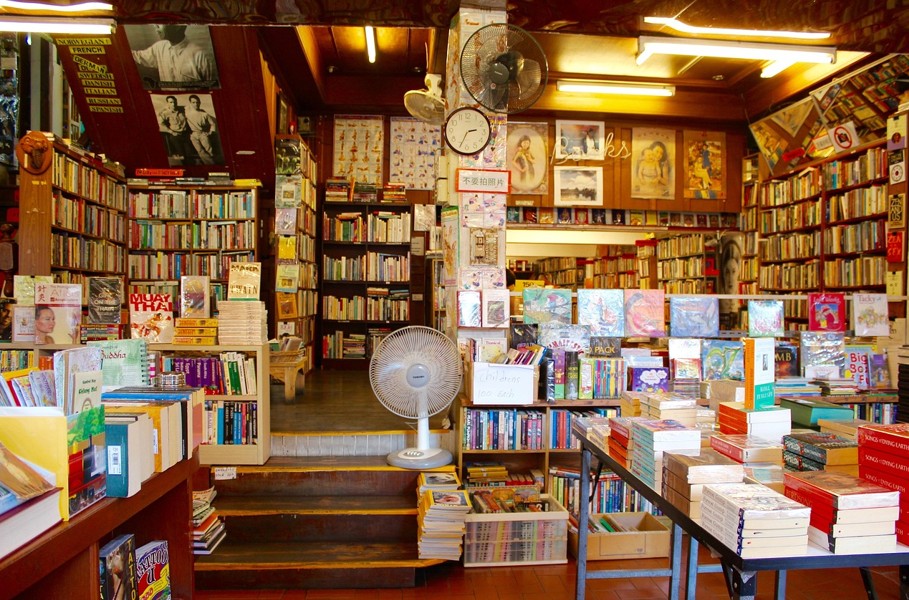
Every year, on the last day of our London trip, we make three stops: Foyles on Charing Cross Road, possibly the most magnificent bookstore in the world—six enormous floors stuffed with books (and that’s not counting the very tasty café where we always pause for lunch and the events auditorium above that). Then, it’s on to the Waterstones flagship store in Piccadilly Circus, said to be the largest bookstore in Europe, before winding down the day at Hatchards, London’s oldest bookshop founded in 1797. At each of these—every one a bibliophile’s dream—Ed and I both grab a hand basket, arrange a time and meeting place, then diverge to sift through the offerings (some 200,000 titles each at Foyles and Waterstones, and 100,000 titles at Hatchards) and load up our favorite finds. When time’s up, we go to the main counter—where we do a quick check to make sure we’re not buying any duplicates—and arrange to have our purchases shipped to the States. We’re like two kids set free in a candy store. And man, do we stuff ourselves! This year, though, the shipping costs to the States charged by Waterstones and Hatchards—in retaliation for Trump’s tariffs—almost doubled the price of each book, so we had to put our marvelous finds back on the shelves and then order them online from Alibris at home—thanks a lot, Rumpy!
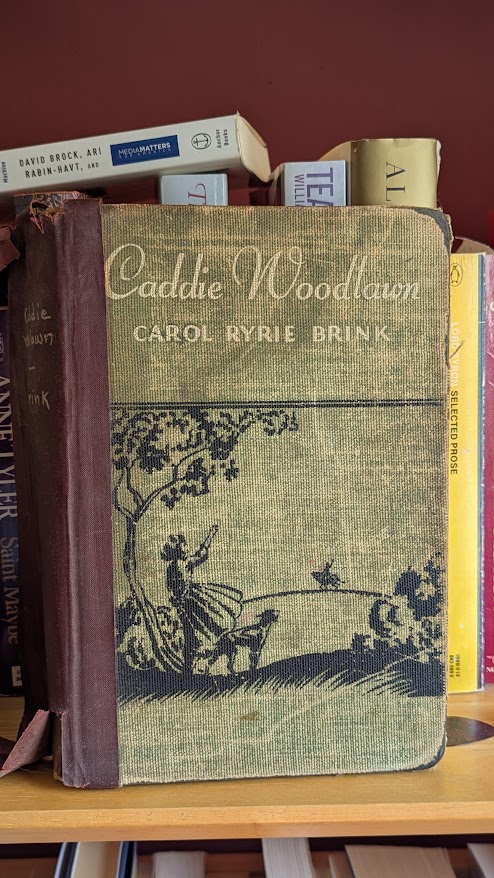
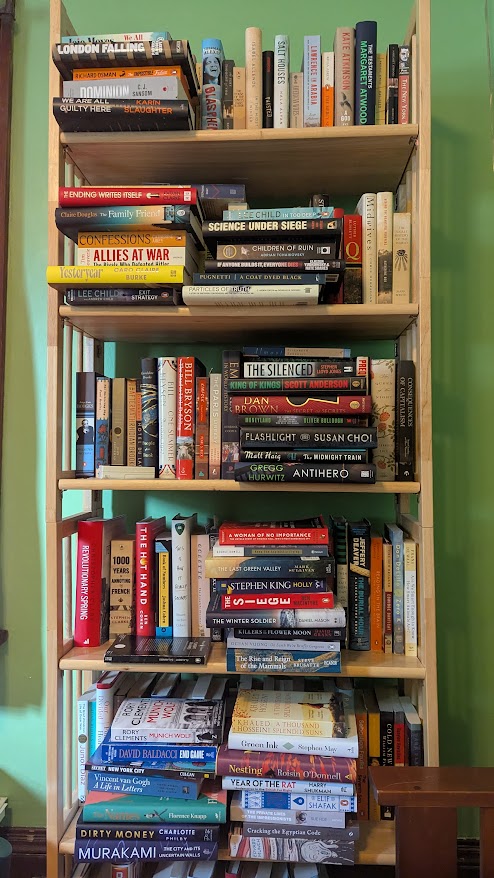
But our disappointment was soon assuaged when we received the Foyles books two days after our return (they ship amazingly fast!). Twenty-four new titles in all! Never mind that our modest three-bedroom home is already bursting at the seams with books, one of the oldest among them Caddie Woodlawn, by Carol Ryrie Brink, the story of a spirited, untamable ten-year-old tomboy running wild with her brothers on the Wisconsin prairies during the Civil War. A book my mom found at the local library tag sale. A treasured tome I had read at least ten times before I was Caddie’s age.
Never mind that our TBR piles will undoubtably last us well into our second century on the planet. As a woman reading to her toddler in the Foyles café remarked when we told her of our annual book spree, “Why, of course. You don’t wait until you run out of groceries to buy more.”
Exactly.
Priorities, Priorities!
In our house, reading is fundamental. So what if the sofa’s a tad threadbare. Or the dining room chairs are a bit scuffed up (OK, maybe more than a bit). We must have books! Reading is pleasure, reading is discovery, reading is knowledge. Reading is power! The power to understand the world around you. Its people. The tangled web of their deeds and interactions (good and bad). To grasp in all its complexity the human condition. How we got here. Why things are the way they are. Who is behind this progressive reform or that racist atrocity. Where we may be headed.
Sadly, though perhaps not surprisingly, the U.S. ranks 36th in literacy in the world, and even that statistic carries a caveat: Of the 79% of U.S. adults deemed literate, the vast majority of these read at or below a sixth-grade level. And an astonishing one in five adults are functionally illiterate. Their inability to read or write leaves them woefully unable to navigate daily life. Medical forms. Job applications. Legal agreements. Written instructions of any kind. Reading IS fundamental.
The Gift of a Lifetime
My mom was a woman who had her problems. A talented artist in the era of “No wife of mine is going to work outside the home,” time hung heavy on her hands, so she read to me and read to me and taught me how to write the alphabet. By age four, I was reading on my own. Simple children’s picture books soon gave way to Charlotte’s Web by E.B. White and The Boxcar Children by Gertrude Chandler Warner. By age 7, I was enjoying Louisa May Alcott’s Little Women (with a bit of help from Merriam-Webster). I never received a greater gift than that of literacy. When I have owned nothing else, I’ve always had shelves of books.
And I passed it on to my children, that lovely lifetime gift. A rainy day would find the three of us snuggled together on the sofa, a stack of storybooks on the coffee table, whiling away the afternoon as I read aloud the tales they had chosen. When the Scholastic book orders arrived each month in their classrooms, I could always spot my kids’ books when I arrived to pick them up—the largest pile in both cases. On the day my son left home at age 18 to teach English in China, he took my dogeared copy of John Steinbeck’s East of Eden. I was thrilled when I saw it peeking out of his backpack. In recent years, he has set himself a to-be-read list of books that any college literature major would recognize. When he’s home for the holidays, he selects one for us to read (or re-read) and discuss. This past December it was George Orwell’s Keep the Aspidistra Flying. Sharing books. Talking books. Exploring the past, present, and the imagined future.Reading IS fundamental.
And yet, reading for pleasure—or knowledge—has taken a precipitous drop in America. Forty-four percent of adults in the U.S. did not reada single book in the past year.
Sound Bites and Earbuds and Screens, Oh My!
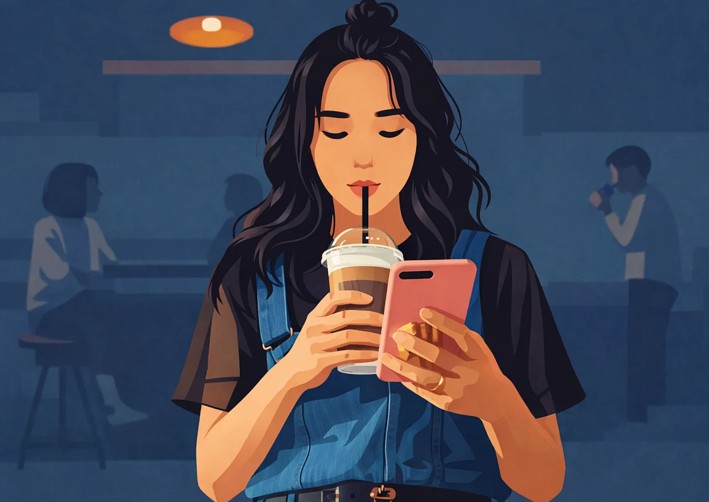
Walk down any street. Survey the patrons of any coffee shop, subway car, or other place where people congregate. What do you see? Faces absorbed in screens, eyes glazed over, not the least sign of acknowledgement that those around them exist. Add those little white earbuds and the barrier is complete. Sadly, the future appears to promise only more of the same. The screen time for one-year-old kids now averages 53 minutes a day. By age 3, those screens consume almost three times that amount—a seriously sizeable chunk of the day for a toddler struggling to grasp the workings of the world around them. And many parents aren’t reading to their kids. We now have a generation of adults who, themselves having grown up on screens, are less inclined to read, and so regard reading as “a subject to learn” rather than a pleasurable or enriching activity.
Their children are adopting the same attitude. Even for those reading at or near grade level, the culture of social media has left its dark mark. Kids today get their info in sound bites and blurbs. They cannot attend to something as “huge” as an entire book. All those pages and pages! Some educators are tossing in the towel and giving kids bits of books. Excerpts. But our world—if we are to save it—demands its citizens be able to grapple with complexity.
Books Tell Us Where We’ve Been and Where We May Be Headed
If books like John Steinbeck’s The Grapes of Wrath have something to say about where we’ve been, George Orwell’s 1984 has sounded the warning of where we may be headed since its publication in 1949. It depicts a future society held in blind obedience to The Party and its leader Big Brother, described in the book by one adherent as “the embodiment of The Party”, suggesting BB is more a myth than a real person—a convenient mechanism to control people through fear. And man, does it work. Citizens are constantly monitored via two-way telescreens, hidden cameras and microphones—never mind the host of civilian informers—as they go about their lives (beneath posters that remind them every minute Big Brother is Watching You). Anyone can be arrested by the Thought Police for even contemplating unapproved ideas. Offending The Party or Big Brother doesn’t end well, I assure you.
When our “Dear Leader” was elected the first time in 2016, following Obama, a president who gave us The Affordable Care Act and brokered the deal with Iran that prevented them from further nuclear weapons development—without spending billions or closing the Strait of Hormuz or killing a single soul—well, when that happened, there were enough concerned citizens, enough thoughtful readers still left in America to send sales of Orwell’s 1984 into the stratosphere. The book’s publisher, Signet Classics, reported sales increased nearly 10,000 percent in the days just following Trump’s first inauguration.
But now a decade has passed. The number of Americans who read for pleasure has dropped. As I noted above, more than forty percent of Americans read no books last year. And the number of Americans who read newspapers has also declined—by nearly two-thirds. Even cable TV news shows and websites are feeling the pinch these days. So where are people getting their news? Social media and video networks. TikTok and YouTube. We get our news in snippets and soundbites. Just like our kids.
As Vibhas Ratanjee noted in his article for Forbes: “Perspective comes from wandering across history, fiction and biography—where ideas collide and recombine into something new. Reading teaches us to hold ambiguity and to wrestle with contradictions.”
We desperately need a thinking population, a nation of people who can evaluate, compare and contrast, make connections. Who can read!
Only We Can Prevent This
For me, the most terrifying scene of the future world ever conceived came, ironically, not from a book, but from the 1960 film adaptation of H.G. Wells’ post-apocalyptic 1895 novel The Time Machine that I happened to see on an oldies movie channel when I was 12 (don’t worry, I ran right out to the library, checked out the book and later bought a copy—I wanted to know the whole story).
In the scene that broke my heart, and still brings tears every time I watch the film, the main character, the Time Traveller, witnessing the sorry state of the far future, asks the Eloi if they have any books. Yes, they assure him. They have books. But as it turns out, the single shelf of books they show him crumbles to dust at his touch. Long neglected. Now gone. Forever.
There are plenty of greedy, soulless people out there counting on your ignorance to make their deadly dreams come true. Don’t let them get away with it. Read. Read. Read.
[This post first ran several years ago. I am reposting it now because: 1) Yours truly is taking some much-needed vacation time to recharge and, well, just plain be happy. You remember happy, right? 2) We must never forget our history–the cruel injustices visited upon innocent Americans because they were the “wrong” color, the “lesser” gender, or had the “wrong” sexual orientation. Yes, the arc of the moral universe is indeed long, but it’s up to all of us–all good, honest, caring people–to bend that arc toward justice. I’ll see you next month. Take care.]
When I was three years old, my mom sent me to a nursery school run by a former teacher in her home. As I had no siblings (yet) and all the kids in my neighborhood were teens and pre-teens, my mom thought the preschool would help me to overcome my shyness. The problem was, the other 7-8 kids were a year older, which doesn’t sound like much, but that one year difference feels mighty big when you’re a measly three. They mostly ignored me, but I was used to playing on my own, so not unduly stressed about the situation.
One of my favorite toys was a miniature wooden train set. I had one like it at home, but this set had twice the track. And I loved the accessories that went with it—the little painted wooden houses, the bridges, the cars of red, blue and green. I could make a whole story in a world of my choosing inside my head. Just like I did at home. If I could get my hands on it. A highly popular toy, it was usually monopolized by the boys.
But one morning, I saw my chance. The train set was wide open! I knelt on the floor and quietly went about the business of linking cars together from engine to caboose. I was almost there when a hand swooped down and snatched the blue car from my grasp.
“You can’t play with this!”
Startled, I looked up to see John R. towering above me, a menacing, satisfied sneer on his face as he placed a firm foot on a section of track.
The shock of that moment. I have never forgotten it. Outwardly, I ventured no response. I didn’t punch or slap him, didn’t yell or try to wrestle the stolen car from his grip. I didn’t even call for the teacher. But in the moments after he grabbed that train car, I burned with indignation. Who was he to take that car from me! I had every right to play with the train set and he had no right to stop me!
I never told the teacher, or my parents, but for the remainder of that year, I sat behind an armchair in the living room and watched the other kids play. Then I went home and copied the games/activities I had seen them enjoying. My mother discovered this from talking to the teacher, but neither of them knew why. Only I did, and I never revealed the reason.
Of course, many other injustices would happen to me over the years, perhaps the most egregious being the failing grade I received in a graduate seminar because I strenuously ignored the professor’s blatant attempts to seduce me during our requisite weekly one-on-one sessions. As payback, he “rescheduled” my final project presentation on the day it was due, leaving only a note in my department mailbox that same morning to say our meeting had been moved up from 9:00 a.m. to 8:00 a.m., knowing I would not get the note until I was on my way to see him. When I found the message at 8:45, I rushed to his office, project in hand, to find him standing in the doorway, ready for the scene he’d set up. “You’re late!” He shouted. “I’m failing you!”
Seeking redress for this outrage, I went to see the ombudswoman. While admitting it was a not an uncommon complaint about this instructor, she let me know that “many just go along with it, until the semester ends,” then added, “He does publish more than anyone else on the faculty.” My faculty advisor ruled that he couldn’t fail me while refusing to accept my project, and got the course expunged from my record (the money was not refunded). But it tagged me in the department as someone who “doesn’t go along to get along.” The kiss of death.
And yet, the seizing of the little wooden train car remains the most vivid of all these affronts. It was my first real, solid end-to-end memory, and it both shaped who I would become and revealed to me who I was. Those who were bigger, those with more power, more money, more cruelty in their so-called hearts—bullying others they believed weaker, inferior; grabbing what wasn’t theirs; cutting a trail of misery everywhere they went—I would take them on in whatever way I could. Justice, not only for myself but for all others who suffered unfair treatment. It was my first solid core value. It has guided me through my life.
The year following the train-set incident, a friend from my new preschool at the local YWCA slept over. As we lay in the dark that night, we talked briefly about racial prejudice. I have no memory of what touched off the topic, maybe stories about the “color bar” in the South—Whites Only signs everywhere—I’d seen on the nightly news, a program that always accompanied our family dinners. I said it was terrible how mean white people were to colored people (we were still a few years shy of Stokely Carmichael and his term black power). Maureen considered this. “I don’t really care for the Negro much,” she said, “but I do love the Indians. It makes me sad that they are treated so badly.”
Honest to god, those were her exact words. I can’t recall what came after that, but I do know that I was: 1) startled and unhappy that my friend didn’t “care for” Black people, and 2) surprised to learn that Native Americans (a term we did not have at the time) were also the victims of prejudice. I had only seen the “happy” portrayals of these indigenous folks sharing that wonderful first Thanksgiving with the “kindly” pilgrims.
This not-fairness thing was almost bigger and wider than it was possible to grasp. Almost. But I would come, bit by bit, to understand the enormity of injustice out there.
The Only Child in School That Day: The Courage of Ruby Bridges
In kindergarten, I witnessed a rarity on the nightly news—a story about a little girl just a year older than me. Her name was Ruby Bridges and she lived in a city familiar to me only through a postcard my parents had of the place they’d honeymooned—New Orleans.
Though the Supreme Court had ruled segregated schools unconstitutional in Brown v. Board of Education in May 1954—shortly before Ruby Bridges was born—the backlash, especially in the South, was fierce. Fierce enough that six-and-a-half years later, Ruby was the first Black child in New Orleans to attempt to integrate a “white school.” She was accompanied by a cadre of U.S. Marshals to protect her from the white crowds who heckled and threatened her every step of the way, right up to the schoolhouse door, many of them parents! People with children of their own, who would never for one minute tolerate their kids being treated that way.
As children, we rely on adults to keep some kind of order. To be fair or, if failing that, at least not malicious. But that day, I learned how brutal injustice could be. Later, I would discover that all the teachers at William Frantz Elementary School had stayed home that day—to register their hostility to desegregation. All but one—Barbara Henry, a white teacher who had recently moved to New Orleans from Boston. She alone volunteered to teach Ruby. In fact, Ruby would be Henry’s only student that year. The school literally kept all the white students hidden from Ruby’s view. She was not allowed to go to the cafeteria or the playground at recess, and U.S. Marshals accompanied her to the restroom. They also continued to walk Ruby to school as the angry crowds remained for months, hurling racial epithets and death threats at the six-year-old.
But Ruby Bridges, with Barbara Henry’s support, did not give up. Eventually the protests stopped and many of the white parents let their kids return to the school. In her second year, Ruby was taught in a classroom with other students, she ate in the cafeteria, went out to the playground, and—surprise!—life went on.
Four Little Girls on A Sunday Morning: The 16th Street Baptist Church Bombing
I had just started third grade when a white man planted a box of explosives under the steps of the Sixteenth Street Baptist Church—a Black church and a hub of civil rights activities—in Birmingham, Alabama on a Sunday morning. The explosives went off during the morning services, killing four young girls who were attending Sunday school and injuring many others. In the violence that erupted afterwards between police and furious members of the Black community, two more Black children were killed. Outrageously, it would be fourteen years before Ku Klux Klan leader, Robert Chambliss, was convicted of murder for the church bombing. His partners-in-crime, Bobby Frank Cherry and Thomas Blanton would not be convicted for another twenty-four years!
In third grade, too, I would encounter the word empathy and immediately grasp its meaning: The ability to emotionally understand what other people feel, see things from their point of view, and imagine oneself in their place. Thirty-two years later, I would buy my children Christopher Paul Curtis’s wonderful book, The Watsons Go to Birmingham—1963, the story of a Black family who travels south to visit Grandma in Birmingham, Alabama and arrives there just in time for the church bombing. It was Curtis’s first novel and it catapulted him to national prominence, winning both the Coretta Scott King Honor Book Award and the Newbery Honor Book Award. Today, sadly, The Watsons Go to Birmingham—1963 ranks high on many banned books lists.
Bloody Sunday: All They Wanted Was Their Civil Rights
I would be just shy of my 10th birthday when the world witnessed another horrifying injustice. What would come to be called “Bloody Sunday” took place on March 7, 1965, as some 600 civil rights activists began the 54-mile march from Selma to Montgomery, Alabama to demand of Governor Wallace that their full rights as American citizens, enumerated in the Civil Rights Act of 1964, be recognized and respected. As with Brown v. Board of Education a decade earlier, large swaths of the South had simply chosen to ignore the new law.
Led by Hosea Williams from the Southern Christian Leadership Conference, Amelia Boynton Robinson, a local civil rights activist, and John Lewis of the Student Nonviolent Coordinating Committee, the marchers passed through Selma without incident, but as they crested the Edmund Pettis Bridge (named for a Confederate general), they got a good look at what awaited them. A throng of Alabama state troopers, billy clubs in hand, blocked the road at the bottom of the bridge, backed by county sheriff deputies, and a crowd of locals waving Confederate flags, rooting for a bloodbath.
The marchers continued cautiously, but as they neared the troopers, they were ordered to disperse or there would be serious consequences. Williams offered to talk. No dice. When the marchers did not move, the troopers rushed in, beating them mercilessly and choking them with tear gas. Lewis was knocked down repeatedly (he suffered a skull fracture that day) and Robinson was severely battered. Seventeen marchers were hospitalized and 50 more required treatment for injuries.
Film of the brutal attack was rushed to the networks. An outraged nation reacted swiftly, organizing sit-ins and demonstrations. Their cries for justice did not go unheeded. A federal court intervened and, at last, protected by National Guard troops, the marchers made it to Montgomery, with Martin Luther King at the helm (he had been in Washington, DC, conferring with President Johnson on Bloody Sunday, intending to join the march the next day).
In August, the Voting Rights Act of 1965 was passed by Congress and signed into law, 94 years after the Fifteenth Amendment had granted Black people the right to vote. The arc of the moral universe is, indeed, long, but Bloody Sunday made me understand that it is up to us to see that it bends toward justice.
They Were Dancing and Laughing, and the State Said You Can’t Do That: Stonewall 1969
I was about to enter high school when the Stonewall Uprising occurred. The Stonewall Inn, a popular Greenwich Village gay bar in an era when same-sex relations were outlawed in every state but Illinois, was a target of frequent police raids. Part of New York’s campaign to rid the city of “sexual deviants.” But on June 28, 1969, the police got more than they bargained for. As they entered the bar in the early morning hours, their attempts to harass and arrest patrons met with unflagging resistance. That resistance spilled into the streets. As word spread, hundreds, then thousands joined the protest. Over the next six days, the clash between riot police and LGBTQ+ people and their allies would rage unabated. But when the tear gas finally cleared, what would become known as the Gay Pride movement had come into being.
It had been a long road. Before the Stonewall Uprising, the possibility of justice for LGBTQ+ folks looked pretty grim. It wasn’t enough that they weren’t bothering anyone, that they had their own clubs to dance and mingle in. If the attitude toward Black people had been that they could exist as long as they knew their place and kept to it, the official take on gays was they had no right to exist. A Chicago group, The Society for Human Rights, founded in 1924 to advocate for gay rights, enjoyed a brief moment of attention before political pressure shut it down.
A quarter century later, another gay rights activist, Harry Hay, founded a more enduring organization—the Mattachine Society—to make Americans rethink their bias against and fear of homosexuals (especially gay men). The Los Angeles-based org sprouted chapters across the country, but the times were still less than hospitable. A 1950 Senate report, “Employment of Homosexuals and Other Sex Perverts in Government” equated homosexuality with mental illness, concluding that LGBTQ+ people were “security risks” to the country. President Eisenhower later banned them from working for the government or any of its contractors. A 1952 publication of the American Psychiatric Association declared homosexuality a “sociopathic personality disturbance.”
The Stonewall Uprising radically altered the landscape. A year later, what would come to be called America’s first Gay Pride parades took place in Los Angeles, Chicago and New York where thousands of LGBTQ+ folks and their allies marched, chanting: Say it loud, gay is proud! Today, Gay Pride Parades are annual events in many countries.
In 1973, the American Psychiatric Association finally deleted homosexuality from its list of mental illnesses, and the next year the first openly gay candidate won a seat on the Ann Arbor, Michigan City Council.
I was a sophomore at Michigan State when the university hosted a “Wear Jeans if You’re Gay Day.” Since this was 1975 and all anyone wore was jeans, it meant that only people who were terrified of being thought gay would make the effort to choose some other garment. I’m happy to report that on a campus of over 50,000 people, I saw no one that day wearing other than denim. It was the era of solidarity. And though it would take another forty years for Obergefell v. Hodges to make same-sex marriage legal across the U.S., the tide had turned.
The Shocking Notion That Women Are People, Too: Roe v. Wade and the Women’s Movement
I would be a senior in high school when Roe v. Wade at last made abortion legal for women. Before that ruling, women were forced to carry unwanted pregnancies to term. Though the advent of “the pill” in 1960 had radically changed women’s lives, back-alley abortions still posed significant risks. And women were still expected to be subservient to men. The happy housewife. The docile helpmate. The all-sacrificing mommy. A woman’s sexuality also remained an unseemly and potentially dangerous thing. Women were still the ones on the hot seat when it came to convictions for rape: Had she “asked for it” in her style of dress (male judges could decide her clothing was too provocative), or by her manner (too flirtatious)? I will say right here, no woman asks to be raped, but the prevailing attitude of the male-dominated judicial system kept many rape victims, already severely traumatized, from reporting the crime.
The women’s movement that arose in the late 1960s imagined a new destiny for their half of the population. Took to the streets to say we demand control over our bodies, our options, our lives. Women would no longer go to college to get their “Mrs. degree”—the term used for women enrolled in higher education where it was assumed they were “husband shopping” for a man with a bright, monied future. Instead, they began running for political office in numbers, increased their presence in the legal system. They worked outside the home, not because economic necessity demanded it but because they wanted to use their talents and intelligence to create a fulfilling life as an independent adult. Roe v. Wade made so much of that possible. It was a momentous victory.
In This Dark Era of Reaction, John Lewis Still Guides Us
And now, so many of our gains for freedom and justice in the past 65 years have been or are being rescinded. In 2013, the Supreme Court kneecapped the Voting Rights Act of 1965 in its Shelby County v. Holder ruling that waived the need for preclearance of new voting or redistricting laws in states and jurisdictions with a history of voting discrimination (as identified in the VRA). Some two dozen states didn’t waste a moment in passing legislation that has restricted Black voters from exercising their rights—changes in voter ID laws and registration mail-in voting, limited polling places and voting hours in Black neighborhoods.
SCOTUS struck again when it overturned the right to abortion guaranteed by Roe v. Wade in its June 2022 Dobbs decision. Instantly, a raft of reactionary laws were enacted in states across the nation, severely limiting or banning abortion, in some instances even in cases of rape, incest, or endangerment to the mother’s life. To enforce these draconian measures, some states have raised the possibility of legally preventing women from traveling to another state where abortion is legal. So far, thankfully, this proposal has met with a resounding “hands off” from the DOJ who filed a “Statement of Interest” in the matter, proclaiming that: The Constitution protects the right to travel across state lines and engage in conduct that is lawful where it is performed and that states cannot prevent third parties from assisting others in exercising that right.
Book bans, laws against providing transgender healthcare or teaching Black history, threats to overturn gay marriage—we are living in a dark era of reaction, bordering on fascism. High on injustice and white male supremacy, low on freedom and civil rights.
It’s been 65 years since John R. grabbed that blue car from my hand and told me I couldn’t play with the train set. Sixty-five years of witnessing the wounding injustice to others, of suffering it myself on several occasions, of fighting for a world of true equality, freedom, and justice. Sixty-five years of hope, celebration and, now, deep concern as attacks on our rights mount once again.
In Barbados this past January, talking with our Bajan friend Tyrone, the subject of justice came up and I mentioned the powerful, lifelong effect that moment at age three has had on me. Thinking it was a stressor—emotional baggage that was weighing me down—Tyrone encouraged me to let it go. But as I explained to him, I don’t want to let it go. Far from being a recollection of defeat, it remains a moment of clarification—what I stand for—of identity. It is precious to me. It is me. As the fabulously courageous John Lewis said: When you see something that is not right, not fair, not just, you have to speak up. You have to say something. You have to DO something.