Love and Stuff

“If you aren’t happy for what you already have, then what makes you think you will be happy with more?”  Maddy Malhotra

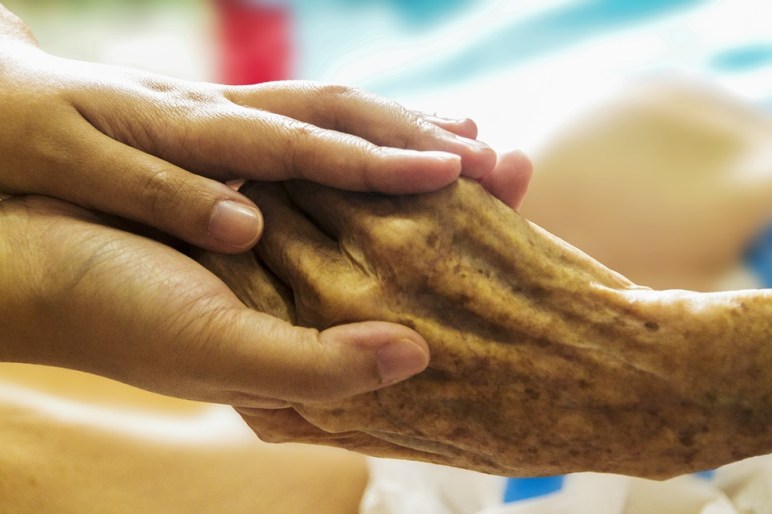
Shortly before Valentine’s Day, I got an email from the International Rescue Committee, a group dedicated to helping people “whose lives and livelihoods are shattered by conflict and disaster to survive, recover and regain control of their future.” They were promoting “Hearts for Humanity,” a fundraiser which offered a choice of four Valentine gifts you could purchase to honor a loved one: Warm Blankets;  A Year of School (for a girl); The Teddy Bear & Creativity Kit for young children, and Safe Passage.

The deal was you chose a gift, and a card would be sent to your Valentine notifying them what you had purchased in their name. It’s a nice way to share some love. 

I selected the Safe Passage gift/card. The blurb for it caught my heart: After fleeing for their lives, refugees arrive to an unfamiliar place frightened, exhausted and in desperate need of basic services, including transportation and information … the IRC provides refugees with critical information on how to access medical care, asylum services, and what to do in case their family is separated. We also help to transport refugees safely to facilities such as hospitals or asylum centers.”

I thought if I was someone fleeing everything I’d ever known, hoping to survive the boat ride to a place foreign in both language and customs, with no home, no job, and no clue as to WTF would happen next, I’d be mighty glad to find some friendly face on the other end who would help explain the rudiments, get me medical assistance, maybe give me a ride.

So, I named my husband Ed, all-around good guy and Valentine-extraordinaire, as the person I wished to honor with my donation. Easy. But what did I want to type in the little “brief message” box provided? My typical Valentine’s card to Ed runs beyond brief, and usually includes some sentiment a tad more racy than I felt like sharing with the card-prep folks at the IRC.

You may think, being a writer, a brief message would be a piece of cake, but I continued to stare at that blank space, willing some coherent thought to materialize. Writer Revelation #1,923: Coherence is only the baseline—the barely acceptable, rock bottom limit—below which writers must not sink, or if we do sink then we must delete quickly or bury the evidence in some file with a name like Holiday Recipes 2005.

No, when faced with a blank page, what writers aspire to pen is something graceful, hopefully thought-provoking, occasionally humorous, and true. Above all, true. 

After more gazing out the window, and fortified by a gin-and-tonic, I decided to focus on why I chose this gift of Safe Passage for Ed rather than a book or sweater or some other item we already have too many of and no place to store. The WHY made it all fall into place. I quickly typed:

One of the miracles of love is that it makes you more generous. We already have everything we need because we have each other, so this Valentine’s Day, I’m extending that love, sending it out like ripples over a pond, to those less fortunate.

What is Enough?

Love makes us generous. Teaches us what is enough. Enough is a good word to know. A life-enhancing concept. A planet-saving philosophy.

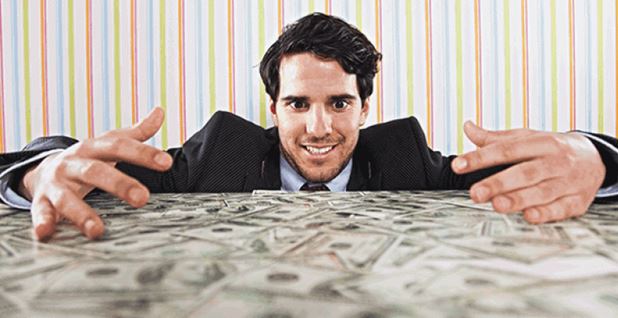
Stuff, on the other hand, just seems to make the folks with the most toys greedier for more. Two homes. Five homes. A personal jet and a helipad. A private island.

Personally, I think it’s bad manners to grab another $100 billion for yourself when other people are homeless, starving, and dying from lack of basic medical care. Forty percent of the world struggles to survive on less than $2.50 a day.

But if I’m honest, I know the Stuff Gene is shared to greater and lesser degrees by much of the developed world. Even in my own modest (by American standards) home, I often feel the walls closing in, squeezed tight by too much stuff. Why is it Ed and I have three coffee mugs crammed with pens, pencils, and markers on our partners’ desk when one would do? Are we expecting to sprout another dozen hands, become an ambidextrous stunt-writing team?

Speaking of coffee mugs, why do we have 27 of them hogging space in our kitchen cabinets? Are we anticipating a Fifties style coffee klatch—two dozen ladies in June Cleaver bouffant dresses and pearls, gathering for a gossip? 

Ed and I are woefully short on extra homes, sports cars, and Cayman Island accounts, but we have more prints and posters than wall space to hang them, enough kitchenware to open a diner, and a pile of electronics dating back to the dawn of the digital age. If floppy disks, VCR players, or cassette recorders ever make a comeback, we’re ready.

We are two people … with eight suitcases, three laptops, three tablets. And about 800 sweaters.

The Trouble with Stuff

As a nation, we’ve come a long way from the folks who inhabited those quaint cabins you see at places like Plimoth Plantation. One, maybe two rooms. A couple of hooks for the family’s several items of clothing. A cooking pot. Today, many people pay an average $1,000 a year for self-storage lockers to hold the stuff they can’t cram in their homes. Annual self-storage revenue has been estimated at $38 billion. I suspect Goodwill is not returning my calls regarding what items they accept because they, like me, are drowning in stuff.

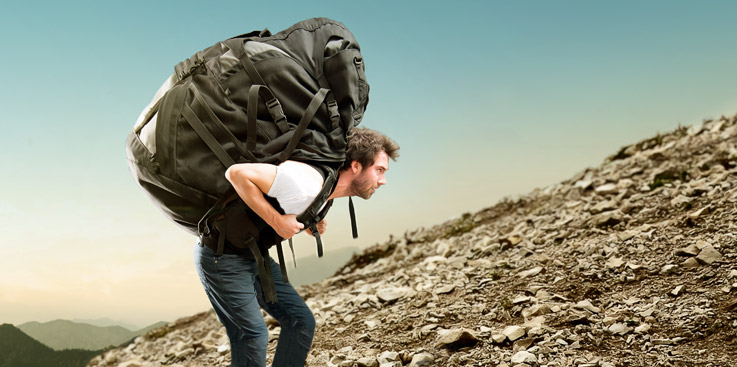
Stuff weighs us down. Not only do we have to pay for it, but once purchased we must maintain it: clean it, store it, repair it. And ultimately, dump or recycle it. This last is an increasingly serious issue. According to theworldcounts.com, we dump more than 2,000,000,000 tons of trash each year. And 99% of the stuff we buy gets tossed out in the first six months.

Stuff also begets stuff. When I was a kid, you saw a movie once, and maybe once again years later on some late night movie channel. Then the VHS tape was born. Now we could own hundreds of movies, but we had to buy a VCR player to view them, which later had to be replaced with a DVD player when movies went digital. All this movie-owning gave birth to the entertainment center—a bulky piece of furniture to house your TV, with multiple shelves for storing those tapes and discs. Now, everyone’s streaming and the contents of our entertainment centers are becoming the contents of our landfills.

Why all this acquisition?

Those “Lovely Intangibles”

Worth a replay: One of the miracles of love is that it makes you more generous. We already have everything we need because we have each other.

Love is more important than stuff. Stuff fills the space in our closets, our homes, our landfills. But loving and being loved fills the space in our hearts.

Thinking about this, I began jotting a list of more things I believe trump stuff in their importance.     Things that, if we have them, give us the sense of enough. 

*Health. As I watched Nancy Pelosi hold the floor in the House for 8+ hours on February 7, protesting a spending bill that did not protect Dreamers, I was inspired by her energy, her stamina. Seventy-seven years old and going strong! Health is life. I’ll take good health over a pile of riches and the stuff it buys any day.

*Peace of Mind/A Sense of Safety. This is a toughie right now, but imagine the weight of worries over the state of democracy, health care, DACA, gun violence, and the Trump/Kim Jong-un nuclear brinksmanship dropping away, freeing us up for joy. Stuff is heavy, cumbersome. Peace of mind is lightness, energy.

*A Sense of Connectedness. When we recall the good times, the best moments, it’s the faces of loved ones we see—family, friends, neighbors, folks from our community, people we’ve encountered in our travels. In his 2013 book Social, UCLA biobehavioral scientist Matthew Lieberman states that our need to connect with others is as vital as our need for food and water. Science has yet to make this same claim for a Mercedes, or a Williams-Sonoma Jura Giga X7 “café worthy” automatic coffee center ($8,999.95).

*A Rich Inner Life. To me, this means reading, listening to music, going to art galleries and museums, learning new things, reflecting on the long history of ideas, making connections between seemingly disparate events, dreaming.

In his excellent—and scary—futuristic YA novel Feed, M.T. Anderson paints a world where everyone’s head is wired for Internet. Originally touted as a “learning tool”—a world of valuable information piped right into your brain—the feed has largely become a stream of consumer ads. It’s the ultimate nightmare of losing our minds to stuff.

*Purposes/Goals Other Than Making Money. After we moved into our current home, I spent four summers digging over the bindweed-infested yard. I then terraced the wildly uneven terrain and put in garden beds. It was hot, often frustrating work, but in the end it was enormously satisfying to make a lovely space out of a junky lot. Much, maybe most, of what gives us satisfaction in life never earns a dime. 

*Getting Out in Nature. Hiking the Quabbin Reservoir at Thanksgiving with my family, I was stunned almost to dizziness by the expanse of the sky, the richness of the air, the dazzling stretch of green. This huge, beautiful silence that is nature feeds the soul, heals the heart.

*Job Satisfaction. As Annie Dillard said, How we spend our days is, of course, how we spend our lives. The race for stuff puts a lot of pressure on us to choose a career path with the biggest paycheck. But if we’re going to spend half—or more—of our waking life doing something, maybe the real key to satisfaction is the work itself, or the folks we work with, or friendly workplace policies that accommodate our personal/family needs. A job that doesn’t demand we be literally on call 24/7.

*Self-respect. To trust in your own integrity, to be able to look yourself in the mirror every morning and like who you see, is a treasure beyond any price tag. Without it, you become someone like … Paul Manafort.

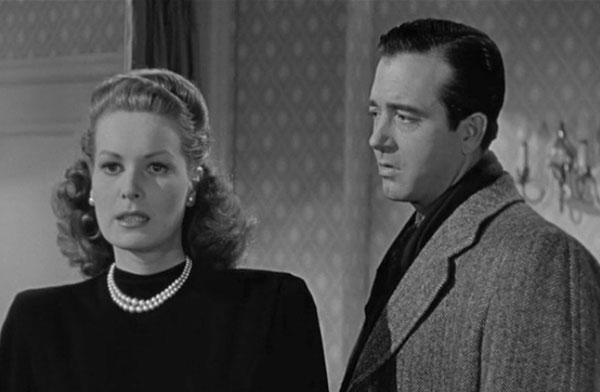
These are the “lovely intangibles” the lawyer Fred Gailey (John Payne) speaks of when he defends his decision to represent Kris Kringle in the 1947 Thanksgiving classic Miracle on 34th Street. The dialogue in this scene with his new love interest Doris Walker (Maureen O’Hara) is too good to summarize, so I’ll just run it here:

Doris: [Kris is] a nice old man, and I admire your wanting to help him. But you’ve got to be realistic and face facts. You can’t throw your career away because of a sentimental whim.

Fred: But I’m not throwing my career away.

D: But if Haislip [top dog at the firm that’s threatened to fire him if he persists with the Kringle case] feels that way, so will every other law firm.

F: I’m sure they will. I’ll open my own office.

D: And what kind of cases will you get?

F: Probably a lot of people like Kris. That’s the only fun in law anyway. I promise, if you believe in me and have faith in me, everything will… [he pauses]  You don’t have any faith in me, do you?

D: It’s not a question of faith. It’s just common sense.

F: Faith is believing in things when common sense tells you not to. It’s not just Kris on trial, it’s everything he stands for. Kindness, love and the other intangibles.

D: You talk like a child! It’s a realistic world. Those lovely intangibles aren’t worth much. You don’t get ahead that way.

F: What’s getting ahead? Evidently you and I have different definitions.

D: These last few days we’ve made some wonderful plans. Then you go on an idealistic binge. You give up your job and security, then expect me to be happy about it!

F: Yes, I guess I expected too much. Someday you’ll find your way of facing this realistic world doesn’t work. And when you do, don’t overlook those lovely intangibles. You’ll discover they’re the only things that are worthwhile.”

I can’t improve on that. It’s graceful. It’s thought-provoking. Above all, it is true.

Every Man For Himself Leaves All Of Us Helpless

“The only thing that will redeem mankind is cooperation.”                Bertrand Russell

In this dark and chilly season, I stole away for a few weeks to a little heaven on earth, Barbados. My days there were about reading on beaches, a rum punch at the ready, with frequent dips in an ocean so clear, I could see the bottom. Not blogging. So, while I gear up once more for “regular life,” I’m running this post first published in March 2017. It seems an appropriate choice, set to drop on the morning following the State of the Union (which I can summarize in two words: Not good). Many of the best things I cite here have already received the axe. Others remain on the chopping block. Some of the horrors had yet to rear their ugly heads, like the zillion dollar heavily-privatized infrastructure plan where you pay now, and pay later, and pay forever, largely with cuts to education, healthcare, Social Security and Medicare, as well as thumping local/state tax hikes and increased tolls. Faced, as we are, with all these challenges, it feels more vital than ever that we pull together.  So, here ’tis:

Like a warped record you can’t get to play true, America seems stuck on repeating the myth of the rugged individual.

He’s a self-made man.

She pulled herself up by her own bootstraps.

In a free society, it’s every man for himself.

Herbert Hoover was a big fan of rugged individualism. He invoked it frequently in the depths of the Great Depression. It was his way of telling millions of hungry, destitute Americans that as far as the government was concerned, they were on their own.

But what is this thing called America? Is it really just a random collection of 350 million individuals, rugged and not so, butting heads in a zero sum game to see who survives?

 The Pioneer Spirit

The much-lauded “pioneer spirit” of America paints a picture of the hardy individual, musket in hand, blazing a trail in the New World (his woman and babes tucked somewhere safe offstage). He’s a guy who likes to go his own way, live by his own rules. It stirs people up, this portrait of our fearless forebears, mavericks all.

Except it never happened that way.

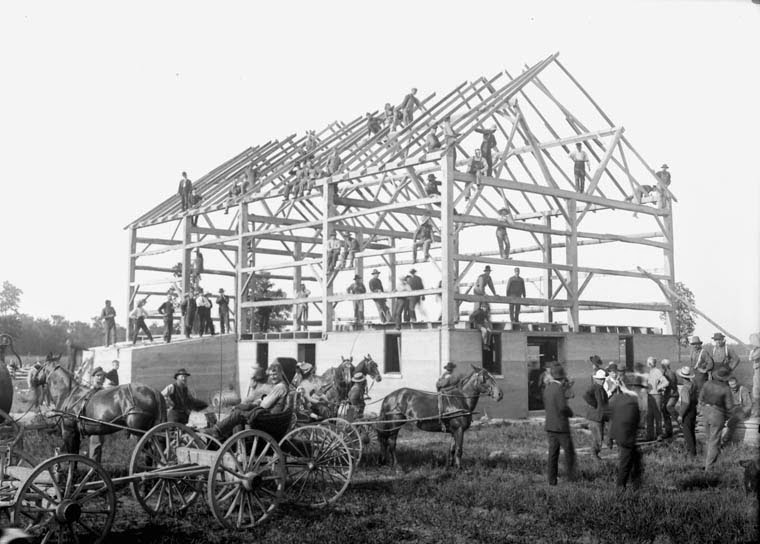
When the first non-native settlers arrived, they took one look and understood the situation: It was gonna take a village to build a colony. The land had to be cleared and plowed for planting. Ditches had to be dug for irrigation. Roads had to be made. Barns raised. Houses built. The rugged individual did not do these things with his little shovel. As European Americans were to do for much of the next 150 years, the settlers accomplished these tasks as a community.

And those Westward Ho-ing pioneers didn’t travel across the plains as individuals in the family’s little covered wagon. They formed wagon trains, BIG wagon trains, because the unknown road was dangerous and people got sick, wagons broke down. Under the best of conditions, the array and amount of labor still demanded many hands. Someone had to hunt for fresh food and someone had to cook it. Someone must fetch the water and feed the animals, repair the wagons and tend to the children. Going it alone, for all the fabled glory of the intrepid individual, would have posed a slew of serious challenges. America might never have made it 10 miles west of Philadelphia.

Our Ancestors Had This Nailed Long Before the Wheel

When our nomadic ancestors began to settle down 10,000 -14,000 years ago, they did not pitch their tents as individuals. My tent here. Your tent in the next valley. They settled in communities. And before they turned to agriculture, they had hunted in groups. Why? Because for all they didn’t know about the wonders to come over the next dozen millennia, they understood this: It sucks to be alone. It’s dangerous and difficult and you don’t do too well.

To thrive and grow requires a society. As legendary Green Bay Packers coach Vince Lombardi said: “Individual commitment to a group effort—that’s what makes a team work, a company work, a society work, a civilization work.”

So, what is this animal, society?

A quick google of the question turned up the following:

“Society describes a group of people who share similar values, laws and traditions living in organized communities for mutual benefits.” (Reference.com)

“Humans are stronger as an organised group than they are as individuals. Humans in societies survive longer, breed more successfully and dominate resources. Therefore society is a survival mechanism and we have evolved for it.”  (S. Spencer Baker)

“To love our neighbor as ourselves is such a truth for regulating human society, that by that alone one might determine all the cases in social morality.” (John Locke)

And my personal favorite:

“Many times a day, I realize how much my outer and inner life is built upon the labors of people, both living and dead, and how earnestly I must exert myself in order to give in return as much as I have received and am still receiving.” (Albert Einstein)

Today, in our fast-paced digital world, with its glut of consumer goods and endless distractions, it’s easy to miss what our ancestors saw so clearly: We need each other.  If we don’t support higher education, we won’t have the doctors we need to care for us when we’re sick or injured. If we don’t fund science, we won’t have the research we need to discover cures for our diseases or environmental solutions to save our planet. If we don’t spend the tax dollars to replace our aging infrastructure, we risk repeats of the 2007 I-35W bridge collapse in Minneapolis that killed 13 people and injured 145.

Look Around You
  1. If you had a bowl of cereal this morning, federal safety regulations (OSHA) protect the workers in the factory who packaged your cereal, and federal food standards (FDA) ensure that toxic substances are not floating around in your cereal bowl.

Enjoy a tomato in your lunchtime salad? Farm workers picked those tomatoes, and trucks delivered them to your local supermarket over Interstates built by the Federal-Aid Highway Act of 1956. (The $25 billion, 41,000-mile highway system was the largest public works project in America up to that time.)

  1. Borrowed a book from your local library recently? Public libraries are funded by local, state, and federal tax dollars. And to get there, you don’t have to take your chances weaving between cars in the street because local and state tax dollars, often matched by federal funds, have provided sidewalks for your safety.

3. Enjoy walking in the sunshine and having a cold glass of water afterward? The air we breathe and the water we drink are subject to federal regulations that monitor and establish limits for pollution on both. Though these standards are under attack right now and may be eliminated, they evolved as a response to the growing concern in the 1960s and 70s about the impact of human activity on our environment. The kind of concern that inspired Randy Newman’s 1972 song “Burn on Big River” about Cleveland’s Cuyahoga River, so polluted it burst into flames.

Scott Shaw/Cleveland Plain Dealer

Some 30 million Americans in eight states depend on the Great Lakes for their drinking water. But urban growth has overwhelmed marshes that once filtered runoff, and fertilizer from intensive farming has filled rivers with highly toxic algae blooms. The Great Lakes Restoration Initiative, begun under President Obama, provides federal dollars to help protect and restore the Lakes area. The highly successful project hopes not to get the budget axe before it finishes cleaning up the decades-old toxic sites and restoring the necessary ecological balance.

Thanks to EPA automobile tailpipe emissions standards, our children can play outdoors without having to wear face masks. Even LA’s smoggy reputation has improved.  According to a 2015 Wall Street Journal article, “… researchers at the University of Southern California say … pollution in L.A. has declined significantly over the past 20 years … and as a result, residents here are healthier.”

The National Oceanic and Atmospheric Administration (NOAA) adds: “The cleanup of California’s tailpipe emissions over the last few decades has not only reduced ozone pollution in the Los Angeles area, it has also altered the pollution chemistry in the atmosphere, making the eye-stinging ‘organic nitrate’ component of air pollution plummet.”

4. Deposited a check in the bank lately? If it was under $250,000, you don’t need to worry because the Federal Deposit Insurance Corporation, created under Roosevelt in 1933, insures deposits up to that amount. Imagine what folks would have given for that in 1929.

5. Glad there wasn’t an outbreak of the Ebola virus in the U.S.? The Centers for Disease Control and Prevention (CDC), the leading national public health institute in America, was there on the ground in West Africa when the epidemic developed. They are still there, working to improve public health and prevent another epidemic.  

6. Ever been a victim of a tornado, hurricane, or other natural disaster? Then you were probably mighty glad to see the Federal Emergency Management Agency (FEMA) personnel arrive on the scene to handle clean-up. Even the most diehard opponents of federal  programs, like New Jersey’s Chris Christie, change their tune when disaster strikes their own house. In the wake of Hurricane Sandy, Christie was only too happy to take the billion-plus dollars that federal agencies like FEMA and HUD poured into his state.

7. Are you 65 or over? Have parents or grandparents that age? Thanks to Social Security (1935) and Medicare (1965), the people who taught our children, built our roads and bridges, staffed our hospitals, and kept the world turning in one way or another during their working lives are not left to starve by the roadside. Why should people under 65 care about this? Because one day, with any luck, we will all get to be “old geezers.” Because a society does not throw people under the bus when it’s “finished” with them.

The bottom line is this: When your house catches fire, do you really want to try dousing the flames with buckets of water from your kitchen sink, or do you want to call the fire department?

What Price the Public Good? 

Donald Trump said Meals on Wheels was slashed from his budget because it “doesn’t work.” Meals on Wheels uses volunteers to deliver hot meals to housebound people, mostly the elderly. Research shows that the program greatly improves both diet and quality of life for its recipients. And it keeps many of those folks out of hospitals and nursing homes.

So, people get a hot meal, feel happier, and stay healthier. How is this not working? Because it doesn’t make a profit?

In his 1940 novel You Can’t Go Home Again, Thomas Wolfe addressed this notion that what serves the public has no worth because it doesn’t make a buck:

I think the enemy is here before us with a thousand faces, but I think we know that all his faces wear one mask. I think the enemy is single selfishness and compulsive greed.

America is a BIG country. It is not possible for each of us to provide all we need. It never was. The myth of the self-made man and the rugged individual are, at root, excuses for not making that individual commitment to the group effort that Lombardi spoke of.

President Obama addressed this eloquently during his 2012 campaign:

“If you’ve been successful, you didn’t get there on your own… I’m always struck by people who think, well, it must be because I was just so smart. There are a lot of smart people out there. It must be because I worked harder than everybody else. Let me tell you something — there are a whole bunch of hardworking people out there …

“….there are some things we do better together. That’s how we funded the GI Bill. That’s how we created the middle class. That’s how we built the Golden Gate Bridge or the Hoover Dam … That’s how we sent a man to the moon. We rise or fall together as one nation and as one people … You’re not on your own, we’re in this together.”

Warren Buffett, clever lad, nailed it in one line: “Someone’s sitting in the shade today because someone planted a tree a long time ago.”

Skip the Resolutions and Pass the Gravy

 “I finally figured out the only reason to be alive is to enjoy it.” 
― Rita Mae Brown

“Enjoy life. There’s plenty of time to be dead.” 
― Hans Christian Andersen

“Do anything, but let it produce joy.” 
― Walt Whitman (Leaves of Grass)

“You’re looking at the waves, but ignoring the sea.”  ― Rumi


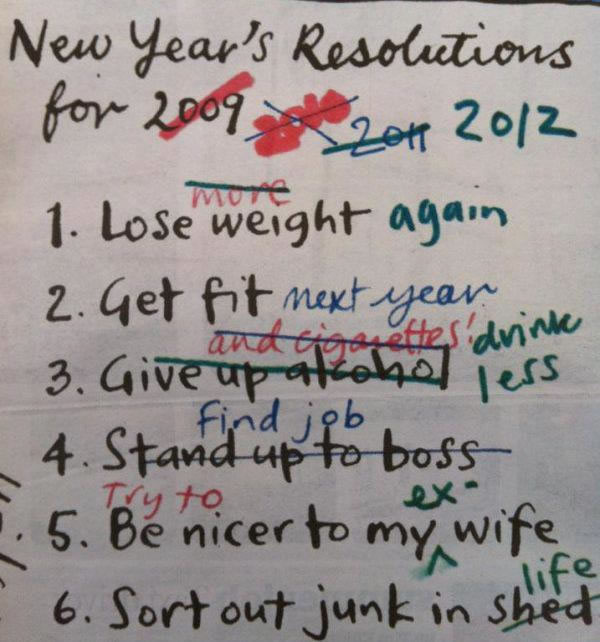
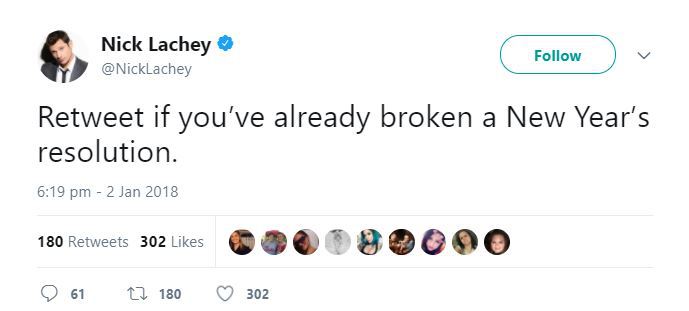
It’s that time of year once again when people are asking, “What’s your plan for 2018? What New Year’s resolutions did you make?”

My inner Sassy Girl is tempted to reply: “I’m giving up pinochle.” Or, “I’m swearing off glyphosate as a salad dressing.” But as most of these folks are friends (let’s face it—who else really cares what’s going on with you?), I give them the straight truth with a solemn face: I didn’t make any resolutions. I don’t have a plan. 

Which is just a tiny bit disingenuous because that is my plan.

Like 320 million other ordinary Americans, I’m always trying to figure out how to do this thing called Life. Lacking a roster of servants to do my bidding, and having never purchased a winning lottery ticket, I’m left to struggle with the eternal question: How the hell do I fit everything into the narrow confines of a 24-hour day?  The stuff I’m passionate about—writing, family, political action. The daily drudgework like dishes and laundry. The unending avalanche of forms/bills/notices that if not filed/paid/answered may result in a stiff penalty. Or a short jail sentence.

And sometimes I just need to sleep.

Resolution Madness

The single uniting force in the human race appears to be our mania for resolutions. If we share nothing else, come January 1, we all want to: 1) get in shape; 2) be more productive, and 3) manage the stress caused by #s 1 and 2.

Googling the subject, I see that 50 is THE number to shoot for this year. Fifty New Year’s resolutions came up more than once on my search. Ay caramba! Well, I suppose it seems less daunting than, say, 100, but it’s still madness. I mean, you’re gonna need a lot more than a Fitbit to keep track of that load. By the time I hit #16 (Get a Side Hustle) on the first 50-List, my head was exploding.

But it’s not just the number of resolutions these lists propose, it’s the scope. A second 50-list suggested the reader:

(#3) stop procrastinating—LOL, if we could do that, we wouldn’t need resolutions;

(#17) have better sex (Is there a meter for this? A checklist?);

(#22) get out of debt—has someone volunteered to pick up my tab?

(#33) re-invent yourself. This last strikes me as redundant. If I took up resolutions #1-49, there’d be no need to re-invent myself. I would be unrecognizable. 

For some reason, “drink more water” was a featured item on every list. Turn on the tap already.

Not every catalog of resolutions was so Herculean. Number one on Alexia Dellner’s list “Start your day with a really good stretch” felt both attainable and non-invasive.

Scroll down to #14: “Stop doing one thing.”

Ah, now we’re getting somewhere!

Andrea, dear soul, like a mom holding out dessert for last, dishes up major relief with #50: Cut yourself some slack.

Amen. That’s my kind of list. Stop doing. Lie down. Let sanity find you.

Sisyphus 0; Rock 100  

The thing, as it turns out, is that though we’re resolution junkies on the front end, we suck at keeping them. It’s a true Sisyphean situation. The rock doesn’t just roll back down that hill. It flattens us. According to usnews.com, 80% of resolutions fail by the second week of February. All that remains is the $1,995 you still owe on that Peloton Indoor Exercise Bike.

Researchers at the University of Scranton don’t even give us that much staying power. They claim that the resolution success rate is in the single digits. Eight percent to be exact. People, I don’t have to tell you this is not a flattering portrait.

Or—and this is the explanation I favor—perhaps we were never meant to be like that Timex watch in the old ads. The one that takes a lickin’ (by an 18-wheeler!) and keeps on tickin’. We are human beings. We have needs: Food, water, sex, online solitaire.

According to the Huff Po, there are numerous reasons why we fail the resolutions test in such astounding numbers, but they basically boil down to the same thing: A serious lack of realism in the expectations department. Vowing “I’ll never eat sugar again when a) you love sweets, and b) you love sweets, is like swearing you’ll never take another breath until we have someone sane in the White House. However noble your intention, it’s a doomed mission from the start. 

Case in point—one familiar to all writers—the ambitious plan to work on your novel 10 hours a day and/or resolving to pen 5,000 new words before each sunset. If you live in a monastery, where all you have to do is pray and someone prepares your meals, you might make it, but if you have a family, a job, a house, I can tell you from experience: It’s not happening. As Forbes noted: The average person has so many competing priorities that extreme life makeovers sink faster than the Titanic.

Enough Already with the Straitjackets

This post actually started with me considering a “plan” proposed by another self-employed blogger: Do one thing each day. Just that. This resolution grabbed my attention because it sounded so sane. Blog on Monday. Write on Tuesday, Thursday, and Friday.  Do household stuff and errands on Wednesday. Rest on the weekend. I could feel my anxiety level plummeting in the clarity and simplicity of the idea. Like the sound of those miniature desk fountains people buy to soothe themselves in the midst of utter chaos.

But then I realized that’s just trading one kind of to-do list for another, and to paraphrase Jackie DeShannon’s 1965 hit (“What the World Needs Now”): Lord, we don’t need another to-do list. Which is what resolutions really boil down to.

I’m a putterer. The thing I treasure most—what truly floats my boat—is to look at a day on the calendar and see nothing penciled in. This is a day to do with as I please, and I can make it all about one big project or several smaller projects. I can go to the gym or grab my honey and head out for a day of adventure. I can paint the kitchen or write a short story. Nothing kills a day for me more than getting up and realizing I’m straitjacketed into must-do tasks from dawn until lights out.

My plan—the one that isn’t a plan—is to minimize those strait-jacket days.

Carpe Diem

Last summer, I started cataloguing my books—all my books—a massive project that evolved out of a deep desire to stop purchasing copies of books I already own (I’m aware this makes sense only to my fellow book junkies). Whenever I got the chance, I would enter a shelf of titles/authors on my laptop. For someone who lives in a smallish house, I have an astounding number of books. Anyway, the project proceeded slowly. I was always promising myself I’d “reward” myself with cataloging a shelf after I wrote the next chapter of the novel or the next short story. After I’d penned the next blog post or researched a few more lit-mags and agents. After I finished weeding the garden or …

Surprise! The moment I could get to my cataloging project almost never happened. Ditto for playing my guitar or trawling for creative recipes. I was like the kid who dutifully eats her dinner day after day but never gets dessert. Feeling I had to cross off everything on a to-do list the length of War and Peace made me resentful. I felt like one of the Morlocks in The Time Machine, slaving away in the dark underground, the surface world something I glimpsed the light of only rarely.

So, I switched things up. In the week between Christmas and New Year’s this year, I gave myself a rare treat: I left my days completely open. This doesn’t mean I did nothing. I actually accomplished quite a few things, but I chose each activity in the moment, and only worked at a task until I felt my energy for it fading. The sense of possibility in each day energized me. Not having a to-do list calmed me. Gone was the stress of cramming, cramming, cramming. As my resentment faded, my focus sharpened. I finished the cataloging project (yay!). I also wrote this post, penned several new chapters of my novel and revised others, cleaned out dresser drawers, read one book and started another, watched several movies, cleared the mess on my desk, caught up with all my correspondence. All without forcing or fretting or rush.

A Different Kind of List

As someone who has earned a living writing and editing for much of my adult life, I’m no stranger to deadlines, and I’ve never missed one. But I don’t use a list to whip me to the finish line. Instead, I look at the scope of a project, estimate the total number of half-day units it will take to complete, add 2-4 more units because you never know what surprises lurk, in the project itself or in life, and count backward from the due date. I like the flexibility of this system. It leaves me time to write fiction. It allows me to work all day one day and skip the next if circumstances demand it or I’m just chomping at the bit for some free rein.

But we’re all individuals, so if you feel naked without a list (or a resolution), resolve to try this one: The Got-Done List. Got-done lists are not about the non-stop push to cross off task after task. They’re not about the relentless spur in the side that keeps you running until you drop, always short of some hoped-for finish line.

In her book Overwhelmed: Work, Love and Play When No One Has the Time, Brigid Schulte talks about the weight many of us suffer from overloaded to-do lists, how it steals our happiness, slows our productivity, and damages our health. Schulte calls this state “The Overwhelm.” Got-done lists are about throwing off that weight and celebrating what we did achieve rather than ruing what we haven’t (yet) accomplished.

Research supports Schulte’s claims. Studies find that focusing on what we have achieved motivates us, makes us more creative, enhances problem-solving, and just plain adds to our happiness.

“I spend a few minutes at the end of the day writing down what I accomplished successfully,” says Nada Arnot, chief marketing officer of Qubed Education. “It’s rewarding and empowering to focus on what I did, rather than on what I didn’t do, which can be both stressful and demoralizing.”

I hear you, Nada!

So I’m sticking to my plan that isn’t a plan. Following my heart and letting the dust bunnies blow where they may. I’ve got living to do.

(Crank this one to the rafters and never forget what it is to hold the possibilities of your life in your hands.)

I Still Holler

“It always seems impossible until it’s done.”   Nelson Mandela


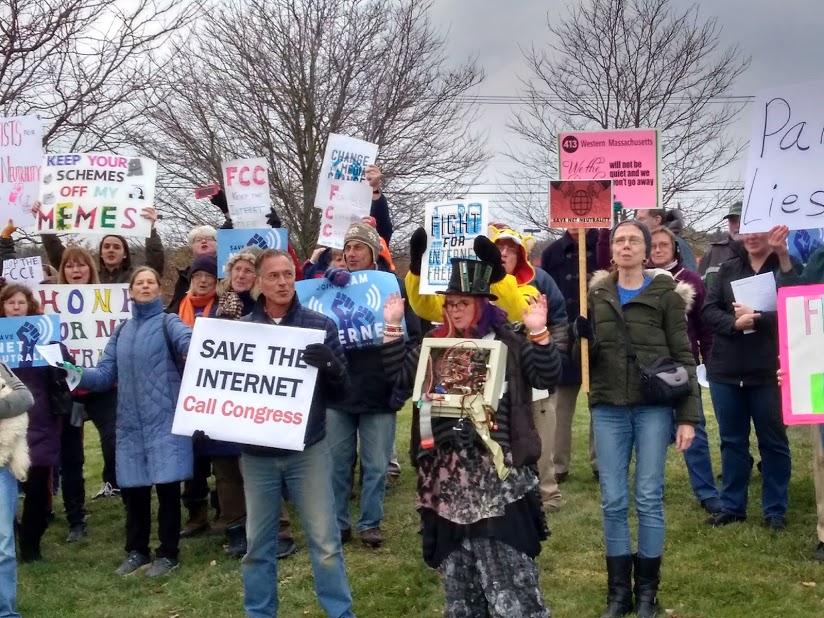
It’s two-and-a half weeks before Christmas. I’m standing in the parking lot of my local Verizon store. To be precise, I’m standing on the soggy, grassy strip that separates the paved lot from the onrushing traffic of Route 9. It’s a good place to be if you’re wielding, as I am, a sign that says “Save Net Neutrality.”

Earlier today, the sun was out, sort of, but now it’s 4:00 p.m. Darkness is descending and the temperature’s in free fall. I’m a veteran of these things. I should have remembered to wear two pairs of socks. But despite the teeth-chattering cold and the marshy ground, I’m good because I’m not alone. There’s a hundred or so of us out here, waving our signs at the passing cars, and there are lots of cars. The Verizon store is situated between two malls and just down the road from the University of Massachusetts, Amherst. People honk and wave wildly, opening their car windows in the freezing air to give us a thumbs-up in solidarity.

“Net Neutrality is Free Speech!” we shout. “Hey, hey. Ho, ho. Ajit Pai has got to go!”

This is what democracy looks like.

The Crazy That Was 2017

2017 has been a tumultuous year. To quote Dickens, It was the best of times; it was the worst of times.

The awfulness is easy to identify:

The Muslim travel ban.

The elevation of pro-Nazi groups and their rhetoric of hate.

The silencing of scientists and the dismantling of EPA regulations. 

The deportation of Dreamers.

The repeated threats to our healthcare. (Trump’s monkeying with payments to states has resulted in higher premiums for everyone.)

Attacks on our first amendment rights.

Attacks on women, LGBTQ folks, and all people of color.

The proposed drilling of the Arctic, and the doling out of national monuments/public lands like candy to fossil fuel magnates.

The baiting of North Korea’s volatile, psychopathic leader by our own volatile, psychopathic leader.

A slew of appointments for far-right racist, sexist, homophobic, anti-environment federal judges—a legacy which we’ll suffer for the next four decades.

And that’s the short list.

What can you say about a country where an accused child-molester was in serious contention for a seat in the Senate?

A country where the Speaker of the House wets his pants at the prospect of dismantling Social Security and Medicare, reducing millions of Americans to starvation, homelessness, and premature death.

A country where thousands of disabled Americans fill the halls of Congress, pleading “Kill the [tax reform] bill! Don’t kill us!”, only to be ousted from their wheelchairs and dragged out by cops.

During the Geo W. Bush years, it often felt like we were fighting some Medusa. For every threat we battled, two more appeared with lightning speed. I remember thinking, “Crikey, does this guy ever take a rest?” Little did we know Bush was just the warm-up act.

David S. Graham nailed it in The Atlantic : “[The Trump] administration has set a new standard for chaos and dysfunction.”

A word to the wise: Never ask what else can go wrong.

The Best of Times

So, what’s the upside to this mayhem you might well ask. As Francoise Stovall, Digital Director for Every Voice, noted: “I’ve protested, I’ve called, I’ve signed, I’ve knocked, I’ve rallied, I’ve organized – but it can still be hard not to get discouraged or feel hopeless that our democracy is under attack or that one person can’t make a difference.”

The upside is that it’s not just you or me battling the behemoth. It’s millions of us. The continual onslaught of threats to our civil rights, first amendment protections, and democracy itself has gotten us out of our armchairs and into the streets. We are organizing and mobilizing and raising our voices from Maine to California. From the Women’s March, which drew an estimated 4,000,000 people, to protests against the Muslim travel ban at airports across the country. From noisy denunciations of Republican fake healthcare bills at Town Halls to packing the halls of Congress in outrage against the current tax-bill scam.

Driving home from the Net Neutrality action, I felt energized and hopeful and, yes, happy. Standing with a hundred other people—shouting If they take away net neutrality, Corporations will control what you see!, and getting lots of positive feedback from passersby—gives you strength. Makes you part of something positive and powerful. Reminds you that you don’t have to fight this alone. We’ve got each others’ backs.

The Proof is in Your Inbox

 For proof that our collective fight for our democracy is working, you need only to consult your Inbox. Two notes I received today:

Thank you, thank you, thank you! Because of you, two of Trump’s radically extreme judicial nominees, Jeff Mateer and Brett Talley, had their nominations withdrawn today. This victory would not have been possible without supporters and activists like you who signed petitions, bombarded senators with calls, donated, and shared information about why these nominees were completely unfit for lifetime seats.

                                                           : People For the American Way (PFAW)

I’m excited to share that the outpouring of public pressure from UCS supporters like you has worked. Together, we successfully defeated Michael Dourson, President Trump’s dangerous pick to lead the Environmental Protection Agency’s (EPA) Office of Chemical Safety and Pollution Prevention. This is a victory for science and the safety of families throughout the country—and it wouldn’t have been possible if thousands of people like you didn’t speak out.

: Union of Concerned Scientists

We must be the change we wish to see, and we are being it.

The Long Arm of the Law
Stephen Carr / Daily Breeze / SCNG )

When I was a young punk, I associated “lawyer” with other evils like “Nixon” and “Agent Orange.” But life has shown me that “lawyer,” like “satisfaction guaranteed,” is a relative term. Which lawyers are we talking? The ACLU? Lambda Legal? The SPLC (Southern Poverty Law Center)? These are the heroes out there, protecting in court the democratic values we fight for in the streets. “We’ve got lawyers on the ground” has become a balm to my jangled nerves.

The Boston Globe reported that Trump has been sued 134 times in federal court since he took office—lawsuits that erupted over the Muslim travel ban, violations of the Emoluments Clause (Trump’s private profiteering from the presidency), and the attempted ban on transgender people serving in the military.

But that tally only takes us up to last May. Add to it the subsequent litigation concerning the rights of Dreamers (DACA), proposed drilling in the Arctic, sexual harassment, Trump’s (unconstitutional) plot to reduce and sell off national monuments/public lands, and you’ve got quite the list. The Center for Biological Diversity, alone, has filed 40 lawsuits. And just yesterday, New York Attorney General, Eric Schneiderman, tossed his hat in the ring when he announced a multi-state lawsuit against the FCC, challenging their December 14 repeal of net neutrality.

Conservative lawyer Jonathan Turley fumed, “Every group, every aggrieved person, is filing lawsuits.”

“If every aggrieved person is indeed filing suit, then the president can expect a good deal more,” Caroline Hallemann wryly observed in her article for Town & Country.

Out of the Darkness, Into the Light

In the past year, the volume of e-mails I get has almost doubled. It’s running around 600 a day. And then there’s the text alerts. All of it begging me to please stop whatever I’m doing now and save this, sign that, call my senators, my rep, write a letter, submit a public comment. Top that off with the many calls to action: Be here to fight this/that in the rain, the snow, the cold, the heat, weekends, holidays.

I do my best to keep up with it all, but I must confess there are moments I resent the time these unending requests take from my writing, from relaxing with friends and family, from reading and gardening, from dreaming. I’ve been marching and protesting and fighting the good fight since I was a student in the 1970s. When do I get the time to live my life, pursue my goals? And then I realize, this is my life—this is what matters—and I am living it. So, I must keep hollering for what I value. For justice. For democracy. For the preservation of the planet.

Two years ago, my stepdaughter gave me an orchid plant. It cycled through a series of blooms until this past July when the petals fell away and then …nothing. A friend advised me to cut back the old stem and continue regular watering. A new stem, she assured me, would appear in time. Last week, it finally sprouted. I know it will be some weeks though before buds appear and more time still before they blossom. I just have to keep watering.

Fighting the good fight is like that. It’s not enough to sit in a corner and hope. Like my orchid, hope needs active tending. And sometimes it’s a long wait. Last week, though, Doug Jones defeated accused child molester Roy Moore for the Alabama senate seat vacated by now Attorney General Jeff Sessions. Jones, as the U.S. Attorney for the Northern District of Alabama, brought to justice the two remaining Klansmen responsible for the 1963 bombing of an Alabama church that killed four young black girls. In his victory speech, Jones quoted Martin Luther King, Jr.: The arc of the moral universe is long but it bends toward justice.

The arc doesn’t bend toward justice by some magic, but from our collective actions. And that’s possible because, as Anne Frank so poignantly noted in her diary, there truly are more good people than soulless scoundrels in this world.

Tomorrow is the winter solstice, the turn of the earth from darkness toward the light. People in every culture celebrate this as a moment of renewal, of hope. In a blog post written right after the 2016 elections, I quoted D.D. Guttenplan: If we withdraw into our grief and abandon those most threatened by Trump’s win, history will never forgive us.

So, as we head into 2018, I’m still here. I still holler. Let’s get together and make some noise.

Peace on Earth. Happy Holidays.

  (And now a little “Holiday Cheer” guaranteed to put a smile on your face.)


Sometimes a Cigar Is (Should Be) Just a Cigar

“Simplicity, simplicity, simplicity! We are happy in proportion to the things we can do without.” (Henry David Thoreau)


I’m about to say something so heretical, I can already hear the gasps of disbelief and nervous laughter all the way from the West Coast:

I miss my old flip phone.

That’s right. I miss my Verizon Samsung flip phone with its archaic texting set-up (no separate keyboard) and its crap camera that was really only good for taking close-ups of your jean-clad arse if you left the phone in your back pocket when you sat down. This last is more of a guy thing. Somewhere, I feel certain, there are men with online photo albums composed entirely of their denim-covered derrières.

Before you do an eye roll and dismiss my flip-phone fetish as “one of those old people things,” I would like to direct your attention to a story on Time.com about millennials who still use and prefer flip phones. According to a survey cited in the article, 13% of 25-34 year olds like their flip phones, and—this will really blow your mind—an even greater number (15%) of 18-24 year olds are flip-phone users.

Does this mean the phone-that-is-just-a-phone is poised to make a comeback? Can it be that people are searching for something more meaningful to do with their lives than snapping selfies? If only.

Okay, confession: The Time story is from 2014, but that’s not so ancient. Everyone reading this post was already alive in that year. In a different sense, though, 2014 does seem like another lifetime, an existence I dimly recall when people still went out to the movies and someone sensible was at the helm of the government. Sigh.

But Ame, I hear you saying, why do you yearn for that crappy little flip phone? Don’t you love that you can drain your bank account in an afternoon of frenzied shopping simply by tapping your sexy new Smartphone on that little white cube? Hasn’t it qualitatively enriched your existence now that you have a keyboard that anticipates—rightly or wrongly—every next word you wish to text? That you have a world of .gifs at your fingertips? Or apps like Android’s Flush Toilet Finder, and Is It Dark Outside which, I kid you not, tells you whether … it’s dark outside.

Okay, I know smartphones make it easy to bank online from anywhere, check the weather in Dubai, or pinpoint a leaky window.  And yet … I long for a phone that does only one thing: Be a phone. And here is why.

Multitasking is the fast track to insanity.     

Psychologists have pretty well debunked the efficacy of that 1980s’ Type-A wet dream, multitasking. Turns out that though you may be able to do two things at once, say, walk and chew gum, you cannot concentrate on two things at the same time. 

Even those who haven’t entirely forsaken multitasking acknowledge that it’s both a time and energy drain. It takes us about 15 minutes to mentally switch tasks, and there’s a certain amount of cerebral friction that comes from dealing with multiple distractions. The day flies by without much to show for it. To boot, your brain may become addicted to this state of distraction. Bye-bye focus.

My old flip phone never invited me to watch an episode of Stranger Things while tweeting to friends and playing Super Mario Run. It was just there when I needed to tell someone my car had broken down at a major intersection during rush hour.

I am not a Finger Monkey. 

Critic Anne Billson, recently declared: “People who watch movies on phones (especially if they think they can leave valid critical comments on imdb) should be shot.”

While I do find this a tad harsh, it should be noted that Anne made her comment on Twitter, a medium known for encouraging impassioned, if not always well-considered, reactions. But beneath the emo, she makes a good point: No one is going to watch Magnolia or Schindler’s List—both clocking in at 3+ hours—on a screen measuring 2¼ x 4 ¼ inches, a size suited to Finger Monkeys and  Pygmy Rabbits, but not people.

Nor are readers likely to scroll through War and Peace (1,296 pp.) or Infinite Jest (1,079 pp.). I could barely get through the Wiki article on kangaroos I used as a test case for the “ease” of reading on a Smartphone.

Reading is made for curling up in a large, comfy chair, or nestling among piles of pillows, snug beneath the blankets in bed. It’s about the feel of paper beneath your fingers as you turn the pages, and reveling in a wealth of words you don’t have to squint to decipher.

Brevity may be the soul of wit but it’s murdering journalism.

“Old person! Old person!” I hear you shouting.

Not so fast. While it’s true I won’t see 20 again in this lifetime, a wealth of decades provides (along with wrinkles) a useful yardstick to measure change. I used to freelance as a magazine writer, and I watched the average length of articles shrink from pages to paragraphs to 500-word blurbs as increasing numbers of publications went online. It became impossible to make a decent living writing pay-per-word. I continue to subscribe to The Atlantic because it still publishes articles worthy of the name, with stuff like well-researched content and in-depth analysis.   

In a Slate.com article, Jack Shafer cites a revealing study which found that people who get their news from print sources “remember significantly more news stories than online news readers.” Print readers also recall significantly more topics and remember more main points. Only when it comes to recalling headlines does the online crowd match print readers.

Shafer, who cancelled his own print subscription to the New York Times, lured by the sexy design of the online version, was back to home delivery within a year. “What I really found myself missing was the news,” he explains. “Even though I spent ample time clicking through the Times website… I quickly determined that I wasn’t recalling as much of the newspaper as I should be. Going electronic had punished my powers of retention.”

A paragraph here, a page there—what is this thing I’m reading?

A reviewer on Goodreads lamented that more and more books are making less and less sense. Half-baked plots. Twists that don’t stand up to scrutiny. Cardboard characters with incomprehensible motivations. She wondered how so many of these spotty reads were selling.

I wonder how many readers even notice.

I think “gaps” in a novel’s plot, structure, and characters reveal themselves readily when we read a printed book, but maybe not so much when we’re scrolling through a page or two while waiting on the subway platform, then scanning another half dozen paragraphs while standing in the checkout line at CVS. With the noise and movement of the world all around, who’s to really remember if Mrs. McGillicuddy was at the manor on the night of Lord Dudley’s murder, or if her name is actually Ms. McQuade and she dresses as Lord Dudley on her nights off from the massage parlor? Details—and sometimes entire plotlines—are easily lost in the flitter flutter of smartphone reading on the run.

I want a life apart from my phone.

In a 2014 Pew Research poll, 46% of smartphone owners reported “they couldn’t live without” their phone. Among millennials, 87% said their smartphones never leave their side.

Well, I can, and do, live without my phone much of the day, often leaving it in the jumble of notes and manuscripts on my desk, ignoring it until it rings.

I know it seems like the ultimate definition of personal freedom to head out into the world each day with nothing more than the clothes on your back and a phone that offers every app modern life requires, but I don’t want to reach for my smartphone each morning (as one user reported) to shut off the alarm and find myself automatically scrolling through my Twitter timeline.

In an age where nearly 40% of people under 35 interact more with their smartphones than they do with friends, family, or co-workers, I still enjoy going for a beer with friends or having dinner out with my husband—and talking to each other, nary a smartphone in sight.

I also like to take a walk or go for a bike ride without wires coming out of my head, my texting fingers idle by my side.

I like a thing to be just what it is.

Irony of ironies, a UK survey reports that making phone calls is not among the Top 10 uses we make of our smartphones. We are more likely to check email, trawl Facebook, shop online, watch YouTube videos, even check the weather than phone someone.

“I honestly can’t remember the last time I used my phone to call someone,” one user admitted. “I get incoming calls, but I usually just ignore them.”

As someone who has worked phone banks for political campaigns, I can attest to the truth of this statement. Almost no one picks up.

I like a thing to be what it is. Just that. I don’t want a stove that doubles as a dishwasher, or a microwave that also serves as a TV and hair dryer.

When I go to the gym, I take my iPod, not my phone. That’s because my iPod contains my workout  music. That’s all it does—play music—and I don’t want a perfectly good gym tune like “Build Me up Buttercup” to be interrupted by a text, or a notification that I’ve got 200 new messages in my Inbox. I go to the gym to get away from that.

On road trips (where I do carry a phone in case of breakdown), I use my portable Garmin GPS that sits on the dashboard. It does one thing: provides directions. Why do I prefer this geriatric invention to the Google Maps app? In a complex situation, like driving into New York City, I like to see the entire grid of streets and on-off ramps without having to take my eyes from the road or juggle my phone between my knees. Do I have to navigate five lanes or three? Will I need to bear left on the off ramp? That’s the beauty of something with only one purpose: All its components are geared toward doing that one thing well.

In a world of 2.2 million apps, where the number of smartphone users is expected to top 5 billion in 2019, I am certainly Don Quixote here, tilting at windmills. But there are worse characters to be, and I still think nothing is lovelier than a summer day on my deck, a warm breeze riffling the pages of the book I’m reading, a gin-and-tonic at my elbow. And if you should stop by, I’ll snap a photo of you. With my Nikon camera. That’s all it does—take pictures. I love it.