The Human Condition (BLOG)

We Are All In This Together

Eight months after I got my BA in Literature, and two months after I returned to the Midwest from Arizona—having discovered: 1) I do NOT like dry heat, and 2) I NEED green trees, green grass, seasons—I began a Masters in Literature. I was fortunate to be given a graduate teaching assistantship, structuring and leading a writing class for fourteen delightful freshmen. A gig that also covered a significant portion of my tuition and paid the rent for a room in a large boxy house a block from campus. A place I shared with fourteen other young women and men—some students, some working odd jobs until they figured out next steps. The usual college town scene.  

Two of my housemates—Kevin and Connor—were into cooking, and as the house had a vast kitchen in the lower level, complete with a lengthy trestle table, they began cooking dinners several nights a week. Anyone from the house could partake of the meal if they pitched in a dollar. That’s right, one dollar to help cover the cost of groceries. And, if you didn’t have that dollar, you could still eat. All you had to do was go to the market two streets over and bring home the ingredients, as I did twice during the summer of ’78 before I got a part-time gig at a Joann Fabrics store—no stipends for grad students during the summer session.

Lest this generosity and communal bonhomie appear specific to my housemates, I can assure you it wasn’t. The late ‘70s were a time of community. Hungry? I’ve got a can of soup we can share. No place to crash? I’ve got a sleeping bag and an extra pillow. You can stay at my place. Need a doctor? The free medical clinic was tucked among the bookstores, music venues, and mini marts that define a college town. Everyone went there, and it was the consensus among former and current students that the care we received there was superior to the university’s health services. I used the clinic twice and received prompt, courteous, top-quality care both times.  

The Backlash Begins

I remember thinking that ours would be the generation that would end hunger and homelessness, provide quality healthcare to everyone. After all, the decade before had seen the passing of The Civil Rights Act of 1964 and The Voting Rights Act of 1965. The Social Security Amendments of 1965 gave us both Medicare and Medicaid. Yes, we were building a new world, one that would make good on the promises of a true democracy, an America governed by the people and for the people as Abraham Lincoln said at Gettysburg. At its heart would lie that most basic of human truths: We are all depending on one another.

Sadly, the following decades were to prove me wrong, as Reagan’s “Morning in America” began the long eclipse of all that had flourished in the ‘60s and ‘70s, as we watched our best hopes smothered beneath a rollback of rights and cutbacks to domestic programs. All in service to hedge funds, private equity groups, and the billionaires who run them. (Sound familiar?)

I was reminded of this last fall when a bout of sciatica made walking painful and stairs almost unnavigable just days before we were to travel to Rome. I arrived at my local hospital’s emergency room, hobbling, my whole left hip/leg in agony. In the two hours I was there, the only person I saw was the one who showed up five minutes after I arrived to take my credit card info for my ER co-pay. She returned ninety minutes later to give me a shot “for the pain.” The pain remained. This is the kind of “service” I received and I have health insurance.  

As I sat…and sat in the ER that morning, I recalled a very different experience from my early post-student days. I had developed a fever, but being generally very healthy, I chalked it up to “just something” that would quickly pass. It didn’t and by the time a friend stopped by several days later, I was slightly delirious. She drove me to the emergency room of the local hospital where my temp registered 104 degrees. “Why did you wait so long?” The ER doctor admonished me. “You could have lost a kidney!” I started to cry. “I don’t have any money right now,” I sobbed, “I can’t pay.” They treated me and never charged for the visit.

Healthcare Now

According to the Office of Health Policy (under HHS), 11.5 percent of adults in the U.S. lacked health insurance in the first quarter of 2024. I love percentages, don’t you—the way they transform real suffering on the ground into a neat, faceless mathematical expression. So let me put that statement into human terms: A year ago, more than 27 million people lacked health insurance. Their only option? Community health centers, if they were lucky to live near one.

But such health centers rely to a huge extent on federal funding. The very funding that TheRUMP announced he was freezing on January 23. Grants, loans, financial assistance. Thousands of organizations were affected. Thousands of community programs. Head Start, cancer research, Meals on Wheels, mental health programs, housing assistance, natural disaster aid, public schools, and a whole slew of other public-service programs—funded by our tax dollars—including hospitals and healthcare centers. All funding to be paused for such orgs until it could be determined whether they might conflict with the president’s “agenda.”   

“Dangerous, Illegal and Unconstitutional”  

As the Associated Press put it (in the understatement of the year), “the order capped the most chaotic day for the U.S. government since Trump returned to office.” Reaction was swift. Less than 24 hours after the nationwide funding freeze was announced, U.S. District Judge Loren AliKhan, granted an administrative stay in a case brought by the National Council of Nonprofits. Trump could not freeze the funds until further review, she ordered.

A second U.S. district judge, John McConnell, Jr., at the request of 23 Democratic state attorneys general, echoed AliKhan’s ruling, issuing a temporary block on the funding freeze, saying it appeared to violate the law. “The Executive cites no legal authority allowing it to do so; indeed, no federal law would authorize the Executive’s unilateral action here,” McConnell stated.  New York Attorney General Letitia James agreed: “There is no question this policy is reckless, dangerous, illegal and unconstitutional.”

Despite these rulings, the funds and grants remained frozen, the Democratic state attorneys general reported in early February, calling on McConnell to enforce his earlier temporary restraining order. McConnell agreed and blocked the funding freeze, declaring it unconstitutional. “[It] has caused and continues to cause irreparable harm to a vast portion of this country,” he noted.

As of this writing, federal funding and grants appear to remain frozen.

Gimme Shelter: Poverty Becomes A Crime 

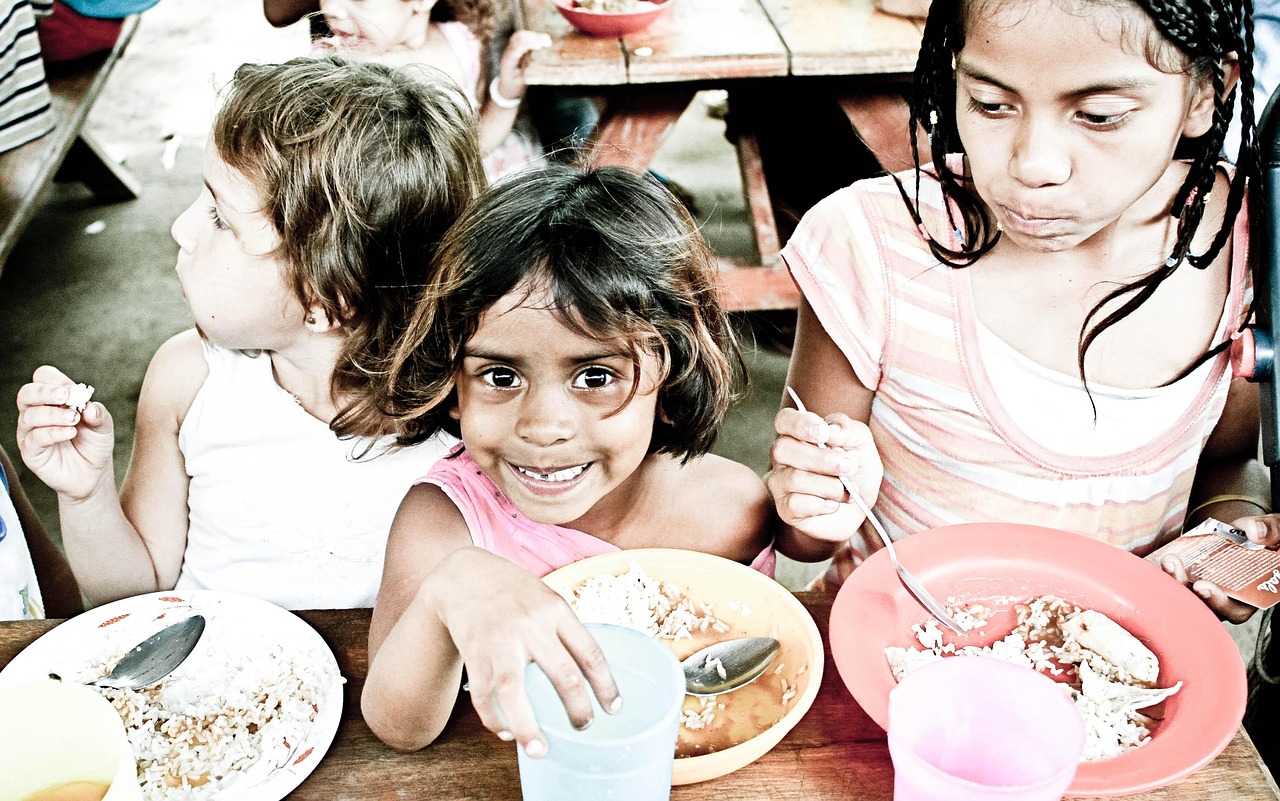
Giving shelter—a cot, a sofa, a sleeping bag on the floor—to a friend who is out of work and can’t pay rent or a friend of a friend “between places”—that may still happen. I hope it still happens. In my senior year of college, we sheltered a friend of one of my roommates for a whole semester as she waited for a grant to come through. There were also public shelters back then. Places that offered a large room—fifty or so cots, bathrooms, often a soup kitchen staffed by volunteers. People need a roof over their head. They need a warm, dry place to sleep, a toilet, a shower. Because for chrissake, we are all human beings. And one human being does not leave another to freeze or starve.

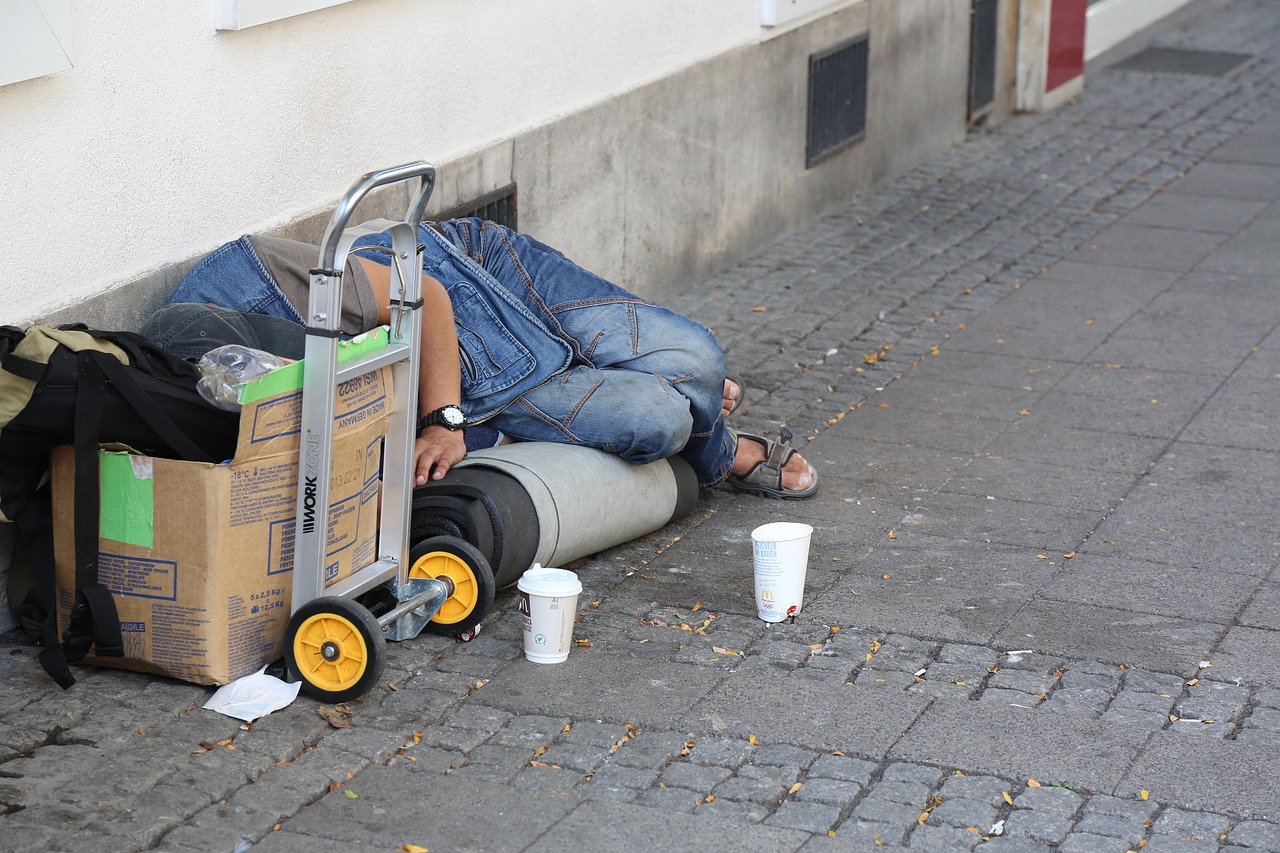
Except now it seems we do. In 2024, over 770,000 people—that we know of—were homeless. That’s an 18% increase from 2023, itself a 12% increase from 2022, and the highest number since the Department of Housing and Urban Development (HUD) started counting in 2007. At the same time, the number of Community Housing and Homeless Shelters has dropped by 2.2.% in the past year. You don’t have to be a math whiz to know that a drop in the number of shelters during the single largest increase in the number of people without a home spells despair, illness, even death for hundreds of thousands.       

So, if there are not enough shelters, where do these unfortunate people go? Where do they sleep? Good question. Until recently, it was the case that people without housing and no access to a shelter slept in tents in public spaces, laid out a pillow, maybe a blanket, on a park bench. If they were fortunate enough to still have wheels, they slept in their car. Some still might, but a purported wave of public antipathy toward the homeless brought a number of lawsuits last year demanding homelessness be made a crime.   

I detailed this in my September post “The Madness of Money.” Suffice it to say that in June 2024, the Supreme Court ruled 6-3 that cities can ban the homeless from sleeping and “camping” in public spaces. (Wouldn’t want the good, upstanding folk to have to witness such “unpleasantness.”) This SCOTUS ruling, in a case brought by the city of Grants Pass, Oregon, overturned lower court decisions that found criminalizing homelessness to be “cruel and unusual” under the Eighth Amendment. After all, people must sleep. And if one has no options for lodging, what can one do?

The “kindly” officials of Grants Pass had an answer: Pay a $295 fine. And if they catch you sleeping rough again, you’ll be criminally prosecuted and spend a month in jail! Grants Pass claimed the previous rulings encouraged homelessness (as if this were something ‘desirable’ many people aspire to). As I pointed out in my post, people sleep rough because they don’t have $295. I strongly suspect if they had somewhere better to go, they would go there. And if a city, any city, has the money to imprison innocent people down on their luck, it could use those same funds to help them. Unfortunately, since the ruling, more than 100 cities have made it illegal to sleep outside. In California’s San Joaquin County, violators can be fined up to $1,000 and six months in jail. It will hardly surprise anyone that TheRUMP supports these bans.

What the World Needs Now     

In the closing days of the Biden-Harris Administration, then-U.S. Surgeon General Dr. Vivek Murthy sat down with Time magazine’s senior health correspondent, Alice Park, to offer Americans “a parting prescription” as he put it, to address “the deeper pain, the unhappiness I was seeing for years across the country” based on his many conversations with Americans from all walks of life. Conversations that spanned his two terms of service, first under President Obama, then under Biden.

What Murthy discovered in those talks is that “for many people, [the] sense of community has eroded.” Millions of Americans are suffering from loneliness. Citing a recent survey, he expressed concern: “More than half of young adults …said they felt low or no sense of meaning and purpose in their lives.”

Murthy’s prescription? Rebuild what we have seemingly lost: Community. “Community is a place where we have relationships, help each other, and where we find purpose in each other,” he said. “Those three elements are the core pillars…” And those pillars, he stressed, are braced by love. Love fuels generosity, kindness, and courage. “When you put these together, then you have a place where people find a sense of belonging and meaning.”

A Caring Human Being

This past December, our car began making a horrendous clanking noise when starting up. I thought maybe the dealership had forgotten to top the anti-freeze when they replenished all the fluids last summer. After a week of this, Ed took the car to a local gas station where he filled up the tank, then asked the attendant to please check the fluids as we had concerns about the engine and wanted to make sure it was okay before driving to the airport the next day to pick up my son for the holidays. “What?!” the attendant snarled. “I’m not gonna send someone out in this weather (a sunny December day, low 30s) just to check your fluids!”

Ed then took the car to Ren’s, a neighborhood mechanic we trust. Ren checked all the fluid levels, found everything in order, and relieved our worries, assuring Ed it was simply a reaction to the low nighttime temps we’d been having for the past week. Sure enough, when the temps rose a bit, the car expressed its gratitude with perfect silence. And what did Ren charge for the time he spent going over the car? He charged NOTHING. He just did it because we had concerns. Because he didn’t want to send someone off to possibly experience a breakdown, or worse on a busy highway. Because he is a caring human being.                        

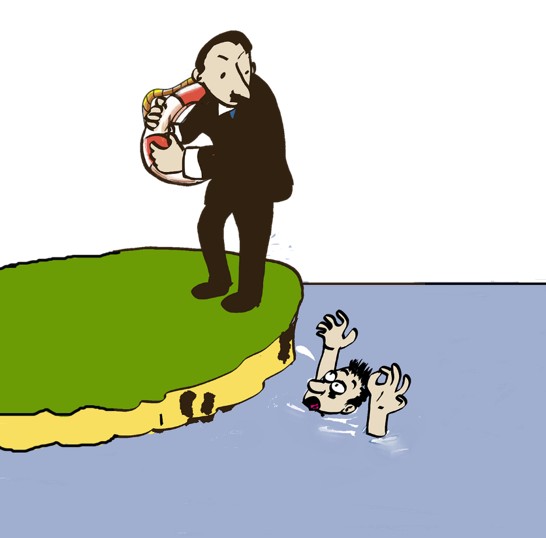
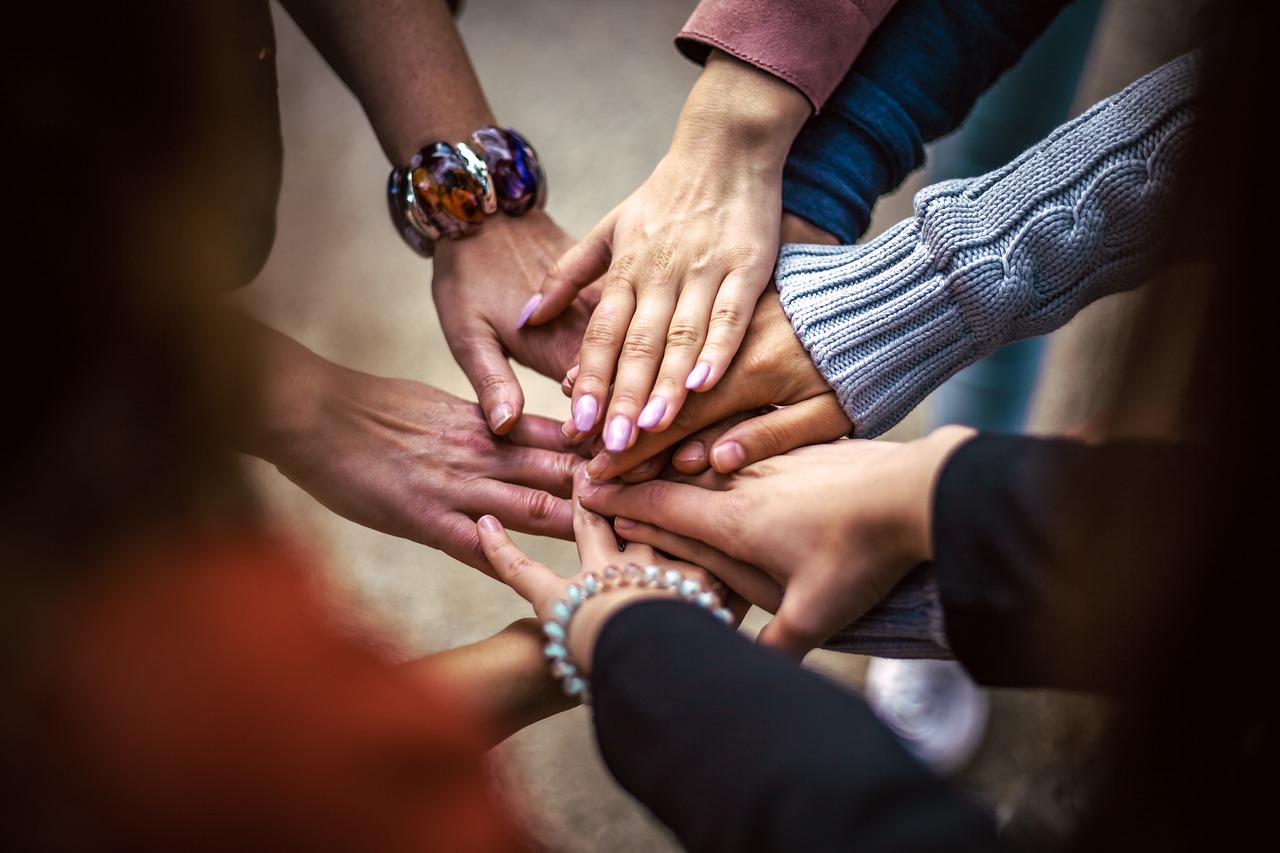
You don’t have to know someone to know what hunger is, what illness is, how frightening homelessness is. To offer a hand, to advocate for others, to stand up for justice for all. At the personal level, at the societal level, at the global level, we MUST take care of one another.

The Value of What Came Before

When the server—a young woman in her mid-20s—comes to take our order, I ask if she knows the film. She scrutinizes the action on the TV screen and shakes her head. Never heard of it. I give it a strong recommendation. It may be camp, but it’s first-rate camp and it was nominated for five Academy Awards.

This exchange got me thinking about the increasing transience of culture and knowledge. How what’s happening in the ever-changing nanosecond fills and floods our attention to the exclusion of everything that came before.  

The Seduction of Now

It’s very seductive to think of the past as something finished. Over. That it has no connection or relevance to who we are now or where we’re headed. That we can re-invent ourselves at will, without a backward glance, and no price to pay.

Our high-tech world, with its rapid flow of new, disposable “product” and seemingly endless streams of “content” not only encourages this attitude, but practically demands it. When something “brand new” happens every 15 minutes, our attention is sorely taxed just scrambling to keep up. Who has time to reflect? To make connections? 

Though each of us has a personal life that begins with our birth and ends with our death, we’re also part of a much larger world with a long and complicated past that affects our little blip on the timeline.     

Okay, no one is going to argue that Whatever Happened to Baby Jane is a force to deepen one’s understanding of the world. But an existence composed solely of what’s-happening-now leaves us with no compass to steer by, no yardstick for comparison on serious, larger-than-our-lifetime issues—say, global warming or the worldwide resurgence of nationalist movements. Without an understanding of what “went before,” we might not even realize it is a resurgence. That the current global trend toward nationalism has roots in the European fascist movements of the 1930s and the Jim Crow laws of the American South—the latter going back to the Civil War and that defender of slavery, John C. Calhoun. That nationalism itself is not without links to the European conquerors of Columbus’s “new world.” All of it a shorthand for the belief that some people are created more equal than others. That some people don’t even have the right to exist.

Without a sense of how today’s headlines fit in along the timeline of human history, we’re left vulnerable to all who would prey on that ignorance. And they are out there.

In a State of Disconnect: Clueless about History

A quick survey of polls targeting common misconceptions (and just plain ignorance) about history makes for fascinating—if frightening—reading.

A 2006 poll by the now defunct McCormick Tribune Freedom Museum found that one in five Americans could name all five Simpson cartoon family members, but only one in a thousand people could identify all five First Amendment freedoms.

 A 2012 ACTA survey revealed that fewer than 20% of college graduates could correctly identify the effect of the Emancipation Proclamation.

A 2010 survey, cited by The Atlantic, reported more Americans knew that Michael Jackson composed “Beat It” than knew that the Bill of Rights is a body of amendments to the Constitution. And one in three did not know that the Bill of Rights guarantees the right to a trial by jury.

Fifty percent of Americans surveyed also suffer severe timeline confusion. They identified the American Revolution as happening after either the Civil War or the War of 1812. And more than a third had no clue at all in which century the American Revolution occurred. One can only hope continued sell-out performances of Hamilton will provide some hints.

In light of the video that went viral this summer—a man harassing a woman for wearing a shirt with the flag of Puerto Rico (“You should not be wearing that in the United States of America!” he shouted repeatedly.)—it’s worth noting that a 2017 poll revealed almost half of Americans don’t know that the people of Puerto Rico are United States citizens.

Perhaps the most shocking—and saddening—statistic I came across was cited on NPR’s All Things Considered: Forty percent of Americans cannot identify what Auschwitz was. In fact, fewer than half of Americans know that Hitler did not take control of Germany by force, but was democratically elected. We’ll return to this later.

Why Does This Matter? Why Should We Care?

Not knowing what came before, as I said, renders us prey to spin doctors, Russian hackers, unscrupulous politicians, and hucksters of every stripe.   

“I watched when the World Trade Center came tumbling down,” said then-presidential candidate Trump at a 2015 Birmingham rally. “And I watched in Jersey City, New Jersey, where thousands and thousands of [Muslims] were cheering as that building was coming down. Thousands of people were cheering.”

Trump stirred up a lot of anti-immigrant feeling with these words, sowing the seeds of support for his notorious Muslim Ban, but politifact.com gave him a “Pants on Fire” rating for that speech. That’s code for one big fat whopper.

PolitiFact cites a September 17, 2001 Associated Press report that debunked “rumors of rooftop celebrations of the attack by Muslims” in Jersey City. And wildfire rumors of Muslim-Americans cheering the fall of the World Trade Center in Paterson, N.J., turned out to be a nasty lie spawned by chain e-mails and fanned by shock jock Howard Stern.  

The historical truth? Muslim residents of Paterson mounted a banner in that city saying “The Muslim Community Does Not Support Terrorism.”

Trump sold his tax cuts for the rich by promising American workers that, with more money in their boss’s pocket, they would benefit from increased wages and bonuses. It was gonna be “beeeeautiful.”

If there’s one thing we should be wise to by this point, it’s the bald-faced lie of trickle-down economics—that when you let the rich keep all their money, out of gratitude they will pass pots of it along to the peons who made them rich in the first place. William Jennings Bryan, a three-time Democratic presidential candidate, exposed the nonsense of trickle-down more than a hundred years ago in his Cross of Gold speech:

There are two ideas of government. There are those who believe that if you just legislate to make the well-to-do prosperous, that their prosperity will leak through to those below. The Democratic idea has been that if you legislate to make the masses prosperous their prosperity will find its way up and through every class that rests upon it.

The term “trickle-down economics” was coined by American humorist and commentator Will Rogers to ridicule President Hoover’s dismal stimulus efforts to cure a Great Depression many economists feel he played a large hand in creating. Hoover, a cheerleader for “rugged individualism,” believed that only the voluntary action of “socially responsible capitalist leaders” (know any?), not government intervention, would restore economic order. 

Trickle-down economics failed in the close of the 19th century. It failed in the Great Depression. It failed in the massive tax cuts to the rich known as “Reaganomics” that started an almost 30-year slide into the financial crash of 2008. And it is failing under Trump. A 2018 analysis of Fortune 500 companies reveals that fewer than five percent of workers will get a one-time bonus or wage increase from the Trump tax cuts. If they still have a job. AT&T and General Motors both cut 1,500 jobs. Kimberly-Clark dumped 5,000 workers. It seems that most companies poured virtually all of their tax-break money into stock buybacks, making the richest folks even richer.

Trickle-down economics does one thing and one thing only: It robs from the poor and middle classes, and gives to the rich.

Recently, I read a piece (sorry, I didn’t copy the link) where psychologists discussed how people tend to mentally catalog only those things they perceive as affecting them directly. For example, if you’re not a union member—a teacher, a nurse, an auto worker—you might think that current efforts to cripple or destroy unions have little to do with you. “Right to work” laws, attacks on overtime pay. But you’d be wrong.

History shows that the advantages labor unions have fought for and won (starting with the right to unionize) have generally benefitted all American workers. Before there were unions, many people worked six, even seven days a week for an average workweek of 61 hours. It was the unions, waging massive (and sometimes bloody) strikes in the late 19th/early 20th centuries that brought us the 8-hour day and the weekend. A half-century of struggle culminated in the passage of the Fair Labor Standards Act of 1938. 

When unions are strong, the middle class tends to flourish. When they are weakened, as happened under Trump [2016-2020], income inequality increases for all workers and the purchasing power of the middle and poor classes shrinks. A lot. Benefits disappear, too.

Speaking of benefits, it was the rise of unions in the 1930s and 1940s that we have to thank for employer-sponsored health insurance. When unions used their numerical clout to negotiate health care for their members, many other employers scrambled to stay competitive by offering the same.  By 1950, a majority of employers offered some type of health insurance to their workers. With the current two-pronged effort of the GOP to weaken unions and sabotage the ACA, the future of employer-sponsored healthcare is something to keep on your radar.

In its first national convention (1881), the American Federation of Labor started the ball rolling to end child labor. State after state responded to this call until the 1938 Fair Labor Standards Act abolished child labor nationwide. [UPDATE: Since this post first appeared, more than 60 bills to weaken child labor protections have been proposed in 29 states and enacted in thirteen.]   

If you don’t know the Bill of Rights guarantees you a trial by jury in serious civil cases as well as criminal cases—and inhibits the court from overturning a jury’s finding in the former—you might be bulldozed by your adversary into waiving your right to a jury trial in exchange for one heard (and ruled on) solely by a judge. This is increasingly a power tactic of corporations who feel juries tend to be sympathetic to individuals claiming damage or loss rather than to the big companies alleged to have screwed them.

It’s easy to take from people what they don’t know is theirs. Remember those 999 people out of 1,000 who could not name the five freedoms guaranteed in the First Amendment? They are at risk for believing the current propaganda that a press who criticizes the president is un-American. They may fear to speak out because some politician with an agenda says protesting government actions is “illegal.”

Well, here they are, the five freedoms guaranteed to all Americans under the First Amendment to the Constitution (at the very top of the Bill of Rights):

Congress shall make no law respecting an establishment of religion, or prohibiting the free exercise thereof; or abridging the freedom of speech, or of the press, or the right of the people peaceably to assemble, and to petition the Government for a redress of grievances.

We are allowed to holler with all our might against those who would violate or destroy our democracy. And we should.

Recently, a guest on MSNBC’s All In with Chris Hayes said of the current fight against widespread attacks on voting rights, “The Civil Rights Movement continues. It is eternal.”

Ditto the fight against fascism. Fascism did not end with the surrender of the Nazis any more than white supremacy died with Abraham Lincoln’s signature on the Emancipation Proclamation or the passage of the 13th Amendment.  

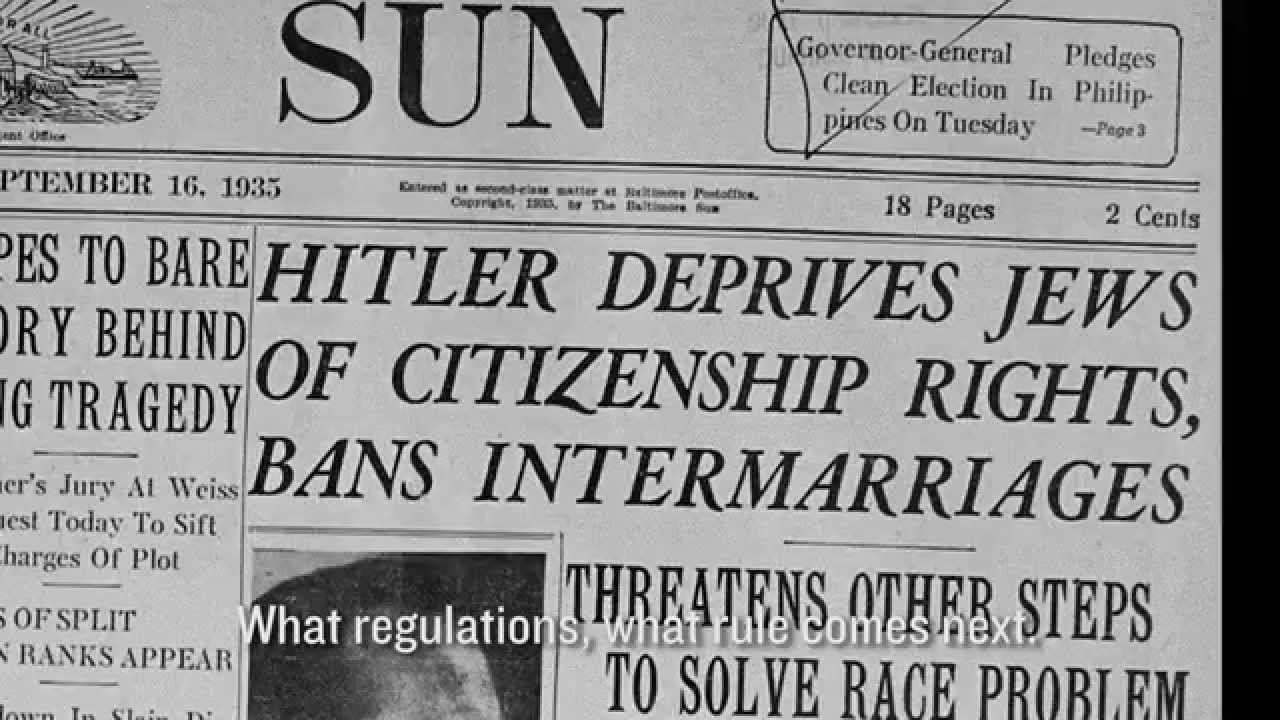
I mentioned up-top a poll that found fewer than half of Americans know that Hitler did not take control of Germany by force, but was democratically elected. As Emory University history professor, Deborah Lipstadt, explains: “The Nazis didn’t come into office on January 30, 1933, and decide on a genocide the next day. They slowly broke down a democracy. They destroyed it.”

She goes on to cite the “steady drumbeat of attacks” that began under Hitler. “First on the press, then on the courts, then on institutions, [the] slow takeover of institutions.”

Sound familiar?

Connecting the Dots 

To have a solid grasp of what came before is to have a richer understanding of what we’re seeing now. A guide to sift truth from lies. A way to answer the always-pertinent question: From whose viewpoint is this coming and what do they stand to gain by pushing this particular agenda? Instead of bouncing from tweet to tweet, history gives us a telescopic lens to pinpoint the connections. And it cannot be said enough: Everything is connected.

The films and books, the music and paintings and theatre of the past have messages for us, too. Not perhaps the kitschy romp of Whatever Happened to Baby Jane? But there is much worth our attention in the dusty archives of film, the overflowing shelves of the library, in Shakespeare’s plays and John Donne’s poetry. 

One book that Americans are rediscovering is a little dystopian novel, 1984.

Written 68 years ago by English author George Orwell, it’s been flying off the shelves, as they say, topping the best-seller list at Amazon in January 2017—after Kellyanne Conway coined the term “alternative facts” to justify Trump’s complete fabrication about the size of his inaugural crowd.

I will close with a paragraph from an article[LINK] written by Adam Gopnik for The New Yorker in 2017, “Orwell’s 1984 and Trump’s America”:

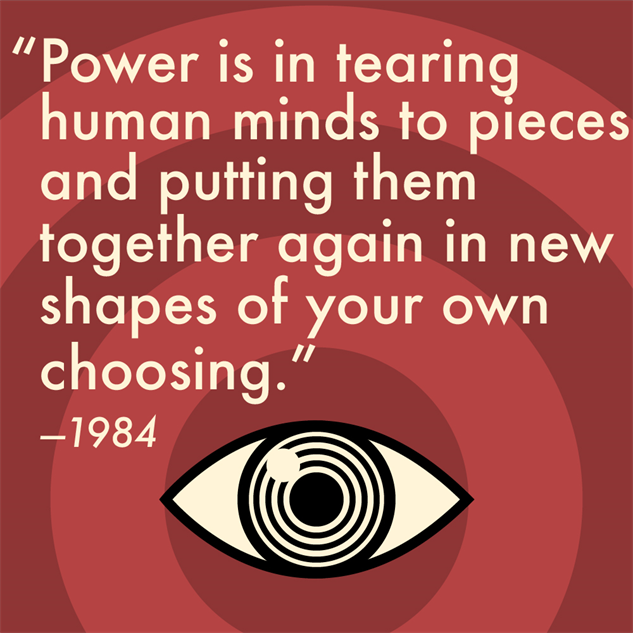
“And so, rereading Orwell, one is reminded of what Orwell got right about this kind of brute authoritarianism—and that was essentially that it rests on lies told so often, and so repeatedly, that fighting the lie becomes not simply more dangerous but more exhausting than repeating it. Orwell saw, to his credit, that the act of falsifying reality is only secondarily a way of changing perceptions. It is, above all, a way of asserting power.”

To know what came before is a great gift. It is also a warning.

Don’t Leave Happiness to Chance

In response to my December blog Keep Walking, long-time reader and fellow blogger Neil replied: Excellent essay. We should fight the good fight with our heads held high. And, simultaneously, we should enjoy life as much as possible too. It was as if he’d read my outline for this month’s post.

For many reasons, 2024 was a challenging year, both personally and politically. I’m generally a positive, happy, upbeat person, but in 2024, too many mornings began with shower musings that were dark and fretful. No way to start a day. Or live a life. So I’ve been making a list on “Keep Notes” (marvelous feature of smartphones!) of what I want to zero in on this coming year—activities that give me joy, that maintain physical health, that in some way make the world a better, safer place for all of us. I don’t want to leave happiness to chance—when I “have time.” In my experience, we never have time. We must make time. Give the activities that bring us the highest satisfaction top priority.   

Couch Potatoes No More!

First of all, if we want to enjoy life and have energy for the good fight, we’ve got to get up out of our chairs, get away from the funk, and start moving forward. It’s amazing how energized you can feel by simply taking a brisk stroll around your hood. Got cooking duty tonight? Put on some vinyl, a CD, or Spotify and bop to the beat as you sauté, roast, or grill. I find dancing around my kitchen makes any chore lighter and happier. Feeling “sporty?” Shoot some hoops at your local playground, rollerblade through the park, or bike the backroads of your town. This last is one of my favorites—the tranquility of riding through cornfields under blue skies, the breeze sifting my hair. Heaven! Wintry where you are right now? Many communities offer salsa and swing dance classes. If you already have a partner, great, but don’t hang back because you’re solo. Lots of people take these classes and instructors make sure everyone is paired. So, groove to the music and dance the night away! Or grab a friend and go bowling. Ed and I go with my kids each year during the holidays. We all suck and we all have a great time.    

Won’t You Be My Neighbor?

Speaking of friends, one giant step to a better, happier world is connecting with other people. And the best place to begin is right where you live. According to a 2018 Pew Research Center survey, only 26% of Americans said they know most of their neighbors.          

So, get to know your neighbors if you don’t already. Throw an informal party on your lawn. You provide the drinks and the space, your neighbors bring their own deck chairs and a snack or dish to share. This is how I’ve met most of the folks in my hood. We now get together seven or eight times a year and keep in frequent touch between celebrations.

Knowing your neighbors can be a great source of strength, joy, and mutual assistance. Over the years, not only have we partied together, we have fed each other’s pets, watered plants and collected the mail of neighbors on vacation. We’ve prepared meals for the families of several neighbors after they underwent major surgery. As I take my daily walk, it’s a rare day I don’t see one or more of my neighbors out raking or gardening or reading on their porch and pause to enjoy a brief chat. Community—it’s a good feeling.    

If Not Now, When?

We’ve all got ‘em—projects we’d like to undertake, new skills we’d love to acquire whether for our own pleasure or to make a career move, possibly into an entirely different field. But we’ve put off trying/starting/doing because we’re not sure how it will pan out, or the thing we want to do seems so vast, how will we ever carve out the time between the laundry and the cooking and the yardwork, all those daily repetitive tasks that eat up the clock?

If the things that would bring more joy to your life keep getting shifted to next week, next month, next year, I suggest taking a cue from that timeless Nike slogan and Just do it! Dive in. Take a leap. If something didn’t work out before, try again or try differently.  

As a writer, I can tell you writing is the fun part. It’s getting the finished works out there that demands so much time, so much research, new skills. I submitted my first novel in what would prove to be the dying days of the traditional publishing industry, when there were houses galore and you sent your manuscript over the transom to be read by a real editor who brought his or her favorites to a company meeting and campaigned for the author. Long story short, those many publishers have been absorbed in the U.S. by the “Big Five.” To get a publisher now, you must first get an agent. To get an agent, you must develop a query letter, a synopsis of your book, an outline. And even if you are in the 1%-2% who land an agent, that’s no guarantee your book will find a home.

Alternatives include indy houses which may or may not charge you part of the cost of publishing, and you will definitely be handling all the marketing (lots of time); self-publishing where you will front all the costs including cover art and spend most of your valuable writing time finding avenues—a blog, for instance—to get your name out there. Or you can try to build a huge readership for your blog and market your book(s) to them, as Andy Weir did so successfully in 2011 with his book The Martian. Crown Publishing Group took notice of this and published the novel in 2014. Within weeks, a movie deal was signed. The film was nominated for seven Academy Awards in 2016.      

For too long, I’ve been going in circles, so I’m making 2025 the year I map Plans A, B, and C—including the skills/actions I need to acquire/take for each—and just start DOING. Because, seriously, there’s nothing to lose.

What would you like to change, learn, do

Get Out of Dodge Now and Again   

A Grand Tour via a luxury liner is not required to rejuvenate the spirit. Instead, you can explore the art galleries and museums of a city within driving/train/bus distance. Attend a concert of whatever music turns you on be it Mozart, Taylor Swift, or contemporary jazz sensation, Masego. I’m a Rock & Roll girl, but an evening on the lawn at Tanglewood, listening to Mozart, Beethoven, Tchaikovsky, played by the virtuoso violinists and pianists of our time—the starry night overhead, picnic hamper and a bottle of wine at hand—is moving, healing, a deep and profound joy. Ed and I also love to drive up to Brattleboro, Vermont or Portsmouth, New Hampshire and make a day of browsing bookshops for new and used reads. And don’t overlook the restorative power of the great outdoors. One of my favorite places to wander is the Quabbin Reservoir, a one-hour drive from my house. I could roam this 25,000-acre preserve forever, under a sky so vast, it provides much-needed perspective about the universe and our humble place in it.  

The People United Will Never Be Defeated

Echoing blogger-friend Neil’s words uptop—We should fight the good fight with our heads held high—I believe one of the most important actions we can undertake in this new year is to join our like-minded fellow beings and work together for the survival of our democracy and the planet. As then-Senator Obama stressed in his 2008 presidential campaign speech: “Change will not come if we wait for some other person, or some other time. We are the ones we’ve been waiting for. We are the change that we seek.”  

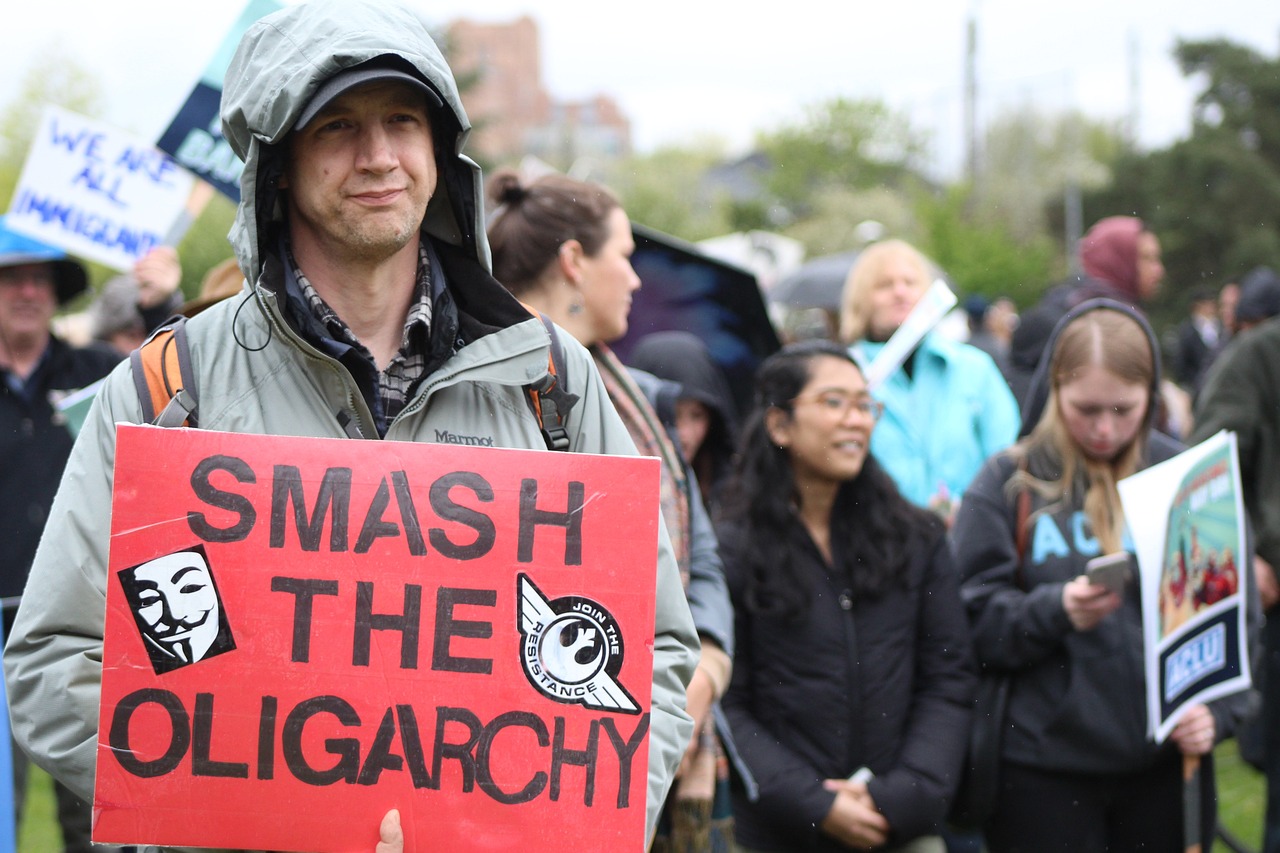
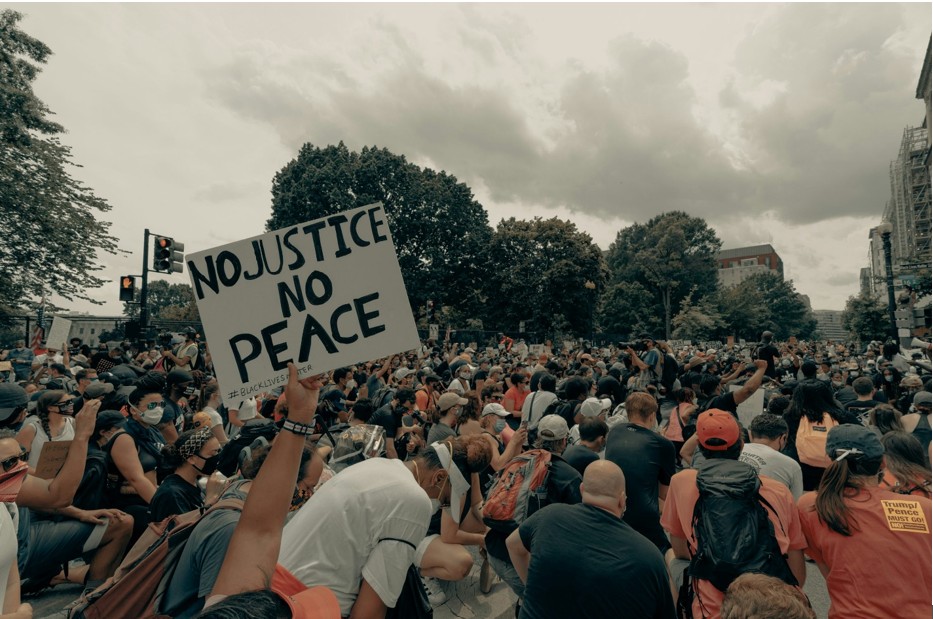
If you’re in a sizeable city, you may already know of or belong to a local organization fighting for our freedoms and our environment. But if you live outside a metropolitan area or you’re not sure which org or orgs you’d like to dedicate some time and energy to, just click on https://www.democracy2025.org/ and scroll down to where you see This is the united frontline in the fight for our democracy. There you’ll find a rolling tape of more than 280 organizations who have joined together to preventour democracy/planet from being trashed and stolen by the greedy billionaires and their fascist buddies. Choose one and get involved—letter writing, phone-banking, registering voters, marching.

As someone who grew up in the Civil Rights era and came of age protesting the Viet Nam War, I can attest to the truth that fighting alongside others for what you hold dear is one of the most satisfying, uplifting experiences you will ever have.

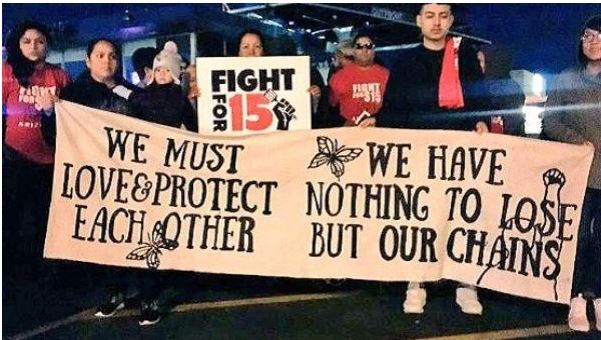
The bottom line: No one is coming to save us. We must save ourselves. And together, WE CAN.

Get a Life!

As I said, I’m a writer. Shaping plots, creating characters, taking them through whatever transformational journey is theirs to travel—that’s what I love doing. Fighting for our country, our world—that gives me hope and strength. So what if the patches on the walls (recent repairs to “plaster fatigue” in an 1895 house) that need priming and painting go bare a week, a month, a season longer. Does it really matter? If I’m devoting my energies to that which makes me happiest—writing, and that which gives me hope—banding together with others to save our freedoms, then in my book, that’s a life well-lived. I mean, in the final moments, who reflects on their life and regrets that the hallway suffered unpainted patches for several months? At the end of the road, it’s not the chores delayed or left undone we regret, but the myriad hours spent on things that didn’t really matter. The time lost to not doing what we loved most. What made us feel alive. So, here’s to truly living in 2025!

Keep Walking

The only journey is the one within  (Rainer Maria Rilke)

December, the holidays—whatever one celebrates: Hanukkah, Christmas, Kwanzaa, Bodhi Day, the Solstice—are traditionally a time of peace, family, friends, joy, generosity, and hope. We count on this. We expect it to be so. Which makes the tremendous uncertainty of the present—the fears for the future of our democracy, our freedoms, our planet—all the more stressful. We humans struggle with uncertainty and yet, in truth, that’s all we ever have. So, how do we stay strong and be joyful in the face of the unknown? I wrote this post in 2017. In it, I share one philosopher’s wisdom that has guided me through the darkest moments. I hope it will prove a source of comfort and strength for you as well:

In the interest of full disclosure, I’ll state upfront that I have often—half jokingly, half seriously—referred to life as a minefield. Running, running down the days, the years, in pursuit of life, liberty, and happiness. All the while, one eye out for those pesky tripwires, ducking, dodging the myriad hazards until I land on the one that blows me sky high, game over. An event, hopefully, far off in the misty future.

This is not as dark a characterization as it may sound. I would describe myself as a happy person. I have a major sense of whimsy. Love to laugh, love to joke. The minefield thing is more of a heads-up approach to the great unknown that greets us each morning. And the near-miss can be quite exhilarating, just as I imagine it is on a real battlefield.  Ha-ha, dodged that one! There’s a sense of inner strength. The ability to endure.

But what happens when we encounter one landmine after another—family illness, natural disasters, a precipitous drop in circumstances, a nutso president and his arsenal of threats? The constant state of high alert wears us out. When will there be good news? Can we make it to a place where we can draw a free breath?

Wisdom Through the Ages

As any trawl through Twitter will attest, most of us seem to have a need for guideposts. A map through the minefield, or at least a large supply of encouraging words.

Sometimes this encouragement wears a stiff upper lip:

F.E.A.R. has two meanings:

Forget Everything And Run

OR

Face Everything And Rise

The choice is yours.

(Andrea Shea/WBUR)

Sometimes, it appears as a balm to a wounded heart:

One small crack doesn’t mean that you are broken;

it means that you were put to the test and you didn’t fall apart. (Linda Poindexter)

Thomas Jefferson, in his famous “10 Rules of Life” suggested (Rule #9) that we Take things always by their smooth handle,

while Winston Churchill cut straight to the chase: If you’re going through hell, keep going.

Perhaps the most famous example of such words of wisdom—WOWs, we’ll call them—is the “Serenity Prayer,” written by theologian Reinhold Niebuhr, and made famous by Alcoholics Anonymous:

God, grant me the serenity to accept the things I cannot change,

Courage to change the things I can,

And wisdom to know the difference.

Sufi Poets, Hedgehogs, and Anxiety

My personal WOW comes from Jalal ad-Din Muhammad Rumi, the 13th-century Persian Muslim poet, scholar, and Sufi master. Rumi’s writing are beloved the world over. A 2014 BBC story hailed Rumi as America’s bestselling poet. That’s a longer run than Shakespeare can boast.

So what does some Sufi dude born in 1207 know about life in the 21st century? How does a poet who lived before the invention of the printing press speak to us who navigate the digital age?

Up top, I spoke of life as a trip through a minefield, always ducking and dodging as we race toward the hazy future. But, it’s more often a confused slog of uncertainty (as opposed to outright catastrophe), and uncertainty makes us anxious. Faced with a disaster, we tend to deliver: roll up our sleeves and get to work. Uncertainty, on the other hand, can paralyze. Like a hedgehog, we curl up in a ball and wait for clarity to strike. Or we stumble about, unfocused, grasping wildly at every straw.

And Rumi absolutely got this. You don’t need to be born in the age of the iPhone X to recognize our need to believe we run the show. Our craving to have control over our lives. It’s the most basic of all human tendencies. And yet, of course, we don’t. The folks in Puerto Rico couldn’t turn Hurricane Maria away from their shores. The concert-goers at the Route 91 Harvest Festival in Las Vegas couldn’t vanquish the bullets of a madman’s bump-stocked semi-automatic rifle.

Something Approaching Grace

So somewhere in my wanderings, I came across this verse from Rumi, typed it up in 24-point bold, and taped it to the bookcase by my desk:

Keep walking, though there’s no place to get to.

Don’t try to see through the distances,

That’s not for human beings. Move within,

But don’t move the way fear makes you move.

When the weight of uncertainty threatens to sink me, these lines tease my brain to look beyond the moment, to consider something outside my flailing angst. For almost two decades, I have sifted Rumi’s words for a way I can live with “what is” with something approaching grace. I’m still pondering, still learning. This is merely my interim report. What I’ve gleaned so far.

Keep walking, though there’s no place to get to.

We are creatures of ambition. We love to make plans, set goals, imagine ourselves moving smoothly from success to success. We crave “places to get to.” It is hard, hard, hard for us to move forward without these destinations to propel us. Like a person wandering the desert, plans and goals are the oasis we thirst for, a mirage always on the horizon, just over the next hill. We may get there, but rarely the way we imagine. And if we do, the reality of the mirage may be quite different to what we fantasized. As John Lennon said, Life is what happens to you while you’re busy making other plans. 

It’s not that plans and goals are bad or futile, but we need to recognize two things: 1) We create them. Our pictures of dazzling accomplishments and ideal lifestyles are self-imposed, the children of our own brain—they have no mandate in the natural world; 2) They can go south at any moment and often do.

If our happiness, our very ability to function, depends on getting into an Ivy League school, making partner at the law firm, or having our novel published by one of the “Big Five,” we make ourselves vulnerable to the vagaries of life. Ask anyone in Puerto Rico or the Virgin Islands. One day, you’re making breakfast, going to work, dreaming of the new motor scooter business you’re going to start this winter, just in time for tourist season, and the next day you’re homeless, stumbling about your hurricane-wrecked island, searching for drinkable water.

Rumi says keep walking. Walking is life.

Don’t try to see through the distances,

That’s not for human beings.

But we do try, over and over. We want to know what lies ahead. We want to shore up against any and all disappointments, disasters. We have no say about the circumstances of our birth, nor (discounting suicide) the hour of our death, so we scramble like hell between these endpoints to foresee the future, and prepare.

I don’t read this as we should do nothing with the knowledge we have at hand. Rather we do today what we can do, and let neither our hopes blind us to reality nor our fears cripple us. We join a campaign to get our town to commit to renewable energy. We donate to a legal fund to defend Dreamers. We write the next chapter of our novel. We study for the exam. The outcomes are unknowable. We can only act in the moment.

If you read this blog regularly, you know I’m a big fan of history, partly because I simply love stories, and partly because I want to understand the patterns of human behavior. Over the years, two key things have emerged for me:

1) Everything you have, including your life, can be taken from you at any moment. Think Nazis. Think ICE. Boko Haram or Czar Nicholas II. There are no guarantees, no talismans. The trick is to somehow acknowledge this truth while living each day with joy and generosity and hope. That is grace.

2) We tend to focus on the threats all around us. Survival instinct, no doubt. What we fail to see, cannot see in fact, is the thing that may happen to throw a monkey wrench into what looks like doom. The discovery of a vaccine for polio. The tiny island of Britain shutting down Hitler’s voracious advance, alone, for two years until America joined the fight. And there are people out there right now inventing plant-based plastics that won’t damage the environment, and high-tech sieves to render ocean water drinkable.

There is as much hope as threat in what we cannot yet see.

Move within,

But don’t move the way fear makes you move.

 Ah, this is the one I puzzle over most. I get the “don’t move the way fear makes you move.” Don’t delete your manuscript because 20 agents turned down your novel. Wake up tomorrow and query Agent #21, and if no one bites, ever, keep writing because it’s what you love. Don’t abandon fighting for a more humane and cooperative world because white nationalism is showing its ugly face across the planet and Trump is in the White House. Make phone calls to defend Dreamers. Raise your voice in Town Halls for diplomacy, not war. Bring a sick neighbor a meal. Give a stranger a genuine smile.

Okay, I get that. But what does it mean to “move within?” Within the limits of the day at hand?

Gandhi  said: “I do not want to foresee the future. I am concerned with taking care of the present. God has given me no control over the moment following.” Taking care of the present is good. It’s all we ever live, really.

Move within the confines of our own head? Change the perceptions that color how we view the world. The assumptions that drive our actions.

How would the quality of our life be different if we saw our mistakes not as failures but as practical wisdom gained? If we viewed setbacks not as insurmountable roadblocks but as opportunities to explore new and different paths?

What if we were to relish the journey of this day rather than tizzy over some imagined endgame?

To Look On Tempests

Searching these deceptively scant lines for Rumi’s meaning, meditating on his many subtle layers, has been comforting, energizing, life-affirming. Heeding it has been much harder. I still exist on the far side of grace, that state in which I can face the truth of each moment without panic, without despair. To look on tempests, as Will Shakespeare said, and remain unshaken.

To keep walking. Whatever.

In The Face of Hate, Love Is A Powerful Weapon

“If we withdraw into our grief and abandon those most threatened by Trump’s win, history will never forgive us.” (D.D. Guttenplan, “Welcome To The Fight”, The Nation, Nov. 10, 2016)

[NOTE: This post first appeared in November 2016. It never occurred to me, especially in the wake of the 2020 elections, that I would ever need to run it again, but since my November 2024 post was a cri de coeur to VOTE, VOTE, VOTE for DEMOCRACY, now that that dream is past, I want to make the case once more that our love–for democracy, for the planet and for justice for all its people–is our most powerful weapon in fighting fascism.] 

The truly crap thing about waking up to find yourself in a nation where hatred and fear carried the election is that it’s hard not to hate those whose oxymoronic hearts are fueled by hate. Hatred towards Blacks, Latinx, women, LGBTQ folks, indigenous peoples, Muslims, Jews, intellectuals, climate scientists, and Syrian refugees. My apologies to anyone I inadvertently left out here, but my list makes its point: The road of hate is slippery. You start out hating one group of people, and you wind up hating most of humanity. Your heart grows harder. Your dissatisfactions multiply. The world takes on an ugly face. A mirror perhaps.

I stayed with MSNBC on election night through all the hours as optimism turned to cautious hope, as hope grasped at every possible straw, as the straws disappeared and the outcome became a grim certainty, right up until Hillary conceded in the early morning of November 9. I stayed because, as Emily Dickinson wrote:

“Hope” is the thing with feathers – 

That perches in the soul – 

And sings the tune without the words – 

And never stops – at all – 

I usually devote my mornings to writing, but when I awoke after three hours sleep on that post-election day, I crawled to my computer and, fueled by black coffee, did the only thing I could manage: Look for a balm for my broken heart. Something to get me through the next 24 hours, and the four years beyond that.

AP Photo/Carla K. Johnson) sandiegouniontribune.com

And I found it in the goodness of all the people out there whose hearts, even when outraged and hurting, do not harbor hate. I share here excerpts from two of those messages:

“Let’s get all these words out of the way: Devastated. Angry. Heartbroken. Outraged. Shocked. Sad. Disgusted. Ashamed. Discouraged. Exhausted. Shattered.

And now four more words — the most important ones: THESE. DOORS. STAY. OPEN.

… It’s up to us to keep fighting to protect Planned Parenthood health centers, so they can continue to serve the people who rely on them — people who come from communities that need our continued support in this new reality — immigrants, people of color, the LGBTQ community, people of faith, and more …

[These] doors will stay open because our voices get louder. Our determination grows stronger. And our commitment to protecting the rights and health care of millions of people is unwavering.

Whatever you’re feeling today, know that there are millions of us who feel the same way — and we aren’t going anywhere. I’m holding on tight to that truth this morning as I think about what comes next. It is so good to know we can count on each other, especially now.” (Planned Parenthood)

“Tragically, Donald J. Trump is the president-elect of the United States…  As we watched state after state turn red, we could not escape the realization that the country was taking a sharp turn for the worst.

To be clear, we’re under attack and we’re scared for our families and loved ones …

The stakes have never been higher. We have work to do and we need to be powerful enough to organize and refuse to support Trump’s regime and its heinous agenda …

London protests over shooting of American black teenager Michael Brown dailymail.co.uk

In the face of a government that will force deportations, engage in rabid sexism, cultivate overt appeals to white nationalism and enforce brutal crackdowns on protesters, we have a duty and responsibility to act, to build, and to resist hate, fear, and violence.” (Presente Action)

Fighting Hate With Love

As a force in the world, I’m not certain love is stronger than hate. But it certainly is healthier. Hate maims, kills, sucks all the oxygen from our lives, from the planet. Love creates, rejuvenates, breathes life, breeds joy and connection. In the face of the fight ahead, we will need great quantities of love to fuel our efforts. Without love, how can we fight for a more loving world? Hate robs us of our humanity. Without our humanity, how can we build a more humane society? The signature of love is social justice. The signature of hate is revenge. I want to fight hate with all the love in my heart.

And when enough of us do that together, love will trump hate.

Where Does Anger Fit Into This?
no-trump-no-dapl-north-dakota-protest1

I’m ANGRY. Angry that so many of my fellow citizens voted for a man endorsed by white supremacists; a man who has vowed to ignore our commitments to the Paris Agreement dealing with climate change, who would let our beautiful planet, with its abundant life, rot so that fossil fuel billionaires can bank more billions; a sexual predator who thinks of women as toys to be used and discarded, and LGBTQ people as “abominations”; a man who has … well, the list goes on and on with every nightmare scenario imaginable for both domestic and foreign policy.

But anger is an emotion, in the abstract neither good nor bad and with the potential to be either. All the reports say Trump’s supporters were angry, angry, angry. But instead of channeling that anger into positive action for a better world, they let it rankle inside. Become something toxic. Become the hatred and distrust of everyone “else.” That’s what unfocused anger becomes: hatred.

To be constructive, anger must fuel positive action. Personally, I don’t have the time or energy to spend hating the people who would destroy this planet, deport my friends, steal my children’s future. Better to take the love I have for my fellow human beings, the animals, our world, and this life—and let that love direct my anger in fighting the people and policies that would harm them. There were many messages, like this one, in my Inbox on November 9, reminding me that love is a powerful force:

no-trump-mgid-ao-image-mtv

“Our editor-in-chief, Clara Jeffery, wrote an essay last night (because none of us could sleep anyway). She explained:

“There is no time, no room, no space to do anything but push back against what, in large part, this will turn out to be: not just a protest vote by rural whites who feel left behind, but the coming out of a burgeoning while nationalist, authoritarian movement …  Trump appealed to America’s worst impulses. Now it’s on the rest of us to show, to prove, that this is not all that America is. This is a time when we’re called on to do things we may not have done before. To face down bigotry and hate, and to reach beyond our Facebook feeds in trying to do so.” (Mother Jones)

Scary Times: Handling the Fear

I’m not trying to be clever when I say fear is a terrifying feeling. Most of us will go a long ways around a situation to avoid tangling with our fears. But fear doesn’t vanish because we keep our head down. Fears multiply in silence and inaction. We have to adopt the attitude of the main character in the Dr. Seuss story I Had Trouble in Getting to Solla Sollew. After a long, difficult journey seeking a way to avoid trouble in life, he realizes there is no magical trouble-free place:

Then I started back home

To the Valley of Vung.

I know I’ll have troubles.

I’ll, maybe, get stung.

I’ll always have troubles.

I’ll, maybe, get bit

By the Green-Headed Quail

On the place where I sit.

But I’ve bought a big bat.

I’m all ready, you see.

Now my troubles are going

To have troubles with me!

UNSUB Global hands-600497_960_720

A Trump presidency scares many of us, but we are the only ones who can stem the tide of assaults on our democracy and the world. As this message from Grassroots International reminds us, U.S. policy reverberates globally:

“As a global funder and advocacy organization, Grassroots International knows all too well that the damages of US policies and practices does not stop at our borders. In fact, some of the worst aspects of US policy play out regularly in the lives of our partners around the world.

  • Social movements in Brazil are currently engaged in their own struggle against right-wing forces, installed by an institutional coup.
  • Haitian peasants continue to organize to create alternative economies and new solutions in the face of predatory international practices and climate crisis …
  • Palestinians continue to live under a siege funded heavily by US aid.
  • Everywhere, communities face the ravages of climate change while the US refuses to address its root causes.

As we try to figure out what the election means for us in the US, let’s remember that we are part of a much larger community on this one planet.” (Grassroots International)

You Are Not Alone

The good news is none of us has to face these fears or wage the struggle alone. In the many e-mails I received the morning after the election, this was the common thread: We will fight for a better world together.

One of my favorite messages came from the ACLU:

(AP Photo/Ted S. Warren) huffingtonpost.com

“If President-elect Trump tries to make his unlawful and unconstitutional campaign promises into policy, we’ll see him in court. He’ll have to face the full force of the ACLU – all of our lawyers and advocates in every state.

And he’ll have to answer to you—the millions of action-takers, activists, and card-carrying members leading the fight for rights and liberties for all. Together, we’ll fight for women, for people of color, for the LGBT community, for immigrants – for everyone in this country.” (ACLU)

POW! BAM! You gotta love those guys!

Heed History
no-trump-civil-rights-march-march_marcherswithsigns

The American Dream is not about a 5,000 square-foot house in the burbs and the right of white people to lord it over everyone else. The true American Dream, that vision of a stronger-together melting pot, was the first prescient step into a global future. I keep hearing that Trump’s supporters fear and loathe a global world, that they want to turn back the clock to a time where there were no troubles and everyone (who mattered) was a white American. That time, though, never existed. Even in the five minutes of sun-soaked glory the U.S. reveled in after World War II, fear and hatred cast a long shadow over many of our citizens. The McCarthy witch hunts to expose the “Commies” among us turned American against American. The Jim Crow laws  of the South and the de facto segregation of the North prevented Black Americans from equal access to education, housing, jobs, even diners and restrooms.

But using courage and love, Black Americans triumphed over hate and fear. The Civil Rights movement of the 1950s and ‘60s stood up to Jim Crow and declared that an American dream that does not encompass all Americans is a sham. Black Americans and their white allies faced down their tormentors, risked their lives (and some lost their lives) to win the Civil Rights Act and The Voting Rights Act.

RUBY 2

As Congressman John Lewis, said: “Our struggle is a struggle to redeem the soul of America. It’s not a struggle that lasts for a few days, a few weeks, a few months, or a few years. It is the struggle of a lifetime, more than one lifetime.”

In a darker lesson, we know what happens when people look away from injustice, hide from their fears. Two days before the election, this reminder appeared on Twitter under the hashtag #beentheredonethat: 

“Dear Americans,

Go ahead, vote for the guy with the loud voice who hates minorities, threatens to imprison his opponents, doesn’t give a fuck about democracy, and claims he alone can fix everything. What could possibly go wrong?

no-trump-hitleryouth

Good luck.

– The people of Germany”

What if people had rejected Hitler’s rise to power in 1933? What if people had taken to the streets in massive numbers when the Nuremberg Laws were passed in 1935, laws that denied Jews any civil rights whatsoever? What if they had fought the round-up and execution of gays, the mentally-disabled, and Communists?

We face an enormous challenge going forward, but I believe we can meet it. Because we must. Because love, in action, is stronger than hate. Because the fate of humanity and the planet itself are depending on our strength, our endurance, our love.

no-trump-hands-joined-lastdownload