“Life is what happens to you while you’re busy making other plans.” ( John Lennon)
I don’t know about you, but I gave up making New Year’s resolutions somewhere back in Obama’s first administration. Instead, I started making action plans, neat little Word-generated tables with 3-hour writing blocks and chunks of time allocated to house projects, gardening, agent searches, and guitar playing. No negativity allowed. I will write from 10 a.m. to 1 p.m. each day. I will clean the attic, organize the pantry, query two agents every week, and figure out how my Nikon camera works.
Every December, after the holiday hoopla subsided, I made a new action plan. Another attempt to quantify my time and direct my life. Imposing a strict limit of 15 minutes for e-mail and social media twice a day, I could feel my muscles tense each time I signed into my Google accounts (both professional and personal), then ripped through the tangle of likes, retweets, and new follows on Twitter, before sprinting to the finish line on Facebook, exhausted and always 20 to 200 minutes behind schedule.
The Best Laid Plans …
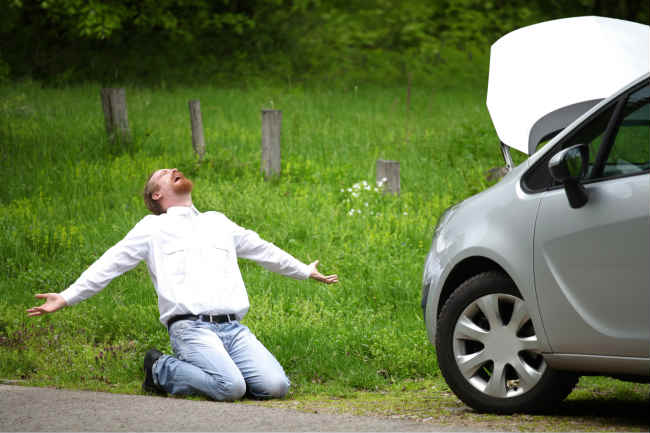
The problem with life is that it refuses to lie down and be compartmentalized. My perfectly-constructed little blocks allocating hours to this or that goal were always under siege. The car broke down. A filling fell out of my tooth. The cat got sick. The hot water heater flooded the basement. Unlike laundry (which you can always do at 2 a.m. after all your other to-dos are done), most schedule interrupters just … erupt. And there goes your plan.
One of my favorite illustrations of this is a story my neighbor told. When he was in his 20s, Matt decided to celebrate his college graduation by hiking the Appalachian Trail end to end before starting a graduate program. A consummate planner, Matt did his research and talked to others who had made the trek. He assembled the recommended equipment, and a month before departure, drove the entire trail, stopping to bury caches of food and water at each night’s designated camp spot. Goal set. Prep done. Game on.
But Matt got sick the week before his departure and had to be hospitalized. By the time he recovered, the summer was gone and his graduate program was about to start. By the end of that, he was married. He spent the next 25 years raising four kids. If those caches of food are still out there, they’ll be celebrating their golden anniversary soon. Personally, I like to imagine some grateful bears unearthed them.
New Year New You (and Other Inanities)
This morning, at the gym, I saw a TV ad: New Year, New You! That perennial January favorite that lures us into believing we can will events to synchronize with our goals. But unless you’ve won the $10,000,000 lottery recently, and can pay others to handle all the annoying curve balls life throws, I predict 2017 will look remarkably like every other year you’ve lived. Stuff will go wrong. Stuff will break down. You’ll break down. And everything you thought would take two hours to accomplish will take three hours. Or three days.
New Year, New You? I think The Who nailed it, bang on truth, when they sang Meet the new boss. Same as the old boss (“Won’t Get Fooled Again”).
“New Year, New You” also suggests there needs to be a new you, but I’m willing to bet there’s nothing wrong with the old you. Maybe you want to curb your habit of checking your Twitter feed every 15 minutes, or limit your online Solitaire games to something reasonable like 50 a day, but basically there’s nothing wrong with you or me that a 48-hour day wouldn’t fix.
One of the most depressing documents I ever saw was a calendar for 2013 (this was in November of 2012) filled with events and appointments all the way through to December of the coming year. It wasn’t even my calendar, but it made me want to hide under the covers for the next twelve months.
Struggling to adhere to an airtight schedule, with day upon day of little boxes to tick, just zaps the joy from life. And the stress of trying to plan for every contingency, doubled by the distress of managing the interruptions you didn’t and couldn’t foresee—Surprise! Your cousin and her kids just came to stay for two weeks—leads to a life of wolfing down meals, working past midnight, ignoring friends, and the endless sinking feeling that you’re always running behind. When free time dwindles to a 15-minute slot every Tuesday, and a dinner out with your partner is just one more item to be checked off, you may find yourself wondering what’s the point? Don’t ignore that question. It’s the voice of sanity.
Anyone who knows me will tell you there is nothing as determined as a determined Amy, but doing the same thing over and over while expecting different results is the definition of stupidity. I may be ambitious, but I’m not stupid. So I keep searching for the better mousetrap.
Happiness is Sanity (Or Close Enough)
This January 1, I decided to take a new approach. One that puts a premium on inner peace and happiness. Call it a mental health year. I began by listing the things I’d like to do more of in 2017, the things that make me happy:
Writing fiction
Spending more fun time with my husband Ed
Interesting cooking (something more exciting than fall-back, rush meals of omelets or packaged pasta)
Playing guitar
Reading
House projects (as opposed to house cleaning)
Connecting with friends
That’s it. No boxes to tick. No word counts. No limits. Just a list of the things I love doing.
Atop my file cabinet, behind my desk, sits a card with an Annie Dillard quote: How we spend our days is, of course, how we spend our lives.
“You and I have memories longer than the road that stretches out ahead.” Lennon/McCartney
When I was in my teens and early twenties, I spun out countless hours with friends, talking, dreaming, confiding, laughing. Life hurtled toward us at a dizzying speed. High school to college. Graduation to first jobs. In the constant rush of forward motion—new situations, new people—it was easy to lose track of old friends. To not even realize you were losing track.
We two have paddled in the stream,
from morning sun till dine;
But seas between us broad have roared
since auld lang syne.
Auld Lang Syne: Robert Burns [English translation from original Scots verse]
Friendships rarely end in dramatic confrontations. Changing circumstances—jobs, marriage, kids—or changing values and philosophies take their toll. Not all friendships are anchored enough to withstand the inevitable drift and spin of time.
Out for an evening of dancing and beers with twenty of your “best friends” in college, the thing you don’t yet realize is that very few people will go with you through life. Or how precious those few people—the ones who knew you when you were young—will become. Even though a continent may lie between you. Even when communications are few and face time is rare.
Old friends don’t fade. Seen through the eyes of love, they acquire a timeless beauty. Forever young. A cherished buffer against the rough and tumble of the world. A bright beacon in the hazy uncertainties of the future. They are the ones from which nothing must or can be hidden. They know us through and through, and somehow love us just the same.
Time it was And what a time it was, it was A time of innocence A time of confidences
Long ago it must be I have a photograph Preserve your memories They’re all that’s left you.
(“Bookends”: Paul Simon)
Like the taste of the madeleine cake Proust’s Narrator dips in his tea in Swann’s Way, a smell, a song, an object can viscerally evoke a moment from our past. Years drop away. We experience again the heat or cold, the doubt or certainty, the grief or exultation of a younger self.
The holiday season—whether you celebrate Hanukkah or Diwali, Kwanzaa or Christmas—is ripe with “madeleine” moments for most of us. Our individual traditions are both the result of and prompt for a host of treasured memories.
We remember moments that took us outside ourself and expanded our awareness of the world.
Opening the boxes of tree ornaments each year, I find myself kneeling again beside a large Mayflower storage carton, lifting out the red and green glass balls, the silver angels and cotton-bearded Santas of my childhood. At the bottom of the box, I discover a postcard. A photo of a place my mother tells me is the French Quarter in a city called New Orleans where she and my dad honeymooned. I’m not quite four years old, and this is the first time I understand that a world with my parents in it existed before me.
For some years to come, I’ll check each Christmas to make sure the postcard is still there. To marvel at this New Orleans neighborhood, so different from my Midwestern landscape of single-story clapboard and brick houses, apple orchards and snow. But most of all, to wonder at my parents—these staid people who never go to the movies or play records. How is it possible they were young and romantic in this place of Mardi Gras debauchery with its jazz clubs and zydeco musicians?
The postcard has long vanished, as have the ornaments with a few exceptions. My father is dead, and I left the Midwest years ago. But I never trim the tree without recalling that postcard, its power undiminished to evoke those childhood Christmases. Its lessons: That I was not the center of the universe, but the newest link in a timeless chain. That how we see other people is always the tip of the iceberg, never the whole.
Sometimes a memory extends so far back, it defies our ability to place its origin. It simply seems to encompass our entire existence.
At the top of our tree is wedged a little silver glass dog. One of the few survivors I mentioned. The delicate curl on his back that took an ornament hanger is broken. He is missing his snout and one leg. As the ornament from my first Christmas, he’s been with me virtually my whole life. Each December, I lift him from his cloth cocoon with care and reverence because in some strange Druidic way, this little dog is the repository of my life, the oldest witness to my existence. If he were to fall and shatter, I would mourn that lost link to my past.
Memories also possess the power to recall and strengthen our emotional connections. Like time-lapse photography, the moment we are sharing today with loved ones is a moment we have shared across decades.
Around the time my children were born, I watched Frank Capra’s It’s a Wonderful Life, that Christmas film of all Christmas films. It became an annual staple at our house. Curled up together on the big bed in the late December dark, we watched a young, impassioned Jimmy Stewart lose faith in himself, then through a long, dark journey, rediscover the light. In this time warp, my children are again 5 and 2, 12 and 9, adolescents morphing into young adults. If we were scattered far and wide, none of us could watch this film without conjuring the others. “No man is a failure who has friends” and nothing matters more than the people we love.
Perhaps the memories hardest to explain are those moments when we were awed by the sheer beauty of existence.
When I was seven, I went caroling with a church group. I don’t remember what songs we sang. I do recall that it was freezing and that one house gave us hot chocolate (for which I felt both grateful and shy). Had that been the evening, I doubt I would remember anything more than the fact of the event.
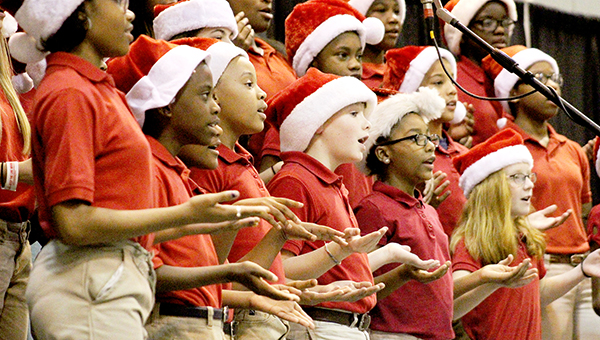
Vicksburg Post
But the last house we stopped at was the home of our new church organist. After we sang, his wife invited us into a narrow hallway cluttered with coats and bicycles. At the top of the stairwell that led to their apartment, stood the organist. In gratitude for our songs, he offered to sing one to us. The song was “O Holy Night.” His voice, a pure, clear tenor. I stood in that shadowy vestibule, spellbound.
To this day, the opening notes of that carol transport me back to the moment with its clanking steam radiators, smell of damp mittens, and the most profound peace I have ever known.
The persistence of memory. Sometimes hard, sometimes a balm. Both gift and wonder.
In a fragment from my own bad poetry, age 19:
What we love
Is not the new, the beautiful, the unscarred
But the stained, the torn,
The weathered and broken of
Time and knowing.
Whatever celebrations you observe this season, as the earth once again emerges from darkness into the light, I wish you the joy of reliving many long-cherished moments, and the delight of creating new ones.
If you can keep your integrity when all about you are losing theirs … (riffing on Rudyard Kipling)
In May 2013, MSNBC’s Lawrence O’Donnell (The Last Word) devoted his “Rewrite” segment to Keystone Sporting Arms founders Bill McNeal and his son Steve.
KSA manufactures guns for children. (Let that sink in for a moment.) Among the logo rights the company owns is “My First Rifle.”
On April 30, 2013, Caroline Sparks of Kentucky died when her 5-year-old brother accidentally shot her with KSA’s “Crickett”, a .22-caliber youth rifle he’d received the year before, a birthday gift.
[It was] “just one of those crazy accidents,” Gary White, the local coroner, said. “It’s a little rifle for a kid … The little boy’s used to shooting the little gun.”
O’Donnell had a slightly different take. He blasted the McNeals as “greedy death merchants” and labeled a KSA website promo pic of a baby holding a rifle as “legal child pornography.”
He then related a story about his own father turning down an opportunity to invest in a liquor store because “he had seen booze destroy too many lives, and kill too many people.” His father told the young O’Donnell “there are some things you don’t do for money.”
“I’m guessing [the McNeals] never talked about what they would not do to make money,” O’Donnell said, “because what they decided to do, as a father and son team in a small town in Pennsylvania, was start a company to make guns and sell guns for children.
“You would think one of the McNeals would have had the good sense to say, ‘If we make guns for little kids, someone is going to get killed. Well, if one of them said that, the other one must have said ‘Yeah, but we can get rich,’ and getting rich mattered more to the McNeals than someone getting killed.”
I’ve thought about that story many times in the years since it aired. As money continues to ascend in its power, wiping out all other definitions of what matters in life. As more and more politicians sell themselves to the NRA, the Koch brothers, and big Pharma. As climate change escalates, unchecked, because to take action to save our planet would decrease the multi-billion-dollar profits of fossil fuel magnates.
What would you not do for money?
Over Thanksgiving weekend, I jotted down a few responses to that question.
Things I Would Not Do For Money
1) Murder or injure another person.
2) Take a job as a lobbyist or spokesperson shilling for the fossil fuel or chemical industries, Big Pharma or Wall Street.
I’ve actually had experience with this one. As an English major, there weren’t a ton of companies rushing my college campus to sign me up. The recruitment center, however, did offer me an interview with Dow Chemical. They were looking for a writer and the starting salary was twice what anyone else was paying students of Shakespeare and Faulkner. But I turned down the interview. In fact, I remember being amused by the irony of it all: I’d just been involved in a campus protest against Dow two weeks before.
3) Publicly advocate a position different to my actual beliefs.
4) Take something that doesn’t belong to me.
5) Betray someone. Anyone.
6) Write to the market—what I think will sell—rather than follow my heart.
Unlike numbers 1-5, this is not a moral question. People write for many different reasons. If you have writing chops, it’s perfectly ethical to use those skills to make a living. I’ve written many non-fiction articles for magazines and newspapers. But my novels and short stories have a deeper, different meaning. I revere fiction above all other forms of writing. The best of it informs us, transforms us, gives shape and meaning to human experience. Though I hope to publish my fiction, when it comes to choosing what to write, I take the line of the late anti-Apartheid activist and writer Stephen Biko: I write what I like.
As I developed this list, I realized the question of what one would refuse to do for money comes in a multitude of guises. There’s the illegal and immoral, the perfectly legal but morally murky, and the personally repugnant. I became curious how others would answer the question, so I e-mailed a handful of friends to solicit their responses.
Money Can’t Buy Me Trust
Several people echoed Maribeth F., who wrote: “Not certain how to answer this as there are so many things I would NOT do for money.”
She goes on to tell about a time she was asked to lie at work. “I said no, my reputation is the most valuable thing I own. I will not compromise that. People at work knew that they could trust whatever I said. That level of trust got me through really tough times such as taking positions that were not popular, having to lay people off, confront bad behavior, dealing with potential lawsuits, etc. These challenges helped me to find my voice which overall helped me to confront people when I needed to or chose to.”
In an interesting twist, it turns out there are some things we might do, but not for pay. As Kathleen D. put it: “I who have told lies on occasion would not lie for money.”
Singer/songwriter Cyndi Lauper said it best: Money changes everything.
Love Trumps Money
Most responders noted they would not violate personal relationships for money. Apropos of the 1993 movie Indecent Proposal, where a rich man offers a young husband $1,000,000 for a night with his wife, several people said no amount of money could induce them to cheat on their spouse. Ed M. said the promise of money wouldn’t persuade him to neglect the people he loves or the things he loves to do. Tom R. said he wouldn’t change his identity for money or cut ties with his friends and family.
Promises of Fame and Fortune
Toni R. reported that she wouldn’t set a forest fire for money. She lives in the South where wildfires have been raging since mid-October, adversely affecting air quality and forcing the evacuation of thousands. While it’s thought that a lightning strike, not arson, was responsible for starting the Rough Ridge fire in Georgia, police suspect arson has played a part in the rapid spread of such fires across drought-ravaged forests in North Carolina, Tennessee, and Kentucky.
Bureau of Land Management
How many arsonists might be involved is unclear at this time. In one case, however, we do know that fame served as a surrogate motive for money. An aspiring weatherman from Kentucky admitted to starting a forest fire to draw people to his selfie videos on Facebook. The 21-year-old was jailed for arson, but not before racking up some 3,000 views on social media. The man said he enjoys the attention.
Arson brings up another facet of the money question: What would you not do for profit? The intentional burning of rain forests in Indonesia and Malaysia to clear land for oil palm plantations releases large quantities of the greenhouse gas carbon dioxide. Highly injurious to people’s health and the planet, oil palm plantations yield big profits for companies like Colgate-Palmolive and PepsiCo because palm oil is cheap and has a long shelf life.
Respect for Self
Although all the responses I received involve de facto respect for oneself—the unwillingness to violate one’s principles for the purpose of legal or illegal gain—Tom R. addressed the issue directly. “I wouldn’t risk my life [for money] in a stunt—trying to cross Niagara Falls on a tightwire comes to mind … and I wouldn’t undergo unnecessary surgery.” Tom is a retired lawyer turned actor, but I’m guessing he won’t be lining up for Botox injections or a facelift any time soon. He’s not willing to gamble his health or personal safety.
What’s In a Name?
The question of what one would not do for money speaks directly to the issue of personal integrity. It acknowledges that some considerations rank higher than money—perhaps many, if my small sample has any validity. It concedes that such a thing as a moral compass may yet exist, and be valued. That integrity brings its own riches, beside which money looks both dirty and cheap.
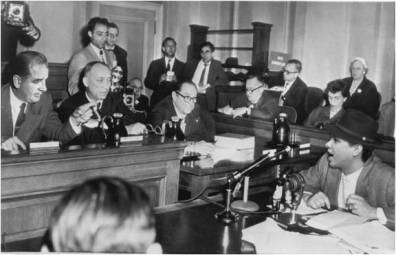
Arthur Miller spoke to integrity in The Crucible, a play in which the Salem witch trials mirror Joe McCarthy’s “witch hunt” for Communists in the 1950s. McCarthy and his House Un-American Activities Committee (HUAC) didn’t offer people cash to sell out their friends and colleagues, but they threatened their freedom and their jobs.
Like the principled men and women who stood up to HUAC, when John Proctor is asked at the close of The Crucible to betray his neighbors and perjure himself to save his own skin, he refuses. The officials are shocked. They try to convince him that throwing his own life away is a graver sin than informing on his friends, but he’s having none of it. Wringing their hands, they ask why, for God’s sake, does he refuse to sign his name to their trumped-up confession? It’s just a signature.
And he tells them: Because it is my name. Because I cannot have another in my life.
That’s integrity.
[Many thanks to everyone who contributed to this post.]
“If we withdraw into our grief and abandon those most threatened by Trump’s win, history will never forgive us.” (D.D. Guttenplan, “Welcome To The Fight”, The Nation, Nov. 10, 2016)
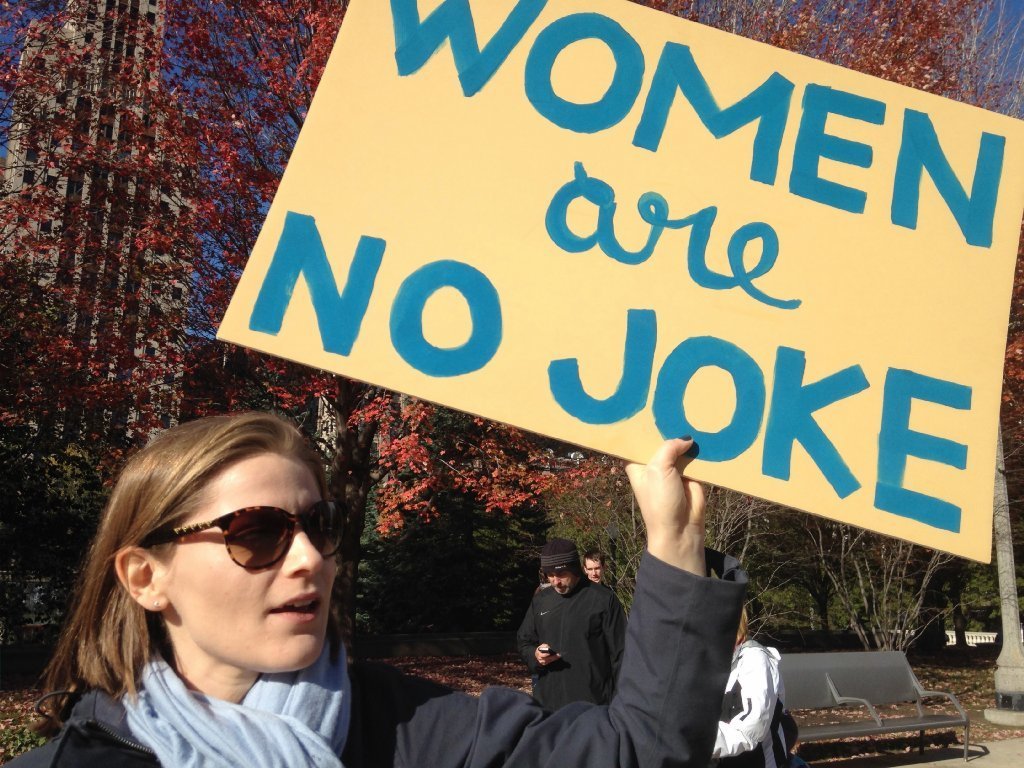
The truly crap thing about waking up to find yourself in a nation where hatred and fear carried the election is that it’s hard not to hate those whose oxymoronic hearts are fueled by hate. Hatred towards Blacks, Latinx, women, LGBTQ folks, indigenous peoples, Muslims, Jews, intellectuals, climate scientists, and Syrian refugees. My apologies to anyone I inadvertently left out here, but my list makes its point: The road of hate is slippery. You start out hating one group of people, and you wind up hating most of humanity. Your heart grows harder. Your dissatisfactions multiply. The world takes on an ugly face. A mirror perhaps.
I stayed with MSNBC on election night through all the hours as optimism turned to cautious hope, as hope grasped at every possible straw, as the straws disappeared and the outcome became a grim certainty, right up until Hillary conceded in the early morning of November 9. I stayed because, as Emily Dickinson wrote:
“Hope” is the thing with feathers –
That perches in the soul –
And sings the tune without the words –
And never stops – at all –
I usually devote my mornings to writing, but when I awoke after three hours sleep on that post-election day, I crawled to my computer and, fueled by black coffee, did the only thing I could manage: Look for a balm for my broken heart. Something to get me through the next 24 hours, and the four years beyond that.
AP Photo/Carla K. Johnson) sandiegouniontribune.com
And I found it in the goodness of all the people out there whose hearts, even when outraged and hurting, do not harbor hate. I share here excerpts from two of those messages:
“Let’s get all these words out of the way: Devastated. Angry. Heartbroken. Outraged. Shocked. Sad. Disgusted. Ashamed. Discouraged. Exhausted. Shattered.
And now four more words — the most important ones: THESE. DOORS. STAY. OPEN.
… It’s up to us to keep fighting to protect Planned Parenthood health centers, so they can continue to serve the people who rely on them — people who come from communities that need our continued support in this new reality — immigrants, people of color, the LGBTQ community, people of faith, and more …
[These] doors will stay open because our voices get louder. Our determination grows stronger. And our commitment to protecting the rights and health care of millions of people is unwavering.
Whatever you’re feeling today, know that there are millions of us who feel the same way — and we aren’t going anywhere. I’m holding on tight to that truth this morning as I think about what comes next. It is so good to know we can count on each other, especially now.” (Planned Parenthood)
“Tragically, Donald J. Trump is the president-elect of the United States… As we watched state after state turn red, we could not escape the realization that the country was taking a sharp turn for the worst.
To be clear, we’re under attack and we’re scared for our families and loved ones …
The stakes have never been higher. We have work to do and we need to be powerful enough to organize and refuse to support Trump’s regime and its heinous agenda …
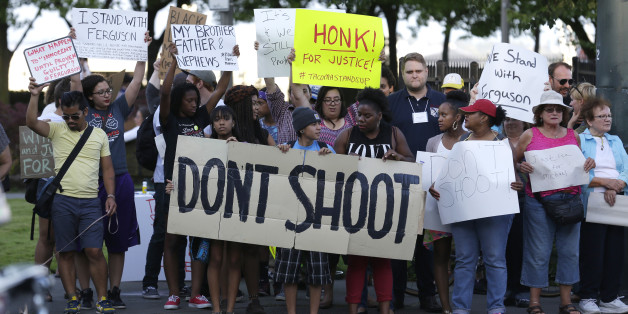
London protests over shooting of American black teenager Michael Brown dailymail.co.uk
In the face of a government that will force deportations, engage in rabid sexism, cultivate overt appeals to white nationalism and enforce brutal crackdowns on protesters, we have a duty and responsibility to act, to build, and to resist hate, fear, and violence.” (Presente Action)
Fighting Hate With Love
As a force in the world, I’m not certain love is stronger than hate. But it certainly is healthier. Hate maims, kills, sucks all the oxygen from our lives, from the planet. Love creates, rejuvenates, breathes life, breeds joy and connection. In the face of the fight ahead, we will need great quantities of love to fuel our efforts. Without love, how can we fight for a more loving world? Hate robs us of our humanity. Without our humanity, how can we build a more humane society? The signature of love is social justice. The signature of hate is revenge. I want to fight hate with all the love in my heart.
And when enough of us do that together, love will trump hate.
Where Does Anger Fit Into This?
I’m ANGRY. Angry that so many of my fellow citizens voted for a man endorsed by white supremacists; a man who has vowed to ignore our commitments to the Paris Agreement dealing with climate change, who would let our beautiful planet, with its abundant life, rot so that fossil fuel billionaires can bank more billions; a sexual predator who thinks of women as toys to be used and discarded, and LGBTQ people as “abominations”; a man who has … well, the list goes on and on with every nightmare scenario imaginable for both domestic and foreign policy.
But anger is an emotion, in the abstract neither good nor bad and with the potential to be either. All the reports say Trump’s supporters were angry, angry, angry. But instead of channeling that anger into positive action for a better world, they let it rankle inside. Become something toxic. Become the hatred and distrust of everyone “else.” That’s what unfocused anger becomes: hatred.
To be constructive, anger must fuel positive action. Personally, I don’t have the time or energy to spend hating the people who would destroy this planet, deport my friends, steal my children’s future. Better to take the love I have for my fellow human beings, the animals, our world, and this life—and let that love direct my anger in fighting the people and policies that would harm them. There were many messages, like this one, in my Inbox on November 9, reminding me that love is a powerful force:
“Our editor-in-chief, Clara Jeffery, wrote an essay last night (because none of us could sleep anyway). She explained:
“There is no time, no room, no space to do anything but push back against what, in large part, this will turn out to be: not just a protest vote by rural whites who feel left behind, but the coming out of a burgeoning while nationalist, authoritarian movement … Trump appealed to America’s worst impulses. Now it’s on the rest of us to show, to prove, that this is not all that America is. This is a time when we’re called on to do things we may not have done before. To face down bigotry and hate, and to reach beyond our Facebook feeds in trying to do so.” (Mother Jones)
Scary Times: Handling the Fear
I’m not trying to be clever when I say fear is a terrifying feeling. Most of us will go a long ways around a situation to avoid tangling with our fears. But fear doesn’t vanish because we keep our head down. Fears multiply in silence and inaction. We have to adopt the attitude of the main character in the Dr. Seuss story I Had Trouble in Getting to Solla Sollew. After a long, difficult journey seeking a way to avoid trouble in life, he realizes there is no magical trouble-free place:
Then I started back home
To the Valley of Vung.
I know I’ll have troubles.
I’ll, maybe, get stung.
I’ll always have troubles.
I’ll, maybe, get bit
By the Green-Headed Quail
On the place where I sit.
But I’ve bought a big bat.
I’m all ready, you see.
Now my troubles are going
To have troubles with me!
A Trump presidency scares many of us, but we are the only ones who can stem the tide of assaults on our democracy and the world. As this message from Grassroots International reminds us, U.S. policy reverberates globally:
“As a global funder and advocacy organization, Grassroots International knows all too well that the damages of US policies and practices does not stop at our borders. In fact, some of the worst aspects of US policy play out regularly in the lives of our partners around the world.
Social movements in Brazil are currently engaged in their own struggle against right-wing forces, installed by an institutional coup.
Haitian peasants continue to organize to create alternative economies and new solutions in the face of predatory international practices and climate crisis …
Palestinians continue to live under a siege funded heavily by US aid.
Everywhere, communities face the ravages of climate change while the US refuses to address its root causes.
As we try to figure out what the election means for us in the US, let’s remember that we are part of a much larger community on this one planet.” (Grassroots International)
You Are Not Alone
The good news is none of us has to face these fears or wage the struggle alone. In the many e-mails I received the morning after the election, this was the common thread: We will fight for a better world together.
One of my favorite messages came from the ACLU:
(AP Photo/Ted S. Warren) huffingtonpost.com
“If President-elect Trump tries to make his unlawful and unconstitutional campaign promises into policy, we’ll see him in court. He’ll have to face the full force of the ACLU – all of our lawyers and advocates in every state.
And he’ll have to answer to you—the millions of action-takers, activists, and card-carrying members leading the fight for rights and liberties for all. Together, we’ll fight for women, for people of color, for the LGBT community, for immigrants – for everyone in this country.” (ACLU)
POW! BAM! You gotta love those guys!
Heed History
The American Dream is not about a 5,000 square-foot house in the burbs and the right of white people to lord it over everyone else. The true American Dream, that vision of a stronger-together melting pot, was the first prescient step into a global future. I keep hearing that Trump’s supporters fear and loathe a global world, that they want to turn back the clock to a time where there were no troubles and everyone (who mattered) was a white American. That time, though, never existed. Even in the five minutes of sun-soaked glory the U.S. reveled in after World War II, fear and hatred cast a long shadow over many of our citizens. The McCarthy witch hunts to expose the “Commies” among us turned American against American. The Jim Crow laws of the South and the de facto segregation of the North prevented Black Americans from equal access to education, housing, jobs, even diners and restrooms.
But using courage and love, Black Americans triumphed over hate and fear. The Civil Rights movement of the 1950s and ‘60s stood up to Jim Crow and declared that an American dream that does not encompass all Americans is a sham. Black Americans and their white allies faced down their tormentors, risked their lives (and some lost their lives) to win the Civil Rights Act and The Voting Rights Act.
As Congressman John Lewis, said: “Our struggle is a struggle to redeem the soul of America. It’s not a struggle that lasts for a few days, a few weeks, a few months, or a few years. It is the struggle of a lifetime, more than one lifetime.”
In a darker lesson, we know what happens when people look away from injustice, hide from their fears. Two days before the election, this reminder appeared on Twitter under the hashtag #beentheredonethat:
“Dear Americans,
Go ahead, vote for the guy with the loud voice who hates minorities, threatens to imprison his opponents, doesn’t give a fuck about democracy, and claims he alone can fix everything. What could possibly go wrong?
Good luck.
– The people of Germany”
What if people had rejected Hitler’s rise to power in 1933? What if people had taken to the streets in massive numbers when the Nuremberg Laws were passed in 1935, laws that denied Jews any civil rights whatsoever? What if they had fought the round-up and execution of gays, the mentally-disabled, and Communists?
We face an enormous challenge going forward, but I believe we can meet it. Because we must. Because love, in action, is stronger than hate. Because inclusive, progressive values won the popular vote. By a margin of something close to a million. And that margin gives me hope.

 playing. No negativity allowed. I will write from 10 a.m. to 1 p.m. each day. I will clean the attic, organize the pantry, query two agents every week, and figure out how my Nikon camera works.
 The problem with life is that it refuses to lie down and be compartmentalized. My perfectly-constructed little blocks allocating hours to this or that goal were always under siege. The car broke down. A filling fell out of my tooth. The cat got sick. The hot water heater flooded the basement. Unlike laundry (which you can always do at 2 a.m. after all your other to-dos are done), most schedule interrupters just … erupt. And there goes your plan.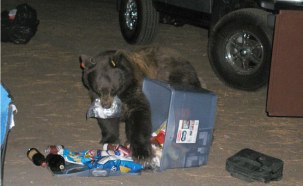
 look remarkably like every other year you’ve lived. Stuff will go wrong. Stuff will break down. You’ll break down. And everything you thought would take two hours to accomplish will take three hours. Or three days.
 two weeks—leads to a life of wolfing down meals, working past midnight, ignoring friends, and the endless sinking feeling that you’re always running behind. When free time dwindles to a 15-minute slot every Tuesday, and a dinner out with your partner is just one more item to be checked off, you may find yourself wondering what’s the point? Don’t ignore that question. It’s the voice of sanity.
 Reading










 As I developed this list, I realized the question of what one would refuse to do for money comes in a multitude of guises. There’s the illegal and immoral, the perfectly legal but morally murky, and the personally repugnant. I became curious how others would answer the question, so I e-mailed a handful of friends to solicit their responses.
 In an interesting twist, it turns out there are some things we might do, but not for pay. As Kathleen D. put it: “I who have told lies on occasion would not lie for money.”
 Arthur Miller spoke to integrity in The Crucible, a play in which the Salem witch trials mirror Joe McCarthy’s “witch hunt” for Communists in the 1950s. McCarthy and his House Un-American Activities Committee (HUAC) didn’t offer people cash to sell out their friends and colleagues, but they threatened their freedom and their jobs.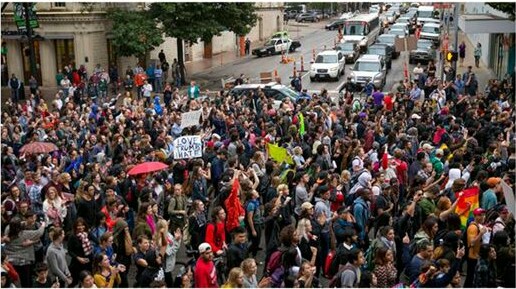




 amyhenrybooks
