“As long as you can laugh at yourself, you will never cease to be amused.” (Anonymous)
[Note:Some days it can feel like there’s not a whole lot to laugh at out there. But fortunately, we all arrive on planet Earth with surefire comic material–ourselves. So I’m leaving you with a lighthearted post to get you through the psychotic times in which we live. Never mind that you’ve seen it before. It will do you good to see it again. Besides, I’m off to Copenhagen for a bit of R-and-R where I plan to indulge in lots of Danish pastries and tip a pint or two with the locals at my neighborhood “værtshuse.” I’m sure I’ll amuse the Danes no end, starting with my attempts to ask for a beer in Danish. Hold the fort while I’m away and I’ll see you with an all-new post in November.]
Some months ago, a friend shared a story at a party. The NGO she works for is part of a global project involving a half dozen other NGOs. Right in the middle of a networking weekend, no one could get access to the project’s shared online folder. People from Amsterdam to San Francisco were frantically e-mailing each other: Where’s our data?! When the dust settled, it transpired that one of the participants had moved on to another job and wiped the old files from his computer to gain usable space. Unfortunately, he was listed with Google as the administrator on the folder. When he erased his copy, he unwittingly erased all the members’ copies.
Everyone at the party had a good laugh over this little tale of digital mayhem. Probably because: 1) we could all imagine ourselves doing something equally stupid, and 2) we were relieved we hadn’t been the one to do so in this instance.
Since then, I’ve often found myself chuckling over this incident and wondering if its innocent perpetrator saw its humorous side—after all, no one was hurt and though it was a nuisance, the remaining NGO members were able to reconstruct the folder from their individual notes. I hope he can laugh as we at the party laughed, but I’m doubtful. We tend to suffer the embarrassment of our mistakes for a long time. Sometimes to the grave.
There’s a lot of pressure to perform to perfection out there. Mistakes are anathema—heads will roll, et cetera—yet who among us doesn’t make them?
To compound the problem, we are vulnerable to something psychologists call the “Spotlight Effect.” When we think we’ve screwed up—called a prospective employer by the wrong name, tripped over a cord as we made our way to the podium to give a speech, sent the wrong manuscript to an editor—we tend to freak out, imagining that everyone saw, that everyone now thinks we’re awkward, stupid, incapable. This magnification of our own mistakes has two negative effects: 1) To avoid any risk of humiliation or rejection, we become much more guarded in what we say and do; 2) As a consequence, we drain a lot of the joy from our lives.
Tragedy + Time = Comedy
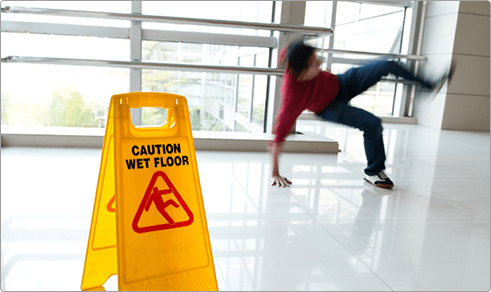
My husband once set his hair on fire while trying out an expensive cigarette lighter in a posh department store. My friend Pete swallowed a piece of ham tied to a string while doing an experiment on peristalsis. I hauled around my three-week-old son at the bottom of a Snugli, like a sack of potatoes, until a woman in the supermarket told me there was a little button-in cloth seat for newborns. Embarrassing? Well, in the case of the peristalsis experiment gone awry, maybe more frightening than humiliating. The point, though, is that these anecdotes, told and retold over the years, have become the source of much hilarity and bonhomie. As comedian and writer Steve Allen said: Tragedy + Time = Comedy. Our most embarrassing missteps become our funniest stories, the ones everyone asks us to repeat.
filmywar.com
But what if we just cut to the chase and start laughing at our foibles the moment we spill the lasagna all over our lap, drop our cell phone down a restaurant toilet, forget to attach the CV to our job application? Life should come with a beeper, warning us when we’re about to screw up, but it doesn’t, so we need to adopt the ability to laugh at ourselves.
My dad could be ornery, and he was not much with the compliments, but he could always laugh at himself. It’s probably the most important thing I learned from him. I remember one time in a restaurant, he was fixing his coffee. “Geezus, this cream is thick,” he remarked as it fell in chunks from the little pitcher into his cup. “Oh no,” my mom cried, “that’s my blue cheese dressing. I asked for it on the side.” Now, my dad could have blamed his mistake on the low lighting or the waitress’s failure to set the blue cheese next to my mom’s plate or the stupidity of a restaurant that would put both cream and blue cheese in identical pitchers. But he just laughed. Because it was funny. Because there’s no point in pretending you didn’t do what you did. Because no one is perfect. And then he ordered a fresh cup of coffee.
Mistakes—we all make ‘em. So, laugh it up. And if the people around you can’t cope with this very human reality, maybe you just need different people.
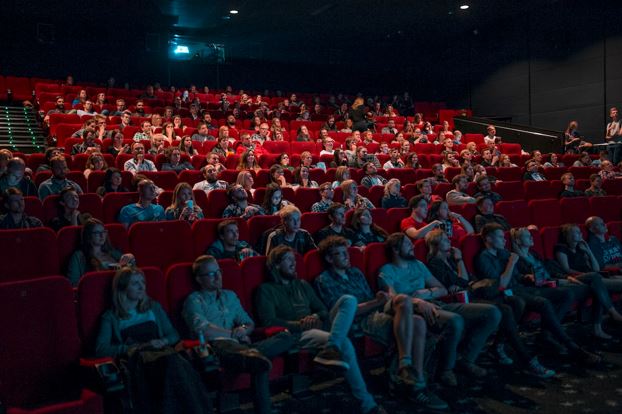
When the films Oppenheimer and Barbie both opened on July 21, I felt a surge of joy and hope. Joy that big-screen films may have survived both the plague and the surfeit of made-for-TV movies streaming in its wake. Hope that the return of such films, bringing us together again in movie theatres large and small across the country—happily munching popcorn, laughing together, crying together, sitting on the edge of our seats as the tension mounts—will mark the beginning of a return to shared cultural experiences. We. Need. This.
Unsplash: Krists Luhaers
For too long now, we’ve been asunder. Pawns in a game of divide-and-conquer that’s been creeping up on us for almost three decades. (More on this in a moment.) Gen Z has never experienced an America that is not riven “twenty ways to Sunday” as my mom used to say. Has never known a United States.
To say this is not to wax nostalgic for some lost idyllic democracy of yore. Our American “melting pot” has always struggled to meld. Has always fallen far short of a true integration of all peoples when it comes to equal opportunities in education, housing, employment, health, and rights. But our shared American culture—movies, music, TV shows, news broadcasts—meant we all listened and danced to the songs of Motown, Queen, Little Richard, the Beatles. We all watched Saturday Night Live, Star Trek, All in the Family. We all saw Titanic, The Godfather, Men in Black. We all got our news from one of three network sources—ABC, NBC, CBS—each barely distinguishable from the others. We all tuned into the impeachment proceedings against Nixon in the wake of the Watergate scandal. And we all witnessed Neil Armstrong stepping onto the Moon in July 1969—“That’s one small step for a man, one giant leap for mankind.” These commonalities helped forge a coherent society. An us.
Raising America’s Collective Conscience: How A Free Press Challenged Us To Be Better
Those cultural bonds also challenged us to look at ourselves. Not just our neighborhood, or even our region, but our entire country. This vast entity called America—who were we? In 1960, our thousands of local and big city newspapers, together with our local and network news stations, all brought the story of Ruby Bridges into our living rooms, as the six-year-old, flanked by federal agents, entered her new school in Louisiana, the first Black child to integrate an all-white school in the South. Three years later, we all saw and heard Martin Luther King, Jr. deliver his “I Have A Dream” speech at The March On Washington.
Those widely-shared stories and images awakened many white Americans to the deep injustices that Blacks Americans continued to suffer, and created a vast support network across the country for the Civil Rights Movement. Freedom Riders—Black and white civil rights activists together—boarded interstate buses in 1961 and rode into the Deep South to challenge Jim Crow segregation. Four years later, the nationally-televised Selma to Montgomery marches in Alabama showed Americans everywhere just how brutal southern resistance to integration was, as we watched Alabama state troopers beat and gas Black activist John Lewis on the Edmund Pettus Bridge, a day that would become known as “Bloody Sunday” in the struggle for civil rights. [Lewis would go on to become the U.S. representative for Georgia’s 5th district, a position he held for 33 years until his death in 2020.] The nationwide televising and reporting of these events not only raised America’s consciousness. They led to the passing of the Civil Rights Act of 1964 and the Voting Rights Act of 1965, both signed into law by President Johnson.
News broadcasts and newspapers also brought the escalation of U.S. involvement in the Vietnam War into our living rooms on a nightly basis, spawning an active anti-war movement in America that numbered in the tens of millions and defined a generation. Life magazine’s cover story on the 1968 My Lai Massacre in Vietnam further galvanized American support for ending that war. Life was another touchpoint of American culture.
That we all experienced the same cultural and political events does not mean we all held hands and danced around a maypole in some idyllic Shangri-la. There is no movie or TV show, no song, no social movement, no political moment that will bring us all into agreement. There always has been and always will be differing tastes, opposing opinions, and just plain bad actors who need to be dealt with—in a non-violent legal framework—when they cross the line. But I would argue this underscores all the more the desperate need for shared cultural experiences through which we can relate to others and build bonds.
Sowing Division: The Rise of Fact-free News and the Silencing of Voices
So, what do we have now, in this brave new world?
We have Fox News (which first aired in 1996) and One America News (oh, the irony of that name!), and Breitbart News and QAnon lunacy, all lying to us, dividing us by intent, shaping our worldview to suit their own ends. Ends antithetical to democracy itself.
We have a press that has shrunk—and continues to shrink—at an alarming rate. A recent study by Northwestern University’s Medill School of Journalism, Media, and Integrated Marketing Communications found that, on average, two papers go out of business every week in the U.S. In the past 18 years, more than 2,500 have ceased publishing. “This is a crisis for our democracy and our society,” stated Penelope Muse Abernathy, lead author on the study.
Unsplash: Sarah Penney
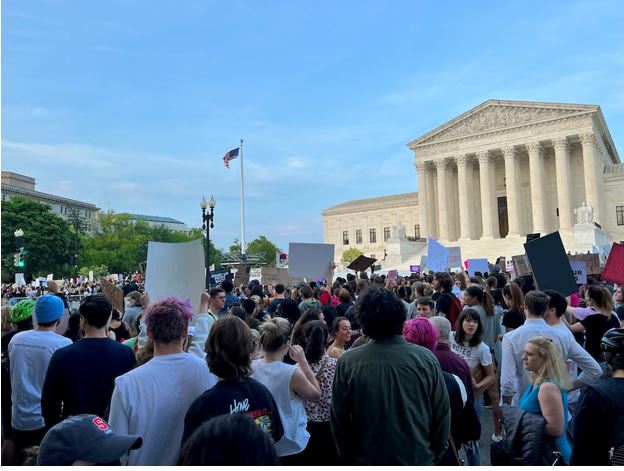
We have a Supreme Court, the majority of which has been carefully selected and, in some cases, bribed by billionaires to dismantle our rights, hence, our democracy. Even before they struck down women’s right to abortion and affirmative action in education, SCOTUS was hot on the trail of curtailing our civil rights. In Citizens United (2010), the Court claimed that corporations were “people”, reversing longtime campaign finance restrictions to allow corporations and other outside groups to spend unlimited amounts of money on elections. Three years later, the Court ruled in favor of officials from Shelby County, Alabama, gutting a key part of the 1965 Voting Rights Act. President Obama lamented the decision, saying it invalidated core provisions of the law, upsetting “decades of well-established practices that help make sure voting is fair, especially in places where voting discrimination has been historically prevalent.”
What happened to a nation who rejected Jim Crow? A people who rose up and stopped an unjust war? Who grooved together to the Temptations’ My Girl and laughed together watching Beverly Hills Cop at their local cineplex?
One is the Loneliest Number
Polls suggest that nation is still out there. Seventy percent of likely voters support the Freedom to Vote Act—a majority support that extends across party lines. In a May 2023 Gallup poll, 85% of Americans said abortion should be legal in at least some circumstances. So why has our collective voice been reduced to a whimper? Why has our cultural cohesion become invisible? Why do so many of us stare at each other with suspicion—or fear?
For too long, we have been isolated, each in our own little bubble. Individually streaming our movies for consumption at home, causing nearly a quarter of America’s indoor cinemas to shutter their doors from 1995 to 2020. And that’s before the pandemic hit.
We individually stream our tunes, too. Music streaming services have revolutionized the way we listen to music, the CEO of Media Music News posted Linked In. They certainly have. From Spotify and Pandora to YouTube and Big R Radio Network (this last, features more than three dozen channels, including something called Yacht Rock, Country Oldies, Post Grunge Rock, and Explicit Top 40), we select our music like menu items at a restaurant, according to our individual taste. But if we always order the Bolognese, how are we gonna know what we might be missing with the Tandoori chicken or the Kung Pao tofu? How can individual streaming provide the kind of social glue that connects us from coast to coast as jazz did in the 1920s, as swing and Big Band did in the 1940s, as rock, blues and soul did in the 1960s, as New Wave, Hip-Hop, and punk rock did in the 1980s?
Unsplash: Ardian Lumi
While it’s true that radio has been diversifying (rock/country/classical) since the 1960s, radio was then and continued to be, until the turn of the millennium, the way America sampled new music, shared tunes, forged a common culture. As Soul Source notes: DJs on “pop stations would pick many soul sides to spins…even when many of the other things given heavy airplay on their station were by…the Beach Boys, the Beatles, the Monkees, Bobby Vee, the Lovin’ Spoonful, Frank Sinatra.” Now if that ain’t a diverse playlist, I don’t know what is. And from my own experience, I can attest that country singers like Kenny Rogers, Glen Campbell, and Dolly Parton were heard on pop/rock stations everywhere. Casey Kasem’s American Top 40 Countdown was a coast-to-coast weekly radio show. “Listening to Casey was as much of a family Sunday tradition as going to church,” Remind Magazinesays, featuring the “best-selling and most-played songs from the Atlantic to the Pacific, from Canada to Mexico[emphasis, mine].” A Top 40 for America.
This hermetic existence many of us are now living—plugged into our personal devices, sealed off from society and our fellow beings—has made for a lonely country and a sad, scared, increasingly-violent people. A divided people easily manipulated by those who know the buttons to press—racism, homo- and trans-phobia, religion—to gain their own ends: a dictatorship of the rich. Can our democracy with all its flaws, but still far superior to a fascist oligarchy, survive these divisions?
Commonweal: Reclaiming Our Cultural Cohesion
Set of Hamlet (Shakespeare in the Park 2023)
So, that is why I celebrate the opening of major, wide-audience films like Barbie and Oppenheimer. In New York City, I saw groups of children in pink gear, romping noisily together after seeing Barbie, elated at sharing an experience with their peers, something they were denied during the pandemic’s grueling loneliness of online-learning. Why I, who am not an early-morning person, willingly got up at 5:30 a.m. to be on line, literally, by 7:00 in Central Park, with hundreds of other theater buffs, waiting for tickets to Shakespeare in the Park’s production of Hamlet. Tickets that are free to the public for an event in a public space. Why I smile every time I pass my neighbor Louisa’s house with the HELLO sign posted prominently by her front door—a sign, a word, that welcomes and embraces all who pass by.
I will close with something a friend shared recently on Facebook. It was signed by Ira Byock, a palliative care physician and author. The journalist in me dug around to find its source. Though I cannot definitively say Mead told this exact story, I can tell you it has been widely quoted. And for my purposes here, it is the story itself that matters:
Anthropologist Margaret Mead was asked by a student what she considered to be the first sign of civilization in a culture.
Mead said that the first sign of civilization in an ancient culture was a femur (thighbone) that had been broken and then healed.
Mead explained that in the animal kingdom, if you break your leg, you die. You cannot run from danger, get to the river for a drink or hunt for food. You are meat for prowling beasts. No animal survives a broken leg long enough for the bone to heal.
A broken femur that has healed is evidence that someone has taken time to stay with the one who fell, has bound up the wound, has carried the person to safety and has tended the person through recovery.
Helping someone else through difficulty is where civilization starts. We are at our best when we serve others.
Be civilized.
To that, I can only add my conviction that civilization begins, is nurtured by, survives through what we share in common. A culture open to and embracing all.
I don’t know about you, but my favorite days are the ones entirely free of encumbrances. No doctors’ appointments (especially no dentist!). No weekly schlep to the supermarket. No hours lost to the hair salon. No plumbing/heating/appliance breakdowns (rare, but always a time-consuming nuisance). Nothing but a whole day stretching gloriously ahead to use as I choose. Uninterrupted writing time. Unhurried hours to lose myself in a house project of my choosing. Time for a cup of java with Ed at one of our local cafes or taking our books for a leisurely read at the park down the street. A stint playing my guitar. Maybe—dare I hope—time to start an art project. A decoupage, perhaps. Or collage.
That’s the fantasy anyway. And some days, I actually manage to do several of these happy, life-enhancing activities, but all too often (and weirdly, more and more often—did someone put the 24-hour cycle on hyperspeed?), to paraphrase Joni Mitchell, “Stuff gets in my way.” Not worthy stuff. Not interesting stuff. Not some unexpected delight like my recent meet-up with a dear friend I haven’t seen for nine years who happened to be in town for the week, a guest lecturer at the local university. For that, I gladly cut my working day short and even forewent my usual five o’clock gin-and-tonic so Ed and I could have dinner and drinks with M without me doing a faceplant.
Pounding Headaches
No, the stuff that routinely wreaks havoc on my waking hopes are things both unforeseen and unavoidable. Like two weeks ago when the contractors renovating our house informed me that it’s best to take everything off the walls while they’re re-siding the house because the hammering (and it’s a lot of hammering, weeks of hammering stretching into the foreseeable future) may cause pictures and pottery and all sorts of wall-mounted bric-a-brac to crash.
Michal Balog (Unsplash)
So instead of writing or enjoying a coffee out or strumming the old guitar, I took down all the framed artwork and photos, transferred all the antique bowls and vases from their shelves to the dining room table (where we will eat for the coming weeks is a mystery)—and started to box the 10,000 CDs (slight exaggeration but not by much) stashed in the CD wall-mounted case. Actually, I’m getting ahead of myself here—I first had to find a box to hold the CDs. Make that three boxes. Wide enough and long enough to hold a zillion CDs in alphabetical order—otherwise I’ll lose two days on the return when I have to put them all back into the hanging cupboard.
As of this writing, I am still searching for the floor space to stash these boxes, space where we won’t trip over them every ten minutes as we’re now doing.
One-Sided Phone Tag
If it was just the house renovation, one could philosophically say, “It will end someday.” Some month. Some year. Hopefully. But that’s the thing about dies interruptus, there’s always something happening. And then there are the things that happen over and over, with slight variations. Like phone tag. Whole mornings, complete afternoons vanish as I wait, and wait…and wait for someone to talk to who can (maybe) resolve my problem.
A recent classic example of this occurred when I tried to do a routine annual renewal for my Carbonite back-up plan (there is no greater fear for a writer than some unexpected catastrophic glitch that erases everything one has written. Essays. Short stories. Entire novels. In a word: one’s life’s work). So, as I was waiting for visiting family to get ready for a much-anticipated day—a river walk and art gallery visit, followed by lunch at a favorite eatery—I clicked on the e-mail link that in under two minutes should have renewed my subscription for the year. The prior credit card I used was now defunct, so I typed in the new info where it said change payment method. No big deal, right? I’ve done it. You’ve done it. One card expires. You use another.
Only this time, it was a big deal. This transaction cannot be processed. No rhyme. No reason. I refreshed and tried again. And again. I scrolled down to the Contact info and dialed the number. We are experiencing an unusually high call volume at this time. Please wait for the next available representative… The mantra of our times.
No fool, I put my phone on speaker and used the time to clear 600-some emails. A half-hour later, the family was ready to go, so I cancelled the call. Another day. Long story short, it took several more calls, consuming sizeable chunks of several more mornings to get the renewal straightened out. I could have walked to Carbonite headquarters in Boston faster, although it would have been more fun to visit their field office in Paris.
The Doctor is (Not) In
Last November, I went to my scheduled annual physical with Doctor Z. A nurse did the usual prelim weight check, blood pressure, pulse stuff and assured me, “the doctor will be with you shortly.” I used the time to finish a chapter of my current read (I always bring a book), cleaned up some email on my phone, and waited. Forty minutes passed. No doctor. I went out to the nurses’ station to investigate the situation. “Oh, Dr. Z isn’t here,” one of the nurses gaily informed me. “She has jury duty today.”
Jury duty? Jury duty! Why didn’t someone call me or at least inform me when I arrived? Why did they proceed with the preliminary checks?!
“If you’d like to see someone today,” the receptionist said [Did they think I had arrived for some other purpose??!], “Dr. Y could give you a few minutes between her appointments.”
I will refrain from going into a tirade here about the sorry state of medical care in this country and just say that since I did have a particular concern that day, I took the few minutes Dr. Y could spare. She was wonderful—attentive and supportive for the ten minutes I saw her. On my way out, I mentioned with all the politeness I could muster that it would have been good if someone had called me to inform me about Dr. Z’s jury duty. “Jury duty?” the receptionist said. “She’s not on jury duty. She’s taking a couple of weeks off. She scheduled it months ago.”
I swear, every word of this time-wasting tale is true. But I did get one good thing out of this “lost morning.” Dr. Y. She is now my primary care doc, though making that happen is another loooong time-wasting tale I will spare you here.
Computer Glitches
It was a beautiful day in early May. Nothing scheduled on the calendar. Following breakfast, I settled into my desk chair, looking forward to an uninterrupted morning of work on my novel, after which I would take a stroll downtown and browse the local bookshops. Ed would no doubt want to accompany me and we’d have lunch on the open rooftop of a favorite local brewery.
Ha. Ha. Nice try, Henry.
I had just opened my manuscript, tweaked my last chapter, added a new twist to my outline, and typed in Chapter 20 when my computer curtly informed me: You do not have permission to edit this file.
Permission? Permission?!! I WROTE THIS “FILE” YOU ****** MORON MACHINE. [For sensitive readers, I have edited out the longish string of expletives here.]
But, of course, shouting at your computer will only take you so far, as in “that and five bucks will still buy you a cup of coffee.” Which is to say, nowhere. So, heaving a big sigh, I started the tortured journey into ascertaining where the glitch lay. I first checked my other files to see if this forbidden thing was systemic. Nope, I could happily edit each of the five files I opened. Next stop: Settings.
After a frustrating half hour of searching likely places to no avail, I googled my problem, jotted down several possible solutions and tried again. Still… nada. Ninety minutes into the morning, I at last located the problem: I had somehow been bumped from the position of “administrator” on my novel. Just who the administrator was for my file on my computer remained a mystery. I returned to googling solutions. Found something that sounded like it might work and, crossing all fingers, knocked wood (my desk), and deleted everything under “administrator”—a string of letters and numbers I didn’t recognize. I then boldly typed my info in. Voila! I could now edit my novel again. What I could no longer do was work on it for the morning or enjoy a stroll downtown to browse bookshops. It was lunchtime.
How We Spend Our Days
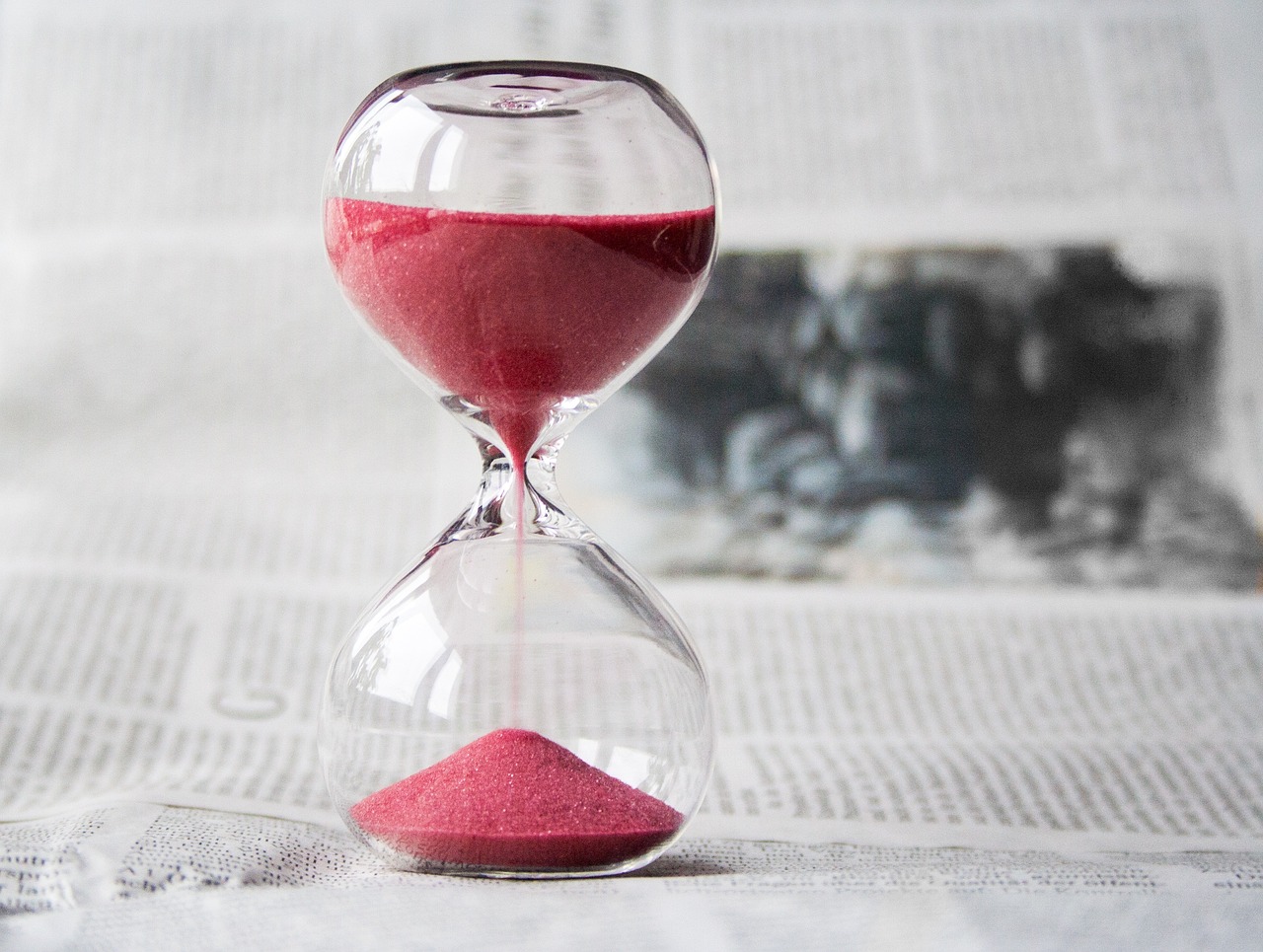
I have no snappy words of wisdom to impart here. Only the observation that time is a precious commodity. No one’s time is infinite. If you’ve followed this blog for a while, you know I’m a big fan of writer Annie Dillard’s thoughts on this subject: How we spend our days is, of course, how we spend our lives.
Some time-busters are one-offs like our house renovation. In a few months, it will be finished. I’ll restore order to the interior and move on. Others are reliable repeats—my thrice-yearly dental visits, the weekly shop. Some are not only time-consuming but utterly maddening—like the repeated attempts to renew my file protection I detailed here.
It does seem that since the Plague broke in 2020, the number of “glitches” one daily encounters has skyrocketed at the same time as easy, straightforward solutions have plummeted, but that’s where we are. And since I don’t see a likely turnabout in this state of things, and moving to a yurt on the tip of outer Mongolia is not an option—too cold, bad internet, no Quik Marts within a zillion miles—I need a way to not let the unending stream of time-zappers deflate my spirits and spoil my day (after day, after day).
When I told Ed the topic for this month’s blog, he laughed heartily and said, “The day you plan, and the day you get? They are not the same. Ever.” But yesterday was one of those rare days. Ed and I took our computers to a coffee shop downtown where I wrote undisturbed for two-and-a-half hours before we moved on to lunch on the shady porch of a café with Mediterranean cuisine. Heaven! Damn, what I wouldn’t give for a week of days like that. But…
This morning, I got a jury duty summons. Then, an incorrect medical bill that had been settled months ago resurfaced, involving a long string of messaging and several phone calls. And one of the brand-new posts for the front porch was somehow badly scratched and chipped in the installation, so I need to get in touch with the builders.
[I’ve been away this past month, playing hooky in London with Ed–watching lots of theatre, enjoying art and history museums, traipsing the parks and, of course, patronizing my fair share of pubs! So I’m re-posting a piece from July 2021. Hope it brings more joy to your summer, and a greater sense of sanity amidst all the noise out there.]
During my son’s recent visit, we drove up to Vermont. The centerpiece of this daytrip was lunch at my favorite summer eatery—the Marina in Brattleboro. The restaurant boasts a sizable deck overlooking the Connecticut River. In the soft hazy heat of a June afternoon, you can enjoy a lazy meal to the sound of water lapping and birdsong. The word somnolent comes to mind.
I first dined at the Marina eons ago, scant weeks after moving from the heart of Boston. The restaurant’s deck was smaller then, but the tranquility factor was just as high. Sitting there, I was startled to realize the only noise was me. All around was serene—the agitation, the angst, the tumult was all within me. I love cities. Love the diversity, the wide array of culture, the energy, but in the chaos and rush of the urban, you may never hear your own heartbeat.
A Discordant Jangle of Uncertainty
The noise within: You’ve got a zillion things to do—a zillion things you want to do—but you can’t settle on what to tackle first. Whatever you turn your hand to, you find yourself spinning your wheels, repeating the same steps without making any discernible advances. Busy doing nothing, as a friend once put it, leaves you exhausted but unfulfilled. In this state of paralysis, hours and days melt away as you frantically row but get no closer to land.
The noise within distracts us from what matters most in the moment, leaves us confused and uncertain about our true feelings—Am I doing what I want? What do I want? It blurs our focus and renders us immobile. Should I go this route? But what if I went the other way? What if I miss something vital? The possibilities overwhelm. The problems feel insurmountable. Fear spirals wildly, an endless loop of anxiety. What if I fail? What if I fail because I fear failing? We are swamped in a deluge of despair.
What is Making All That Racket?
The still calm of that long ago afternoon on the Connecticut River revealed the noise within me, but Boston didn’t create that noise. You don’t have to be standing in Times Square to be rendered deaf to your inner voice. We live on Planet Earth, home of Social Media A to Z, the Worldwide Web, and the 24-hour news cycle. An unceasing parade of pundits forecast doom and gloom. Experts—true and false—spout their wisdom(?) freely everywhere:
“You should do this.”
“You mustn’t think that.”
“Everyone knows…”
The subtext: Whatever you’re doing, you’re doing it wrong. Like the increasingly contaminated air we breathe that pollutes our lungs, the constant, often contradictory, mumbo jumbo from these talking heads offers lots of anxiety but little affirmation.
The din of the outside world—a cacophony of voices, often strident and discordant—may drown out the most essential voice, our own. Getting away from that din long enough to tune in to our true inner state is the first step toward reducing the noise within. The good news is, we can choose to decrease the time we spend on, take breaks from, or entirely turn off this media circus. We can limit the authority we grant to others, especially strangers.
You don’t have to hide away in a yurt in the Himalayas to hear your own voice. You just need to create space and trust yourself. While it’s wise to take in and weigh new or differing viewpoints, it’s healthy to remember—and value—your own experience, your needs, your hopes. If anyone tells you they know you better than you know yourself, don’t believe them. And if someone says, “This is the one right way to do/approach/achieve this”, ignore them. In every field, for any endeavor, history proves there are many paths to any goal.
Mute the Noise: Mind Cleansers
During the pandemic, shut out from my usual visits to the gym, I took long walks. The gym has re-opened but I’ve put off signing up, preferring these daily rambles that both empty and “clean” my head, leaving space for new ideas, insights, calm. Some people swear by meditation, and if that works for you, great, but I get fidgety sitting still. For me, the mind/body catharsis of a good walk works best.
Other mind cleansers I’ve discovered or borrowed and tweaked include:
1. Get ready… Jigsaw puzzles! Yes, those BIG 1000- to 2000-piece babies. Absorbed, focused solely on finding and fitting pieces, it’s my “dessert” at the end of a workday. Unlike the inner push many of us feel to have a finished product—a new chapter on the book, the entire garage cleaned—to show for a day’s effort, jigsaw is all about process. No one expects to complete a jigsaw in an afternoon. There’s no “right” number of pieces to fill in. There’s no success/failure pressure. It just feels great to make whatever progress you can. If we could adopt this attitude about all our endeavors, the sanity quotient would skyrocket around the globe.
Okay, I hear you saying, but what about real deadlines? The kind the boss imposes. Believe me, writers get deadlines, too. All the time. I think it’s possible, though, that more gets done—and better—when we focus more on the work itself and less on watching the clock. Anxiety is not conducive to either creativity or productivity.
Unsplash: Hello I’m Nick
2. The stuff that nags. The seemingly endless—and changing—list of troubles and woes we can’t fix at the moment—or maybe ever—but must wait for the answer or leave to fate. This is an old trick—one the experts got right—but it has worked for me (when I’ve taken the time to do it). Make a list of the stuff your mind keeps churning over to no avail. Just brainstorm it without pause or judgment. Then tuck that list in a folder or a drawer—I tape mine to the far side of my file cabinet where I can’t see it—and let those suckers go. Get on with life. You might get a shock from revisiting this list in a month. How many items have resolved themselves or simply don’t matter anymore? And how much energy have you freed up in the meantime? Repeat as often as necessary.
3. Of course, there are BIG valid worries aplenty in our world. Our climate is in chaos—June saw 115 degrees in Las Vegas. Geo-politics are trending toward the fascist. Here in the States, we’ve watched the rise of violent militaristic groups and white supremacy. Voting rights are on the chopping block. Whole lotta noise out there.
Unsplash: Mika Baumeister
I confess to struggling with these fears—I like to get out in front of troubles and act to prevent them. But when we’re talking about problems of this scale, it’s just not possible for any one person to eradicate or correct them. They are systemic and well-funded by Big Money. Allowing them to endlessly rattle around in our brain drains us of hope and energy. Worrying doesn’t empty tomorrow of its sorrow, it empties today of its strength, writer and Dutch watchmaker Corrie Ten Boom cautioned. And she walked the talk on that one. Cornelia “Corrie” ten Boom and her family hid many Jews in their home during World War II, aiding them in escaping the Nazis.
Like Corrie, what each of us can do is act from where we are. We can make phone calls, write letters, register voters, join local environmental groups, protest, and donate. Every dollar helps. Every voice raised swells the whole. As Corrie Ten Boom’s life shows, action gives strength. Empowers rather than depletes us.
4. Mental health days. Take them regularly. Play is as essential to our well-being as the loftiest purpose. Got a full-time job? Kids to care for? Ask a spouse/partner/relative/friend to step in for an afternoon. Even a daily mental health hour—like the walks I took during COVID and continue to enjoy—can reset your head.
Choose Your Focus
Unsplash: Jonathan Kemper
Once you’ve freed up some mental real estate, you can direct your energy. Choose your focus. What are the basic areas where you want to expend your time and effort? My list includes: Writing (novels/short fiction/blogging), playing guitar, gardening, house projects, reading, walking and, of course, family/friends. These are things I strive to do with great frequency because they matter to me—in the case of writing, almost daily.
What my list does is provide a road map, a general direction, when I start to feel lost or overwhelmed. Say, if I have six hours today, I might spend two on my current work-in-progress, and one hour each on blogging, walking/guitar, and gardening. The sixth hour? Maybe I’ll throw those boxes of clothing for the Salvation Army into the car. Ed and I will drop them off, then enjoy a summer lunch at a favorite café.
I don’t do these things with a stopwatch. It’s just a loose guideline. If I should get bitten by the neighbor’s dog—which happened two weeks ago—and have to spend my morning in the ER, c’est la vie. No self-recriminations. As John Lennon wrote: “Life is what happens to you while you’re busy making other plans.”
Your True Voice: Let It Rip
Unsplash: Clay Banks
“The sky is falling in!” Henny-Penny cries in the classic children’s fable after an acorn falls from the tree above and bonks her on the head. While it’s never pleasant to get hit on the head, I think if you look up, you’ll find the sky is still there. It’s always been there. It will always be there—at least in terms of any timeline that concerns us.
The noise within, maybe it’s just a whole lot of acorns pelting us from one direction and another. If we let them take seed and sprout, we’ve got a forest too dense to see through, but we can just decide to cast those babies aside one by one and keep focused on what really matters to us. Whether that’s work or play, if it doesn’t hold some kind of real satisfaction, I don’t want to waste myself on it.
I hope you’ve found something in these observations and ideas that will help vanquish the noise within. I also hope you’ll take a moment to comment and share any “tricks” you use to turn down the din. Our possibilities are too wondrous and our hours too precious to let our true voice be muffled in the roar of the crowd.
“Yesterday is history. Tomorrow is a mystery. Today is a gift. That is why it is called the present.” — Alice Morse Earle
Ever since people discovered they were mortal—and I’m guessing this was around the time they first saw someone drop dead and remain dead—they began to create various belief systems in which this demise was only temporary, that life would somehow resume in another realm. In short, they invented immortality.
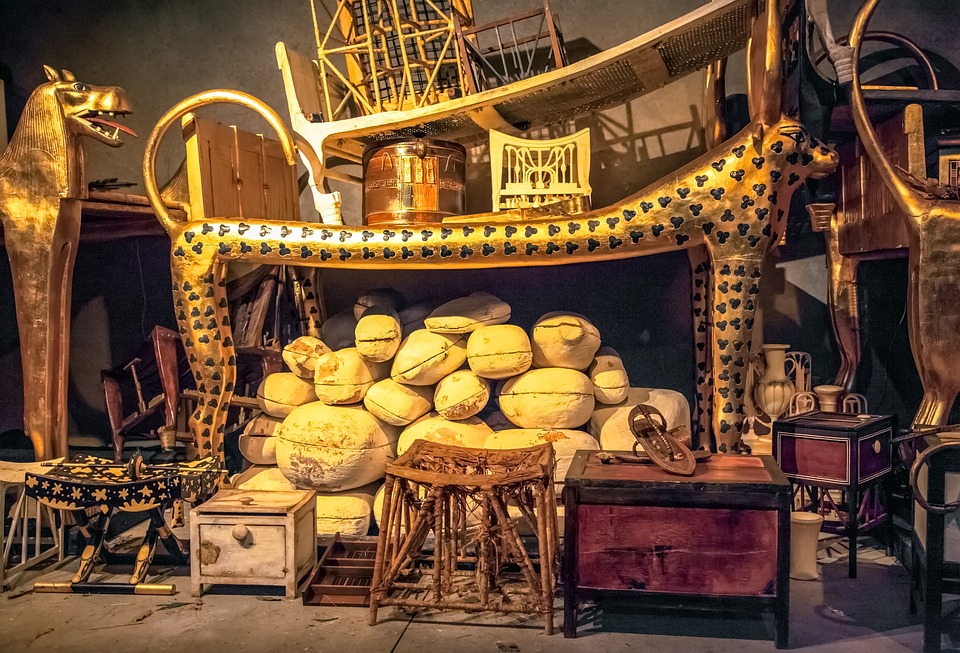
The ancient Egyptians, famed for being buried with plenty of food and all their worldly possessions, believed that earthly life was but the first leg of a journey; that if one had pleased the gods thus far, one would end up in The Field of Reeds, a paradise that would mirror one’s life on earth exactly.
You have to work a little harder as a Hindu. While they believe the soul never dies, Hindus also believe the soul is reborn in another body—reincarnated—and you keep coming back until you get it right. You can be stuck in samsara, this cycle of birth and death, a long time. But eventually good karma is achieved and you are freed from your earthly body to live a life of divine bliss for all eternity with Brahman, the supreme universal spirit.
The Igbo people of Africa believe that one continues to have agency in earthly affairs after they leave this world and go to the land of bliss. There, along with their ancestors, they interact, intercede, and protect their earthly families.
Christianity promises eternal life, but whether that’s Heaven or Hell—or the waiting room of Purgatory, if one follows the Pope—depends on your behavior here. Similarly, Islam says you will be sent to Paradise (Jannah) if you followed the teachings of the Qur’an, or Hell (Jahannum) if you don’t. Immortality, in these religions, is a dicey thing.
Eternal life. That’s the promise of most religions, but there’s another kind of immortality—the kind that we seek in life. The deep hunger to make our mark on earth—an indelible permanent mark—through an achievement or achievements that will long outlive us. To be remembered, even revered, for centuries in this world after our mortal coil has turned to dust. I would argue that this is the real immortality most people seek, unable as we are to truly imagine ourselves dead. But what price do we pay for that desire?
Changing Fortunes/Shifting Sands
The writer F. Scott Fitzgerald published his first novel, This Side of Paradise, in 1920 at the tender age of 24. It was an instant smash hit. Overnight, prestigious literary mags like Scribner’s clamored for short stories from this rising star of the Jazz Age. The Saturday Evening Post, one of the most widely-read magazines in America, paid Fitzgerald handsomely—in the tens of thousands of dollars in today’s cash per story—and arranged to have first dibs on all his short fiction.
Fitzgerald then married the girl of his fictional dreams, Alabama socialite Zelda Sayre, who had put off his advances until This Side of Paradise made him “somebody.” The Fitzgeralds lived the party life, drinking and cavorting with the glitterati of the day in New York, Paris and the Riviera. In 1922, Fitzgerald published a second novel, The Beautiful and the Damned, which also enjoyed much success. The party continued, and it’s a testament to just how lavish their lifestyle was that as much money as Fitzgerald’s books and short stories generated, the couple had no trouble living beyond their means. But who worried? He was the golden boy, destined for immortality.
Then he published The Great Gatsby in 1925, and it did not do well. After six months, only 20,000 copies had sold. Fitzgerald was shattered. His next book, Tender is the Night, would take him nine years to write. It also failed to achieve success. He would never complete another book. His final work, a rough, unfinished novel, The Last Tycoon, would be completed by literary critic and writer Edmund Wilson, and published in 1941, the year after Fitzgerald’s death at age 44.
In the years between the failure of Gatsby and the heart attack that ended his brief life, Fitzgerald would increasingly sink into the alcoholism that had begun in his Princeton days. Would attempt suicide on at least one occasion. Would struggle to get his ideas for screenplays accepted by Hollywood and fail all but once (“The Three Comrades”). Would face rejection over and over from the very magazines that had once clamored for his every word. His stories grew darker, more explicit—sex and drink and suicide—as Zelda descended into madness and their marriage crumbled. In 1940, lamenting the loss of his popularity, he wrote to his editor, Max Perkins: “But to die so completely and unjustly after having given so much. Even now, there is very little published in American fiction that doesn’t slightly bare my stamp—in a small way I was an original.” The words have the ring of something he fervently hoped for rather than believed.
Too Little, Too Late
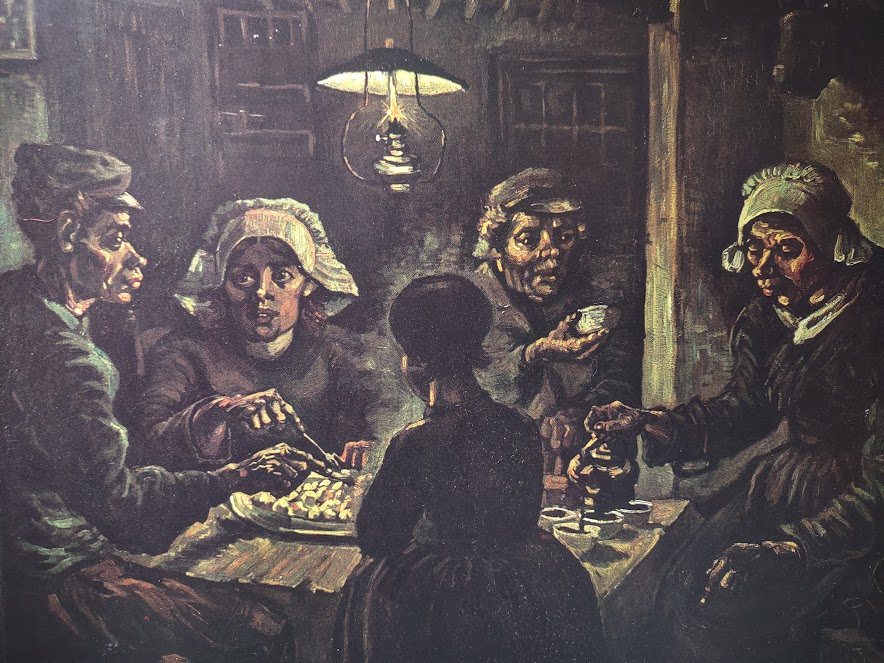
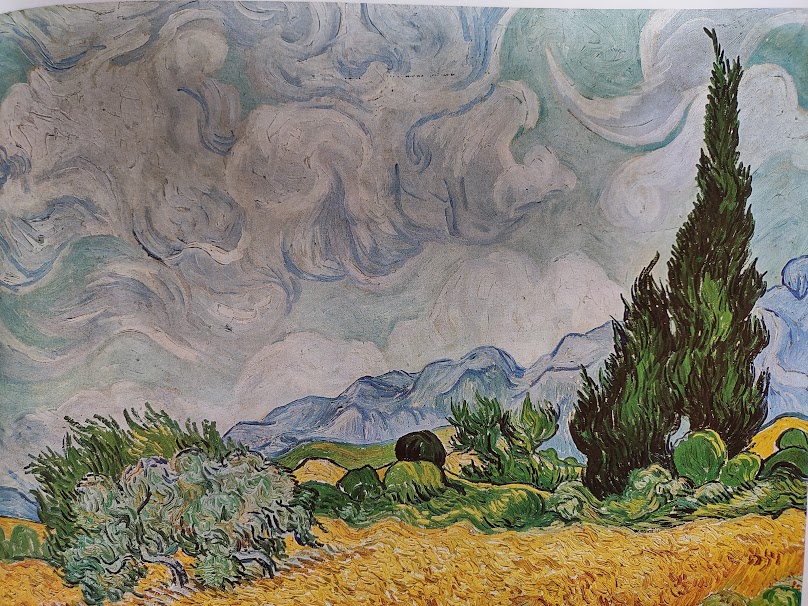
Van Gogh had none of Fitzgerald’s polish, his sophistication. None of the success or wealth Fitzgerald experienced in his youth. Van Gogh would struggle for more than a decade to find himself, although once he did, he would create on a scale that few, if any, have ever achieved. Over two-thousand works of art, including nearly 900 oil paintings. The Starry Night. Café Terrace at Night. Bedroom in Arles. Van Gogh’s Chair. The Potato Eaters. The Church at Auvers. The Wheatfield with Crows. His works are bold in color, dramatic in their brushwork. The viewer cannot look away.
And yet, it was not enough.
Vincent Van Gogh was the son of a Dutch-Reformed minister and a woman who was grieving the stillbirth of her first child, a child who died exactly one year before Van Gogh was born. A child he would be named after, Vincent Willem—an idealized perfect child his mother had invented and whom he would never feel he could live up to. At age 11, he was shipped off to boarding school. He hated it, but his repeated pleas to come home went unanswered.
His professional life began five years later when his uncle snagged a position for him with famed art dealers Goupil & Cie in the Hague. After four years training, he was sent to London, then Paris, but found the commodification of art deeply troubling. Van Gogh then took up Latin and Greek, hoping to become a clergyman, but that didn’t work out so he became a lay preacher, caring for the sick and reading the Bible to coal miners in a desolate region of Belgium. It was here that he finally decided to take up the work he had always been drawn to—painting. He stopped preaching to the miners and began making sketches of them, then paintings. He was 27. He would be dead a decade later.
Always restless, he soon left Belgium for The Hague, where he met up with his cousin by marriage, Anton Mauve, an artist who was enjoying the kind of success Van Gogh dreamed of. Mauve introduced him to painting in oil. He also fronted Van Gogh the money to set up a studio, but later cut him dead when he discovered Van Gogh was living with a prostitute.
Van Gogh would move on to Antwerp, painting the local mills and churches, the wheatfields, the orchards, the faces he found in cafes, the peasants. Of his painting The Potato Eaters, he wrote to his brother Theo: “I wanted to convey the idea that the people eating potatoes by the light of an oil lamp used the same hands with which they take food from the plate to work the land… that they have earned their food by honest means.”
He would try to sell his paintings. Without success. Theo, an art dealer, would do all he could to help. It was Theo who got The Potato Eaters into a Paris exhibit in 1885. But the world was not yet ready for Van Gogh. “Too dark,” they said. So unlike the light, bright style of the Impressionists. In Paris, he met other avant-garde painters, notably Emile Barnard and Paul Gauguin, who were also moving beyond Impressionism. But the vast city wore him out and he moved to Arles, having not sold a single painting of the hundreds he’d completed in Antwerp and Paris.
At Arles, in the famous Yellow House, both home and studio to Van Gogh, his painting continued at a fevered pitch, each work more brilliant than the last. It was here he invited Gauguin to come and live with him so they might work together and make real a dream he had long harbored—an artists’ collective. For a time, the dream seemed possible—the two men took their easels into the fields, painting companionably side by side, but then the arguments started. And grew in volatility. After a particularly heated debate over whether painting should proceed from the imagination (Gauguin) or be based in nature (Van Gogh), Gauguin packed his bags and left in December 1888. Van Gogh cut off a piece of his ear soon after and spent the next year in a mental asylum in Saint-Remy-de-Provence where he continued to paint, completing more than 150 works. He then settled in Auvers. It would be his final home.
His brother, Theo, had continued submitting Van Gogh’s paintings, most notably to the annual “Salon des Indépendants” in Paris. Ten of his works were finally accepted in March 1890. Claude Monet declared them the best in the show. Only two months before, the critic Albert Aurier had called Van Gogh “a genius”, and a society of avant-garde painters that included Toulouse-Lautrec had invited him to submit works to their annual exhibition.
His art was beginning to be appreciated. But it would come too late and be too little. Worn out from years of fevered hopes, hardscrabble living, and constant disappointment, on the morning of July 27, 1890, Van Gogh wandered out into the fields he loved to paint and committed suicide, shooting himself in the abdomen before walking back to town where he died in his bed two days later.
What We Can Never Know
Fitzgerald died believing his life had been irrelevant. His works would be forgotten. His quest for immortality a failure. And those beliefs hastened his death—there was not enough alcohol in the world to ease the pain.
Van Gogh died believing the world to be utterly indifferent to what he offered.
To be mortal though is to never know the true impact of our life. How the ripples we cast, whether ignored or heeded in their hour, stretch beyond us, touch and change other lives. How The Great Gatsby—whose initial dismal sales would eat away at its author’s confidence and happiness until it killed him—would then be rediscovered a decade later to become a huge best seller. A literary masterpiece that has sold over 25 million copies worldwide and is a staple of university literature studies around the globe. How the painter of The Starry Night, who sold but one painting in his lifetime of the hundreds he created—and so despairing, took his own life—would one day be regarded as one of the greatest painters of all time, his works hung in museums around the globe and sold at auction for prices in the tens of millions.
Embrace the Moment
Will Shakespeare likely had no notion that the plays he wrote would last 400 years and counting. Very few plays were published in his lifetime. Publication paid little, if anything, to the author, and there were no copyright laws. In fact, plays were largely felt, by those who decide what “matters”, to be entertainments for “the rabble.” Had it not been for Shakespeare’s actor friends Henry Condell and John Heminges tracking down prompt books (the manuscripts used by the actors), the best of the quartos (cheap pamphlets of plays, sometimes assembled from memory by audience members), and the author’s working drafts to produce The First Folio, many of what are now considered his greatest plays would have vanished. Shakespeare simply wrote because that’s what he loved—the theatre. It was his LIFE. And that way of living—doing what you love because you love it, wherever it goes, however it is received—is much more important than what happens after you’re gone.
When I was surveying world religions for their take on immortality, I was struck by two things: 1) Most religions seem to use the afterlife as a carrot-and-stick to get people to follow whatever rules the religion deems “appropriate behavior”; 2) Judaism and the ancient Greco/Roman world share a fuzzier notion about an afterlife, if they have/had any notions about it at all. I have no ancient Greco/Roman friends to query about this, but I did ask my Jewish friends on Facebook for their understanding of immortality as it plays out in their religion. Here are a few of their comments:
Jeffrey: Apparently, there’s no afterlife per se.
Amy: It’s vague and I think the point is that this life matters.
Lesley: In every service, we say prayers for those who have passed. So that they are always with us.
Toni: For many Jews, the emphasis is on living today, not on an afterlife.
Mimi: In all my years of Sunday school, Hebrew school, and services, I don’t remember the topic coming up!
As for the ancient Greeks, with their various gods, mythic tales, and the underworld, the fate of humans still came down to what the playwright Aeschylus has Apollo declare in Eumenides: “There is no resurrection.”
Death is it, ballgame over.
The Roman poet Horace was even more succinct. Cutting right to the point, he wrote: Carpe diem. Seize the day!
 Everyone at the party had a good laugh over this little tale of digital mayhem. Probably because: 1) we could all imagine ourselves doing something equally stupid, and 2) we were relieved we hadn’t been the one to do so in this instance.
 to freak out, imagining that everyone saw, that everyone now thinks we’re awkward, stupid, incapable. This magnification of our own mistakes has two negative effects: 1) To avoid any risk of humiliation or rejection, we become much more guarded in what we say and do; 2) As a consequence, we drain a lot of the joy from our lives.






















 amyhenrybooks