What You Don’t Know CAN Hurt You

Recently, as I was waiting in my local hair salon, I overheard another customer ask the stylist if she had seen some issue on the news. The stylist replied that she never watched the news. “I just don’t want to know,” she said.

I was surprised, and distressed, by her words. Our country is at a crossroads such as we have not experienced since the Civil War. In that time, the issue was whether the union would endure. The question before us now is whether we will remain a democracy or become a dictatorship, our Constitution and fundamental civil rights consigned to the trash heap of history. None of us can afford to look away.

And yet, many of us are. Looking away. Ever since the pandemic—an event initially presided over by a MAGA-hatted president who advised us to drink bleach and who left the individual states up to their own devices when it came to procuring masks and dealing with overcrowded, understaffed hospitals as the bodies piled up in trucks during the summer of 2020—ever since then, increasing numbers of Americans have been “tuning out.”

 A Reuters Institute for the Study of Journalism survey reports that more than 40% of Americans say they avoid news about national politics altogether. “It’s such high stakes, no clear resolutions,” NPR’s media correspondent David Folkenflik summed up the respondents’ comments.

High stakes, indeed, in an election year. Who will we elect president and what will be the consequences? Yes, the news can often feel unnerving, even frightening at times, but we must all ask ourselves this: Do we really want to be ignorant about the people and policies that will shape our lives, our children’s lives, that will heal or destroy the environment, improve or demolish healthcare, save or terminate Social Security and Medicare, protect or outlaw our right to protest, equal treatment under the law for all Americans, access to birth control, gay marriage?  

Consider the Source

“You don’t know what to believe; it’s so much information to soak in that you sometimes don’t know if it’s true or not,” one woman said in a recent Pew poll on the subject of following national politics. To be sure, the present media deluge of he said/she said/they did that/they didn’t do that can feel both confusing and exhausting So, how to choose which news to view or read?

I cannot emphasize this strongly enough: Everything has a point of view. Every newspaper article, every news broadcast, every topical book, every social media post dealing with political issues, every blog post—including this one. Think of The New York Post versus The New York Times. Or Alex Jones versus Rachel Maddow. Clearly though, while everything has a point of view, not every view is equally true, i.e., based on the facts. Toss in the nefarious strategy Trump buddy Steve Bannon calls “flooding the zone with s**t” to intentionally confuse readers/viewers/listeners, and you’ve got the perfect recipe for chaos. As Bannon bragged, “This is not about persuasion. This is about disorientation.” Beware the bamboozlers who are trying to confuse the issues—and you.   

In his excellent op-ed for The Hill, Joe Ferullo, an award-winning media exec, producer and journalist who has worked for ABC, NBC and CBS, noted the steep decline in both viewership for the major nightly TV news programs and readership for print newspapers. At the same time, people are consuming ever-increasing amounts of what Ferullo calls “unpackaged” news—an endless series of unmoored headlines, updates, tweets, and notifications on their phones and tablets. A jumble of one thing after another without depth or connection. How are we to develop “a comprehensive picture of politics, the nation or the world?” Ferullo asks. Contributing to this quagmire is what CNN cites as the tendency of social media platforms to boost the “most extreme confrontational and conspiracy theorist voices.”

Sifting the Facts: Panning for Truth

Sifting what is fact versus fiction can require a little digging and cross-checking. Generally, I rely on the news agencies AP (Associated Press) and Reuters or fact-checking websites like Politifact and FactCheck.org. As an example, I’ll use an email I received yesterday from Color of Change, a self-described progressive nonprofit civil rights advocacy org. The email reported that:

Neo-segregationists have won two crucial legal victories in their fight to enshrine Jim Crow-era advantages for white people.

First, two Trump appointed judges blocked the Fearless Fund, a Black-owned venture capital firm, from issuing grants to support Black women-owned businesses. They perversely cited a Reconstruction-era law meant to protect Black people from economic discrimination. Given that Black women-owned businesses receive only 0.0006% of total funding from venture capitalists, this ruling makes it clear that neo-segregationists want to exclude Black women from access to financial resources for their businesses.”

I copied the words in bold and put them in my search bar. Up popped the AP News website where I read:

A U.S. federal court of appeals panel suspended a venture capital firm’s grant program for Black women business owners, ruling that a conservative group is likely to prevail in its lawsuit claiming that the program is discriminatory.

The ruling against the Atlanta-based Fearless Fund is another victory for conservative groups waging a sprawling legal battle against corporate diversity programs that have targeted dozens of companies and government institutions.   

     The case against the Fearless Fund was brought last year by the American Alliance for Equal Rights, a group led by Edward Blum, the conservative activist behind the Supreme Court case that ended affirmative action in college admissions.

Color of Change email verified! And I learned that this case was brought by the same right-wing group that spearheaded the (sadly) successful effort at the Supreme Court last June to end affirmative action in higher ed. The whole process took just three minutes. The time it takes to read and respond to one or two Facebook posts. Is the future of our democracy worth it? I think so.

Our Democracy Has Basic Rules

Contrary to what you may have heard recently from a certain orange-haired person found guilty in the first degree in a New York State trial on 34 counts of falsification of business records, the president of the United States is not above the law. Presidents cannot do whatever they want. Whenever they want. America is not a dictatorship—yet. As citizens, our best interests are served by knowing the basics of how our government works and being alert to those who would run roughshod over our Constitution and curtail our rights.

In our democracy, there are checks and balances to prevent a president from acting like a dictator: Congress, the courts. The framers of the Constitution made sure these checks were down in writing. They did not want any one person to seize power, be they king or dictator. The president cannot make new laws or change existing ones. Legislative power belongs exclusively to the House and Senate. However, in the spirit of checks and balances, the president can veto any bill they believe unconstitutional, unjust, or just plain risky.

But that’s not the end of it. The president’s veto cannot simply amend or alter the proposed legislation. Instead, the president’s objections are sent back to the House or Senate (depending on which branch of Congress originated the legislation) where the bill will be reconsidered. If two-thirds of that body still agree to pass the bill as written, it is sent to the other house for the same process. And if two-thirds of that house still approve the bill it becomes law. This is spelled out clearly in Article I, Section 7, clause 2 of the Constitution. This procedure prevents Congress, as well as the president, from seizing total power. No dictators whether on “Day 1” or “Only on Day 1.”

What a President Can Do

Reading across a wide array of Internet articles, I repeatedly came across reports of undecided voters leaning toward Trump because they blamed Biden for the sharp uptick in the cost of groceries and other consumer goods. Okay, first of all, I travel outside the U.S. each year. Prices are up everywhere. Second, the leap in prices began soaring as COVID gripped the country in early 2020, well before Biden was elected. Supply chain issues and so forth, companies said. Once Biden took office in 2021 and got the plague under control with his vaccine roll-out, companies saw no reason to yield the big profits they’d been enjoying. Third, and most important, in a democracy, in a capitalist country, the president cannot unilaterally lower costs. They cannot simply order private companies to drop their prices.

What a president can do is propose legislation. They can urge Congress to enact it into law, but that’s the limit. The president cannot introduce it in the House or Senate. Biden’s Build Back Better Act was introduced into the House by Rep. John Yarmuth (D-KY) in September 2021 and passed by that body in November. Described by Arvind Ganesan, business and human rights director for Human Rights Watch, as legislation that “could help reverse decades of underinvestment in social protection”, the Build Back Better Act included major investments in free universal pre-school and the highly popular child tax credits, affordable housing, expanded healthcare, the right to four weeks of paid leave, and increased penalties for workplace safety violations or violation of workers’ right to unionize. The icing on top was $555 billion to fight climate change and authorizing Medicare to negotiate prices for a lengthy list of prescription drugs. In a Senate split 50/50 between the two parties, and no Republicans willing to vote for the bill, it would take every Democrat with VP Kamala Harris breaking the tie, to pass the act. That’s when Sen. Joe Mansion, a Dem in name only, announced he would not vote for the bill as written.

A much-watered-down version The Inflation Reduction Act was passed into law in 2022. The new bill retained the funds for healthcare, a 15% minimum corporate income tax, and record spending for climate (though substantially less than the initial bill), but the right of Medicare to negotiate drug prices was immediately contested by pharmaceutical giants Johnson & Johnson and Bristol-Myers Squibb, among others, who currently have lawsuits pending against Biden’s Health and Human Services Department to stop the negotiations.

Undaunted, Biden has continued to press for more and better, asking Congress last March to increase the number of prescription drugs Medicare may negotiate from 20 to 50 per year. His proposed budget for FY2025 would expand Medicare’s $2,000 annual out-of-pocket limit on drug costs to people of all ages with private insurance. In June, Biden announced he is forming a “Strike Force on Unfair and Illegal Pricing” to be co-chaired by the Federal Trade Commission and the DOJ to investigate and stop illegal corporate price-gouging practices in groceries, housing, healthcare and financial services that hurt or cheat American families. This is what a president can do and Biden is doing it.

Ignorance is Not Bliss

The need to protect their mental health was a reason cited by many respondents in the Pew poll of people who have largely or completely tuned out of national politics and the news. Others expressed frustration over the two-party system. “I hate the fact that you’re forced to pick between the lesser of two evils when voting. No, I don’t want either of them. Next,” a man in his twenties complained.

However much one agrees or disagrees with that man’s feelings, the bottom line is one of the two major candidates, Biden or Trump, will remain or become president in November. The four other candidates—Robert F. Kennedy, Jr., an outspoken anti-vaxxer whose legendary family has disavowed him and publicly supports Biden, is running as an independent, as is activist Cornel Wes, along with the Green Party’s Jill Stein, and the Libertarian Party’s Chase Oliver—combined will only draw a few percentage points of the vote, but possibly just enough to swing it one way or the other for Biden or Trump, as Jill Stein’s candidacy may have done for Trump in 2016.

As for “protecting one’s mental health”, I don’t buy it that tuning out stops the worrying. The hair stylist I mentioned at the outset? She’s still depressed, worried, agitated. Ignoring what’s happening around you, the threats our country and our world faces—it doesn’t bring inner peace. The body still remains stressed, the mind exhausted with the great effort to silence what is occurring out there.  

Engaging with the world, taking positive action for the outcomes you wish to see—I know from experience that can help and it can make a difference. In 2020, I wrote 250 postcards to Georgia voters to help elect U.S. Senate candidates Jon Ossoff and Raphael Warnock. They both won their seats. Of course, 250 postcards was a drop in the bucket but when all the “drops” were combined—the efforts of all my fellow postcard writers—it was enough. Likewise, if we close our eyes and ears to what’s happening in the moment, what’s at stake, our failure to engage may be enough to bring about the dark future we fear.

In this critical moment, it’s worth remembering that when Hitler seized control of the German government in 1934 and began his “make Germany pure again” program—rounding up and exterminating the Jews, Communists, trade unionists, Black people, Roma people, gays, the mentally- and physically-challenged—many “good Germans” said, “It doesn’t affect me. I’m not in any of those groups,” and looked the other way. They couldn’t have been more mistaken. Eleven years later, when Germany finally surrendered to the Allies, Hitler had fomented a world war that killed nearly 60 million people, including six million Jews, and decimated his own country.

However distressing it is to see what’s happening in the world now, it is nothing compared to the disaster that awaits us if we close our eyes.

Hang Up And …Live!

“The only time you ever have in which to learn anything or see anything or feel anything, or express any feeling or emotion, or respond to an event, or grow, or heal, is this moment … You’re only here now; you’re only alive in this moment.”   Jon Kabat-Zinn

(NOTE: This is an “ancient” (meaning anything older than three months in today’s vernacular) post, but I think it’s even more germane today than when I penned it in 2017. And I needed some pithy words to post here while I regain my sanity in London. See you all next month with fresh words.)

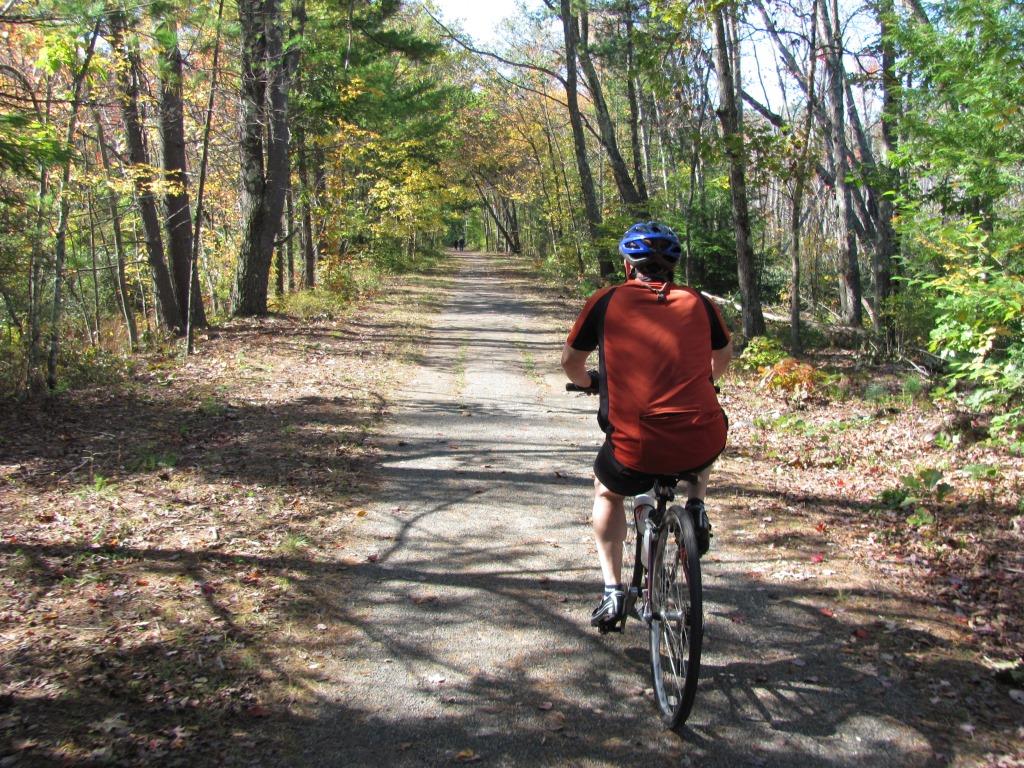
I’m lucky to live in a state that has over 300 miles of rail-trails, so when I’m done with the morning’s writing (and it’s not January), I often go for a bike ride. Lose the tension in my shoulders. Let go of whatever problems my characters have posed for me that day (and those pesky people can cause real trouble when they choose).

My favorite loop, about ten miles out and back, takes me to Look Park, a vast oasis of  green lawn and blue ponds. The trail there mostly goes through wooded areas. At one spot, chickens and ducks waddle along the verge, scouring the long grasses and wildflowers for a snack to supplement their caregiver’s feed. The first time I saw them, I worried for their safety—so many bicyclists whizzing by—but over the years, I’ve come to realize they are proof of Darwin’s law:  Adapt or perish. They are obviously smart fowl.

At another spot, the land falls sharply away from the trail, and I glimpse the skeleton of a 1940s truck, blue in the patches that rust hasn’t eaten. Time. It’s always there, at some moments shouting, at others whispering.

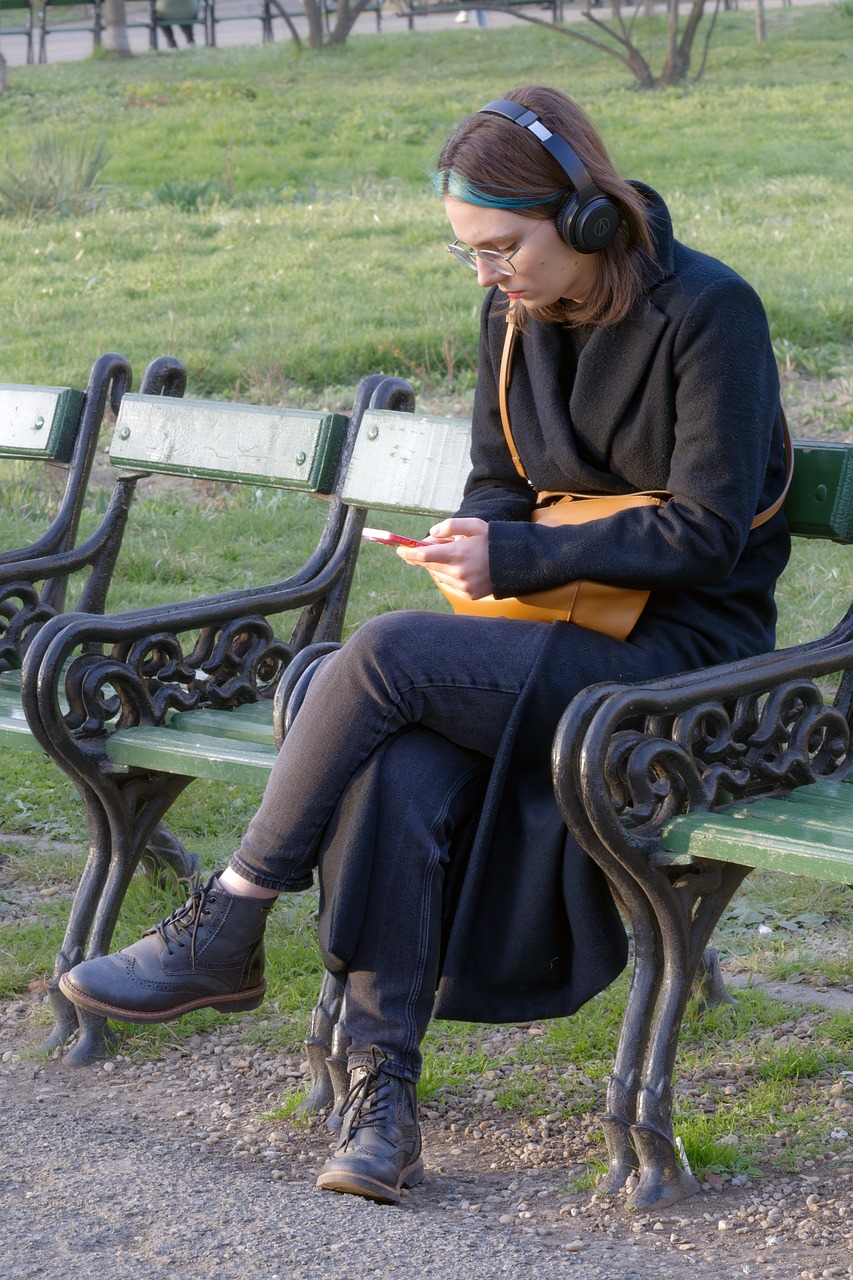
No matter how scorching or muggy the day, a breeze lifts my hair, cools my skin, empties my busy brain, and I tune into the birdsong, tranquil. Which is what makes it all the more jarring when I pass a woman, walking with her toddler and talking into her cell phone. Seconds later, I cycle past another walker, this one with ear buds connecting her to an iPod while she texts on her phone, fingers flying over the keyboard. There’s even a bicyclist—and I’m not making this up—pedaling along while texting two-handed.

It’s lovely that all these folks are out here enjoying the rail-trail, but my question is: Are they actually enjoying the rail-trail?

Selfie Madness

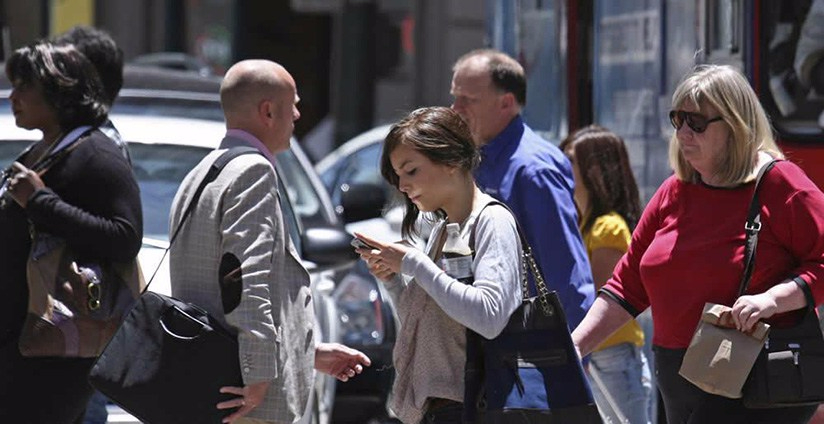
We’ve all seen the absorbed texter (maybe even bumped into them!) walking through the airport, oblivious to others and their luggage or, like an errant pinball, caroming down a crowded city sidewalk only to step off the curb into traffic, unaware.

CAMERA cellphone user on busy sidewalk caminar-mirando-el-celular3People speak of life passing you by, but our digital addictions are causing us to pass by life without pausing to register its pulse. Texting. Tweeting. And then there’s selfie-madness.

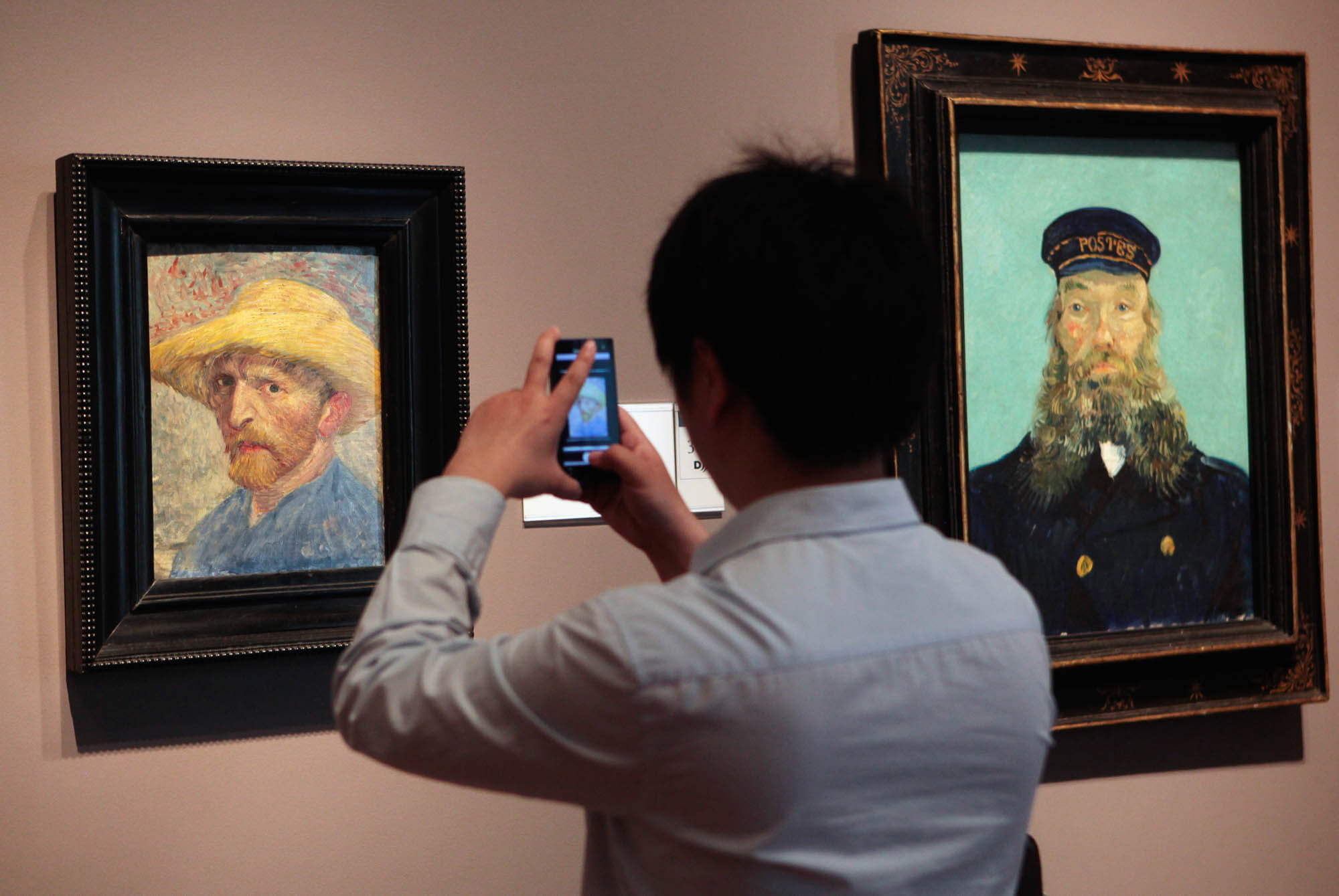
In June, I was at a Yankees-Red Sox game with my husband. Since we only go once a year, we treated ourselves to field level tickets along the first base line. These seats aren’t cheap, so I was surprised at how many people around us spent the entire game taking selfies, their backs to the ball field. They seemed to prefer snapping photos of themselves attending a Yankees-Red Sox game to actually watching the play on the field. And it was a great game. Tense. The lead bouncing back and forth. Close score. But it often felt like my husband and I were the only ones following the action, a task not made easier by the bodies hurtling through our line of sight in search of the perfect location/angle/backdrop for a selfie.

The Digital Invasion

I first glimpsed signs of what would become our digital mania in 2003 while vacationing in Florence, Italy. We were visiting Il Duomo (Santa Maria del Fiore) when I noticed a man walking about with a video camera, filming, his wife and kids doggedly trotting after. Although camcorders still used videotape at this time, they had shrunk considerably in size from their dinosaur predecessors of the mid-1980s. And this man was determined to make use of their newfound mobility.

He continued filming as we strolled about the piazza, admiring Ghiberti’s Gates of Paradise—ten dramatic bronze reliefs that depict Old Testament scenes on the doors of the Baptistery—and Giotto’s polychromatic marble-faced campanile with its della Robbia panels.

The camera remained glued to his face when we entered Il Duomo beneath the clock designed by Uccello, and traveled up, up, up the 463 steps to stand amazed beneath Brunelleschi’s architectural miracle of a dome, its interior graced with Vasari’s frescoes of the Last Judgment.

I never saw his face that day. In my mind, he remains a figure ambling about with a large camera where his head should be. I’ve often wondered if he and the family ever got around to watching the hundreds of hours I’m guessing he filmed during his Italian vacation. Or did he just move on to the next destination, camera at the ready, missing more moments of his life amid the wonders of the world? Perhaps he morphed into the guy I saw a decade later during another trip to Florence, a selfie stick strapped to his forehead, a camcorder suspended from its top, dutifully recording everything he was walking away from in the Piazza della Signoria, his face in the foreground.

Ain’t Nothing Like the Real Thing

With smartphones, the capture of every moment is only a click away. On the same trip that took us to Yankee Stadium, we spent a morning in the Metropolitan Museum of Art. We were hanging out in European Paintings 1250-1800, soaking up the dark mysteries of Rembrandt, the pink fulsome flesh of Rubens, the broad Flemish landscapes of Bruegel. Darting all about us, like a gnat you can’t seem to lose, was a woman snapping photos of every painting. And not only the paintings, but the little description cards that accompanied each work. Snap. Snap. Snap. She paused only a nanosecond to capture Vermeer’s Young Woman with a Water Pitcher before buzzing off to give Franz Hals’s Portrait of a Bearded Man with a Ruff the same blink of her camera.

I can report she missed not a single painting, but in another, more significant way she missed them all. If that seems an exaggeration, pick up a postcard of Van Gogh’s extraordinary painting of a chair, called reasonably enough Van Gogh’s Chair, and compare it to the original that hangs in London’s National Gallery. A picture may be worth a thousand words, but an amateur photo of a major artwork is… squat.

Patti LuPone Takes On The Texters

And when we’re not filming, we’re texting. Two years ago, while starring in Shows for Days, actress Patti LuPone grabbed the cell phone of an audience member in the front row who had been texting through the entire first act. The cast and audience had already endured four separate cell phone rings during that day’s show, so tempers were somewhat frayed.

“She was sitting in the light, so everyone could see her texting. It’s ridiculous,” LuPone said.

Lupone returned the phone after the performance was over, but gave vent to her distress. “I’m defeated by this. It’s not changing, it’s only getting worse … If something isn’t done, I will think twice before I get back on a stage again.

“It’s not [about] theater etiquette,” she explained. “It’s human etiquette. We’re living in an isolated society, the phone controls our every move, and we’ve lost sight of our neighbor, the people surrounding us.”

One of the great ironies of our cell phone addiction is that it was preceded by an innovation that freed us from our phones: the answering machine. They were a revelation, a revolution. No longer did you have to worry about missing an important call. It would be there on the little cassette when you got home. You were free to go about your day, or travel the world, without once thinking of your phone. It was a golden time, however short-lived.

Surprise: Pop Quiz!

Okay, I’ve had my moment on the soapbox. Now it’s time for you to play along.

When did you last:

-Take an evening off Facebook and Twitter to hang out with friends and neighbors?

-Visit an art gallery or museum using only your eyes, no camera (photos of you and loved ones in front of the museum don’t count here)?CAMERA couple both on cellphones Who-is-more-important-your-spouse-or-your-phone

-Pick a dining spot in a city not your own by walking along the streets “window shopping” restaurants and cafes rather than googling TripAdvisor or Yelp?

-Enjoy a cup of coffee or glass of wine at a cafe with your significant other and no cell phones in sight?

-Browse a brick-and-mortar bookstore–with actual shelves and real books you can open and read–rather than surf Goodreads for recommendations, then order from Amazon?

-Go for a hike or a bicycle ride “naked”–no iPod, no earbuds, no smartphone?

If you can’t recall the last time for any or (yikes!) all of the above, I suggest you get out into the world immediately. Talk to real people. Listen to the sounds of summer—the buzz of bees, kids laughing, birds trilling, the lap of water at the beach. Literally, stop and smell the roses.

And give your texting thumbs a rest. For there are more things in heaven and earth, Horatio, than are dreamt of in your mobile apps.

Where There’s Life, There’s Hope

The onset of Spring in the Northeast is marked by the blooming of the first flowers. Daffodils, crocuses, hyacinths. Usually, this occurs mid-March but this past winter, the high-40s/mid-50s weather that brings these blossoms came early in a surprisingly mild February. Valentine’s Day saw the first buds appear on the bank of daffodils that line my driveway. Like the unexpected reprieve from the usual snow, ice and freezing temps of winter, the sight of these early buds both lifted my spirits and worried me. Climate change, with its spikes of unseasonable warm winter weather, followed by a freeze, had killed the local peach crops in 2023, and this February “heat wave” made me fear these buds, too, would die before they ever bloomed. After all, we had a long stretch of winter to go. I resigned myself to this likeliest of fates. Next year, I told myself. Maybe next year.             

When the daffodils actually blossomed in the first week of March, I was cautiously happy: Well, at least I’ll enjoy them for however long they have. Then came a frost. Nighttime temps dipped into the low 20s for several days. Cold winds buffeted the garden at 20 miles an hour. The daffodils slumped, heads downward, and I thought, Okay, they’re over.

But the following week brought several days of bright sun. Despite the cold winds still blowing, the flowers seemed to lift in this welcome light.  At first, I thought it was just my wishful thinking, but as I checked them daily, I realized they were, in fact, not simply hanging in there but getting stronger. Then one morning after two days of rain, voila!, they looked great. No longer tentative, but hale and hearty! They even survived an early April ice storm. I recalled the poet Emily Dickinson’s famous verse:

Hope is the thing with feathers,
That perches in the soul,
And sings the tune without the words,
And never stops–at all.

Hope–the life raft we cling to in times of trouble.

Bad News on the Doorstep

The late winter weeks were not an easy time for me. In mid-February, my dentist informed me I had an infection in Tooth #31 that would require the tooth be extracted. Since the drug I take to build bone density carries a risk of jaw necrosis (meaning “death of the jaw”—not good!) for such procedures, no regular dentist wants to touch it. I had to schedule an appointment with an oral surgeon ASAP. But as we all know well, everyone is “scheduling out” for months in advance. After some gentle but steady pressure on my part, I was able to secure an appointment for the end of March. By mid-March, my tooth and jaw were really aching, but a round of antibiotics eased the pain. Just two weeks to go, I thought. I can make it. Everything will be okay.

And then I got a summons for U.S. District Court. Two months of on-call jury duty for May and June. The problem? Ed and I had booked flights and rented a flat in London many months earlier for—you guessed it—May. Ten-thousand dollars, non-refundable.  

I answered my summons online and pleaded my case. I got an email reply that same day. My service would be postponed until August/September. September—the month we were already booked to travel to Rome for our anniversary. I searched my summons papers for a phone number to call. Nada. Just an automated check-in line for jurors already on duty.   

I replied to the email that same afternoon. Happy, I said, overjoyed, I stressed, to do the jury thing in July and August. Or October and November. I’ve been summoned for jury duty 10 times in my life, I emphasized, and other than the summons during the dark months of COVID (when it posed a risk to Ed), I’ve never asked to be excused or postponed. Please. Please. PRETTY PLEASE!

No reply. I decided to give it a week. After all, people get busy.  

Hitting Bottom                                                                                                                                 

Four days later, I heard not from the court, but the oral surgeon. Could I come in today? The office had a cancellation and he could pull my tooth that afternoon—a week ahead of schedule. Yes! Sooner meant less risk of serious jaw infection.

The oral surgeon turned out to be excellent and I followed the usual “eat only applesauce/yogurt/pablum” post-surgery diet for a week. I was relieved, but the jury thing was still out there. I wrote the court a second time, mindful to include our previous correspondence, and crossed my fingers. A week went by, then another. Silence. Meanwhile, though the area around the pulled tooth was healing well, all kinds of pain was occurring in other teeth, my sinuses and the back of my jaw on both sides. The soonest my dentist could see me was April 11. Two…whole…weeks…away. More of a wait than I wanted but what can you do? I asked them to let me know if anyone cancelled before that date, and returned to my diet of soft mush, Advil—and hope.

Then in the early hours of April 2, I woke with a pain so intense in my left jaw, I couldn’t worry about or even imagine the future. April 11? In that moment, it felt like the 12th of Never. Ed retrieved the ice pack—a gift of the oral surgeon—from the freezer. I wrapped it snug around my head and took two Advil.  

I was enjoying a light doze when the phone rang at 7:15 a.m. No one calls at that hour unless it’s important, so I jumped up and retrieved the phone from my dresser. It was the dentist. There’d been a cancellation. Could I come in now? There was no time for a shower, so I did a quick spot clean, brushed my teeth, and headed out the door. The upshot? Jealous of all the fuss the extracted tooth (Tooth #31) had received, Tooth #15 was now yammering for a root canal. My dentist set up an appointment with the endodontist for that same afternoon. Ed and I went to work in our usual coffee shop for a few hours, then headed 20 miles north to seek salvation. Three hours later and $1,800 lighter, I emerged painless.   

A Celebration and the Gift of Hope

Two days later, I celebrated my birthday quietly with Ed, watching movies and playing Scrabble, while the ice storm I mentioned up top raged outside. I was just glad to be pain-free. The next evening we had dinner out at a favorite local eatery, High Brow. Our town has never really recovered from The Plague restaurant-wise. Many places closed and those that remained open seem to largely survive through take-out orders. More than once, Ed and I have been the sole table in a restaurant, while people came and went, picking up their take-out food. But High Brow hops on a Friday night. Friendly staff. Excellent food. Always a lively crowd. It was a real celebration and it refueled my hopes. Hope for a world where people value and enjoy a communal life. If we can come together, we can support one another, solve our problems, take courage—and joy—in the knowledge that we are not alone.

Even a brief one-on-one encounter with another person can boost hope as I was reminded three days later when, out for a walk as the Total Solar Eclipse reached the Northeast, I stopped to chat with a young man who was viewing the phenomenon through a pair of special eclipse glasses. He asked if I’d like to take a look. The “black” moon with its fiery orange sun rays was indeed amazing. I thanked him and continued home. A five-minute exchange at most, but I’m convinced our mental health, happiness, hope depend on these human connections—big and small.    

When You Have Exhausted All the Possibilities, Remember This: You Haven’t (Thomas A. Edison)

So, the tooth was good—just waiting for a crown. The birthday was happy. The daffodils had been joined by a few tulips. But there was still the jury duty thing. Keeping to my long-standing mantra of “one disaster at a time,” I had let it go for a couple of weeks, simply checking my email daily in hopes of a reply. So far…nada. I would have to figure out the next step. Soon. Real soon.

The night after the eclipse, seeking some, any idea on how to proceed, I googled “postponing jury duty.” Scrolling through the results, I was excited to discover that one could request a specific postponement date on the state government’s website. Why had this not been mentioned on the summons? Or the original email I received from the Clerk of Court? I went to the website the next morning. I had my juror number, but you also needed the pin number from your summons. My summons had no pin number. Scrolling, scrolling, I discovered a helpline for answers in filling out your request. I called and got A Real Person! I explained my situation, the correspondence that had ended in limbo. “No problem,” this lovely person replied. “I’ll just schedule you for the week after you return from Rome.” Three minutes later, I had an email in my Inbox, confirming the new date. The stress of the past two months fell away in seconds, like the ice from the daffodils had done the week before. By the time I picked up my youngest from the train station that afternoon for a much-anticipated visit, my heart was light, joyful.

Hope, as Eternal as the Stars

I have written here about the stars on several occasions. How, sitting on my deck on a clear night, the sight of them fills me with hope. They are eternal. Whatever mess of things we mortals make down here, however stupidly, dangerously we risk the future of our planet and all its abundant life, the stars will survive. My stressful weeks from late February to mid-April happened to coincide with a long string of cloudy evenings. The stars were not in evidence just when I needed them most. But one night, I thought It’s okay. Though I can’t see them at the moment, they’re still up there, exactly where they should be. Obvious, I know, and yet profoundly comforting.     

I leave you with a haiku I composed in the shower the morning we “sprang ahead” to Daylight Savings Time on March 10:

Today the light’s one
Hour longer, the dark recedes,
Our hopes grow stronger.


Injustice Burns Deep

(Yes, this is a lengthy post, but I believe we need to remember and draw courage from the moments of our greatest strength, our finest ambitions. I promise you a much shorter post for May. )

When I was three years old, my mom sent me to a nursery school run by a former teacher in her home. As I had no siblings (yet) and all the kids in my neighborhood were teens and pre-teens, my mom thought the preschool would help me to overcome my shyness. The problem was, the other 7-8 kids were a year older, which doesn’t sound like much, but that one year difference feels mighty big when you’re a measly three. They mostly ignored me, but I was used to playing on my own, so not unduly stressed about the situation.

One of my favorite toys was a miniature wooden train set. I had one like it at home, but this set had twice the track. And I loved the accessories that went with it—the little painted wooden houses, the bridges, the cars of red, blue and green. I could make a whole story in a world of my choosing inside my head. Just like I did at home. If I could get my hands on it. A highly popular toy, it was usually monopolized by the boys.

But one morning, I saw my chance. The train set was wide open! I knelt on the floor and quietly went about the business of linking cars together from engine to caboose. I was almost there when a hand swooped down and snatched the blue car from my grasp.

“You can’t play with this!”

Startled, I looked up to see John R. towering above me, a menacing, satisfied sneer on his face as he placed a firm foot on a section of track.

The shock of that moment. I have never forgotten it. Outwardly, I ventured no response. I didn’t punch or slap him, didn’t yell or try to wrestle the stolen car from his grip. I didn’t even call for the teacher. But in the moments after he grabbed that train car, I burned with indignation. Who was he to take that car from me! I had every right to play with the train set and he had no right to stop me!  

I never told the teacher, or my parents, but for the remainder of that year, I sat behind an armchair in the living room and watched the other kids play. Then I went home and copied the games/activities I had seen them enjoying. My mother discovered this from talking to the teacher, but neither of them knew why. Only I did, and I never revealed the reason. 

Of course, many other injustices would happen to me over the years, perhaps the most egregious being the failing grade I received in a graduate seminar because I strenuously ignored the professor’s blatant attempts to seduce me during our requisite weekly one-on-one sessions. As payback, he “rescheduled” my final project presentation on the day it was due, leaving only a note in my department mailbox that same morning to say our meeting had been moved up from 9:00 a.m. to 8:00 a.m., knowing I would not get the note until I was on my way to see him. When I found the message at 8:45, I rushed to his office, project in hand, to find him standing in the doorway, ready for the scene he’d set up. “You’re late!” He shouted. “I’m failing you!”

Seeking redress for this outrage, I went to see the ombudswoman. While admitting it was a not an uncommon complaint about this instructor, she let me know that “many just go along with it, until the semester ends,” then added, “He does publish more than anyone else on the faculty.” My faculty advisor ruled that he couldn’t fail me while refusing to accept my project, and got the course expunged from my record (the money was not refunded). But it tagged me in the department as someone who “doesn’t go along to get along.” The kiss of death.

And yet, the seizing of the little wooden train car remains the most vivid of all these affronts. It was my first real, solid end-to-end memory, and it both shaped who I would become and revealed to me who I was. Those who were bigger, those with more power, more money, more cruelty in their so-called hearts—bullying others they believed weaker, inferior; grabbing what wasn’t theirs; cutting a trail of misery everywhere they went—I would take them on in whatever way I could. Justice, not only for myself but for all others who suffered unfair treatment. It was my first solid core value. It has guided me through my life.

The year following the train-set incident, a friend from my new preschool at the local YWCA slept over. As we lay in the dark that night, we talked briefly about racial prejudice. I have no memory of what touched off the topic, maybe stories about the “color bar” in the South—Whites Only signs everywhere—I’d seen on the nightly news, a program that always accompanied our family dinners. I said it was terrible how mean white people were to colored people (we were still a few years shy of Stokely Carmichael and his term black power). Maureen considered this. “I don’t really care for the Negro much,” she said, “but I do love the Indians. It makes me sad that they are treated so badly.”

Honest to god, those were her exact words. I can’t recall what came after that, but I do know that I was: 1) startled and unhappy that my friend didn’t “care for” Black people, and 2) surprised to learn that Native Americans (a term we did not have at the time) were also the victims of prejudice. I had only seen the “happy” portrayals of these indigenous folks sharing that wonderful first Thanksgiving with the “kindly” pilgrims.     

This not-fairness thing was almost bigger and wider than it was possible to grasp. Almost. But I would come, bit by bit, to understand the enormity of injustice out there.

The Only Child in School That Day: The Courage of Ruby Bridges

In kindergarten, I witnessed a rarity on the nightly news—a story about a little girl just a year older than me. Her name was Ruby Bridges and she lived in a city familiar to me only through a postcard my parents had of the place they’d honeymooned—New Orleans.

Though the Supreme Court had ruled segregated schools unconstitutional in Brown v. Board of Education in May 1954—shortly before Ruby Bridges was born—the backlash, especially in the South, was fierce. Fierce enough that six-and-a-half years later, Ruby was the first Black child in New Orleans to attempt to integrate a “white school.” She was accompanied by a cadre of U.S. Marshals to protect her from the white crowds who heckled and threatened her every step of the way, right up to the schoolhouse door, many of them parents! People with children of their own, who would never for one minute tolerate their kids being treated that way.

As children, we rely on adults to keep some kind of order. To be fair or, if failing that, at least not malicious. But that day, I learned how brutal injustice could be. Later, I would discover that all the teachers at William Frantz Elementary School had stayed home that day—to register their hostility to desegregation. All but one—Barbara Henry, a white teacher who had recently moved to New Orleans from Boston. She alone volunteered to teach Ruby. In fact, Ruby would be Henry’s only student that year. The school literally kept all the white students hidden from Ruby’s view. She was not allowed to go to the cafeteria or the playground at recess, and U.S. Marshals accompanied her to the restroom. They also continued to walk Ruby to school as the angry crowds remained for months, hurling racial epithets and death threats at the six-year-old.

But Ruby Bridges, with Barbara Henry’s support, did not give up. Eventually the protests stopped and many of the white parents let their kids return to the school. In her second year, Ruby was taught in a classroom with other students, she ate in the cafeteria, went out to the playground, and—surprise!—life went on.

Four Little Girls on A Sunday Morning: The 16th Street Baptist Church Bombing

I had just started third grade when a white man planted a box of explosives under the steps of the Sixteenth Street Baptist Church—a Black church and a hub of civil rights activities—in Birmingham, Alabama on a Sunday morning. The explosives went off during the morning services, killing four young girls who were attending Sunday school and injuring many others. In the violence that erupted afterwards between police and furious members of the Black community, two more Black children were killed. Outrageously, it would be fourteen years before Ku Klux Klan leader, Robert Chambliss, was convicted of murder for the church bombing. His partners-in-crime, Bobby Frank Cherry and Thomas Blanton would not be convicted for another twenty-four years!

In third grade, too, I would encounter the word empathy and immediately grasp its meaning: The ability to emotionally understand what other people feel, see things from their point of view, and imagine oneself in their place. Thirty-two years later, I would buy my children Christopher Paul Curtis’s wonderful book, The Watsons Go to Birmingham—1963, the story of a Black family who travels south to visit Grandma in Birmingham, Alabama and arrives there just in time for the church bombing. It was Curtis’s first novel and it catapulted him to national prominence, winning both the Coretta Scott King Honor Book Award and the Newbery Honor Book Award. Today, sadly, The Watsons Go to Birmingham—1963 ranks high on many banned books lists.

Bloody Sunday: All They Wanted Was Their Civil Rights

I would be just shy of my 10th birthday when the world witnessed another horrifying injustice. What would come to be called “Bloody Sunday” took place on March 7, 1965, as some 600 civil rights activists began the 54-mile march from Selma to Montgomery, Alabama to demand of Governor Wallace that their full rights as American citizens, enumerated in the Civil Rights Act of 1964, be recognized and respected. As with Brown v. Board of Education a decade earlier, large swaths of the South had simply chosen to ignore the new law.

Led by Hosea Williams from the Southern Christian Leadership Conference, Amelia Boynton Robinson, a local civil rights activist, and John Lewis of the Student Nonviolent Coordinating Committee, the marchers passed through Selma without incident, but as they crested the Edmund Pettis Bridge (named for a Confederate general), they got a good look at what awaited them. A throng of Alabama state troopers, billy clubs in hand, blocked the road at the bottom of the bridge, backed by county sheriff deputies, and a crowd of locals waving Confederate flags, rooting for a bloodbath.

The marchers continued cautiously, but as they neared the troopers, they were ordered to disperse or there would be serious consequences. Williams offered to talk. No dice. When the marchers did not move, the troopers rushed in, beating them mercilessly and choking them with tear gas. Lewis was knocked down repeatedly (he suffered a skull fracture that day) and Robinson was severely battered. Seventeen marchers were hospitalized and 50 more required treatment for injuries. 

Film of the brutal attack was rushed to the networks. An outraged nation reacted swiftly, organizing sit-ins and demonstrations. Their cries for justice did not go unheeded. A federal court intervened and, at last, protected by National Guard troops, the marchers made it to Montgomery, with Martin Luther King at the helm (he had been in Washington, DC, conferring with President Johnson on Bloody Sunday, intending to join the march the next day).  

In August, the Voting Rights Act of 1965 was passed by Congress and signed into law, 94 years after the Fifteenth Amendment had granted Black people the right to vote. The arc of the moral universe is, indeed, long, but Bloody Sunday made me understand that it is up to us to see that it bends toward justice.

They Were Dancing and Laughing, and the State Said You Can’t Do That: Stonewall 1969         

I was about to enter high school when the Stonewall Uprising occurred. The Stonewall Inn, a popular Greenwich Village gay bar in an era when same-sex relations were outlawed in every state but Illinois, was a target of frequent police raids. Part of New York’s campaign to rid the city of “sexual deviants.” But on June 28, 1969, the police got more than they bargained for. As they entered the bar in the early morning hours, their attempts to harass and arrest patrons met with unflagging resistance. That resistance spilled into the streets. As word spread, hundreds, then thousands joined the protest. Over the next six days, the clash between riot police and LGBTQ+ people and their allies would rage unabated. But when the tear gas finally cleared, what would become known as the Gay Pride movement had come into being.

It had been a long road. Before the Stonewall Uprising, the possibility of justice for LGBTQ+ folks looked pretty grim. It wasn’t enough that they weren’t bothering anyone, that they had their own clubs to dance and mingle in. If the attitude toward Black people had been that they could exist as long as they knew their place and kept to it, the official take on gays was they had no right to exist. A Chicago group, The Society for Human Rights, founded in 1924 to advocate for gay rights, enjoyed a brief moment of attention before political pressure shut it down.  

A quarter century later, another gay rights activist, Harry Hay, founded a more enduring organization—the Mattachine Society—to make Americans rethink their bias against and fear of homosexuals (especially gay men). The Los Angeles-based org sprouted chapters across the country, but the times were still less than hospitable. A 1950 Senate report, “Employment of Homosexuals and Other Sex Perverts in Government” equated homosexuality with mental illness, concluding that LGBTQ+ people were “security risks” to the country. President Eisenhower later banned them from working for the government or any of its contractors. A 1952 publication of the American Psychiatric Association declared homosexuality a “sociopathic personality disturbance.”

The Stonewall Uprising radically altered the landscape. A year later, what would come to be called America’s first Gay Pride parades took place in Los Angeles, Chicago and New York where thousands of LGBTQ+ folks and their allies marched, chanting: Say it loud, gay is proud! Today, Gay Pride Parades are annual events in many countries.

In 1973, the American Psychiatric Association finally deleted homosexuality from its list of mental illnesses, and the next year the first openly gay candidate won a seat on the Ann Arbor, Michigan City Council.

I was a sophomore at Michigan State when the university hosted a “Wear Jeans if You’re Gay Day.” Since this was 1975 and all anyone wore was jeans, it meant that only people who were terrified of being thought gay would make the effort to choose some other garment. I’m happy to report that on a campus of over 50,000 people, I saw no one that day wearing other than denim. It was the era of solidarity. And though it would take another forty years for Obergefell v. Hodges to make same-sex marriage legal across the U.S., the tide had turned.

The Shocking Notion That Women Are People, Too: Roe v. Wade and the Women’s Movement

I would be a senior in high school when Roe v. Wade at last made abortion legal for women. Before that ruling, women were forced to carry unwanted pregnancies to term. Though the advent of “the pill” in 1960 had radically changed women’s lives, back-alley abortions still posed significant risks. And women were still expected to be subservient to men. The happy housewife. The docile helpmate. The all-sacrificing mommy. A woman’s sexuality also remained an unseemly and potentially dangerous thing. Women were still the ones on the hot seat when it came to convictions for rape: Had she “asked for it” in her style of dress (male judges could decide her clothing was too provocative), or by her manner (too flirtatious)? I will say right here, no woman asks to be raped, but the prevailing attitude of the male-dominated judicial system kept many rape victims, already severely traumatized, from reporting the crime.   

The women’s movement that arose in the late 1960s imagined a new destiny for their half of the population. Took to the streets to say we demand control over our bodies, our options, our lives. Women would no longer go to college to get their “Mrs. degree”—the term used for women enrolled in higher education where it was assumed they were “husband shopping” for a man with a bright, monied future. Instead, they began running for political office in numbers, increased their presence in the legal system. They worked outside the home, not because economic necessity demanded it but because they wanted to use their talents and intelligence to create a fulfilling life as an independent adult. Roe v. Wade made so much of that possible. It was a momentous victory.

In This Dark Era of Reaction, John Lewis Still Guides Us

And now, so many of our gains for freedom and justice in the past 65 years have been or are being rescinded. In 2013, the Supreme Court kneecapped the Voting Rights Act of 1965 in its Shelby County v. Holder ruling that waived the need for preclearance of new voting or redistricting laws in states and jurisdictions with a history of voting discrimination (as identified in the VRA). Some two dozen states didn’t waste a moment in passing legislation that has restricted Black voters from exercising their rights—changes in voter ID laws and registration  mail-in voting, limited polling places and voting hours in Black neighborhoods.

SCOTUS struck again when it overturned the right to abortion guaranteed by Roe v. Wade in its June 2022 Dobbs decision. Instantly, a raft of reactionary laws were enacted in states across the nation, severely limiting or banning abortion, in some instances even in cases of rape, incest, or endangerment to the mother’s life. To enforce these draconian measures, some states have raised the possibility of legally preventing women from traveling to another state where abortion is legal. So far, thankfully, this proposal has met with a resounding “hands off” from the DOJ who filed a “Statement of Interest” in the matter, proclaiming that: The Constitution protects the right to travel across state lines and engage in conduct that is lawful where it is performed and that states cannot prevent third parties from assisting others in exercising that right. 

Book bans, laws against providing transgender healthcare or teaching Black history, threats to overturn gay marriage—we are living in a dark era of reaction, bordering on fascism. High on injustice and white male supremacy, low on freedom and civil rights.

It’s been 65 years since John R. grabbed that blue car from my hand and told me I couldn’t play with the train set. Sixty-five years of witnessing the wounding injustice to others, of suffering it myself on several occasions, of fighting for a world of true equality, freedom, and justice. Sixty-five years of hope, celebration and, now, deep concern as attacks on our rights mount once again.

In Barbados this past January, talking with our Bajan friend Tyrone, the subject of justice came up and I mentioned the powerful, lifelong effect that moment at age three has had on me. Thinking it was a stressor—emotional baggage that was weighing me down—Tyrone encouraged me to let it go. But as I explained to him, I don’t want to let it go. Far from being a recollection of defeat, it remains a moment of clarification—what I stand for—of identity. It is precious to me. It is me. As the fabulously courageous John Lewis said: When you see something that is not right, not fair, not just, you have to speak up. You have to say something. You have to DO something.

NOW IS THE TIME 

Hundreds, if not thousands, of books have been written on the subject of Time—what it is, how we perceive it, how to manage it. From Einstein’s Relativity: The Special and the General Theory to Kevin Kruse’s 15 Secrets Successful People Know About Time Management, time—that elusive thing that keeps on ticking, ticking, ticking—continues to baffle us.

But for my money, no one has captured the truth of the matter better than James Baldwin, American writer and civil rights activist, who said: There is never a time in the future in which we will work out our salvation. The challenge is in the moment; the time is always now.  As much as we duck and dodge, delay and defer—time for that later, once everything is settled, when I feel less harried—there’s no denying Baldwin nailed it. Tomorrow never comes. It is always now. Now is the time.

Say It Now                                           

One of the most tragic figures to ever grace the literary world is the poet Sylvia Plath. Plath’s Ariel, a collection of poetry written in the last months of her life, would rock the world and catch fire with the burgeoning women’s movement of the 1960s. Her novel, The Bell Jar—after initially being rejected by numerous American publishers—would become a fixture on required reading lists in high schools and colleges. For Plath, however, the recognition would come too late. On February 11, 1963, Sylvia Plath killed herself. She was 30 years old. She had two children. And her husband had recently dumped her for another woman. On the night Plath left plates of food by her children’s bedside, then sealed off the kitchen with wet towels before turning on the gas oven and inhaling its poisonous fumes, she already knew Hughes’ lover was pregnant.

It would be a mistake, though, to conclude that Plath and Hughes’ marriage (achieved within scant months of their meeting) broke down solely over his infidelity. That was more the result than the cause. In many ways, their marital troubles can be ascribed to a simple truth—as two fiercely ambitious aspiring poets, they were in love and they were in competition. But as a man, in a time when men “knew best,” Hughes was in a position to assert his authority. It was he who insisted they return to England in 1958, a year after they’d moved to America where Plath had accepted the teaching position Smith College had offered their talented alumna. Hughes had managed to get a gig lecturing at nearby UMass Amherst, but he didn’t like teaching. He told Plath he was determined to earn a living as an author and poet.

One wonders at this distance why Hughes didn’t simply do that from America? At least for a few years, to let Plath fully engage with the post she’d been given. He’d already won the prestigious Somerset Maugham Award for his collection of poetry, Hawk in the Rain, which Plath had faithfully typed up for him. He could have written from anywhere.

Plath decided she, too, would focus solely on her poetry, but the birth of their first child in 1960 vied for her time and attention. Her first collection, The Colossus and Other Poems, was published that same year. Though well-received by critics, it did not win a prestigious award. If Plath was disappointed, her response was to write more poetry, better poetry. She wrote at a feverish pace, excited about where her new verses were taking her. Then Hughes walked out just months after their second child was born in 1962. The emotional strain was intense but Plath completed the collection of poetry for what would become the crowning literary achievement of her short life, Ariel. At her death, she left detailed instructions as to how the poems should be ordered in the book. Hughes was familiar with the verses, for Plath had shared many of them with her estranged husband on those occasions when he visited the children after he moved out.   

Hughes did see Ariel through to publication, spending two years on the project, but he changed Plath’s arrangement of the poems. He also omitted some poems, while adding others. These changes would earn him decades of rebuke from the new wave of feminist writers and academics who assumed Hughes had deleted Plath’s most damning verses against him. To compound the perceived offense, it was discovered that Hughes had burned Plath’s final journals.

Hughes’ “interference” in Plath’s manuscript would remain a point of contention and speculation until the publication in 2004 of The Restored Edition: Ariel, the collection of Plath’s poems as she had intended at her death. Meghan O’Rourke, writing for Slate, argued a “good case could be made that Hughes’ version of Ariel is actually superior to Plath’s,” for it included poems written in the final weeks of her life, poems she herself predicted would Make my name.

Eighteen years after Plath’s death, Hughes would edit and publish Sylvia Plath: The Collected Poems, the works Plath had published in her teens and 20s in such esteemed publications as The Atlantic Monthly, The New Yorker, Harper’s Magazine, and The Christian Science Monitor. To this, Hughes added some of Plath’s poetry he had omitted from Ariel almost two decades earlier. It would seem the ghost of his late first wife continued to haunt him. But the world would not realize just how fierce this haunting was for Hughes until the 1998 publication of Birthday Letters in the final months of his life. This collection of poetry from the man who was then England’s esteemed poet laureate—a man frequently cited as one of the twentieth century’s great writers—would reveal just how shattering Plath’s suicide had been for Hughes, how it had haunted him every day of his life for 35 years. Professor of English at Williams College, Lynda K. Bundtzen, noted that many of these new poems were direct responses to Plath’s own poetry. “They address her as if she’s still alive, as if he can talk to her,” Bundtzen said.

For me, the most poignant—and revealing—poem in Birthday Letters is “The Machine,” with its closing lines: …Blackly yawned me Into its otherworld interior Where I would find my home. My children. And my life Forever trying to climb the steps now stone Towards the door now red Which you, in your own likeness, would open With still time to talk.

What if Hughes had opened up his true self, his real feelings to his wife in those final months? What if he had said, “I’m sorry. What I’ve done is less than honest. Your talent feels threatening sometimes. It both amazes and scares me.” Words left unsaid are never heard. Our best intentions, our deepest feelings are never known unless we make them known. If you love someone, tell them now. Apologize for those harsh words now. Admit the mistake you made now. Express your gratitude now.  

Do It Now    

Time has a way of creeping up on us. We mean to do something, but in the hurly-burly of day-to-day life, we often put off making a decision or taking action until—poof!—the moment is gone when we can do so. Perhaps nowhere in modern history has this played out so tragically as it did in Germany when Hitler and his Nazi Party came to power in 1933.

Hitler—and this is essential in understanding people’s response—did not simply waltz into Berlin and “seize” power, as is often supposed. In fact, the Nazis (the National Socialist German Workers’ Party) had been rather small potatoes in the wake of the German Empire’s collapse after WWI. The new government, known as the Weimar Republic, considered itself a democratic institution. It held elections. It had a constitution. Under this government, Hitler spent some nine months in prison for treason when his attempted coup failed in 1924. The Weimer Republic believed the growing popularity of the German Communist Party to be a much greater threat.

National Archives

But as I said, time has a way of creeping up on us. In Germany, the economic devastation caused by the post-war Treaty of Versailles, with the huge reparations it demanded for France and Great Britain, became unbearable as the world economy collapsed in the Great Depression. The Nazi Party was only too happy to lay the blame for Germany’s economic woes on the Jews and the Communists. With their message that true-blooded Germans were the real “chosen people”, the Nazis began to unite a sizeable chunk of the country. By 1932, they were winning a third of the votes in parliamentary elections—an achievement no other party could claim. German President Paul von Hindenburg at first refused to grant Hitler’s demand that he be appointed chancellor, but after various backroom deals with conservative politicians who assured him they could control the Nazi’s leader, von Hindenburg ceded to his wishes. Hitler became Chancellor of Germany in 1933. When Hindenburg died nineteen months later, Hitler had already engineered a bill—with a little intimidation and much suspected fraud—that merged the offices of President and Chancellor into one, making him the sole leader (Führer) of Germany. The Nazis then seized control of the government and booted democracy into the gutter.

picryl.com A chart illustrating the Law for the Protection of German Blood and Honor, which forbid Jews and Germans to marry, and established a complicated, mathematical definition for who was a “true” German and who a Jew.

But it was a gradual coup, and the passage of time lulls people, prepares them in many ways to accept circumstances they would have once found intolerable. Acts like a narcotic— anesthetizing its victims with the thought If things get worse, then I’ll act, I’ll leave then… Because, let’s face it, leaving your homeland—your family, your house, all you’ve ever known—is the hardest thing anyone can do. And the Nazis manipulated this gradual dance with cruel brilliance.

Even before President von Hindenburg’s death, the strength of the Nazi Party in parliament had made it possible to pass laws banning Jews and other political opponents of the Reich from holding civil service positions or practicing law, with a few exemptions. But the pace of persecution kicked up a notch once Hitler took full control. The infamous Nuremberg Laws of 1935—the Reich Citizenship Law and the Law for the Protection of German Blood and German Honor—proclaimed Judaism not a religion but a race, distinct from and inferior to the German race. Therefore, Jews could no longer vote or hold public office. As non-Germans, they had no legal rights. In 1936, Jewish doctors were banned from practicing medicine. In 1938, all Jews were required to register any property held within the Reich and Jewish students were barred from German schools.

And then Kristallnacht (Night of Broken Glass) happened and everything exploded. This wholesale attack on all things Jewish saw synagogues, hospitals, and schools destroyed. Jewish shops and homes were burned and looted. At the end of that fiery, violent pogrom on November 9/10, ninety-one Jews had been murdered and some 30,000 Jewish men were sent to concentration camps.

Dachau, built in 1933, was the first concentration camp, a forced labor camp originally built to imprison Hitler’s political opponents—Communists, Social Democrats, and trade unionists. In the ensuing years, Jehovah’s witnesses, Gypsies, and gay men swelled the ranks, as well. Few Jews, though, were to be found at Dachau unless they belonged to one of these groups or had violated the Nuremberg Laws. Until Kristallnacht. After that, German Jews could no longer hope or believe that the Nazis were just an annoying but not mortally dangerous blip on the timeline of history—that things would surely return to normal soon, democracy would be restored. Now, every Jew in Germany understood they must leave ASAP.

U.S. Holocaust Memorial Museum: SS guards force Jews, arrested during Kristallnacht to march through the town of Baden-Baden, Gremany. Onlookers watch from along the street and walls. November 10, 1938.

Though emigration for Jews was still encouraged in 1938 by the Nazis—the fewer Jews in Germany, the better—that didn’t mean the process was smooth or, for many, even possible. To emigrate, you needed paperwork, mountains of it, much of it difficult to obtain. You needed a destination country willing to take you in. If you managed both those things, you still faced having to find some way of setting up once you arrived. Before 1938, the financial struggles of the Great Depression made many countries reluctant to take on more residents. By 1939, when emigration became easier and quotas rose in both the U.K and the U.S., the Nazis had placed a heavy emigration tax on Jews and severely restricted the amount of money they could transfer abroad from German banks. Though many would make it out, one-third of the original Jewish population would still be in Germany in 1941 when emigration was banned by the Nazis and Hitler’s “Final Solution” took effect, with its forced internment of Jews in the rapidly sprouting number of death camps. Now, it was too late.

Although genocide remains an active evil in our world—just turn on the news—most of us will not face such a dire threat, where every moment lost to hesitation, to inaction may spell the difference between life and death. But we still struggle with the human tendency to “kick the can down the road.” We put off leaving a job that bores us. We remain in a relationship that’s making us unhappy. Or we postpone getting those medical tests the doctor urged us to have.

Why do we hesitate? Perhaps a task seems difficult—too laborious (I can’t imagine undertaking all this). Or we’re not sure how to proceed (What if I make a mistake?).  Maybe we’re fearful (What if the tests come back positive?). So, we put off taking the first step and thus this thing that matters—it never happens.

Revel in the Now     

It would seem that no one would need to be exhorted to enjoy the moment, to revel in the now, and yet, many of us tend to come up with a lengthy list of reasons to put off pleasure when confronted with the opportunity to relax or take up some project we’ve been longing to launch into. Even something as simple as scheduling a definite date to meet up with old friends—those ones we keep messaging on Facebook: Let’s get together for drinks on our deck this summer and catch up. But June slips by, then July, then August, and “this summer” too often becomes never.  

Recently I was reminded how precious—and fleeting—the “now” is. Every Sunday evening during our annual jaunt to Barbados, Ed and I go to Surfside, an open-air club on the ocean sands that features live steel pan bands on that day. For three hours, we revel in the songs of Bob Marley, Jimmy Cliff, Neil Diamond, the Village People, Jimmy Buffett and a jillion other steel-pan classics. We—and when I say “we”, I mean everyone in the place—sing along with “Sweet Caroline” and do the hand motions to “Y.M.C.A.” People flock to the “dance floor”—a narrow sandy strip between the bandstand and the tables—to boogie in whatever style moves them, or no particular style at all. It is People. Feeling great. About being ALIVE.

The last Sunday of our stay, as we were munching on shrimp and drinking Rum Punch, the band struck up ABBA’s “Dancing Queen.” Ed and I looked at each other and headed for the dance floor. It’s a great song to dance to, but as I started whirling and twirling around, the lyrics played in my head: You are the dancing queen, young and sweet, only seventeen…Having the time of your life. For a moment, my heart clutched. So much time gone by never to return. How did it slip by so fast? But then I looked at Ed, at the night, the people, the stars above. Felt how much I loved it all. How much I loved this moment.     

James Baldwin was spot-on. The time is always now. Say it Now. Act Now. Above all, Revel in the Now.