Say Good-bye to Guilt


This post is not for the relentlessly ambitious, nor is it for those who feel no driving need to accomplish any particular thing in this life. This post is for the rest of us: The ones who feel like we should be out “living life” when we’re buried deep in our work. The same ones who suffer the nagging pressure to get back to work when doing anything that isn’t work. (We know who we are.)

So, if like me, your Sisyphean attempts to push that rock (novel, start-up, thesis) up the hill find you second-guessing your every move and feeling guilty about both what you’re doing and what you’re not doing, read on.

My personal guilt cycle goes something like this:

  1. I’m not getting any younger.

2.  I need to finish editing this book.

3. There’s more to life than this damn book.

4. I should be _______  (Fill in the blank with any of the fun, groovy activities I’m not doing  because I’m always editing the book.)

5. I should really be working on the next book.

6. I’m not getting any younger.

Lassie CROP Good Girl Bad GirlWhen the guilt cycle hits high spin, it’s not pretty.

Some people blame the human penchant for guilt on centuries of the Judeo-Christian work ethic, but when it comes to guilt about time, I blame the aphorism.

Aphorisms are those pithy little observations that are said to impart a general truth. But even the briefest glance at a list of common aphorisms reveals their tendency to mind-boggling contradiction:

Look before you leap. / He who hesitates is lost.

The more the merrier. / Two’s company, three’s a crowd.

Stop and smell the roses. / Keep your nose to the grindstone.

Give him an inch and he’ll take a mile. / Give him enough rope and he’ll hang himself. (In that case, better give him the inch first.)

And then there’s the mother of all contradictory aphorisms: Live each day as if it were your last.

It sounds so lofty, so noble, doesn’t it? But like a salted caramel latte laced with chocolate, it’s packed with guilt. Taunting us that it’s not enough to muddle through each day, doing the best we can with some mundane blend of work, chores, errands, and goofing off. Live-each-day-as-if-it-were-your-last, like a cop with a heavy nightstick,QUandary girl lays on the pressure: Are you having the most amazing, profound life you can? Or are you just taking up oxygen?

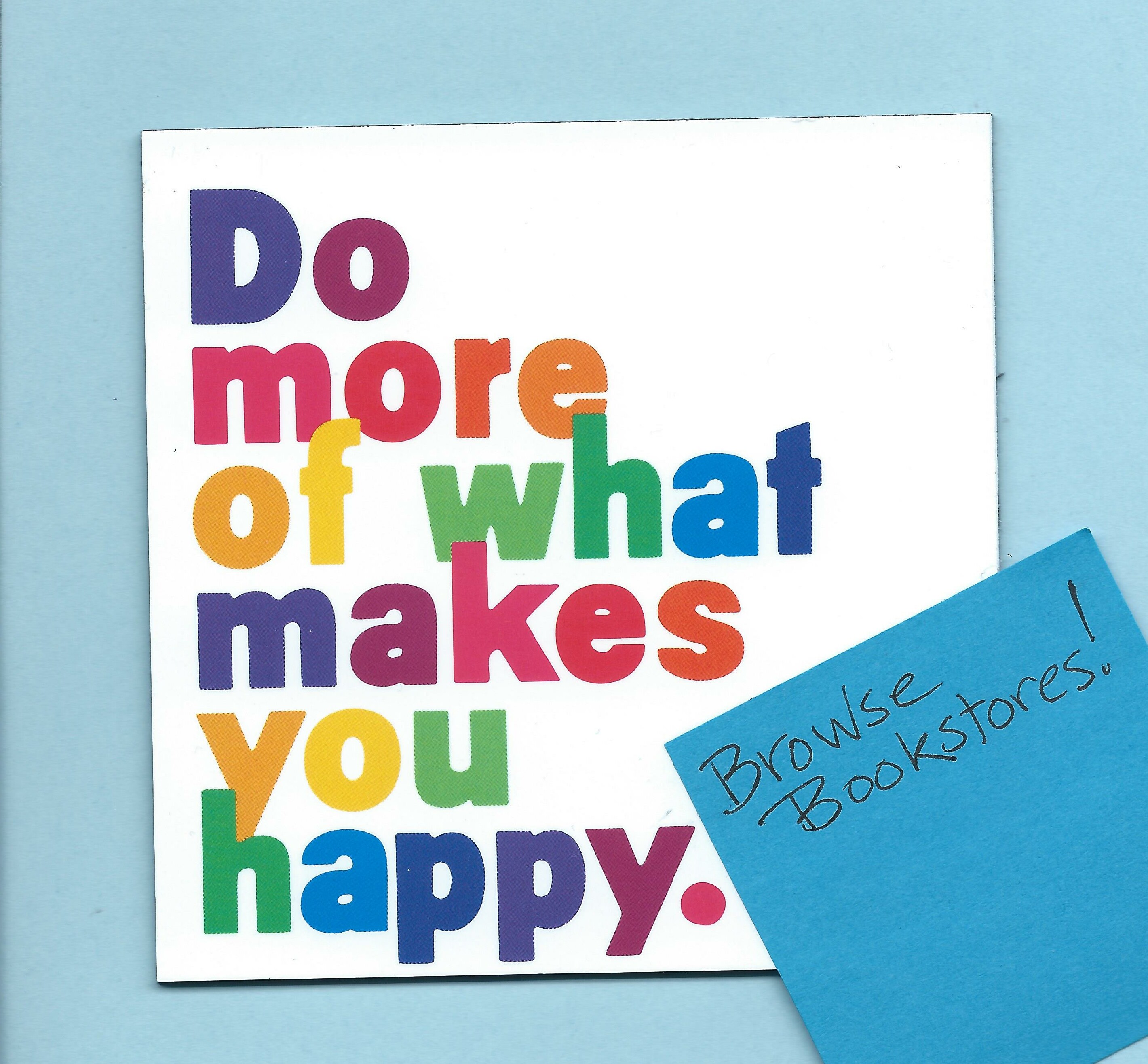
If I were truly living today as if it were my last, I would begin with a huge stack of blueberry pancakes, spend the morning browsing bookstores, and then pick one of those tomes to enjoy over a cup of good java at my favorite café. After lunch (a sizeable slab of cheesecake) on the rooftop deck of the local bistro, I’d relax in a hot tub with my husband and enjoy a couples massage. I’d cap it all off with a night of dancing and a bottle of Italian red.

It would indeed be a great DAY, but I have some serious doubts about it making a great LIFE.

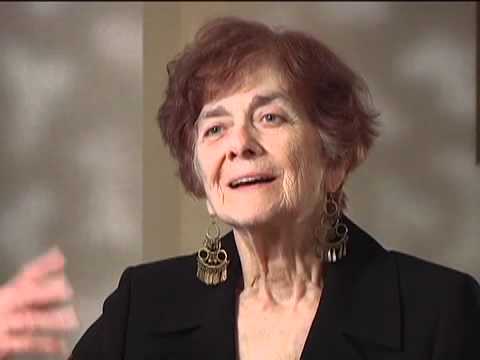
Recently, in the throes of this dilemma (while folding the laundry—a compromise—it’s not editing the book, but it’s not goofing off either), I paused long enough to see an interview with Frances Fox Piven on MSNBC’s The Last Word. It was a moment of clarity: Eighty-three years young, Fox Piven has spent her life fighting the good fight. Talking to Lawrence O’Donnell, she radiated strength, humor, intelligence, and stamina. Watching her, I thought: She is exactly what I hope to be.

FRANCES FP USENow, I can’t say what Fox Piven’s life has been, but here are a few of the known facts:

  • She is a professor of political science and sociology at the Graduate Center, CUNY, and a member of the Democratic Socialists of America.
  • She grew up in Queens, attended P.S. 148, earned a B.A., M.A., and Ph.D., all from the University of Chicago—a scholarship student, she waited tables to make ends meet.
  • She has served on the board of the ACLU and held office in various professional associations including the Society for the Study of Social Problems.
  • She’s written books galore including Challenging Authority: How Ordinary People Change America.
  • She has devoted her life to social activism and made significant contributions to social theory.

All this sounds glamorous. A life of exclamation points. But I strongly suspect that a woman who says, “I believe in the necessity for struggle by people at the bottom of any society,” is no stranger to roadblocks, frustration, setbacks, and uncertainties. To work for social justice is to take on the Hydra whose heads multiply by a factor of ten for every one slain. One just rolls with it. All of it.

And rolling with life—all of it—may be the antidote to guilt. Guilt eats our energy, leaves us doubting, renders us unable to fully engage with whatever we’re doing (yes, even if what we’re doing is playing online solitaire).

Instead of always feeling guilty for what we think we should be doing, or what we fear we’re neglecting, or what we might have accomplished by now, I think it may be enough to just be. To say, at the end of the day: I had a day, and with any luck I’ll have another tomorrow.

Imagine the possibilities for happiness in that.

As Pete Seeger (by way of Ecclesiastes) wrote:    0529 Amy in Regent's Park  MYPIC AMY

To everything – turn, turn, turn
There is a season – turn, turn, turn
And a time to every purpose under heaven.
 

The Power of Love

Screenshot from Youtube video (see more below)

“Where There Is Love There Is Life”

                                       Mahatma Gandhi

A couple of weeks ago, I read a story about a little elephant and a dog. It was a love story, albeit one outside the usual definitions. No moonlit kisses. No ripped bodices. It got me thinking about this thing called love. What do we mean when we say that we love someone, that we are loved? From where does love draw its power (for love is certainly powerful)?

Digging around, I found the following four stories. Each illuminates an aspect of love that is vital to its power to transform our lives, our world. Consider these tales my Valentine to you.

The Power of Trust

RUBY 2Six-year-old Ruby Bridges didn’t know what segregation or integration meant on the morning of November 14, 1960. She only knew what her mother had told her as she prepared for the first day at her new school: “There might be a lot of people outside the school, but you don’t need to be afraid. I’ll be with you.”

Ruby was one of six first-graders selected to begin the court-ordered integration of New Orleans’ public schools. As she and her mother reached William T. Frantz Elementary that morning, Ruby saw the crowds and heard the shouting. She thought it was part of Mardi Gras. She quickly discovered it was not. People yelled racist slurs and threw things as Ruby, escorted by U.S. Marshals, climbed the steps of the school.

Ruby sat in the principal’s office with her mother that first day while enraged white parents refused to let their children enter the school and teachers refused to have a black child in their classrooms.

Her mother accompanied Ruby again the next day—the day they met the one teacher who welcomed Ruby’s presence, Barbara Henry. The teacher took them to her classroom where Ruby was the only student.

On Day 3, Ruby’s mother had to return to work and look after her children at home, but she assured Ruby that the marshals would take good care of her. “And remember, if you get afraid, say your prayers. You can pray to God anytime, anywhere. He will always hear you.”

Angry whites continued to harass Ruby. One woman kept a black baby doll in a wooden coffin as a protest outside the school. That scared Ruby more than anything. Taking her mother’s advice, she began praying on the way to school, which she says helped to drown out the nasty comments people hurled at her. Although some white children returned to the school, Ruby remained in a classroom of her own that first year. She never even went to the cafeteria. As a precaution against threats of poisoning, she ate only the lunch her mother packed for her.

But there was kindness, too. When Ruby’s father lost his job and the local grocery store refused to serve the family, people both black and white stepped up, finding a new job for her dad and protecting the family’s house. From farther afield, people sent letters, gifts, and money. It was as her mother had said. Ruby didn’t need to be afraid. She was not alone.  That she could trust her mother’s words gave a six-year-old girl the courage to change the world.

The Power of a Shared History/Vision

In the 1950s, Jack Evans lost his job at Neiman Marcus in Houston. Because he was gay. Around the same time, George Harris was fired from his job at the CIA in Virginia. Because he was gay.

LARRY W. SMITH /EPA/ LANDOV
LARRY W. SMITH /EPA/LANDOV

George moved to Dallas. In 1961, he met Jack. They bonded over politics, fell in love, and have spent the last fifty years working together on the causes they believe in, especially the issues affecting LGBTQ people in the Dallas area. Last year, on the very day the Supreme Court legalized gay marriage across the country, George, 82, and Jack, 85 were married in Texas. It would be fair to say they have worked most of their adult lives to make this day happen.

In the late 1950s, there was no gay rights movement in Texas. LGBTQ people were fearful and kept quiet. It was a time when you could get arrested at a private party just for being homosexual. As George and Jack shared their thoughts and experiences, they began to forge a vision for an active gay rights movement and how they might foster its growth. Organizing the movement became a natural extension of the work day they already shared in their real estate business.

Together, they founded the North Texas GLBT Chamber of Commerce. On the organization’s website, they state: “We envision a global society where individuals and businesses have equal rights, equal representation and equal opportunities.” George and Jack also created The Dallas Way, a project that preserves and presents the history of Dallas’s LGBTQ community. Their hope is to inspire young people to make a difference. To recognize the struggle that has gone before, and to continue it. The history they share has strengthened their love, and the vision they worked for has given strength to others.

The Power of Constancy

MAP Mogadishu to KampalaTo travel 1,200 kilometers on foot is a challenging undertaking. To make much of that trek through a country in the throes of a bloody civil war would be daunting.  To do so carrying a five-year-old child in your arms seems beyond imagining. But in 2009, that’s exactly what Jamila Abdulle did when she made the journey from Mogadishu, Somalia to Kampala, Uganda to seek medical attention for her ailing daughter Sagal. The girl had been born with a hole in her heart, and nowhere in war-ravaged Somalia was the critical care she needed available.

The journey took 21 days. Aside from the dangers and stresses of the trip—Sagal’s health continued to deteriorate—Jamila had other things tugging at her heart. To save her daughter, she had left behind her husband and seven more children.

In the refugee camp in Kampala, Jamila at last found hope. She met another Somali family who suggested she take Sagal to a hospital operated by the United Nations. They were able to keep Sagal alive until arrangements could be made through the International Rescue Committee to send Jamila and Sagal to Phoenix, Arizona. By September 2011, Jamila and her daughter were in the U.S., where Sagal underwent open-heart surgery. Today, she is a lively, active girl who plays with the other kids in her neighborhood.

It is not a story with a simple happy ending. Fighting continues in Jamila and Sagal’s homeland. They are still waiting to be reunited with the rest of their family. But without her mother’s steadfast determination to find medical help, Sagal would have died. Because Jamila refused to abandon hope whatever the risk, Sagal lives.

The Power of Healing

For Ellie, life began badly. The little elephant calf suffered from an umbilical hernia which quickly developed into a life-threatening abscess. Worst of all, his herd rejected the ailing infant. Ellie would have died, alone, if he hadn’t been discovered and rescued by the people at the Thula Thula Rhino Orphanage.

Though the orphanage in Zululand, South Africa, was established to rehabilitate baby rhinos orphaned by poachers, it is also part of a wildlife preserve that includes elephants, leopards, giraffes, and zebras. When Ellie was brought there, the odds of his survival were 1 in 100. But his rescuers never gave up hope. They nursed him day and night. When it was discovered he had an intolerance to milk, his caretakers made him a special formula.

Ellie began to stabilize physically, but he was still suffering psychological trauma. Elephants are highly social animals and their grief at being rejected by their herd can cause life-threatening problems in a fragile infant. What Ellie needed was something to make him want to live again.

Thinking the little elephant might be cheered by an animal friend, his caretakers introduced him to a former service dog named Duma. Ellie and the German shepherd frolicked together in the sand pit that first day. They quickly became inseparable, and Ellie began showing an interest in life.

Without a herd, Ellie still faces many challenges in his development, but Duma’s affection has helped to heal his elephant friend’s emotional pain.

Please Note

I had intended to put Ellie and Duma’s story at the top of this piece. But in the weeks between discovering their story and publishing this post, Ellie’s brave struggle ended. The little elephant died at the close of January. This post is for him and Duma and all the kind, caring people at the Thula Thula Rhino Orphanage who gave Ellie joy and much love in his short life. You can learn more about their work here and visit their Facebook page here.


One Disaster At A Time

SOURCE
SOURCE

In my last post, I shared the best advice I ever received at a writers’ conference (“Leap and the Net Will Appear”) and exhorted us all to follow our dreams. That’s the big picture—the adrenaline-rousing kickstart—but in the cold, hard reality of late January, I have to admit there’s a whole lot involved in the leap from conceiving a dream to making it actually happen. So, fasten your seat belts as we descend from the loftiness of our aspirations to the bumpy terrain of everyday life. The two will intersect (I hope) in some sort of useful way.

“Life is just one damn thing after another,” American writer Elbert Hubbard once observed. Ah, if only it were that simple. In my experience, life is usually dozens of damn things, converging all at once like a bad pile-up on the Interstate.  But somehow, we’ve got to manage all the craziness bombarding us, so I’ve put together a little blueprint for meeting the challenge.

Acceptance

Two things to know here: 1) Life is always chaotic. 2) As humans, we are always trying to order this chaos. But how do you manage a thing like life? As with some fantastical dragon of yore, it seems to sprout two new heads for every one you slay. Revisions of one book teeter atop a stack of research for the rough draft of another, e-mails pile up in the Inbox, there’s nothing in the fridge for dinner, you’ve got a dental appointment, and your body is threatening mutiny if you don’t get to the gym soon. Over it all, dust settles on every surface and rolls in drifts across the floor like tumbleweed. A good day is when nothing arrives in the mail requiring your immediate attention.

Prioritizing, that mantra of you-too-can-be-organized gurus, is useful and arguably an absolute necessity when you’ve got a deadline (especially the sort involving contracts, lawyers, and money). But let’s be practical—sooner or later, someone’s gotta unload the dishwasher.

Posit #1: It is not possible to do everything at once. It is not even possible to always do the most important thing first. If you’re rushing to get edits done and the pipe bursts under the kitchen sink, are you going to finish Chapter 12 or call the plumber and start mopping?

This is where perspective comes in handy.

Perspective

overwhelmed man behind wheel photo-1434210330765-8a00109fc773In the 2015 film, The Martian, during a manned mission to Mars, Astronaut Mark Watney (Matt Damon) gets struck by debris, then lost, in a whammy of a dust storm. The biometer on his spacesuit is now busted and quits chirping, leaving the rest of his crew to assume he’s dead. In peril themselves, they boogie out of there. Watney regains consciousness to find himself alone, on Mars, with no working communications gear, a length of antenna lodged in his gut, and a limited supply of food in “the Hab” (the crew’s martian living quarters). His only hope is to survive until the next scheduled crew lands at the Schiaparelli crater 2000 miles away in four years.

I would argue that life doesn’t get more challenging than that.

Posit #2: If you’ve still got most of your body parts, a working mind, and you haven’t been stranded on another planet, then there’s hope.  

But it helps to recognize and respect our human limits. Multi-tasking, that great savior of the ‘80s, turns out to be more myth than fact. Our computers may be able to open 12 windows at once, but we cannot. And trying to do so just results in a lot of stress, silly mistakes, and badly-burned dinners.

Which leads to the necessity of developing some basic life philosophy about our limitations and how to deal with them.

Basic Life Philosophy

Source
Source

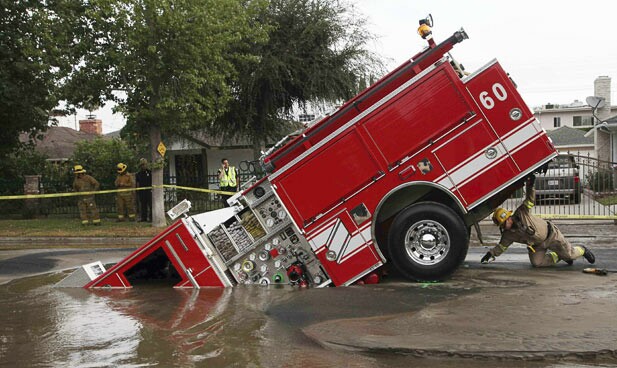
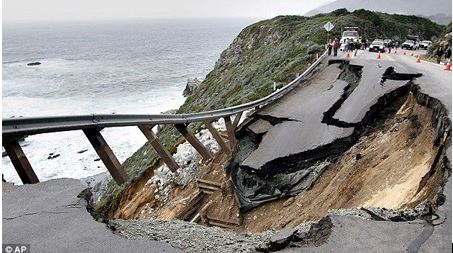
When I was raising kids and teaching school and writing a book and doing the cooking, laundry, et cetera, I realized I would go right smack out of my head if I didn’t figure out some way to juggle the chaos. As with most things, necessity proved to be the mother of invention. One evening, with dinner bubbling on the stove, two dozen cupcakes baking in the oven for a fundraiser, and a pile of federal tax forms waiting on my desk, my daughter informed me we needed to do a science experiment that night for her class project the next day. She began listing the many items we would need. Wiping a strand of hair from my (tired) face, I gave her one of those smiles parents employ to keep from committing hara-kiri before their children’s eyes. “One disaster at a time,” I told her. Thus was born my succinct philosophy for managing the impossible.

Posit #3: You don’t need a 48-hour day (though if you know where one can be obtained, please write me immediately!). You need to exercise your power of choice.

Making Choices

A few weeks ago, I was feeling overwhelmed by all the stuff that needed doing RIGHT NOW.  And a tad cranky about how this was affecting the overall quality of my life. In a fit of take-charge/can-do, I made a list titled “Life Crushers.” (Okay, I was feeling very cranky.) On it were 11 items that felt like five-ton weights around my neck because it seemed: 1) I had to do them and there wasn’t time; 2) I wanted to do them and there wasn’t time; 3) I was just generally consumed with anxiety about them. Weirdly, I felt better as soon as I finished the list. Looking it over, I began to see choices rather than musts. I could work on two books simultaneously, or focus solely on the revisions for one, or take a break from writing. I could allot one day a week to deal with routine house stuff, tackle it in small doses daily, or wait until we have our next party. I could CHOICE rHBf1lEaSc2nsbqYPQau_IMG_0177blog twice a month, once a month, never again. I made a list of 3-4 alternatives for each life-crusher. In most cases, my choices reflected my original goals, but the exercise helped me to see that I had more control and flexibility in my life than I’d realized. And that very little has to be done by any particular date.

Posit #4: You can slow the merry-go-round any time you want, rearrange the horses, or get off it completely. Yes, there are consequences for your decisions. Choice is not about escaping consequences. It’s about deciding what things you’re willing to pony up for and how high the price you’re prepared to pay.

At the close of The Martian, Matt Damon’s Watney (safely back on Earth) explains the reality behind their dreams to a class of wannabe astronauts. “At some point,” he tells them, “everything’s going to go south on you. You’re going to say, ‘This is it. This is how I end.’ Now, you can either accept that, or you can get to work. That’s all it is. You just begin … You solve one problem and you solve the next one, and then the next. And if you solve enough problems, you get to come home.”

Hey, it’s one disaster at a time. It’s what we all do. It’s really all we can do.

It is enough.

Leap and the Net Will Appear

“It is not enough to be busy. So are the ants. The question is: What are we busy about?”                                                                                                                              (Henry David Thoreau)

It’s mid-January and, depending on your personal tolerance for masochism, you may already be hearing the crack! of those New Year’s resolutions. You know the ones I’m talking about: eat less, exercise more, eliminate stress, organize your closet/house/universe. There’s nothing inherently wrong with these goals. The problem is they quickly drain enthusiasm because they address our shoulds but not our dreams. No one lives to lose ten pounds. So, before we get much older, let’s make a pact and declare 2016 the year we embrace our dreams. Go all out. Lay the foundations for, or continue building the life we really want, the one that speaks to our true selves.

Everyone harbors dreams. Listen to kids. They can invent a million dreams on a summer afternoon. But by the time we’re adults, that equation has shifted to a million reasons LEAP NET charybdis and scyllawhy we can’t pursue our heart’s desire: How can I become an artist/dancer/open my own B&B when I’ve got student loans to pay down/ three kids to feed/am past age 50? It’s true, there’s a world of responsibilities at 40 you never imagined at 10, but there’s also a lot more fear: What if people think I’m crazy? What if I try and don’t make it?

You can drown in reasons and argue with your fears forever. Nothing untried can be proved or disproved. So I will repeat here the best piece of advice I ever got from a writers’ conference: Leap and the net will appear.

As a college student in the Midwest, I used to hitch rides with kids driving home to the NYC area on semester breaks. Arriving in Manhattan, I’d rent a student room for $6/day on the upper floors of a Madison Avenue hotel and walk. Everywhere. I just needed to breathe in that “center of the world” energy and hope because it was my energy and hope, too. After college, I landed a job as editor at a publishing company in Michigan, andLEAP NET feet of girl atop tall building traveled the country learning the ropes of the apparel trade while writing how-to-succeed articles for women’s retailers. I met a lot of good people, but it wasn’t my dream. So, I turned in my resignation, loaded up my VW Bug, and drove to Boston where I signed a lease on a small apartment. (I figured it was easier to be poor in Boston than NYC.)

I leapt and—miracle!—the net did appear. For me, it was the offer my company made to continue my editorship on a contractual basis from my Boston home. It was a great and unexpected gift, saving me the hassle of looking for work, but if it hadn’t happened, I would have waited tables or manned the Slurpee machine at my local 7-11 to support my writing. Sometimes, someone else holds out the net. Sometimes, we have to weave it ourselves. Usually, it’s a combination of both. But mostly, it’s about wanting something so much and believing you are capable. When you see with the eyes of a dream, you begin to spot opportunities outside the range of normal vision. (Don’t worry, it’s not all Shangri-la. I’m going to fess up to some BIG mistakes before we’re through here, and I invite you to laugh long and loud or shake your head in despair of me. I just want to illustrate that nets do appear, and you often have to leap before you see them.)

So, I moved to Boston, wrote my first novel, revised it a bunch of times, and tackled a few short stories. Doing my old job outside an office gave me a lot more hours to write. (It’s amazing how much time gets wasted in offices.)

LEAP NET stargazingIt’s true that when you’re young, you don’t worry so much about stepping outside the conventional. You’re not particularly dizzied at the idea of beating your own path. Indeed, unless you’re born with a silver spoon in your mouth, what else can you do in your early 20s? But, I don’t believe our dreams vanish with age. More like they get shoved into some dark corner and silenced in the cacophony of our busy lives. Doubts creep in, grow up around them, cut off their oxygen. We must fight this silencing. A Facebook friend, Jo Anne Shumard, recently posted this: “Doubt is like being afraid to color outside the lines. Do it anyway.”

What happens, though, if you make a mistake, maybe many mistakes? Well, you will. Obstacles arise. Things fall apart. Failure lurks. That first novel I referred to earlier? After typing THE END, I mentioned it to my hairdresser. She had a sister whose college roommate had become an assistant editor at what is today a division of one of the Big Five publishing houses in New York. Cut to the chase: I had lunch with the sister. She recommended me to her editor friend. I sent off the manuscript and the editor loved it. Yes! I thought, I’m on my way! The catch was that as an assistant, she needed her boss, a senior editor, to read the book. A second letter arrived three months later. The seniorLEAP NET skateboarder editor liked my book, but had a list of specific changes he wanted to see before making an offer. Still great, right? Except I was so young and so clueless about the industry and had yet to meet other writers, I thought this meant I had bombed. I put the novel in a drawer and went off to Europe. (I know. I know. I can only offer this example as one that perfectly answers the question: How dumb can you be?)

But doubts don’t kill you. Mistakes don’t kill you. I continued writing and had kids and paid the bills by doing freelance articles for business publications and newspapers. From there, I broke into feature articles for women’s magazines and got a regular gig online. I made and still make decent money editing college texts. But I never gave up fiction.  I went to writers’ conferences, joined critique groups, and just kept learning my craft. And now I’ve got a novel I’m shopping and another I’m writing. Life is good. Hard sometimes, but good. Kathryn Stockett tells the story of how she revised and revised her novel The Help while getting rejections that would have crushed a lesser soul (“There’s no market for this kind of tiring writing.”), BUT the 61st  agent she queried said yes. The Help enjoyed a long ride on the New York Times bestseller list, sold more than a million copies, and was made into a movie. Seriously, read her story here. She will inspire you to never quit.

Yes, luck definitely plays a role. There are so many things we don’t control. But I’ve always liked the quote by humorist/writer Sam Levenson (on the struggle up from his immigrant tenement childhood): “I discovered that the more I hustled, the luckier I seemed to get.”

LEAP NET man on cliffWhat happens, though, if you go for your dreams and they don’t materialize in the way you  imagined? Well, what does? If you strive for your dreams until your last breath, and that last breath finds you still striving, you will have lived a life pursuing what you loved. There are worse epitaphs. As business magnates are fond of telling us, all opportunity carries risk. But you can’t really do a risk assessment on your dreams without asking: What do I risk by not following my heart?

So, as we launch out into 2016, I wish you a year—and a lifetime—of dreams. Remember that John Lennon was once dismissed as “hopeless” and “certainly on the road to failure.” Stephen King worked a drudge job in an industrial laundry while writing Carrie. Even Albert Einstein was told he “[would] never amount to anything.” All they had were their dreams, a fierce belief in themselves, and an unquenchable determination.

So, keep leaping. And maybe pack a few bandages.

LEAP NET hundreds of balloons


Doing the Wassail 2016

“The Oak King” by Emily Balivet (for more by this artist, click here )


This New Year’s Eve Let’s Party Like It’s 1099

In general, I’m not a big one for rituals, but the Solstice exerts some weird influence on me and I find myself feverishly steeped in holiday traditions. The buying of a Christmas tree the day after Thanksgiving. The production of 27 dozen cookies and two pounds of fudge to be tinned and shipped hither and yon (an event known at our house as the Bake-a-Thon). Perhaps, the most “sacred” among these annual doings is the viewing of six holiday-themed movies, ending on Christmas Eve with the 1984 George C. Scott A Christmas Carol.

I have many favorite scenes from this lush version of Dickens’s tale, but oddly what most sticks in my head is a little throw-away bit where Tiny Tim and the whole Crachit gang belt out a song. “Here we come a-wassailing among the leaves so green; Here we come a-wandering, so fair to be seen,” they sing blithely, huddled cheek-by-jowl in their dark little hovel. No matter that Bob Crachit’s boss Scrooge is, well, a scrooge, or that the Grim Reaper may soon claim Tiny Tim, the Crachits are imbued with the Christmas spirit, and damn if it isn’t infectious. I find myself humming that tune even in the sweltering heat of July, but what exactly does it mean: Here we come a-wassailing?

Digression #1: I have always been a sucker for the mysterious power of words. As a child, I was bewitched by Edward Lear’s line in “The Owl and the Pussycat”: “They dined on mince, and slices of quince, Which they ate with a runcible spoon.” “Runcible,” a delicious slice of language that runs joyfully over the tongue. The Collins Dictionary defines a runcible spoon as a “forklike utensil with two broad prongs and one sharp, curving prong, as used for serving hors d’oeuvres.” Runcible, it notes, is a nonsense term coined in 1871 by Lear. Apparently, he used it to refer to a variety of objects, including cats, in his poems. We invent the language we need.

"Wassail" by Jeremy Tarling, London, United Kingdom.
“Wassail” by Jeremy Tarling, London, United Kingdom.

So, back to this wassailing thing. Wassail itself is a hot drink made with wine, beer, or cider, spices, sugar, and usually baked apples. Traditionally, it is served in a large communal bowl with handles and passed around at celebrations for Twelfth Night and Christmas Eve. (Wassail and wassailing clearly predate germ theory.) This would have been the wassail Shakespeare knew.

The original wassail was simply warmed mead—ale brewed with honey. Roasted crab apples, dropped into the mead, burst tartly to create a drink called “Lamb’s Wool” drunk on Lammas Day, which is nowhere near Twelfth Night (more about this later).

The word “wassail” was first noted in the 12th Century by the Normans as characteristic of the English, but seems to have been in usage for several centuries before that, a cobbled hybrid of the various groups who were always invading England in the dark old days—Vikings, Danes—with perhaps a dash of the native Druids. At any rate, by the time William the Conqueror arrived, wassailing was as English as Tooting Bec.

Digression #2: For the etymologists among you, Merriam-Webster reports the Middle English version of the word, wæs hæil, washayl, developed from the Old Norse ves heill “be well,” from ves (imperative singular of vera to be) + heill healthy. (Think on that next time you have a skull-splitting hangover.)

Besides going from house to house singing Christmas carols, “wassail” is also a term for “riotous reveling.” Listed among its synonyms are: bender, drunk, carouse, toot. Wassailing in this context involves imbibing liberal amounts of alcohol and enjoying oneself with friends in a noisy, lively manner. Of course, it’s entirely possible to do this in conjunction with singing Christmas carols for a real Wassail Whammy.

The point of all this caroling and carousing in medieval England was to awaken the cider apple trees while frightening away the evil spirits who might interfere with a good harvest the following year.

And it’s still going on. In a scenario straight out of the British ITV series Midsomer Murders, the Apple Orchard Wassailing takes place at Carhampton each year on January 17, the date of Twelfth Night before England adopted the Gregorian calendar. The Wassailers build a bonfire and pour cider around the trunk of the biggest apple tree.

The Wassail Queen http://www.matchingfoodandwine.com/news/recent/where---and-how---to-go-wassailing-updated-for-2014/
The Wassail Queen http://www.matchingfoodandwine.com/news/recent/where—and-how—to-go-wassailing-updated-for-2014/

They then—and this is my favorite part—hang cider-soaked pieces of toast from the branches. In theory, this appeases the robins who represent the “good spirits” of the tree. Personally, I think it’s the sort of thing that happens when the cider is flowing a little too freely. But wait, there’s more. Someone (hopefully, the soberest) fires a shotgun overhead to frighten away evil spirits and the assembled group sings “Old apple tree, we wassail thee . . .”

Digression #3: I promised you a note on Lammas, the origin of the drink Lamb’s Wool (you’ll find a recipe below). Shakespeare mentions Juliet’s birth on Lammas Eve, but Lammas Day, August 1, predates the Bard by centuries. Pagan in origin, Lammas was the first of three autumn harvest festivals in the medieval agricultural year (marking the end of the haying that had begun at Midsummer). Among the romps enjoyed in this merrymaking was the “loosing of a sheep” in the meadow among the mowers “for him to keep who could catch it.” (God, I love the English!)

So, as we prepare to ring in the New Year, having fired up the Yule Log (relinquishing the dark half of the year and celebrating the rebirth of the Oak King on Solstice Night), and hung up the Mistletoe (representing the seed of the Divine, and gathered long ago in the forest by Druids at Midwinter), let us wassail loudly and joyfully in a chorus of “Auld Lang Syne.”

To quote Dr. Chasuble (The Importance of Being Ernest): Isn’t language a curious thing?


RECIPE FOR LAMB’S WOOL (WASSAIL)

Author Roberta Trahan contributed this Americanized, easy-to-make version of a traditional Old English recipe when she was a guest host on Stephanie Dray’s website.

Ingredients

3 apples, peeled, cored & finely chopped

3 tablespoons butter

3 (12 ounce) bottles dark beer

1/2 cup firmly packed brown sugar

1 teaspoon cinnamon

1 teaspoon ginger

Directions

Preheat oven to 350 degrees. In a casserole dish, bake apples and butter for 30 minutes or until the apples are soft.

In a large saucepan combine: apples, beer, brown sugar and spices. Heat until hot, and serve (unstrained) in mugs.

If you’d like to try your hand at the more authentic old-world brew, click here.