Every Man For Himself Leaves All Of Us Helpless

“The only thing that will redeem mankind is cooperation.”                Bertrand Russell


Like a warped record you can’t get to play true, America seems stuck on repeating the myth of the rugged individual.

He’s a self-made man.

She pulled herself up by her own bootstraps.

In a free society, it’s every man for himself.

Herbert Hoover was a big fan of rugged individualism. He invoked it frequently in the depths of the Great Depression. It was his way of telling millions of hungry, destitute Americans that as far as the government was concerned, they were on their own.

But what is this thing called America? Is it really just a random collection of 350 million individuals, rugged and not so, butting heads in a zero sum game to see who survives?

 The Pioneer Spirit

The much-lauded “pioneer spirit” of America paints a picture of the hardy individual, musket in hand, blazing a trail in the New World (his woman and babes tucked somewhere safe offstage). He’s a guy who likes to go his own way, live by his own rules. It stirs people up, this portrait of our fearless forebears, mavericks all.

Except it never happened that way.

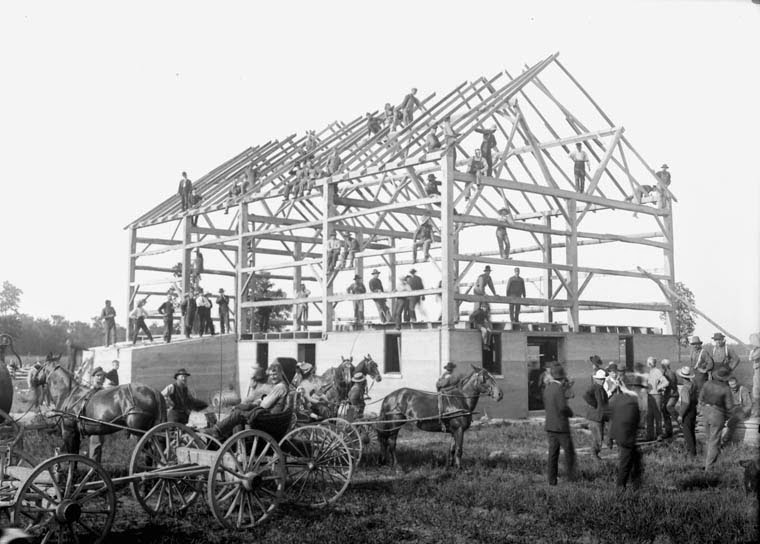
When the first non-native settlers arrived, they took one look and understood the situation: It was gonna take a village to build a colony. The land had to be cleared and plowed for planting. Ditches had to be dug for irrigation. Roads had to be made. Barns raised. Houses built. The rugged individual did not do these things with his little shovel. As European Americans were to do for much of the next 150 years, the settlers accomplished these tasks as a community.

And those Westward Ho-ing pioneers didn’t travel across the plains as individuals in the family’s little covered wagon. They formed wagon trains, BIG wagon trains, because the unknown road was dangerous and people got sick, wagons broke down. Under the best of conditions, the array and amount of labor still demanded many hands. Someone had to hunt for fresh food and someone had to cook it. Someone must fetch the water and feed the animals, repair the wagons and tend to the children. Going it alone, for all the fabled glory of the intrepid individual, would have posed a slew of serious challenges. America might never have made it 10 miles west of Philadelphia.

Our Ancestors Had This Nailed Long Before the Wheel

When our nomadic ancestors began to settle down 10,000 -14,000 years ago, they did not pitch their tents as nuclear families or individuals. My tent here. Your tent in the next valley. They settled in communities. And before they turned to agriculture, they had hunted in groups. Why? Because for all they didn’t know about the wonders to come over the next dozen millennia, they understood this: It sucks to be alone. It’s dangerous and difficult and you don’t do too well.

To thrive and grow requires a society. As legendary Green Bay Packers coach Vince Lombardi said: “Individual commitment to a group effort—that’s what makes a team work, a company work, a society work, a civilization work.”

So, what is this animal, society?

A quick google of the question turned up the following:

“Society describes a group of people who share similar values, laws and traditions living in organized communities for mutual benefits.” (Reference.com)

“Humans are stronger as an organised group than they are as individuals. Humans in societies survive longer, breed more successfully and dominate resources. Therefore society is a survival mechanism and we have evolved for it.”  (S. Spencer Baker)

“To love our neighbor as ourselves is such a truth for regulating human society, that by that alone one might determine all the cases in social morality.” (John Locke)

And my personal favorite:

“Many times a day, I realize how much my outer and inner life is built upon the labors of people, both living and dead, and how earnestly I must exert myself in order to give in return as much as I have received and am still receiving.” (Albert Einstein)

Today, in our fast-paced digital world, with its glut of consumer goods and endless distractions, it’s easy to miss what our ancestors saw so clearly: We need each other.  If we don’t support higher education, we won’t have the doctors we need to care for us when we’re sick or injured. If we don’t fund science, we won’t have the research we need to discover cures for our diseases or environmental solutions to save our planet. If we don’t spend the tax dollars to replace our aging infrastructure, we risk repeats of the 2007 I-35W bridge collapse in Minneapolis that killed 13 people and injured 145.

Look Around You
  1. If you had a bowl of cereal this morning, federal safety regulations (OSHA) protect the workers in the factory who packaged your cereal, and federal food standards (FDA) ensure that toxic substances are not floating around in your cereal bowl.

Enjoy a tomato in your lunchtime salad? Farm workers picked those tomatoes, and trucks delivered them to your local supermarket over Interstates built by the Federal-Aid Highway Act of 1956. (The $25 billion, 41,000-mile highway system was the largest public works project in America up to that time.)

  1. Borrowed a book from your local library recently? Public libraries are funded by local, state, and federal tax dollars. And to get there, you don’t have to take your chances weaving between cars in the street because local and state tax dollars, often matched by federal funds, have provided sidewalks for your safety.

3. Enjoy walking in the sunshine and having a cold glass of water afterward? The air we breathe and the water we drink are subject to federal regulations that monitor and establish limits for pollution on both. Though these standards are under attack right now and may be eliminated, they evolved as a response to the growing concern in the 1960s and 70s about the impact of human activity on our environment. The kind of concern that inspired Randy Newman’s 1972 song “Burn on Big River” about Cleveland’s Cuyahoga River, so polluted it burst into flames.

Scott Shaw/Cleveland Plain Dealer

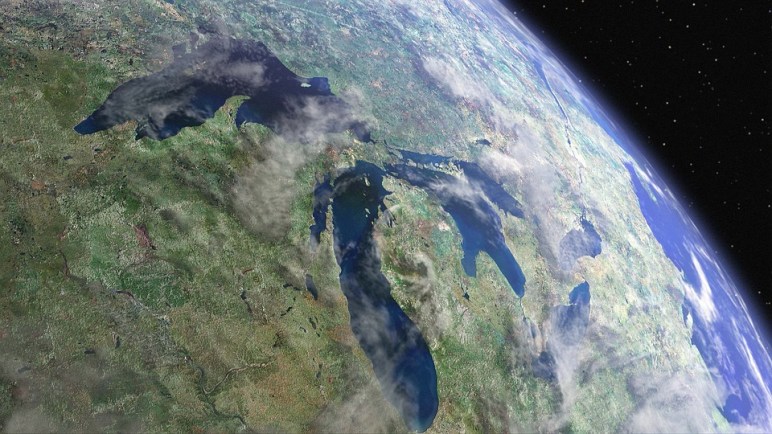
Some 30 million Americans in eight states depend on the Great Lakes for their drinking water. But urban growth has overwhelmed marshes that once filtered runoff, and fertilizer from intensive farming has filled rivers with highly toxic algae blooms. The Great Lakes Restoration Initiative, begun under President Obama, provides federal dollars to help protect and restore the Lakes area. The highly successful project hopes not to get the budget axe before it finishes cleaning up the decades-old toxic sites and restoring the necessary ecological balance.

Thanks to EPA automobile tailpipe emissions standards, our children can play outdoors without having to wear face masks. Even LA’s smoggy reputation has improved.  According to a 2015 Wall Street Journal article, “… researchers at the University of Southern California say … pollution in L.A. has declined significantly over the past 20 years … and as a result, residents here are healthier.”

The National Oceanic and Atmospheric Administration (NOAA) adds: “The cleanup of California’s tailpipe emissions over the last few decades has not only reduced ozone pollution in the Los Angeles area, it has also altered the pollution chemistry in the atmosphere, making the eye-stinging ‘organic nitrate’ component of air pollution plummet.”

4. Deposited a check in the bank lately? If it was under $250,000, you don’t need to worry because the Federal Deposit Insurance Corporation, created under Roosevelt in 1933, insures deposits up to that amount. Imagine what folks would have given for that in 1929.

5. Glad there wasn’t an outbreak of the Ebola virus in the U.S.? The Centers for Disease Control and Prevention (CDC), the leading national public health institute in America, was there on the ground in West Africa when the epidemic developed. They are still there, working to improve public health and prevent another epidemic.  

6. Ever been a victim of a tornado, hurricane, or other natural disaster? Then you were probably mighty glad to see the Federal Emergency Management Agency (FEMA) personnel arrive on the scene to handle clean-up. Even the most diehard opponents of federal  programs, like New Jersey’s Chris Christie, change their tune when disaster strikes their own house. In the wake of Hurricane Sandy, Christie was only too happy to take the billion-plus dollars that federal agencies like FEMA and HUD poured into his state.

7. Are you 65 or over? Have parents or grandparents that age? Thanks to Social Security (1935) and Medicare (1965), the people who taught our children, built our roads and bridges, staffed our hospitals, and kept the world turning in one way or another during their working lives are not left to starve by the roadside. Why should people under 65 care about this? Because one day, with any luck, we will all get to be “old geezers.” Because a society does not throw people under the bus when it’s “finished” with them.

The bottom line is this: When your house catches fire, do you really want to try dousing the flames with buckets of water from your kitchen sink, or do you want to call the fire department?

What Price the Public Good? 

Donald Trump said Meals on Wheels was slashed from his budget because it “doesn’t work.” Meals on Wheels uses volunteers to deliver hot meals to housebound people, mostly the elderly. Research shows that the program greatly improves both diet and quality of life for its recipients. And it keeps many of those folks out of hospitals and nursing homes.

So, people get a hot meal, feel happier, and stay healthier. How is this not working? Because it doesn’t make a profit?

In his 1940 novel You Can’t Go Home Again, Thomas Wolfe addressed this notion that what serves the public has no worth because it doesn’t make a buck:

I think the enemy is here before us with a thousand faces, but I think we know that all his faces wear one mask. I think the enemy is single selfishness and compulsive greed.

America is a BIG country. It is not possible for each of us to provide all we need. It never was. The myth of the self-made man and the rugged individual are, at root, excuses for not making that individual commitment to the group effort that Lombardi spoke of.

President Obama addressed this eloquently during his 2012 campaign:

“If you’ve been successful, you didn’t get there on your own… I’m always struck by people who think, well, it must be because I was just so smart. There are a lot of smart people out there. It must be because I worked harder than everybody else. Let me tell you something — there are a whole bunch of hardworking people out there …

“….there are some things we do better together. That’s how we funded the GI Bill. That’s how we created the middle class. That’s how we built the Golden Gate Bridge or the Hoover Dam … That’s how we sent a man to the moon. We rise or fall together as one nation and as one people … You’re not on your own, we’re in this together.”

Warren Buffett, clever lad, nailed it in one line: “Someone’s sitting in the shade today because someone planted a tree a long time ago.”

A Survival Guide for the Times in Which We Find Ourselves

“These are the times that try men’s souls.”                                                     Thomas Paine  (The Crisis, 1776)

The evidence began popping up everywhere last summer. People on Facebook talked about rising blood pressure and deepening anxiety as the realization hit that Trump could very possibly win the election. Over 3,000 therapists signed A Public Manifesto: Citizen Therapists Against Trumpism, a document penned by University of Minnesota psychologist William J. Doherty, in which he discusses how Trump’s hate-filled campaign was inducing anxiety, fear, and a sense of helplessness in many people, especially women, the LGBTQ community, and people of color. Almost half of Americans surveyed reported Trump was causing them emotional stress. And this was all before the election.

resist-smog-the-eleventh-hour-1156792__340With the extreme right now controlling both chambers of Congress as well as the presidency, the situation has only escalated. As Slate reported in late January, “the Trump effect” on many Americans’ anxiety levels is very much alive, manifesting its negative health impact in doctors’ and therapists’ offices, as well as emergency rooms, across the country.

As someone experiencing this stress on both a personal level (fears about losing my ACA healthcare, my husband losing his Medicare without which he can’t afford the prescriptions that keep him alive), and a more general level (fears about environmental dangers escalating, the fascist threat to our democracy), I have devoted much thought to how we might both fight these threats and stay sane in the process. What follows is my five-point survival guide for getting through this mess with some better outcome than ulcers or stroke. I hope you find something of use here.

And don’t miss the music video at the end. It’s a guaranteed smile.

1. Engage Where You Can

If the 24-hour news cycle is raising your blood pressure and depressing your spirit, I strongly recommend turning off the TV and rolling up your sleeves. Join your local eco group. Volunteer to help resettle immigrant families. Campaign for clean water. Protect civil rights. In a nutshell: Get out of the house and into the streets. Nothing is more empowering than standing up and speaking out for what you believe in. Everywhere you look, millions of ordinary Americans are voicing their concerns and sharing their stories.resist-womens-place-is-resitance-womens-march-2001566_960_720 The Women’s March on Washington. The crowds congregated at our major airports to denounce the Muslim Ban. The Town Halls across America over the past two weeks. This is what democracy looks like. It’s vital and it feels great.

If you’re lucky enough to live in or near a large urban area, you have many opportunities to participate and make your voice heard. But so powerful is this movement of Americans fighting to defend what they value—the environment, healthcare, Medicare, Social Security, civil rights, women’s rights, LGBTQ rights, workers’ rights, immigrants, and public education—that smaller cities and towns all across our nation are also organizing meetings, rallies, and marches. Many organizations such as Move On and the Sierra Club  can help you find activities and events near you simply by entering your zip code on their website.

resistpermitLately, I’ve seen some disturbing references to such civic engagement as “criminal.” Raising your voice for democracy, the human rights of all people, and the safety of our planet is not only your civic duty, protected by the First Amendment (“the right of the people peaceably to assemble, and to petition the Government for a redress of grievances”), it’s also widely recognized as a healthy activity. According to the National Physicians Alliance:

Simply put, people who have a voice–whether in the exam room, in the voting booth, or in civic and community life–tend to be healthier. And the more voices there are, the healthier our democracy becomes.  This is Rx: Democracy.

If people around the globe from London to Sydney, Paris to Budapest, Toronto to Barcelona, can speak out for our democracy, we can, too.

2. Join With Others (Invite a Friend)

Everything seems easier and happier when friends are in the picture. I went up to New Hampshire in 2004 to stump for John Kerry. It was a New England picture-perfect fall day and the natives were (for the most part) friendly and willing to chat. But what made the day especially pleasant was that we did our canvassing in groups of three. Knocking on doors and introducing myself was a lot easier because it wasn’t just myself but also my teenage son and my good friend Rachel.

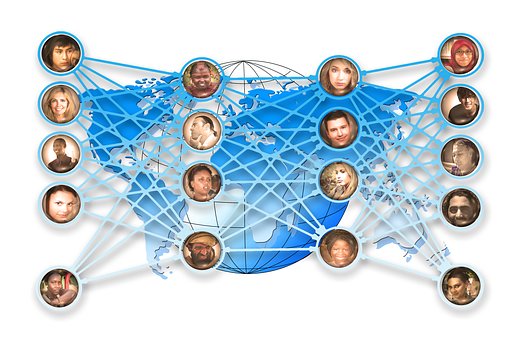
In a February Town Hall, Senator Ed Markey pointed out that real change often starts at the state level. He encouraged people to band together locally to convince their surrounding communities to adopt a particular policy. When enough communities cooperate, measures can be put on state ballots. This kind ofresist-friends-networksocial-media-1635576__340 local-action-gone-wide is how Fight for $15, a coalition of low-paid workers and their supporters which began in New York City in 2012, has been able to raise the minimum wage in more than 40 cities and states around the country in just a few years.

Working locally for larger objectives offers opportunities to work with like-minded friends (as well as making new ones). In the face of congressional efforts to disband the EPA and roll back crucial environmental protections, the Sierra Club campaign to get cities and towns to commit to 100% renewable energy is another great think-global/act-local effort. According to a 2016 Sierra Club report:

100% clean energy is not a not pie-in-the-sky idea. Burlington, Vermont; Aspen, Colorado; Columbia, Maryland; and Greensburg, Kansas, have already achieved 100% clean energy and are powering their cities today with entirely renewable sources. A dozen additional cities have made commitments to reach 100% clean energy in the next 15-20 years, and many others are considering similar plans.

So gather up some friends and neighbors and start talking to your local officials.

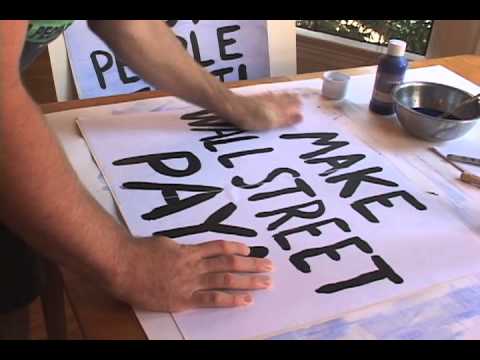
resist-people-making-protest-sign-hqdefaultMaking phone calls to legislators and other decision-makers may seem like a boring task, but you can make use of a Weight Watchers technique to keep going: Involve your social network. This could be old friends, neighborhood friends, or your Facebook friends. Set a goal. Maybe it’s to make two phone calls a day. Or sign five petitions. Or write one letter. Everyone agrees to do it and share what they’ve done. That one-minute phone call to voice your opposition to fracking goes a lot easier (and you’re more likely to do it) if you know you’ll be sharing your activity with friends later.

Fighting for what you believe in need be neither angry nor lonely. Orgs like Democracy for America and Move On have long recognized how powerful the social aspect of political action is. Rallying at your senator’s local office? Marching for healthcare? Organize a potluck beforehand to make signs and discuss slogans. Collecting signatures for clean energy? Finish up the night with a house party and pizza. After all, isn’t what you care about, what you’re fighting for, at its most basic level, community?

3. Focus On What You’re Fighting For, Not What You Fear

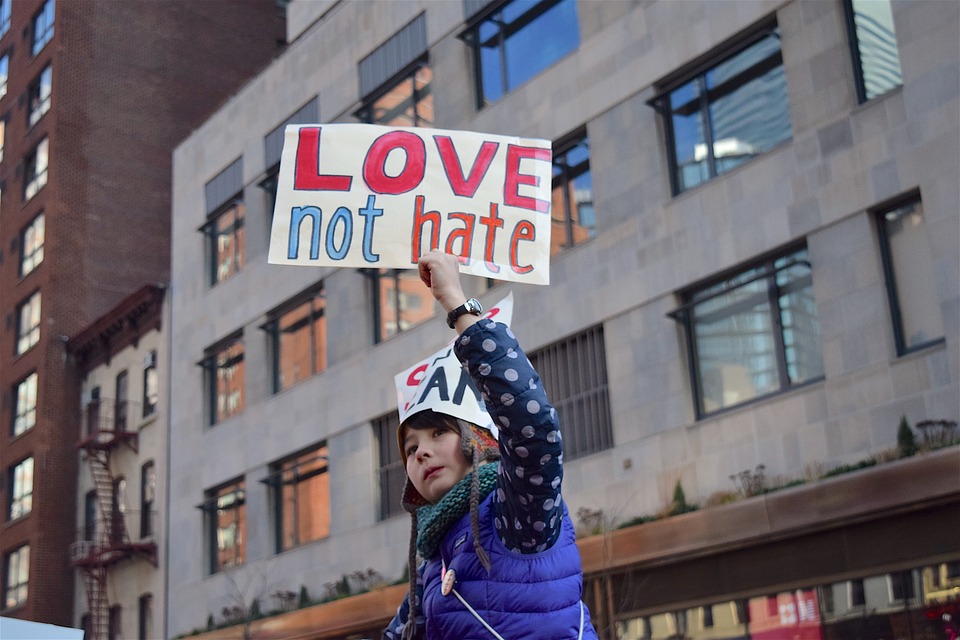
This is a tough one because there’s plenty out there right now to be scared about. Our environment, our civil rights, our healthcare, our very democracy are all under attack, but fear zaps our energy at a timeresist-love-not-hate-signwomens-march-2001559_960_720 when we need our strength. It elevates our stress levels which can damage our health. And it doesn’t change one thing.

But we can channel our fear into something positive by focusing on why we’re distressed. For example, I worry about the appointment of Jeff Sessions to Attorney General because I care deeply about civil rights protections for all people, including the LGBTQ community.

resist-dad-andbaby-22194_960_720The answers to why do we fear tell us what we value, what we love, what we’re fighting for, and that’s a place of strength from which to make a stand and take action. As President Franklin D. Roosevelt said in his inauguration speech in March 1933: Let me assert my firm belief that the only thing we have to fear is…fear itself — nameless, unreasoning, unjustified terror which paralyzes needed efforts to convert retreat into advance.

This is definitely the moment to fight for what we cherish.

4. Spell Yourself (Stay Sane)

If you’re like me, you open your e-mail and are assaulted by a dizzying Hydra of issues that threatens to devour your every waking moment. Where to start? No sooner do you sign one petition than ten more appear.

You can’t do it all. And you can’t do it all the time. The good news is: You don’t have to. None of us is alone. We have each others’ backs. So, take a rest from time to time. Attend to what needs tending in your life. Enjoy your family and friends. Take a walk. Read a book. Dance to music. And reflect on the beauty of the stars at night, the sound of children’s laughter, the majestic roar of the ocean. The sweetness of being alive. resist-relax-crop-klong-prao-beach-2071238_960_720

History is a long road. There have been upheavals, tyrants, and gross injustice since the beginning of settled civilizations. As relatively young as the United States is, we began with a revolution in one century and a civil war in the next. It wasn’t all George Washington standing up in a boat, crossing the Delaware, or Abe Lincoln signing the Emancipation Proclamation. Those critical points in our history were bloody and scary and full of uncertainties. The Civil War severed friendships and families. It threatened to turn this idea of our nation to dust. Less than 50 years after Lee surrendered at Appomattox, the world went to war in 1914, and again in 1939, after which America was rocked by violent backlash against the Civil Rights movement and the war in Viet Nam escalated.

There will always be conflict brewing out there. Sometimes it’s just brewing and sometimes, like now, it’s threatening to explode wide open. But history is a great teacher. It reminds us that holocausts can happen when we choose to close our eyes. It reminds us, as American abolitionist Wendell Phillips did, that eternal vigilance is the price of liberty. But it also tells us that shutting down a despot and defending democracy is the result of many people working together. It’s like standing watch. A watch works in shifts. While some people are sleeping, others are awake and vigilant. So be sure to get your down time. We need you. The planet needs you. We don’t want you wrecked.

5. Retain Your Sense of Humor

I have been in political groups where laughter, a sense of humor, was judged a lack of serious intent. I quickly found other groups to work with.

resist-group-nlaughterquit-1200-675A sense of humor is one of the great “weapons” of the world, a shield against depression and anxiety, a breath to keep going when you feel exhausted. Humor, however dark, is always a bulwark against despair. And despair is what those who would steal our freedoms, our health, our lives should feel. Not us.

In the moments before signing the Declaration of Independence, Benjamin Franklin told the Continental Congress, “We must all hang together, or most assuredly we shall all hang separately.” I like to imagine that he did so with a glint of humor in his eyes.

Fools Rush In: A Valentine to Love’s Crazy, Twisty Ways


Wine comes in at the mouth 
And love comes in at the eye; 
That’s all we shall know for truth 
Before we grow old and die. 
I lift the glass to my mouth, 
I look at you, and I sigh.
                         (A Drinking Song: William Butler Yeats)


Whether you’ve recently “fallen off the horse” or are just getting “back in the saddle,” or are happily wrapped up snug with your true soulmate, the inevitability of falling in love (again, and again) seems to be a truth universally acknowledged, as Jane Austen would say. Along with oxygen, water, and food, we crave love.

One of the great things about falling in love is that you never know when it’s coming. On your worst day, in your darkest hour, it’s entirely possible you will turn a corner and bump right into your heart’s desire. Neurons will release a flood of feel-good dopamine in your brain. The sun will feel sunnier. “All the world loves a lover,” Ralph Waldo Emerson wrote. But when it comes to romance, the smart money’s on Shakespeare: “The course of true love never did run smooth.”

When Love Comes in at the Eye     

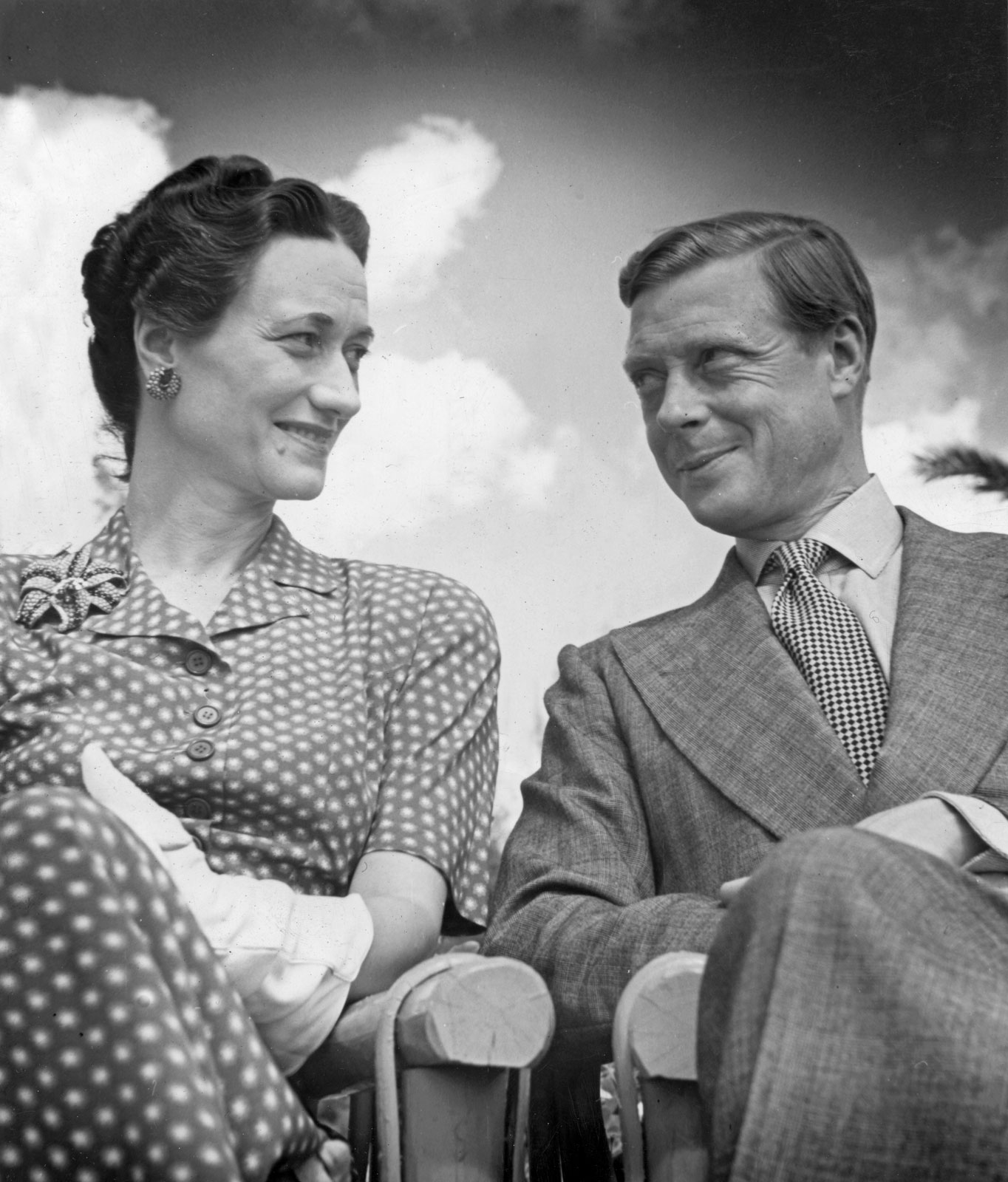
Wallis Simpson, that perky American socialite, was twice-and-still married when she met England’s King Edward VIII. Their love caused a tremendous scandal when the king abdicated his throne to marry her in 1937. “You have no idea how hard it is to live out a great romance,” Simpson told the press.

The fact that love catches us unaware means it can go in many directions, assume many forms. Though Simpson caught a lot of flak for her royal romance, at least she had her newly-dethroned husband tocupid-wallis-simpson-king-ed-b99ca65ce8372e9d737550a0c17ea509 share the backlash with. But what if she’d found herself in love with King Edward VIII from afar? If, say, she was on the palace payroll and it had been her job to bring the king’s slippers to the royal billiard room every day at 4 p.m., where she would be permitted to (discreetly) stare at his magnificent form for thirty seconds before banishing herself to swoon and gnash her teeth in the outer hall?

That’s unrequited love, and while those in the throes of break-up agony may tell you how lucky you are, most of us find one-sided love somewhat unfulfilling and awkward. You have to invent endless, ridiculous reasons to spend snippets of time with the object of your adoration—snippets in which it must appear your interest is completely platonic. It’s one thing to feel pathetic privately—you can keep a secret—but the worst thing that can happen to you as the enamored party in unrequited love is to be found out.

Yet, when “love comes in at the eye,” it’s a rare person who can look away. Even from that most futile of all romances—the long distance crush.

Love From Afar 

During the latter part of a difficult marriage, I saw Colin Firth in Love Actually. To say I was utterly gobsmacked would be a serious understatement. I’d been a fan of Firth since I first saw him in A Month in the Country. Thought him a talented actor. Had seen many of his films, including Bridget Jones’s Diary (in which any sane woman would have melted instantly into a flaming puddle). But it was not until that moment in 2004, out-of-love in real life, that I stared at the screen and wondered why I’d never realized just how gorgeous, funny, sexy, smart Firth was.

london-et-al-2008-158Anonymity in love has its obvious pains but it also has its pleasures. For three happy years, I chattered about all things Colin on a fansite with my (I’m not making this up) “Firthsisters.” I had it so bad, I drove all the way to the Toronto Film Festival hoping he’d show up to promote his new film (he didn’t).

But the experience, overall, was joyful, giddy, energizing—all those reasons we love falling in love. I met lots of fun, lively women on the fansite with whom I shared a billion laughs as well as some memorable photos (one Aussie Firthsister was especially skilled at getting great “stills” from films where Colin had a shower scene). And it rescued me at a time when I was in the limbo cycle of love. You know, the one where you keep asking yourself What was I thinking?

I Must Have Been Bonkers    

When we fall in love, we tend to zero in on some things about the object of our affection and ignore others, sometimes HUGE others. I call this “messages we should have paid attention to.” My favorite of all time is the woman who confessed that, when they were dating, her future husband remarked “I’m just not that into relationships.”

This is the phase in some romances where the person who loves world travel grinds their teeth over the partner for whom travel is a trip from the recliner to the fridge. It’s the moment (or years) when the social butterfly who loves to dance and mingle realizes they’re shackled to a dead moth. It’s the standoff between those who crave intimacy and those for whom stonewalling is not a reference to the 1969 LGBTQ uprising in Greenwich Village, but an eternal, defensive silence.

A square peg forced into a round hole. 3D render with HDRI lighting and raytraced textures.

Discovering that you and your honey are in the square-peg/round-hole configuration doesn’t necessarily end a romance. I know Democrats who have been married to Republicans for decades (wonder how they’re doing now), and urbanites who settled with backwoodsy types. Power to them, but when one or both people have to give up too much of what they love, or compromise too much of who they are, moving on may be the healthiest, least painful choice.

Depending on how long you’ve lived with your stalemate (apologies for the pun), and a whole bunch of personality analytics I have neither the space nor time to research here, moving on may be a HUGE relief. Or you may spend some time licking your wounds in romance hell. This is usually the place where people vow to: 1) join a convent; 2) build a yurt in a remote corner of Mongolia; 3) hire a hitman.

The Heartbreak of Heartbreak      

In her autobiography, actress Vanessa Redgrave recounts the time she was dumped by her husband Tony Richardson for another actress whose film he was directing. She’d come to visit him on location, completely clueless, and he gave her the news. She described the long evening she spent in a little seaside bar, playing over and over every sad song on the jukebox.

cupid-sad-music-man-the-1763660_640Heartbreak is definitely the basement bummer of romantic love—the roughest part of love’s bumpy ride—and most of us have logged in some time there. I remember sitting in the living room of my Boston apartment after a breakup, a bottle of Jameson’s by my side, a stack of weepy records on the stereo (shades of Redgrave), watching my roommate paint the living room.

If I’d only known I would join a writing group two weeks later and fall in love again, I might have got my derrière off that chair and picked up a brush. But then, love is always a surprise. If you want to get to the Bliss, you have to throw yourself out there and take a chance on happiness.

The Bliss      

Oh, the high of falling in love. It’s what leads poets to write stuff like “You are whatever a moon has always meant and whatever a sun will always sing.” (e.e. cummings) It’s why we can’t pack it in and join that convent/monastery. Or become a hermit in the back of beyond.

This flawed and fabulous thing that is love answers our deepest longings to know and be known. The universe is infinite but we are very finite. In our short hour, we seek someone who will grasp who we are and love us for all that. cupid-bliss-engagement-1718244_1280

When my first marriage was breaking up, I wondered if I’d ever get seriously involved again. I was feeling a bit burnt out at the time. It seemed more attractive to embrace my freedom. Move to London. Focus solely on my writing, and limit romance to the occasional fling.

At the time, I was spending much of my day in a local coffee bar, writing freelance articles for magazines. A number of regulars frequented the place, and on a Friday afternoon one of them touched me on the shoulder as he left, and wished me a good weekend.

That was 10 years ago this summer, and the man (we’ll call him Ed because that’s his name) turned out to be the love of my life. The winning ticket in the lottery that is romance.

cupid-balloon-balloon-1046658_1280“The heart never really shuts up,” one character says in a novel I penned some years back.

It may not be elegant prose. But it’s true.


Put the Happy Back in Your New Year

“Life is what happens to you while you’re busy making other plans.”       ( John Lennon)

I don’t know about you, but I gave up making New Year’s resolutions somewhere back in Obama’s first administration. Instead, I started making action plans, neat little Word-generated tables with 3-hour writing blocks and chunks of time allocated to house projects, gardening, agent searches, and guitarhappy-busy-busy-calender playing. No negativity allowed. I will write from 10 a.m. to 1 p.m. each day. I will clean the attic, organize the pantry, query two agents every week, and figure out how my Nikon camera works.

Every December, after the holiday hoopla subsided, I made a new action plan. Another attempt to quantify my time and direct my life. Imposing a strict limit of 15 minutes for e-mail and social media twice a day, I could feel my muscles tense each time I signed into my Google accounts (both professional and personal), then ripped through the tangle of likes, retweets, and new follows on Twitter, before sprinting to the finish line on Facebook, exhausted and always 20 to 200 minutes behind schedule.

The Best Laid Plans … 

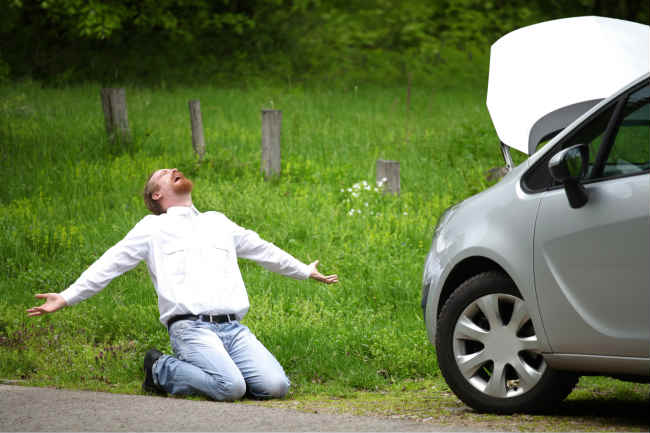
Driver furious a broken car by the roadThe problem with life is that it refuses to lie down and be compartmentalized. My perfectly-constructed little blocks allocating hours to this or that goal were always under siege. The car broke down. A filling fell out of my tooth. The cat got sick. The hot water heater flooded the basement. Unlike laundry (which you can always do at 2 a.m. after all your other to-dos are done), most schedule interrupters just … erupt. And there goes your plan.

One of my favorite illustrations of this is a story my neighbor told. When he was in his 20s, Matt decided to celebrate his college graduation by hiking the Appalachian Trail end to end before starting a graduate program. A consummate planner, Matt did his research and talked to others who had made the trek. He assembled the recommended equipment, and a month before departure, drove the entire trail, stopping to bury caches of food and water at each night’s designated camp spot. Goal set. Prep done. Game on.

happy-by-jeffrey-brookerbearincampsite-lg
Jeffrey Brooker

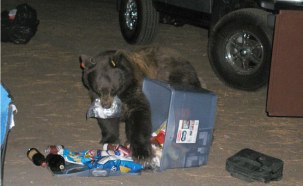
But Matt got sick the week before his departure and had to be hospitalized. By the time he recovered, the summer was gone and his graduate program was about to start. By the end of that, he was married. He spent the next 25 years raising four kids. If those caches of food are still out there, they’ll be celebrating their golden anniversary soon. Personally, I like to imagine some grateful bears unearthed them.

New Year New You (and Other Inanities)

This morning, at the gym, I saw a TV ad: New Year, New You! That perennial January favorite that lures us into believing we can will events to synchronize with our goals. But unless you’ve won the $10,000,000 lottery recently, and can pay others to handle all the annoying curve balls life throws, I predict 2017 will happy-girl-holding-cash-in-handslook remarkably like every other year you’ve lived. Stuff will go wrong. Stuff will break down. You’ll break down. And everything you thought would take two hours to accomplish will take three hours. Or three days.

New Year, New You? I think The Who nailed it, bang on truth, when they sang Meet the new boss. Same as the old boss (“Won’t Get Fooled Again”).

“New Year, New You” also suggests there needs to be a new you, but I’m willing to bet there’s nothing wrong with the old you. Maybe you want to curb your habit of checking your Twitter feed every 15 minutes, or limit your online Solitaire games to something reasonable like 50 a day, but basically there’s nothing wrong with you or me that a 48-hour day wouldn’t fix.happy-girl-hiding-under-covers

One of the most depressing documents I ever saw was a calendar for 2013 (this was in November of 2012) filled with events and appointments all the way through to December of the coming year. It wasn’t even my calendar, but it made me want to hide under the covers for the next twelve months.

Struggling to adhere to an airtight schedule, with day upon day of little boxes to tick, just zaps the joy from life. And the stress of trying to plan for every contingency, doubled by the distress of managing the interruptions you didn’t and couldn’t foresee—Surprise! Your cousin and her kids just came to stay for happy-353b78453171447cdd131cce6e613891_images-of-scared-people-people-running-scared-clipart_830-625two weeks—leads to a life of  wolfing down meals, working past midnight, ignoring friends, and the endless sinking feeling that you’re always running behind. When free time dwindles to a 15-minute slot every Tuesday, and a dinner out with your partner is just one more item to be checked off, you may find yourself wondering what’s the point? Don’t ignore that question. It’s the voice of sanity.

Anyone who knows me will tell you there is nothing as determined as a determined Amy, but doing the same thing over and over while expecting different results is the definition of stupidity. I may be ambitious, but I’m not stupid. So I keep searching for the better mousetrap.

Happiness is Sanity (Or Close Enough)

This January 1, I decided to take a new approach. One that puts a premium on inner peace and happiness. Call it a mental health year. I began by listing the things I’d like to do more of in 2017, the things that make me happy: happy-stack-of-books-8ixrmj48t

  1. Writing fiction
  2. Spending more fun time with my husband Ed
  3. Interesting cooking (something more exciting than fall-back, rush meals of omelets or packaged pasta)
  4. Playing guitar
  5. happy-use-playing-acoustic-guitar-wallpaperReading
  6. House projects (as opposed to house cleaning)
  7. Connecting with friends


That’s it. No boxes to tick. No word counts. No limits. Just a list of the things I love doing.

Atop my file cabinet, behind my desk, sits a card with an Annie Dillard quote: How we spend our days is, of course, how we spend our lives.

I want to spend mine happily.

happy-ed-and-amy-crop-vemont-noho-2008-006


Auld Acquaintance

“You and I have memories longer than the road that stretches out ahead.” Lennon/McCartney

When I was in my teens and early twenties, I spun out countless hours with friends, talking, dreaming, confiding, laughing. Life hurtled toward us at a dizzying speed. High school to college. Graduation to first friends-crop-pete-and-mbjobs. In the constant rush of forward motion—new situations, new people—it was easy to lose track of old friends. To not even realize you were losing track.

We two have paddled in the stream,
from morning sun till dine;
But seas between us broad have roared
since auld lang syne.

Auld Lang Syne: Robert Burns [English translation from original Scots verse]                      friends-crop-terri-and-rebecca


Friendships rarely end in dramatic confrontations. Changing circumstances—jobs, marriage, kids—or changing values and  philosophies take their toll. Not all friendships are anchored enough to withstand the inevitable drift and spin of time.

Out for an evening of dancing and beers with twenty of your “best friends” in college, the thing you don’t yet realize is that very few people will go with you through life. Or how precious those few people—the ones who knew you when you were young—will become. Even though a continent may lie between you. Even when communications are few and face time is rare.

friends-crop-roger-and-marlyseOld friends don’t fade. Seen through the eyes of love, they acquire a timeless beauty. Forever young. A cherished buffer against the rough and tumble of the world. A bright beacon in the hazy uncertainties of the future. They are the ones from which nothing must or can be hidden. They know us through and through, and somehow love us just the same.

Old friends. This post is for them.


friends-cropjen-and-me