The Thing That Cannot Be Changed

And while the future’s there for anyone to change, still you know it seems
It would be easier sometimes to change the past. . .
(“Fountain of Sorrow” Jackson Browne)

I’m going to borrow a little quote from Henry David Thoreau, used in my previous post, to introduce this one. You will perhaps notice a tweak or two:

I went into the wilds of western Massachusetts because I wished to write deliberately, to front only the essential facts of my work-in-progress, and see if I could not get something done away from laundry, appointments, and the flotsam of daily life, and not, when I came to die, discover that I had not written …

It’s my way of saying this is a repeat, but I believe it still has merit. I hope you’ll feel the same.

***********

Sometimes, it’s something we truly earned—and didn’t get. The career-making job that would have launched our dreams. Sometimes, it’s something we never had, but always craved. Parents who could love us. And sometimes it’s just one terrible moment: The car we failed to see in time. Whatever it is, in most of our lives there lurks The thing that cannot be changed. It’s the moment, the decision, the situation that all our effort and talent and endurance cannot alter or undo.

Successful writers and actors, business people and ballplayers, if they’re honest, often mention the role luck played in their achievement. Along with the hard work and long hours, they confess to being in the right place at the right time. No one mentions the opportunities that went to someone else, the love that never materialized, the awful accident of standing in the wrong place at the wrong time.

THING fantasy-1275253_960_720And that’s the hardest part about The thing that cannot be changed. It’s almost never the result of our own doing. Perhaps that’s why it looms so large. It lies outside our control, and people like to control their own lives. When someone else denies us our most basic needs, tramples our dreams, we experience it as an injustice, and injustice bites deep. Its grip is tenacious.

Yet, we must learn to live with The thing that cannot be changed. Thrive in spite of it. Not let it swamp us internally or accept it as a judgment of our own worth. There’s a myth that only losers suffer from The thing that cannot be changed. That successful people simply leave adversity in the dust. Would that it were it so easy.

“The Places That Failed Us Before”

Tennessee Williams was a two-time Pulitzer prize winner and hailed as one of the greatest dramatists in 20th-century American theater. Decidedly a brilliant writer and a great success. But he was never able to stare down The thing that cannot be changed.

 For Williams, The thing was twofold: The abusive, alcoholic father who disdained and bullied a son he considered weak; and the controlling, puritanical mother horrified by all things sexual. Williams heard their message loud and clear: “You are wrong as you are.”

chicagotribune.com
chicagotribune.com

In one particularly harrowing incident, his father hauled him out of the University of Missouri after he failed a military training course in his junior year, and put him to work in the factory of the International Shoe Company where the senior Williams was an executive. Tennessee hated the daily grind and eventually suffered a nervous breakdown.

After he recovered, Williams enrolled in another college, and later studied at the Dramatic Workshop of The New School in New York City. Speaking of his early days as a dramatist, collaborating with others on a play for an amateur summer theater group, Williams wrote, “The laughter … enchanted me. Then and there the theatre and I found each other for better and for worse. I know it’s the only thing that saved my life.”

The hope in that last sentence is moving; its subtext, haunting: If I just work hard enough, long enough, I can write my way free of my pain. But he never did. Despite using that pain to create some of the most memorable characters on the stage (Big Daddy, Amanda Wingfield), he remained trapped within The thing that cannot be changed. Elia Kazan, who directed many of Williams’s plays said, “Everything in his life is in his plays, and everything in his plays is in his life.”

In 1939, with the assistance of his agent, he received a $1,000 grant from the Rockefeller Foundation for a play he was writing, Battle of Angels. The play foundered when it opened, but Williams was on his way. And yet, a poem he penned that same year reveals how badly The thing that cannot be changed dogged him. Cried the Fox speaks of an animal, running in ever-narrowing circles—frantic, desperate, lonely—always coming back to the places of past hurt and doubt.                  

Williams once remarked that “A high station in life is earned by the gallantry with which appalling experiences are survived with grace.” But the undertow of those experiences finally claimed him. He died of asphyxia, an accident related to the quantity of alcohol and drugs he consumed over the last 30 years of his life. His obituary in The New York Times (February 27, 1983) paid homage to him as “a master of dramatic moments who created lost, tortured characters struggling for dignity and hope in a world that often denied both.”

Beyond Her Own Pain and Anger
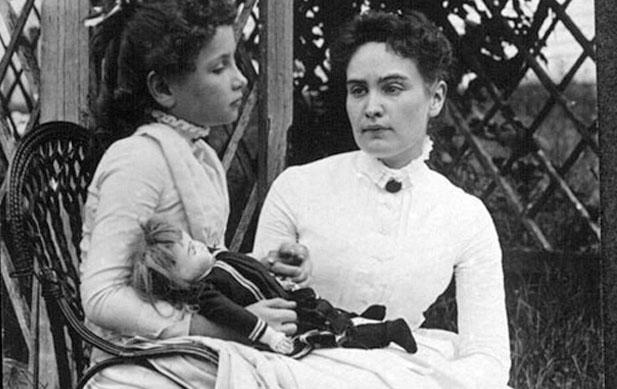
Helen w/ Annie Sullivan

Helen Keller became acquainted with The thing that cannot be changed at 19 months, when a severe illness left her blind and deaf. Imagine the terror of that. Your world goes dark and silent, and you are too young to even grasp why. By all accounts, Helen spent the next five years in a rage, rejecting every attempt to reach her. It was only when the young teacher, Annie Sullivan, at last broke through that dark silence and communicated with her, that Helen understood there might be something beyond her own pain and anger.

As an adult, she used that discovery to help other people afflicted with blindness. She joined the American Foundation for the Blind. For 40 years, this organization served as her global platform to advocate for people with vision loss. She saw to it that state commissions for the blind were established, rehabilitation centers were built, and education was made accessible to children without sight. She also championed the rights of working people and women’s suffrage.

It is a hard thing for us humans to accept, but the bottom line is this: We cannot control other people and we cannot change the past. We can only control our own actions and responses. So when The thing that cannot be changed brings us to our knees, as it sometimes will, we must learn to breathe with it. As Helen Keller discovered, it is one aspect of our personal story, but it is not our whole story. So we own it, and then we rise up. And carry on.

THING summer-1458129_960_720

The Final Arbiter

“What you get by achieving your goals is not as important as what you become by achieving your goals.”   Henry David Thoreau

It’s the most human of desires: To crave validation for our work, our ideas, our dreams, our self. Whether we are scientists or writers, teachers or public defenders, musicians or social workers, we like to imagine our work will have lasting impact, influence positive change, spark new discoveries. Even if we don’t aspire to a world stage, it’s a rare person who doesn’t want to have their efforts recognized and valued by their immediate peers and colleagues.

Warning: Seeking validation from others puts us in an extremely vulnerable place. Marks us out as a target. Like walking around with a “Kick Me” sign on our back. When we need something from others, we cede control over the outcome. This is rarely a problem with family and friends, but beyond those warm waters, be aware: There are sharks.

Few of us have escaped the damage jealousy inflicts. The colleague who badmouths us behind our back because he fears any success of ours makes him appear less capable.

The ruthless competitor is another shark. Everything is about power to the RC, and she covets all of it. Line from a quirky little TV movie Donovan Quick: “It’s not enough that we are seen to win; others must be seen to fail.” That’s the ruthless competitor.

These attacks, delivered by people we know and deal with daily, feel personal even though they say a lot more about the attacker than they do about the attacked. Out in the wider world, however, what undermines our validation is highly impersonal: Money. Trends. The status quo. If you’re feeling defeated by these faceless forces, rest assured you are in excellent company.

Too Weird: Vincent van Gogh  

The all-time poster boy for lack of public validation is Vincent van Gogh. If you google famous paintings of the 1880s, a lot of Van Gogh’s works pop up, but the reality was completely different on that summer day in 1890 when he shot himself with a revolver on the streets of Auvers. Up to that day, Van Gogh had sold just one painting, The Red Vineyards, from the several thousand he’d done. 

During the years Van Gogh painted starry nights and cornfields and chairs with a pipe on their caned seats, people went to galleries to view Impressionist works. Renoir’s Girl with a Hoop. Monet’s Bathers at La Grenouillère. Beautiful pieces of light, air, and dazzling color. By contrast, Van Gogh’s first painting, The Potato Eaters, was perceived as crude, amateurish, ugly.

Van Gogh, too, admired the Impressionists and they influenced his use of color, but his paintings were not the tranquil stuff of little boats floating on the Seine or lunching parties. The galleries and the art-viewing public turned away from the raw emotion of his work. The truth of the turbulent feelings he expressed made them uncomfortable. Not much money in that. As Van Gogh wrote to his sister Wilhelmina: The exhibitions, the picture stores, everything, everything, are in the clutches of fellows who intercept all the money. Prophetically, heartbreakingly, he adds: People give a lot of money for the work after a painter himself is dead [but] they are always slighting the living painters …

A decade would pass after Van Gogh’s death before his enormous talent achieved the recognition he craved in life, and only then because his sister-in-law Joanna bothered to collect all his surviving work (his mother had thrown away crates of it—thanks, Mom). She kept pushing the powers of the art world until she got a Paris show in 1901, where at last, in the new century, the world was ready for Vincent. Today, of course, his paintings are worth millions, and it’s recognized that he was in the forefront of Expressionism, a style that celebrates the artist’s emotional response to his subject.

Too Unprofitable: Franz Kafka

Franz Kafka fared slightly better than Van Gogh. He was able to get a few of his short stories published in his lifetime, “The Metamorphosis” among them. But he wasn’t writing what everyone else was writing, and most publishers regarded his existentialist tales as too “out there” to be profitable. What he did manage to publish received scant attention.

Kafka always craved more time to write, but his lack of success as an author meant he had to work full-time for the Worker’s Accident Insurance Institute in Prague, a job he held for most of his life, right up until the final months before tuberculosis killed him.

The man who would come to be considered the most influential existentialist writer of the 20th century died thinking himself a failure. In his last days, he begged his good friend and fellow writer Max Brod to burn all his work. Fortunately, Brod ignored this request and, like Van Gogh’s sister-in-law, made it his mission to get his friend’s work out there. Brod prepared the manuscripts for three of Kafka’s novels and saw them through German publication: The Trial (1925), The Castle (1926), and Amerika (1927).

The Trial would not appear in English until 1937, by which time a world still recovering from major economic depression, mired in fascism, and on the brink of another global war, was better prepared for a novel about a man who is arrested and prosecuted by a remote, inaccessible authority who withholds the nature of his crime from both him and the reader.

The times had caught up with Kafka’s genius. His books were immensely popular during World War II. Their blend of realism and the fantastic, edged with black humor and themes of alienation, spoke to the anxieties of a rapidly changing 20th century.

Kafka’s handwritten manuscript of The Trial sold for a record $1.98 million in 1988, but perhaps it was Gabriel Garcia Marquez who paid Kafka the most significant tribute. Reading “The Metamorphosis,” he said, had made him see “that it was possible to write in a different way.”

No Point to It: Gregor Mendel

Sometimes what we’re doing is not perceived as too weird or unprofitable so much as completely irrelevant. Most folks in the mid-19th century had no idea what Gregor Mendel was up to, puttering out there in the monastery gardens with his zillions of little pea plants. Nor did they care.

Mendel was by all accounts a shy, quiet man who suffered occasional psychological breakdowns. He was also brilliant—a scholar of philosophy, mathematics, and physics—and curious about everything, especially the natural sciences. He conducted his experiments in a monastery garden because he had decided to become a monk. In his day, it was one way to extend your education without having to cough up the actual dough, of which he had none. 

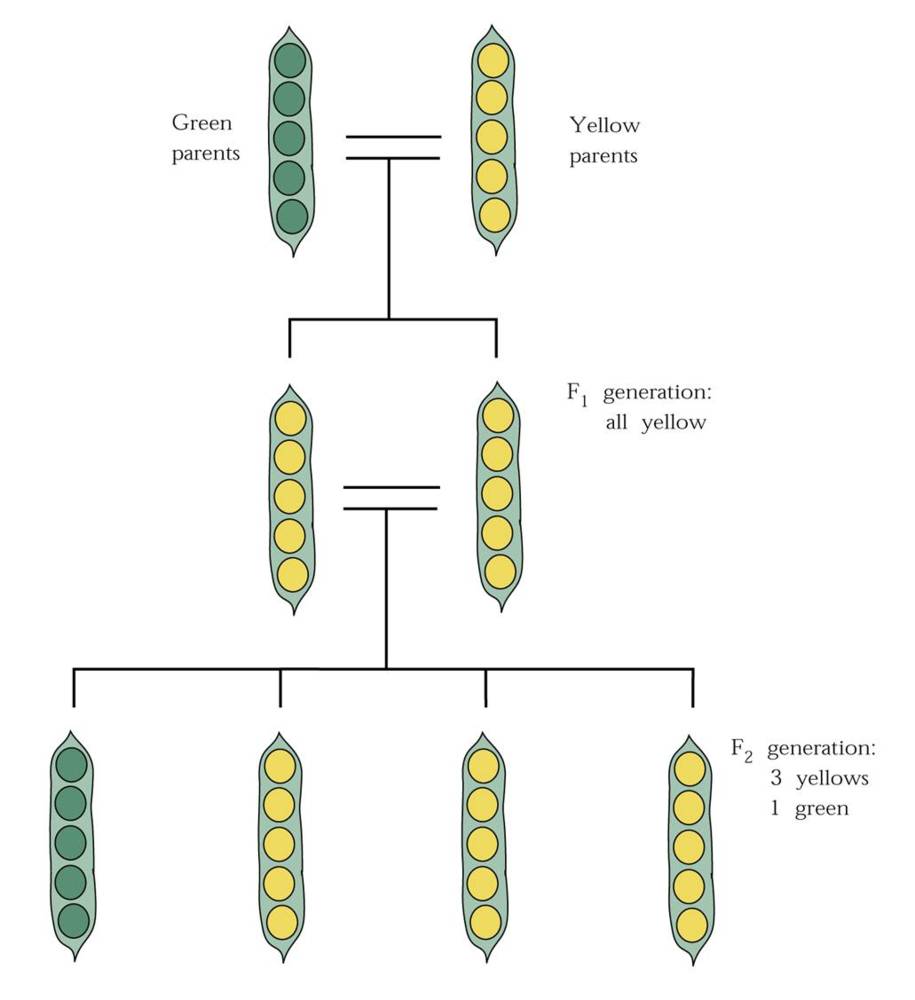
In 1854, when Mendel started looking at how hereditary traits get transmitted in plant hybrids, the prevailing beliefs were: 1) the traits of all species were merely a diluted combo of the parents’ traits, and 2) any hybrid would return to its original form over generations, ergo a hybrid could not result in something truly new. What experiments there had been to bolster these beliefs were dodgy by modern scientific standards. Scant number of trial subjects. Short trial durations. Mendel’s work, by contrast, went on for eight years, involved tens of thousands of individual plants, and mountains of meticulous data. His experiments showed that the inheritance of certain traits in pea plants follows particular patterns.

But no one “got it.” When the results of his studies—the first to use statistical analysis to predict hereditary principles—were published, the reaction was a major yawn. Like many a 9th grade biology student, the public, and even the scientific community, failed to understand the huge significance of Mendel’s discoveries about dominant and recessive traits (think Big B/brown eyes/dominant and Little b/blue eyes/recessive) for heredity, genetics, and biodiversity.

His key findings, the Law of Segregation (dominant and recessive traits are passed on randomly from parents to offspring) and the Law of Independent Assortment (traits are passed on independently of other traits) would languish for decades before 20th century biologists “discovered” his work, confirmed his experiments, and proclaimed him the father of modern genetics.

A Threat to the Status Quo: Galileo Galilei

Sometimes our work or our ideas threaten the status quo. As we saw with Mendel, people will cling tenaciously to any sort of nonsense as long as it’s the prevailing nonsense or gives them power or makes them rich. The price for bucking the established order runs high, especially the more those in power suspect you’re onto a truth that will unseat them.

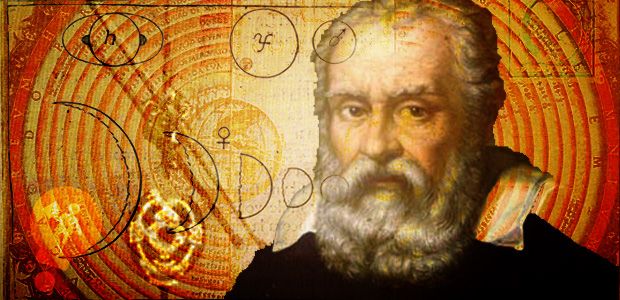
In Galileo Galilei’s lifetime, the world was believed to be geocentric and fixed in place. To suggest the earth revolved around the sun was to contradict Scripture (Psalm 104.5: “The Lord set the earth on its foundations; it can never be moved.”) and to court heresy charges.

Source: http://goo.gl/Wg7y2u

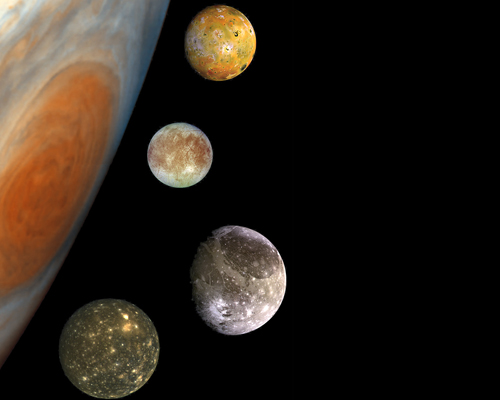
Galileo was not interested in prevailing “truths.” Born in 1564, on the cusp between natural philosophy and modern science, he just wanted to find out everything he could about the planets, their characteristics and how they moved. Through the telescope he invented, he was able to view things like four of Jupiter’s largest satellites orbiting that planet, an observation that corroborated Copernicus’s until-then-unproven theory of a heliocentric solar system.

Not only did this get the Church’s back up, but the discovery of moons orbiting another planet contradicted Aristotelian cosmology—the “science” of the day—which said that all heavenly bodies orbited Earth. The Aristotelian astronomers felt Galileo’s discoveries made them look like fools, so he wasn’t going to get much help from that quarter either.

Pope Urban VIII invited Galileo to write a book giving arguments for and against heliocentrism, including the Pope’s own views on the matter. The catch? Galileo was not to advocate for heliocentrism. In his 1631 Dialogue Concerning the Two Chief World Systems, Galileo did indeed include the pope’s views, but he also strongly defended his own proofs that the earth was not fixed, nor the center of the universe.

The enraged pope formally accused him of heresy and placed him under house arrest. Knowing that neither popes nor misguided Aristotelians can silence the truth forever, Galileo continued his work, publishing a treatise on the principles of mechanics and making new discoveries about the moon, until his death eight years later. Stephen Hawking said of Galileo that he probably had more of a hand in the birth of modern science than anyone else.

Coloring Outside the Lines: Henry David Thoreau

Sometimes, our ideas, our work, our whole way of being just makes people itch. A person who goes their own way, without reference to the status quo—what is expected of someone from their background, of their gender, in their situation—poses a subtle threat to those who are careful never to color outside the established lines.     

Henry David Thoreau made people itch. A writer and philosopher from a middle-class family, Thoreau studied at Harvard, but could not work up any enthusiasm for the professions available to college   graduates in the 1830s: the law, the church, business, medicine. So, he took up teaching in the Concord public school, a job he quit after several weeks because he refused to administer corporal punishment. He then opened a grammar school with his brother, but his brother soon died. What to do next?

Troubled by and dissatisfied with industrialization in particular and capitalism in general, Thoreau sought a simpler life, a closer relationship with nature. It was around this time that he met Ralph Waldo Emerson, who became both a mentor and a conduit to people like journalist/women’s rights advocate Margaret Fuller, writer Nathaniel Hawthorne, and writer/teacher/reformer Bronson Alcott. These Transcendentalists believed that all nature and humanity are divine without resort to organized religion, which they saw as corrupt. It was a philosophy that dovetailed closely with Thoreau’s own views.

Thoreau cobbled together a living by tutoring Emerson’s children and other odd jobs while seeking out any and every connection that could help get his writing published. He was a prolific writer (he left thousands of pages of unpublished manuscripts at his death), but only fifteen of his essays and two of his books found their way into print in his lifetime. One of these was Walden, a recounting of the two years he spent living in a self-built shack in the woods. As Thoreau wrote:

I went to the woods because I wished to live deliberately, to front only the essential facts of life, and see if I could not learn what it had to teach, and not, when I came to die, discover that I had not lived …

Walden received little attention at its publication. People had a hard time understanding this man who lived outside the usual conventions of ambition, a man who lived by his own lights. But after Thoreau’s death, the book became a classic that has informed environmentalists, philosophers, and writers like Tolstoy. His essay On Civil Disobedience, which champions nonviolent dissent, influenced both Gandhi and Martin Luther King Jr.

You Are a Ming Vase

As these stories show, failure to achieve recognition during one’s life—to be publicly validated—has dogged some of history’s greatest talents. Even J.S. Bach’s compositions were little known in his day because music publishers didn’t feel they were worth the high cost of printing. So Bach, at his death, was regarded merely as a skilled organ player. His music only became known in the following century when Felix Mendelssohn reintroduced his “Passion According to St. Matthew.”

But lack of validation did not lessen the significance Bach’s music or Galileo’s contributions to science. It did not mar the enduring beauty of Van Gogh’s paintings. To accept the judgment of others as a true measure of our merits is to place what is most valuable into indifferent hands. You wouldn’t give a careless stranger your Ming vase to hold.

If you believe in your ideas, if you are passionate about your work, don’t be discouraged by what’s trending, what’s profitable, what’s status quo. Keep going. In your lifetime, you must be the final arbiter.


We’re Not the Only Ones

“If having a soul means being able to feel love and loyalty and gratitude, then animals are better off than a lot of humans.”        (James Herriot)

I’m watching my cat Tibby investigate a cardboard carton, a remnant from the holidays that has yet to find its way to the recycle bin. The flaps have been closed to overlap one another, but the box has yet to be invented that Tibby can’t breach.

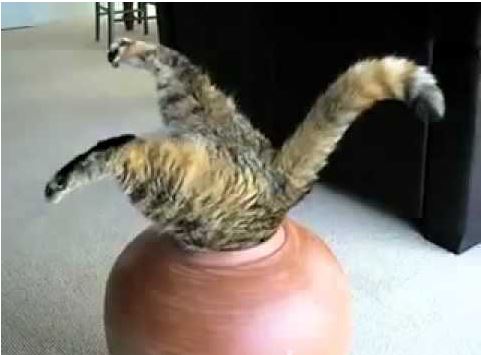
ANIMALS cat jumping in vaseCaptureAfter testing the interlocking flaps with his paws for some kind of “give,” and finding little, he simply dives into the center, head first. The carton tumbles sideways and up pops Tibby with the box on his head. He stumbles around for several moments until I rescue him, concerned this stunt might break his neck. Freed from his folly, he slinks off amid our laughter, clearly embarrassed.
Cats are easily embarrassed. Missing a routine jump to the countertop or rolling over on the bed and … tumbling off, they lower their head and pad quietly to another room. You didn’t see that, right?

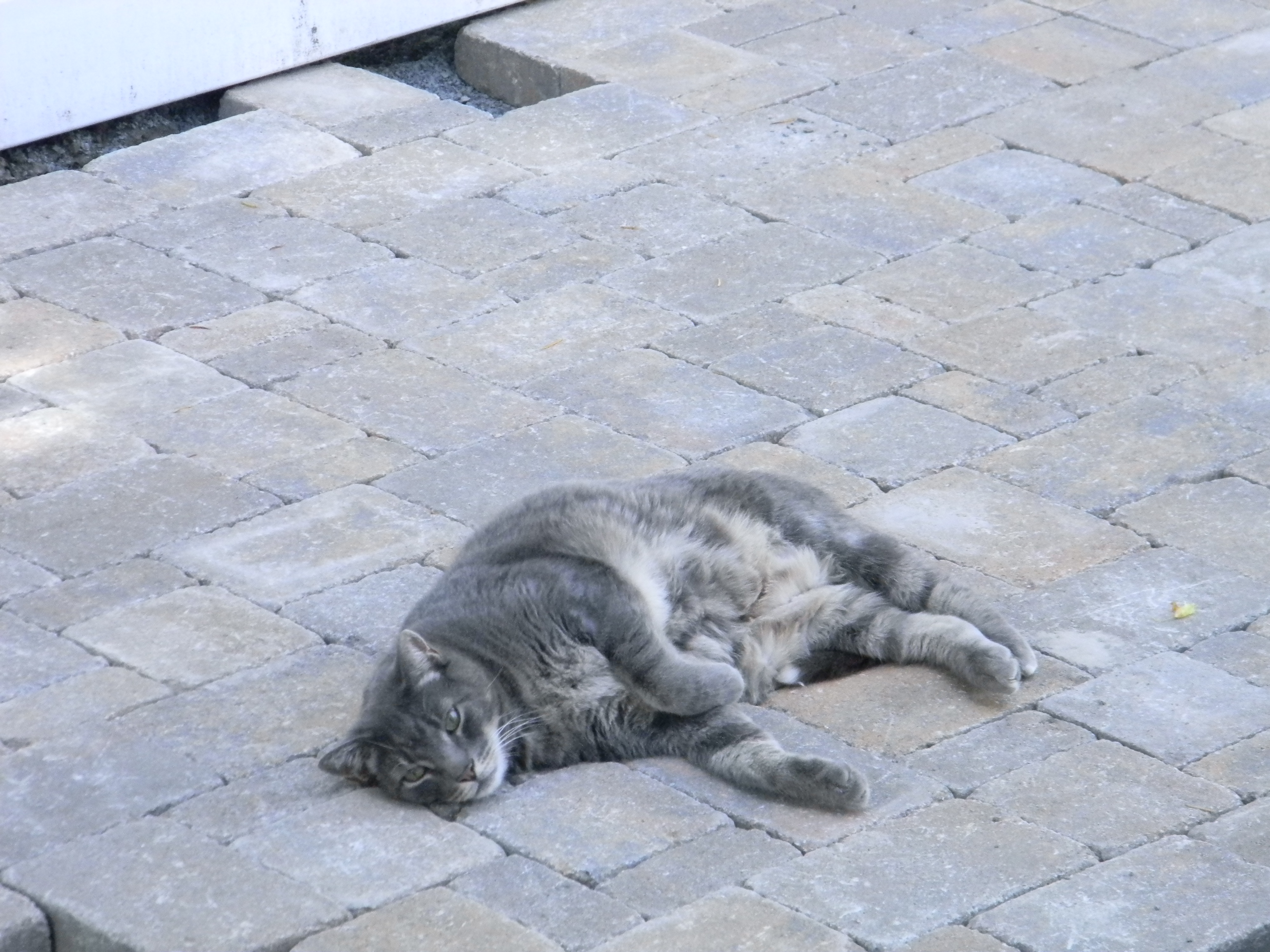
They’re also capable of great joy—my other cat, Coosh, writhes in ecstasy on the patio pavers in warm weather and relishes the midnight-hour snuggle on the bed when I turn on Mozart and take up a book to read. Of course, he gets annoyed, too, and is not slow to0601 Coosh on New Patio show his displeasure, once peeing all over a box of albums while giving me the angry eye for not sharing my pizza.
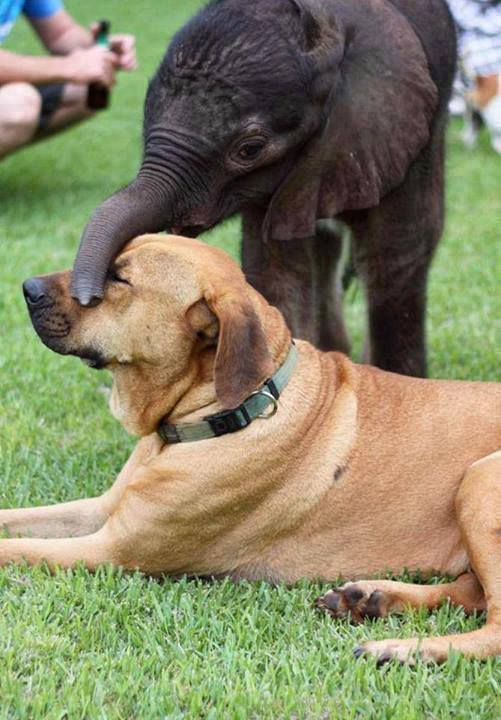
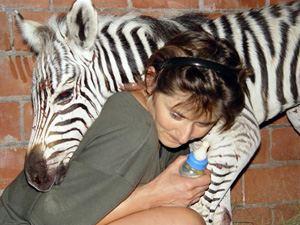
Until very recently, biologists believed animals to be creatures of instinct only, but that view is undergoing a radical shift as evidence of both emotions and smarts piles up in study after study. Biologists are discovering what pet owners, livestock farmers, racehorse trainers, and veterinarians have always known: Animals are complex creatures who deserve our respect. All we can ask is: What took you so long to catch on?

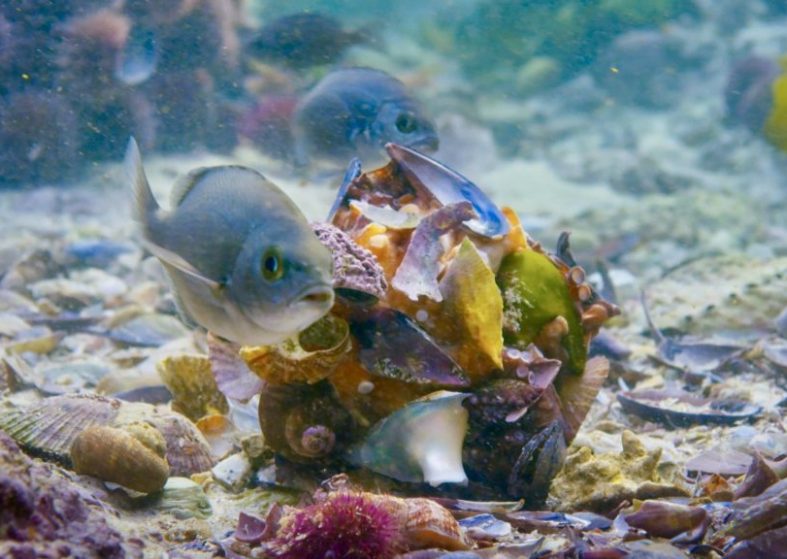
It seems the height of hubris to imagine that humans alone experience joy, fear, love, anger, distress. Even fish, long thought to be devoid of just about everything but the ability to swim, experience conscious pain. Turns out they have complex nervous systems with pain receptors that fire off soothing endorphins when they are injured—just like human and non-human mammals do.

That all animals experience pain should not be surprising. Pain is an evolutionary survival mechanism. While not feeling pain would be a definite plus if you tumbled over a cliff to be dashed on the rocks below, pain or the threat of it keeps us alert to physical dangers in our world. Thus, we thrive and continue.

Animal Smarts

Problem-solving is another survival mechanism. You don’t last long if you can’t navigate your environment, and that requires the ability to learn. Animals, researchers are discovering, possess plenty of smarts.

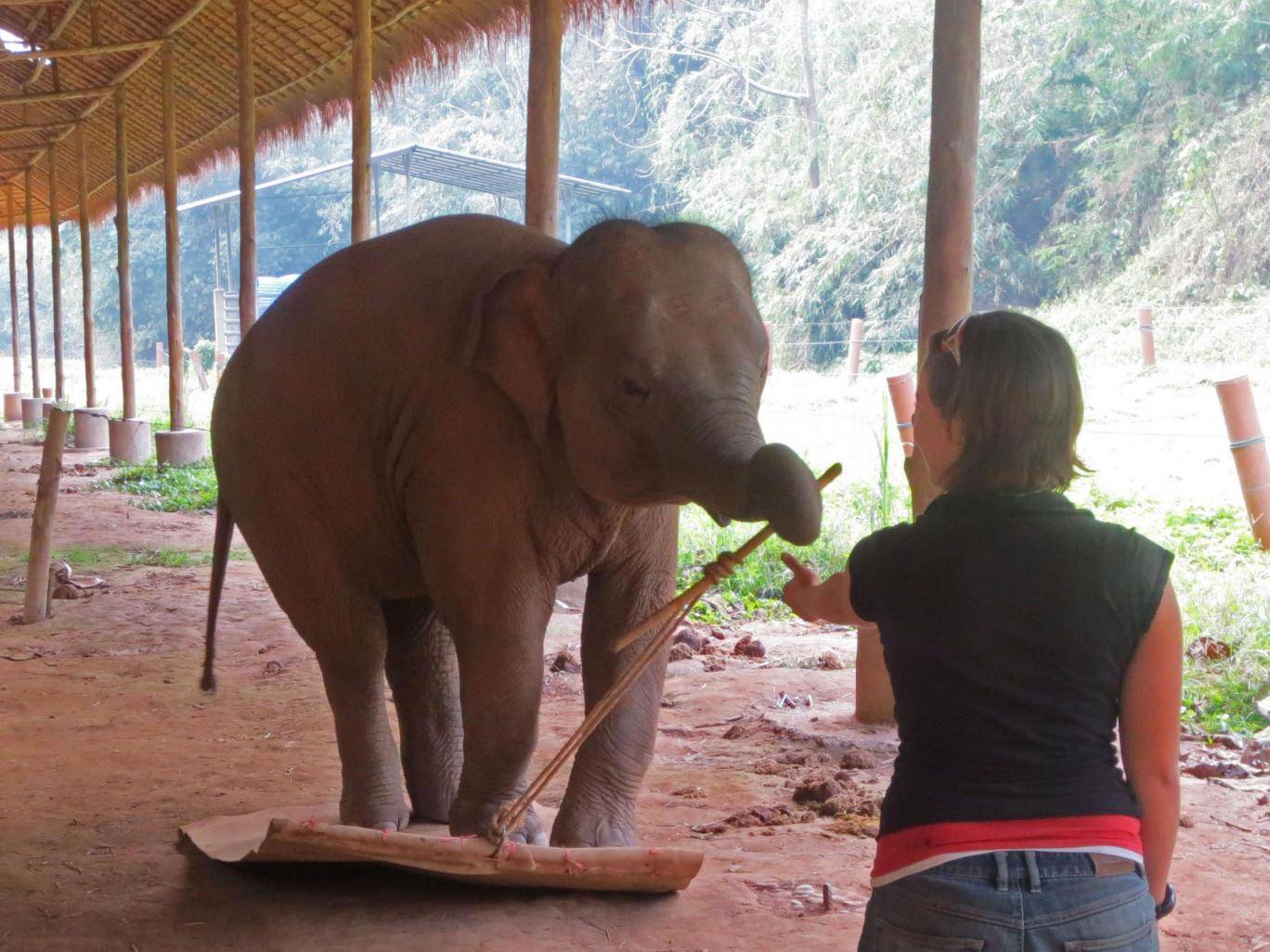
Elephants recently blew away the scientific world when they demonstrated a level of self-awareness generally thought to be beyond the capability of non-human animals. The experiment that revealed this involved two items: a mat and a stick. While standing on the mat, the elephants had to pick up the stick and hand it to a researcher. A simple task. But what would happen when the stick was tied to the mat?

Dale/Plotnik

What did happen was that most of the elephants quickly realized they were what was making the task impossible—that the stick tied to the mat could not be picked up and passed to the researcher as long as they were standing on the mat. So, the elephants stepped off the mat and solved their problem.

Okay, everyone knows elephants have a reputation for being pretty savvy, but what about cows (an animal, by the way, with which we share 80% of our genes)? When did you last hear someone say, “He has the memory of a cow”?

Well, a 2004 Cambridge University research team demonstrated just how smart cows can be when it comes to solving problems in their environment—and the pleasure they get from doing so. The research team placed cows on one side of a gate. On the other side was a food reward.  The cows had to figure out how to operate the gate in order to get the food. During the process of solving the problem, the cows’ heart rates rose. They also showed behavioral signs of excitement—jumping and kicking—when they figured out how to press their nose to a panel that would release the gate. Cows given access to the same food reward minus the tricky gate demonstrated none of these behaviors. The cows literally got a kick, scientists say, from solving the problem on their own.

Can you spot the octopus?

A number of studies show octopi—yes, octopi—to be extremely perceptive when it comes to solving the problem of how to elude predators. Mimic octopi shapeshift to appear as other animals—ones their predator of the moment doesn’t devour. Others pick up shells, rocks, and whatever ocean flotsam is at hand to disguise themselves. The cool thing is they can analyze both their environment and their predator to form a specific plan for slipping under the radar.

Closer to home, Stanley Coren, a well-known expert on all things canine and author of The Intelligence of Dogs, claims that the average dog can understand 165 words (whether you speak them in English, Swedish, or Urdu), and the smartest 20% of dogs learn up to 250 words. For some reason, he compares this to the mental abilities of a child age 2 to 2.5 years, but I was rather impressed. I’m considerably older than 2.5 years and I don’t speak any “dog.”

Proof of intelligence and problem-solving among non-human animals can be spotted everywhere animals are. My cats Tibby and Coosh are brilliant about butter wrappers. A stick of butter is never opened in our house that they are not aware of and onsite within five seconds, begging for the wrapper to lick. Tibby figured out almost immediately that he needed to place one paw on the wrapper to prevent it sliding across the floor as he licked it. Coosh was frustrated at first with the slippery wrapper, but after watching his brother a few times, he also adopted the paw method of holding down the goods.

They are smart, too, about deception in the pursuit of forbidden pleasures. The two of them can make a powerful racket, thumping down the stairs, but let there be an unattended pie cooling on the stovetop or an English muffin sitting in the toaster, and they move like stealth missiles, leaving nothing but a pile of crumbs in their wake. Mark Twain would have enjoyed writing about them.

So, why do we human animals treat non-human animals as if they were so much inorganic flotsam, at our disposal to use and abuse as we please?

Making a Killing

As I’m writing this, an email just popped up, informing me that Trump will now consider all permits for elephant trophy imports from African nations on a “case by case” basis, ending the Obama-era ban on such imports from Zimbabwe and Zambia. The U.S. Fish and Wildlife Service claims that sport hunting in these countries would “enhance the survival of the species in the wild” because the permit fees would go for preservation.

Okay, let me get this straight. The U.S. is now permitting trophy hunting of elephants, a highly-endangered animal, in order to raise money to save elephants???!

Why am I not buying this? Could it be because Safari Club International, big advocates of trophy hunting and good buddies with Interior Secretary Ryan Zinke, sued to block Obama’s 2014 ban—with support from the National Rifle Association (surprise!)—and I don’t believe they have elephants’ best interests at heart?

But trophy hunters are just one threat animals face. Poachers are another. From the coveted ivory tusks of elephants to the skins, bones, and teeth of tigers, poachers are hunting animals into extinction. Rhino horns fetch up to $65,000 per kilo, a price that tops gold, diamonds, and cocaine for the same weight. And the population of hawksbill sea turtles, whose yellow-and-brown shell is used to make tortoiseshell jewelry, glasses, and ornaments, has dropped by more than 90% in the past century, bringing them to the brink of extinction.

One way and another, animals have gotten the short end of the stick for as long as they’ve been profitable to humans. When buffalo hide became a cheap alternative to leather after the Civil War, the buffalo population dropped from 30-plus million in 1850 to less than 400 by 1893.

Sometimes, as in the case of poachers, profitability involves a direct assault on animals. The factory farms, on which 99% of U.S. farm animals are raised, breed animals in cruel and abusive conditions before they’re shipped to gigantic slaughterhouses where they’re often ripped apart while still breathing. Time is money! Rabbits are skinned alive for the fur trade, and geese have their feathers and the undercoating of their skin ripped off in a process known as “live plucking” for down comforters and pillows.

Forest habitat cleared for palm oil.

Sometimes, animals are simply the indirect victims of profitability. Palm oil, for example. Easy to grow and cheap to produce, the production of palm oil has laid waste to over 22 million acres of rainforest habitat in Malaysia and Indonesia alone—an area the size of Maine, and a number projected to triple by 2025.

Habitat loss is ranked by wildlife groups as the #1 threat to animals the world over. Rampant, thoughtless development is one cause. Human-driven climate change is another. The rapid melt of sea ice is literally shrinking the habitats of polar bears, Arctic caribou, and emperor penguins. Rising temperatures in freshwater streams are rendering salmon more vulnerable to predators and disease, while the increasingly severe storms climate change brings wash away their eggs and destroy their spawning habitat.

The staggering loss of species we’re seeing today is estimated to be between 1,000 and 10,000 times that of the natural extinction rate. Many scientists are calling this the Sixth Extinction. Unlike previous mass extinction events, however, this one’s on us. As the World Wildlife Fund put it, “A single species—ours—appears to be almost wholly responsible.”

How Should We Deal with Nature?

A human being is an animal, a part of nature. But we single ourselves out from the rest of nature. We classify other animals and living beings as nature, as if we ourselves are not part of it. Then we pose the question, “How should I deal with Nature?” We should deal with nature the way we deal with ourselves. . . ! Harming nature is harming ourselves, and vice versa.

That’s Zen Master Thich Nhat Hanh speaking, globally revered Buddhist monk, a man Martin Luther King, Jr. called “an apostle of peace and nonviolence.”

Buddhist philosophy makes no clear distinction between non-humans and humans. Animals are not lesser or “other.” In his book Hua-yen Buddhism: The Jewel Net of Indra, scholar Francis H. Cook notes that this principle not only stresses that we are all in this together, but that we are all “rising and falling as one living body.”

Everything is connected.

By contrast, Western Old Testament tradition holds that humans have “dominion” over all non-human creatures: And God said, Let us make man in our image, after our likeness: and let them have dominion over the fish of the sea, and over the fowl of the air, and over the cattle, and over all the earth, and over every creeping thing that creepeth upon the earth. (Genesis 1:26)

Convenient, isn’t it, that something written by humans for humans gives humans all the power.

But if one believes that humans were given dominion over non human animals by a deity, why is that dominion so widely understood as a license to abuse and torture rather than a mandate to nurture and protect?

Rising and Falling Together

Last year, I read a story about a village in India whose people were relocated due to industrial development. The problem was, they were resettled right in the middle of an ancient migration path used by elephants. When the elephants encountered this new roadblock, they rampaged and several people were trampled to death. As it turns out, this was not an isolated event. Sometimes people take the brunt of these confrontations. Sometimes elephants are the victims. In actuality, both groups are casualties of rapid agricultural and industrial development that has failed to take heed of those it affects.

India is home to a large portion Asia’s wild elephants (about 27,000 in 2017). The herds migrate with the seasons from one forest habitat to another. Between forests, they travel through, and are sustained by, linear patches of vegetation called “corridors.” As development gobbles up forest habitat, elephants must travel further to get from one forest to the next. The corridors grow longer. Increasingly, they find them blocked by human settlements. Desperate, elephants often raid the local crops and stores. It rarely ends well.

A group, the Wildlife Trust of India, has launched Right of Passage: The National Elephant Corridors Project. WTI is working to legally secure and protect these corridors through a combination of land purchase, voluntary relocation, community participation, and mediation between authorities and the affected villages. WTI also provides jobs for these villagers by engaging them in habitat restoration. It’s slow, people-intensive work, but of India’s 101 elephant corridors, a dozen have been secured or are in the process of being so.

As I watch my cat Tibby trying to work the catch on his Pet Taxi at the vets, desperate to open the door and return to safety, return to home, I’m touched by both the intelligence and emotion his efforts demonstrate. Of course, he can’t work the latch. It’s been engineered by humans for operation only by those of us with an opposable thumb. But that he understands what needs to happen even if he can’t make it work is deeply moving.

This is not anthropomorphizing animals, any more than dressing to disguise ourselves at Halloween is octopi-morphizing. Animals have feelings. They possess intelligence. Ultimately, how we treat animals says much more about us than it does about them. We need to consider how we will share and protect this planet and each other.

If today, it’s the polar bears and the elephants and the sea turtles who are at risk, tomorrow it will be us, the human animals.

Everything is connected.

Love and Stuff

“If you aren’t happy for what you already have, then what makes you think you will be happy with more?”  Maddy Malhotra

Shortly before Valentine’s Day, I got an email from the International Rescue Committee, a group dedicated to helping people “whose lives and livelihoods are shattered by conflict and disaster to survive, recover and regain control of their future.” They were promoting “Hearts for Humanity,” a fundraiser which offered a choice of four Valentine gifts you could purchase to honor a loved one: Warm Blankets;  A Year of School (for a girl); The Teddy Bear & Creativity Kit for young children, and Safe Passage.

The deal was you chose a gift, and a card would be sent to your Valentine notifying them what you had purchased in their name. It’s a nice way to share some love. 

I selected the Safe Passage gift/card. The blurb for it caught my heart: After fleeing for their lives, refugees arrive to an unfamiliar place frightened, exhausted and in desperate need of basic services, including transportation and information … the IRC provides refugees with critical information on how to access medical care, asylum services, and what to do in case their family is separated. We also help to transport refugees safely to facilities such as hospitals or asylum centers.”

I thought if I was someone fleeing everything I’d ever known, hoping to survive the boat ride to a place foreign in both language and customs, with no home, no job, and no clue as to WTF would happen next, I’d be mighty glad to find some friendly face on the other end who would help explain the rudiments, get me medical assistance, maybe give me a ride.

So, I named my husband Ed, all-around good guy and Valentine-extraordinaire, as the person I wished to honor with my donation. Easy. But what did I want to type in the little “brief message” box provided? My typical Valentine’s card to Ed runs beyond brief, and usually includes some sentiment a tad more racy than I felt like sharing with the card-prep folks at the IRC.

You may think, being a writer, a brief message would be a piece of cake, but I continued to stare at that blank space, willing some coherent thought to materialize. Writer Revelation #1,923: Coherence is only the baseline—the barely acceptable, rock bottom limit—below which writers must not sink, or if we do sink then we must delete quickly or bury the evidence in some file with a name like Holiday Recipes 2005.

No, when faced with a blank page, what writers aspire to pen is something graceful, hopefully thought-provoking, occasionally humorous, and true. Above all, true. 

After more gazing out the window, and fortified by a gin-and-tonic, I decided to focus on why I chose this gift of Safe Passage for Ed rather than a book or sweater or some other item we already have too many of and no place to store. The WHY made it all fall into place. I quickly typed:

One of the miracles of love is that it makes you more generous. We already have everything we need because we have each other, so this Valentine’s Day, I’m extending that love, sending it out like ripples over a pond, to those less fortunate.

What is Enough?

Love makes us generous. Teaches us what is enough. Enough is a good word to know. A life-enhancing concept. A planet-saving philosophy.

Stuff, on the other hand, just seems to make the folks with the most toys greedier for more. Two homes. Five homes. A personal jet and a helipad. A private island.

Personally, I think it’s bad manners to grab another $100 billion for yourself when other people are homeless, starving, and dying from lack of basic medical care. Forty percent of the world struggles to survive on less than $2.50 a day.

But if I’m honest, I know the Stuff Gene is shared to greater and lesser degrees by much of the developed world. Even in my own modest (by American standards) home, I often feel the walls closing in, squeezed tight by too much stuff. Why is it Ed and I have three coffee mugs crammed with pens, pencils, and markers on our partners’ desk when one would do? Are we expecting to sprout another dozen hands, become an ambidextrous stunt-writing team?

Speaking of coffee mugs, why do we have 27 of them hogging space in our kitchen cabinets? Are we anticipating a Fifties style coffee klatch—two dozen ladies in June Cleaver bouffant dresses and pearls, gathering for a gossip? 

Ed and I are woefully short on extra homes, sports cars, and Cayman Island accounts, but we have more prints and posters than wall space to hang them, enough kitchenware to open a diner, and a pile of electronics dating back to the dawn of the digital age. If floppy disks, VCR players, or cassette recorders ever make a comeback, we’re ready.

We are two people … with eight suitcases, three laptops, three tablets. And about 800 sweaters.

The Trouble with Stuff

As a nation, we’ve come a long way from the folks who inhabited those quaint cabins you see at places like Plimoth Plantation. One, maybe two rooms. A couple of hooks for the family’s several items of clothing. A cooking pot. Today, many people pay an average $1,000 a year for self-storage lockers to hold the stuff they can’t cram in their homes. Annual self-storage revenue has been estimated at $38 billion. I suspect Goodwill is not returning my calls regarding what items they accept because they, like me, are drowning in stuff.

Stuff weighs us down. Not only do we have to pay for it, but once purchased we must maintain it: clean it, store it, repair it. And ultimately, dump or recycle it. This last is an increasingly serious issue. According to theworldcounts.com, we dump more than 2,000,000,000 tons of trash each year. And 99% of the stuff we buy gets tossed out in the first six months.

Stuff also begets stuff. When I was a kid, you saw a movie once, and maybe once again years later on some late night movie channel. Then the VHS tape was born. Now we could own hundreds of movies, but we had to buy a VCR player to view them, which later had to be replaced with a DVD player when movies went digital. All this movie-owning gave birth to the entertainment center—a bulky piece of furniture to house your TV, with multiple shelves for storing those tapes and discs. Now, everyone’s streaming and the contents of our entertainment centers are becoming the contents of our landfills.

Why all this acquisition?

Those “Lovely Intangibles”

Worth a replay: One of the miracles of love is that it makes you more generous. We already have everything we need because we have each other.

Love is more important than stuff. Stuff fills the space in our closets, our homes, our landfills. But loving and being loved fills the space in our hearts.

Thinking about this, I began jotting a list of more things I believe trump stuff in their importance.     Things that, if we have them, give us the sense of enough. 

*Health. As I watched Nancy Pelosi hold the floor in the House for 8+ hours on February 7, protesting a spending bill that did not protect Dreamers, I was inspired by her energy, her stamina. Seventy-seven years old and going strong! Health is life. I’ll take good health over a pile of riches and the stuff it buys any day.

*Peace of Mind/A Sense of Safety. This is a toughie right now, but imagine the weight of worries over the state of democracy, health care, DACA, gun violence, and the Trump/Kim Jong-un nuclear brinksmanship dropping away, freeing us up for joy. Stuff is heavy, cumbersome. Peace of mind is lightness, energy.

*A Sense of Connectedness. When we recall the good times, the best moments, it’s the faces of loved ones we see—family, friends, neighbors, folks from our community, people we’ve encountered in our travels. In his 2013 book Social, UCLA biobehavioral scientist Matthew Lieberman states that our need to connect with others is as vital as our need for food and water. Science has yet to make this same claim for a Mercedes, or a Williams-Sonoma Jura Giga X7 “café worthy” automatic coffee center ($8,999.95).

*A Rich Inner Life. To me, this means reading, listening to music, going to art galleries and museums, learning new things, reflecting on the long history of ideas, making connections between seemingly disparate events, dreaming.

In his excellent—and scary—futuristic YA novel Feed, M.T. Anderson paints a world where everyone’s head is wired for Internet. Originally touted as a “learning tool”—a world of valuable information piped right into your brain—the feed has largely become a stream of consumer ads. It’s the ultimate nightmare of losing our minds to stuff.

*Purposes/Goals Other Than Making Money. After we moved into our current home, I spent four summers digging over the bindweed-infested yard. I then terraced the wildly uneven terrain and put in garden beds. It was hot, often frustrating work, but in the end it was enormously satisfying to make a lovely space out of a junky lot. Much, maybe most, of what gives us satisfaction in life never earns a dime. 

*Getting Out in Nature. Hiking the Quabbin Reservoir at Thanksgiving with my family, I was stunned almost to dizziness by the expanse of the sky, the richness of the air, the dazzling stretch of green. This huge, beautiful silence that is nature feeds the soul, heals the heart.

*Job Satisfaction. As Annie Dillard said, How we spend our days is, of course, how we spend our lives. The race for stuff puts a lot of pressure on us to choose a career path with the biggest paycheck. But if we’re going to spend half—or more—of our waking life doing something, maybe the real key to satisfaction is the work itself, or the folks we work with, or friendly workplace policies that accommodate our personal/family needs. A job that doesn’t demand we be literally on call 24/7.

*Self-respect. To trust in your own integrity, to be able to look yourself in the mirror every morning and like who you see, is a treasure beyond any price tag. Without it, you become someone like … Paul Manafort.

These are the “lovely intangibles” the lawyer Fred Gailey (John Payne) speaks of when he defends his decision to represent Kris Kringle in the 1947 Thanksgiving classic Miracle on 34th Street. The dialogue in this scene with his new love interest Doris Walker (Maureen O’Hara) is too good to summarize, so I’ll just run it here:

Doris: [Kris is] a nice old man, and I admire your wanting to help him. But you’ve got to be realistic and face facts. You can’t throw your career away because of a sentimental whim.

Fred: But I’m not throwing my career away.

D: But if Haislip [top dog at the firm that’s threatened to fire him if he persists with the Kringle case] feels that way, so will every other law firm.

F: I’m sure they will. I’ll open my own office.

D: And what kind of cases will you get?

F: Probably a lot of people like Kris. That’s the only fun in law anyway. I promise, if you believe in me and have faith in me, everything will… [he pauses]  You don’t have any faith in me, do you?

D: It’s not a question of faith. It’s just common sense.

F: Faith is believing in things when common sense tells you not to. It’s not just Kris on trial, it’s everything he stands for. Kindness, love and the other intangibles.

D: You talk like a child! It’s a realistic world. Those lovely intangibles aren’t worth much. You don’t get ahead that way.

F: What’s getting ahead? Evidently you and I have different definitions.

D: These last few days we’ve made some wonderful plans. Then you go on an idealistic binge. You give up your job and security, then expect me to be happy about it!

F: Yes, I guess I expected too much. Someday you’ll find your way of facing this realistic world doesn’t work. And when you do, don’t overlook those lovely intangibles. You’ll discover they’re the only things that are worthwhile.”

I can’t improve on that. It’s graceful. It’s thought-provoking. Above all, it is true.

Every Man For Himself Leaves All Of Us Helpless

“The only thing that will redeem mankind is cooperation.”                Bertrand Russell

In this dark and chilly season, I stole away for a few weeks to a little heaven on earth, Barbados. My days there were about reading on beaches, a rum punch at the ready, with frequent dips in an ocean so clear, I could see the bottom. Not blogging. So, while I gear up once more for “regular life,” I’m running this post first published in March 2017. It seems an appropriate choice, set to drop on the morning following the State of the Union (which I can summarize in two words: Not good). Many of the best things I cite here have already received the axe. Others remain on the chopping block. Some of the horrors had yet to rear their ugly heads, like the zillion dollar heavily-privatized infrastructure plan where you pay now, and pay later, and pay forever, largely with cuts to education, healthcare, Social Security and Medicare, as well as thumping local/state tax hikes and increased tolls. Faced, as we are, with all these challenges, it feels more vital than ever that we pull together.  So, here ’tis:

Like a warped record you can’t get to play true, America seems stuck on repeating the myth of the rugged individual.

He’s a self-made man.

She pulled herself up by her own bootstraps.

In a free society, it’s every man for himself.

Herbert Hoover was a big fan of rugged individualism. He invoked it frequently in the depths of the Great Depression. It was his way of telling millions of hungry, destitute Americans that as far as the government was concerned, they were on their own.

But what is this thing called America? Is it really just a random collection of 350 million individuals, rugged and not so, butting heads in a zero sum game to see who survives?

 The Pioneer Spirit

The much-lauded “pioneer spirit” of America paints a picture of the hardy individual, musket in hand, blazing a trail in the New World (his woman and babes tucked somewhere safe offstage). He’s a guy who likes to go his own way, live by his own rules. It stirs people up, this portrait of our fearless forebears, mavericks all.

Except it never happened that way.

When the first non-native settlers arrived, they took one look and understood the situation: It was gonna take a village to build a colony. The land had to be cleared and plowed for planting. Ditches had to be dug for irrigation. Roads had to be made. Barns raised. Houses built. The rugged individual did not do these things with his little shovel. As European Americans were to do for much of the next 150 years, the settlers accomplished these tasks as a community.

And those Westward Ho-ing pioneers didn’t travel across the plains as individuals in the family’s little covered wagon. They formed wagon trains, BIG wagon trains, because the unknown road was dangerous and people got sick, wagons broke down. Under the best of conditions, the array and amount of labor still demanded many hands. Someone had to hunt for fresh food and someone had to cook it. Someone must fetch the water and feed the animals, repair the wagons and tend to the children. Going it alone, for all the fabled glory of the intrepid individual, would have posed a slew of serious challenges. America might never have made it 10 miles west of Philadelphia.

Our Ancestors Had This Nailed Long Before the Wheel

When our nomadic ancestors began to settle down 10,000 -14,000 years ago, they did not pitch their tents as individuals. My tent here. Your tent in the next valley. They settled in communities. And before they turned to agriculture, they had hunted in groups. Why? Because for all they didn’t know about the wonders to come over the next dozen millennia, they understood this: It sucks to be alone. It’s dangerous and difficult and you don’t do too well.

To thrive and grow requires a society. As legendary Green Bay Packers coach Vince Lombardi said: “Individual commitment to a group effort—that’s what makes a team work, a company work, a society work, a civilization work.”

So, what is this animal, society?

A quick google of the question turned up the following:

“Society describes a group of people who share similar values, laws and traditions living in organized communities for mutual benefits.” (Reference.com)

“Humans are stronger as an organised group than they are as individuals. Humans in societies survive longer, breed more successfully and dominate resources. Therefore society is a survival mechanism and we have evolved for it.”  (S. Spencer Baker)

“To love our neighbor as ourselves is such a truth for regulating human society, that by that alone one might determine all the cases in social morality.” (John Locke)

And my personal favorite:

“Many times a day, I realize how much my outer and inner life is built upon the labors of people, both living and dead, and how earnestly I must exert myself in order to give in return as much as I have received and am still receiving.” (Albert Einstein)

Today, in our fast-paced digital world, with its glut of consumer goods and endless distractions, it’s easy to miss what our ancestors saw so clearly: We need each other.  If we don’t support higher education, we won’t have the doctors we need to care for us when we’re sick or injured. If we don’t fund science, we won’t have the research we need to discover cures for our diseases or environmental solutions to save our planet. If we don’t spend the tax dollars to replace our aging infrastructure, we risk repeats of the 2007 I-35W bridge collapse in Minneapolis that killed 13 people and injured 145.

Look Around You
  1. If you had a bowl of cereal this morning, federal safety regulations (OSHA) protect the workers in the factory who packaged your cereal, and federal food standards (FDA) ensure that toxic substances are not floating around in your cereal bowl.

Enjoy a tomato in your lunchtime salad? Farm workers picked those tomatoes, and trucks delivered them to your local supermarket over Interstates built by the Federal-Aid Highway Act of 1956. (The $25 billion, 41,000-mile highway system was the largest public works project in America up to that time.)

  1. Borrowed a book from your local library recently? Public libraries are funded by local, state, and federal tax dollars. And to get there, you don’t have to take your chances weaving between cars in the street because local and state tax dollars, often matched by federal funds, have provided sidewalks for your safety.

3. Enjoy walking in the sunshine and having a cold glass of water afterward? The air we breathe and the water we drink are subject to federal regulations that monitor and establish limits for pollution on both. Though these standards are under attack right now and may be eliminated, they evolved as a response to the growing concern in the 1960s and 70s about the impact of human activity on our environment. The kind of concern that inspired Randy Newman’s 1972 song “Burn on Big River” about Cleveland’s Cuyahoga River, so polluted it burst into flames.

Scott Shaw/Cleveland Plain Dealer

Some 30 million Americans in eight states depend on the Great Lakes for their drinking water. But urban growth has overwhelmed marshes that once filtered runoff, and fertilizer from intensive farming has filled rivers with highly toxic algae blooms. The Great Lakes Restoration Initiative, begun under President Obama, provides federal dollars to help protect and restore the Lakes area. The highly successful project hopes not to get the budget axe before it finishes cleaning up the decades-old toxic sites and restoring the necessary ecological balance.

Thanks to EPA automobile tailpipe emissions standards, our children can play outdoors without having to wear face masks. Even LA’s smoggy reputation has improved.  According to a 2015 Wall Street Journal article, “… researchers at the University of Southern California say … pollution in L.A. has declined significantly over the past 20 years … and as a result, residents here are healthier.”

The National Oceanic and Atmospheric Administration (NOAA) adds: “The cleanup of California’s tailpipe emissions over the last few decades has not only reduced ozone pollution in the Los Angeles area, it has also altered the pollution chemistry in the atmosphere, making the eye-stinging ‘organic nitrate’ component of air pollution plummet.”

4. Deposited a check in the bank lately? If it was under $250,000, you don’t need to worry because the Federal Deposit Insurance Corporation, created under Roosevelt in 1933, insures deposits up to that amount. Imagine what folks would have given for that in 1929.

5. Glad there wasn’t an outbreak of the Ebola virus in the U.S.? The Centers for Disease Control and Prevention (CDC), the leading national public health institute in America, was there on the ground in West Africa when the epidemic developed. They are still there, working to improve public health and prevent another epidemic.  

6. Ever been a victim of a tornado, hurricane, or other natural disaster? Then you were probably mighty glad to see the Federal Emergency Management Agency (FEMA) personnel arrive on the scene to handle clean-up. Even the most diehard opponents of federal  programs, like New Jersey’s Chris Christie, change their tune when disaster strikes their own house. In the wake of Hurricane Sandy, Christie was only too happy to take the billion-plus dollars that federal agencies like FEMA and HUD poured into his state.

7. Are you 65 or over? Have parents or grandparents that age? Thanks to Social Security (1935) and Medicare (1965), the people who taught our children, built our roads and bridges, staffed our hospitals, and kept the world turning in one way or another during their working lives are not left to starve by the roadside. Why should people under 65 care about this? Because one day, with any luck, we will all get to be “old geezers.” Because a society does not throw people under the bus when it’s “finished” with them.

The bottom line is this: When your house catches fire, do you really want to try dousing the flames with buckets of water from your kitchen sink, or do you want to call the fire department?

What Price the Public Good? 

Donald Trump said Meals on Wheels was slashed from his budget because it “doesn’t work.” Meals on Wheels uses volunteers to deliver hot meals to housebound people, mostly the elderly. Research shows that the program greatly improves both diet and quality of life for its recipients. And it keeps many of those folks out of hospitals and nursing homes.

So, people get a hot meal, feel happier, and stay healthier. How is this not working? Because it doesn’t make a profit?

In his 1940 novel You Can’t Go Home Again, Thomas Wolfe addressed this notion that what serves the public has no worth because it doesn’t make a buck:

I think the enemy is here before us with a thousand faces, but I think we know that all his faces wear one mask. I think the enemy is single selfishness and compulsive greed.

America is a BIG country. It is not possible for each of us to provide all we need. It never was. The myth of the self-made man and the rugged individual are, at root, excuses for not making that individual commitment to the group effort that Lombardi spoke of.

President Obama addressed this eloquently during his 2012 campaign:

“If you’ve been successful, you didn’t get there on your own… I’m always struck by people who think, well, it must be because I was just so smart. There are a lot of smart people out there. It must be because I worked harder than everybody else. Let me tell you something — there are a whole bunch of hardworking people out there …

“….there are some things we do better together. That’s how we funded the GI Bill. That’s how we created the middle class. That’s how we built the Golden Gate Bridge or the Hoover Dam … That’s how we sent a man to the moon. We rise or fall together as one nation and as one people … You’re not on your own, we’re in this together.”

Warren Buffett, clever lad, nailed it in one line: “Someone’s sitting in the shade today because someone planted a tree a long time ago.”