
Every autumn, I rake up 60 to 64 bags of leaves from our small intown lot. As we have but one tree, an ancient maple, I’ve always believed we must be the “lucky” recipients of the leaves from the several other mammoth trees in neighboring yards. And then last week, I happened to look out the rear window on our second floor and saw…the neighbor’s lot behind us was buried in leaves. And she only has pine trees! My entire perspective changed in that instant. I realized New England simply has a motherload of leaves and they scatter everywhere in October. By looking beyond my own yard. I gained a wider perspective. And that allowed me to grasp the true situation.

The Britannica Dictionary defines perspective as “a way of thinking about and understanding something (such as a particular issue or life in general).” I actually started thinking about perspective at a sculpture gallery in Aix-en-Provence, France this past September. I snapped a photo of the figure of a man appearing to be gazing off to the left. Then feeling it was somehow “incomplete”, I took a second photo of him [below] gazing straight ahead.

Same sculpture but with a very different feel. In the first photo, the man seems to be gazing intently at something directly in front of him, the set of his mouth expressing, if not outright contempt, then at least a wariness of what’s before him. In the second pic, the man appears stunned—and vulnerable.
Seeing something from only one angle, getting only one side of the story, renders us vulnerable to disinformation, especially from those who stand to profit from our confusion or ignorance. And there are a lot of those greedsters lurking about these days.
Half Empty…or Half Full?
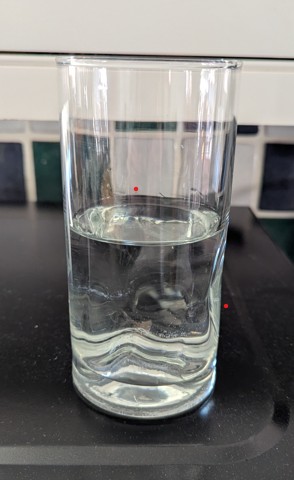
My first conscious encounter with perspective came in second grade when our teacher held up a partially-filled glass of water and asked, “What do you think—is the glass half-empty or half-full?” Seconds of uncomfortable silence became minutes as we stared at the glass and squirmed in our seats and stared at the glass some more. It looked…even. Half-empty and half-full. What was the right answer? As the teacher explained that day, there was no right answer. Both things were true. But the way we saw it—the (new word!) perspective we took—said much about us. People who saw the glass as half full tended to be optimistic, more hopeful, better able to cope with the normal setbacks of life. The half-empty crowd were likely to feel warier of new experiences, less trusting of others, more distressed by setbacks, even viewing them as irredeemable failures.
What we didn’t know in those tender years is that perspective is often a multi-faceted thing. In the glass problem, all the evidence is before you. There are no hidden aspects. In real life, it’s too easy to see only one angle and assume that’s the whole picture, which leaves us misinformed about the true state of things. Too easy, as the photos of the sculpture prove, to decide from a passing glimpse that a man is simply contemptuous…or heartbreakingly vulnerable, a victim perhaps. Easy to believe you are the unfortunate recipient of every fallen leaf in the neighborhood.
Misinformation Spreads Quickly
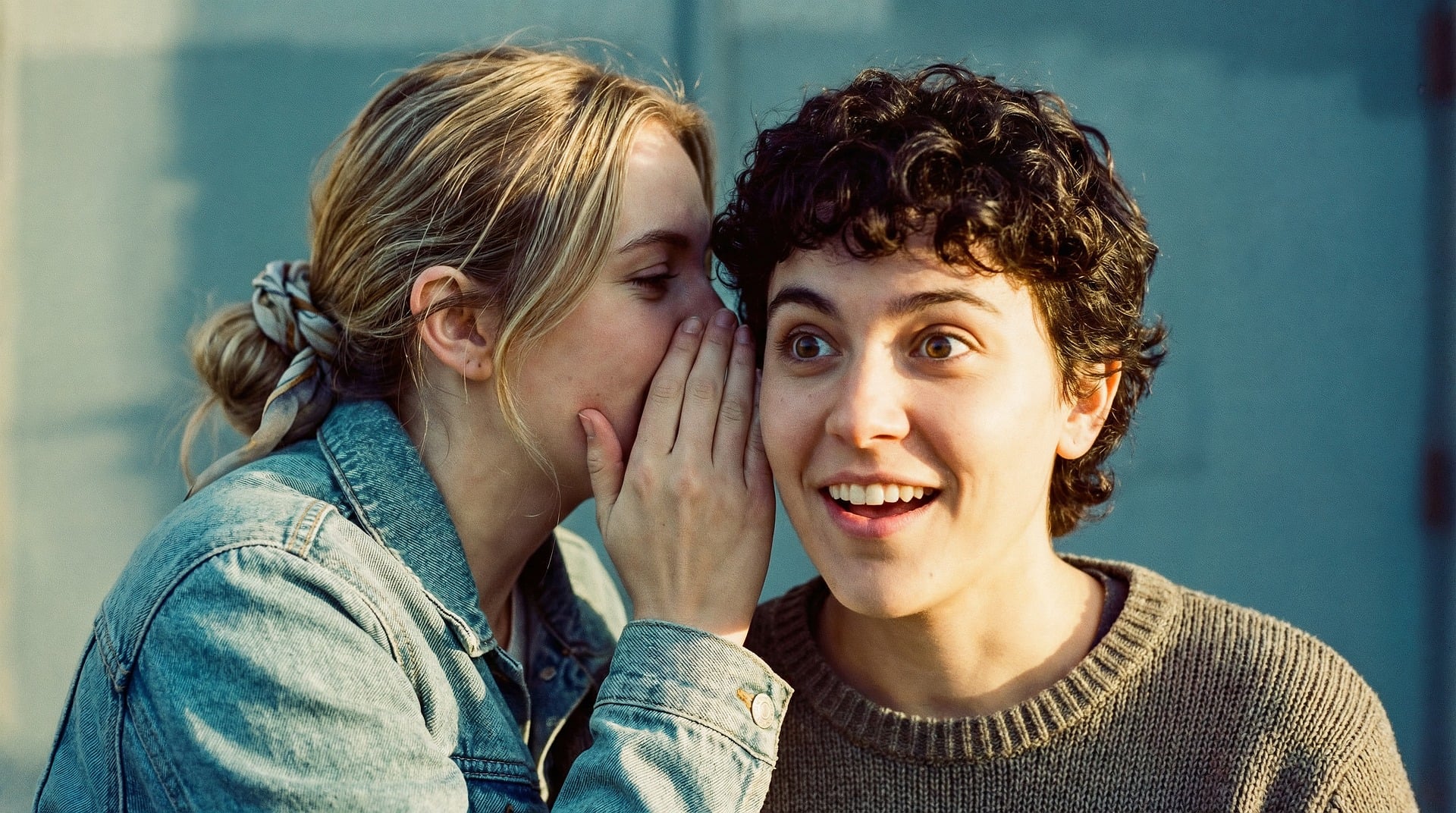
If you ever played the party game Telephone, you know how quickly a message repeated and passed through a community or spread online becomes twisted and distorted, not necessarily by the intent to deceive, but simply by the fact that people tend not to repeat something verbatim. They put it into their own words, using the understanding they possess on that subject. If the message was simply “FIRE!”, it would be easy to pass it on with accuracy and clarity, but few subjects are so simple. Or free from the messenger’s bias. “Immigrants are stealing Americans’ jobs!” “The current global warming is just one of the many natural cycles Earth has experienced over millennia—we’ll be fine.”
When we simply accept the perspective of others without knowing if that viewpoint is based on facts, hearsay, or distorted by their own biases, we risk becoming proponents of ideas and policies that can come back to bite us, with a vengeance. For example, let’s take a closer look at the claim that immigrants are stealing Americans’ jobs and driving down wages for native workers.
Sifting the Evidence: The Search for the Truth
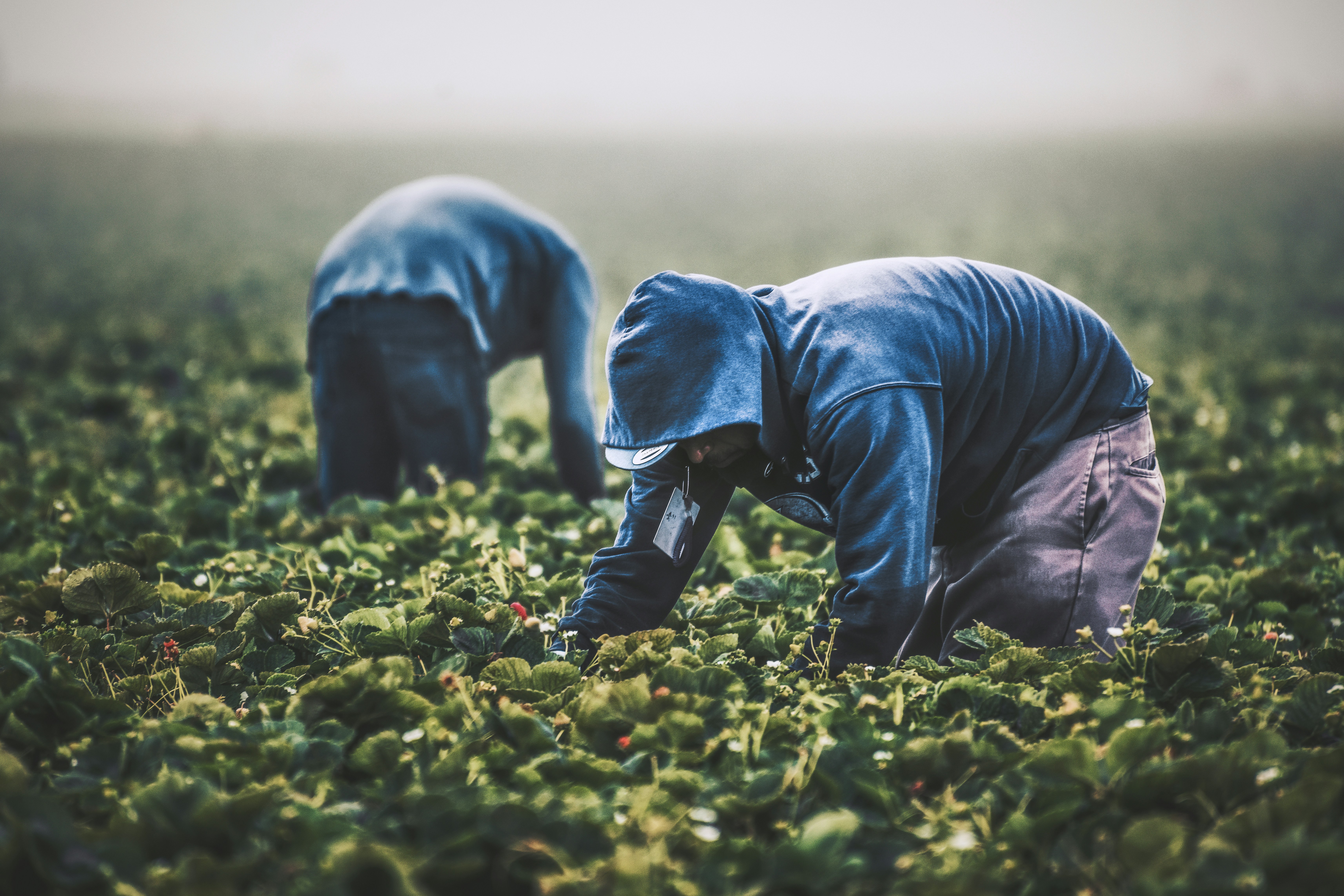
As someone who grew up in the “fruit belt” of Michigan (a fertile stretch of farmland along the eastern coast of Lake Michigan), I saw firsthand the conditions immigrant laborers worked (and lived) under. The federal farm minimum wage in 1973 was $1.30 an hour. The workers tended to be Mexicans or Texans of Mexican descent, Puerto Ricans and people from Central American countries. Itinerant workers who stayed for the season, where they slept cheek by jowl, eight to a small, narrow cabin. Four sets of bunk beds. Maybe a sink, maybe not. That was it. No cabin toilet, no closet, no fridge. You worked as many hours as the boss told you to. Then you slept, or if you had just gotten paid, you maybe pooled your money with your co-workers and got a bottle of hootch—a little liquid comfort to soften the aches and send you off to a brief night’s slumber before you awoke to do it all over again. Few American-born workers were signing up for these jobs, these inhuman conditions.

Fast forward to the present claims that immigrants are stealing Americans’ jobs. Digging around, I came across The American Business Immigration Coalition (ABIC), a self-proclaimed bipartisan coalition of CEOs, business owners, and trade associations that promotes “commonsense immigration reform” with the goal of integrating immigrants into America’s economy “as consumers, workers, entrepreneurs, and citizens.” ABIC asserts that studies show American-born workers are not losing their jobs to immigrants, but rather immigrants are being hired for the jobs most Americans don’t want—those that involve heavy physical labor, long hours, or working the night shift.
In addition, immigrants contribute to America’s prosperity and economic stability through the taxes they pay. In 2022, immigrant workers paid $579 billion in federal, state, and local taxes. Foreign-born workers also provide 25% of GDP (gross domestic product) growth, though they make up less than 20% of the workforce.
And—surprise!—it appears that immigrants, far from stealing Americans’ jobs, create new jobs. According to the Massachusetts Institute of Technology, immigrants are eighty percent—yes, that’s 80%!—more likely to start a new business than native-born Americans. Immigrants are often job creators! You don’t get that in the news very often.
But don’t simply take my word for it. Dig around. Examine the evidence from all angles. From a variety of perspectives. Who is backing what—and what might they have to gain from promoting that view? Getting a true perspective isn’t easy—issues and people are multifaceted, complex—but it is essential to saving our democracy. To defending our freedoms. To preserving our humanity. It is, in short, everything.

