Eight months after I got my BA in Literature, and two months after I returned to the Midwest from Arizona—having discovered: 1) I do NOT like dry heat, and 2) I NEED green trees, green grass, seasons—I began a Masters in Literature. I was fortunate to be given a graduate teaching assistantship, structuring and leading a writing class for fourteen delightful freshmen. A gig that also covered a significant portion of my tuition and paid the rent for a room in a large boxy house a block from campus. A place I shared with fourteen other young women and men—some students, some working odd jobs until they figured out next steps. The usual college town scene.

Two of my housemates—Kevin and Connor—were into cooking, and as the house had a vast kitchen in the lower level, complete with a lengthy trestle table, they began cooking dinners several nights a week. Anyone from the house could partake of the meal if they pitched in a dollar. That’s right, one dollar to help cover the cost of groceries. And, if you didn’t have that dollar, you could still eat. All you had to do was go to the market two streets over and bring home the ingredients, as I did twice during the summer of ’78 before I got a part-time gig at a Joann Fabrics store—no stipends for grad students during the summer session.
Lest this generosity and communal bonhomie appear specific to my housemates, I can assure you it wasn’t. The late ‘70s were a time of community. Hungry? I’ve got a can of soup we can share. No place to crash? I’ve got a sleeping bag and an extra pillow. You can stay at my place. Need a doctor? The free medical clinic was tucked among the bookstores, music venues, and mini marts that define a college town. Everyone went there, and it was the consensus among former and current students that the care we received there was superior to the university’s health services. I used the clinic twice and received prompt, courteous, top-quality care both times.
The Backlash Begins

I remember thinking that ours would be the generation that would end hunger and homelessness, provide quality healthcare to everyone. After all, the decade before had seen the passing of The Civil Rights Act of 1964 and The Voting Rights Act of 1965. The Social Security Amendments of 1965 gave us both Medicare and Medicaid. Yes, we were building a new world, one that would make good on the promises of a true democracy, an America governed by the people and for the people as Abraham Lincoln said at Gettysburg. At its heart would lie that most basic of human truths: We are all depending on one another.
Sadly, the following decades were to prove me wrong, as Reagan’s “Morning in America” began the long eclipse of all that had flourished in the ‘60s and ‘70s, as we watched our best hopes smothered beneath a rollback of rights and cutbacks to domestic programs. All in service to hedge funds, private equity groups, and the billionaires who run them. (Sound familiar?)

I was reminded of this last fall when a bout of sciatica made walking painful and stairs almost unnavigable just days before we were to travel to Rome. I arrived at my local hospital’s emergency room, hobbling, my whole left hip/leg in agony. In the two hours I was there, the only person I saw was the one who showed up five minutes after I arrived to take my credit card info for my ER co-pay. She returned ninety minutes later to give me a shot “for the pain.” The pain remained. This is the kind of “service” I received and I have health insurance.
As I sat…and sat in the ER that morning, I recalled a very different experience from my early post-student days. I had developed a fever, but being generally very healthy, I chalked it up to “just something” that would quickly pass. It didn’t and by the time a friend stopped by several days later, I was slightly delirious. She drove me to the emergency room of the local hospital where my temp registered 104 degrees. “Why did you wait so long?” The ER doctor admonished me. “You could have lost a kidney!” I started to cry. “I don’t have any money right now,” I sobbed, “I can’t pay.” They treated me and never charged for the visit.
Healthcare Now

According to the Office of Health Policy (under HHS), 11.5 percent of adults in the U.S. lacked health insurance in the first quarter of 2024. I love percentages, don’t you—the way they transform real suffering on the ground into a neat, faceless mathematical expression. So let me put that statement into human terms: A year ago, more than 27 million people lacked health insurance. Their only option? Community health centers, if they were lucky to live near one.
But such health centers rely to a huge extent on federal funding. The very funding that TheRUMP announced he was freezing on January 23. Grants, loans, financial assistance. Thousands of organizations were affected. Thousands of community programs. Head Start, cancer research, Meals on Wheels, mental health programs, housing assistance, natural disaster aid, public schools, and a whole slew of other public-service programs—funded by our tax dollars—including hospitals and healthcare centers. All funding to be paused for such orgs until it could be determined whether they might conflict with the president’s “agenda.”
“Dangerous, Illegal and Unconstitutional”

As the Associated Press put it (in the understatement of the year), “the order capped the most chaotic day for the U.S. government since Trump returned to office.” Reaction was swift. Less than 24 hours after the nationwide funding freeze was announced, U.S. District Judge Loren AliKhan, granted an administrative stay in a case brought by the National Council of Nonprofits. Trump could not freeze the funds until further review, she ordered.
A second U.S. district judge, John McConnell, Jr., at the request of 23 Democratic state attorneys general, echoed AliKhan’s ruling, issuing a temporary block on the funding freeze, saying it appeared to violate the law. “The Executive cites no legal authority allowing it to do so; indeed, no federal law would authorize the Executive’s unilateral action here,” McConnell stated. New York Attorney General Letitia James agreed: “There is no question this policy is reckless, dangerous, illegal and unconstitutional.”

Despite these rulings, the funds and grants remained frozen, the Democratic state attorneys general reported in early February, calling on McConnell to enforce his earlier temporary restraining order. McConnell agreed and blocked the funding freeze, declaring it unconstitutional. “[It] has caused and continues to cause irreparable harm to a vast portion of this country,” he noted.
As of this writing, federal funding and grants appear to remain frozen.
Gimme Shelter: Poverty Becomes A Crime

Giving shelter—a cot, a sofa, a sleeping bag on the floor—to a friend who is out of work and can’t pay rent or a friend of a friend “between places”—that may still happen. I hope it still happens. In my senior year of college, we sheltered a friend of one of my roommates for a whole semester as she waited for a grant to come through. There were also public shelters back then. Places that offered a large room—fifty or so cots, bathrooms, often a soup kitchen staffed by volunteers. People need a roof over their head. They need a warm, dry place to sleep, a toilet, a shower. Because for chrissake, we are all human beings. And one human being does not leave another to freeze or starve.
Except now it seems we do. In 2024, over 770,000 people—that we know of—were homeless. That’s an 18% increase from 2023, itself a 12% increase from 2022, and the highest number since the Department of Housing and Urban Development (HUD) started counting in 2007. At the same time, the number of Community Housing and Homeless Shelters has dropped by 2.2.% in the past year. You don’t have to be a math whiz to know that a drop in the number of shelters during the single largest increase in the number of people without a home spells despair, illness, even death for hundreds of thousands.
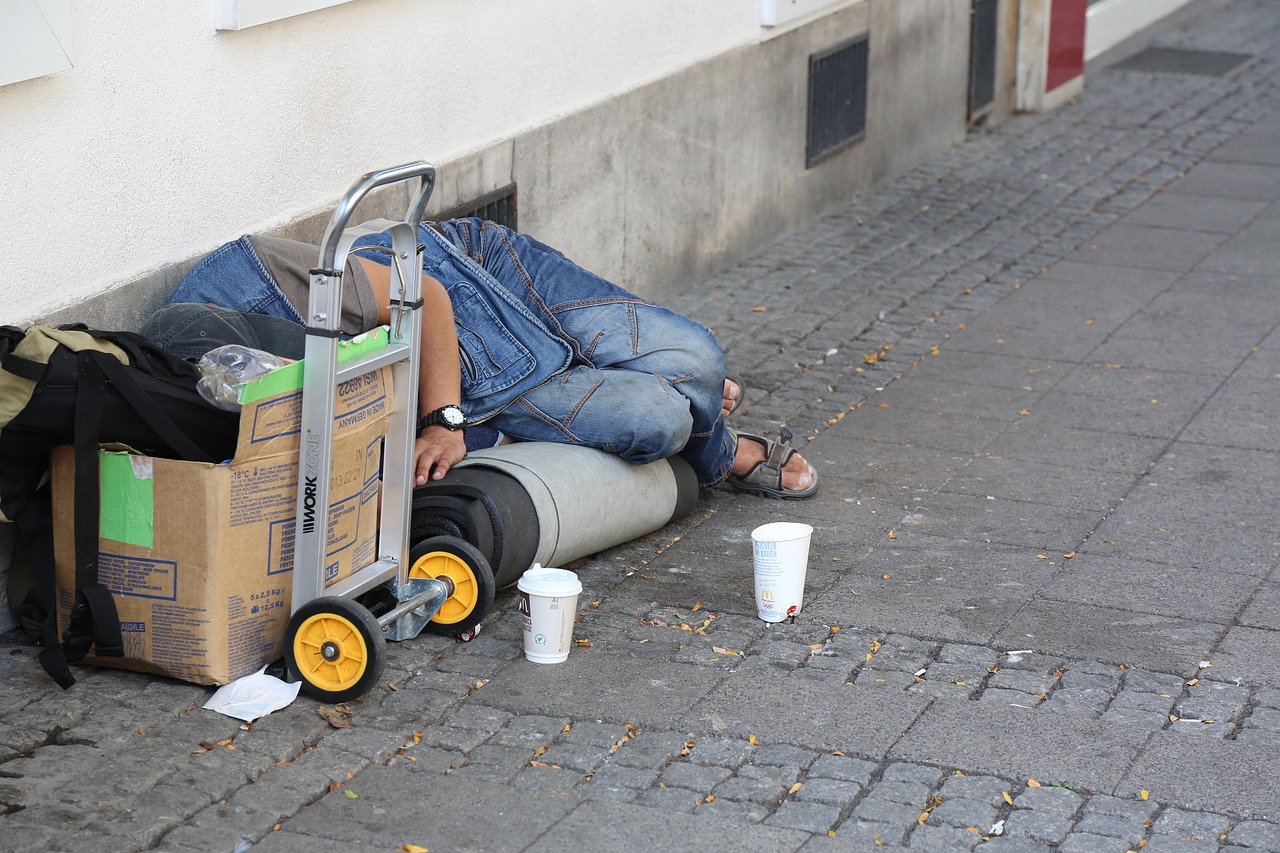
So, if there are not enough shelters, where do these unfortunate people go? Where do they sleep? Good question. Until recently, it was the case that people without housing and no access to a shelter slept in tents in public spaces, laid out a pillow, maybe a blanket, on a park bench. If they were fortunate enough to still have wheels, they slept in their car. Some still might, but a purported wave of public antipathy toward the homeless brought a number of lawsuits last year demanding homelessness be made a crime.
I detailed this in my September post “The Madness of Money.” Suffice it to say that in June 2024, the Supreme Court ruled 6-3 that cities can ban the homeless from sleeping and “camping” in public spaces. (Wouldn’t want the good, upstanding folk to have to witness such “unpleasantness.”) This SCOTUS ruling, in a case brought by the city of Grants Pass, Oregon, overturned lower court decisions that found criminalizing homelessness to be “cruel and unusual” under the Eighth Amendment. After all, people must sleep. And if one has no options for lodging, what can one do?

The “kindly” officials of Grants Pass had an answer: Pay a $295 fine. And if they catch you sleeping rough again, you’ll be criminally prosecuted and spend a month in jail! Grants Pass claimed the previous rulings encouraged homelessness (as if this were something ‘desirable’ many people aspire to). As I pointed out in my post, people sleep rough because they don’t have $295. I strongly suspect if they had somewhere better to go, they would go there. And if a city, any city, has the money to imprison innocent people down on their luck, it could use those same funds to help them. Unfortunately, since the ruling, more than 100 cities have made it illegal to sleep outside. In California’s San Joaquin County, violators can be fined up to $1,000 and six months in jail. It will hardly surprise anyone that TheRUMP supports these bans.
What the World Needs Now
In the closing days of the Biden-Harris Administration, then-U.S. Surgeon General Dr. Vivek Murthy sat down with Time magazine’s senior health correspondent, Alice Park, to offer Americans “a parting prescription” as he put it, to address “the deeper pain, the unhappiness I was seeing for years across the country” based on his many conversations with Americans from all walks of life. Conversations that spanned his two terms of service, first under President Obama, then under Biden.
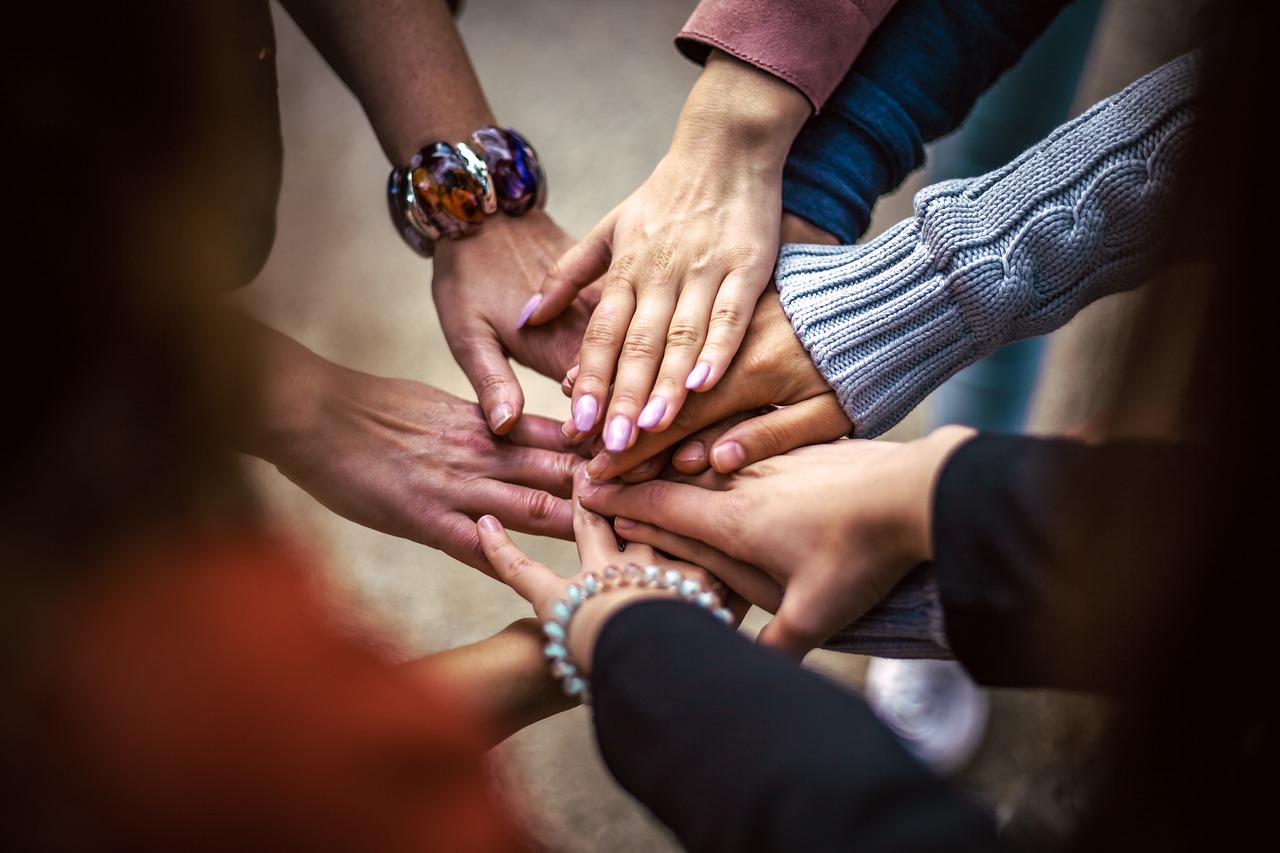
What Murthy discovered in those talks is that “for many people, [the] sense of community has eroded.” Millions of Americans are suffering from loneliness. Citing a recent survey, he expressed concern: “More than half of young adults …said they felt low or no sense of meaning and purpose in their lives.”
Murthy’s prescription? Rebuild what we have seemingly lost: Community. “Community is a place where we have relationships, help each other, and where we find purpose in each other,” he said. “Those three elements are the core pillars…” And those pillars, he stressed, are braced by love. Love fuels generosity, kindness, and courage. “When you put these together, then you have a place where people find a sense of belonging and meaning.”
A Caring Human Being
This past December, our car began making a horrendous clanking noise when starting up. I thought maybe the dealership had forgotten to top the anti-freeze when they replenished all the fluids last summer. After a week of this, Ed took the car to a local gas station where he filled up the tank, then asked the attendant to please check the fluids as we had concerns about the engine and wanted to make sure it was okay before driving to the airport the next day to pick up my son for the holidays. “What?!” the attendant snarled. “I’m not gonna send someone out in this weather (a sunny December day, low 30s) just to check your fluids!”
Ed then took the car to Ren’s, a neighborhood mechanic we trust. Ren checked all the fluid levels, found everything in order, and relieved our worries, assuring Ed it was simply a reaction to the low nighttime temps we’d been having for the past week. Sure enough, when the temps rose a bit, the car expressed its gratitude with perfect silence. And what did Ren charge for the time he spent going over the car? He charged NOTHING. He just did it because we had concerns. Because he didn’t want to send someone off to possibly experience a breakdown, or worse on a busy highway. Because he is a caring human being.
You don’t have to know someone to know what hunger is, what illness is, how frightening homelessness is. To offer a hand, to advocate for others, to stand up for justice for all. At the personal level, at the societal level, at the global level, we MUST take care of one another.
 amyhenrybooks
Great essay, as always. I think back to the late 1960s now and then, the hippie era. The values and outlooks of millions of people back then were expansive, based on love, kindness and open-mindedness. That era significantly shaped me. Needless to say, darker forces didn’t disappear. But, there are still many good people, and we’ll continue the good fight.
LikeLiked by 1 person
Absolutely! As Papillon says (as he leaps off the cliff to the raft below that will take him to freedom): “I’m still here!” Thanks for reading and stopping by, Neil. Take care.
LikeLiked by 1 person
Such a wonderful post! Yes we must find/make community more than ever now, plus whatever small things bring us joy. It’s how we’ll get through this, if it can be gotten through.
LikeLiked by 1 person
Yes, community is always important, but especially crucial in this difficult moment. I’m very fortunate to live in a close-knit neighborhood, but I know far too many people who think they are saving themselves distress by closing their eyes and turning away from what’s happening–drawing into themselves and tuning out. It doesn’t seem to be making them any happier. I was at a local “Take back our democracy” rally several weeks ago, and though it was very cold, the crowd was energetic, cheering on the various speakers, and everyone smiling at each other.
Yes, also, to making time for the things that bring us joy. After all, this is our life, and it’s going by one way or the other. Thanks so much for reading and stopping by.
LikeLike
This is a highly personal post, full of humanity and heart. Thank you. These are troubling times, and we will get through them, but we can do this only by acting together. You simply can’t be a loner these days, not without distancing yourself from the core characteristics that make you human, among them, a sense of community, a constant outpouring of empathy, and the application of intelligence to complex challenges. Our nation was founded on a mystical belief in the political principles of liberty, equality, and faith in a common weal. Today we are on the brink of throwing all those core beliefs off a cliff of our own making. Only by acting–rapidly–together can we pull ourselves and the rest of our citizenry (yes, all of them) back to a place of kindness and safety.
LikeLiked by 1 person
Thanks so much for your lovely and thoughtful response, Ed. As you said, we MUST act RAPIDLY and TOGETHER. If 1940 was the darkest hour (marvelous film!) for Britain, today is the darkest hour for the U.S. May we all pull together and get to the other, brighter, side.
LikeLike
Excellent post, Amy! I can attest to all you say about the 70s and how things went steadily downhill after Reagan. We never thought we’d be where we are now, this being AMERICA. I hope and pray we’ll find our way back to community, peace, love, and kindness, not back to the 1930s where we’re headed. Thank you for sharing.
LikeLiked by 1 person
I share your hopes, Kyrian. This is such a stressful way to live. Recently I read about a woman who voted for this madness. She was outraged (maybe she’s losing her Medicaid thanks to TheRUMP and the GOP)–she said, “I didn’t think it would hurt ME!” So, when she thought it would only hurt “other people”, she was okay with that? Sad. Cruel. Unconscionable. We MUST keep pressing, marching, voting for something humane and just.
LikeLiked by 1 person