
The first day of the Paris Olympics, as ESPN was interviewing Americans in the crowd, one man announced that he had bet a friend $175,000 on the outcome of some event and won.
“A hundred and seventy-five thousand dollars!” I exclaimed to Ed who was sitting next to me. “Think of all the food, the medical care, the shelter that money could have bought for people who are hungry or sick or homeless, and this guy blows it on a bet, a bet!”
I will not identify the man because the issue here is much bigger than any one person. The issue is about insatiable greed, the unending need to trounce all comers, and beneath that, a vast insecurity. As Genghis Khan is believed to have said twelve centuries ago: “It is not sufficient that I succeed—all others must fail.” Some might call it the spiritual poverty of excessive wealth. I just think of it as the Billionaires Disease.
A Bottomless Insecurity

The first symptom I detected of our American in Paris having succumbed to The Billionaire’s Disease was his need to announce—in a worldwide broadcast—the exact dollar amount of the wager he’d won. He could have said, “I bet an old friend on that last event and won.” But he wanted us, needed us, needed millions of strangers to know that he was so wealthy, such a major wheeler-dealer, that $175,000 was a trifle—chump change—he could gamble and lose if it came to that. Wow! (he imagines), all those people listening will envy me, will wish they were me. But even if this were true, envy is not the same as esteem. And what I believe people afflicted with Billionaires Disease most crave is the esteem of others—millions of strangers—because deep down inside they doubt their own true worth as a human being.
So Much, Too Much: A Boundless Greed
And it’s never enough. The payouts, the ever-increasing profit margins, the millions, the billions. The need for more and more and more, it never stops, is never satisfied. Why have only four homes when you can have five? Why restrict yourself to one private jet when you can have a fleet of them?

Last fall, the world’s second richest man (with a net worth of $209 billion), Amazon founder Jeff Bezos, purchased a seven-bedroom, 14-bathroom mansion in Miami-Dade County, Florida’s exclusive gated community, Indian Creek. It is the third property he owns on this man-made barrier island. In addition (naturally) to his numerous other mansions scattered across the U.S. from Manhattan to Beverly Hills.
Even the “poorer” of the uber-wealthy (those whose net worth is a piddling $30+ million) can boast of owning 3.7 homes on average. And the high prices they can afford to pay, combined with the number of properties they purchase, are one factor driving up single-family home prices beyond the reach of the average American. At a median price of $431,000, some three-quarters of all homes on the market now have become the impossible dream for most Americans.
What’s Mine is Mine, What’s Yours is Mine

But it’s not just that the super-rich are buying multiple homes for themselves. They’re also buying large tracts of single- and multi-family housing across the country at bargain prices (cheaper by the dozen!) via their hedge funds and private equity firms. In the case of single-family homes, hedge-fund groups turn the houses into rental properties for a never-ending stream of revenue, thus forcing America’s middle class to keep pumping their earnings into enriching the hedge-fund managers while destroying their own chances of building the equity they need to buy a home. Private equity firms, on the other hand, tend to buy up apartment buildings, then jack up the rent far beyond the residents’ ability to pay. In both instances, the big-money landlords have a reputation for letting these properties fall into disrepair and evicting any tenants who complain. They then unload the buildings at a substantial profit.
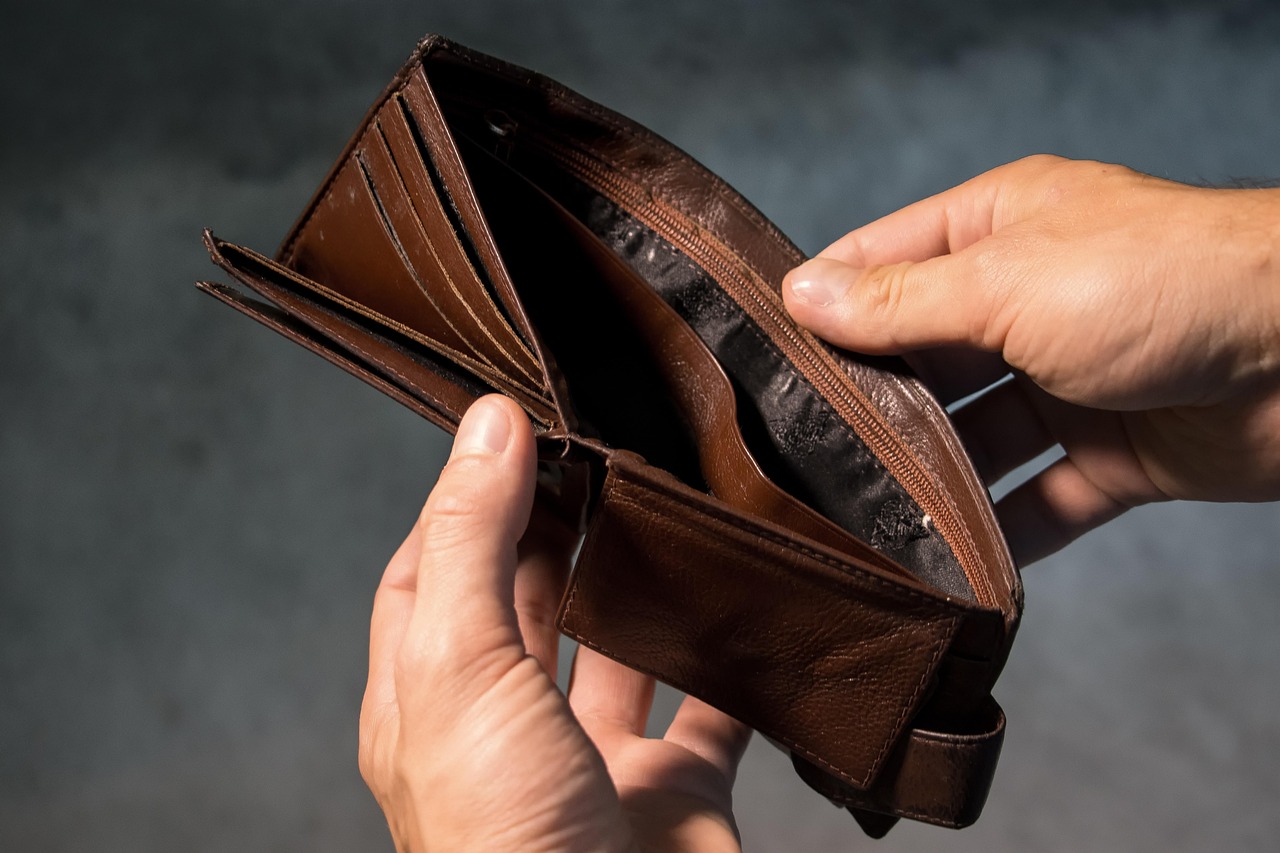
If young working people, including professionals, can’t buy homes, and many struggle to pay the steep rents, what is happening to Americans making minimum wage, people who are between jobs at the moment, people with disabilities? The U.S. experienced its biggest increase—12 percent—in homelessness last year, with one in every 500 Americans (roughly 653,000 total) left stranded on the streets. The highest number since tracking began in 2007.
All of which makes the Supreme Court’s June 28 ruling that cities can ban the homeless from sleeping and “camping” in public spaces the more invidious and downright inhuman.
Criminalizing the Need to Sleep
The 6-3 (surprise, not!) SCOTUS decision overturned lower court rulings that held criminalizing homelessness to be “cruel and unusual” under the Eighth Amendment. After all, people must sleep. And if one has no options for lodging, what can one do?

The case was brought by Grants Pass, a city of about 40,000 people in the mountains of southern Oregon. Grants Pass has a longstanding prohibition against sleeping or “camping” in public spaces, including parks. One is not even permitted to use a blanket or pillow to nap on a bench.
Grants Pass claimed the lower courts’ rulings encouraged homelessness (as if this were something ‘desirable’ many people aspire to) and endangered public safety. But that’s not the whole story—just the part the city’s elite want you to hear. The truth is lower courts had ruled that cities have a right to restrict when and where people can sleep, but they must first offer these homeless citizens adequate shelter. Trouble is, the city of Grants Pass has no public shelter now, and the shelter it offered before 2022 had just 25 beds. This facility has now been taken over by UCAN, a private non-profit org, who added eight-and-a-half “tiny homes” to shelter up to 17 more people, with a community building that includes a bathroom, kitchen, and showers. And that’s it. Guess we should be glad there’s a bathroom.

Forty-two UCAN shelter beds? Grants Pass has roughly 600 homeless folks on any given day, as the Supreme Court noted. And Grants Pass is just one of many cities that can now crack down on those who can’t afford the spiking rents that further enrich the already wealthy. A humorous line from my college days ran: You can sleep in your car, but you can’t drive your house. Not so funny these days. Many cities now forbid sleeping in your car in a public parking lot or street parking space.
Money for Prisons but Not for Housing

So, what happens to those without a home or at least a room to rest their weary head? In the irony of ironies, Grants Pass policy is to fine these unfortunate folks $295. Multiple offenses will result in criminal prosecution with up to 30 days in jail. I’d like to point out here that people sleep rough because they don’t have $295. I strongly suspect if they had somewhere better to go, they would go there. I would also argue that if a city has the money to imprison innocent people down on their luck, it could use those same funds to help them.
As Diane Yentel, president of the National Low Income Housing Coalition, asked: “Where do people experiencing homelessness go if every community decides to punish them for their homelessness?” And Ed Johnson of the Oregon Law Center, the org that sued Grants Pass on behalf of the accused homeless, noted that a criminal record imposed by the city makes it even harder for these people to ever get housing. He also laid the blame squarely where it belongs: A severe shortage of affordable housing for half of all tenants. Housing that the richest of the rich have gobbled up to make themselves still richer. Funny, if you have millions, all laws and restrictions disappear—poof!
You Got a Few Centuries—or Ten-thousand Years—to Play Catch-up?
As I was outlining this month’s post, I got an email from the AFL-CIO (The American Federation of Labor and Congress of Industrial Organizations). As it speaks so eloquently to the sickness—and cruelty—of Billionaires Disease, I will reprint it here:

Do you know how long the median employee in America would have to work in order to earn what a CEO makes in a single year?
On average, the median employee of an S&P 500 company would have had to start working in 1755 (prior to the start of the American Revolution) to earn what the average CEO received in 2023. At the worst offending company this year, the median employee would have had to start working in 8,354 B.C. to earn what the CEO made in a single year. In 2023, CEO pay at S&P 500 companies increased 6% over the previous year—to an average of $17.7 million in total compensation.
We Can No Longer Afford the Uber-Rich
In explaining his decision to stand with Grants Pass and against the homeless, Justice Neil Gorsuch wrote: “Homelessness is complex. Its causes are many. So may be the public policy responses required to address it … A handful of federal judges cannot begin to match the collective wisdom the American people possess in deciding how best to handle a pressing social question like homelessness.”

Complex? Really, not so much, Neil. Homelessness is the result of greed and indifference to the fate of our fellow human beings by those who possess the means to alleviate their suffering. After all, there’s no profit to be derived from helping those folks.
As for federal judges not possessing the collective wisdom of the American people to deal with homelessness, I recall you ruled against the Chevron doctrine that same day, declaring that the courts’ fundamental duty to interpret the law overrode federal agencies’ interpretations, thus setting yourself up as “experts” on an array of complex issues from drug safety to environmental poisons to nuclear weapons. The thing about homelessness, Neil, is it doesn’t require a Ph.D. to see what’s needed. All it requires is a conscience to call out wrongs when we see them and a heart to care for our fellow human beings.
“It is not sufficient that I succeed—all others must fail.” Genghis Khan’s words echo down through the centuries. Billionaires Disease is a lethal sickness. It’s killing the planet—the oceans, the skies, the land. It’s killing the animals, the birds, the sea creatures. It’s killing us. And we can no longer afford to let the unbridled greed of the few destroy the right of the many to life, liberty, and the pursuit of happiness. They will take everything and still it won’t be enough.
 amyhenrybooks
Right on target, as usual. Describing the unbridled and nonsensical hoarding of wealth as a disease is correct on personal terms. On societal terms, however, it is a crime. Every dollar hoarded is a dollar made unavailable to the rest of society for vital human needs. Surely a proportion of all dollars over a certain amount should be subject to confiscaton (I.e., taxation) for the public good.
LikeLike
I can only imagine the amount of research you did for this article. We live in very troubled times. Some ultra-rich people give back and try to improve the human condition (Melinda Gates and Bill Gates to name two). Most don’t to any meaningful extent, I’d guess.
LikeLike
When I was working
LikeLike