
“The Oak King” by Emily Balivet (for more by this artist, click here )
This New Year’s Eve Let’s Party Like It’s 1099
In general, I’m not a big one for rituals, but the Solstice exerts some weird influence on me and I find myself feverishly steeped in holiday traditions. The buying of a Christmas tree the day after Thanksgiving. The production of 27 dozen cookies and two pounds of fudge to be tinned and shipped hither and yon (an event known at our house as the Bake-a-Thon). Perhaps, the most “sacred” among these annual doings is the viewing of six holiday-themed movies, ending on Christmas Eve with the 1984 George C. Scott A Christmas Carol.
I have many favorite scenes from this lush version of Dickens’s tale, but oddly what most sticks in my head is a little throw-away bit where Tiny Tim and the whole Crachit gang belt out a song. “Here we come a-wassailing among the leaves so green; Here we come a-wandering, so fair to be seen,” they sing blithely, huddled cheek-by-jowl in their dark little hovel. No matter that Bob Crachit’s boss Scrooge is, well, a scrooge, or that the Grim Reaper may soon claim Tiny Tim, the Crachits are imbued with the Christmas spirit, and damn if it isn’t infectious. I find myself humming that tune even in the sweltering heat of July, but what exactly does it mean: Here we come a-wassailing?
Digression #1: I have always been a sucker for the mysterious power of words. As a child, I was bewitched by Edward Lear’s line in “The Owl and the Pussycat”: “They dined on mince, and slices of quince, Which they ate with a runcible spoon.” “Runcible,” a delicious slice of language that runs joyfully over the tongue. The Collins Dictionary defines a runcible spoon as a “forklike utensil with two broad prongs and one sharp, curving prong, as used for serving hors d’oeuvres.” Runcible, it notes, is a nonsense term coined in 1871 by Lear. Apparently, he used it to refer to a variety of objects, including cats, in his poems. We invent the language we need.

So, back to this wassailing thing. Wassail itself is a hot drink made with wine, beer, or cider, spices, sugar, and usually baked apples. Traditionally, it is served in a large communal bowl with handles and passed around at celebrations for Twelfth Night and Christmas Eve. (Wassail and wassailing clearly predate germ theory.) This would have been the wassail Shakespeare knew.
The original wassail was simply warmed mead—ale brewed with honey. Roasted crab apples, dropped into the mead, burst tartly to create a drink called “Lamb’s Wool” drunk on Lammas Day, which is nowhere near Twelfth Night (more about this later).
The word “wassail” was first noted in the 12th Century by the Normans as characteristic of the English, but seems to have been in usage for several centuries before that, a cobbled hybrid of the various groups who were always invading England in the dark old days—Vikings, Danes—with perhaps a dash of the native Druids. At any rate, by the time William the Conqueror arrived, wassailing was as English as Tooting Bec.
Digression #2: For the etymologists among you, Merriam-Webster reports the Middle English version of the word, wæs hæil, washayl, developed from the Old Norse ves heill “be well,” from ves (imperative singular of vera to be) + heill healthy. (Think on that next time you have a skull-splitting hangover.)
Besides going from house to house singing Christmas carols, “wassail” is also a term for “riotous reveling.” Listed among its synonyms are: bender, drunk, carouse, toot. Wassailing in this context involves imbibing liberal amounts of alcohol and enjoying oneself with friends in a noisy, lively manner. Of course, it’s entirely possible to do this in conjunction with singing Christmas carols for a real Wassail Whammy.
The point of all this caroling and carousing in medieval England was to awaken the cider apple trees while frightening away the evil spirits who might interfere with a good harvest the following year.
And it’s still going on. In a scenario straight out of the British ITV series Midsomer Murders, the Apple Orchard Wassailing takes place at Carhampton each year on January 17, the date of Twelfth Night before England adopted the Gregorian calendar. The Wassailers build a bonfire and pour cider around the trunk of the biggest apple tree.

They then—and this is my favorite part—hang cider-soaked pieces of toast from the branches. In theory, this appeases the robins who represent the “good spirits” of the tree. Personally, I think it’s the sort of thing that happens when the cider is flowing a little too freely. But wait, there’s more. Someone (hopefully, the soberest) fires a shotgun overhead to frighten away evil spirits and the assembled group sings “Old apple tree, we wassail thee . . .”
Digression #3: I promised you a note on Lammas, the origin of the drink Lamb’s Wool (you’ll find a recipe below). Shakespeare mentions Juliet’s birth on Lammas Eve, but Lammas Day, August 1, predates the Bard by centuries. Pagan in origin, Lammas was the first of three autumn harvest festivals in the medieval agricultural year (marking the end of the haying that had begun at Midsummer). Among the romps enjoyed in this merrymaking was the “loosing of a sheep” in the meadow among the mowers “for him to keep who could catch it.” (God, I love the English!)
So, as we prepare to ring in the New Year, having fired up the Yule Log (relinquishing the dark half of the year and celebrating the rebirth of the Oak King on Solstice Night), and hung up the Mistletoe (representing the seed of the Divine, and gathered long ago in the forest by Druids at Midwinter), let us wassail loudly and joyfully in a chorus of “Auld Lang Syne.”
To quote Dr. Chasuble (The Importance of Being Ernest): Isn’t language a curious thing?
RECIPE FOR LAMB’S WOOL (WASSAIL)
Author Roberta Trahan contributed this Americanized, easy-to-make version of a traditional Old English recipe when she was a guest host on Stephanie Dray’s website.
Ingredients
3 apples, peeled, cored & finely chopped
3 tablespoons butter
3 (12 ounce) bottles dark beer
1/2 cup firmly packed brown sugar
1 teaspoon cinnamon
1 teaspoon ginger
Directions
Preheat oven to 350 degrees. In a casserole dish, bake apples and butter for 30 minutes or until the apples are soft.
In a large saucepan combine: apples, beer, brown sugar and spices. Heat until hot, and serve (unstrained) in mugs.
If you’d like to try your hand at the more authentic old-world brew, click here.



 so important to him? Is he angry or just nervous? And if the latter, what is he jittery about? Is he waiting for something or someone? I notice his smartphone on the table. Is he expecting a call? He might have pushed for a booth because the call he expects is not a conversation he wishes to be overheard.
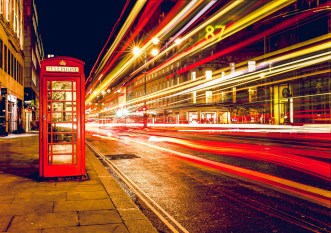 The tony guy picks up his phone. Who is he calling? If the anxious man picks up his phone now… He does. Another coincidence, or are the two men communicating? Planning a heist of some sort? The British Museum is just down the street. What are they after? The Rosetta Stone? No, too large, too heavy. Maybe the Lewis Chessmen. Will the men leave now (singly, of course)? Go in separate directions, one of them preparing to create a distraction, maybe detonate an explosive with the touch of a button: SEND? Who are they working for?
 novel?). Almost every situation suggests characters, a plot. The real-life couple on that HGTV show—ever notice how she shrinks from that hug he gives her? How she doesn’t laugh when he’s trying to be funny? What’s the story behind that? And the Tappan Zee Bridge in New York—the way it sort of buckles and bounces as you drive across it? Hmm. Corruption at high levels? Is the public’s safety hostage to a bevy of tough legislative players, each with his or her own secret hopes and vices?
 amyhenrybooks