The Human Condition (BLOG)

THE LONG ROAD HOME

“The past is never dead. It’s not even past.” (William Faulkner)

As regular readers of this blog may recall, April is the month I do a little tally of the lessons life has imparted—or dumped on me—in the preceding year. This time around, as the Birthday Fairy drops me another one, I’m taking a wider lens. Much wider. Forty years. But I’m still learning. May it ever be so.

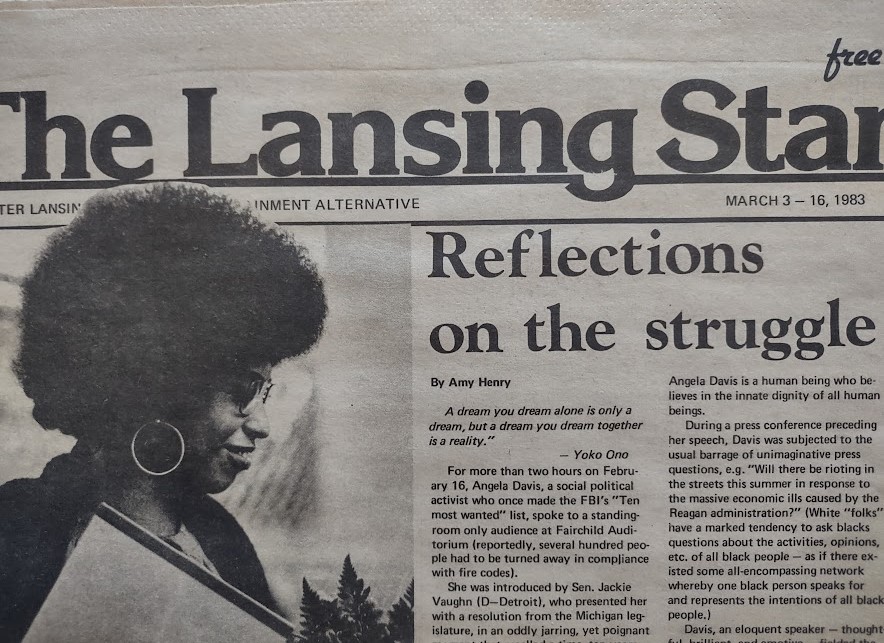
In March 1983, I was a part-time journalist for an alternative newspaper in East Lansing, Michigan. When Black activist Angela Davis came to speak at Michigan State University, I jumped at the chance to cover the story and interview this legendary woman. While being one of six reporters permitted to spend a half hour talking to her before the event was a dream come true, what has stayed with me most was something she said to the largely student audience: Don’t let these places [universities] make you forget from whence you came.

It was a striking line then, and its truth/import has only grown for me over the intervening years. In fact, I have come to believe it’s impossible to forget where you come from. Oh, you can fake it for others, you can choose to keep the blinders on, you can even lie to yourself. But where you come from, it’s always there, the good and the bad.

Five months after Davis’s visit, I got into my orange VW “Bug” and headed out to Boston, almost 800 miles to the east. I was going in search of a place to live in a city I had never seen. I was going to make my Big Move, leave behind the conservative, small-minded, small town culture of the Midwest and move to the East Coast where “things happened.”

Famed newspaper editor Horace Greeley may have said “Go West, young man” but I had always yearned for the East. During my college years, I hitched rides with various fellow students heading to New York for a term break. They would drop me off in Manhattan, where I rented a student room for $6 a night at the top of an old hotel in Midtown, ate at Horn and Hardart Automats—“frill-free and democratic” eateries (as one writer put it)—and walked. And walked. And dreamed.

New York was definitely the center of “all things literary” in the States, but the City was too pricey for a lowly-paid editor, so I settled on Boston because it was: 1) still a major city on the East Coast, and 2) an easy hop by bus or car down to Manhattan. On Labor Day weekend, 1983, I again got in my VW and drove to my new home in Boston, the first floor of a house in a working class neighborhood in Somerville. I was leaving the Midwest behind.

Twenty-six years would pass before I saw Michigan again.

Yearning to Breathe Free

We are a restless nation, a mobile nation. At least those of us with a college degree—about a third of the country. While a sizeable number of people still live their entire life in the place of their birth, college graduates are generally out the door and on to someplace else, most frequently the West Coast or the Northeast. “Many young people in rural communities now see college not so much as a door to opportunity as a ticket out of Nowheresville,” the Wall Street Journal noted in 2017. For my part, I wanted to find “my people”, the place where I fit. It was a quest I had anticipated making since I was thirteen.

Thirteen. That was the year Martin Luther King, Jr. was assassinated. Bobby Kennedy, too. The year the Black Panther Party (born in 1966) came to national prominence, with its demands for decent housing; an education that exposed the true nature of racism in American society; free healthcare, and an “immediate end to police brutality and murder of Black people” (plus ça change, plus c’est la même chose). Nineteen-sixty-eight was also the year of the Tet Offensive in Vietnam and a concomitant intensification of an already very active, highly visible U.S. (and worldwide) protest movement against our involvement in that war. Women, too, were starting to rise up, refusing to accept their circumscribed roles as sex toy or wife and mother. We, not men, will define who we are, how we act, what we want. The Stonewall Uprising, a major turning point in the struggle for LGBTQ rights, was only a year away. The world was happening, baby!  

But not in my small corner of it. In my little virtually all-white town, Nixon was a hero. The local country club banned Blacks and Jews. The jocks in my high school roamed the halls taunting the non-jock guys with cries of “faggot” and “queer”.  On a particularly memorable day, during my freshman civics course, a group of “the cool kids” gathered round my desk, shouting over and over, “This is America, love it or leave it!” (a favorite chant of rightwing, pro-war, Nixon fanatics). I knew they were arseholes, but what can you do at thirteen except dream of getting out?

In one revealing instance, one of the “elite”, a cheerleader, was cast into the netherworld when her mother married a Black man. Her former clique shunned her. I mean, cut…her…dead. We had a gym class together and over that year, we talked a lot. Her experience had radicalized her. She later signed my yearbook—a thing she would never have done a year earlier: “Let’s hope we make it through all these rotten schools.” Wherever you are, B., I hope you escaped, found your true home.

… With Many a Winding Turn

Going east for college was out of the question. “Too many communists there,” my dad said. (I know. I know.) I finally selected Michigan State University, in part because it boasted the largest undergraduate community of any campus in America—48,000. No more small-minded, small-town cliquishness. If you thought you were too cool to associate with others, you’d find yourself…alone.

I loved my college years. East Lansing was a true breath of fresh air. But it was still Michigan, still the Midwest. And my determination to escape had only intensified with each visit to New York. The road east, though, turned out to be far more labyrinthine than my opening paragraphs may have suggested. Oddly enough, right after graduation, I did a 180 and went west for a while. Tucson, Arizona. Wide open desert country stretching to the mountains. What I discovered there was how much a child of the north I was—I needed green. Grass. Trees. Seasons.

So… back to East Lansing where I had friends. And a few kindly profs from my undergraduate days who fast-tracked me into grad school. In recognition of my strong academic record, I was given my own section of a freshman writing course to help pay the bills. I. Loved. It. The new plan: I’d get a Ph.D. in literature, become a college prof and then hit the road, this time for the Northeast. No detours.

But grad school was not what I had thought it would be. Not a deeper dive into literature at a more complex level. As an undergrad, literature had been about reading widely, making connections. Grad school felt more like regurgitation. It wasn’t the student’s insights and ideas that were wanted, but a steady stream of vomiting up all the noted scholars in the field who had preceded you. Your turn would come… in a decade or two.

Home, at Last      

In the middle of all this, John Lennon was murdered outside his home in Manhattan. My boyfriend of the time, his cousin, and I headed for New York for the memorial service in Central Park, driving all night to get there by dawn. It may be hard for someone not of that time to understand what a major impact the Beatles had on a generation, especially John Lennon. I mark his death as the end of my childhood, though I was 25 when he died. Time to stop mucking about, I thought. Pursue my dreams. So, I left grad school and got a job waiting tables to support myself while I wrote my first novel, a thinly-disguised tribute to Lennon about a rock star who is murdered by a mentally-disturbed fan with jealousy issues.

As I was doing revisions on the book, a friend suggested I apply for an editor’s job with a company in Lansing and I got the job. For a year, I put aside a few bucks from each paycheck while I churned out a monthly rag for indy women’s retailers and traveled to apparel markets around the country to push our publication to store owners. Then I quit, got in my VW, and moved to Boston. Where, on my first day, I took the “T” down to the North End and dipped my hands in the Atlantic, grateful—I made it. I made it. Where I had recurring nightmares of finding myself back in the Midwest, stranded, no car, no friends, and no way out. Where I met and married my first husband. When housing prices soared to the point that our 400 square-feet in the South End bought an entire house in Western Mass, we moved.   

And here I have remained. Writing. Teaching. Raising kids. In a progressive community that celebrates immigrants and champions the rights of LGBTQ+  folks, Black and Indigenous people, women. A creative community, home to many artists, writers, musicians. And just three hours up the road from New York City where my beloved second husband, Ed, was born, and which we visit regularly.  

Postscript: The Things That Shape You

In 2009, I returned to Michigan for a visit. Ed’s son was a student at UMich, and I still had dear friends in East Lansing and Ann Arbor. We spent a day in my hometown, where I knocked on the doors of my several childhood houses and the owners were kind enough to invite us in. Then, we topped off the trip with a weekend in Chicago. Museums, art galleries—the Windy City has some great ones. What sticks most in my head, though, is a conversation we had with a young guy—a Ketel One vodka distributor—at a neighborhood bar as we were unwinding from the day, a Cubs ballgame on TV. Not the conversation itself, but my realization that I’d forgotten how open Midwesterners can be, chatting to strangers. A reminder that amidst all the negatives of my native land, this down-home easiness was a part of where I came from. A part of me.      

But the significance of that didn’t really hit me until a decade later when my stepson’s new partner came to Thanksgiving dinner in 2019. He, like me, was a “transplant”—the only other one at the table who had not grown up in the Northeast but had chosen to be here. I felt an instant connection to him. Felt we could understand something of each other that no one else in that room might get. The choice, the need to self-exile from “places that failed [us] before,” as Tennessee Williams put it. And the equally haunting truth that you will keep returning to them, if only in your head.

I mentioned the long drive to Boston in 1983. My VW had no cassette player. As I recall, it didn’t even have a radio. So I brought along a portable cassette player and a pile of cassettes for the eleven-hour trip across Canada, New York State, and the length of Massachusetts. On one of those tapes, a compilation, was John Denver’s Take Me Home, Country Roads. I’m not a Denver fan, but that one song, I’ve always had a soft spot for. After the family left that Thanksgiving, I took out my guitar and messed around until I found the right chords. Sang the song. Have sung it many times since.

What does it mean, that I cannot entirely leave behind that place I left nearly 40 years ago? It’s not nostalgia. There is nothing sentimental in it. I remain deeply grateful that I escaped. I love where I live. This is MY space—the Northeast. It’s where I was born to be, but the things that shape you, the good and the bad, you never forget them. They are forever a part of you. As author Asha Tyson wrote: Your journey has molded you for your greater good. And it was exactly what it needed to be. Don’t think that you’ve lost time. It took each and every situation you have encountered to bring you to the now. And now is right on time.

Healing: The Human Connection

“We have all known the long loneliness and we have learned that the only solution is love and that love comes with community.”  (Dorothy Day)

Unsplash: Obie Fernandez

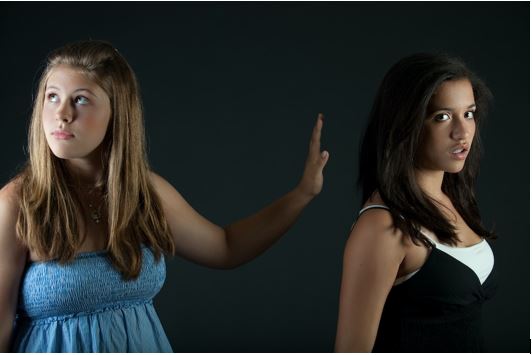
As I’ve strolled through my neighborhood in the past few years—a walk that within fifteen minutes can take me to my favorite bookshop in the center of town or out along the banks of the river that runs through the Smith College campus or into a tree-studded park with winding paths and shaded benches for reading—I’ve felt the increasing reticence of people I encounter to speak or even make eye contact (let alone smile) in passing. Most of the “Boomers” still nod, say hello. Respond to my “I’m loving the sun today” or offer some observation of their own. But the under-60 crowd avoids such “terrifying” exchanges by turning their eyes to the pavement, and the local college students stare fixedly at their smartphones with such ferocity I’m amazed their gaze doesn’t blaze a hole in the screen! It takes a lot of energy to avoid other people, to act as if the fellow human being passing two feet from you does not exist. I pity them. It’s clear from their furrowed brow, they are not enjoying this pretense. I long to ask: How will we ever fix the world and make it a more humane place if we can’t even nod to each other in passing? But I don’t ask. They have made their wishes clear.

Or have they? Does any of us ever really wish to sever contact with our fellow humans? To view others with distrust or fear?  

The Weight of Depression

If laughter is the shortest distance between two people, avoidance of others is a cumbersome ball and chain. And it may be making many of us ill. Emotionally, psychologically, even physically because the mind informs the body and the stress of building a virtual wall to keep other people  at a ‘safe” distance can take a heavy toll on both. So why do so many of us seem intent on defending that wall of silence?  

It’s no secret that cases of depression skyrocketed during COVID, nearly tripling in the early months of 2020. Sadly, that’s to be expected during traumatic events. But it’s also expected that the mental/emotional toll such crises engender will peak and then drop off. Only this time they haven’t. New research from Boston University School of Public Health reveals that the 2020 increase has not only persisted BUT escalated. Nearly one in three Americans, BUSPH reports, now suffers from depression.    

Yes, there was a brief moment in the Spring of 2021—after the election ousted TheRUMP and the COVID vaccine rollout opened up the world a bit—when people seemed lighter, our unmasked faces revealing relief, hope; when people smiled at each other in passing. But, quickly, fears of COVID were replaced by worries over the state of democracy and the growth of fascism around the globe. Increasing police violence against black citizens, GOP threats to LGBTQ persons, the death of ROE, and a flurry of laws from right-wing controlled states: If we don’t approve of the candidates Americans vote for, our Republican legislatures will just change the outcome to one we do like.

The Key to Easing Anxiety       

Psychotherapist Kerry Malawista’s recent op-ed in the Baltimore Sun identifies a new complaint she is witnessing among a rapidly rising number of patients, a complaint one client labeled “Democracy Anxiety Disorder”—grief for America and one’s own future in it. Malawista notes that while many people are in denial about the threats to America and the planet, millions more “cannot look away from what is happening to our country and our freedoms.” She asks, “How do we offer psychological help when we know the danger is real, not imagined?” In response to that question, Malawista notes, “Here we have some agency, because in the face of a threat to good government and democracy itself, power rests in voting and volunteering in grassroot efforts.” In other words, we must work with other people to build something positive, to make a better, safer, more inclusive world. As Malawista observes, “engaging in constructive work with others eases anxiety, offers hope.” But to do that, we must talk to each other, not look away. Stop using our phones as a shield from the world.

There are some real challenges to doing that. The pandemic and the resulting greedy grab by corporations to cash in on the moment—downsize workers, reap bigger profits, consolidate market share—have literally changed the face of America. In many places, especially smaller cities and towns, the center of public life—our downtown gathering places, locally-owned shops and restaurants—was gutted by the pandemic and has not come back. Empty storefronts line Main Street. In their place, an army of Amazon Prime vans brings virtually (no pun intended) all our material needs to our front door. Food delivery services like DoorDash and Grubhub do the rest. We stick our heads out, grab the stuff, return to our smartphones and streaming devices. On the surface, our needs appear to be taken care of, and with a minimum of effort. But what about our emotional needs? Our need for human connection?

“The need to connect socially with others is as basic as our need for food, water and shelter,” writes Matthew Lieberman, professor of psychiatry and biobehavioral science at UCLA’s Semel Institute for Neuroscience and Human Behavior, and author of Social: Why Our Brains Are Wired to Connect (Crown Publishers). “It’s been baked into our operating system for tens of millions of years.”  

Making Connections: Old Friends and New

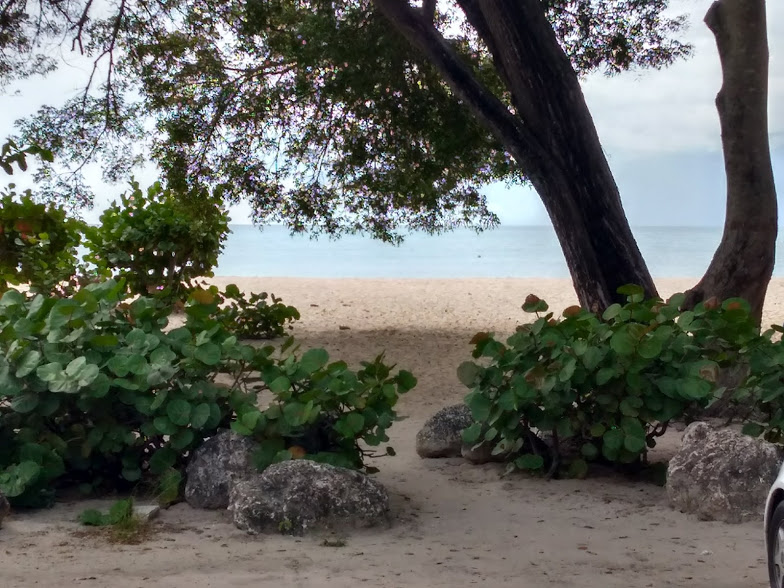
As I mentioned in a note to last month’s post, Ed and I spent most of January in Barbados, a jaunt that has become an annual thing. A welcome reprieve from the cold, dark days of the New England winter. For three weeks, we lie on the beach—reading, swimming in the clear warm ocean waters, enjoying a rum punch or two. All to the best of reggae music. It truly is a healing experience. Literally. The on-again, off-again UTI symptoms I’d experienced for the previous 14 months vanished completely the day we arrived and never returned. But the most healing of all is the people we meet there. Barbadians are among the most open, welcoming people I have ever encountered.

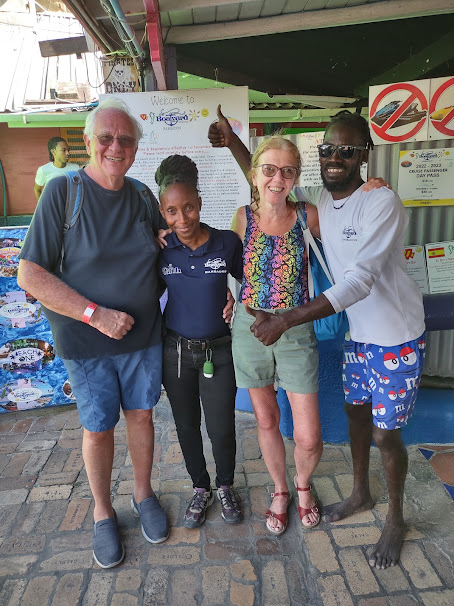
You don’t just “take a cab” in Barbados. You converse with the driver, swap stories about family, the tastiest eateries, local politics. At The Boatyard in Bridgetown—our favorite beach!—you don’t just pay for the day’s pass (umbrella, chairs, a food and drink allowance), you talk to everyone on the staff. Trade jokes with R., ask T. how his plans for opening a coffee shop are going, chat with N. about the work he does teaching magic tricks to kids.

Out for dinner in the evening, you exchange stories of family holiday gatherings with A., your waiter—the number one reason you always come back to this restaurant (and that’s saying something because the menu is amazing)—and promise to send him your recipe for the French Apple Pie he wants to try. You sing along with the steel pan band to “Sweet Caroline” and “YMCA”—with about sixty other locals and tourists at a favorite beachside cafe. The same cafe you’ll take Boatyard friend T. to for dinner and music, as he’ll later take you for beer and karaoke several blocks away.

Yes, Ed and I love the sun, surf and sand, but one of the great joys of our annual visits to the island is seeing familiar faces and catching up on each other’s lives. As the poet William Butler Yeats said: “There are no strangers here; Only friends you haven’t yet met.” And there are more people to be met on this island besides Barbadians—Bajans as the locals refer to themselves. A world of people, in fact.

Icebreakers: Take the Plunge

On the many beaches that encircle Barbados, people gather from around the globe. Some are locals, of course, but a sizeable number are from cruise ships making a brief stopover, and many—like Ed and me—are vacationing on the island. Lots of Brits and Scots, even more Canadians, but also Italians, Spaniards, the French, the Dutch, Middle Easterners, Aussies. And that’s the short list.   

So here we all are, lined up on the beach, no more than a couple of feet between umbrella/chair set-ups. Or splashing happily in the ocean together. In such an environment, it’s more unnatural not to talk to each other. Making contact is just a matter of commenting on some aspect of the scene. Finding an icebreaker.

I found mine in the ocean. Though the water is reasonably warm, there’s just something about committing to that final all-in plunge. Ed dives right in, but I always linger a few minutes, talking myself into that leap—The water will feel warm within a minute or two. I’ll be okay. I can’t just stand here—until, at last, I throw myself into the waves. Of course, it’s always better once you do, but I had observed that, like me, many women hesitate as the water rises above their waist. I don’t know if there’s a biological reason for this, but I began using it as a way to connect, empathizing over how hard it is to go all the way. Laughing at my own hesitation. Yes, yes, my fellow swimmers nodded. Suddenly we were talking—about anything and everything. Sometimes, as with one couple from Milan, in an exchange of broken English (theirs, really good) and broken Italian (mine, really bad). But I’ve seldom found language to be a barrier (in part, admittedly, because most people speak at least a little English and many speak it quite well).

Even when the overlap in lingo is virtually zip, if you want to make a friendly gesture, there’s often a way. We were in a New York City hotel once and the elevator was kaput—waiting for the repair people. Standing in the lobby, I noticed a young woman repeatedly pressing the elevator button.  Approaching her, I said, “It’s not working.” She shook her head. “Russian,” she replied. Wracking my brain, I produced the one Russian word I possess: “Nyet.”  “Ahh.” She nodded her understanding and we both started laughing.

Kids and grandkids are another easy way to get a conversation going. Last year, we saw a girl of four splashing about in the shallow water. Her sister, age two, watched avidly, but hung back despite Mom’s coaxing. The game changed, though, when big sister came out to the shore and started lobbing small pebbles and seashell fragments into the surf. Then the little one went crazy—picking up everything not nailed down and tossing it with joyous abandon into the ocean, in the process getting thoroughly soaked. “Guess she’s been converted,” I said. “Oh yeah,” the woman replied. “Whatever big sister does…” And with that, we were off and running.   

Survival: It’s Up to Us

It really is a small world. On Alleyne’s Beach, the step into the ocean is a bit of a drop off and a little rocky for the first several feet. Getting in is easy, but getting out with the waves rolling in behind you can be tricky. On one of our visits there, a man helped Ed manage the last couple of feet to shore. Which started us talking. He and his wife were from London. I said it was my favorite place in the world and had been ever since I was a student for a semester at the University of London. He asked which college of the university. “Bedford College, 1976,” I said. “Me, too!” he exclaimed. “I haven’t met anyone for years who was there at that time.” Well, there you have it. Forty-six years later and four-thousand miles away—a connection!     

These little conversations, light-hearted and fleeting though they are, unite us. Make us smile, laugh. Lift our spirits. But you don’t have to go to Barbados to have them. We are surrounded wherever we are by others who dream and fear and hope, just as we dream and fear and hope. Edward Said, the controversial scholar who founded the academic field of postcolonial studies, wrote: “Survival, in fact, is about the connection between things.”

I would say, simply, survival is about the connection between people.

Love and Stuff

NOTE: It’s the season of freeze here in the Northeast, so Ed and I are off to Barbados for some sun, surf, and Rum Punch! I’m leaving you with this post that first ran in 2018 because it’s also the season of love.

Shortly before Valentine’s Day, I got an email from the International Rescue Committee, a group dedicated to helping people “whose lives and livelihoods are shattered by conflict and disaster to survive, recover and regain control of their future.” They were promoting “Hearts for Humanity,” a fundraiser which offered a choice of four gifts you could purchase to honor a loved one: Warm Blankets;  A Year of School (for a girl); The Teddy Bear & Creativity Kit for young children, and Safe Passage. The deal was you chose a gift, and a card would be sent to your Valentine notifying them what you had purchased in their name. It’s a nice way to share some love.

I selected the Safe Passage gift/card. The blurb for it caught my heart: After fleeing for their lives, refugees arrive to an unfamiliar place frightened, exhausted and in desperate need of basic services, including transportation and information … the IRC provides refugees with critical information on how to access medical care, asylum services, and what to do in case their family is separated. We also help to transport refugees safely to facilities such as hospitals or asylum centers.”

I thought if I was someone fleeing everything I’d ever known, hoping to survive the boat ride to a place foreign in both language and customs, with no home, no job, and no clue as to WTF would happen next, I’d be mighty glad to find some friendly face on the other end who would help explain the rudiments, get me medical assistance, maybe give me a ride.

So, I named my husband Ed, all-around good guy and Valentine-extraordinaire, as the person I wished to honor with my donation. Easy. But what did I want to type in the little “brief message” box provided? My typical Valentine’s card to Ed runs beyond brief, and usually includes some sentiment a tad more racy than I felt like sharing with the card-prep folks at the IRC.

You may think, being a writer, a brief message would be a piece of cake, but I continued to stare at that blank space, willing some coherent thought to materialize. Writer Revelation #1,923: Coherence is only the baseline—the barely acceptable, rock bottom limit—below which writers must not sink, or if we do sink then we must delete quickly or bury the evidence in some file with a name like Holiday Recipes 2005.

No, when faced with a blank page, what writers aspire to pen is something graceful, hopefully thought-provoking, occasionally humorous, and true. Above all, true. 

After more gazing out the window, and fortified by a gin-and-tonic, I decided to focus on why I chose this gift of Safe Passage for Ed rather than a book or sweater or some other item we already have too many of and no place to store. The WHY made it all fall into place. I quickly typed:

One of the miracles of love is that it makes you more generous. We already have everything we need because we have each other, so this Valentine’s Day, I’m extending that love, sending it out like ripples over a pond, to those less fortunate.

What is Enough?

Love makes us generous. Teaches us what is enough. Enough is a good word to know. A life-enhancing concept. A planet-saving philosophy.

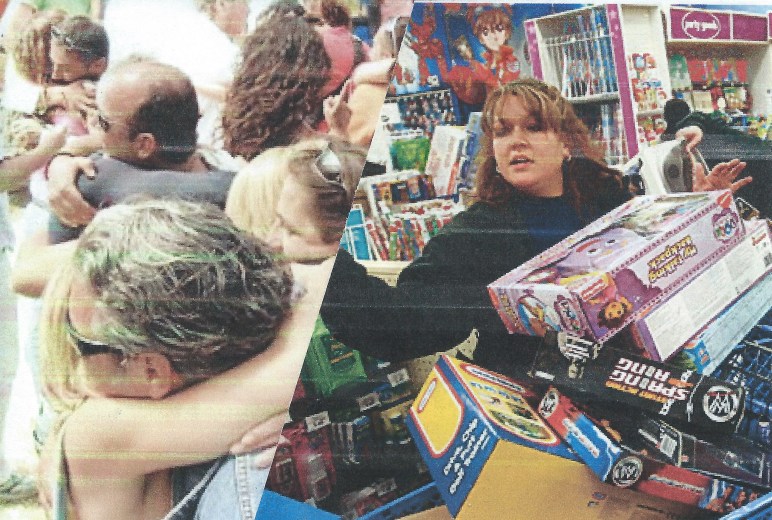
Stuff, on the other hand, just seems to make the folks with the most toys greedier for more. Two homes. Five homes. A personal jet and a helipad. A private island.

Personally, I think it’s bad manners to grab another $100 billion for yourself when other people are homeless, starving, and dying from lack of basic medical care. Forty percent of the world struggles to survive on less than $2.50 a day.

But if I’m honest, I know the Stuff Gene is shared to greater and lesser degrees by much of the developed world. Even in my own modest (by American standards) home, I often feel the walls closing in, squeezed tight by too much stuff. Why is it Ed and I have three coffee mugs crammed with pens, pencils, and markers on our partners’ desk when one would do? Are we expecting to sprout another dozen hands, become an ambidextrous stunt-writing team?

Speaking of coffee mugs, why do we have 27 of them hogging space in our kitchen cabinets? Are we anticipating a Fifties style coffee klatch—two dozen ladies in June Cleaver bouffant dresses and pearls, gathering for a gossip? 

Ed and I are woefully short on extra homes, sports cars, and Cayman Island accounts, but we have more prints and posters than wall space to hang them, enough kitchenware to open a diner, and a pile of electronics dating back to the dawn of the digital age. If floppy disks, VCR players, or cassette recorders ever make a comeback, we’re ready.

We are two people … with eight suitcases, three laptops, three tablets. And about 800 sweaters.

The Trouble with Stuff

As a nation, we’ve come a long way from the folks who inhabited those quaint cabins you see at places like Plymouth Plantation. One, maybe two rooms. A couple of hooks for the family’s several items of clothing. A cooking pot. Today, many people pay an average $1,000 a year for self-storage lockers to hold the stuff they can’t cram into their homes. Annual self-storage revenue has been estimated at $38 billion. I suspect Goodwill is not returning my calls regarding what items they accept because they, like me, are drowning in stuff.

Stuff weighs us down. Not only do we have to pay for it, but once purchased we must maintain it: clean it, store it, repair it. And ultimately, dump or recycle it. This last is an increasingly serious issue. According to theworldcounts.com, we dump more than 2,000,000,000 tons of trash each year. And 99% of the stuff we buy gets tossed out in the first six months.

Stuff also begets stuff. When I was a kid, you saw a movie once, and maybe once again years later on some late night movie channel. Then the VHS tape was born. Now we could own hundreds of movies, but we had to buy a VCR player to view them, which later had to be replaced with a DVD player when movies went digital. All this movie-owning gave birth to the entertainment center—a bulky piece of furniture to house your TV, with multiple shelves for storing those tapes and discs. Now, everyone’s streaming and the contents of our entertainment centers are becoming the contents of our landfills.

Why all this acquisition?

Those “Lovely Intangibles”

Worth a replay: One of the miracles of love is that it makes you more generous. We already have everything we need because we have each other.

Love is more important than stuff. Stuff fills the space in our closets, our homes, our landfills. But loving and being loved fills the space in our hearts.

Thinking about this, I began jotting a list of more things I believe trump stuff in their importance. Things that, if we have them, give us the sense of enough. 

*Health. As I watched Nancy Pelosi hold the floor in the House for 8+ hours on February 7, protesting a spending bill that did not protect Dreamers, I was inspired by her energy, her stamina. Seventy-seven years old and going strong! Health is life. I’ll take good health over a pile of riches and the stuff it buys any day.

*Peace of Mind/A Sense of Safety. This is a toughie right now, but imagine the weight of worries over the state of democracy, health care, DACA, gun violence, and the Trump/Kim Jong-un nuclear brinksmanship dropping away, freeing us up for joy. Stuff is heavy, cumbersome. Peace of mind is lightness, energy.

*A Sense of Connectedness. When we recall the good times, the best moments, it’s the faces of loved ones we see—family, friends, neighbors, folks from our community, people we’ve encountered in our travels. In his 2013 book Social, UCLA biobehavioral scientist Matthew Lieberman states that our need to connect with others is as vital as our need for food and water. Science has yet to make this same claim for a Mercedes, or a Williams-Sonoma Jura Giga X7 “café worthy” automatic coffee center ($8,999.95).

*A Rich Inner Life. To me, this means reading, listening to music, going to art galleries and museums, learning new things, reflecting on the long history of ideas, making connections between seemingly disparate events, dreaming.

In his excellent—and scary—futuristic YA novel Feed, M.T. Anderson paints a world where everyone’s head is wired for Internet. Originally touted as a “learning tool”—a world of valuable information piped right into your brain—the feed has largely become a stream of consumer ads. It’s the ultimate nightmare of losing our minds to stuff.

*Purposes/Goals Other Than Making Money. After we moved into our current home, I spent four summers digging over the bindweed-infested yard. I then terraced the wildly uneven terrain and put in garden beds. It was hot, often frustrating work, but in the end it was enormously satisfying to make a lovely space out of a junky lot. Much, maybe most, of what gives us satisfaction in life never earns a dime. 

*Getting Out in Nature. Hiking the Quabbin Reservoir at Thanksgiving with my family, I was stunned almost to dizziness by the expanse of the sky, the richness of the air, the dazzling stretch of green. This huge, beautiful silence that is nature feeds the soul, heals the heart.

*Job Satisfaction. As Annie Dillard said, How we spend our days is, of course, how we spend our lives. The race for stuff puts a lot of pressure on us to choose a career path with the biggest paycheck. But if we’re going to spend half—or more—of our waking life doing something, maybe the real key to satisfaction is the work itself, or the folks we work with, or friendly workplace policies that accommodate our personal/family needs. A job that doesn’t demand we be literally on call 24/7.

*Self-respect. To trust in your own integrity, to be able to look yourself in the mirror every morning and like who you see, is a treasure beyond any price tag. Without it, you become someone like … Paul Manafort.

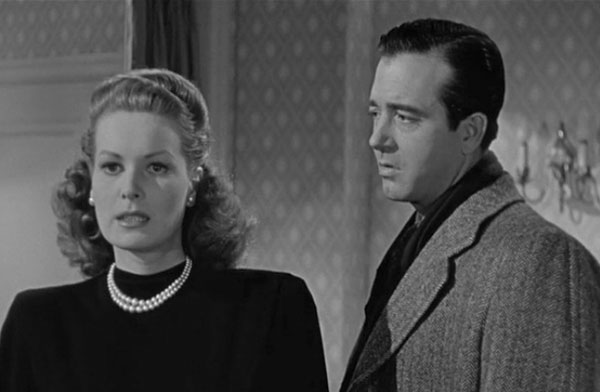
These are the “lovely intangibles” the lawyer Fred Gailey (John Payne) speaks of when he defends his decision to represent Kris Kringle in the 1947 Thanksgiving classic Miracle on 34th Street. The dialogue in this scene with his new love interest Doris Walker (Maureen O’Hara) is too good to summarize, so I’ll just run it here:

Doris: [Kris is] a nice old man, and I admire your wanting to help him. But you’ve got to be realistic and face facts. You can’t throw your career away because of a sentimental whim.

Fred: But I’m not throwing my career away.

D: But if Haislip [top dog at the firm that’s threatened to fire him if he persists with the Kringle case] feels that way, so will every other law firm.

F: I’m sure they will. I’ll open my own office.

D: And what kind of cases will you get?

F: Probably a lot of people like Kris. That’s the only fun in law anyway. I promise, if you believe in me and have faith in me, everything will… [he pauses]  You don’t have any faith in me, do you?

D: It’s not a question of faith. It’s just common sense.

F: Faith is believing in things when common sense tells you not to. It’s not just Kris on trial, it’s everything he stands for. Kindness, love and the other intangibles.

D: You talk like a child! It’s a realistic world. Those lovely intangibles aren’t worth much. You don’t get ahead that way.

F: What’s getting ahead? Evidently you and I have different definitions.

D: These last few days we’ve made some wonderful plans. Then you go on an idealistic binge. You give up your job and security, then expect me to be happy about it!

F: Yes, I guess I expected too much. Someday you’ll find your way of facing this realistic world doesn’t work. And when you do, don’t overlook those lovely intangibles. You’ll discover they’re the only things that are worthwhile.”

I can’t improve on that. It’s graceful. It’s thought-provoking. Above all, it is true.

What Counts

Welcome to 2023. Wow, how tempus fugits! Like a cheetah on a Dodge Tomahawk.

Okay, I’ll leave off with the witty Latin phrases and the references to a 300-mph motorbike of which only nine were ever produced. But time and the ways in which we allow it to hold us hostage is a stress generator, and taking that stress from 100 down to something like my shoe size is the subject of this month’s post. The focus of what might be called my New Year’s resolution, though I don’t really go in for formal “declarations.” Anyway, here goes:      

The Last Straw

When we returned from France at the beginning of October, I started hustling to get the garden cleaned up for winter—always a frenzied task. Then Ed developed an infection which landed him in the hospital for a week and recuperating at home for several more. Shopping, cooking, raking up the usual 30 bags of leaves and getting them to the landfill before it closed for the season—everything fell to me. And when he recovered sufficiently, family began arriving for my son’s birthday and Thanksgiving.

Somewhere in that chaotic whirlwind, I became aware that I was counting pages every time I settled down to read a book. Like I was taking a speed test. The thing is, I’ve always been a slow reader. I linger over a passage, return to former chapters, pause to reflect on a character or a scene. And here I was, racing through book after book, ticking off chapters, and doing a daily assessment of how many pages remained in my current read. The one thing I wasn’t doing was enjoying the experience. And that was when I realized just how stressed out I had become. My life had narrowed to a frenzied existence of tick, tick, ticking the to-do list. List done, new list.

So, in this new year, I am laser-focused on zapping the stress inducers that steal the joy from life.   

I want to stop counting the minutes.

As when the alarm goes off in the morning at 7:45, with a calculated fifteen additional minutes of groggy rest while Mozart plays on the CD/radio clock and Ed rubs my feet, which brings me to 8:00, at which time I’m “supposed to” bound out of bed, head into the shower, deodorize, brush teeth, moisturize, etc. ad nauseum, be dressed and ready to present myself for breakfast no later than 9:05 (or woe, there won’t be enough time in the day to: write, clear emails, go for a walk, read, grocery shop, keep my guitar fingers nimble, cook, clean up from cooking and, depending on the season, rakes leaves/cut back garden/weed and water garden). 

Staggered by the sheer weight of it all, I inevitably fall back onto the pillow, only to find myself jumping up at 8:15, or—god forbid—8:20 (Oh no, I’m late! Won’t make it down to breakfast before 9:15, 9:20!). Psychotic, I know, but true.

Similar versions of this play out over the course of the day. Oh no, didn’t start my walk at 12:15, so won’t be back by 1:00, and lunch will be late, then the afternoon will be shot. Etc. Etc.

I have actually been experimenting with this one since mid-October when I declared aloud to no one: “I’m done counting the minutes.” No more heart failure over whether the clock says 10:55 or 11:00.

This was easier said than done because, as I quickly realized, our lives contain an amazing number of “timepieces”. Besides the clock on the bedroom radio/CD player, the hour and its minutes confront me on the microwave, the stove, the downstairs radio/CD player, and the lower right-hand corner of my computer. No use fleeing the house because time—that devilish taskmaster—travels with me, front and center on my smartphone’s screen. But as was said of Elizabeth Warren, nevertheless, I’ve persisted, and I think I’m making some progress. After breakfast, which now starts when it starts and ends when it ends, I select something to focus on—working on the deathless prose you see before you, researching my novel-in-progress, cleaning up a section of the attic that was catapulted into chaos when we had solar panels installed last summer (Best thing about the attic? It has no clocks.), or some other project of my choosing. And to continue working on that task until I tire of it.

I want to scrap the disaster recount.

This letting go of the hysteria over minutes has turned out to have surprising benefits in another part of my life I want to overhaul: Enumerating all the things that have gone wrong, are going wrong, or could go wrong. (Ay, caramba! Oy vey! Crikey!) Recounting the months of phone calls and reams of written correspondence it took to get a simple insurance claim settled in 2020 rapidly morphs into Jeff Bezo’s ambitions to destroy the (already troubled) American healthcare system by making it an Amazon product.  

This rundown of woes, worthy of the fictional family in Silver Linings Playbook, takes place daily in the shower when I’m half awake, and started (surprise!) during the early months of The Plague. Before that, I used to wake up looking forward to any day that didn’t contain a dental appointment. But when I stopped worrying about the time lapse between, say, 9:23 and 9:26, my daily review of The Ghosts of Disasters Past, Present, and Future, started shrinking, fading. I’ve actually been able to take some showers where the dominant focus is whether or not it’s a shampoo day. Bliss.

As for the litany of life’s little disasters, I am taking a page from George W.’s Secretary of Defense, Donald Rumsfeld—and pay close attention here because I will never be quoting this arsehole again—“Stuff happens.”

It just does and replaying it ad nauseum doesn’t erase it or prevent it from happening.

I want to make peace with the boring stuff.

Stress is not restricted to the lapse of minutes (hours, days), but also the way we employ that time. So, next on my list: Stop tallying the petty tedium of everyday life—it’s laundry day (again), it’s recycle/trash day (again), it’s time for a supermarket run (again and again). Maybe it’s because you can only do something 673,000 times before it starts to feel like a life zapper. I want to write! read! play guitar! Anything but unload the dishwasher again!. But one has to wash clothes, empty the overflowing wastebaskets, and eat, so I’m working on just sucking it up and adopting a Zen attitude. Becoming one with my laundry and losing myself in the rhythm of the dishwasher.  

I want to stop tallying the little slights and rudenesses of other people.

I don’t know about you, but since The Plague, many of life’s ordinary interactions—with store employees, healthcare providers, customer service reps—have become, shall we say, tainted by rude slights, even open hostility. My local supermarket, for example, introduced self-service check-outs after COVID started (thus allowing them to reduce check-out staff to one or two cashiers in the bargain—more profits for the Big Boys). I’m okay with self-service checkouts, but the machines at my store batter you remorselessly, their grating electronic “voice” demanding you put the last item scanned into your shopping bag (on the scale) after you’ve already done so. Then you have to wait for someone to come and reset the machine. Since the scale seems to have trouble detecting things placed in the bag that are lighter than, say, a carton of Cokes, this little tug-of-war happens repeatedly every trip to the store. And not just to me, but to the eight or nine other shoppers in the same self-checkout pen. Sometimes no one from the store’s (cost-saving) 2-3 remaining employees comes for quite a while. And not always in a good, or even neutral, frame of mind. So, on top of this effed-up machine that triples the time spent checking out, one often has to deal with a cranky, verbally abusive store “helper.”

Then there’s what passes for the “healthcare” system. My primary doctor referred me to a specialist last year for recurring UTIs. When I called to schedule an appointment, the receptionist barked, “Can you hold?”, then put me on hold without waiting for my reply. This happened, no joke, five times before she finally took the call forty minutes later. I started to explain that I had a referral, and she cut me off. “You won’t be able to see that doctor for at least six months. I don’t even have your referral on my list yet.” With that, she hung up. We replayed this scene twice more over the next several days, with the receptionist becoming more and more abusive. I did finally get the appointment four months later after numerous interventions by my PCP’s nurses, but it was something of a battering experience.

As I write this, a news item just landed in my inbox. A 75-year-old man in Florida shot and killed an 81-year-old couple—his neighbors in the same condominium development—over a laundry room dispute. To be specific, the gunman’s wife had left open the door to the community laundry room (I know, I know, what the eff???) and the husband of the 81-year-old couple had rushed up to her place and roundly berated the woman for this “terrible” deed. Several days later, her husband ran into the man at the condo’s mailboxes and started yelling at him for upsetting his wife, demanding he apologize at once. When the man ignored him, the avenging husband pulled out the 9mm pistol he always carries and shot the 81-year-old man dead. At the sound of gunfire, the dead man’s wife rushed to the scene where she, too, was shot dead.

Yes, I know it staggers the imagination, but as an object lesson for not letting the rude behavior and slights of others stress you out, it’s a doozy.

I am saying YES.

Much has been written about the stress fallout from COVID, not to mention the nerve-wracking threats to both democracy and the environment we’re witnessing. Taking positive action—staying up-to-date on our vaccines, voting for pro-democracy candidates, and supporting planet-saving efforts with our donations and/or our feet in the street—reduces that stress. Counting and recounting “the slings and arrows of outrageous fortune”, as The Bard would say, only multiplies that distress by a factor of a zillion.   

So, in this new year, where 365 fresh days await, anything is possible. In this new year, I am saying NO to counting minutes, pages, the roster of daily chores. NO to replaying ad nauseum the stressful cock-ups of life or the rude slights of others who are doubtless stressed themselves. And YES to life. YES to time without a stopwatch, time as process—to be enjoyed, relaxed with, contented in. To bask in the great good fortune of being ALIVE.

Lest We Forget

This past September, I did something I’ve longed to do for twenty years: Ed and I went to Utah Beach and Omaha Beach on the coast of Normandy. Two of the five beaches involved in the Allies June 6, 1944 invasion of France, colloquially known as D-Day. It is no exaggeration to say that D-Day was seen as a now-or-never, do-or-die effort to at last turn the tide of the war and defeat Hitler and the Nazis. A war that would claim the lives of 60 million people before it was over, 45 million of them civilians.  

You have to imagine the fear, the uncertainty, the desperation as year after year of the war dragged on, bringing new, more frightening, more destructive weapons—the Nazi’s V-1 flying bomb and later, before the carnage would end, the V-2 rocket missile. The race on both sides to create the ultimate killing machine, the atomic bomb. You have to picture the piles of burning rubble that just hours before had been home to hundreds. Hear the scream of the air raid sirens. Envision the desperate rush to descend into the Underground stations in London as the bombs fell. Feel the unrelenting weight, knowing every hour of the day that you might not live to see the next. Then you need to imagine enduring that for nearly five years. Only then can you understand what enormous hope was pinned on this all-out effort by British, American, and Canadian troops, aided by soldiers from Australia, Belgium, Czechoslovakia, Denmark, the Netherlands. France, Greece, New Zealand, Norway, Poland, and Luxembourg.

As the largest naval, air and land operation in history, the Normandy invasion remains a testament to what people can do when they come together to fight fascism—and fascism is always with us, sometimes lying low, sometimes—as now—rearing its ugly head openly at home and around the globe.  

The Plan

The British began planning how they might invade Europe shortly after the evacuation of Dunkirk in 1940 (when Germany overran Belgium, the Netherlands, and northern France), but practical preparations for Operation Overlord—D-Day’s military codename—did not begin until July 1943, eighteen months after the first U.S. troops arrived in the UK and two years after Hitler had opened a second front of war against Russia thereby splitting his own forces. By this point, the Allies had gained the upper hand in the Battle of the Atlantic. All vital developments if the invasion was to have any chance of success.

As Allied officers brainstormed strategies, they agreed that: 1) air operations must have a night with clear skies and a full moon; 2) naval operations—the safe transport of troops ashore—would require low winds and calm seas at dawn; 3) ground troops had to land at low tide when any obstacles on the German-occupied shore would be visible. Weather, tides, and the moon cycle must all come together to create the perfect conditions.

Unsplash: Sven Verweij

By December 1943, a committee headed by American General Dwight D. Eisenhower was busy planning the specific naval, air and land operations. British factories began pumping up production, their work aided by some nine million tons of supplies and equipment shipped from the U.S. and Canada. Spring saw over two million troops in Britain preparing for the invasion and, that May, a target landing date was set: June 5 (though bad weather in the days just prior would force Operation Overlord to be delayed until June 6). 

Meanwhile, a stunning deception campaign was in full swing to fool the Germans as to where the invasion would occur. Calais was the most plausible spot, as it was just across the channel from Britain, but it was also the most heavily fortified, so the Allies chose the Normandy coast 150 miles to the southwest, then set about creating the illusion that the invasion would be at Calais. Fictitious radio transmissions about Allied troop and supply movements were broadcast. Fake inflatable Sherman tanks were moved from location to location in the dead of night to simulate advance. Row upon row of dummy airplanes and an armada of decoy landing crafts were created from painted canvases over steel frames. All this to deceive Nazi radio and aerial reconnaissance.

Concurrently, the French Resistance and the British Special Operations Executive sabotaged German defenses and collected intelligence while the Allies stepped up their aerial attacks on Calais to keep the ruse going. To echo Churchill’s words at the Battle of Britain in 1940: Never in the field of human conflict was so much owed by so many to so few.

The Day

The invasion was to take place at dawn on five beaches along a 50-mile stretch of the Normandy coast. Utah and Omaha beaches would be handled by U.S. troops, while the British would take Gold and Sword beaches, and the Canadian forces would overrun Juno.

In the wee hours leading to dawn on June 6, 15,000 paratroopers were dropped behind the invasion areas to provide tactical support for the infantry soon to arrive. Key among their objectives was to block all entrances leading into the Allied landing zones. But the Germans rallied quickly. A number of paratrooper planes were destroyed by German flak while many others were forced to make their drops off-target, creating chaos on the ground and preventing scores of pre-determined link-ups from happening. One soldier’s parachute snagged on a steeple, where he “played dead” for several hours while German soldiers rushed the grounds of the church below. But in the end, many paratroopers made their rendezvous and wreaked a fair amount of havoc along the German lines.

Meanwhile, the ground troops were arriving. On Omaha Beach, the Americans narrowly escaped defeat. The Germans had built a string of bunkers in the dunes along the Normandy coast, effectively shielding them from both enemy reconnaissance and the Allies’ preliminary air and naval bombardment which failed to knock out key targets on Omaha. Only two of the 29 amphibious tanks launched at sea reached the shore that day, and the first wave of infantrymen were gunned down in the rough surf before they made land. But the troops did not give up. Eventually more and more soldiers made it to the seawall and climbed the steep bluffs while U.S. warships moved in to fire on the German bunkers. Omaha would turn out to be the most heavily defended of the five beaches. Twenty-four hundred U.S. soldiers died there that day.

Despite months of calculating wind, weather, moonrise, and tides (best laid plans!), the morning of June 6 gave the Allied troops something more to deal with than German firepower. Strong winds made the seas rough, bringing the tide in sooner than expected. On Utah Beach, the first wave of troops was swept 2,000 yards south of their original target and visibility was severely hampered by the shore bombardment preceding the landings. Three of the four Allies’ designated control craft were destroyed by mines.    

The same high winds also caused the tide to rise rapidly along Gold, Juno, and Sword beaches, concealing obstacles on the shore. Fortunately, the air and naval bombardment prior to the ground troops’ landing had succeeded in weakening German defenses on Gold Beach. British troops were able to advance some six miles inland that day to make their rendezvous with the Canadian forces who landed on Juno.

The Canadians at Juno Beach had a tougher time of it. The turbulent seas had delayed their landing, and the rising tide had left only a thin strip of shore that quickly became jammed with Allied vehicles and equipment. Like Omaha Beach, Juno was heavily defended, making it difficult to clear the exits from the beach. Casualties ran high. But by midnight, the troops were on the march, had joined the Gold Beach forces, and were waiting only to link up with the British 3rd Division who had landed on Sword Beach.

The British assault on Sword Beach had also been slowed by the lack of room for the armored support vehicles needed to advance inland. Time moved at an agonizing crawl and German resistance was spotty but fierce. In the early afternoon, the British finally made it off the beach and linked up with airborne troops. Together, they managed to push a few miles inland toward their key objective for D-Day—to take the strategically vital city of Caen and its nearby Carpiquet airfield nine miles away—before encountering intense German opposition. It would take another six weeks for the Allies to make those last few miles and conquer Caen.            

The Past Always Matters

Despite the various difficulties they faced, the Allies persisted undaunted. Some 133,000 troops from England, Canada and the U.S. had landed on the Normandy coast with the assistance of 7,000 ships and landing craft manned by more than 195,000 naval personnel from eight countries who bombarded German coastal defenses and provided artillery support for the invading troops. The human cost for June 6 would be tragically high—more than 9,000 Allied soldiers were killed or wounded—but by the end of the day, the Allies had established themselves on shore and begun the advance into France. 

Operation Overlord did not bring an end to the war in Europe, which would drag on until May 1945, but it did kickstart the process through which victory was eventually achieved. By the close of August 1944, the German Army was in full retreat. Northern France had been liberated. It was the beginning of the end of a nightmare—Hitler’s maniacal fascist dream of a “Thousand Year Reich”—that had engulfed much of Europe and left tens of millions dead.

As I descended the dunes down to the shore on Omaha Beach and gazed out across that vast expanse of water, I thought back to a day I spent in our local library. A map that caught my eye as I gathered research for my World War II novel. A map of Europe 1940, shaded darkly with Hitler’s conquests. By June of that year, only Great Britain was unconquered. This small island nation that never gave up, never gave in to the Nazis. Tears streamed down my cheeks that day. Even now, writing this, my throat tightens, my eyes well up. We owe the British people of that era—the soldiers, the airmen, the navy, the government, the people everything. Everything. For eighteen months, before U.S. troops joined the fight, the British were the lone candle in a very dark world.

Before going to Normandy, Ed and I had spent a week in Paris. We ate breakfast daily at a lovely café across the road from our Airbnb, where we were usually served by a genial waiter, a man in his mid-40s. On our last day, he asked where we were going next. Ed told him the Normandy beaches. He was puzzled. “Where the Allies landed. D-Day,” I added. He shook his head and smiled. He had no idea what we were talking about. I did the math. He was probably born around 1975. His parents likely around 1950. Meaning his grandparents lived through the war as young adults.

Several years ago, trolling a directory for agents I could query about my WWII novel, I ran across an agency that said they had no interest in novels of that nature: “We’re moving past World War II now.” I beg to differ. Fascism is very much alive in the world today. Far-right and openly fascist leaders are seeking power everywhere, running for offices large and small, and getting elected. They are using social media platforms, and sometimes seizing the companies themselves, to fan the flames of racism, antisemitism, homo- and transphobia, and chauvinism. Recently, after acquiring Twitter, Elon Musk tweeted an image of Adolf Hitler with the words “Stop comparing me to Justin Trudeau. I had a budget.” Ah, Elon. So cute. So hilarious. Why don’t you trying telling that “joke” to the 11 million Jews, prisoners of war, Romany, Jehovah’s Witnesses, LGBTQ folk, and the mentally/physically disabled people who were murdered in Hitler’s concentration camps?

We have never so desperately needed to understand the horror, the devastation, the tragic cost of fascism as we do now. The poet and philosopher George Santayana observed that “those who cannot remember the past are condemned to repeat it.” We can’t afford to let the history of one generation vanish with the next. No one is coming to save us this time. We must save ourselves.

I’m leaving you with one of the most poignant, best-loved songs from World War II, “The White Cliffs of Dover”, penned by Walter Kent and Nat Burton, and made famous in 1942 by Vera Lynn. May you enjoy a happy, peaceful holiday season with your loved ones.

And never give up the fight for a better, more inclusive, more humane world.