The Human Condition (BLOG)

THE NOISE WITHIN

[I’ve been away this past month, playing hooky in London with Ed–watching lots of theatre, enjoying art and history museums, traipsing the parks and, of course, patronizing my fair share of pubs! So I’m re-posting a piece from July 2021. Hope it brings more joy to your summer, and a greater sense of sanity amidst all the noise out there.]

During my son’s recent visit, we drove up to Vermont. The centerpiece of this daytrip was lunch at my favorite summer eatery—the Marina in Brattleboro. The restaurant boasts a sizable deck overlooking the Connecticut River. In the soft hazy heat of a June afternoon, you can enjoy a lazy meal to the sound of water lapping and birdsong. The word somnolent comes to mind.

I first dined at the Marina eons ago, scant weeks after moving from the heart of Boston. The restaurant’s deck was smaller then, but the tranquility factor was just as high. Sitting there, I was startled to realize the only noise was me. All around was serene—the agitation, the angst, the tumult was all within me. I love cities. Love the diversity, the wide array of culture, the energy, but in the chaos and rush of the urban, you may never hear your own heartbeat.   

A Discordant Jangle of Uncertainty 

The noise within: You’ve got a zillion things to do—a zillion things you want to do—but you can’t settle on what to tackle first. Whatever you turn your hand to, you find yourself spinning your wheels, repeating the same steps without making any discernible advances. Busy doing nothing, as a friend once put it, leaves you exhausted but unfulfilled. In this state of paralysis, hours and days melt away as you frantically row but get no closer to land.

The noise within distracts us from what matters most in the moment, leaves us confused and uncertain about our true feelings—Am I doing what I want? What do I want? It blurs our focus and renders us immobile. Should I go this route? But what if I went the other way? What if I miss something vital? The possibilities overwhelm. The problems feel insurmountable. Fear spirals wildly, an endless loop of anxiety. What if I fail? What if I fail because I fear failing? We are swamped in a deluge of despair.

What is Making All That Racket?

The still calm of that long ago afternoon on the Connecticut River revealed the noise within me, but Boston didn’t create that noise. You don’t have to be standing in Times Square to be rendered deaf to your inner voice. We live on Planet Earth, home of Social Media A to Z, the Worldwide Web, and the 24-hour news cycle. An unceasing parade of pundits forecast doom and gloom. Experts—true and false—spout their wisdom(?) freely everywhere:

“You should do this.”

“You mustn’t think that.”

“Everyone knows…”

The subtext: Whatever you’re doing, you’re doing it wrong. Like the increasingly contaminated air we breathe that pollutes our lungs, the constant, often contradictory, mumbo jumbo from these talking heads offers lots of anxiety but little affirmation.

The din of the outside world—a cacophony of voices, often strident and discordant—may drown out the most essential voice, our own. Getting away from that din long enough to tune in to our true inner state is the first step toward reducing the noise within. The good news is, we can choose to decrease the time we spend on, take breaks from, or entirely turn off this media circus. We can limit the authority we grant to others, especially strangers.

You don’t have to hide away in a yurt in the Himalayas to hear your own voice. You just need to create space and trust yourself. While it’s wise to take in and weigh new or differing viewpoints, it’s healthy to remember—and value—your own experience, your needs, your hopes. If anyone tells you they know you better than you know yourself, don’t believe them. And if someone says, “This is the one right way to do/approach/achieve this”, ignore them. In every field, for any endeavor, history proves there are many paths to any goal.

Mute the Noise: Mind Cleansers

During the pandemic, shut out from my usual visits to the gym, I took long walks. The gym has re-opened but I’ve put off signing up, preferring these daily rambles that both empty and “clean” my head, leaving space for new ideas, insights, calm. Some people swear by meditation, and if that works for you, great, but I get fidgety sitting still. For me, the mind/body catharsis of a good walk works best.

Other mind cleansers I’ve discovered or borrowed and tweaked include:

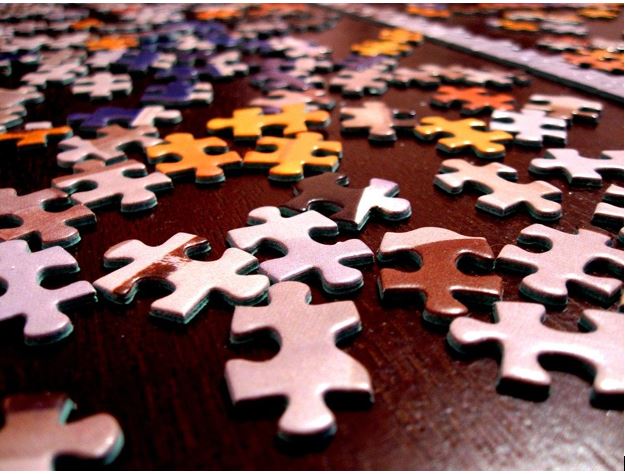
1. Get ready… Jigsaw puzzles! Yes, those BIG 1000- to 2000-piece babies. Absorbed, focused solely on finding and fitting pieces, it’s my “dessert” at the end of a workday. Unlike the inner push many of us feel to have a finished product—a new chapter on the book, the entire garage cleaned—to show for a day’s effort, jigsaw is all about process. No one expects to complete a jigsaw in an afternoon. There’s no “right” number of pieces to fill in. There’s no success/failure pressure. It just feels great to make whatever progress you can. If we could adopt this attitude about all our endeavors, the sanity quotient would skyrocket around the globe.

Okay, I hear you saying, but what about real deadlines? The kind the boss imposes. Believe me, writers get deadlines, too. All the time. I think it’s possible, though, that more gets done—and better—when we focus more on the work itself and less on watching the clock. Anxiety is not conducive to either creativity or productivity.

Unsplash: Hello I’m Nick

2. The stuff that nags. The seemingly endless—and changing—list of troubles and woes we can’t fix at the moment—or maybe ever—but must wait for the answer or leave to fate. This is an old trick—one the experts got right—but it has worked for me (when I’ve taken the time to do it). Make a list of the stuff your mind keeps churning over to no avail. Just brainstorm it without pause or judgment. Then tuck that list in a folder or a drawer—I tape mine to the far side of my file cabinet where I can’t see it—and let those suckers go. Get on with life. You might get a shock from revisiting this list in a month. How many items have resolved themselves or simply don’t matter anymore? And how much energy have you freed up in the meantime? Repeat as often as necessary.

3. Of course, there are BIG valid worries aplenty in our world. Our climate is in chaos—June saw 115 degrees in Las Vegas. Geo-politics are trending toward the fascist. Here in the States, we’ve watched the rise of violent militaristic groups and white supremacy. Voting rights are on the chopping block. Whole lotta noise out there.

Unsplash: Mika Baumeister

I confess to struggling with these fears—I like to get out in front of troubles and act to prevent them. But when we’re talking about problems of this scale, it’s just not possible for any one person to eradicate or correct them. They are systemic and well-funded by Big Money. Allowing them to endlessly rattle around in our brain drains us of hope and energy. Worrying doesn’t empty tomorrow of its sorrow, it empties today of its strength, writer and Dutch watchmaker Corrie Ten Boom cautioned. And she walked the talk on that one. Cornelia “Corrie” ten Boom and her family hid many Jews in their home during World War II, aiding them in escaping the Nazis.

Like Corrie, what each of us can do is act from where we are. We can make phone calls, write letters, register voters, join local environmental groups, protest, and donate. Every dollar helps. Every voice raised swells the whole. As Corrie Ten Boom’s life shows, action gives strength. Empowers rather than depletes us.

4. Mental health days. Take them regularly. Play is as essential to our well-being as the loftiest purpose. Got a full-time job? Kids to care for? Ask a spouse/partner/relative/friend to step in for an afternoon. Even a daily mental health hour—like the walks I took during COVID and continue to enjoy—can reset your head.  

Choose Your Focus

Unsplash: Jonathan Kemper

Once you’ve freed up some mental real estate, you can direct your energy. Choose your focus. What are the basic areas where you want to expend your time and effort? My list includes: Writing (novels/short fiction/blogging), playing guitar, gardening, house projects, reading, walking and, of course, family/friends. These are things I strive to do with great frequency because they matter to me—in the case of writing, almost daily.

What my list does is provide a road map, a general direction, when I start to feel lost or overwhelmed. Say, if I have six hours today, I might spend two on my current work-in-progress, and one hour each on blogging, walking/guitar, and gardening. The sixth hour? Maybe I’ll throw those boxes of clothing for the Salvation Army into the car. Ed and I will drop them off, then enjoy a summer lunch at a favorite café.

I don’t do these things with a stopwatch. It’s just a loose guideline. If I should get bitten by the neighbor’s dog—which happened two weeks ago—and have to spend my morning in the ER, c’est la vie. No self-recriminations. As John Lennon wrote: “Life is what happens to you while you’re busy making other plans.”

Your True Voice: Let It Rip

Unsplash: Clay Banks

“The sky is falling in!” Henny-Penny cries in the classic children’s fable after an acorn falls from the tree above and bonks her on the head. While it’s never pleasant to get hit on the head, I think if you look up, you’ll find the sky is still there. It’s always been there. It will always be there—at least in terms of any timeline that concerns us.

The noise within, maybe it’s just a whole lot of acorns pelting us from one direction and another. If we let them take seed and sprout, we’ve got a forest too dense to see through, but we can just decide to cast those babies aside one by one and keep focused on what really matters to us. Whether that’s work or play, if it doesn’t hold some kind of real satisfaction, I don’t want to waste myself on it.

I hope you’ve found something in these observations and ideas that will help vanquish the noise within. I also hope you’ll take a moment to comment and share any “tricks” you use to turn down the din. Our possibilities are too wondrous and our hours too precious to let our true voice be muffled in the roar of the crowd.

IMMORTALITY IS FOR THE GODS

“Yesterday is history. Tomorrow is a mystery. Today is a gift. That is why it is called the present.” — Alice Morse Earle

Ever since people discovered they were mortal—and I’m guessing this was around the time they first saw someone drop dead and remain dead—they began to create various belief systems in which this demise was only temporary, that life would somehow resume in another realm. In short, they invented immortality.

The ancient Egyptians, famed for being buried with plenty of food and all their worldly possessions, believed that earthly life was but the first leg of a journey; that if one had pleased the gods thus far, one would end up in The Field of Reeds, a paradise that would mirror one’s life on earth exactly.

You have to work a little harder as a Hindu. While they believe the soul never dies, Hindus also believe the soul is reborn in another body—reincarnated—and you keep coming back until you get it right. You can be stuck in samsara, this cycle of birth and death, a long time. But eventually good karma is achieved and you are freed from your earthly body to live a life of divine bliss for all eternity with Brahman, the supreme universal spirit.

The Igbo people of Africa believe that one continues to have agency in earthly affairs after they leave this world and go to the land of bliss. There, along with their ancestors, they interact, intercede, and protect their earthly families.

Christianity promises eternal life, but whether that’s Heaven or Hell—or the waiting room of Purgatory, if one follows the Pope—depends on your behavior here. Similarly, Islam says you will be sent to Paradise (Jannah) if you followed the teachings of the Qur’an, or Hell (Jahannum) if you don’t. Immortality, in these religions, is a dicey thing.

Eternal life. That’s the promise of most religions, but there’s another kind of immortality—the kind that we seek in life. The deep hunger to make our mark on earth—an indelible permanent mark—through an achievement or achievements that will long outlive us. To be remembered, even revered, for centuries in this world after our mortal coil has turned to dust. I would argue that this is the real immortality most people seek, unable as we are to truly imagine ourselves dead. But what price do we pay for that desire?        

Changing Fortunes/Shifting Sands

The writer F. Scott Fitzgerald published his first novel, This Side of Paradise, in 1920 at the tender age of 24. It was an instant smash hit. Overnight, prestigious literary mags like Scribner’s clamored for short stories from this rising star of the Jazz Age. The Saturday Evening Post, one of the most widely-read magazines in America, paid Fitzgerald handsomely—in the tens of thousands of dollars in today’s cash per story—and arranged to have first dibs on all his short fiction.     

Fitzgerald then married the girl of his fictional dreams, Alabama socialite Zelda Sayre, who had put off his advances until This Side of Paradise made him “somebody.” The Fitzgeralds lived the party life, drinking and cavorting with the glitterati of the day in New York, Paris and the Riviera. In 1922, Fitzgerald published a second novel, The Beautiful and the Damned, which also enjoyed much success. The party continued, and it’s a testament to just how lavish their lifestyle was that as much money as Fitzgerald’s books and short stories generated, the couple had no trouble living beyond their means. But who worried? He was the golden boy, destined for immortality.

Then he published The Great Gatsby in 1925, and it did not do well. After six months, only 20,000 copies had sold. Fitzgerald was shattered. His next book, Tender is the Night, would take him nine years to write. It also failed to achieve success. He would never complete another book. His final work, a rough, unfinished novel, The Last Tycoon, would be completed by literary critic and writer Edmund Wilson, and published in 1941, the year after Fitzgerald’s death at age 44.

In the years between the failure of Gatsby and the heart attack that ended his brief life, Fitzgerald would increasingly sink into the alcoholism that had begun in his Princeton days. Would attempt suicide on at least one occasion. Would struggle to get his ideas for screenplays accepted by Hollywood and fail all but once (“The Three Comrades”). Would face rejection over and over from the very magazines that had once clamored for his every word. His stories grew darker, more explicit—sex and drink and suicide—as Zelda descended into madness and their marriage crumbled. In 1940, lamenting the loss of his popularity, he wrote to his editor, Max Perkins: “But to die so completely and unjustly after having given so much. Even now, there is very little published in American fiction that doesn’t slightly bare my stamp—in a small way I was an original.” The words have the ring of something he fervently hoped for rather than believed.

Too Little, Too Late 

Van Gogh had none of Fitzgerald’s polish, his sophistication. None of the success or wealth Fitzgerald experienced in his youth. Van Gogh would struggle for more than a decade to find himself, although once he did, he would create on a scale that few, if any, have ever achieved. Over two-thousand works of art, including nearly 900 oil paintings. The Starry Night. Café Terrace at Night. Bedroom in Arles. Van Gogh’s Chair. The Potato Eaters. The Church at Auvers. The Wheatfield with Crows. His works are bold in color, dramatic in their brushwork. The viewer cannot look away.

And yet, it was not enough.

Vincent Van Gogh was the son of a Dutch-Reformed minister and a woman who was grieving the stillbirth of her first child, a child who died exactly one year before Van Gogh was born. A child he would be named after, Vincent Willem—an idealized perfect child his mother had invented and whom he would never feel he could live up to. At age 11, he was shipped off to boarding school. He hated it, but his repeated pleas to come home went unanswered.

His professional life began five years later when his uncle snagged a position for him with famed art dealers Goupil & Cie in the Hague. After four years training, he was sent to London, then Paris, but found the commodification of art deeply troubling. Van Gogh then took up Latin and Greek, hoping to become a clergyman, but that didn’t work out so he became a lay preacher, caring for the sick and reading the Bible to coal miners in a desolate region of Belgium. It was here that he finally decided to take up the work he had always been drawn to—painting. He stopped preaching to the miners and began making sketches of them, then paintings. He was 27. He would be dead a decade later.

Always restless, he soon left Belgium for The Hague, where he met up with his cousin by marriage, Anton Mauve, an artist who was enjoying the kind of success Van Gogh dreamed of. Mauve introduced him to painting in oil. He also fronted Van Gogh the money to set up a studio, but later cut him dead when he discovered Van Gogh was living with a prostitute.

Van Gogh would move on to Antwerp, painting the local mills and churches, the wheatfields, the orchards, the faces he found in cafes, the peasants. Of his painting The Potato Eaters, he wrote to his brother Theo: “I wanted to convey the idea that the people eating potatoes by the light of an oil lamp used the same hands with which they take food from the plate to work the land… that they have earned their food by honest means.”  

He would try to sell his paintings. Without success. Theo, an art dealer, would do all he could to help. It was Theo who got The Potato Eaters into a Paris exhibit in 1885. But the world was not yet ready for Van Gogh. “Too dark,” they said. So unlike the light, bright style of the Impressionists. In Paris, he met other avant-garde painters, notably Emile Barnard and Paul Gauguin, who were also moving beyond Impressionism. But the vast city wore him out and he moved to Arles, having not sold a single painting of the hundreds he’d completed in Antwerp and Paris.

At Arles, in the famous Yellow House, both home and studio to Van Gogh, his painting continued at a fevered pitch, each work more brilliant than the last. It was here he invited Gauguin to come and live with him so they might work together and make real a dream he had long harbored—an artists’ collective. For a time, the dream seemed possible—the two men took their easels into the fields, painting companionably side by side, but then the arguments started. And grew in volatility. After a particularly heated debate over whether painting should proceed from the imagination (Gauguin) or be based in nature (Van Gogh), Gauguin packed his bags and left in December 1888. Van Gogh cut off a piece of his ear soon after and spent the next year in a mental asylum in Saint-Remy-de-Provence where he continued to paint, completing more than 150 works. He then settled in Auvers. It would be his final home.

His brother, Theo, had continued submitting Van Gogh’s paintings, most notably to the annual “Salon des Indépendants” in Paris. Ten of his works were finally accepted in March 1890. Claude Monet declared them the best in the show. Only two months before, the critic Albert Aurier had called Van Gogh  “a genius”, and a society of avant-garde painters that included Toulouse-Lautrec had invited him to submit works to their annual exhibition.

His art was beginning to be appreciated. But it would come too late and be too little. Worn out from years of fevered hopes, hardscrabble living, and constant disappointment, on the morning of July 27, 1890, Van Gogh wandered out into the fields he loved to paint and committed suicide, shooting himself in the abdomen before walking back to town where he died in his bed two days later.

What We Can Never Know

Fitzgerald died believing his life had been irrelevant. His works would be forgotten. His quest for immortality a failure. And those beliefs hastened his death—there was not enough alcohol in the world to ease the pain.   

Van Gogh died believing the world to be utterly indifferent to what he offered.      

To be mortal though is to never know the true impact of our life. How the ripples we cast, whether ignored or heeded in their hour, stretch beyond us, touch and change other lives. How The Great Gatsby—whose initial dismal sales would eat away at its author’s confidence and happiness until it killed him—would then be rediscovered a decade later to become a huge best seller. A literary masterpiece that has sold over 25 million copies worldwide and is a staple of university literature studies around the globe. How the painter of The Starry Night, who sold but one painting in his lifetime of the hundreds he created—and so despairing, took his own life—would one day be regarded as one of the greatest painters of all time, his works hung in museums around the globe and sold at auction for prices in the tens of millions.  

Embrace the Moment

Will Shakespeare likely had no notion that the plays he wrote would last 400 years and counting. Very few plays were published in his lifetime. Publication paid little, if anything, to the author, and there were no copyright laws. In fact, plays were largely felt, by those who decide what “matters”, to be entertainments for “the rabble.” Had it not been for Shakespeare’s actor friends Henry Condell and John Heminges tracking down prompt books (the manuscripts used by the actors), the best of the quartos (cheap pamphlets of plays, sometimes assembled from memory by audience members), and the author’s working drafts to produce The First Folio, many of what are now considered his greatest plays would have vanished. Shakespeare simply wrote because that’s what he loved—the theatre. It was his LIFE. And that way of living—doing what you love because you love it, wherever it goes, however it is received—is much more important than what happens after you’re gone.

When I was surveying world religions for their take on immortality, I was struck by two things: 1) Most religions seem to use the afterlife as a carrot-and-stick to get people to follow whatever rules the religion deems “appropriate behavior”; 2) Judaism and the ancient Greco/Roman world share a fuzzier notion about an afterlife, if they have/had any notions about it at all. I have no ancient Greco/Roman friends to query about this, but I did ask my Jewish friends on Facebook for their understanding of immortality as it plays out in their religion. Here are a few of their comments:  

Jeffrey: Apparently, there’s no afterlife per se.

Amy: It’s vague and I think the point is that this life matters.

Lesley: In every service, we say prayers for those who have passed. So that they are always with us.

Toni: For many Jews, the emphasis is on living today, not on an afterlife.

Mimi: In all my years of Sunday school, Hebrew school, and services, I don’t remember the topic coming up!

As for the ancient Greeks, with their various gods, mythic tales, and the underworld, the fate of humans still came down to what the playwright Aeschylus has Apollo declare in Eumenides: “There is no resurrection.”

Death is it, ballgame over.

The Roman poet Horace was even more succinct. Cutting right to the point, he wrote: Carpe diem. Seize the day!

THE LONG ROAD HOME

“The past is never dead. It’s not even past.” (William Faulkner)

As regular readers of this blog may recall, April is the month I do a little tally of the lessons life has imparted—or dumped on me—in the preceding year. This time around, as the Birthday Fairy drops me another one, I’m taking a wider lens. Much wider. Forty years. But I’m still learning. May it ever be so.

In March 1983, I was a part-time journalist for an alternative newspaper in East Lansing, Michigan. When Black activist Angela Davis came to speak at Michigan State University, I jumped at the chance to cover the story and interview this legendary woman. While being one of six reporters permitted to spend a half hour talking to her before the event was a dream come true, what has stayed with me most was something she said to the largely student audience: Don’t let these places [universities] make you forget from whence you came.

It was a striking line then, and its truth/import has only grown for me over the intervening years. In fact, I have come to believe it’s impossible to forget where you come from. Oh, you can fake it for others, you can choose to keep the blinders on, you can even lie to yourself. But where you come from, it’s always there, the good and the bad.

Five months after Davis’s visit, I got into my orange VW “Bug” and headed out to Boston, almost 800 miles to the east. I was going in search of a place to live in a city I had never seen. I was going to make my Big Move, leave behind the conservative, small-minded, small town culture of the Midwest and move to the East Coast where “things happened.”

Famed newspaper editor Horace Greeley may have said “Go West, young man” but I had always yearned for the East. During my college years, I hitched rides with various fellow students heading to New York for a term break. They would drop me off in Manhattan, where I rented a student room for $6 a night at the top of an old hotel in Midtown, ate at Horn and Hardart Automats—“frill-free and democratic” eateries (as one writer put it)—and walked. And walked. And dreamed.

New York was definitely the center of “all things literary” in the States, but the City was too pricey for a lowly-paid editor, so I settled on Boston because it was: 1) still a major city on the East Coast, and 2) an easy hop by bus or car down to Manhattan. On Labor Day weekend, 1983, I again got in my VW and drove to my new home in Boston, the first floor of a house in a working class neighborhood in Somerville. I was leaving the Midwest behind.

Twenty-six years would pass before I saw Michigan again.

Yearning to Breathe Free

We are a restless nation, a mobile nation. At least those of us with a college degree—about a third of the country. While a sizeable number of people still live their entire life in the place of their birth, college graduates are generally out the door and on to someplace else, most frequently the West Coast or the Northeast. “Many young people in rural communities now see college not so much as a door to opportunity as a ticket out of Nowheresville,” the Wall Street Journal noted in 2017. For my part, I wanted to find “my people”, the place where I fit. It was a quest I had anticipated making since I was thirteen.

Thirteen. That was the year Martin Luther King, Jr. was assassinated. Bobby Kennedy, too. The year the Black Panther Party (born in 1966) came to national prominence, with its demands for decent housing; an education that exposed the true nature of racism in American society; free healthcare, and an “immediate end to police brutality and murder of Black people” (plus ça change, plus c’est la même chose). Nineteen-sixty-eight was also the year of the Tet Offensive in Vietnam and a concomitant intensification of an already very active, highly visible U.S. (and worldwide) protest movement against our involvement in that war. Women, too, were starting to rise up, refusing to accept their circumscribed roles as sex toy or wife and mother. We, not men, will define who we are, how we act, what we want. The Stonewall Uprising, a major turning point in the struggle for LGBTQ rights, was only a year away. The world was happening, baby!  

But not in my small corner of it. In my little virtually all-white town, Nixon was a hero. The local country club banned Blacks and Jews. The jocks in my high school roamed the halls taunting the non-jock guys with cries of “faggot” and “queer”.  On a particularly memorable day, during my freshman civics course, a group of “the cool kids” gathered round my desk, shouting over and over, “This is America, love it or leave it!” (a favorite chant of rightwing, pro-war, Nixon fanatics). I knew they were arseholes, but what can you do at thirteen except dream of getting out?

In one revealing instance, one of the “elite”, a cheerleader, was cast into the netherworld when her mother married a Black man. Her former clique shunned her. I mean, cut…her…dead. We had a gym class together and over that year, we talked a lot. Her experience had radicalized her. She later signed my yearbook—a thing she would never have done a year earlier: “Let’s hope we make it through all these rotten schools.” Wherever you are, B., I hope you escaped, found your true home.

… With Many a Winding Turn

Going east for college was out of the question. “Too many communists there,” my dad said. (I know. I know.) I finally selected Michigan State University, in part because it boasted the largest undergraduate community of any campus in America—48,000. No more small-minded, small-town cliquishness. If you thought you were too cool to associate with others, you’d find yourself…alone.

I loved my college years. East Lansing was a true breath of fresh air. But it was still Michigan, still the Midwest. And my determination to escape had only intensified with each visit to New York. The road east, though, turned out to be far more labyrinthine than my opening paragraphs may have suggested. Oddly enough, right after graduation, I did a 180 and went west for a while. Tucson, Arizona. Wide open desert country stretching to the mountains. What I discovered there was how much a child of the north I was—I needed green. Grass. Trees. Seasons.

So… back to East Lansing where I had friends. And a few kindly profs from my undergraduate days who fast-tracked me into grad school. In recognition of my strong academic record, I was given my own section of a freshman writing course to help pay the bills. I. Loved. It. The new plan: I’d get a Ph.D. in literature, become a college prof and then hit the road, this time for the Northeast. No detours.

But grad school was not what I had thought it would be. Not a deeper dive into literature at a more complex level. As an undergrad, literature had been about reading widely, making connections. Grad school felt more like regurgitation. It wasn’t the student’s insights and ideas that were wanted, but a steady stream of vomiting up all the noted scholars in the field who had preceded you. Your turn would come… in a decade or two.

Home, at Last      

In the middle of all this, John Lennon was murdered outside his home in Manhattan. My boyfriend of the time, his cousin, and I headed for New York for the memorial service in Central Park, driving all night to get there by dawn. It may be hard for someone not of that time to understand what a major impact the Beatles had on a generation, especially John Lennon. I mark his death as the end of my childhood, though I was 25 when he died. Time to stop mucking about, I thought. Pursue my dreams. So, I left grad school and got a job waiting tables to support myself while I wrote my first novel, a thinly-disguised tribute to Lennon about a rock star who is murdered by a mentally-disturbed fan with jealousy issues.

As I was doing revisions on the book, a friend suggested I apply for an editor’s job with a company in Lansing and I got the job. For a year, I put aside a few bucks from each paycheck while I churned out a monthly rag for indy women’s retailers and traveled to apparel markets around the country to push our publication to store owners. Then I quit, got in my VW, and moved to Boston. Where, on my first day, I took the “T” down to the North End and dipped my hands in the Atlantic, grateful—I made it. I made it. Where I had recurring nightmares of finding myself back in the Midwest, stranded, no car, no friends, and no way out. Where I met and married my first husband. When housing prices soared to the point that our 400 square-feet in the South End bought an entire house in Western Mass, we moved.   

And here I have remained. Writing. Teaching. Raising kids. In a progressive community that celebrates immigrants and champions the rights of LGBTQ+  folks, Black and Indigenous people, women. A creative community, home to many artists, writers, musicians. And just three hours up the road from New York City where my beloved second husband, Ed, was born, and which we visit regularly.  

Postscript: The Things That Shape You

In 2009, I returned to Michigan for a visit. Ed’s son was a student at UMich, and I still had dear friends in East Lansing and Ann Arbor. We spent a day in my hometown, where I knocked on the doors of my several childhood houses and the owners were kind enough to invite us in. Then, we topped off the trip with a weekend in Chicago. Museums, art galleries—the Windy City has some great ones. What sticks most in my head, though, is a conversation we had with a young guy—a Ketel One vodka distributor—at a neighborhood bar as we were unwinding from the day, a Cubs ballgame on TV. Not the conversation itself, but my realization that I’d forgotten how open Midwesterners can be, chatting to strangers. A reminder that amidst all the negatives of my native land, this down-home easiness was a part of where I came from. A part of me.      

But the significance of that didn’t really hit me until a decade later when my stepson’s new partner came to Thanksgiving dinner in 2019. He, like me, was a “transplant”—the only other one at the table who had not grown up in the Northeast but had chosen to be here. I felt an instant connection to him. Felt we could understand something of each other that no one else in that room might get. The choice, the need to self-exile from “places that failed [us] before,” as Tennessee Williams put it. And the equally haunting truth that you will keep returning to them, if only in your head.

I mentioned the long drive to Boston in 1983. My VW had no cassette player. As I recall, it didn’t even have a radio. So I brought along a portable cassette player and a pile of cassettes for the eleven-hour trip across Canada, New York State, and the length of Massachusetts. On one of those tapes, a compilation, was John Denver’s Take Me Home, Country Roads. I’m not a Denver fan, but that one song, I’ve always had a soft spot for. After the family left that Thanksgiving, I took out my guitar and messed around until I found the right chords. Sang the song. Have sung it many times since.

What does it mean, that I cannot entirely leave behind that place I left nearly 40 years ago? It’s not nostalgia. There is nothing sentimental in it. I remain deeply grateful that I escaped. I love where I live. This is MY space—the Northeast. It’s where I was born to be, but the things that shape you, the good and the bad, you never forget them. They are forever a part of you. As author Asha Tyson wrote: Your journey has molded you for your greater good. And it was exactly what it needed to be. Don’t think that you’ve lost time. It took each and every situation you have encountered to bring you to the now. And now is right on time.

Healing: The Human Connection

“We have all known the long loneliness and we have learned that the only solution is love and that love comes with community.”  (Dorothy Day)

Unsplash: Obie Fernandez

As I’ve strolled through my neighborhood in the past few years—a walk that within fifteen minutes can take me to my favorite bookshop in the center of town or out along the banks of the river that runs through the Smith College campus or into a tree-studded park with winding paths and shaded benches for reading—I’ve felt the increasing reticence of people I encounter to speak or even make eye contact (let alone smile) in passing. Most of the “Boomers” still nod, say hello. Respond to my “I’m loving the sun today” or offer some observation of their own. But the under-60 crowd avoids such “terrifying” exchanges by turning their eyes to the pavement, and the local college students stare fixedly at their smartphones with such ferocity I’m amazed their gaze doesn’t blaze a hole in the screen! It takes a lot of energy to avoid other people, to act as if the fellow human being passing two feet from you does not exist. I pity them. It’s clear from their furrowed brow, they are not enjoying this pretense. I long to ask: How will we ever fix the world and make it a more humane place if we can’t even nod to each other in passing? But I don’t ask. They have made their wishes clear.

Or have they? Does any of us ever really wish to sever contact with our fellow humans? To view others with distrust or fear?  

The Weight of Depression

If laughter is the shortest distance between two people, avoidance of others is a cumbersome ball and chain. And it may be making many of us ill. Emotionally, psychologically, even physically because the mind informs the body and the stress of building a virtual wall to keep other people  at a ‘safe” distance can take a heavy toll on both. So why do so many of us seem intent on defending that wall of silence?  

It’s no secret that cases of depression skyrocketed during COVID, nearly tripling in the early months of 2020. Sadly, that’s to be expected during traumatic events. But it’s also expected that the mental/emotional toll such crises engender will peak and then drop off. Only this time they haven’t. New research from Boston University School of Public Health reveals that the 2020 increase has not only persisted BUT escalated. Nearly one in three Americans, BUSPH reports, now suffers from depression.    

Yes, there was a brief moment in the Spring of 2021—after the election ousted TheRUMP and the COVID vaccine rollout opened up the world a bit—when people seemed lighter, our unmasked faces revealing relief, hope; when people smiled at each other in passing. But, quickly, fears of COVID were replaced by worries over the state of democracy and the growth of fascism around the globe. Increasing police violence against black citizens, GOP threats to LGBTQ persons, the death of ROE, and a flurry of laws from right-wing controlled states: If we don’t approve of the candidates Americans vote for, our Republican legislatures will just change the outcome to one we do like.

The Key to Easing Anxiety       

Psychotherapist Kerry Malawista’s recent op-ed in the Baltimore Sun identifies a new complaint she is witnessing among a rapidly rising number of patients, a complaint one client labeled “Democracy Anxiety Disorder”—grief for America and one’s own future in it. Malawista notes that while many people are in denial about the threats to America and the planet, millions more “cannot look away from what is happening to our country and our freedoms.” She asks, “How do we offer psychological help when we know the danger is real, not imagined?” In response to that question, Malawista notes, “Here we have some agency, because in the face of a threat to good government and democracy itself, power rests in voting and volunteering in grassroot efforts.” In other words, we must work with other people to build something positive, to make a better, safer, more inclusive world. As Malawista observes, “engaging in constructive work with others eases anxiety, offers hope.” But to do that, we must talk to each other, not look away. Stop using our phones as a shield from the world.

There are some real challenges to doing that. The pandemic and the resulting greedy grab by corporations to cash in on the moment—downsize workers, reap bigger profits, consolidate market share—have literally changed the face of America. In many places, especially smaller cities and towns, the center of public life—our downtown gathering places, locally-owned shops and restaurants—was gutted by the pandemic and has not come back. Empty storefronts line Main Street. In their place, an army of Amazon Prime vans brings virtually (no pun intended) all our material needs to our front door. Food delivery services like DoorDash and Grubhub do the rest. We stick our heads out, grab the stuff, return to our smartphones and streaming devices. On the surface, our needs appear to be taken care of, and with a minimum of effort. But what about our emotional needs? Our need for human connection?

“The need to connect socially with others is as basic as our need for food, water and shelter,” writes Matthew Lieberman, professor of psychiatry and biobehavioral science at UCLA’s Semel Institute for Neuroscience and Human Behavior, and author of Social: Why Our Brains Are Wired to Connect (Crown Publishers). “It’s been baked into our operating system for tens of millions of years.”  

Making Connections: Old Friends and New

As I mentioned in a note to last month’s post, Ed and I spent most of January in Barbados, a jaunt that has become an annual thing. A welcome reprieve from the cold, dark days of the New England winter. For three weeks, we lie on the beach—reading, swimming in the clear warm ocean waters, enjoying a rum punch or two. All to the best of reggae music. It truly is a healing experience. Literally. The on-again, off-again UTI symptoms I’d experienced for the previous 14 months vanished completely the day we arrived and never returned. But the most healing of all is the people we meet there. Barbadians are among the most open, welcoming people I have ever encountered.

You don’t just “take a cab” in Barbados. You converse with the driver, swap stories about family, the tastiest eateries, local politics. At The Boatyard in Bridgetown—our favorite beach!—you don’t just pay for the day’s pass (umbrella, chairs, a food and drink allowance), you talk to everyone on the staff. Trade jokes with R., ask T. how his plans for opening a coffee shop are going, chat with N. about the work he does teaching magic tricks to kids.

Out for dinner in the evening, you exchange stories of family holiday gatherings with A., your waiter—the number one reason you always come back to this restaurant (and that’s saying something because the menu is amazing)—and promise to send him your recipe for the French Apple Pie he wants to try. You sing along with the steel pan band to “Sweet Caroline” and “YMCA”—with about sixty other locals and tourists at a favorite beachside cafe. The same cafe you’ll take Boatyard friend T. to for dinner and music, as he’ll later take you for beer and karaoke several blocks away.

Yes, Ed and I love the sun, surf and sand, but one of the great joys of our annual visits to the island is seeing familiar faces and catching up on each other’s lives. As the poet William Butler Yeats said: “There are no strangers here; Only friends you haven’t yet met.” And there are more people to be met on this island besides Barbadians—Bajans as the locals refer to themselves. A world of people, in fact.

Icebreakers: Take the Plunge

On the many beaches that encircle Barbados, people gather from around the globe. Some are locals, of course, but a sizeable number are from cruise ships making a brief stopover, and many—like Ed and me—are vacationing on the island. Lots of Brits and Scots, even more Canadians, but also Italians, Spaniards, the French, the Dutch, Middle Easterners, Aussies. And that’s the short list.   

So here we all are, lined up on the beach, no more than a couple of feet between umbrella/chair set-ups. Or splashing happily in the ocean together. In such an environment, it’s more unnatural not to talk to each other. Making contact is just a matter of commenting on some aspect of the scene. Finding an icebreaker.

I found mine in the ocean. Though the water is reasonably warm, there’s just something about committing to that final all-in plunge. Ed dives right in, but I always linger a few minutes, talking myself into that leap—The water will feel warm within a minute or two. I’ll be okay. I can’t just stand here—until, at last, I throw myself into the waves. Of course, it’s always better once you do, but I had observed that, like me, many women hesitate as the water rises above their waist. I don’t know if there’s a biological reason for this, but I began using it as a way to connect, empathizing over how hard it is to go all the way. Laughing at my own hesitation. Yes, yes, my fellow swimmers nodded. Suddenly we were talking—about anything and everything. Sometimes, as with one couple from Milan, in an exchange of broken English (theirs, really good) and broken Italian (mine, really bad). But I’ve seldom found language to be a barrier (in part, admittedly, because most people speak at least a little English and many speak it quite well).

Even when the overlap in lingo is virtually zip, if you want to make a friendly gesture, there’s often a way. We were in a New York City hotel once and the elevator was kaput—waiting for the repair people. Standing in the lobby, I noticed a young woman repeatedly pressing the elevator button.  Approaching her, I said, “It’s not working.” She shook her head. “Russian,” she replied. Wracking my brain, I produced the one Russian word I possess: “Nyet.”  “Ahh.” She nodded her understanding and we both started laughing.

Kids and grandkids are another easy way to get a conversation going. Last year, we saw a girl of four splashing about in the shallow water. Her sister, age two, watched avidly, but hung back despite Mom’s coaxing. The game changed, though, when big sister came out to the shore and started lobbing small pebbles and seashell fragments into the surf. Then the little one went crazy—picking up everything not nailed down and tossing it with joyous abandon into the ocean, in the process getting thoroughly soaked. “Guess she’s been converted,” I said. “Oh yeah,” the woman replied. “Whatever big sister does…” And with that, we were off and running.   

Survival: It’s Up to Us

It really is a small world. On Alleyne’s Beach, the step into the ocean is a bit of a drop off and a little rocky for the first several feet. Getting in is easy, but getting out with the waves rolling in behind you can be tricky. On one of our visits there, a man helped Ed manage the last couple of feet to shore. Which started us talking. He and his wife were from London. I said it was my favorite place in the world and had been ever since I was a student for a semester at the University of London. He asked which college of the university. “Bedford College, 1976,” I said. “Me, too!” he exclaimed. “I haven’t met anyone for years who was there at that time.” Well, there you have it. Forty-six years later and four-thousand miles away—a connection!     

These little conversations, light-hearted and fleeting though they are, unite us. Make us smile, laugh. Lift our spirits. But you don’t have to go to Barbados to have them. We are surrounded wherever we are by others who dream and fear and hope, just as we dream and fear and hope. Edward Said, the controversial scholar who founded the academic field of postcolonial studies, wrote: “Survival, in fact, is about the connection between things.”

I would say, simply, survival is about the connection between people.

Love and Stuff

NOTE: It’s the season of freeze here in the Northeast, so Ed and I are off to Barbados for some sun, surf, and Rum Punch! I’m leaving you with this post that first ran in 2018 because it’s also the season of love.

Shortly before Valentine’s Day, I got an email from the International Rescue Committee, a group dedicated to helping people “whose lives and livelihoods are shattered by conflict and disaster to survive, recover and regain control of their future.” They were promoting “Hearts for Humanity,” a fundraiser which offered a choice of four gifts you could purchase to honor a loved one: Warm Blankets;  A Year of School (for a girl); The Teddy Bear & Creativity Kit for young children, and Safe Passage. The deal was you chose a gift, and a card would be sent to your Valentine notifying them what you had purchased in their name. It’s a nice way to share some love.

I selected the Safe Passage gift/card. The blurb for it caught my heart: After fleeing for their lives, refugees arrive to an unfamiliar place frightened, exhausted and in desperate need of basic services, including transportation and information … the IRC provides refugees with critical information on how to access medical care, asylum services, and what to do in case their family is separated. We also help to transport refugees safely to facilities such as hospitals or asylum centers.”

I thought if I was someone fleeing everything I’d ever known, hoping to survive the boat ride to a place foreign in both language and customs, with no home, no job, and no clue as to WTF would happen next, I’d be mighty glad to find some friendly face on the other end who would help explain the rudiments, get me medical assistance, maybe give me a ride.

So, I named my husband Ed, all-around good guy and Valentine-extraordinaire, as the person I wished to honor with my donation. Easy. But what did I want to type in the little “brief message” box provided? My typical Valentine’s card to Ed runs beyond brief, and usually includes some sentiment a tad more racy than I felt like sharing with the card-prep folks at the IRC.

You may think, being a writer, a brief message would be a piece of cake, but I continued to stare at that blank space, willing some coherent thought to materialize. Writer Revelation #1,923: Coherence is only the baseline—the barely acceptable, rock bottom limit—below which writers must not sink, or if we do sink then we must delete quickly or bury the evidence in some file with a name like Holiday Recipes 2005.

No, when faced with a blank page, what writers aspire to pen is something graceful, hopefully thought-provoking, occasionally humorous, and true. Above all, true. 

After more gazing out the window, and fortified by a gin-and-tonic, I decided to focus on why I chose this gift of Safe Passage for Ed rather than a book or sweater or some other item we already have too many of and no place to store. The WHY made it all fall into place. I quickly typed:

One of the miracles of love is that it makes you more generous. We already have everything we need because we have each other, so this Valentine’s Day, I’m extending that love, sending it out like ripples over a pond, to those less fortunate.

What is Enough?

Love makes us generous. Teaches us what is enough. Enough is a good word to know. A life-enhancing concept. A planet-saving philosophy.

Stuff, on the other hand, just seems to make the folks with the most toys greedier for more. Two homes. Five homes. A personal jet and a helipad. A private island.

Personally, I think it’s bad manners to grab another $100 billion for yourself when other people are homeless, starving, and dying from lack of basic medical care. Forty percent of the world struggles to survive on less than $2.50 a day.

But if I’m honest, I know the Stuff Gene is shared to greater and lesser degrees by much of the developed world. Even in my own modest (by American standards) home, I often feel the walls closing in, squeezed tight by too much stuff. Why is it Ed and I have three coffee mugs crammed with pens, pencils, and markers on our partners’ desk when one would do? Are we expecting to sprout another dozen hands, become an ambidextrous stunt-writing team?

Speaking of coffee mugs, why do we have 27 of them hogging space in our kitchen cabinets? Are we anticipating a Fifties style coffee klatch—two dozen ladies in June Cleaver bouffant dresses and pearls, gathering for a gossip? 

Ed and I are woefully short on extra homes, sports cars, and Cayman Island accounts, but we have more prints and posters than wall space to hang them, enough kitchenware to open a diner, and a pile of electronics dating back to the dawn of the digital age. If floppy disks, VCR players, or cassette recorders ever make a comeback, we’re ready.

We are two people … with eight suitcases, three laptops, three tablets. And about 800 sweaters.

The Trouble with Stuff

As a nation, we’ve come a long way from the folks who inhabited those quaint cabins you see at places like Plymouth Plantation. One, maybe two rooms. A couple of hooks for the family’s several items of clothing. A cooking pot. Today, many people pay an average $1,000 a year for self-storage lockers to hold the stuff they can’t cram into their homes. Annual self-storage revenue has been estimated at $38 billion. I suspect Goodwill is not returning my calls regarding what items they accept because they, like me, are drowning in stuff.

Stuff weighs us down. Not only do we have to pay for it, but once purchased we must maintain it: clean it, store it, repair it. And ultimately, dump or recycle it. This last is an increasingly serious issue. According to theworldcounts.com, we dump more than 2,000,000,000 tons of trash each year. And 99% of the stuff we buy gets tossed out in the first six months.

Stuff also begets stuff. When I was a kid, you saw a movie once, and maybe once again years later on some late night movie channel. Then the VHS tape was born. Now we could own hundreds of movies, but we had to buy a VCR player to view them, which later had to be replaced with a DVD player when movies went digital. All this movie-owning gave birth to the entertainment center—a bulky piece of furniture to house your TV, with multiple shelves for storing those tapes and discs. Now, everyone’s streaming and the contents of our entertainment centers are becoming the contents of our landfills.

Why all this acquisition?

Those “Lovely Intangibles”

Worth a replay: One of the miracles of love is that it makes you more generous. We already have everything we need because we have each other.

Love is more important than stuff. Stuff fills the space in our closets, our homes, our landfills. But loving and being loved fills the space in our hearts.

Thinking about this, I began jotting a list of more things I believe trump stuff in their importance. Things that, if we have them, give us the sense of enough. 

*Health. As I watched Nancy Pelosi hold the floor in the House for 8+ hours on February 7, protesting a spending bill that did not protect Dreamers, I was inspired by her energy, her stamina. Seventy-seven years old and going strong! Health is life. I’ll take good health over a pile of riches and the stuff it buys any day.

*Peace of Mind/A Sense of Safety. This is a toughie right now, but imagine the weight of worries over the state of democracy, health care, DACA, gun violence, and the Trump/Kim Jong-un nuclear brinksmanship dropping away, freeing us up for joy. Stuff is heavy, cumbersome. Peace of mind is lightness, energy.

*A Sense of Connectedness. When we recall the good times, the best moments, it’s the faces of loved ones we see—family, friends, neighbors, folks from our community, people we’ve encountered in our travels. In his 2013 book Social, UCLA biobehavioral scientist Matthew Lieberman states that our need to connect with others is as vital as our need for food and water. Science has yet to make this same claim for a Mercedes, or a Williams-Sonoma Jura Giga X7 “café worthy” automatic coffee center ($8,999.95).

*A Rich Inner Life. To me, this means reading, listening to music, going to art galleries and museums, learning new things, reflecting on the long history of ideas, making connections between seemingly disparate events, dreaming.

In his excellent—and scary—futuristic YA novel Feed, M.T. Anderson paints a world where everyone’s head is wired for Internet. Originally touted as a “learning tool”—a world of valuable information piped right into your brain—the feed has largely become a stream of consumer ads. It’s the ultimate nightmare of losing our minds to stuff.

*Purposes/Goals Other Than Making Money. After we moved into our current home, I spent four summers digging over the bindweed-infested yard. I then terraced the wildly uneven terrain and put in garden beds. It was hot, often frustrating work, but in the end it was enormously satisfying to make a lovely space out of a junky lot. Much, maybe most, of what gives us satisfaction in life never earns a dime. 

*Getting Out in Nature. Hiking the Quabbin Reservoir at Thanksgiving with my family, I was stunned almost to dizziness by the expanse of the sky, the richness of the air, the dazzling stretch of green. This huge, beautiful silence that is nature feeds the soul, heals the heart.

*Job Satisfaction. As Annie Dillard said, How we spend our days is, of course, how we spend our lives. The race for stuff puts a lot of pressure on us to choose a career path with the biggest paycheck. But if we’re going to spend half—or more—of our waking life doing something, maybe the real key to satisfaction is the work itself, or the folks we work with, or friendly workplace policies that accommodate our personal/family needs. A job that doesn’t demand we be literally on call 24/7.

*Self-respect. To trust in your own integrity, to be able to look yourself in the mirror every morning and like who you see, is a treasure beyond any price tag. Without it, you become someone like … Paul Manafort.

These are the “lovely intangibles” the lawyer Fred Gailey (John Payne) speaks of when he defends his decision to represent Kris Kringle in the 1947 Thanksgiving classic Miracle on 34th Street. The dialogue in this scene with his new love interest Doris Walker (Maureen O’Hara) is too good to summarize, so I’ll just run it here:

Doris: [Kris is] a nice old man, and I admire your wanting to help him. But you’ve got to be realistic and face facts. You can’t throw your career away because of a sentimental whim.

Fred: But I’m not throwing my career away.

D: But if Haislip [top dog at the firm that’s threatened to fire him if he persists with the Kringle case] feels that way, so will every other law firm.

F: I’m sure they will. I’ll open my own office.

D: And what kind of cases will you get?

F: Probably a lot of people like Kris. That’s the only fun in law anyway. I promise, if you believe in me and have faith in me, everything will… [he pauses]  You don’t have any faith in me, do you?

D: It’s not a question of faith. It’s just common sense.

F: Faith is believing in things when common sense tells you not to. It’s not just Kris on trial, it’s everything he stands for. Kindness, love and the other intangibles.

D: You talk like a child! It’s a realistic world. Those lovely intangibles aren’t worth much. You don’t get ahead that way.

F: What’s getting ahead? Evidently you and I have different definitions.

D: These last few days we’ve made some wonderful plans. Then you go on an idealistic binge. You give up your job and security, then expect me to be happy about it!

F: Yes, I guess I expected too much. Someday you’ll find your way of facing this realistic world doesn’t work. And when you do, don’t overlook those lovely intangibles. You’ll discover they’re the only things that are worthwhile.”

I can’t improve on that. It’s graceful. It’s thought-provoking. Above all, it is true.