The Human Condition (BLOG)

We Have a Democracy–If We Can Keep It

Over the past year, as the most critical test of our democracy since the ink dried on the Declaration of Independence draws closer—the November elections—I’ve repeatedly asked myself why, how is it even possible, that we whose fathers and grandfathers fought on the beaches of Normandy and in the forests of the Ardennes to stop the mad fascist Hitler, are now considering electing another mad fascist? What is the benefit to any American, except the top 1% of the richest people in the country? The very people with their hedge funds and private equity groups who are already strangling our housing market, destroying our hospitals and healthcare, polluting our planet. The authors of Project 2025 and their chosen puppet to oversee the dismantling of our democracy, the trashing of our Constitution: Trump.

How Did We Get Here?

I’d like you to consider for a moment what democracy means to you. The right of the people to elect those who govern our nation? The right of every American to peaceful protest, guaranteed in the First Amendment to the Constitution? An equality under the law of all Americans whatever their gender, race, ethnicity, sexual orientation, religion or lack of same? This last, I know, is a long work in progress, but it has been in progress. Or was until the Supreme Court lifted decades of campaign finance restrictions with their 2010 ruling (5-4) in Citizens United v. Federal Election Commission, a decision that essentially gave corporations and other outside groups free rein to spend unlimited dollars—millions, billions—to influence our elections. 

Until SCOTUS largely gutted the Voting Rights Act of 1965 in 2013.

Until 2022, when the six conservative members of the court overturned Roe v. Wade, taking away the freedom of women to control their own bodies even in cases of incest, rape, and endangerment to the woman’s life. That last especially underscores the truth that it’s not life the far-right cares about, but putting women back in their “place”—under men’s thumbs.

Until 2023 when those same justices declared affirmative action in college admissions unconstitutional, thus ending a highly successful program of nearly half a century that sought to redress the wrongs perpetrated against Black and Latino Americans.

Until 2024, when the far-right SCOTUS majority gave the president (Trump v. United States) the powers of a king. Not the current president, you understand. Not Joe Biden. Just one year earlier, on June 30, 2023, the conservative justices ruled against Biden’s student loan forgiveness program in Biden v. Nebraska—a program that would have erased up to $400 billion in educational loans for some 40 million Americans, most of whom have been paying off these loans at exorbitant interest rates for over 20 years. The conservative majority said the program “overstepped” the President’s authority. Apparently, only Trump, or any other dictator-puppet selected by far-right billionaires to do their bidding, has the conservative Court’s blessing to act as they please.  

To their credit, the Biden-Harris administration has fought back, to date finding legal loopholes to grant loan forgiveness to over 4.8 million Americans. In mid-October, they were able to get through another $4.5 billion for student debt relief to 60,000 public service workers—teachers, first responders, social workers, and nurses. They worked this miracle through the Public Service Loan Forgiveness Program, a 2007 Bush-era initiative that, before Biden, had rescued less than 10,000 borrowers due to poor management and low acceptance rates.     

U.S. Secretary of Education Miguel Cardona said, “I want to send a message to college students across America that pursuing a career in public service is not only a noble calling but a reliable pathway.”

The School-to-Factory Pipeline?

Speaking of education, much has been written, and rightfully so, about the school-to-prison pipeline many poor children of Color face in our inner cities, but little attention has been paid to a new threat: Trump’s promise to eliminate the U.S. Department of Education. A four-alarm disaster under any conditions, it is especially troubling in light of the GOP’s attacks on child labor laws in state after state. Since 2021, 28 state legislatures have introduced bills to weaken such protections, and 12 states have enacted them. This year, the Florida House voted to eliminate state guidelines regulating work hours for teens, while also banning meal and rest breaks. In Mississippi, a 16-year-old was working nights as a cleaner at a chicken processing plant when one of the machines drew him in and killed him. His employment clearly violated a federal law that requires meatpacking facility workers to be at least 18 years of age, in recognition of the dangers of the job. Iowa, however, passed a bill expanding such hazardous employment for kids as young as 14, federal law be damned. 

National Archives: Eisenhower Presidential Library

In the U.S. House, when Democrats sought a committee hearing on strengthening child labor protections, Republicans (with the backing of numerous business groups, including the U.S. Chamber of Commerce, the National Restaurant Association and the National Retail Federation) ignored their several requests.

Reading these reports—Trump’s promise to dismantle the Department of Education at the same moment child labor laws are being weakened in much of the country, I was reminded of Hitler’s labor camps like Dora-Mittelbau (originally a sub-camp of Buchenwald) in Germany’s Harz Mountains where the Nazi’s “untermenschen”—Jews, Poles, Communists, gays—were forced to build Hitler’s V-weapons until the prisoners literally dropped, at which time they were tossed into ovens. Next.

Climate Change: Not “One of the Great Scams”

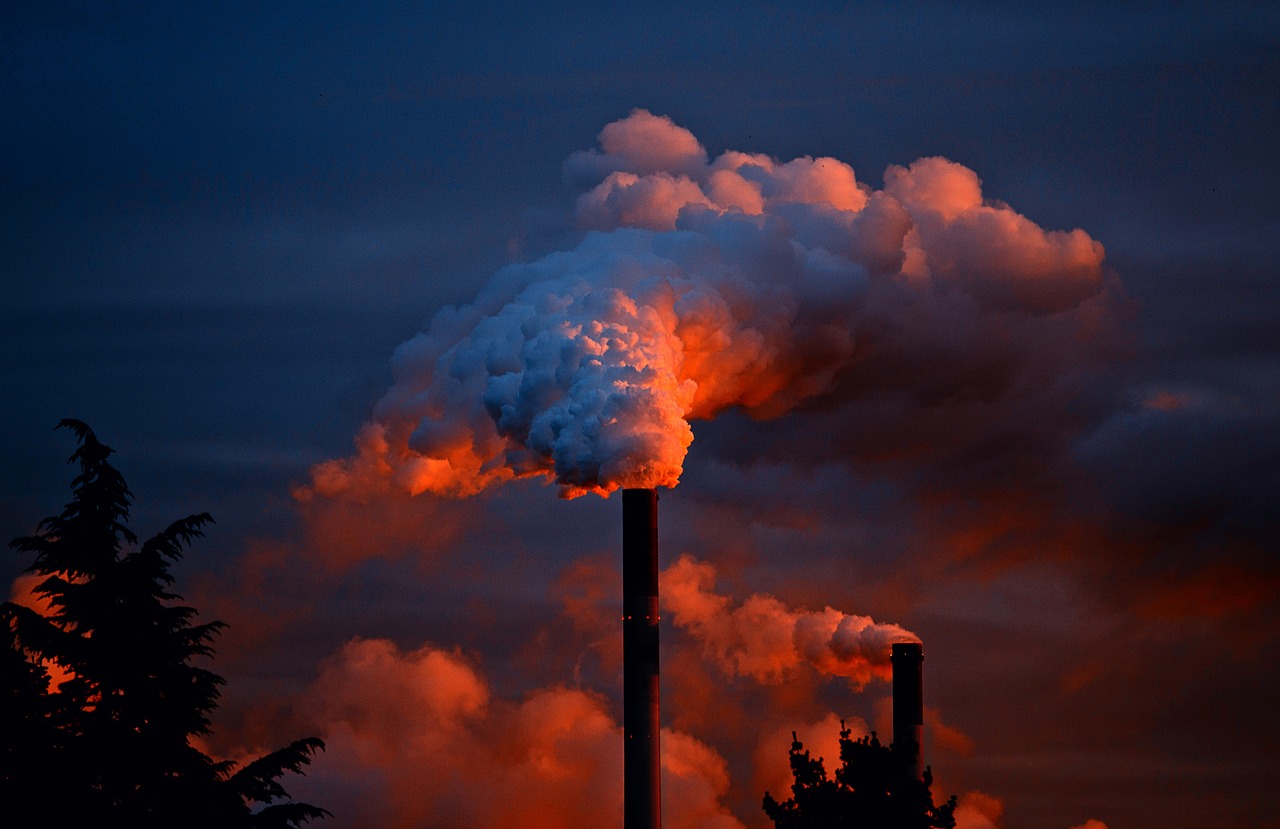
Despite the horrific loss of life and massive damage caused by recent back-to-back hurricanes Milton and Helene, Trump has also promised to dismantle the Environmental Protection Agency—in line with Project 2025’s goals. Trump has repeatedly called climate change a “hoax”, “one of the great scams.” Oil, he says, is the “liquid gold under our feet.” Not only has he no interest in taking action to reduce America’s carbon footprint, he’s openly pledged to approve all permits to “drill, baby, drill” on our public lands and waters, allow more gas pipelines to be built, and keep those coal plants burning. Such policies will fill our air, and lungs, with “greenhouse gas emissions equivalent to another billion cars,” The New York Times reports.

Kamala Harris calls climate change an “existential threat” that our country must combat and has promised to build on the billions of dollars the Biden Administration has already invested in clean energy. Indeed, as vice president, hers was the tie-breaking vote in the Senate for the Inflation Reduction Act, which aims to reduce greenhouse gas emissions to 40 percent below their 2005 levels by the end of this decade. Her dedication is proven. In her role as California’s attorney general, she went after Big Oil for environmental violations.

A Very Public Enemy: Social Media Conspiracy Theorists and Their Lies

Charlie Warzel, in his recent piece for The Atlantic, “I’m Running Out of Ways to Explain How Bad This Is”, laments: The truth is, it’s getting harder to describe the extent to which a meaningful percentage of Americans have dissociated from reality. As Hurricane Milton churned across the Gulf of Mexico last night, I saw an onslaught of outright conspiracy theorizing and utter nonsense racking up millions of views across the internet.

It’s no secret that QAnon, Infowars’ Alex Jones, Steve Bannon’s War Room, and a host of other conspiracy theorists have been spreading lies and outrageous propaganda since the rise of Trump in 2016. Infowars’ Alex Jones recently claimed that Hurricanes Milton and Helene were “weather weapons” unleashed on the East Coast by the U.S. government.

Indeed, purposely seeding lies on social media has the potential to be deadly as happened in Chimney Rock, North Carolina in the wake of Hurricane Helene. A rumor rapidly spread that FEMA rescue workers were not really there to help the people of this village, but to destroy what remained of the town and bury the bodies beneath the rubble. Yes, I know. Utter madness, right? But enough people bought the lie to bring FEMA rescue efforts to a halt for 24 hours as threats of a local armed militia—raised to murder the government workers— persisted despite authorities and news outlets insistence that the rumors about FEMA were 100% false. What was true, apparently, was that National Guard troops, called in, came across several trucks of armed militia claiming they were hunting down FEMA workers.       

FEMA workers did return the next day to clear roads for search-and-rescue teams, but due to the death threats, they abandoned their normal practice of going door to door. A Forest Service official from Asheville said that people have been shouting “We don’t want your help” at rescue workers delivering aid.  

This Is Not Who We Are

How is it that the values, opinions, and wishes of the majority of Americans are increasingly not reflected in our laws, our courts, or the GOP platform? Most Americans oppose a federal abortion ban. Indeed, an increasing number of us support access to abortion for any reason.

Two-thirds of Americans also believe we should make developing renewable energy—wind, solar—a priority, and cut back on oil, coal, and natural gas. In a 2022 Pew survey, 69% of Americans supported the U.S. taking steps to become carbon neutral by 2050, a goal President Biden called for at the outset of his administration.

The majority of Americans, 71%, approve of labor unions and support workers’ right to organize.

So why are we always having to fight for what the vast majority of us want? It’s time to revisit the Supreme Court.

Dark Money: Lights Out for Democracy 

While conservative justices have dominated the Supreme Court for all of the new century, two of their decisions stand out as having special relevance—and a potential threat—to the 2024 elections. First, the Court’s 2000 decision to reverse a Florida Supreme Court order that mandated a manual recount of the states’ ballots for presidential candidates Al Gore and George W. Bush. Instead, SCOTUS simply stopped the recount and handed the election to Bush. The Supreme Court (5-4) chose the president of the United States!

Second, the enduring damage to our elections and, thus, our democracy was rendered in the 2010 decision I mentioned up top, Citizens United v. Federal Elections Commission (FEC). Big money is nothing new in elections. The wealthy have always been able to open their wallets wide to the candidates of their choice, but as a 2019 report from the Brennan Center for Justice notes: “That sway has dramatically expanded since the Citizens United decision, with negative repercussions for American democracy and the fight against political corruption.” The decision opened the door, via two other decisions in the months following, for a vast flood of “dark money” through the creation of super PACs, those shadowy orgs that keep their donors’ identities secret. By the 2012 elections, more than $300 million of dark money was in play compared to less than $5 million in 2006. Dark money groups also allow foreign countries to invest in our elections “under the radar.” Russia. China. Saudi Arabia. Anyone with an interest in the outcome.

In that same report, author Daniel I. Weiner laments that a very small group of super-wealthy Americans now wield vast power “while many of the rest [of us] seem to be disengaging from politics”, perhaps believing that our vote doesn’t really matter.

Vote Up and Down the Ballot

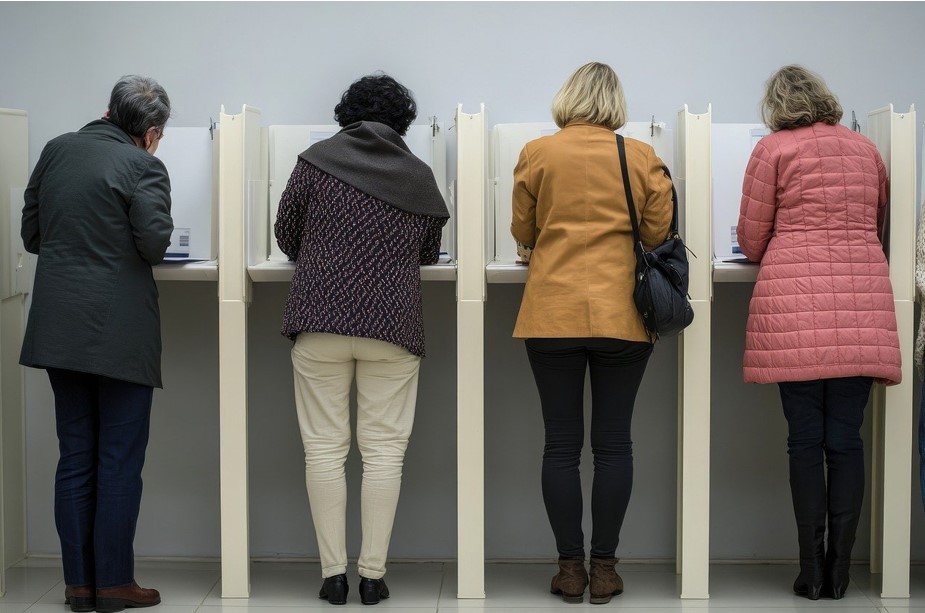
Believing our vote doesn’t really matter. If anyone reading this feels that way, I beg you to reconsider. Nothing could be more false. Our participation—every one of us—has never been more crucial than it is right now. That’s not hyperbole. In our 248 years, we have never had a presidential candidate threaten to send the military after members of the opposition party or toss them into concentration camps as Trump is promising. Never had a candidate who repeatedly praises Hitler and wishes he had generals like the Führer. Everything is at stake on November 5—our democracy, our health and safety, our very survival as a country, our planet.  

I would further implore you to vote up and down the ballot for democracy. Many good proposals in the past four years have been thwarted by a GOP House intent on wrecking Biden’s presidency in order to re-install Trump. When (putting a positive spin on it) Kamala wins, she’ll need a Congress—House and Senate—whose main objective is serving the American people, not acting as a roadblock to everything she proposes. State legislatures matter, too. Many of the efforts in the past decade to kill bills that would have helped their state’s citizens have come from right-wing state legislatures.

Democracy, it’s not a lost cause. Sophia Lin Lakin, director, ACLU Voting Rights Project, in a recent email wrote: I know many of us are concerned about what might happen on Election Day. I want to assure you: our legal team is working around the clock to protect voters and make sure every vote is counted. Lakin reminds us: In the wake of the 2020 election, our team filed more than 30 lawsuits to protect voters and safeguard the outcome of the election.

No Middle Ground

It takes decades, centuries, to build a true democracy. It takes only one election to lose it. To lose our right to speak up for what is humane, fair; to protest against injustice and cruelty; our freedom to worship as we choose or not to worship at all; to lose the opportunity to ever vote again. If you elect me, Trump has promised his followers, you’ll never have to vote again. Could any statement be more chilling in its implications? No need to ever vote again because you will not be given a choice again.

America was founded with the avowal that we would not be ruled by kings but by the people, a democracy. The Supreme Court’s decision to grant Trump unlimited powers should he become president again, though not unexpected, stunned millions, and not just Americans. As dissenting SCOTUS Justice Elena Kagan (an Obama appointee) remarked afterward: “Wasn’t the whole point of the Constitution that the president was not a monarch and was not supposed to be above the law?”

Abolitionist Wendell Phillips, speaking to the Massachusetts Anti-Slavery Society in 1852, cautioned: “Eternal vigilance is the price of liberty. Power is ever stealing from the many to the few.”

Between the threat of fascism and the promise of democracy there is no middle ground.

How Can We See the Sky & Other Mysteries

There are more things in heaven and earth, Horatio, 
Than are dreamt of in your philosophy. 
 Shakespeare, Hamlet (Act 1, Scene 5)

[NOTE: Yes, this is not new, but then who among us is? So, enjoy the opp to revisit this immortal post and let yours truly go galavanting among the ancient ruins of Rome for a few weeks, with nothing more pressing to ponder than which of the 10,000 delicious Italian dishes on offer should I choose for my next meal?]

Alert readers of this blog may recall a post (“Everything Takes as Long as it Takes”) where I shared a sample of the stuff I scribble on scraps of paper which I then leave all over the house. That particular scribbling noted that One day you’re 30; the next, you’re 60, and yet 10 minutes can seem like forever.

Observations like this take up not inconsiderable real estate in my head. I call them “mysteries.”

I thought it might be a nice diversion from the current journey we seem to be embarked on—going to hell in a handbasket—to share some of these musings with you. Also, I’m packing for a trip and penning advance blog posts at a rate Stephen King would envy. I MYSTERIES writer working harddon’t have time to research, say, the validity of Einstein’s theory of relativity or to follow up on a CNN article Drinking more coffee leads to a longer life, two studies say. I’m willing to take CNN at its word. The press in NOT the enemy of the people, and coffee is our friend.

Excuse me, while I get a refill.

Okay, I promised you mysteries.

Mystery #1: How Can We See the Sky?

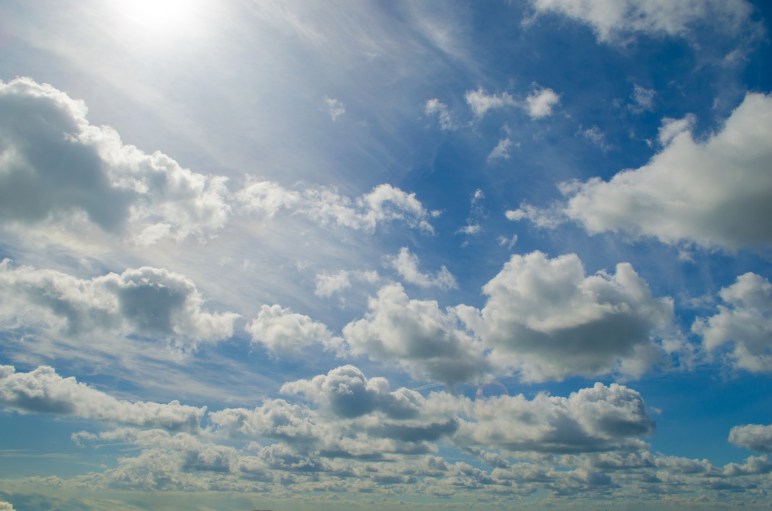
I was sitting out on the lawn at Tanglewood (summer home of the Boston Symphony Orchestra) in July, sharing a picnic with Ed and listening to Mozart’s Piano Concerto No. 24 in C minor. As it was early evening in high summer, the sky above me was still amazingly blue, feathered with clouds that looked like someone just ran a comb through them. Cirrus clouds, I think (I’m a writer, not a scientist). They arced overhead, a perfect dome, the sky meeting the ground in a complete circle around the Tanglewood lawn, our chairs at the exact center. How cool is that?

It’s rare to have such an open vista without buildings or other debris clogging up the sightlines. I hadn’t quite realized before that wherever we are, it’s like we’re inhabiting part of a snow globe. That Earth appears to be a ball inside another ball (the sky) which encompasses it completely. MYSTERIES Skyball CROP

Actually, we never experience Earth as a ball. More like a plane, bisecting a sphere. (To clarify this gibberish, see illustration.)

The Boston Symphony Orchestra moved on to a Tchaikovsky symphony (the Fifth, in E minor—I was paying attention, more or less) while I jotted a note on my program: How can we see the sky?

I pondered this through the Andante-Allegro movement and soon realized that, like Pandora’s Box, this question opens up a slew of thorny conundrums:

If Earth is a ball inside the SkyBall, why can we never touch the sky, even with a very tall ladder or, say, from the roof of the Empire State Building? We can’t even touch the sky where it meets the ground at the horizon because, like a pesky older sibling, the horizon taunts us, moving away as we move toward it.

MYSTERIES ladder to sky photo-1504257365157-1496a50d48f2
Samuel Zeller

And where oh where is outer space? How does this blue, cloud-scraped sky—a visually opaque ceiling—obscure the cosmos of stars and planets that glitter and spin on a decidedly black background?

This is not as stupid a question as it may first appear. Recall the photos of Earth from outer space—there is no “sky barrier” in the way. Maybe a wisp of cloudy looking stuff but you can still see Earth—the oceans, the continents.

MYSTERIES image of earth from space vSrCIE__                                   By the Finale (Andante, Allegro, Moderato), the SkyBall had vanished, leaving me to view a sprinkling of stars light years away. Where did that opaque blue barrier go? Is there a day-to-night transparency button somewhere operating on a timer? And when the night is overcast, does that mean the transparency gizmo is out of juice and needs new batteries?

Like I said, it’s a mystery.

Mystery #2: Are We Right-Side Up or Upside Down? 

Okay, gravity is the stuff that keeps us sticking to the earth—our feet squarely glued as sure as Newton’s apple to whatever patch of turf we’re standing on—but are we right-side up or upside down?

Like most of us, I grew up with those cartoons of little kids holding hands encircling the globe, so popular on UNICEF holiday cards. Being from the northern part of North MYSTERIES children standing on the globe people-2129933__340America, I wasn’t too worried because Michigan was fairly high on the top side of the EarthBall. But those kids in Algeria are living at a perilous slant, and the ones from New Zealand and Patagonia have blood rushing to their little skulls 24/7.
As my age advanced to double digits, I began to question such two-dimensional representations. Was north always up and south always down? Up compared to what? Down from where?

We are citizens of the universe, a multi-dimensional space without end, as scientists tell us (and questions within questions—how do they know this?). So, what exactly is “right-side up” in outer space? Does it change with the movement from day to night, the seasons, the place where we live?

MYSTERIES UP credit the mag G7NReCTW_400x400
thiswayupmag.co.uk

And if there is no right-side up in space, are we always upside down or only sometimes?

Is it this constant switch in equilibrium that creates the need for Excedrin, Prozac, a lobotomy? Or just these constant questions?

I don’t know. Do you?

Mystery #3: How Do We Go to Sleep, and How Do We Get Back?

The word on the street is that even the most exciting things—chocolate, sex, bungee jumping—lose their allure, their mystery, if they are repeated routinely.

Well, it’s hard to find a more enduring routine in life than sleep, and yet sleep remains a great mystery. How do we get there? How do we get back? What exactly is there?

If you think this is just me inventing puzzlers in an effort to slap a blog together so I can get out of town on time, try this experiment: 1) Place a notepad and pen by your bed. 2) Tonight, write down the exact time you “go to” sleep.

Not as easy as you thought, eh?

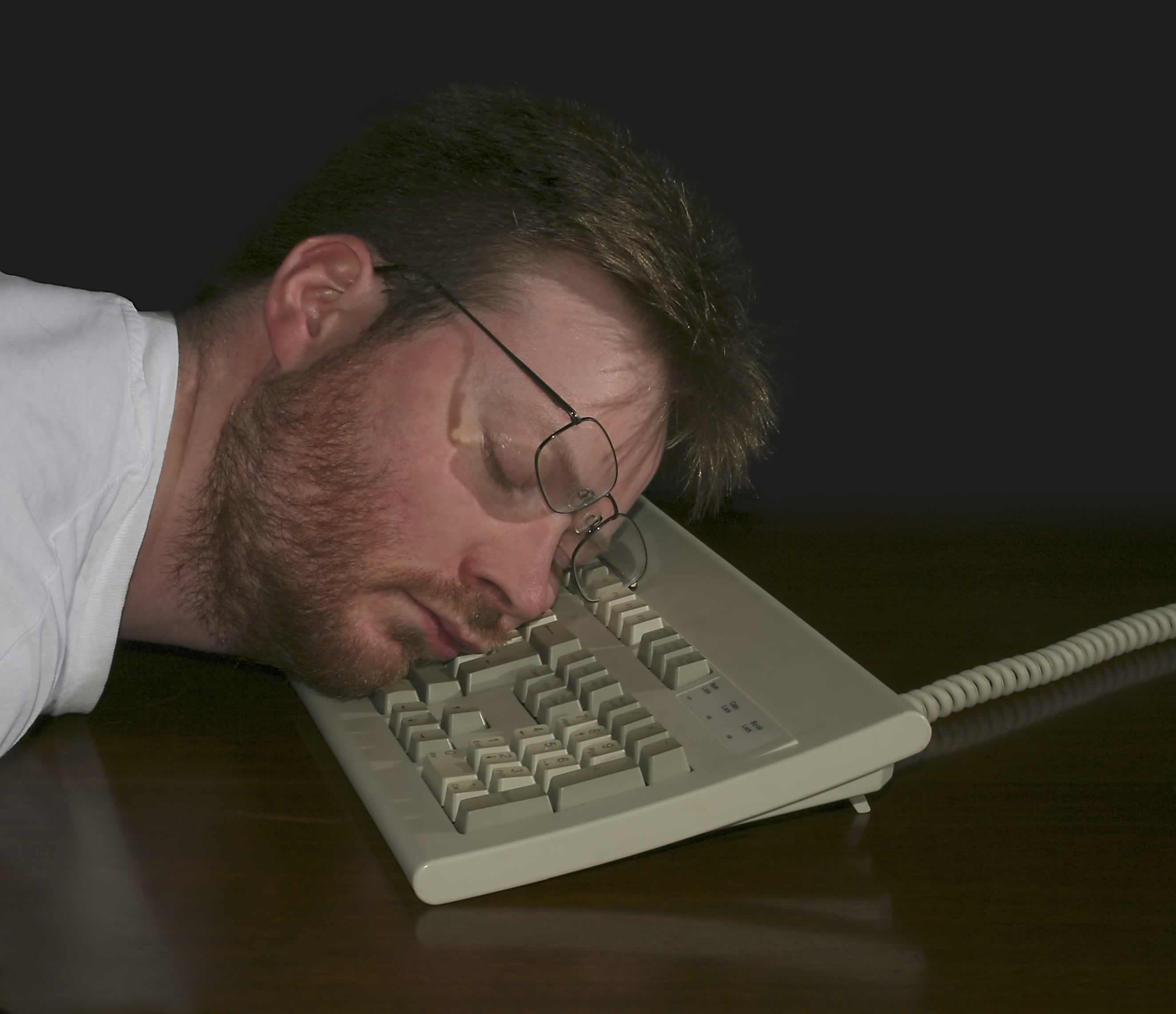
MYSTERIES asleep on keyboard 273995We don’t consciously relinquish our consciousness. It just sort of “happens.” Like walking backwards unawares toward a steep drop-off. That last step… We don’t know what hit us. And we don’t know we aren’t awake wherever it is we “go to.” Except once in a while we realize, “Hey I’m in a dream. I can behave as badly as I like and it doesn’t count.” Which realization is almost as weird as going to sleep itself (though it does show a marvelous talent for taking advantage of unexpected opportunities).

When we’re in dreamland, how do we tune out the burps and beeps of the real world around us? While we sleep, life certainly continues on its merry, noisy way. Thunderstorms thunder. Fire engines siren past. But nothing registers unless it’s REALLY LOUD.  Like the time I was awoken by the bedroom radiator CLANGING in a way it had never clanged before. The sweet oblivion of sleep dropped away in a heartbeat as I realized geysers of boiling water were shooting up from that radiator, at 5:14 a.m.MYSTERIES woman woken up 2751E1EE00000578-3027308-image-m-27_1428317578871

Do you know how hard it is to get a plumber at five in the morning? Those 24-hour emergency services listed online? Just phone check-ins that contact a plumber when he or she rises at a more civilized hour.

We surrender our consciousness each night never doubting it will mysteriously “return” in the morning. Now that’s the kind of deep faith most religious proselytizers would envy.

But how is it we do “return” to the real world each day? And why don’t we fall out of bed in our sleep? We certainly move around in our sleep, so why aren’t we hitting the floor in great numbers, regularly? This has never happened to me, but it did happen to Ed once when we were taking a weekend in NYC. Believe me, it was frightening—waking up suddenly to see him tumbling over the edge of the bed, with a nanosecond to hope he didn’t take his eye out on the corner of the nightstand (he didn’t, though he did suffer a nasty cut on his cheek).

Sleep—there’s a Gordian knot of mysteries involved here.

Mystery #4: How Do Cats Know Where to Go?

As mentioned in my August post (“I Always Wanted an Orange Kitten”), I have had many cats in my life. Most of them were indoor/outdoor creatures, which means there came a day in their young lives when I opened the back door and allowed them to explore the wide world beyond. Without exception, they all returned after a few hours. No one got MYSTERIES cat reading 10e232cb9fc5893a8bee5bccc7cbcdc1--reading-books-cat-readingconfused about which house was theirs—the mock Tudor in need of a paint job, or the Cape with the sagging steps and the rusting swingset?

How do they do it—how do cats unerringly zero in on their house wherever they’ve wandered? I mean you wouldn’t want to try this with your three-year-old.

This mystery deepens as I recall an afternoon in my college days. I went with a carload of friends to a party, a cookout hosted by a couple who lived in the university’s married student housing.

Several hours into the event, my hosts asked if someone would ride down to the convenience store six blocks over to pick up some more drink mixers. They offered the use of their bicycle. I volunteered and off I went. Finding the Mini-Mart was easy. It was up on the main drag. Finding my hosts’ house again—that was the challenge.MYSTERIES houss all alike suburbia

Like cats released into freedom for the first time, I was operating on limited information. Having hitched a ride to the party with friends, I hadn’t bothered to check the house number. Or the street name. Married student housing was laid out in nothing resembling a grid, and all the houses were identical. All 500 of them.

I rode around for a while, Cokes and tonic water warming, bagged ice melting in the bike’s basket. I would probably still be riding if one of my hosts hadn’t chosen the moment I was circling his circle for the hundredth time to set out an empty keg on the front porch. I have rarely been so glad to see anyone.

Cats. Mystery is their milieu. The Egyptians held them sacred. Believed they guarded Egypt from invaders. Next time you see a cat, bow your head in acknowledgment of the inexplicable powers they hold, including the ability to always find home.

 Mystery #5: What Are We?

Okay, one more.

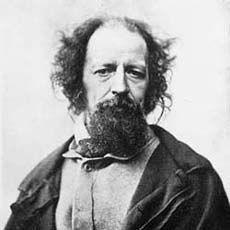
Some years back, a friend invited me to an art exhibit at Smith College. I can’t recall exactly what the theme of the show was, but it included a photograph of the poet Tennyson taken after his death.

In the photo we see Tennyson’s head resting on a pillow, eyes closed, a peaceful expression on his face, as if he were just napping (recall Mystery #3). But he’s dead.

MYSTERIES Tennyson ca40b7888a890424a1a96e5807c0ad52-alfred-lord-tennyson-famous-poemsI stared and stared at that still face. Looked at some more of the exhibit. Returned to Tennyson. There he was—head, shoulders, torso—all of him except the thing that was him. The “Tennyson thing.” The thing that was a poet rather than a cab driver or a hip-hop artist. The thing that preferred Skittles to Milk Duds, or favored the Yankees over the Mets. Okay, I’m improvising here—well, fabricating wildly—but the question is: Where did the mind-personality-heart that was Tennyson go? How was it there one moment and—poof!—gone the next?

I relate all this as background to the greatest mystery of all: What are we?

The startling glimpse I had into this most amazing of riddles came while I was visiting London twelve years ago with my youngest. As well as enjoying galleries and museums, parks and pubs, Lauren was talking to admissions people at several UK universities. This particular day, they were talking to someone at King’s College London about studying microbiology (they wound up majoring in public policy in the States, but that’s a completely separate mystery and nothing to do with the topic at hand).

While they were chatting with the admissions folks, I wandered around and discovered a little anatomy “museum” on one floor. A kind of 19th century exhibit of spare parts—like a Victorian penny dreadful. Among the displays I recall were stomachs and brains, lungs and large intestines, hearts and kidneys. There was even a set of fetal Siamese twins. All floating in some murky preservative in voluminous glass jars.

It brought me smack up against all my assumptions about the species Homo sapiens, and changed my head 180.MYSTERIES body parts Front_View.jpg24e6c945-1e2a-4404-af25-36828fb41797Original

Up to that moment, I thought of human beings in the lofty, ethereal way you might expect from a lit major/writer/daydream believer. We were ideas and dreams, philosophical meanderings and heart-throbbings. But as I stood, gazing at these jars of stuff that looked nothing so much as a lot of cruddy dilapidated hot water bottles and crusted tubing, I had to admit: That’s us.

And when that junk stops working, the game’s over.

The mystery is how something as mentally and emotionally complex, as creative and resourceful as us emerges from what appears to be about five dollars’ worth of spare parts.

You can see how a Hitler or a Trump might come out of this muck, but a Tennyson or a Van Gogh? A Nelson Mandela or a Frida Kahlo?

And yet it is the truth of us.

Mysteries. Life is full of them. I embrace them. I like the way they keep my brain on a Socratic buzz—asking and answering questions, which then generate more questions—as I puzzle out the oddities of this world.

It all comes down to this: When the SkyBall goes transparent tonight, giving way to a universe of stars, I’ll be thankful that whichever way my head is facing, I don’t fall off the planet. And when I come back from the land of sleep tomorrow morning, however that happens, I’ll be grateful for another day, crossing my fingers that the mucky parts and crusty tubing keep on ticking.

THE MADNE$$ OF MONEY

The first day of the Paris Olympics, as ESPN was interviewing Americans in the crowd, one man announced that he had bet a friend $175,000 on the outcome of some event and won.

A hundred and seventy-five thousand dollars!” I exclaimed to Ed who was sitting next to me.  “Think of all the food, the medical care, the shelter that money could have bought for people who are hungry or sick or homeless, and this guy blows it on a bet, a bet!”

I will not identify the man because the issue here is much bigger than any one person. The issue is about insatiable greed, the unending need to trounce all comers, and beneath that, a vast insecurity. As Genghis Khan is believed to have said twelve centuries ago: “It is not sufficient that I succeed—all others must fail.” Some might call it the spiritual poverty of excessive wealth. I just think of it as the Billionaires Disease.  

A Bottomless Insecurity

The first symptom I detected of our American in Paris having succumbed to The Billionaire’s Disease was his need to announce—in a worldwide broadcast—the exact dollar amount of the wager he’d won. He could have said, “I bet an old friend on that last event and won.” But he wanted us, needed us, needed millions of strangers to know that he was so wealthy, such a major wheeler-dealer, that $175,000 was a trifle—chump change—he could gamble and lose if it came to that. Wow! (he imagines), all those people listening will envy me, will wish they were me. But even if this were true, envy is not the same as esteem. And what I believe people afflicted with Billionaires Disease most crave is the esteem of others—millions of strangers—because deep down inside they doubt their own true worth as a human being.

So Much, Too Much: A Boundless Greed

And it’s never enough. The payouts, the ever-increasing profit margins, the millions, the billions. The need for more and more and more, it never stops, is never satisfied. Why have only four homes when you can have five? Why restrict yourself to one private jet when you can have a fleet of them?

Last fall, the world’s second richest man (with a net worth of $209 billion), Amazon founder Jeff Bezos, purchased a seven-bedroom, 14-bathroom mansion in Miami-Dade County, Florida’s exclusive gated community, Indian Creek. It is the third property he owns on this man-made barrier island. In addition (naturally) to his numerous other mansions scattered across the U.S. from Manhattan to Beverly Hills.

Even the “poorer” of the uber-wealthy (those whose net worth is a piddling $30+ million) can boast of owning 3.7 homes on average. And the high prices they can afford to pay, combined with the number of properties they purchase, are one factor driving up single-family home prices beyond the reach of the average American. At a median price of $431,000, some three-quarters of all homes on the market now have become the impossible dream for most Americans.

What’s Mine is Mine, What’s Yours is Mine

But it’s not just that the super-rich are buying multiple homes for themselves. They’re also buying large tracts of single- and multi-family housing across the country at bargain prices (cheaper by the dozen!) via their hedge funds and private equity firms. In the case of single-family homes, hedge-fund groups turn the houses into rental properties for a never-ending stream of revenue, thus forcing America’s middle class to keep pumping their earnings into enriching the hedge-fund managers while destroying their own chances of building the equity they need to buy a home. Private equity firms, on the other hand, tend to buy up apartment buildings, then jack up the rent far beyond the residents’ ability to pay. In both instances, the big-money landlords have a reputation for letting these properties fall into disrepair and evicting any tenants who complain. They then unload the buildings at a substantial profit.  

If young working people, including professionals, can’t buy homes, and many struggle to pay the steep rents, what is happening to Americans making minimum wage, people who are between jobs at the moment, people with disabilities? The U.S. experienced its biggest increase—12 percent—in homelessness last year, with one in every 500 Americans (roughly 653,000 total) left stranded on the streets. The highest number since tracking began in 2007.                          

All of which makes the Supreme Court’s June 28 ruling that cities can ban the homeless from sleeping and “camping” in public spaces the more invidious and downright inhuman.

Criminalizing the Need to Sleep      

The 6-3 (surprise, not!) SCOTUS decision overturned lower court rulings that held criminalizing homelessness to be “cruel and unusual” under the Eighth Amendment. After all, people must sleep. And if one has no options for lodging, what can one do?  

The case was brought by Grants Pass, a city of about 40,000 people in the mountains of southern Oregon. Grants Pass has a longstanding prohibition against sleeping or “camping” in public spaces, including parks. One is not even permitted to use a blanket or pillow to nap on a bench.

Grants Pass claimed the lower courts’ rulings encouraged homelessness (as if this were something ‘desirable’ many people aspire to) and endangered public safety. But that’s not the whole story—just the part the city’s elite want you to hear. The truth is lower courts had ruled that cities have a right to restrict when and where people can sleep, but they must first offer these homeless citizens adequate shelter. Trouble is, the city of Grants Pass has no public shelter now, and the shelter it offered before 2022 had just 25 beds. This facility has now been taken over by UCAN, a private non-profit org, who added eight-and-a-half “tiny homes” to shelter up to 17 more people, with a community building that includes a bathroom, kitchen, and showers. And that’s it. Guess we should be glad there’s a bathroom.      

Forty-two UCAN shelter beds? Grants Pass has roughly 600 homeless folks on any given day, as the Supreme Court noted. And Grants Pass is just one of many cities that can now crack down on those who can’t afford the spiking rents that further enrich the already wealthy. A humorous line from my college days ran: You can sleep in your car, but you can’t drive your house. Not so funny these days. Many cities now forbid sleeping in your car in a public parking lot or street parking space.

Money for Prisons but Not for Housing

So, what happens to those without a home or at least a room to rest their weary head? In the irony of ironies, Grants Pass policy is to fine these unfortunate folks $295. Multiple offenses will result in criminal prosecution with up to 30 days in jail. I’d like to point out here that people sleep rough because they don’t have $295. I strongly suspect if they had somewhere better to go, they would go there. I would also argue that if a city has the money to imprison innocent people down on their luck, it could use those same funds to help them.

As Diane Yentel, president of the National Low Income Housing Coalition, asked: “Where do people experiencing homelessness go if every community decides to punish them for their homelessness?” And Ed Johnson of the Oregon Law Center, the org that sued Grants Pass on behalf of the accused homeless, noted that a criminal record imposed by the city makes it even harder for these people to ever get housing. He also laid the blame squarely where it belongs: A severe shortage of affordable housing for half of all tenants. Housing that the richest of the rich have gobbled up to make themselves still richer. Funny, if you have millions, all laws and restrictions disappear—poof!   

You Got a Few Centuries—or Ten-thousand Years—to Play Catch-up?

As I was outlining this month’s post, I got an email from the AFL-CIO (The American Federation of Labor and Congress of Industrial Organizations). As it speaks so eloquently to the sickness—and cruelty—of Billionaires Disease, I will reprint it here:

Do you know how long the median employee in America would have to work in order to earn what a CEO makes in a single year?

On average, the median employee of an S&P 500 company would have had to start working in 1755 (prior to the start of the American Revolution) to earn what the average CEO received in 2023. At the worst offending company this year, the median employee would have had to start working in 8,354 B.C. to earn what the CEO made in a single year. In 2023, CEO pay at S&P 500 companies increased 6% over the previous year—to an average of $17.7 million in total compensation.

We Can No Longer Afford the Uber-Rich 

In explaining his decision to stand with Grants Pass and against the homeless, Justice Neil Gorsuch wrote: “Homelessness is complex. Its causes are many. So may be the public policy responses required to address it … A handful of federal judges cannot begin to match the collective wisdom the American people possess in deciding how best to handle a pressing social question like homelessness.”

Complex? Really, not so much, Neil. Homelessness is the result of greed and indifference to the fate of our fellow human beings by those who possess the means to alleviate their suffering. After all, there’s no profit to be derived from helping those folks.

As for federal judges not possessing the collective wisdom of the American people to deal with homelessness, I recall you ruled against the Chevron doctrine that same day, declaring that the courts’ fundamental duty to interpret the law overrode federal agencies’ interpretations, thus setting yourself up as “experts” on an array of complex issues from drug safety to environmental poisons to nuclear weapons. The thing about homelessness, Neil, is it doesn’t require a Ph.D. to see what’s needed. All it requires is a conscience to call out wrongs when we see them and a heart to care for our fellow human beings.

“It is not sufficient that I succeed—all others must fail.” Genghis Khan’s words echo down through the centuries. Billionaires Disease is a lethal sickness. It’s killing the planet—the oceans, the skies, the land. It’s killing the animals, the birds, the sea creatures. It’s killing us. And we can no longer afford to let the unbridled greed of the few destroy the right of the many to life, liberty, and the pursuit of happiness. They will take everything and still it won’t be enough.    

Joy Is A Muscle You Gotta Exercise

In many ways, increasing the joy in your life is no different from building the strength of your abdominal muscles or biceps. The secret to both is daily exercise. The more time you devote to joy, the lighter your heart feels, the stronger you are when the going gets tough. The best part? You don’t need any special equipment or fancy workout gear. There are no fees. And you start to enjoy the results right away.

Exercise #1: Breathe Deeply and Reflect

Turn away from all distractions for a moment—social media, house and yard chores, errands that need running, problems that need solving. Then take a deep breath and think of all the things you love to do.

Now, jot them down, these things that bring you joy. (My list includes traveling with Ed, writing fiction, reading, art projects, walking and biking, visiting bookstores and art galleries, playing guitar, and neighborhood get-togethers—I have great neighbors).

Continue to breathe deeply and exhale slowly as you imagine yourself engaged in each of these various pleasures. Feel the happiness they bring, the sense of well-being, a lightness of spirit.

Then reflect on how much time in the last week, the last month, the last year you’ve spent enjoying each of these things you love? If you’re not engaging regularly with the activities and people you most enjoy, ask yourself: What’s stopping me?

What Gets in Our Way: The Joy Blockers      

Endless red-tape: Ever since the pandemic, when real-people assistance vanished and most companies went to automated answering machines—those maddening robot “service reps” who demand you say “I’m a member” or “Question about my bill”, and then insist they don’t understand what you said—ever since then, everyone I know has spent hours and weeks, even months, trying to straighten out the simplest cockups. High frustration and a major waste of time. A real joy drain.

I recently racked up 16 hours in the course of one month trying to untangle incorrect dental billings. My dentist is fabulous, but the business office—whewee! They want you to pay every bill, in full, at time of service while they take their sweet time sending in the claim to your insurance. Since over a period of two months, this would have involved my shelling out thousands of dollars upfront, I resisted. And a good thing I did, as my insurance covered the sum in question and a bit more. But the 16-hour loss was real, and the accompanying aggro, stressful—all the mornings I woke up thinking about how I could fight their constant demands to pay now.

Mundane tasks: The weeds are taking over the garden. The cupboard is bare—someone must get to the grocery store pronto (you can only order so many take-out pizzas!). Your desk is buried beneath an ocean of papers. The laundry basket is overflowing and threatens to swamp the surrounding territory. It’s always something, as the saying goes. And days disappear, never to return, in the time-suck of our to-do lists as we dream of the things we would love to be doing. If only. Last week, my “Lazy Susan” broke down and an entire afternoon was lost to emptying the shelves, fetching stacks of books to leverage the top tray from beneath, and when that failed, tracking down a jack small enough to fit the space, then squeezing head and shoulders into the gap, groping for the pinhole at the back in near darkness, all the while hoping the top shelf wouldn’t collapse on my neck…

Work: In 1866, the newly-formed National Labor Union, a group composed of workers both skilled and unskilled, campaigned for Congress to enact a law limiting the workday to eight hours “in all States of the American Union.” The NLU disbanded seven years later, mission not accomplished. More than two decades would pass before the government even bothered to track workers’ hours. Among their findings? Full-time factory workers were racking up an average of 100 hours a week. Surely that would convince the powers-that-be. Nope. It would take almost another fifty years before Congress passed the Fair Labor Standards Act of 1938, limiting the workweek to 44 hours (amending it two years later to 40 hours) and mandating overtime pay for hourly workers.

And now here we are—84 years on—and that 8-hour day hundreds of thousands struggled for, even died for? The 40-hour week? The two-day weekend? All fading fast in the rearview mirror. Thanks to a combination of COVID, technology (smartphones and Zoom meetings), and just plain corporate greed, many professionals are clocking longer hours—in excess of sixty per week in a range of competitive industries, like tech, finance, law. Working from home—remember how great that sounded in the early days of the plague?—has erased all boundaries. You’re always “on call.” And it’s not only white-collar employees doing the grind. Many factory workers in the South, where unions have always been suppressed, are reporting twelve-hour days, and not just Monday through Friday.    

Exercise #2: S-t-r-e-t-c-h The Way You Think About Time

Many of us plan our days around a to-do list—a litany of work, errands, house and garden chores, phone calls to straighten out messes like the bollixed-up dental billing I mentioned earlier—promising ourselves day after day, month after month, year after year that we will get around to the things we love, the activities that bring us joy, the sense of a life well-lived… as soon as we finish that day’s to-do list. And then the day ends, and all we can do is hope for a happier outcome tomorrow.

But, just for a moment, s-t-r-e-t-c-h the traditional concept of the to-do list. Expand what must be done (according to whom?) to include what you’d love to do and start your list with those activities. Of course, you can’t do everything you’d love to do in any one day, but giving priority to 2-3 joyful things daily and limiting the “have-to” tasks—the mundane, the tedious, the downright irritating—to one or two items brings immediate relief. I began doing this last month and it instantly lifted my spirits. Which gave me more energy. Which made it easier to accomplish the “have-tos.” I also reframed larger chores—like gardening, which as all gardeners know, is never-ending throughout the growing season. But I put a time limit on the task. No more than three days a week, and then for only 30 minutes a day. There will always be weeds.

Among a number of activities I’ve long wanted to do is create a memorial vase for my cats, Tibby and Coosh. Tibby died three years ago. Coosh followed seven months later. But it took a whole year before I managed to purchase the vase, and another year lapsed before I got around to creating the design. It wasn’t until this summer—after committing to put joy at the top of my to-do list—that I actually put pencil and paintbrush to pottery. By working in half-hour spurts, I’ve nearly finished the job!  

If you work for someone else, especially in those long-hour jobs where no one seems to have heard of the weekend, you still need joy. In fact, you especially need it. Break major work projects into steps. A day for X, a day for Y. List joy-boosting activities for the “down-times”—waiting for a client call, the half-hour gap before the Zoom conference. Without a list of joyful items at the ready, we tend to space out and waste those opportunities. And definitely tilt what days or half-days you do have free to the joy side.  If you have one of those 6-days-a-week/12-hours-a-day factory jobs mentioned above, all I can say is vote for candidates who believe in labor unions. You have a right to a life, a right to personal happiness. You are so much more than a cog in a machine.

Of course, there will be the occasional, unavoidable time-eaters: dental and medical appointments, car repairs, the lazy-Susan fiasco I mentioned above. But making things you love to do a planned part of everyday life will give you the strength you need for the final exercise here…

The Heavy Lift  

No getting around it—American democracy has taken a couple of brutal hits in the past month. Not from some outside aggressor bent on taking “the land of the free” down a couple of pegs but from our own Supreme Court. Foremost, on July 1, six of the nine justices charged with upholding our Constitution and protecting the rule of law, decided that a U.S. president has NO limits on their power. They simply cannot be prosecuted or held accountable in any way for breaking the law, including—and I am not making this up—ordering the murder of political rivals, which Trump’s legal team insisted would be his prerogative if re-elected. So much for the Ten Commandments far-right Louisiana governor Jeff Landry has declared must be posted in every public school classroom by 2025. As SCOTUS Judge Sonia Sotomayor so eloquently noted in her dissent: “In every use of official power, the President is now a king above the law…This majority’s [decision] will have disastrous consequences for the presidency and for our democracy…With fear for our democracy, I dissent.”

This thoroughly unAmerican and totally antidemocratic ruling was preceded by another dangerous decision just two days before when SCOTUS overturned the 1984 Chevron v. National Resources Defense Council ruling which said the federal judiciary must defer to a government agency’s interpretation of a law in cases of ambiguity. This new decision means that if, say, Big Oil wants to challenge the EPA over standards or practices that agency mandates, it will be SCOTUS who has the final word. As Chief Justice Roberts wrote, only the judiciary can “say what the law is.”

There are 438 U.S. Government agencies and sub-agencies including the Food and Drug Administration, Health and Human Services, and the Nuclear Regulatory Commission. Do we really believe SCOTUS has the expertise to make better judgments about the risks any particular drug poses than FDA officials? And—show of hands—who wants the far-right, bribe-hungry (at least in Thomas’s and Alito’s cases) SCOTUS majority to override the authority of the NRC concerning the use of nuclear materials?

Then, there’s Project 2025, the 900-page wet dream waiting-to-come-true of the far-right Heritage Foundation (in conjunction with over 100 other conservative orgs). Self-described as a “wider crackdown on ‘woke’ ideology,” Project 2025 seeks to gut environmental regulations, dissolve the Department of Education, dismiss thousands of government employees, dump the FBI, and—wait for it—place the Department of Justice under the president’s direct control! And that’s just for starters. The progressive public policy advocacy group, Move On, has described Project 2025 as a: …plan for a white Christian nationalist takeover of America…written by at least 140 former Trump staffers in an effort to ensure that…Trump will have a meticulously, thoroughly detailed plan that can be implemented on Day 1 to dismantle our democracy and give him absolute power.

Add to all this the nerve-wracking, nail-biting weeks we endured after the June 27 Biden/Trump debate and, as Robert Reich (professor, lawyer and former Secretary of Labor under the Clinton administration) put it in his excellent Substack post, “You’d have to be nuts not to be going nuts.” Like many of us, all I can say is thank you, thank you, thank you for Kamala!

So, how do we tackle the Heavy Lift? How do we keep our fears from destroying our hopes?

Using Our Joy to Fight Hate with Love

Stress, sadness, fear—they agonize the mind, break down the body. But joy lifts our heart, gives us strength. Energizes us to fight for our community, our country, our world. I’ll close this post with a couple of paragraphs from my 2016 post-election blog, Fighting Hate With Love, written in the dark days following that debacle:

As a force in the world, I’m not certain love is stronger than hate. But it certainly is healthier. Hate maims, kills, sucks all the oxygen from our lives, from the planet. Love creates, rejuvenates, breathes life, breeds joy and connection. In the face of the fight ahead, we will need great quantities of love to fuel our efforts. Without love, how can we fight for a more loving world? Hate robs us of our humanity. Without our humanity, how can we build a more humane society? The signature of love is social justice. The signature of hate is revenge. I want to fight hate with all the love in my heart.

And when enough of us do that together, love will trump hate.

What You Don’t Know CAN Hurt You

Recently, as I was waiting in my local hair salon, I overheard another customer ask the stylist if she had seen some issue on the news. The stylist replied that she never watched the news. “I just don’t want to know,” she said.

I was surprised, and distressed, by her words. Our country is at a crossroads such as we have not experienced since the Civil War. In that time, the issue was whether the union would endure. The question before us now is whether we will remain a democracy or become a dictatorship, our Constitution and fundamental civil rights consigned to the trash heap of history. None of us can afford to look away.

And yet, many of us are. Looking away. Ever since the pandemic—an event initially presided over by a MAGA-hatted president who advised us to drink bleach and who left the individual states up to their own devices when it came to procuring masks and dealing with overcrowded, understaffed hospitals as the bodies piled up in trucks during the summer of 2020—ever since then, increasing numbers of Americans have been “tuning out.”

 A Reuters Institute for the Study of Journalism survey reports that more than 40% of Americans say they avoid news about national politics altogether. “It’s such high stakes, no clear resolutions,” NPR’s media correspondent David Folkenflik summed up the respondents’ comments.

High stakes, indeed, in an election year. Who will we elect president and what will be the consequences? Yes, the news can often feel unnerving, even frightening at times, but we must all ask ourselves this: Do we really want to be ignorant about the people and policies that will shape our lives, our children’s lives, that will heal or destroy the environment, improve or demolish healthcare, save or terminate Social Security and Medicare, protect or outlaw our right to protest, equal treatment under the law for all Americans, access to birth control, gay marriage?  

Consider the Source

“You don’t know what to believe; it’s so much information to soak in that you sometimes don’t know if it’s true or not,” one woman said in a recent Pew poll on the subject of following national politics. To be sure, the present media deluge of he said/she said/they did that/they didn’t do that can feel both confusing and exhausting So, how to choose which news to view or read?

I cannot emphasize this strongly enough: Everything has a point of view. Every newspaper article, every news broadcast, every topical book, every social media post dealing with political issues, every blog post—including this one. Think of The New York Post versus The New York Times. Or Alex Jones versus Rachel Maddow. Clearly though, while everything has a point of view, not every view is equally true, i.e., based on the facts. Toss in the nefarious strategy Trump buddy Steve Bannon calls “flooding the zone with s**t” to intentionally confuse readers/viewers/listeners, and you’ve got the perfect recipe for chaos. As Bannon bragged, “This is not about persuasion. This is about disorientation.” Beware the bamboozlers who are trying to confuse the issues—and you.   

In his excellent op-ed for The Hill, Joe Ferullo, an award-winning media exec, producer and journalist who has worked for ABC, NBC and CBS, noted the steep decline in both viewership for the major nightly TV news programs and readership for print newspapers. At the same time, people are consuming ever-increasing amounts of what Ferullo calls “unpackaged” news—an endless series of unmoored headlines, updates, tweets, and notifications on their phones and tablets. A jumble of one thing after another without depth or connection. How are we to develop “a comprehensive picture of politics, the nation or the world?” Ferullo asks. Contributing to this quagmire is what CNN cites as the tendency of social media platforms to boost the “most extreme confrontational and conspiracy theorist voices.”

Sifting the Facts: Panning for Truth

Sifting what is fact versus fiction can require a little digging and cross-checking. Generally, I rely on the news agencies AP (Associated Press) and Reuters or fact-checking websites like Politifact and FactCheck.org. As an example, I’ll use an email I received yesterday from Color of Change, a self-described progressive nonprofit civil rights advocacy org. The email reported that:

Neo-segregationists have won two crucial legal victories in their fight to enshrine Jim Crow-era advantages for white people.

First, two Trump appointed judges blocked the Fearless Fund, a Black-owned venture capital firm, from issuing grants to support Black women-owned businesses. They perversely cited a Reconstruction-era law meant to protect Black people from economic discrimination. Given that Black women-owned businesses receive only 0.0006% of total funding from venture capitalists, this ruling makes it clear that neo-segregationists want to exclude Black women from access to financial resources for their businesses.”

I copied the words in bold and put them in my search bar. Up popped the AP News website where I read:

A U.S. federal court of appeals panel suspended a venture capital firm’s grant program for Black women business owners, ruling that a conservative group is likely to prevail in its lawsuit claiming that the program is discriminatory.

The ruling against the Atlanta-based Fearless Fund is another victory for conservative groups waging a sprawling legal battle against corporate diversity programs that have targeted dozens of companies and government institutions.   

     The case against the Fearless Fund was brought last year by the American Alliance for Equal Rights, a group led by Edward Blum, the conservative activist behind the Supreme Court case that ended affirmative action in college admissions.

Color of Change email verified! And I learned that this case was brought by the same right-wing group that spearheaded the (sadly) successful effort at the Supreme Court last June to end affirmative action in higher ed. The whole process took just three minutes. The time it takes to read and respond to one or two Facebook posts. Is the future of our democracy worth it? I think so.

Our Democracy Has Basic Rules

Contrary to what you may have heard recently from a certain orange-haired person found guilty in the first degree in a New York State trial on 34 counts of falsification of business records, the president of the United States is not above the law. Presidents cannot do whatever they want. Whenever they want. America is not a dictatorship—yet. As citizens, our best interests are served by knowing the basics of how our government works and being alert to those who would run roughshod over our Constitution and curtail our rights.

In our democracy, there are checks and balances to prevent a president from acting like a dictator: Congress, the courts. The framers of the Constitution made sure these checks were down in writing. They did not want any one person to seize power, be they king or dictator. The president cannot make new laws or change existing ones. Legislative power belongs exclusively to the House and Senate. However, in the spirit of checks and balances, the president can veto any bill they believe unconstitutional, unjust, or just plain risky.

But that’s not the end of it. The president’s veto cannot simply amend or alter the proposed legislation. Instead, the president’s objections are sent back to the House or Senate (depending on which branch of Congress originated the legislation) where the bill will be reconsidered. If two-thirds of that body still agree to pass the bill as written, it is sent to the other house for the same process. And if two-thirds of that house still approve the bill it becomes law. This is spelled out clearly in Article I, Section 7, clause 2 of the Constitution. This procedure prevents Congress, as well as the president, from seizing total power. No dictators whether on “Day 1” or “Only on Day 1.”

What a President Can Do

Reading across a wide array of Internet articles, I repeatedly came across reports of undecided voters leaning toward Trump because they blamed Biden for the sharp uptick in the cost of groceries and other consumer goods. Okay, first of all, I travel outside the U.S. each year. Prices are up everywhere. Second, the leap in prices began soaring as COVID gripped the country in early 2020, well before Biden was elected. Supply chain issues and so forth, companies said. Once Biden took office in 2021 and got the plague under control with his vaccine roll-out, companies saw no reason to yield the big profits they’d been enjoying. Third, and most important, in a democracy, in a capitalist country, the president cannot unilaterally lower costs. They cannot simply order private companies to drop their prices.

What a president can do is propose legislation. They can urge Congress to enact it into law, but that’s the limit. The president cannot introduce it in the House or Senate. Biden’s Build Back Better Act was introduced into the House by Rep. John Yarmuth (D-KY) in September 2021 and passed by that body in November. Described by Arvind Ganesan, business and human rights director for Human Rights Watch, as legislation that “could help reverse decades of underinvestment in social protection”, the Build Back Better Act included major investments in free universal pre-school and the highly popular child tax credits, affordable housing, expanded healthcare, the right to four weeks of paid leave, and increased penalties for workplace safety violations or violation of workers’ right to unionize. The icing on top was $555 billion to fight climate change and authorizing Medicare to negotiate prices for a lengthy list of prescription drugs. In a Senate split 50/50 between the two parties, and no Republicans willing to vote for the bill, it would take every Democrat with VP Kamala Harris breaking the tie, to pass the act. That’s when Sen. Joe Mansion, a Dem in name only, announced he would not vote for the bill as written.

A much-watered-down version The Inflation Reduction Act was passed into law in 2022. The new bill retained the funds for healthcare, a 15% minimum corporate income tax, and record spending for climate (though substantially less than the initial bill), but the right of Medicare to negotiate drug prices was immediately contested by pharmaceutical giants Johnson & Johnson and Bristol-Myers Squibb, among others, who currently have lawsuits pending against Biden’s Health and Human Services Department to stop the negotiations.

Undaunted, Biden has continued to press for more and better, asking Congress last March to increase the number of prescription drugs Medicare may negotiate from 20 to 50 per year. His proposed budget for FY2025 would expand Medicare’s $2,000 annual out-of-pocket limit on drug costs to people of all ages with private insurance. In June, Biden announced he is forming a “Strike Force on Unfair and Illegal Pricing” to be co-chaired by the Federal Trade Commission and the DOJ to investigate and stop illegal corporate price-gouging practices in groceries, housing, healthcare and financial services that hurt or cheat American families. This is what a president can do and Biden is doing it.

Ignorance is Not Bliss

The need to protect their mental health was a reason cited by many respondents in the Pew poll of people who have largely or completely tuned out of national politics and the news. Others expressed frustration over the two-party system. “I hate the fact that you’re forced to pick between the lesser of two evils when voting. No, I don’t want either of them. Next,” a man in his twenties complained.

However much one agrees or disagrees with that man’s feelings, the bottom line is one of the two major candidates, Biden or Trump, will remain or become president in November. The four other candidates—Robert F. Kennedy, Jr., an outspoken anti-vaxxer whose legendary family has disavowed him and publicly supports Biden, is running as an independent, as is activist Cornel Wes, along with the Green Party’s Jill Stein, and the Libertarian Party’s Chase Oliver—combined will only draw a few percentage points of the vote, but possibly just enough to swing it one way or the other for Biden or Trump, as Jill Stein’s candidacy may have done for Trump in 2016.

As for “protecting one’s mental health”, I don’t buy it that tuning out stops the worrying. The hair stylist I mentioned at the outset? She’s still depressed, worried, agitated. Ignoring what’s happening around you, the threats our country and our world faces—it doesn’t bring inner peace. The body still remains stressed, the mind exhausted with the great effort to silence what is occurring out there.  

Engaging with the world, taking positive action for the outcomes you wish to see—I know from experience that can help and it can make a difference. In 2020, I wrote 250 postcards to Georgia voters to help elect U.S. Senate candidates Jon Ossoff and Raphael Warnock. They both won their seats. Of course, 250 postcards was a drop in the bucket but when all the “drops” were combined—the efforts of all my fellow postcard writers—it was enough. Likewise, if we close our eyes and ears to what’s happening in the moment, what’s at stake, our failure to engage may be enough to bring about the dark future we fear.

In this critical moment, it’s worth remembering that when Hitler seized control of the German government in 1934 and began his “make Germany pure again” program—rounding up and exterminating the Jews, Communists, trade unionists, Black people, Roma people, gays, the mentally- and physically-challenged—many “good Germans” said, “It doesn’t affect me. I’m not in any of those groups,” and looked the other way. They couldn’t have been more mistaken. Eleven years later, when Germany finally surrendered to the Allies, Hitler had fomented a world war that killed nearly 60 million people, including six million Jews, and decimated his own country.

However distressing it is to see what’s happening in the world now, it is nothing compared to the disaster that awaits us if we close our eyes.