The Human Condition (BLOG)

One Disaster At A Time

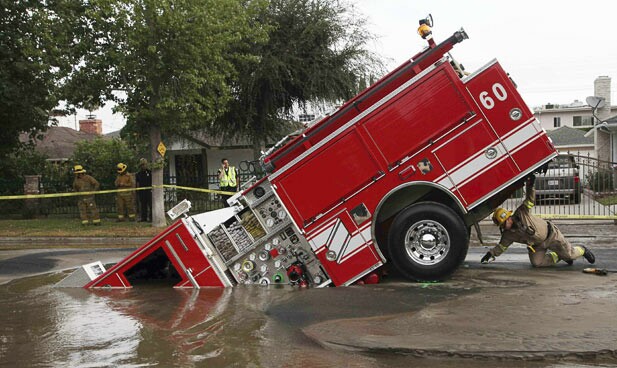
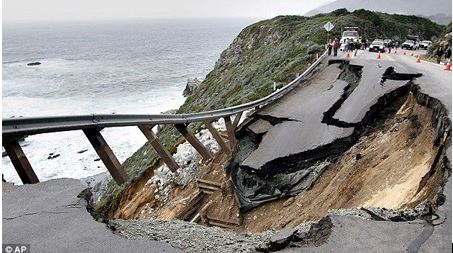
“Life is just one damn thing after another,” American writer Elbert Hubbard once observed. Ah, if only it were that simple. In my experience, life is usually dozens of damn things, converging all at once like a bad pile-up on the Interstate.  But somehow, we’ve got to manage all the craziness bombarding us, so I’ve put together a little blueprint for meeting the challenge.

Acceptance

Two things to know here: 1) Life is always chaotic. 2) As humans, we are always trying to order this chaos. But how do you manage a thing like life? As with some fantastical dragon of yore, it seems to sprout two new heads for every one you slay. Revisions of one book teeter atop a stack of research for the rough draft of another, e-mails pile up in the Inbox, there’s nothing in the fridge for dinner, you’ve got a dental appointment, and your body is threatening mutiny if you don’t get to the gym soon. Over it all, dust settles on every surface and rolls in drifts across the floor like tumbleweed. A good day is when nothing arrives in the mail requiring your immediate attention.

Prioritizing, that mantra of you-too-can-be-organized gurus, is useful and arguably an absolute necessity when you’ve got a deadline (especially the sort involving contracts, lawyers, and money). But let’s be practical—sooner or later, someone’s gotta unload the dishwasher.

Posit #1: It is not possible to do everything at once. It is not even possible to always do the most important thing first. If you’re rushing to get edits done and the pipe bursts under the kitchen sink, are you going to finish Chapter 12 or call the plumber and start mopping?

This is where perspective comes in handy.

Perspective

overwhelmed man behind wheel photo-1434210330765-8a00109fc773

In the 2015 film, The Martian, during a manned mission to Mars, Astronaut Mark Watney (Matt Damon) gets struck by debris, then lost, in a whammy of a dust storm. The biometer on his spacesuit is now busted and quits chirping, leaving the rest of his crew to assume he’s dead. In peril themselves, they boogie out of there. Watney regains consciousness to find himself alone, on Mars, with no working communications gear, a length of antenna lodged in his gut, and a limited supply of food in “the Hab” (the crew’s martian living quarters). His only hope is to survive until the next scheduled crew lands at the Schiaparelli crater 2000 miles away in four years.

I would argue that life doesn’t get more challenging than that.

Posit #2: If you’ve got most of your body parts, a working mind, and you haven’t been stranded on another planet, then there’s hope.  

But it helps to recognize and respect our human limits. Multi-tasking, that great savior of the ‘80s, turns out to be more myth than fact. Our computers may be able to open 12 windows at once, but we cannot. And trying to do so just results in a lot of stress, silly mistakes, and badly-burned dinners.

Which leads to the necessity of developing some basic life philosophy about our limitations and how to deal with them.

Basic Life Philosophy

When I was raising kids and teaching school and writing a book and doing the cooking, laundry, et cetera, I realized I would go right smack out of my head if I didn’t figure out some way to juggle the chaos. As with most things, necessity proved to be the mother of invention. One evening, with dinner bubbling on the stove, two dozen cupcakes baking in the oven for a fundraiser, and a pile of federal tax forms waiting on my desk, my daughter informed me we needed to do a science experiment that night for her class project the next day. She began listing the many items we would need. Wiping a strand of hair from my (tired) face, I gave her one of those smiles parents employ to keep from committing hara-kiri before their children’s eyes. “One disaster at a time,” I told her. Thus was born my succinct philosophy for managing the impossible.

Posit #3: You don’t need a 48-hour day (though if you know where one can be obtained, please write me immediately!). You need to exercise your power of choice.

Making Choices

CHOICE rHBf1lEaSc2nsbqYPQau_IMG_0177

A few weeks ago, I was feeling overwhelmed by all the stuff that needed doing RIGHT NOW.  And a tad cranky about how this was affecting the overall quality of my life. In a fit of take-charge/can-do, I made a list titled “Life Crushers.” (Okay, I was feeling very cranky.) On it were 11 items that felt like five-ton weights around my neck because it seemed: 1) I had to do them and there wasn’t time; 2) I wanted to do them and there wasn’t time; 3) I was just generally consumed with anxiety about them. Weirdly, I felt better as soon as I finished the list. Looking it over, I began to see choices rather than musts. I could work on two books simultaneously, or focus solely on the revisions for one, or take a break from writing. I could allot one day a week to deal with routine house stuff, tackle it in small doses daily, or wait until we have our next party. I could blog twice a month, once a month, never again. I made a list of 3-4 alternatives for each life-crusher. In most cases, my choices reflected my original goals, but the exercise helped me to see that I had more control and flexibility in my life than I’d realized. And that very little has to be done by any particular date.

Posit #4: You can slow the merry-go-round any time you want, rearrange the horses, or get off it completely. Yes, there are consequences for your decisions. Choice is not about escaping consequences. It’s about deciding what things you’re willing to pony up for and how high the price you’re prepared to pay.

At the close of The Martian, Matt Damon’s Watney (safely back on Earth) explains the reality behind their dreams to a class of wannabe astronauts. “At some point,” he tells them, “everything’s going to go south on you. You’re going to say, ‘This is it. This is how I end.’ Now, you can either accept that, or you can get to work. That’s all it is. You just begin … You solve one problem and you solve the next one, and then the next. And if you solve enough problems, you get to come home.”

Hey, it’s one disaster at a time. It’s what we all do. It’s really all we can do.

It is enough.

UNSUBSCRIBE ME, PLEASE!

“You’re in a mess, and in excess.”  Billy Strayhorn

I am a person who cares very deeply about the planet—how can I not? It’s my home. I also have a great fondness for humanity. As Ruth Gordon so aptly put it in Harold and Maude: They’re my species. I love cats UNSUB Global hands-600497_960_720and dogs, elephants, tigers, and the giant panda. I even have a soft spot—at a respectful distance—for the bees that pollinate the crops from which so much of our food comes.

Because of these various and numerous carings, I am the recipient of a staggering quantity of e-mail petitions and donation requests. Three-hundred is a “good” day, but a closer average is 500. More than that and you can hear me whimpering softly into my keyboard Please, let me have a life.

Well, problems demand solutions, so I have recently decided to weed through the druck and click on that little life-saver Unsubscribe Me. (I should have done it years ago, but I was too busy … answering e-mails.)

I’m not doing a Thoreau here and disappearing into the woods. I realize these are desperate times, and as such call for desperate measures. Or at least a quantity of $5 and $10 donations, and a daily dozen of signed petitions. So, how to separate the wheat from the chaff? Well, I believe there are situations whereUNSUB stacks of dollar-499481_960_720 our democracy needs lawyers on the ground, sometimes hordes of them, so I won’t be axing the ACLU. Likewise, I won’t part company with Planned Parenthood, People for the American Way, Democracy Now, the Union of Concerned Scientists, or the World Wildlife Fund. And I want to reassure the Humane Society that I’m still going to donate my lovely 2001 Ford Focus. I just need the use of it for another six weeks.

But, not all that screams READ ME THIS INSTANT is gold. So, gone is the magazine I declined to renew back in 2009, but which continues to send me weekly come-ons. (Read this woman’s lips: No means no.) History, too, are the BIG! SALE! NOW! adverts for clothing, designer cookware, and high-tech gadgets from companies I’ve never patronized.  It’s also arrivederci to the guy who’s always yammering on about tinnitus (I can’t hear you anymore.)

www.mailbait.info
http://www.mailbait.info

And though it pains me, because I think many of them are very good people, it’s time to be honest with myself and confess that I cannot possibly fill the campaign coffers of all 187 Democrats in the House on a writer’s income. (Democrat #188, Rep. Fattah  from Pennsylvania, saved me the trouble by resigning in June after being busted on corruption charges.)

Don’t worry Lizzie Warren. You are my hero, and you will always have my heart, my vote, and whatever spare change I find beneath the sofa cushions.


This purging of my Inbox is no small task, but already I feel wonderfully exhilarated. It’s made me consider what else in life I might unsubscribe to. A sort of thinking outside the (in)box. So far, my wish list of things I’d like to vanquish with the click of a mouse includes:     UNSUB dirty-dishes

1)Any repetitive task involving cleaning—washing dishes, scrubbing toilets, mopping floors, sieving the cat box. Bye!

2)Junk mail consisting of credit card come-ons, solicitations for “free” dinners to discuss investment strategies for the 401K I don’t have, and ultra-posh catalogs ($275 for a pair of shorts? I’ll think about it when I stop laughing).

3)All yardwork that involves heavy weeding. We have—and I want to emphasize this—a very, very small yard. We chose our house with its wee lot because we DO NOT LIKE yardwork. We like writing and reading, bicycling and enjoying a gin-and-tonic on the deck. Yet, despite the terraced garden I created to cover the front lawn, and the pavers we laid down for a patio to cover the back yard, I still dig and clear 35-40 giant bags of what our landfill correctly labels “yard waste.”

Credit City of Cincinnati

How is it possible that palm oil deforestation is wreaking havoc on half the world and here in my puny 4,000 sq. ft. lot, a jungle abounds?

4)Speaking of havoc in the larger world, unsubscribe me from TV, radio, and print pundits who just spout whatever outlandish drivel comes into their heads for the sole purpose of ramping up their ratings, while sowing discord, escalating tensions, and mongering fear (I’ve always wanted to use monger as a verb!).

5)Related to #4, I would like to cancel the 24-hour news cycle, period. Possibly the worst innovation to come out of the media explosion cable TV introduced, it leads otherwise reasonable newscasters to say things like, “Michael Jackson will only die once.”

6)Also high on my list of things to delete is that phone-answering set-up where an improbably zombie-like computerized “woman” asks you questions, then insists you speak your answer into the void. No matter how slowly and clearly you enunciate, “she” never quite “hears” you.

www.thewhy.com
http://www.thewhy.com

Sample “conversation:”

Zombie woman: Are you experiencing any fever? Just say yes or no.

You: Yes.

ZW: I’m sorry. I didn’t quite understand your reply. Could you repeat that?

You (perspiring heavily): Yes! My temperature is 104!

ZW:  I’m sorry. Can we try that again?

You (swooning): 104! My temperature is 104! I’m burning up!!!

ZW: Let’s try a different question.

You (dead):

7)And last, but certainly not least, please save me from any political “debates” where candidates compare the size of their hands, ears, nose to any other part of their anatomy as if it had any relevance to world hunger, global warming, or the desperate needs of refugees.

I mean, seriously, Beam me up, Scotty!

Paramount/Everett/Rex Features

The Thing That Cannot Be Changed

And while the future’s there for anyone to change, still you know it seems
It would be easier sometimes to change the past. . .
(“Fountain of Sorrow” Jackson Browne)

Sometimes, it’s something we truly earned—and didn’t get. The career-making job that would have launched our dreams. Sometimes, it’s something we never had, but always craved. Parents who could love us. And sometimes it’s just one terrible moment: The car we failed to see in time. Whatever it is, in most of our lives there lurks The thing that cannot be changed. It’s the moment, the decision, the situation that all our effort and talent and endurance cannot alter or undo.

Successful writers and actors, business people and ballplayers, if they’re honest, often mention the role luck played in their achievement. Along with the hard work and long hours, they confess to being in the right place at the right time. No one mentions the opportunities that went to someone else, the love that never materialized, the awful accident of standing in the wrong place at the wrong time.

THING fantasy-1275253_960_720And that’s the hardest part about The thing that cannot be changed. It’s almost never the result of our own doing. Perhaps that’s why it looms so large. It lies outside our control, and people like to control their own lives. When someone else denies us our most basic needs, tramples our dreams, we experience it as an injustice, and injustice bites deep. Its grip is tenacious.

Yet, we must learn to live with The thing that cannot be changed. Thrive in spite of it. Not let it swamp us internally or accept it as a judgment of our own worth. There’s a myth that only losers suffer from The thing that cannot be changed. That successful people simply leave adversity in the dust. Would that it were it so easy.

“The Places That Failed Us Before”

Tennessee Williams was a two-time Pulitzer prize winner and hailed as one of the greatest dramatists in 20th-century American theater. Decidedly a brilliant writer and a great success. But he was never able to stare down The thing that cannot be changed.

 For Williams, The thing was twofold: The abusive, alcoholic father who disdained and bullied a son he considered weak; and the controlling, puritanical mother horrified by all things sexual. Williams heard their message loud and clear: “You are wrong as you are.”

chicagotribune.com
chicagotribune.com

In one particularly harrowing incident, his father hauled him out of the University of Missouri after he failed a military training course in his junior year, and put him to work in the factory of the International Shoe Company where the senior Williams was an executive. Tennessee hated the daily grind and eventually suffered a nervous breakdown.

After he recovered, Williams enrolled in another college, and later studied at the Dramatic Workshop of The New School in New York City. Speaking of his early days as a dramatist, collaborating with others on a play for an amateur summer theater group, Williams wrote, “The laughter … enchanted me. Then and there the theatre and I found each other for better and for worse. I know it’s the only thing that saved my life.”

The hope in that last sentence is moving; its subtext, haunting: If I just work hard enough, long enough, I can write my way free of my pain. But he never did. Despite using that pain to create some of the most memorable characters on the stage (Big Daddy, Amanda Wingfield), he remained trapped within The thing that cannot be changed. Elia Kazan, who directed many of Williams’s plays said, “Everything in his life is in his plays, and everything in his plays is in his life.”

In 1939, with the assistance of his agent, he received a $1,000 grant from the Rockefeller Foundation for a play he was writing, Battle of Angels. The play foundered when it opened, but Williams was on his way. And yet, a poem he penned that same year reveals how badly The thing that cannot be changed dogged him. Cried the Fox speaks of an animal, running in ever-narrowing circles—frantic, desperate, lonely—always coming back to the places of past hurt and doubt.

Williams once remarked that “A high station in life is earned by the gallantry with which appalling experiences are survived with grace.” But the undertow of those experiences finally claimed him. He died of asphyxia, an accident related to the quantity of alcohol and drugs he consumed over the last 30 years of his life. His obituary in The New York Times (February 27, 1983) paid homage to him as “a master of dramatic moments who created lost, tortured characters struggling for dignity and hope in a world that often denied both.”                                                                


Beyond Her Own Pain and Anger

Helen w/ Annie Sullivan

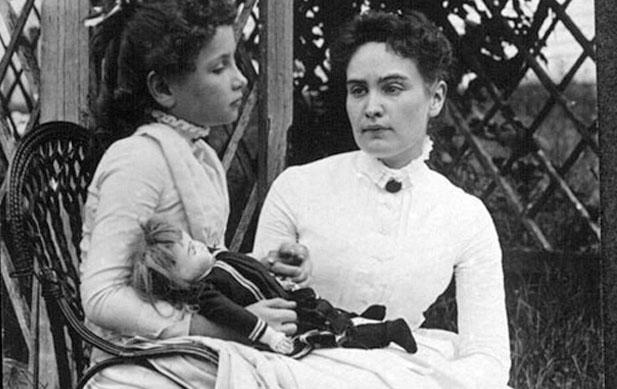
Helen Keller became acquainted with The thing that cannot be changed at 19 months, when a severe illness left her blind and deaf. Imagine the terror of that. Your world goes dark and silent, and you are too young to even grasp why. By all accounts, Helen spent the next five years in a rage, rejecting every attempt to reach her. It was only when the young teacher, Annie Sullivan, at last broke through that dark silence and communicated with her, that Helen understood there might be something beyond her own pain and anger.

As an adult, she used that discovery to help other people afflicted with blindness. She joined the American Foundation for the Blind. For 40 years, this organization served as her global platform to advocate for people with vision loss. She saw to it that state commissions for the blind were established, rehabilitation centers were built, and education was made accessible to children without sight. She also championed the rights of working people and women’s suffrage.

It is a hard thing for us humans to accept, but the bottom line is this: We cannot control other people and we cannot change the past. We can only control our own actions and responses. So when The thing that cannot be changed brings us to our knees, as it sometimes will, we must learn to breathe with it. As Helen Keller discovered, it is one aspect of our personal story, but it is not our whole story. So we own it, and then we rise up. And carry on.

THING summer-1458129_960_720

Necessity Is The Mother Of Invention (And Other Important Reminders From The Dead)

“History is for human self-knowledge … the only clue to what man can do is what man has done. The value of history, then, is that it teaches us what man has done and thus what man is.”      (R. G. Collingwood) 

I have always loved old things. The ghostly line of columns—all that remains of the Temple of Saturn—in the Roman Forum. The hand-made red and yellow fleur-de-lis tiles in Westminster Abbey’s Chapter House –tiles that Henry III walked across during The King’s Great Council of 1257 (in effect, the first English Parliament). I confess, I once laid my cheek against those tiles. I wanted to feel the heartbeat of the ages. Feel the thing that connects me to all living beings past and present.

Okay, so we’ve established I’m a little weird. But everybody’s got to be something.

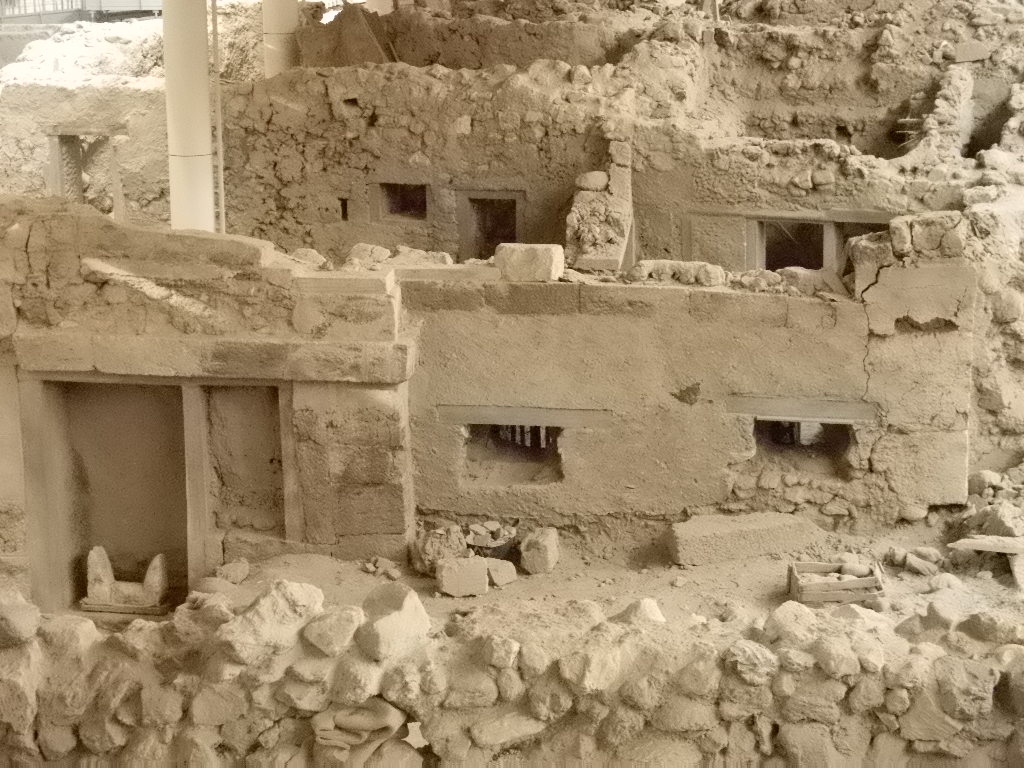
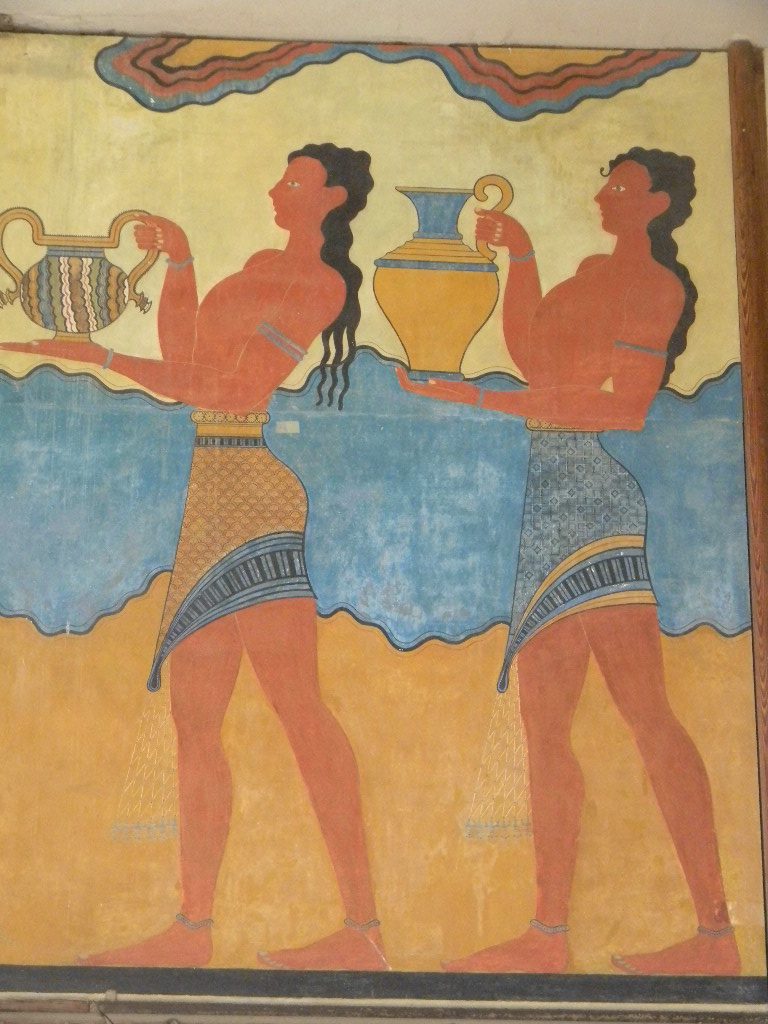
This past May, Ed and I spent three weeks traveling through Greece. I was really psyched because it was a place I’ve always wanted to visit. Of course, we trudged up the long hill to the Acropolis to see the Parthenon. The place where Socrates and Plato walked. The source of the famous marbles that Lord Elgin DSCN6427saved or stole (depending on your viewpoint). And it was worth it, but what really blew me away were the Minoan ruins at Akrotiri, on Santorini, and the Palace of Knossos outside Heraklion, Crete.

Just to put things in perspective, habitation at Akrotiri goes back to the 5th millennium BC, and the first settlement of Knossos predates even that by 2,000 years (though the Minoan Palace wasn’t built until 1900 BC). About 400 generations of men and women have been born, flourished or flailed, and died since the first Neolithic settlement there. We are talking old.

The staircases and roads and walls and rooms of these ancient places are open to wander through and marvel at, but the fragile stuff—the urns and pitchers, the bowls and murals have all been moved to museums. So, after touring the ruins, we headed to the modest Archaeological Museum of Thera and the much bigger Heraklion Archaeological Museum. As women keep telling men, size doesn’t matter. Both museums were filled with treasures that constantly made me stop to think. Call them love letters from the dead.

NECESSITY IS THE MOTHER OF INVENTION

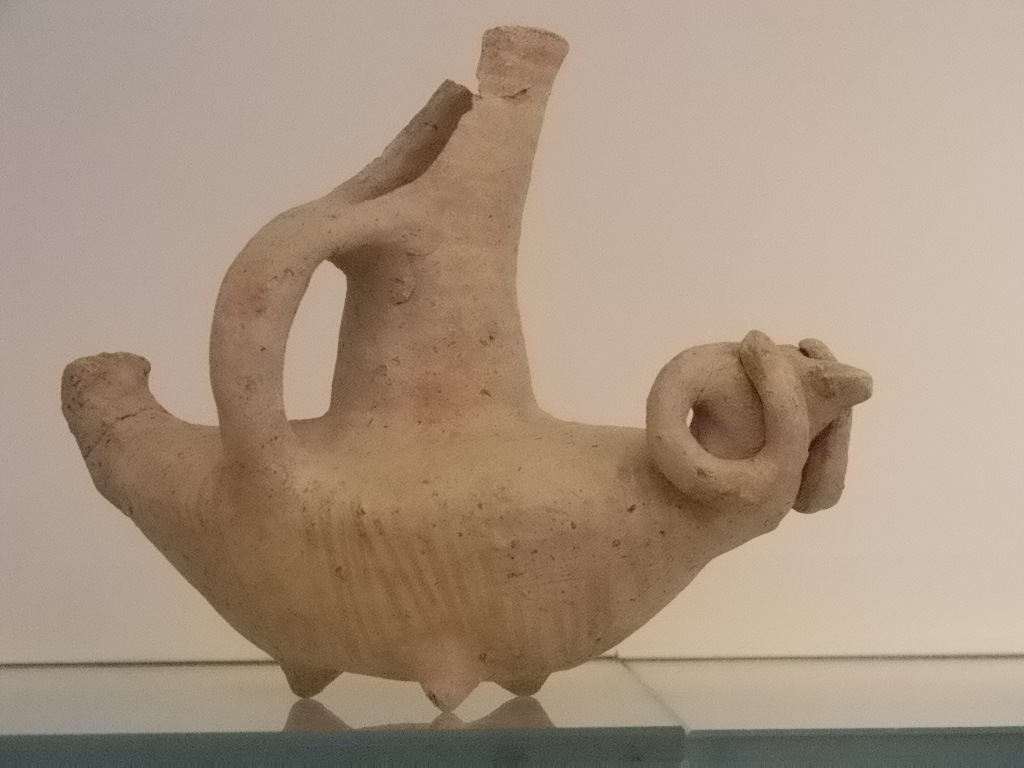
DSCN6529The first item I saw at the museum in Heraklion was an intricately decorated plate that was made 7,000 years ago. The second item was a “bee smoker” of similar vintage. I couldn’t take my eyes off it. It’s the kind of object that contains a whole story in itself and offers a huge window on humanity. It’s the moment the light bulb went on. It’s the invention necessity was the mother of.

At some point, people noticed that beehives yielded delicious honey. They started keeping hives. Obvious problem: Bees get feisty when you mess with their hive. Question: Who’s going to sacrifice himself to collect the honey? Not a popular job. So, they argue and maybe draw straws, and each day some poor guy braves the angry buzzing and the stings.

Until …  the light bulb goes on. Someone notices (over a cooking fire? Smoking a cheroot?) that bees get really groggy with smoke. Fly slower. Don’t raise such a fuss. So this someone thinks, If I make something I can carry, something I can put a little fire inside, give it holes to let the smoke out  … Problem solved.

It’s how water jugs got spouts. And handles. It’s how the wheel got invented—and wasn’t that a red letter day, because people were already planting crops and herding domestic animals. You can almost hear some yeoman in the background, tired of hauling twice his weight over hill and dale, complaining, ComeDSCN6513 on, hurry it up already. We need that wheel!

Take a moment to look around you and imagine all the light bulb moments that occurred to invent all the stuff that fills your home. Necessity is the mother of invention. The mother of creativity. That we can respond to it is what separates us from the amoebas.

NATURE ABHORS A STRAIGHT LINE

The sort of glossy western civilization or world history surveys most of us got in high school laid out the timeline of humanity something like this: There were a whole bunch of millenniums of Neanderthal guys before the Egyptians settled the Nile for farming, domesticated cats, and built the Pyramids. Then nothing much happened until the Romans showed up with their grid-based cities, inter-linked sewage lines, and DSCN6690aqueducts. After the Romans (up to their necks in economic troubles, government corruption, and an over-reliance on slave labor—sound familiar?) took a fatal series of beatings from the Goths, Vandals, etc., the “Dark Ages” settled across Europe in murky mysteriousness for nearly 800 years. Until Michelangelo, Leonardo, and the Medicis brought the Italian Renaissance into glorious light in the 14th century. After that, the printing press gets invented, Shakespeare bursts onto the scene, and then it’s pretty much a straight shot, an unwavering true line of progress from about 1700, growing ever more brilliant—and still rising.

Only it wasn’t. It isn’t. Progress in human history is NOT linear. It’s not even entirely cyclical, although that would be closer to fact. Consider that more than 10,000 years ago, people were cultivating crops in the Levant. Rice had been domesticated in China. And the people of Mesopotamia were already old hands at raising pigs and sheep. It’s not like people used to be so stupid and now they’re so smart. (I could offer you many examples to back this from contemporary society, but I feel certain you have a few of your own.)

Walking through the ruins of Akrotiri—streets and multi-room dwellings with windows and doors and frescoes—I saw a sophisticated Minoan Bronze Age city that enjoyed trade relations with other cultures in the Aegean until it came to an abrupt end with the Theran eruption around 1627 BC. DSCN6281

Plague, famine (blame the weather gods), earthquakes. These unforeseen, and largely unpreventable, disasters sink civilizations. Stall or retard progress. Turn it in a new direction. Send it another people’s way. More cyclical, or at least predictably always in the wings are: Power struggles, corruption, jealousy, wars—all destroyers, or at least retardants, of civilization and progress.

Which brings us to the third lesson the dead have to teach us: The greatest number and magnitude of advances in human history occur in times of peace, tolerance, and cultural inclusion.

WANT TO GET AHEAD? TRY TOLERANCE. TRY INCLUSION.

We saw two amazing exhibits at the British Museum that underscored this truth: Sunken Cities (Egypt’s Lost Worlds), and Sicily: Culture and Conquest. In both cases, a long string of rulers had to govern societies that DSCN6737included citizens from multiple cultures (Phoenicians, Greeks, Romans, Byzantines, Arabs, Normans), with religious customs and beliefs that embraced Greek gods, Egyptian gods, the Hebrew god, and eventually the Christian Holy Trinity. It wasn’t always easy, and those who were successful understood the value of good propaganda—one Greek ruler of the lost Greek/Egyptian settlement at Thonis-Heracleion had his public image chiseled sporting a traditional pharoah’s headdress.

The best rulers may have kept the peace (and inclusivity) to preserve their highly profitable trade with the Mediterranean world, but it permitted people dignity and art and invention. Men like Archimedes, advancing mathematics. Playwrights like Aeschylus. In 398, visiting Syracuse, Plato said that his Utopia could best be imagined, perhaps even realized, in Sicily.DSCN6549

So what brings the cultural co-existence, and its resulting progress, crashing down? Someone gets hungry for empire, and instead of inventing things or making art or legislating democratic laws, it’s war again. And everyone loses. Even those who think they’ve won, because they’re the targets of tomorrow’s predators. Archimedes was killed by an invading Roman soldier.

These are the things I thought about on my summer vacation. The lessons I learned from the dead.


DSCN6464


Listening to the World

“The most basic of all human needs is the need to understand and be understood. The best way to understand people is to listen to them.”  — Ralph Nichols

My dad was fond of saying, “You don’t learn much with your mouth flapping,” by which I always suspected he meant “Shut up and listen to me.” But his point was valid.

One of the great perks of traveling is the opportunity to discover what people around the globe are really thinking and experiencing. Our 24-hour news cycle favors angry pundits and eye-popping footage. It’s geared to win ratings, not enhance understanding.

CRETE BLOG 20160522_221527During the last five weeks, as I traveled through Greece and London with my husband Ed, we talked to hundreds of people: waiters, cashiers, pub staff, shop owners, chefs, fellow theatre goers, strangers in the park, and even a British civil servant who works on humanitarian issues for the Home Office. We asked them about their lives, their homelands, their hopes, and the world as they see it.

On Their Minds

Our travels coincided with several big moments: the upcoming Brexit referendum (June 23) on whether the UK should remain in the EU, and the Greek parliament vote on a new round of taxes and austerity measures under pressure from Germany and the IMF.

No one had to be coaxed to talk.

Individually, opinions ranged widely about the best way to address these issues. Some Greeks we spoke to (especially the Athenians) felt Greece should have taken a cue from the UK, and kept its own currency when they joined the EU. They told us the purchasing power of real wages has fallen with theDSCN6418 euro, and despite 12- to 16-hour workdays, they cannot keep up with the cost of living.

Others wanted out of the EU entirely, citing the sharp inequality of power among nations in the union. They resented the pressure to buy weapons from Germany when that country was insisting Greece cut healthcare and raise the already steep 23% VAT (value-added tax). Many expressed deep disappointment that the supposedly radical left Syriza party was about to sell them down the river (They did. The day we left Greece, May 22, the Greek parliament approved a raft of new taxes and austerity measures to appease their creditors.)

The View From London

Leaving the EU was a less popular idea among the Londoners we spoke with (although ours was a random sample, and decidedly not skewed towards bankers and big-business Tories). While some Londoners shared the Greeks’ view that Germany was lording it over everyone, most people favored EU membership for the rich cultural exchange it has fostered (in London alone, we conversed with people from Albania, Italy, Hungary, India, Pakistan, Hong Kong, Poland, Finland, Iran, Romania, the Ukraine, Turkey, Belgium, Bulgaria, Croatia, Slovenia, Latvia, and Austria). Their views were reflected in a recent letter of support for continued EU membership (signed by Benedict Cumberbatch and 250 other British entertainers): “Britain is not just stronger in Europe, it is more imaginative and more creative, and our global creative success would be severely weakened by walking away.” Many people saw in the EU a hope for unity and peace.

LONDON CROP BLOG 20160529_011953The EU also permits people from all member countries to live and work anywhere within its nations’ borders. This allows people to move to areas of opportunity, and young people from all over Europe have converged on London. (About 80% of all EU immigrants in the UK are working. Others come to study or join family members.) Many under-30s told us there were no jobs or hope for advancement in their homeland. They were drawn to London’s cosmopolitan culture and generally progressive values.

What Unites Us

Collectively, the people who shared their thoughts with us demonstrated an impressive knowledge of political history and current issues. Even when they had differing ideas on how best it might be achieved, their hopes were always centered on building a more peaceful and just world for everyone. We heard no words of hatred or bigotry. No hotheaded rants. Just the desire for global unity, mutual respect, educational and economic opportunities for the many, not just a few.LONDON BLOG 20160528_010813

One final collective note: Everyone we spoke to expressed dismay and alarm about Trump. The question we were asked most often was: How can the U.S., being such a powerful country in the world, even consider Trump as a presidential candidate?

Good question.

Listening has its own rewards. I was moved by the generosity of spirit of the people we met. Many times, I was reminded that those who have the least often give the most.

So, I want to say a big thank-you to everyone who took the time to talk to us, to express and explain their opinions and thinking, who greeted us warmly and treated us well. You all give me great hope. We share this world. We share this fight. When I look into your faces, I see my own.

DSCN6883