The Human Condition (BLOG)

We Must Save Ourselves: Vote 2020

As I was finishing the rough draft of this post, news of Supreme Court Justice Ruth Bader Ginsburg’s death broke. She devoted her life to defending and expanding true democratic rights for all Americans. Her record on women’s rights and racial justice issues is legend. Her death would be a tragedy in any time, but it comes at a particularly dark moment. If we wish to honor her life, we must fight on for our democracy. (Plan Your Vote resources at end of post.)

Pop Quiz: Who is “He” in the following statements?

1. He completely mishandled the coronavirus pandemic.

2. His country’s economy is in shambles.

3. He positioned special forces to arrest protestors in the days before his re-election.

TheRUMP? (Sound of buzzer) Sorry, no free vacation cruise to Turks and Caicos for you. The subject of these charges is actually Belarus dictator President Lukashenko. But they could just as easily—and honestly—have been penned about America’s own dictator-wannabe.    

Frequently described as authoritarian, corrupt, and incompetent (ring any bells?), Lukashenko has ruled over Belarus for more than a quarter century, since the office of president was established in 1994. He claims to have won his recent August 9th election with over 80% of the vote. But everyone knows he stole it—and not for the first time.

Having declared such an amazing (and I’m guessing, statistically improbable) blow-out win, was Lukashenko content to ignore the “rabble” in the street, maybe even toss them a bone—say, less draconian sentences for nonviolent drug-users, or an easing of a law that forces media outlets to report the names of those who submit comments, and their content, to the government? Maybe he could just toss them free rolls of paper towels.  

But the thing is, dictators never cede ground. And they tend to view “the people” as their enemy. In the aftermath of his rigged election, Lukashenko waged war on protestors, employing armed security forces to silence his opposition. According to the New York Times, the last prominent protest leader was kidnapped by masked government thugs on September 7.   

We would be wise to take note.

The Dizzying Damage Done to Our Democracy

It’s shocking, isn’t it, how much has gone up in flames in such a short time. Four years ago, could we have imagined a president who would speak about grabbing women by their pussies? Who would appoint an Attorney General to do his—often corrupt and illegal—bidding, damn the law? Who would separate children—even infants—from their parents? Who would brag about being able to murder someone on a public street and get away with it—and who would then send unidentified thugs into Black Lives Matter protests to arrest people without explanation or cause, and stuff them into unmarked cars?

A president who would gut EPA protections and renege on the Paris Climate Accords. Who would scrap the Iran Nuclear Deal, initiate our withdrawal from the World Health Organization in the midst of a pandemic, and scuttle Obama’s plans for managing just such a pandemic. A president who would tell the states of our supposedly United States that they were on their own when it came to testing, PPE, and life-saving ventilators. Who would threaten government whistleblowers and fire inspectors general, including the one appointed by Congress to oversee the dispersal of COVID funds, after which he would freely deal to his corporate pals $$$ intended to help American small business owners. A president who would be ridiculed and distrusted by all our allies (because he mocked and betrayed them). A president who would stand at the grave of a soldier killed in Afghanistan, and say to his father (General John Kelly), “I don’t get it. What’s in it for them?”  
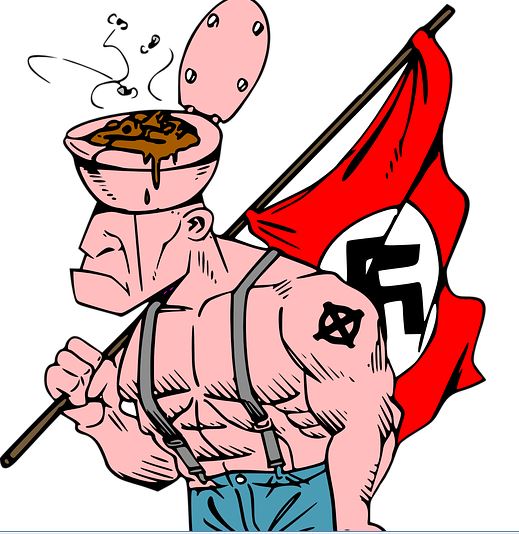
A president who would threaten to withhold funds from the states who didn’t vote for him. Who would defend a 17-year-old charged with first degree intentional homicide in the fatal shooting of two Black Lives Matter protesters. Who would champion the openly racist, anti-Semitic, anti-Islamic QAnon candidate for a House seat from Georgia, Marjorie Taylor Greene, and generally applaud this internet conspiracy group whom the FBI has labeled a potential domestic terrorist threat. Who would look on the COVID deaths of over 200,000 Americans and say, “It is what it is.”

Yet, here we are. And that’s the short list. The long list is exhausting. The Guardian noted that TheRUMP  hit 20,000 false/misleading claims (on the WaPo’s Fact Checker) in a “tsunami of untruths” on July 9, delivering 62 of them on that day alone               

The emotional cost, the mental strain, the ruin of lives. The desecration of the environment, the flouting of the rule of law, the disregard for the separation of powers that is intended to provide a system of checks and balances, preventing the concentration of power in any one branch—say, a dictatorial president.

 And the brutality, the ugliness, it seeps down. When three-time cancer survivor, Bev Veals, called Sen. Thom Tillis (R-NC), worried her job-related healthcare would be cut, she was told that if she couldn’t afford care, she couldn’t have it. “Yeah,” a Tillis staffer said, “just like if I want to go to the store and buy a new dress shirt. If I can’t afford that dress shirt, I don’t get to get it.” When Veals protested that everyone needs healthcare, especially people with cancer, the staffer replied, “Sounds like something you’re going to have to figure it out.”

Hogging the Headlines…

Since TheRUMP’s 2017 inauguration, my e-mails have skyrocketed from 150-200 a day to more than 800. As the election draws closer, COVID deaths top 200,000 and the West Coast burns, that number exceeds 1,000 at times. Petitions to save public lands, public schools, endangered species, healthcare. Petitions to stop Arctic drilling, family separations at the border, police violence. Fundraisers for lawsuits to halt TheRUMP’s atrocities—to protect our laws, our rights—and newsletters detailing those atrocities.

This president, it has been duly noted, sucks all the air from the room, wherever he is, even—and maybe especially—when he’s tweeting. “Social media is the way to go,” he told reporters in 2017. “I’ve got over 100 million people watching. [It’s] a fast way of getting the word out.”

But the tweets, like TheRUMP himself, are mercurial, ill-considered (if considered at all), and frequently dangerous. His flirtations with military actions against Iran put the world on nuclear threat watch, and his announcement in December 2018 that the U.S. would withdraw its troops from Syria because “ISIS had been defeated” shocked everyone—“Trump simply doesn’t understand the extent of the Iranian military presence in the region,” an Israeli official said—but no one was more devastated than the Kurds, who had believed the U.S. to be trusted allies and now found themselves threatened with wholesale slaughter by Turkey.
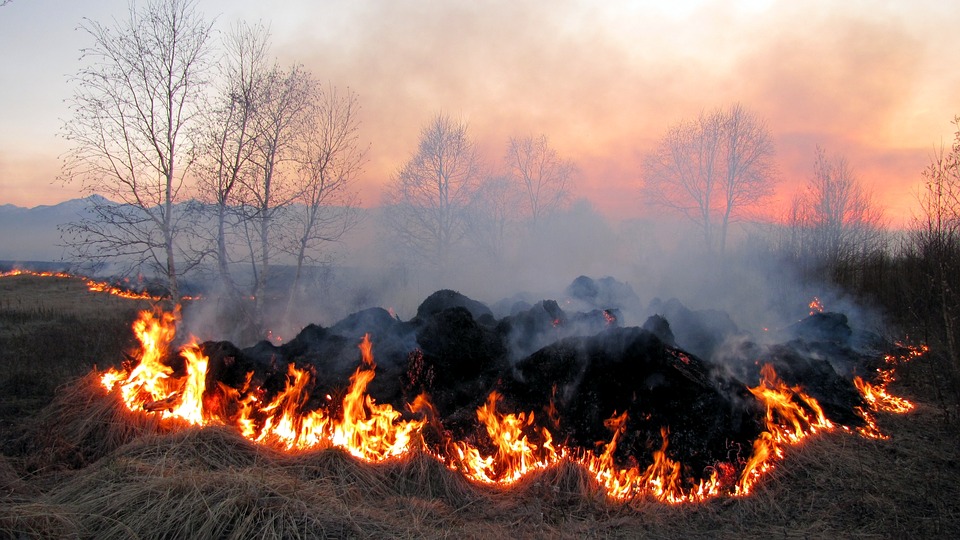
Efforts to sorta partway walk back this off-the-rails policy u-turn resulted in John Bolton seeking some kind of protection for the Kurds from Turkey. It did not go down well with President Erdogan. Despite our Tweeter-in-Chief’s attempt to paint a rosy picture of the situation last November, claiming Erdogan has “a great relationship with the Kurds,” Turkey’s president continues to show his “affection” by setting Kurdish farmers’ fields on fire, shelling their settlements, and shutting off water supplies, despite the ceasefire called for by the UN during the pandemic. 

Policy, both foreign and domestic, is lives. The highly intricate task of statecraft deserves more consideration than the character limit of a tweet fired off at 2 a.m. by a psychopath who’s just inhaled three MickeyD burgers. But our fearless leader tweets on, oblivious to the fallout as long as he’s got center stage.

… And Obscuring the Truth

All these tweets and wild pronouncements—You can cure COVID by injecting disinfectants [deadly false!]—serve not only to keep all attention focused on him, but to distract us from the less fizz!pop!bang! but more dangerous dismantling of our democracy and its institutions taking place daily beneath the LOOK AT ME! LISTEN TO ME! headlines.

1. The decimation of the EPA. Since 2017, one environmental protection after another has vanished, wholesale and without consideration of the impact, to boost the profits of fossil fuel companies. Offshore drilling safety regs—gone. Restrictions on greenhouse gas emissions for coal power plants—history. Habitat protections for endangered species—who cares? Prosecution of EPA violations—very few. Increased logging on federal lands, miles of new oil and gas pipelines, drilling in the Arctic? A green light for all!

And now, with wildfires raging over much of the far west, the rule that required oil and gas companies to detect and repair methane leaks has been lifted. Methane, a potent greenhouse gas, is a global warming nightmare. Oddly enough, it’s the EPA themselves who estimate the change in this rule will increase planet-damaging methane in our atmosphere by 850,000 tons in the next decade. 

And what happens to all those victims of climate-related disasters—the hurricanes, fires, floods? Whole towns are washed away or burned to the ground. Forests of animals die. I feel fairly certain there is mass trauma in the wake of these tragedies, but … silence.   

2. Equally alarming in the midst of our pandemic is the silencing of the CDC, which I first wrote about in June. Since then, things have gone the direction all things Trumpian go: downhill. In July, our Dear Leader shifted control of key COVID info from the CDC to the more White House-friendly Department of Health and Human Services. Hospitals must now report all COVID-related data directly to HHS—vital info the CDC needs for their National Healthcare Safety Network, the country’s most prominent infection tracking system.

This side-lining of the CDC worries scientists and medical experts. “Placing medical data collection outside of the leadership of public health experts could severely weaken the quality and availability of data, burden already overwhelmed hospitals, and add a new challenge to the U.S. pandemic response,” Thomas File Jr., president of the Infectious Diseases Society of America, said. Many health experts view these moves to muzzle the CDC as yet another attempt by TheRUMP to squelch any blame for his lackadaisical response to the pandemic. And the 200,000+ Americans who have died as a result.

3. Despite a court order and a 2018 wink-wink, nudge-nudge desist order from the White House, the emotional devastation and lifelong psychological damage that is the ICE (Homeland Security—ha-ha) policy of separating children from their parents at the border and tossing them into locked warehouses, converted big box stores, and privately-run “family” prisons continues, only now it comes with a slice of COVID.

The Southern Poverty Law Center has written a concise, if hair-raising, history of this heinous policy. Efforts to re-unite families by orgs like the ACLU have only enjoyed partial success because: 1) the kids were scattered across more than 100 Office of Refugee Resettlement shelters, and 2) DHS never created any kind of tracking system to make reunification possible. Amnesty International reported that Customs Border Protection separated over 6,000 families in the four months between April and August 2018. Thousands before. Thousands since.

In January of this year, Judge Dana M. Sabraw—the judge who ordered an injunction against taking kids from their parents in 2018—refused to issue new limits on separating families at the border, choosing to let CBP do as they like. Moral indifference? Whispers from TheRUMP’s lapdog AG—you, too, can be replaced? Sweeteners?

4. It’s been called “the third rail,” an issue so electric, so volatile, that the GOP, though they would like to either privatize it for profit or drown it in a bathtub, does not want to talk about it at election time: Social Security. But TheRUMP talks about it. He proposed cutting Social Security Disability Insurance in his 2018 budget—a move that would have hurt some 10 million Americans. He demanded cuts of $1 trillion-plus from Medicare over the next decade and $26 billion from Social Security in his 2020 budget. His 2021 budget again hammers for long-term cuts to Medicare, but now he’s switched tactics on Social Security, seeking to starve a program that provides 50% to 100% of income for half of all senior Americans.

Let’s be clear. Social Security is taken from American workers’ earnings. We pay for it. Almost all elderly Americans receive it. In June 2020, the average benefit amounted to $18,170 a year. Hardly a king’s ransom—TheRUMP wouldn’t cross the street to pick it up. Yet, he wants to kill it, and the first step is the “holiday on payroll tax” (which funds Social Security and Medicare) he ordered this summer to boost his re-election by putting dollars back in voters’ pockets. There’s a catch—of course. The money, $76.50, on a weekly paycheck of $1,000, will have to be paid back in the new year by employees, leading to a doubling of that amount deducted from their paychecks once the “holiday” ends.

The only thing saving Social Security at this point is the Tweetmaster’s complete and utter ignorance of how things actually work. His plan—rolled out by Treasury Secretary Mnuchin—is so nuts, so confusingly impossible to implement, it’s even been criticized by the conservative U.S. Chamber of Commerce. TheRUMP says he will scotch the 2021 repayments if re-elected, and end these payroll tax deductions permanently, a move WHO says would run the fund dry by 2023, leaving some 64 million people in the lurch. As it stands, only Congress can eliminate payroll deductions, but a GOP Senate won’t stop him, and with Billy Barr at his side, a re-elected TheRUMP will do what he’s been doing—ride roughshod over the House and the Constitution.   

5. TheRUMP’s Secretary of Education, Betsy DeVos, works tirelessly to further starve our already-underfunded public schools, siphoning off every dollar she can to private and religious education. When the CARES Act money became available, she wasted no time in creating a $180- million voucher program for these non-public institutions from public funds.

Lawmakers from both side of the aisle countered that distribution of the aid was intended to reflect the number of vulnerable, low-income students within a district. Daniel A. Domenech, executive director of the School Superintendents Association (AASA), called the new rule “an opportunistic money grab, using the pandemic environment to advance the privatization agenda.” DeVos ignored them, ordering states to redistribute their CARES $$$ as she instructed. A Washington state federal judge temporarily blocked that order from being executed (Washington Post, 8/23/20), but that didn’t stop DeVos. It took a second federal judge and a U.S. district judge to say “No means NO,” as in: This is against the law.   

6. On August 29, the Office of the Director of National Intelligence (ODNI) informed the House and Senate Select Committees on Intelligence they would no longer be given in-person briefings on election security issues. This abrupt and dangerous policy shift prevents members of Congress from being able to ask questions about the ODNI’s findings—especially worrisome in the wake of warnings that interference from Russia is occurring.

Less than two weeks later, Brian Murphy, an intelligence analyst at the Department of Homeland Security, filed a whistleblower complaint, saying he has been pressured to tamp down the threat of Russian interference in the election because it “made the president look bad.” Murphy said he was also demoted for refusing to alter reports on many other subjects including white supremacist groups, and directed to re-spin intelligence assessments on left-wing groups to “ensure they matched up with the public comments by President Trump.”

The True Moral High Ground

In 2008 and 2012, America elected Barack Obama, a man who gave us the Affordable Care Act, who brokered the Iran Nuclear Deal and the Paris Climate Agreement. A president whose tenure included the legalization of gay marriage and the resuscitation of an economy the Bush admin had tanked. In 2016, we elected a heartless pathological white-supremacist thug, characterized perfectly in the title of Rick Wilson’s 2018 book: Everything Trump Touches Dies.

How did we fall so catastrophically far so frighteningly fast?

We failed to turn out. It’s really that simple. Four million 2012 Obama voters sat out the dance entirely, a margin it is believed could have elected Hillary Clinton, especially if you add in the additional 1.5 million former Obama voters who went with Jill Stein (Green Party). In Michigan, Wisconsin, and Pennsylvania, for example, Clinton lost by under a percentage point. In all three states, the votes for Stein would have more than covered her loss and she would have won the election.

Yes, we faced increasing GOP voter suppression in 2016—new voter ID laws that did not favor people of color or college students. Yes, the Supreme Court had hammered a hole in the heart of the 1965 Voting Rights Act, but overarching everything is the undeniable fact: 4,000,000 left-leaning voters failed to show up. And now we have a fascist madman in the White House.

Yes, I know Hillary wasn’t that exciting for many. Too centrist. Too corporate. Too Pantsuit. But—and I say this as a lifelong Progressive who backed Sanders in 2016 and Warren (then Sanders) in 2020—if Hillary had won, she would never have scrapped Obama’s pandemic plan; she would never have destroyed children by taking them from their parents at the border; she would never have told state governors “you’re on your own”, or fired inspectors general so she could give the CARES Act money to her billionaire buddies. And she would never have sued to destroy the ACA. Healthcare was one of her passions.
The true moral high ground in 2020 resides not in sitting out the election until what we regard as the perfect candidate rides into town on her/his steed. The true moral high ground in 2020 is about saving lives. At least 140,000 of the 200,000 lives lost to COVID could have been saved if we had had a coordinated national response dictated by science and not politics, said Dr. Vin Gupta, a Harvard-trained lung specialist who works worldwide with organizations such as WHO, the CDC, Harvard Global Health Institute, and others, to improve public health [The Last Word, 9/22/2020].

The true moral high ground is about justice for ALL Americans and stopping the violence against people of color. Demilitarization of police and serious police reform is NOT going to happen under TheRUMP. We’ll just get more unidentifiable goons, picking up people off the street and stuffing them into unmarked cars, bound for god knows where. Portland was only a test case. A preview of a second term for Donald J. Putin-wannabe.

The true moral high ground is about saving the planet. Literally. There has been some lower court pushback against completely gutting all EPA standards, but with a 6-3 Supreme Court in a second TheRUMP term, all resistance will be crushed.

To anyone wavering about voting in this election because they were hoping for someone more progressive than Joe Biden, I can only say if you sit this one out, millions will suffer. This is not a six of one, half a dozen of the other situation.   

Biden co-sponsored the Violence Against Women Act of 1994. He convinced Barack Obama that gay marriage needed to be made legal. He favors expanding the ACA to include everyone. He welcomed the input of Bernie Sanders, and is now running on the Unity Task Force recommendations they both identified and addressed. It’s a pretty impressive document. 

In one month, we are facing the referendum of a lifetime: Are we committed to saving our democracy, with its rule of law, separate but co-equal branches of government, freedom of speech, freedom of the press and Internet, the right to protest? Are we determined to achieve racial justice, engage in a sustained effort to save the planet, protect and extend healthcare for everyone, preserve Social Security/Medicare, and promote quality public education from pre-K through college for all children? Are we dedicated to fighting this pandemic with science? Not bleach, not wishful thinking or irresponsible orders to re-open and damn the consequences. Science.

If the answer is yes to any or all of the above, then we must VOTE, and do whatever we can to make sure everyone has access to the ballot box. Join letter-writing campaigns. Call or text voters in swing states. Volunteer to be a poll worker in your community. Chip in $5 or $10, if you can, to groups dedicated to registering new Democrat voters. And PLAN YOUR VOTE.

Links for all of these are listed at the end of this post.

2020 and Beyond: Democracy or Dictatorship?  

My husband Ed wore his new VOTE mask recently for a trek about the neighborhood. People he encountered cheered the sentiment. They understood it meant he was supporting Biden. “This mask is a partisan issue, who knew?” Ed said.

But voting is always a partisan issue.
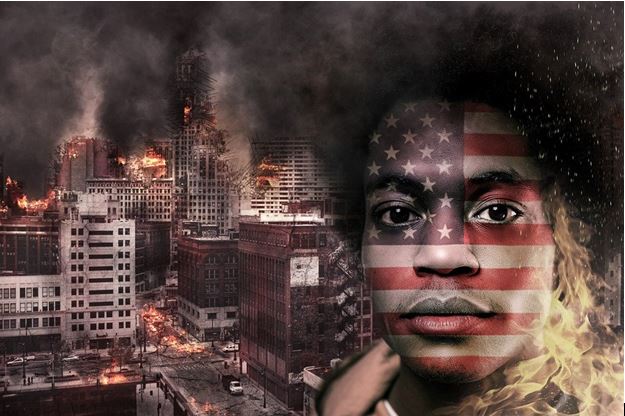
Enfranchisement came slowly for many Americans—women, people of color—and was threatened anew with each advance. The GOP has worked to suppress the vote for decades. Aside from SCOTUS dismembering the Voting Rights Act of 1965, over 17 million voters have been purged from the rolls in conservative-led states, often on the flimsiest of pretexts, but always because if they voted, they would likely vote Democrat. Polling stations have dwindled alarmingly in neighborhoods of color. Presidential appointee, Louis DeJoy, has removed and trashed hundreds of USPS sorting machines and local mailboxes to prevent mail-in ballots from reaching their destination on time. And now TheRUMP is openly declaring that if the election doesn’t appear to be going his way, the Supreme Court—with his newly appointed far-right judge to replace Ruth Bader Ginsburg—can decide the question.  

To riff on Jonathan Kozol’s brilliant observation about the role of public schools in preserving the status quo (The Night is Dark and I am Far From Home, 1975): It’s not that TheRUMP’s autocratic fascist power grab doesn’t work, but that it works so spectacularly—dismantling our democracy, burning the planet, sacrificing American lives for power—leaving us totally screwed.
While writing my World War II novel, The Sticking Place, I was moved many times by how Britain hung on, alone, for almost two years until, first the Russians, then the United States joined the fight to defeat Hitler. The world owes an unbelievable debt to those Britons. If they had caved…

But no one is coming to save us now—TheRUMP has burned every bridge. We must save ourselves.

VOTE. VOTE. VOTE. Whatever it takes: VOTE.

Because the present regime is killing us.

VOTING RESOURCES

PLAN Your Vote:

1. nbcnews.com/plan your vote: Everything you need to know about mail-in and early in-person voting, including the first day you can cast your ballot in the 2020 election. 

2. FiveThirtyEight: How To Vote In The 2020 Election (A state-by-state guide to voting in the age of COVID-19).

3. Iwillvote.com (English and Spanish instructions available)

4. National Education Association: Make a Plan to Vote.

5. Represent Justice: If you or a loved one has been impacted by the justice system, this is a great site. Voting rights for formerly-incarcerated people can be confusing because every state has different policies.  

LET’S GET OUT THE VOTE

Help Staff the Polls:

Volunteer to be a poll worker in your community. Sign up with SumOfUs, a global non-profit advocacy organization committed to human rights and curbing the growing power of corporations.

Help Register New Voters:

Rock the Vote offers a one-stop all you need to know to vote site: You can help register new voters here—a key strategy to winning in 2020—and check your own voter registration status, register to vote, apply for an absentee ballot, or find your polling place.

Your donation to March On will help register voters across the country. And no matter where you live, you can directly support the work of organizers, volunteers, and candidates in the six key battleground states that will be a must in delivering a progressive majority in 2020. Just pick a state, sign up, and March On will get you everything you need to make a big difference this November.

Write Letters/Send Texts:

Vote Forward and Daily Kos have teamed up to increase civic participation by sending letters to voters. Studies show this personal connection is one of the most effective ways to get infrequent Democratic voters to the polls.

Join Sierra Club’s Mobile Action Network: Text, call, or write letters to energize voters.

COVID Time

And each day looks the same to me, the face masks and monotony… (Riffing on Paul Simon)

Facing a seemingly interminable list of stuff to be done, I used to fantasize about something I called “No Time,” an enchanted space of hours tucked into—but not counting toward—the daily 24 rotations around the clock face. During “No Time,” I would indulge my cravings—write without a thought to querying, belt out songs on my guitar, draw, read, decoupage stuff, turn up the music and dance wildly about the house. The magical property of “No Time” was that I could shape it to my whimsy of the moment, with no concern for what had to be done.

Well, as they say, be careful what you wish for. It seldom arrives in the guise you imagined. To paraphrase Gabriel García Márquez, time in the time of coronavirus is distinctly weird. Days sort of flow into one another with little to distinguish one from the next. No trips to the hair salon, no gym sessions, no dental appointments (there is a silver lining in this). The calendar is a clean sheet of 30/31 blank spaces, and every day seems like Saturday, except Saturday which feels like Monday. Oddly, these indistinguishable days pass much too quickly. Like water through a sieve, they hold no shape. I can’t seem to give them meaning or weight.

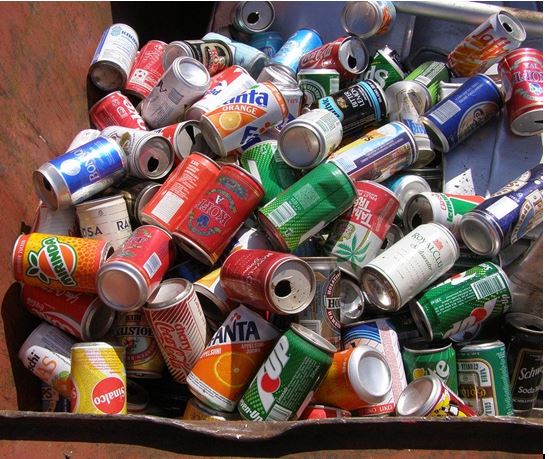
When the pandemic first descended—as the boxes of cans and bottles piled up [recycling center closed], bags of yard-waste  lined the porch [dump closed], and rows of masks and rubber gloves lay drying on a folding rack in the kitchen (were we due in surgery that day?)—I thought Okay, we’re grounded for a while. What can I accomplish that I normally wouldn’t have time for?

The answer may surprise you. It certainly surprised me. I, who have A clean house is the sign of a wasted life magnet on my fridge, decided to deep-clean my house from top to bottom.

Striving for Order in Chaos

Ed and I live in an 1895 Victorian, which gets regular bathroom and kitchen maintenance (we’re not that scurvy), but otherwise mostly survives on “party cleanses.” You know, the kind of cleaning you do when two or three dozen friends are dropping by for the annual holiday bash, and you count on the flow of liquor and dim lighting to disguise the worst of it. Not down-on-your-hands-and-knees clean, but good enough so the health department won’t shut you down. This year, from mid-March through the end of July, I did the hands-and-knees level of cleaning over every square inch of this house. Ed (who generally does the mopping and vacuuming while I write and query agents) would say from time to time, “Babe, why don’t you take a break today?” Good question, but I was consumed. I. Was. Going. To. Clean. The. House. Once. And. For. All!  

What was I seeking amid the dustcloths and Murphy’s oil soap, the sponges and Windex? Lightness? A sense of order in these chaotic times? Some kind of meaning in this pandemic nightmare?

COVID time. It’s not quite “the loss of a future that someone had imagined” as one writer tweeted, and it’s not quite the cancellation of the present. It’s more a kind of suspended animation where we’re still here, and moving about (in a limited way), but the motion feels aimless. Like characters in search of a play, our days lack context. We are ungrounded.

Tough Guys Finish Last

When a team of New York Times journalists interviewed scientists and public health experts from around the globe, they were on a mission: What were the root causes of America’s unrivaled failure in combating COVID?  Predictably, the dereliction of TheRUMP admin was a central theme, but experts also cited the longstanding tendency of Americans to balk at government mandates. No one tells me what to do. I do what I want. “That aversion to collective action,” the experts said, “helped lead to inadequate state lockdowns and inconsistent adherence to mask-wearing based on partisanship instead of public health.”

The aversion to collective action.

“As an American, I think there is a lot of good to be said about our libertarian tradition,” Dr. Jared Baeten, an epidemiologist and Vice Dean of the School of Public Health at the University of Washington, told the Times. “But this is the consequence — we don’t succeed as well as a collective.”

We don’t succeed as well as a collective. Will you listen to yourself, dude? Succeeding is the point, especially in quelling a pandemic with over 5.5 million confirmed cases and 174,000+ deaths in the U.S., alone. Our Marlboro-smoking, gunslinging, machismo—I go my own way—is killing us. And the weird thing is, we know this. That disorienting lack of context I mentioned above? That’s us needing each other, missing each other, adrift without each other.

I’m not talking about the family members and friends who, for reasons of distance and/or underlying health concerns, have been reduced to talking heads on Zoom. I mean we are mourning the loss of a society. Our society.  And craving that society.  Because it’s a myth that we operate individually, as hermetically-sealed bubbles, with nothing beyond our own needs, our own desires, our own well-being. We may act like that, but COVID has revealed a different truth.  

The Sound of Silence

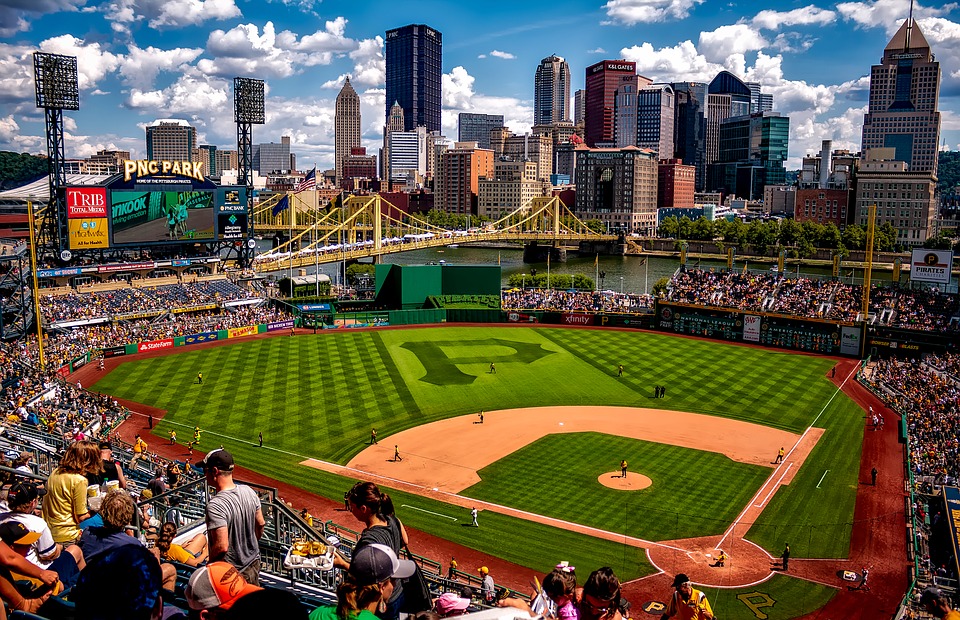
Baseball. I’m a BIG fan. As the truncated 60-game season kicked off on July 23rd, I caught a Red Sox game on TV. It was an education. When I dream about baseball in the dark, cold days of January, what comes to mind more than anything is the crack of the bat. It is the enduring visceral sound of the sport. At least, that’s what I thought until this season.

I found that first game almost unwatchable. The empty stands were weird, but much eerier was the lack of crowd noise, something most of us would have considered “background sound” in pre-pandemic days. Turns out that being a part of the crowd, immersed in the emotions and noise of your fellow fans—even if only by network proxy—is integral to the pleasure of the experience. Apparently Major League Baseball agrees, because the next game I saw was “alive” with the (recorded) sounds of fans—piped in and adjusted by the audio engineers at the ballpark to reflect the reactions of actual fans captured by an interactive website feature “Cheer at the Ballpark.”

Cheers, applause, boos, chatter. We find comfort in the general people-milling-about-us sounds. We find comfort in the presence of others.  

The crowded beaches, bars, and bistros of America’s premature re-opening were/are both exasperating and dangerous, but as much as I rue the fact that we are a nation that lacks the discipline to beat COVID back before venturing out, I’m not entirely pitiless. Not all of those people frolicking in the waves or crowding the boardwalk are QAnon whackjobs. Many, if not most, are simply desperate to feel the world around them again, to be part of that world, connected to others.   

Shoulder to Shoulder, We Make a Mighty Noise

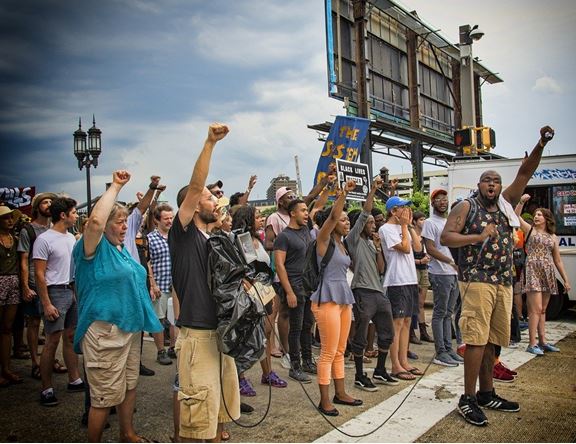
In the weeks following the reckless rush to re-open, something far more compelling and consequential than cocktails and shopping would bring us together and sustain community throughout the summer. The brutal murder of George Floyd by Minneapolis cops on May 25, and the resulting call to action by Black Lives Matter, brought people of all races and ethnicities into the streets in more than 2,000 cities across all 50 states. In the midst of skyrocketing COVID spread, an estimated 15-26 million people risked their life, donned their mask, and came together to protest police violence against people of color and demand racial justice. Tear gas, rubber bullets, kidnap and arrest by TheRUMP’s Brownshirt thugs—nothing could stop the need to rally together and denounce systemic racism with our collective voice.
We haven’t seen protests like these since the Civil Rights era. Why not? In the intervening 50 years, presumably, there were just as many people—and arguably more—for whom Civil Rights and racial justice continued to matter deeply. Yes, protests and rallies erupted after the fatal shooting of Trayvon Martin by a racist neighborhood-watch bully in Florida, and again following the police murders of Michael Brown in Ferguson, MO, and Eric Garner in New York City, but not on the sustained scale we’ve witnessed this summer. It took a knockout combination of punches to break through our private bubbles of COVID despair and get us out of our La-Z-Boys:

1. TheRUMP’s overt whipping up of racist hysteria;

2) The fury over his reckless disregard for American lives threatened by and lost to COVID, a disease that has disproportionately killed people of color;

3) Government indifference, even sanctioning, of ever-increasing racist police brutality and homicide—Ahmaud Arbery was murdered by an ex-cop in February and Breonna Taylor by police in March. But their tragic stories largely remained under the radar until George Floyd.

4) The horrific video of George Floyd’s final minutes erupted on screens all over America—his windpipe crushed under a cop’s knee: I can’t breathe—and a nation, homebound by the pandemic, unable to look away, was stunned.     

In the isolation of COVID, facing an uncertain future, with our democracy on the ropes, the vicious, racist cruelty of George Floyd’s murder reminded many of us—most of us—that we are a nation, a community, and that standing together, standing up for one another is both necessity and comfort. The headline on a recent PEW survey ran: Amid Protests, Majorities Across Racial and Ethnic Groups Express Support for the Black Lives Matter Movement. One in ten respondents to a Gallup poll reported participating in local actions.

No Life in the Safe Room

For the past decade, as the polar ice caps melt, temperatures soar, the oceans fill with plastic garbage, and the Doomsday Clock moves closer to midnight, the world’s billionaires—many of whom share substantial blame for our global mess—have been preparing “escape havens” to ride out an end-of-the-world scenario they believe will bury the rest of us. They are snapping up silos, bunkers, and millions of acres in what they consider the safest, least-polluted places on the planet—New Zealand is a favorite choice.

Billionaire Peter Thiel, co-founder of PayPal, purchased a luxury estate on a large property in NZ, noting, “If you’re the sort of person that says ‘I’m going to have an alternative plan when Armageddon strikes,’ then you would pick the farthest location and the safest environment.” His $13.8 million home on 477 acres boasts views of snow-capped mountains and is outfitted with a safe room. Other “doomsday” bunker sites tout screening rooms, private pools, and personal gyms. “Our clients are sold on the unique advantage of having a luxury second home that also happens to be a nuclear hardened bunker,” says developer Larry Hall, whose “Survival Condo” in Kansas uses abandoned missile silos constructed in the 1960s by the U.S. Army Corps of Engineers.   

Realizing that the $$$ they so greedily accrued to the detriment of the rest of us will be worthless, the uber-rich are looking to self-sustaining properties with plenty of acreage to grow their needs. I recall some mention at one of these annual billionaire confabs of the need for hiring private armies, minions to protect these oases from the less well-heeled doomsday survivors seeking water, food, and shelter. The 1% will be their own little world. Perhaps they’ll be “happy.” I often think the kind of endless greed that enriched them—no sense of “enough” or the harm they cause others—is itself an incurable disease. But for the rest of us?  

Most of us do not want to do life alone, however much “stuff” we possess. We need the other fans at the ballpark. We need the solidarity of fighting alongside others for a more humane, more just world. We need to share the experience of living. We need each other. We may bicker and battle but at the end of the day, what we crave is community. That was, for me, the brilliance and beauty of the Democratic Convention this past week. Although it was a virtual event, it focused on gathering Americans from across the nation and celebrating our hopes for a brighter, more inclusive future.

During her presidential campaign kickoff speech in January 2019, Kamala Harris said:

In the face of powerful forces trying to sow hate and division among us, the truth is that as Americans we have much more in common than what separates us. Let’s speak that truth…  

You know, some say we need to search to find that common ground. Here’s what I say, I say we need to recognize that we are already standing on common ground.

I say we will rise together or we will fall together as one nation, indivisible.

COVID time. If it has anything to teach us, it’s that nothing matters more than life, and to live that precious life fully, we must live it not for ourselves alone, not for the stuff we can accrue, but with and for each other.

We are stronger together.

We are better together.

We are happier together.

One Disaster At A Time

Back by popular demand the need to regroup and relax in these crazy times, I’m reblogging a post I penned back in early 2016. When Obama was still in the White House. When we had a pandemic-preparedness plan, and no pandemic. Before many of us understood what a MAJOR DISASTER really looks like. Nevertheless, I hope you find something of value here. Keep well. Don’t drink the bleach. And stay the hell out of refrigerated trucks.

“Life is just one damn thing after another,” American writer Elbert Hubbard once observed. Ah, if only it were that simple. In my experience, life is usually dozens of damn things, converging all at once like a bad pile-up on the Interstate.  But somehow, we’ve got to manage all the craziness bombarding us, so I’ve put together a little blueprint for meeting the challenge.

Acceptance

Two things to know here: 1) Life is always chaotic. 2) As humans, we are always trying to order this chaos. But how do you manage a thing like life? As with some fantastical dragon of yore, it seems to sprout two new heads for every one you slay. Revisions of one book teeter atop a stack of research for the rough draft of another, e-mails pile up in the Inbox, there’s nothing in the fridge for dinner, you’ve got a dental appointment, and your body is threatening mutiny if you don’t get to the gym soon. Over it all, dust settles on every surface and rolls in drifts across the floor like tumbleweed. A good day is when nothing arrives in the mail requiring your immediate attention.

Prioritizing, that mantra of you-too-can-be-organized gurus, is useful and arguably an absolute necessity when you’ve got a deadline (especially the sort involving contracts, lawyers, and money). But let’s be practical—sooner or later, someone’s gotta unload the dishwasher.

Posit #1: It is not possible to do everything at once. It is not even possible to always do the most important thing first. If you’re rushing to get edits done and the pipe bursts under the kitchen sink, are you going to finish Chapter 12 or call the plumber and start mopping?

This is where perspective comes in handy.

Perspective

In the 2015 film, The Martian, during a manned mission to Mars, Astronaut Mark Watney (Matt Damon) gets struck by debris, then lost, in a whammy of a dust storm. The biometer on his spacesuit is now busted and quits chirping, leaving the rest of his crew to assume he’s dead. In peril themselves, they boogie out of there. Watney regains consciousness to find himself alone, on Mars, with no working communications gear, a length of antenna lodged in his gut, and a limited supply of food in “the Hab” (the crew’s martian living quarters). His only hope is to survive until the next scheduled crew lands at the Schiaparelli crater 2000 miles away in four years.

I would argue that life doesn’t get more challenging than that.

Posit #2: If you’ve got most of your body parts, a working mind, and you haven’t been stranded on another planet, then there’s hope.  

But it helps to recognize and respect our human limits. Multi-tasking, that great savior of the ‘80s, turns out to be more myth than fact. Our computers may be able to open 12 windows at once, but we cannot. And trying to do so just results in a lot of stress, silly mistakes, and badly-burned dinners.

Which leads to the necessity of developing some basic life philosophy about our limitations and how to deal with them.

Basic Life Philosophy

When I was raising kids and teaching school and writing a book and doing the cooking, laundry, et cetera, I realized I would go right smack out of my head if I didn’t figure out some way to juggle the chaos. As with most things, necessity proved to be the mother of invention. One evening, with dinner bubbling on the stove, two dozen cupcakes baking in the oven for a fundraiser, and a pile of federal tax forms waiting on my desk, my daughter informed me we needed to do a science experiment that night for her class project the next day. She began listing the many items we would need. Wiping a strand of hair from my (tired) face, I gave her one of those smiles parents employ to keep from committing hara-kiri before their children’s eyes. “One disaster at a time,” I told her. Thus was born my succinct philosophy for managing the impossible.

Posit #3: You don’t need a 48-hour day (though if you know where one can be obtained, please write me immediately!). You need to exercise your power of choice.

Making Choices

A few weeks ago, I was feeling overwhelmed by all the stuff that needed doing RIGHT NOW.  And a tad cranky about how this was affecting the overall quality of my life. In a fit of take-charge/can-do, I made a list titled “Life Crushers.” (Okay, I was feeling very cranky.) On it were 11 items that felt like five-ton weights around my neck because it seemed: 1) I had to do them and there wasn’t time; 2) I wanted to do them and there wasn’t time; 3) I was just generally consumed with anxiety about them.

Weirdly, I felt better as soon as I finished the list. Looking it over, I began to see choices rather than musts. I could work on two books simultaneously, or focus solely on the revisions for one, or take a break from writing. I could allot one day a week to deal with routine house stuff, tackle it in small doses daily, or wait until we have our next party. I could blog twice a month, once a month, never again. I made a list of 3-4 alternatives for each life-crusher. In most cases, my choices reflected my original goals, but the exercise helped me to see that I had more control and flexibility in my life than I’d realized. And that very little has to be done by any particular date.

Posit #4: You can slow the merry-go-round any time you want, rearrange the horses, or get off it completely. Yes, there are consequences for your decisions. Choice is not about escaping consequences. It’s about deciding what things you’re willing to pony up for and how high the price you’re prepared to pay.

At the close of The Martian, Matt Damon’s Watney (safely back on Earth) explains the reality behind their dreams to a class of wannabe astronauts. “At some point,” he tells them, “everything’s going to go south on you. You’re going to say, ‘This is it. This is how I end.’ Now, you can either accept that, or you can get to work. That’s all it is. You just begin … You solve one problem and you solve the next one, and then the next. And if you solve enough problems, you get to come home.”

Hey, it’s one disaster at a time. It’s what we all do. It’s really all we can do. Even in COVID times.

It is enough.

244 Years: A Reckoning

Any man’s death diminishes me, because I am involved in mankind, and therefore never send to know for whom the bells tolls; it tolls for thee. (John Donne, 1624)

In his 1858 run for a seat in the U.S. Senate, Abraham Lincoln famously said, “A house divided against itself cannot stand.”  Lincoln lost the seat, but was elected president two years later, and his “house divided” speech, considered by many as too radical at the time, gained immortality. Perhaps because it speaks an incontrovertible truth.

A house divided against itself cannot stand.

America, the fabled melting pot, the grand experiment, is flailing on multiple fronts and failing (or to be accurate, continuing to fail) millions of Americans—Blacks, Latinx, and Native Americans, who together make up a third of the U.S. population. That’s 100,000,000 people. Riffing on Lincoln’s metaphor, if a third of your home was suffering neglect, left to rot and, worse, taking continual direct hits, how would you rate the stability of the whole? Would you not grieve for the damage? Do your best to repair it? Prevent a recurrence?

A quarter of a millennium after America declared itself a nation, we are still struggling with what a nation is. Is it a loose collection of tribes—racial, economic, ethnic, religious—with different needs, competing interests, and no intersection? Is it a miscellany of states, blue, red, and trending purple, urban vs. rural? And if we fail to be a nation, a house standing resolutely, every nail and plank and shingle as vital to the whole, as equally worthy of care and respect, then what fate awaits us?  

Who Divisiveness Serves

When the authors of the Declaration of Independence penned that famous line, We hold these truths to be self-evident, that all men are created equal, they weren’t advocating for the equal rights of men without property, or women, or African Americans be they slave, indentured servant, or (in rare instances) free, and certainly not the Native tribes whose land had been stolen by white Europeans, continued to be stolen by white Americans, and today is abused/stolen by primarily white-managed companies, like Energy Partners and its parent-company Sunoco in the case of Standing Rock Sioux and the Dakota Pipeline.

Turns out that a divided house is highly profitable for those with big $$$, the propertied class, and that picture hasn’t changed since Thomas Jefferson. The ten richest people in America today are still men, and still white. As the French say, Plus ça change, plus c’est la même chose. And since the Supreme Court decision on Citizens United, with its absurd notion that corporations are people, these rich white men, and hundreds more like them, have been able to openly buy government officials who will vote their interests. TheRUMP. Moscow Mitch. A majority in the Senate. Governors. And lots of State Secretaries (who oversee voter rolls).

These same white men own or have a controlling interest in companies that largely employ Black and Latinx people in low-paying jobs. Think warehouse workers for Amazon or meatpackers for Tyson Foods. A 2015 analysis showed that only 3.3% of Amazon’s Black workers held “professional” positions, and only one of their 110 top execs and senior officials was Black, while more than 85% of  the company’s Black workers had unskilled jobs. Meat-packing plants, like the ones owned by Tyson Foods, largely employ Latinx and Black workers in grueling, low-paying (the unions that once paid white packers a living wage are long gone), and increasingly dangerous jobs. More than 4,500 Tyson workers have contracted COVID-19.

 A History of Oppression: Nothing New

The history of exploiting and controlling people of color for profit by the powerful and white in America is as old as the nation. And then some. Early European settlers brought not only guns and new diseases, but a concept of ownership that was truly foreign to Native tribes: the idea of private property, that an individual could have legal and exclusive rights to a particular piece of land. The Europeans’ (often violent) usurpation and conversion of Native lands to private holdings drove Native peoples further and further from everything they knew, including the burial grounds of their ancestors, until they were forced onto reservations under the Indian Appropriations Act of 1851. The reservation system not only left Native Americans with the least desirable land, it banned them from leaving the reservation without government permission.

The Dawes Act of 1887 added further insult to injury by giving government the right to divide reservations into small allotments of land for individuals within a Native tribe. This, it was touted, would help the Native peoples to “assimilate” to the American (White, Christian) culture more quickly. In reality, the Act cut the land Native Americans owned by more than 50 percent to make way for the railroads.

At the same moment Native tribes were being shunted onto reservations, African-Americans were deep in their own troubles with the powers-that-be. In what is widely considered to be the worst U.S. Supreme Court decision for Black Americans (and there have been some real doozies), Dred Scott v Sandford (1857) ruled that the Constitution had never intended to grant American citizenship to Black people, enslaved or “free.”

Eleven years and one very bloody Civil War later, the Fourteenth Amendment overturned Dred Scott, granting citizenship to everyone born in the U.S, which is good, of course, but the gap between a legal right on paper and the living/recognition of that right in reality—well, it can be a mighty gap.    

Even before Lee’s surrender to Grant at Appomattox, schemes were being hatched about what to do with the newly-freed slaves. General Sherman seized 400,000 acres—largely rice farming area—along the coastline of Georgia and South Carolina under Field Order 15, and settled 40,000 of the roughly 4 million freed slaves there. Immediately, white Confederate farmers cried foul, claiming the land belonged to them. Andrew Johnson, now president after Lincoln’s assassination, overturned Field Order 15. Black farmers must return the land to its “rightful” white owners.

So, again, where to put these people who are “other”? Recall the fate of Native Americans—do we detect a pattern here? Congress responded with the Southern Homestead Act of 1866, which opened 46 million acres of federal land in Alabama, Arkansas, Florida, Louisiana, and Mississippi for purchase by both newly-freed Blacks and poor white farmers. But many aspiring Black farmers were frustrated in their quest to own a piece, even a bite, of the pie. Not only did extreme poverty put purchase out of reach, but the land often proved unsuitable, difficult to locate, and if they overcame these troubles, they still faced white hostility and violence.

In fact, violence against Black Americans was rising everywhere. The Ku Klux Klan emerged within months of the Civil War’s end. And Jim Crow laws flourished with one aim: to enforce pre-war segregation and a social contract that gave all the rights to whites, including the right to lynch a Black person without consequences. More on this in a bit.

Fear and Hatred: The Tools of Divide and Conquer

Divide and Conquer: It’s as old as the history of sovereigns seeking to control a population for their own benefit and continued dominance. AORTA (Anti-Oppression Resource and Training Alliance) calls divide-and-conquer one of the “most infuriatingly effective tricks in the book” and cites among its key tactics:  Creating a narrative that blames each group for the other group’s problems. This works to foster mistrust amongst groups and to obfuscate the systematic inequalities of white supremacy, capitalism, and patriarchy.

“These aren’t people. These are animals,” TheRUMP said of immigrants seeking asylum at the U.S. southern border. “Working-class Americans are left to pay the price for mass illegal immigration,” he claimed. “Reduced jobs, lower wages, overburdened schools, hospitals that are so crowded you can’t get in, increased crime, and a depleted social safety net.”

Defending his Muslim Ban, TheRUMP declared, “You look at the migration, it’s young, strong men. We cannot take a chance that the people coming over here are going to be ISIS-affiliated.” This despite the fact that most Muslim immigrants are fleeing ISIS terror and the bloody Syrian civil war. 

Jokes about the Trail of Tears. References to Haiti and African nations in general as “shithole countries.”

They’re stealing your jobs, threatening your safety, plotting to overthrow your rightful (white) dominance. It’s the mantra used by the wealthy, white, and powerful to preserve a status quo that benefits them immensely.

So, why do so many white Americans—especially those from the poor and working classes—fall for these lies over and over, even when they’re exposed as myth? Author Ron Breazeale, Ph.D. points out that “promoting and often clinging to [these positions] is based on emotion,” not reason or fact. “Fear and anger distract people and distort their thinking.”

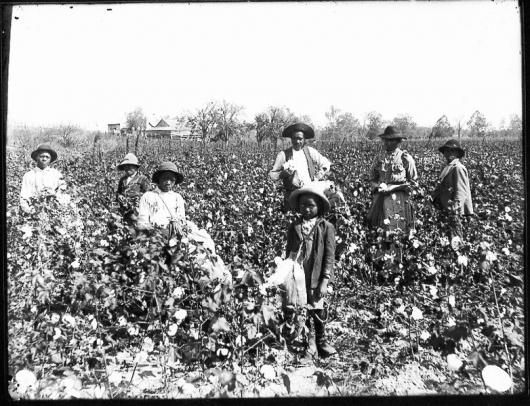
And one of the greatest fears is the fear of becoming “the absolute bottom.” Before the end of the Civil War, poor southern whites could comfort themselves with the fact that though they weren’t wealthy plantation owners, they were at least “better” than the Black slaves picking cotton. After emancipation, this assumption was less certain. The newly-formed KKK spoke to these people’s anxiety.

Having worked in communities where poor, barely-educated whites formed the bulk of the population, I’ve observed this anxiety firsthand. Rather than being sympathetic to or forming an alliance with their Latinx and Black neighbors—“class-mates” economically speaking—they freely spouted racist remarks, most often in comparative terms: At least, they [whites] had standards. They knew the meaning of work. No one was giving them a hand out. Desperate for someone to climb on the backs of, for someone to look down on. I’m not the bottom. I’m not the bottom.  

Easy to play on those fears. Easy to divide whites and people of color, thus assuring a cheap, exploitable, often non-unionized working class, and a political landscape not subject to popular socialist uprisings.

Racial Justice is Economic Justice

The tangle that is economic injustice is thick and difficult to unravel, but education is a great place to start. As a former first grade teacher, I can tell you that schools are both the place where inequalities are perpetuated and the opportunity for those inequalities to be overcome. Many, if not most, students in affluent communities enter school with all the perks that foster success: good nutrition; a surfeit of cultural experiences (largely white culture, though this is s-l-o-w-l-y changing)—trips to museums, concerts; lessons in music, dance, theater; parents who regularly read aloud to them. Perks that students from impoverished communities—where many parents juggle multiple minimum-wage jobs just to survive, and have little time for reading stories or cultural outings, and no money for lessons—can’t match.

Santi Vedri

If we want to break the chain of poverty, we must mandate that all public schools, regardless of location or student population, are housed in clean, spacious, well-equipped buildings, and adequately staffed by credentialed teachers, ESL and reading specialists, counselors, nurses, and administrators committed to racial justice. No cops. No use of court referrals to handle discipline of kids in school. No school-to-prison pipeline.

Financing such a mandate must be a combination of federal and state dollars—with the proportion of federal monies greater in states with less revenue, and lower in states that are tax-affluent—but the control must remain predominantly local. Impoverished schools handed over to state control have not improved outcomes for kids. They have merely silenced the voices of community educators and parents. And those voices are vital in communities of color.

Many people forget that school board elections were some of the first democratic processes in which African Americans were able to engage themselves as candidates for positions of public governance. In representing their communities on local school boards, African Americans were immersed within the political processes of city and county governance, which provided training for elevated levels of government service. (The Southern Education Foundation)    

Rochelle Nicole

Truly great and equitable public schools for all children is the first and most important step toward economic justice. Access to free college or trade schools is the second. Imagine a world where we could all develop our personal talents and pursue our interests, our passions. And now some (affluent, educated, usually white) crank is sure to say, “Whoa, we need someone to work the Slurpee machine at the 7-11. Someone to flip burgers at Mickey D’s. We can’t all be leaders. Some of us have to be followers.” When I hear this, I think, “So why don’t you volunteer?”

We live in a world where automation is advancing daily. How many of the low-wage, no-benefits, dead-end jobs could be done by robots? I mean, we have robots assisting in surgery, so surely they could “learn” the Slurpee machine. And for those jobs that can’t be mechanized, we must pay a true living wage to every worker, say $25 an hour. Not in five years time, but now, with an annual COLA. For the people who harvest our fruits and veggies. For the janitors and the folks who stock the shelves, for childcare workers and Amazon warehouse employees. Economic justice is really equality of opportunity. And to guarantee that equality, you need legal justice.

Racial Justice is Legal Justice

It’s interesting—and chillingly telling—that when Nazi lawyers were casting about for a framework to construct what became the Nuremburg Laws, they studied America’s Jim Crow laws which segregated Blacks from whites, and brutally (even murderously) discriminated against the former.

It is equally horrifying that 75 years after American soldiers, Black and white, risked and sacrificed their lives to defeat Hitler’s Germany, the most deadly effect of Jim Crow—lynching—is still not a federal crime. Some 200 attempts at legislation in the past 100+ years have failed,  even though more than 4,000 Black Americans were lynched from 1877-1950, in the heyday of Jim Crow. Even though these vigilante murders occurred up to the close of the 20th century. Even though they are still occurring, for what is Ahmaud Arbery’s murder if not a lynching?       

Chris Henry

The good news is the House did pass a bill in January making lynching a federal hate crime, citing in its findings: (15) Having concluded that a reckoning with our own history is the only way the country can effectively champion human rights abroad, 90 Members of the United States Senate agreed to Senate Resolution 39, 109th Congress, on June 13, 2005, to apologize to the victims of lynching and the descendants of those victims for the failure of the Senate to enact anti-lynching legislation.

Well, the bad news is that, of this writing, the Senate is still failing to enact such legislation. Rand Paul blocked the House bill from coming to a vote, objecting to the bill’s “broad scope.” I mean, you don’t want to give someone serious prison time for “merely” disfiguring a face or whacking off a limb. Gracious, no! Some Democrats suggested what Paul objected to was the bill’s new name: The Emmett Till Antilynching Act.

For too long, it’s been too easy to dismiss this kind of systemic brutal violence as a “southern” problem. But George Floyd was a Minnesotan, murdered over the issue of twenty bucks. Eric Garner was a New Yorker, strangled for selling cigarettes. And Ryan Twyman, who was shot 34 times in his car in June 2019 by the LAPD for possible possession of illegal weapons (none were found in his car), lived in sunny California. If we are to save this house that’s exploding all around us, we need serious police reforms, not the kind of faux band-aid “suggestions” made by TheRUMP, who, you know, kind of thinks chokeholds are sort of a bad idea, except when they’re necessary. We need:

Clay Banks
  • A ban on police use of chokeholds.
  • And end to the provision/use of military grade weapons by the police.
  • A prohibition on racial profiling, and an end to stop and frisk.
  • A ban on no-knock warrants.
  • Creation of a national police misconduct registry, and an end to qualified immunity.
  • A ban on the use of facial recognition systems by both police and ICE, systems which “misidentify Blacks at rates five to 10 times higher than they do whites.”  

And we must stop sending the police to intervene in every situation. Armed cops do not need to be called in when no actual crime is being committed or openly threatened. As Scott Roberts at Color of Change points out: “Rayshard Brooks should [and would] still be alive today. If a tow truck had been called instead of the police, if family members were called to pick him up, or even if he was simply allowed to walk home. There are a number of non-police alternatives that could have been used in the minutes leading up to Rayshard’s murder.”

Stopping the epidemic of police violence against people of color and putting the dollars spent on police into services that improve the lives of Black and Brown communities is the headline story of the moment, but legal justice must also address the systemic racism in banking and investment.

Maria Oswalt

Robert Reich notes that while the CEOs of JPMorgan Chase, BlackRock, and Goldman Sachs all publicly bemoaned racial bias in the wake of Floyd’s murder, JPMorgan has made it difficult for Black people to get mortgage loans, routinely charging them higher interest rates than white borrowers and refusing them mortgages white applicants would have received. BlackRock is a major investor in the private prisons that disproportionately incarcerate men of color. In the halls of Congress, these CEOs oppose laws against red-lining or payday lending (both of which disproportionately burden Black and Brown people), while receiving giant tax cuts and lobbying against “a wealth tax that could bring world-class schools, first-class healthcare and affordable housing to communities of color.”

We haven’t even touched on voting rights or how gentrification is destroying Black and Brown communities in every city. You’d need an encyclopedia, or a set of them, to catalog all the ways the law works to restrict, harass, incarcerate, and kill Black and Brown Americans.

Racial Justice is Environmental Justice

The destruction of communities of color goes far beyond gentrification. It goes to the very lives of the inhabitants. One of the reasons COVID-19 is proving so deadly for Black and Native peoples is that their communities are too often the dumping grounds for tainted water, smoggy air, and industrial waste. Asthma mortality rates in the Black community are three times that of whites, nationwide, and Black Americans are dying from COVID-19 at a rate of 50.3 per 100,000, compared to 20.7 for whites.  The link? Both diseases are higher in areas that suffer heavy air pollution, and people with Asthma are particularly vulnerable to dying from COVID.

Ella Ivanescu

Landfills, refineries, and industrial plants that poison the environment are overwhelmingly located in Black neighborhoods. Major highways in every metropolis—The Bronx, Los Angeles, Chicago, DC—run through Black and Latinx communities, filling the lungs of those who live there with toxic fumes. And that’s no accident. Race-based zoning has corralled people of color into what are known as “sacrifice zones”, hot spots of pollution.

And though a bulk of the worst pollution sources are dumped in neighborhoods with low education and income levels, studies have shown that environmental injustice is not just a “poor person’s thing.” Middle-class Black neighborhoods, with incomes in the $50,000-$60,000 range, tend to be more polluted than white neighborhoods where the incomes are under $10,000. Nor is this poison-dump only an urban issue. Down-river pollution, fracking, and cheap land for unloading toxic waste all affect rural communities of color and Indigenous peoples. As I write, plans are in the works to build a fracked gas export facility on sacred land of the Texas Carrizo/Comecrudo tribe. And the struggle by Native Americans to stop the Keystone XL pipeline is legend.

Racial justice demands a true environmental rethink/revolution. A genuine green plan that leaves no one gasping for breath.

Racial Justice is Social Justice 

The United Nations defines Social Justice as “the view that everyone deserves equal economic, political, and social rights and opportunities.” The Oxford Reference calls it “the objective of creating a fair and equal society in which each individual matters, their rights are recognized and protected, and decisions are made in ways that are fair and honest.” The justice we’ve been discussing here. The justice we still lack.

On our 244th anniversary, America has yet to answer that most important question: Are we a nation? Or are we just a loose, wrangling collection of various peoples: Black, Brown, Asian, Indigenous, and white, with many whites struggling to maintain the unfair (major) edge they’ve always enjoyed, determined to remain dominant if they’re monied, equally determined to avoid being cast to “the bottom” if they’re not?

Selma to Montgomery March 1965

With internal divisions as deep as any we’ve seen since the Civil War, I believe the first thing we must do is own up to the havoc and ruin this deeply divided house has wrought. And that means continuing and amplifying the kinds of conversations we’ve been having in recent weeks in the wake of the murders of Ahmaud Arbery, George Floyd, Breonna Taylor, and Rayshard Brooks. We’ve begun these conversations before, most notably during the Civil Rights era when people like Martin Luther King, Rosa Parks, and John Lewis revealed to a nation just how badly we had failed the democratic ideal. We need to keep talking this time. And more than that, those of us who enjoy privilege need to walk the walk. Not for a single piece of legislation. Not for a season. But until what happened to George Floyd is impossible for a generation of Black children to imagine.

The idea of supremacy—of racial, class, ethnic, religious “pecking orders”—it’s such a waste of talent, brilliance, of human potential. This—I don’t know what to call it—drive?—to suppress others, to climb on the backs of our fellow beings, to press the life from them. It leads to nothing but suffering—police violence, wars, a poisoned planet where children die daily, without having lived. Our hierarchies are killing us. Literally.

But what if there were no hierarchies? What if we became a house indivisible? Not a “melting pot” of assimilation to whiteness, but an America of true equality,its strength and endurance founded in the beauty and complexity of what we each bring to the mix. Can we ever hope to be that nation, united in justice and opportunity for all?

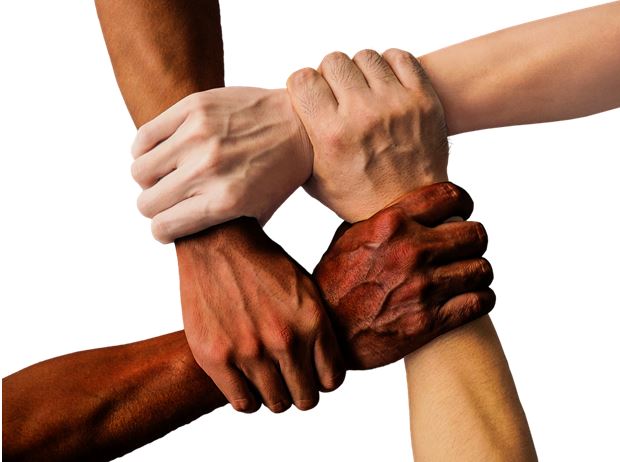
I only know we’ll never get there by climbing on someone else’s back to get advantage. We’ll only get there by linking arms. In his brilliant and enduring Letter from a Birmingham Jail (1963), Martin Luther King said: “Injustice anywhere is a threat to justice everywhere. We are caught in an inescapable network of mutuality, tied in a single garment of destiny. Whatever affects one directly, affects all indirectly.” 

Amen.

Hope, Humor, and Happy Faces

Hope is being able to see that there is light despite all of the darkness. (Desmond Tutu)

Sitting on my deck in my usual early May (71˚ day/43˚ night) evening outfit of down jacket and flip flops, needing some succor from corona-madness, searching the stars for that moral arc of the universe MLK spoke of—long, but bending toward justice—it occurred to me that we need three things to survive difficult times of unknown duration: Hope, humor, and the faces of those we love. While we’re waiting for that long arc to bend, I offer you something of each.  

Hope: The Associated Press Keeps the Lights On

It reads like an apocalyptic political thriller. Okay, maybe more of a pandemic potboiler. Anyway: The good guys try desperately to get the truth out, slugging their way through a mind-numbing series of roadblocks set by the bad guys, who are equally anxious to bury that truth. It’s a real story though, one with far-reaching consequences—one we might never have known if it weren’t for the power and integrity of a free press. As The Washington Post reminds us daily: Democracy dies in darkness.

Thanks to the Associated Press, democracy, however hamstrung at the moment, is still kicking at those who would turn out the lights.

April 30: With more than 55,000 Americans dead from COVID-19, TheRUMP announces the end of federal social distancing guidelines. Over. Done. Time to re-open. Open everything. You can always drink a gallon of bleach if you’re worried.

Heads are scratched. Hmm. What happened to the CDC? Weren’t they supposed to issue some kind of rules for when and how to go about this re-opening thing? Well, yes they were, and yes they had, in fact, created such a document, a 63-page report: Guidance for Implementing the Opening Up America Again Framework. Detailed recommendations for making site-specific decisions on when, how, and whether to open businesses, schools, religious houses, and other public places. Advice for when to shut down again in the advent of inevitable COVID-19 flareups.

But a (not-so) funny thing happened on the way to releasing this important doc with its emphasis on coordination among state and local jurisdictions (because COVID-19 bleeds rapidly across borders in an America on the move). The report appeared to be stuck in that cyberspace pipeline where documents float in obscurity until they magically disappear. Instead, the White House issued its own Opening Up America Again guidelines. With recommendations to re-open public places and businesses in accordance with federal and local “regulations and guidance”, whatever those might be. Oh yeah, and maybe monitor employees for COVID-19. If you have tests. If it’s not too much hassle.

That might have been the end of it if the AP hadn’t gotten curious about the CDC’s uncharacteristic silence and done some digging. If they hadn’t granted CDC officials anonymity to speak truth. If they hadn’t followed a flow of internal emails. But they did. And here are the highlights of what they found: 

April 10: CDC director, Robert Redfield, shares the guidance doc via email with the WH task force, a group that includes not only TheRUMP, his assistant for domestic policy Joseph Grogan, Deborah Birx, and Anthony Fauci, but also epidemiology “luminaries” Jared Kushner and Kellyanne Conway.

April 14: CDC officials send the doc to the Office of Management and Budget, standard operating procedure for agencies seeking “final WH approval for documents an agency has already cleared.” [My italics]

April 17: Ignoring the CDC report, the WH releases the plan mentioned above. It’s up to state governors and local officials to figure out this re-opening stuff.

 April 24: Redfield resends the CDC doc to Birx and Grogan. Would they please review it so it can be published on the CDC website?

April 26: All is still silence from TheRUMP admin. More pleading from the CDC. More waiting.

April 27: An OMB staffer passes along a message from the WH: “They have given strict and explicit direction that these documents are not yet cleared and cannot go out as of right now. This includes related press statements or other communications that may preview content or timing of guidances.”

April 30: The CDC finally gets word from TheRUMP’s Task Force, just hours before the federal guidelines on social distancing expire. In an email, Quinn Hirsch, from the WH’s Office of Information and Regulatory Affairs (OIRA), tells the Department of Health and Human Services—note the circumnavigation here to avoid the Task Force directly addressing the CDC—that the guidelines need to be “more cross-cutting and say when they should reopen and how to keep people safe.”

Huh?

“Fundamentally,” Hirsch writes, “the Task Force cleared this for further development, but not for release.” CDC Chief of Staff Kyle McGowan laments the guidance report will “never see the light of day,” three unnamed CDC officials tell the AP.

May 7: BOMBSHELL. The AP publishes 17 pages of the CDC’s 63-page report obtained from an unnamed federal official. White House reaction is swift (if less than honest). A mad scramble ensues to fast-track approval and release the guidance. At least some part of the guidance. Or something similar to the guidance. At any rate, the AP obtains an email that confirms the WH ordered the CDC to refile the shelved report just hours after the story broke.    

May 8: Gobbledygook is employed to explain this sleight-of-hand switcheroo. When asked what happened to the original CDC report, White House coronavirus adviser Dr. Deborah Birx said, “No one has stopped those guidelines. We’re still in editing.”

And more gobbledygook … It was a “touchstone document,” one federal official said. More of a blueprint for “other groups inside the CDC who are creating the same type of instructional materials for other facilities.” Yeah.

In a statement, circulated by the WH—possibly with a bit of arm-twisting?—Redfield is quoted: The process is “an iterative effort to ensure effective, clear guidance is presented to the American people.”

May 13: Senator Charles Schumer (NY-D) calls for the immediate release of the CDC’s full report. “America needs and must have the candid guidance of our best scientists unfiltered, unedited, uncensored by President Trump or his political minions.” Sen. Mike Braun (IN-R) blocks Schumer’s resolution, saying the CDC’s guide would bog down the economy.

May 14: The CDC releases new guidance docs on reopening—a series of watered-down, one-page mini-reports. No mention is made of reopening states in phases after prescribed benchmarks have been met. After a sustained decline in COVID-19 cases. Many states re-open with abandon.  

May 20: The AP reports that U.S. health officials have “quietly released” 20 new pages of reopening guidelines. The new pages provide more detail, but the language doesn’t mandate. Instead, it suggests: as feasible, if feasible. “This administration has shown time and time again that it has a problem with science,” an unnamed veteran CDC official tells CNN. “We are giving them science and they don’t seem to want it. We are allowed to release what they allow us to release.”

That same day, the AP also reports that “Republican political operatives are recruiting ‘extremely pro-Trump’ doctors to go on television to prescribe reviving the U.S. economy as quickly as possible, without waiting to meet safety benchmarks.”

This is far from the final chapter, but without a free press, we would never have known about any of the WH’s machinations to bury the original CDC report. Without a free press, we would not know that some states are under-reporting COVID-19 cases—endangering their citizens—to boost TheRUMP’s ratings. Without a free press, the whistleblowers and inspectors general being fired at a brisk clip would “disappear” in anonymity. A free press shines a light into all those dark corners—and we are on serious overload here—a hope that democracy may yet survive. 

Humor: Red Hair is a Funny Thing

The thing you should know about red hair is that it’s a very specific color. Paraphrasing (liberally) Tolstoy’s happy/unhappy families trope: Brunettes are all like, but every redhead is red-haired in her own way.

Back when COVID-19 was new—new to us, at least, the U.S. having a rather solipsistic view of world events—Good Groovin’ Buddy (don’t ask) and lifelong friend, Mimi, made an arresting observation on Facebook: We are about 2 weeks away from knowing everyone’s true hair color. Lots of good-humored bon mots greeted this post, but glancing at my calendar, with its crossed-off appointment at a hair salon now shuttered, I realized the time for some definitive action was upon me.

A trip to the supermarket turned up a dozen or so “touch-up” color kits, all in the blonde or brown range, except for a box of something called “ultra violet.” Hmm. Not quite that desperate. Masked and gloved, I moved on to CVS with the same results. I now had about an inch of gray.

Thing #2 to know about redheads: Red hair does not gray gracefully. No salt-and-pepper sultriness, no ashy-blonde mystique. For redheads, it’s more Margaret Thatcher battleship gray.

So, I made one last foray, to Walgreen’s this time, and there I found a touch-up kit that “matches dark auburn shades.” Voila! Feeling pleased with my persistence, I bought both boxes they had and advised the cash register dude to order more.”I’ll be back!” I assured.

I feel compelled here to point out that “matches” is a word with almost as many shades of meaning as there are shades of red.

Anyway, that was March 23, and for the past two months now, I’ve been sporting a two-toned looked. From the roots out—about four inches—my hair is not unlike those incredible descriptions of wine: A hint of wild berries, with undertones of passion fruit, and a neon finish. After that, it’s tired auburn, sun-bleached and sort of blehh. But in the “curious” era of COVID-19, I find I don’t care. I have more essential things to attend to, like staying alive. Vanity is an anachronism that belongs to a world we may or may not ever see again.

During a Mother’s Day Zoom confab, my daughter asked why I don’t just buy a full hair color kit and do my entire head. Excellent question, and I have an excellent answer: To date, there are no full color kits in any shade even bordering on red (except the above-mentioned “ultra violet”) in my local “essential businesses.” So, I cycle and walk and food-shop in the public sphere with my head of many colors. Like my parents’ long-ago two-toned mauve-and-ivory Chevy Bel Air, it’s destined to become a classic.

Happy Faces Save Lives

When my husband had a liver transplant ten years ago, I camped out for a week at his bedside in the hospital, absent only for a quick bite in the cafeteria or a brief catnap in the visitor’s lounge. In the following weeks, I made the 90-minute drive twice daily, going home each night for a shower, a snooze, and a cat feeding before returning to the hospital. Ed told me he listened every morning for the sound of my step in the hallway. “Love is the greatest healer of all,” one of his doctors said. “The medical profession knows that.”

But now, on COVID-19 wards across the country, family members cannot visit. And caregivers’ smiles are buried behind whatever mask/scarf/headgear arrangement they can rig, while ER doctors dress in something resembling hazmat suits, their faces helmeted and shadowy. Virus-infected patients, struggling to breathe, see no human faces at all. And faces matter.

If you’ve ever had your car break down during rush hour on a busy road with no shoulder (I have! I have!). If you’ve ever been trapped in a flood, or awoken to the smell of something burning and realized it’s your house or apartment building. If you’ve gotten lost in some remote area, with no map and no cellphone reception. Then, you know the tremendous joy and relief at seeing the faces of those who arrive to help: To safely direct traffic around you until the tow truck comes. To airlift you from rising waters or rescue you from fire. To guide you back home. Faces. We look to them for love, for understanding, for shared laughter. When we’re in deep trouble, we seek faces for reassurance, hope, help. And in extremity, when there is no more hope, we seek faces to not be alone in our final moments. That’s what makes Robertino Rodriguez’s “smile badge” so brilliant. And so life-saving.

Instagram

In April, Rodriguez, a respiratory therapist at Scripps Mercy Hospital in San Diego, posted on Instagram  “Yesterday I felt bad for my patients in ER when I would come in the room with my face covered in PPE. A reassuring smile makes a big difference to a scared patient. So today I made a giant laminated badge for my PPE. So my patients can see a reassuring and comforting smile.”

A full-face smiling photo of the caregiver behind the mask. Such a simple concept, yet so profound. The idea quickly went viral in the medical community.

 “These patients come in with a cough, shortness of breath, or fever and the question on their minds and everyone’s mind is, ‘Do I have COVID?’” says Peggy Ji, an ER doctor in Los Angeles. “I can only imagine how intimidating it is seeing a team of nurses, respiratory therapists and doctors entering their room in full PPE gear…” Ji now wears a cheerful Polaroid of herself to help her patients connect with the human inside the “walking spacesuit and mask in front of them.”

Instagram

Derek DeVault, a Los Angeles nurse, saw Rodriguez’s post on Instagram and immediately recruited his co-workers to do the same. “[I] thought it was a beautiful way to bring ease to our patients during this stressful time,” DeVault noted on Instagram, beneath a photo of himself and his colleagues sporting their smile badges. 

Dr. Joseph Varon, chief of medicine at United Memorial Medical Center in Houston, and his staff all have smile badges attached to their gowns when they interact with patients. Giving patients hope, Varon believes, is half the battle, and a friendly face can accomplish that. If a patient loses hope, it doesn’t matter how many medications they receive, he says, “they’re going to go. So my goal is to avoid losing people to this coronavirus any way we can.”

I started this section with the story of Ed’s liver transplant. How I stayed by his bedside day after day. How he listened each morning for my footsteps in the hall. What I didn’t tell you was how much I needed to be there, too. Needed to see his face. To hear his breathing. To hold his hand and feel that connection—physical, emotional, visual—unbroken.

Ed’s doctor was right: Love is the greatest healer of all. And it’s just possible that when we help heal others—by giving them hope, by making them laugh, by standing with them though masked and social-distanced—we heal ourselves.

I leave you with a song I’ve been listening to over and over lately. Somehow, it addresses so much. May it offer you some kind of succor, too.

Stay hopeful. Stay well.