“In spite of everything, I still believe that people are really good at heart.” Anne Frank

In the rearview mirror of history, everything emerges with razor-sharp clarity. Villains do their evil deeds. Heroes leap forth to foil them and save at least some part of the day. The present is always hazier, less certain. Millions of refugees from Syria, Nigeria, and Iraq flee across our TV screens, their children pressed close, hearts beating wildly. And, as people around the globe did in 1939, we look on and wonder: Who will stop this?
Recently, I shared a friend’s post on Facebook (thanks, Wayne). It concerned a man, Sir Nicholas Winton, who saved 669 children from the Nazi death camps. Moved, I dug around for more stories. Below is a small sample of what I found, but it suggests that the impulse for good is a global human quality. These men and women had nothing to gain and everything to lose. They did what they did because they could not look away from the wrongs of the world and the suffering of others. If you ever despair of the human heart, I think this list is proof that Anne Frank got it right. I have provided a link for each person at the end of their story, in case you would like to read more.
Sir Nicholas Winton
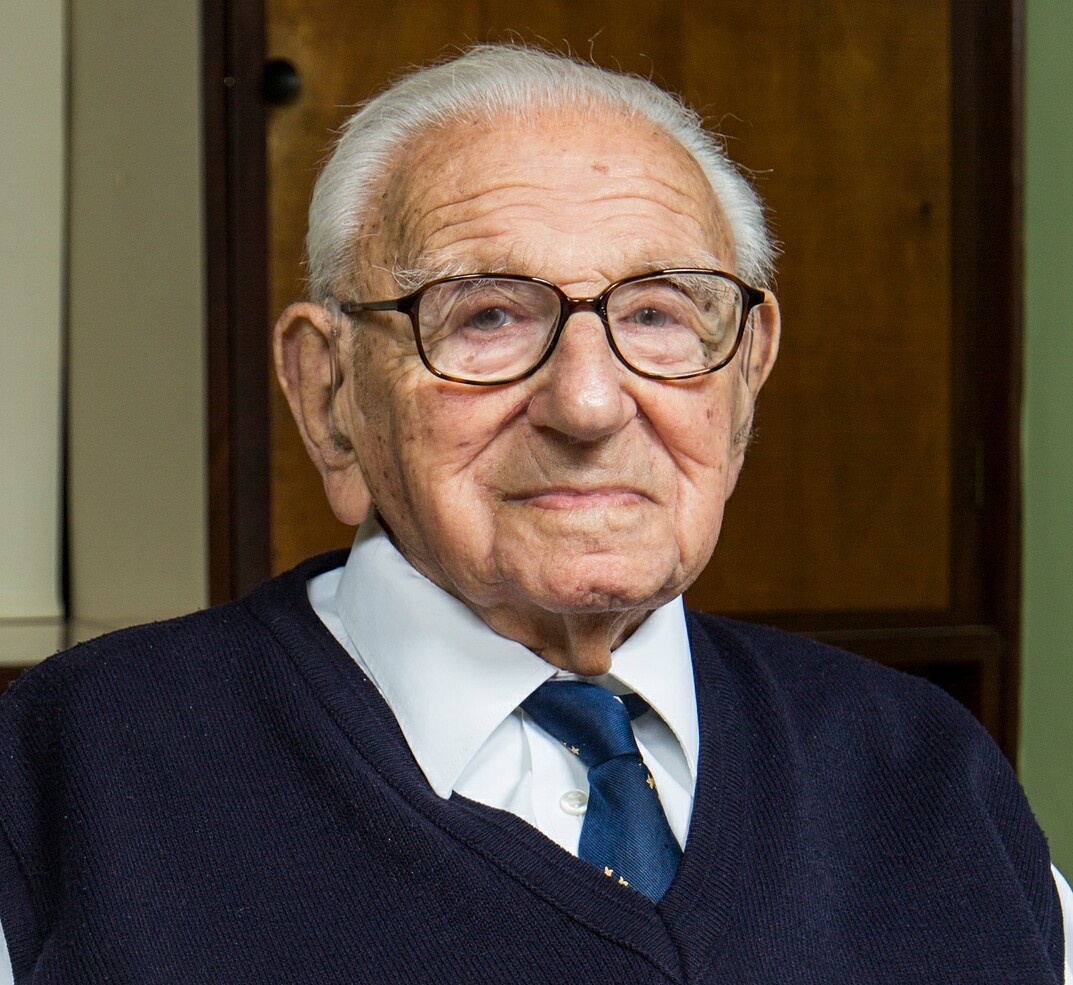
Winton was a young London stockbroker when he received a call from a friend in December 1938, asking him to come to Prague. There, he was introduced to the British Committee for Refugees from Czechoslovakia. Prague was teeming with a quarter million people fleeing Germany, Austria, and the Sudetenland, most of them Jews. When Winton decided he could at least help the children, he was besieged by families anxious to get their sons and daughters on his list. He and his colleagues took photographs and details of each child, and began to organize their evacuation to England. The first 20 left in January 1939. Winton returned to London where he procured more travel permits. Frustrated by the slowness of British bureaucracy, which still thought war unlikely, he made newspaper appeals and organized the children’s placements himself. Following the Nazi invasion of Czechoslovakia in March, he began forging Home Office entry permits. Eight rail transports of some 600 children made it through, but the Germans cancelled the ninth transport, sending its 250 children to concentration camps.
Winton’s heroic work was not widely known until his wife found the book with the children’s names decades later. She encouraged Winton to try to locate them, which he did with the aid of the BBC. In 1988, a TV program was made about the rescue operation. Winton was in the audience when the program’s presenter said, “Stand up if you owe your life to Nicholas Winton!” Everyone stood. They were the adults whose lives he had saved nearly 50 years before. (Learn more)
Raoul Wallenberg
Having observed the Nazi state in action during a business trip, Swedish architect and businessman Raoul Wallenberg accepted an offer from President Roosevelt’s new War Refugee Board to serve as Sweden’s envoy in Budapest, with the aim of helping Hungary’s Jews escape. By the time he arrived in July 1944, some 400,000 Jews had already been sent to the death camps. Intent on saving the rest, Wallenberg designed a protective pass that identified the carrier as a Swede awaiting transit out of Hungary. Observing the German and Hungarian authorities’ love of the flashy, he printed the passes in bright colors and emblazoned them with Sweden’s coat of arms, adding a bevy of official stamps and signatures. The passes had no actual legal value, but Wallenberg used bribery and extortion when necessary. In this way, he was able to increase the number of permitted passes from 1,500 to 4,500. Off the record, he tripled that number, and hired a “staff” of several hundred Jewish workers. One of his drivers remembers Wallenberg climbing atop a trainload of Jews bound for Auschwitz, ignoring commands to halt and dodging Hungarian officers’ bullets as he handed out passes through the doors. He then led the pass holders off the train to a caravan of cars, marked in Swedish colors.
When the Hungarian Nazis officially seized power in October 1944, they declared the passes invalid, but Wallenberg befriended the foreign minister’s wife who helped reverse the decision. He also rented out 32 buildings under the Swedish diplomatic umbrella, declaring them Swedish territory. These buildings, which sheltered 15,000 Jews, were draped in Swedish flags, and bore labels such as “The Swedish Library” and “The Swedish Research Institute” on their doors.
In January 1945, just before the Soviet Army occupied Budapest, Wallenberg threatened Eichmann with prosecution for war crimes in order to stop his plan to blow up the Budapest ghetto, home to 70,000 Jews. Wallenberg is said to have saved 100,000 Hungarian Jews from the death camps. (Learn more)
Irena Sendler
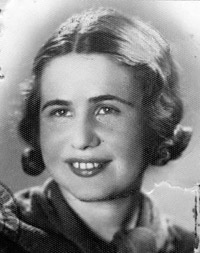 Despite being Catholic, Irena Sendler’s family had a history of fighting anti-Semitism. Sendler herself got into trouble as a student at Warsaw University for opposing the institution’s segregationist policies. When the Nazis invaded Poland, she was working for the Warsaw Social Welfare Department which provided services to the poor and infirm. She extended these services to the Jews in the Warsaw Ghetto, where thousands of people were dying each month from hunger and disease, by finagling permission from the Epidemic Control Department to check refugees for infectious diseases. Inside the Ghetto, Sendler began arranging for the children to be smuggled out and sent to Polish foster families. She recruited people for each of the ten SWD centers to work with her. Together, they issued hundreds of forged documents and transported the children out in ambulances. It was painful for their families to part with them and dangerous for the families who took them in—Poles aiding Jews were executed—but 2,500 children were saved.
Sendler, who always wore the yellow star to show her solidarity with the Jews, was caught by the Nazis, tortured, and sentenced to death, but her friends helped her to escape. She was nominated for the Nobel Peace Prize in 2007. (Learn more)
Aristides de Sousa Mendes do Amaral e Abranches
Aristides de Sousa Mendes do Amaral e Abranches, the Portuguese consul to Bordeaux was not a man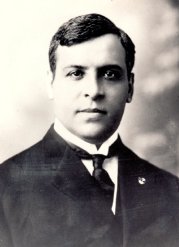 who trembled before power. Despite the Portuguese government’s stern directive to all its diplomats to deny safe haven to refugees—especially Jews—Sousa Mendes began issuing visas in late 1939, shortly before the Nazi invasion of France. The visas granted Jews and other persecuted peoples safe passage across Spain to Lisbon, where they would be free to travel to other parts of the world. Time and again, the Portuguese dictator Salazar warned him to stop. Sousa Mendes ignored him and began issuing visas off the books, making up whatever details he thought necessary. “From now on, I’m giving everyone visas,” he told his son. “There will be no more nationalities, races, or religions.”
As the German occupation took hold, the number of refugees increased dramatically. The consulate was packed with hungry, frightened people, all of them needing transit visas to escape death. When Portugal tried to stop the Spanish from letting Sousa Mendes’s refugees through, he countered by personally leading groups to a border post that had no telephone to report his actions. He was stripped of his position in June 1940, and ordered to leave France. He ignored the directive for weeks, eager to save every life he could. On his return to Portugal, he was forced to rely on Jewish relief charities to feed his family. Sousa Mendes died in poverty, but his daring had opened an escape route that was to save millions of refugees throughout the war. (Learn more)
A few more:
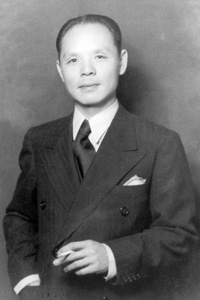 After the Kristallnacht attacks in 1938, the situation for Austrian Jews became critical. That’s when Ho Feng-Shan, a Chinese diplomat in Vienna, went against the express orders of his boss–China’s ambassador in Berlin, who wished to curry Hitler’s favor–and issued thousands of visas to Jewish families to travel to Shanghai. At the time, Shanghai did not require entry visas, but one could not leave Austria without such a permit. (Learn more)
 Lise Børsum was a Norwegian housewife who smuggled Jews out of Nazi-occupied nations into Sweden, often through her own home. She was arrested and sent to Ravensbrück, but survived the war and went on to write about her experiences. (Learn more)







 amyhenrybooks