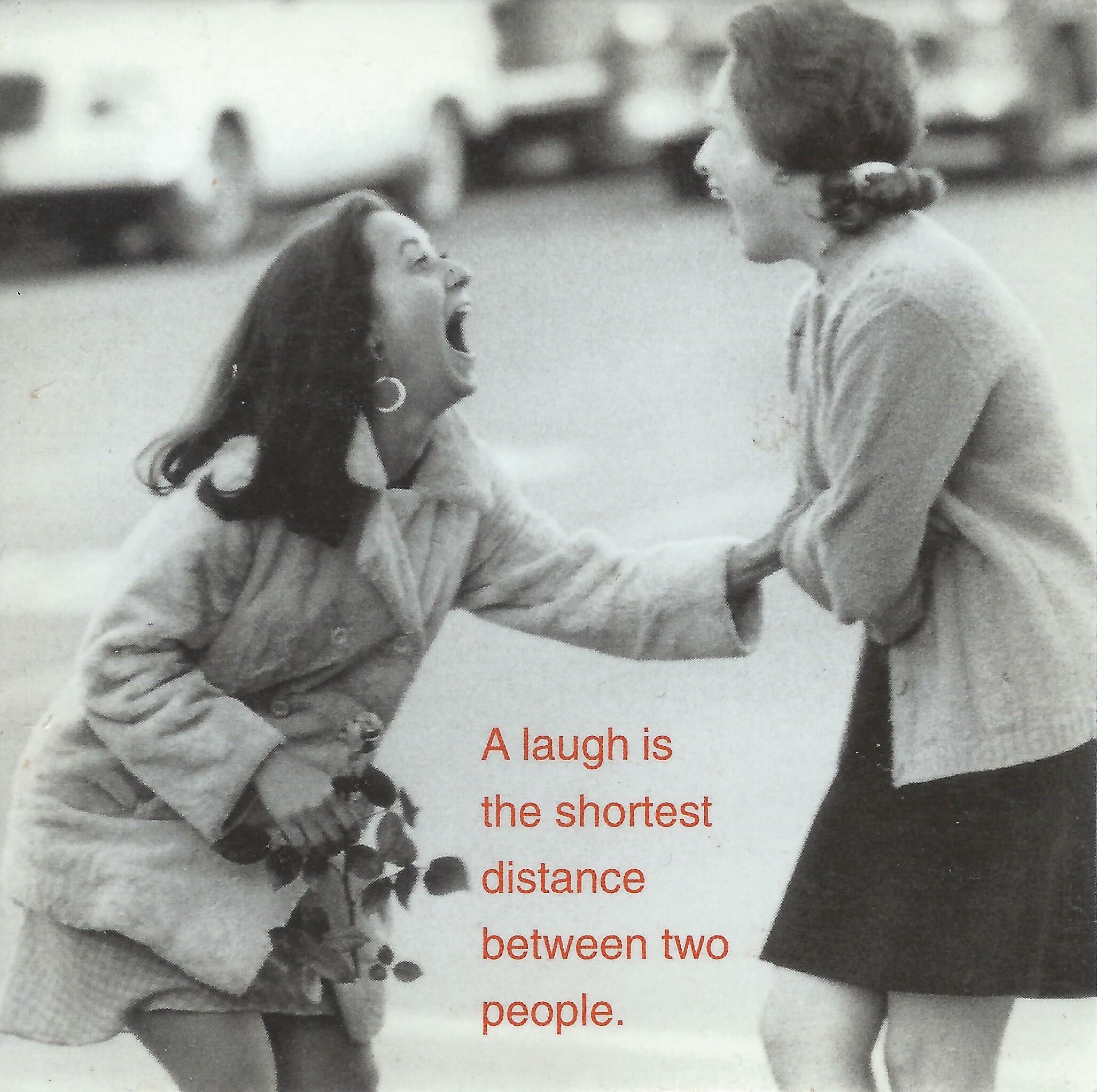
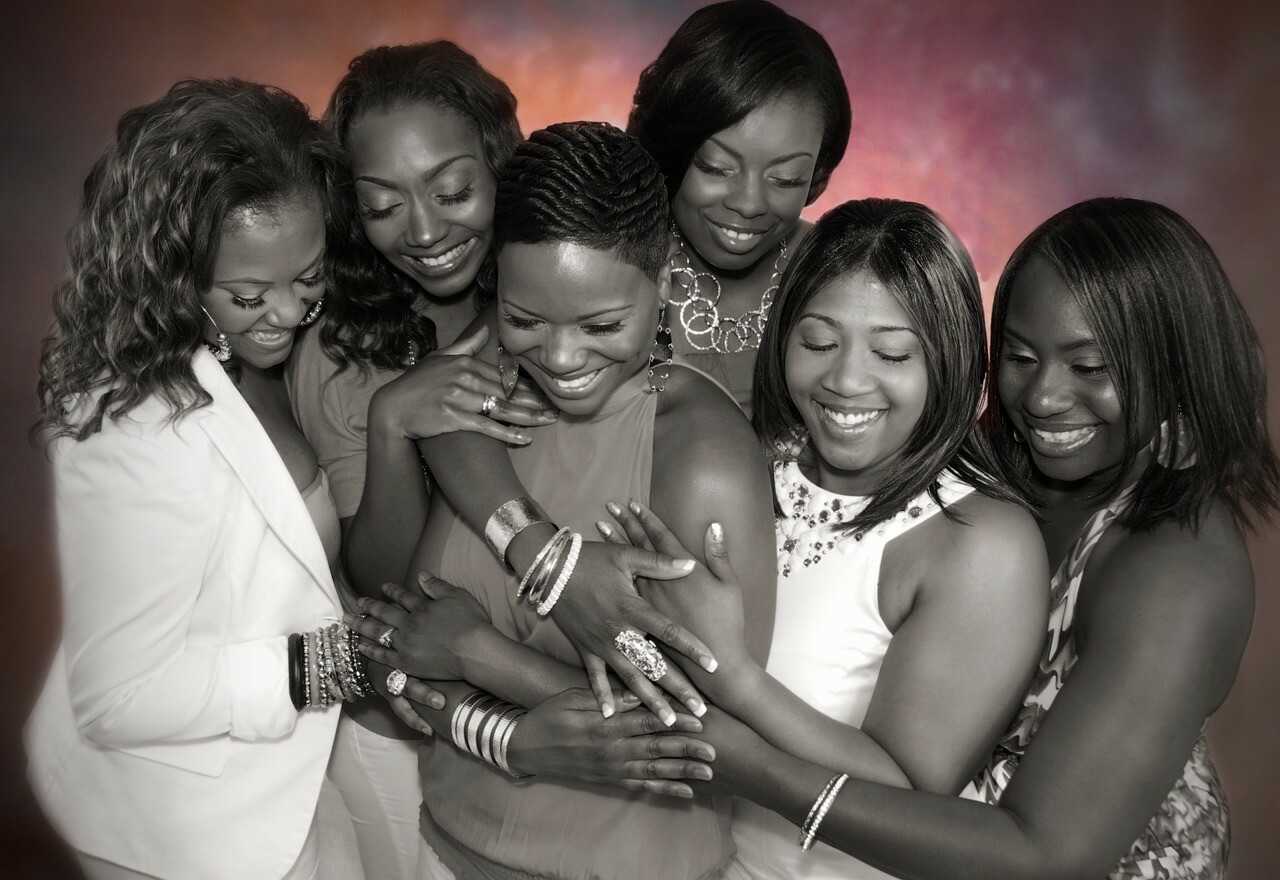
“Walking with a friend in the dark is better than walking alone in the light.” Helen Keller
I was driving along the other day, my mind on the errands at hand: return a shirt ordered online, pick up wine and a hot mustard dip for our holiday party, locate a few more stocking stuffers. Brenda Lee was belting out “Rockin’ Around the Christmas Tree” on the CD player, and I was feeling pretty good about crossing off a few more items on my never-ending to-do list. Suddenly Brenda’s voice grew growly, then inaudible. What the? The music blared, deafening, then faded once more, and I knew in that weird way you do that my car was about to seize up. Which it promptly did. Completely. Died. It was a real X-Files moment, the one where people are driving along through endless woods and their car is hit by an electric zap! that literally stops time just before they’re spirited away by aliens. Except I was not on a deserted road. I was on a congested state highway, twenty yards from a major intersection, and no shoulder to pull off the road, even if my car had been capable of limping a few more feet, which it wasn’t.
I tried turning over the engine. Nothing. Ditto for the radio. At least the flashers still worked. Keeping one eye on the endless stream of cars steering wildly around me, I hit “2” on my speed dial. My husband picked up.
“The car just died,” I wailed. “Right on Route 9. I’m sitting here blocking the road and I can’t move.” A large Target truck barreled down on me. I hoped his brakes were working. How much stopping distance does a truck require?
“You have your Triple-A card?” my husband asked.
“Triple-A card,” I repeated, trying to remember if I had put the card in the purse beside me or my turquoise leather bag. Perhaps it was still in the plastic ziplock with the other stuff I left at home when we last traveled overseas.
“I’ll call Triple-A,” my husband said. “And then I’ll come get you.” With these assurances, I flipped through my wallet, found the Triple-A card, then dialed 911 to get a squad car to the scene. Traffic, by now, was seriously snarled. Twenty minutes and a second squad car later, the police had pushed my Ford wagon to the intersection, around the corner, and off the road. My husband arrived shortly after, his red Hyundai cheering me greatly even as he waved and smiled.
“I called Triple-A,” he reported, joining me on the curb. “But the local operation’s small and they won’t be able to get a tow truck here for another hour.” The hour came and went as the afternoon light faded to night and the mist became a steady rain. We called Triple-A again. Were put on hold. Promised the tow truck would only be “five more minutes.” Just as my toes were growing numb, the truck roared out of the dark. I gave the driver instructions on where to take the car. Almost two hours had passed since my husband had arrived. During that time, he never once complained about the interruption to his day, the rain, the interminable wait for the truck. We chatted. We joked. He was, as always, his wonderful, generous self.
It’s all too easy in the mad dash of 21st century life to get caught up in the pressures to do more, be more, especially at the holidays. All the trimmings, the trappings, the stuff. But none of it, none of it is half so important as the people we love. I was reminded of that when my car died on a busy road. I had the Triple-A card, and I eventually did dial 911, but my first call was an emotional SOS to my husband: Something crap has happened and I need you. Knowing you will not be abandoned—you can’t put a price on it, this greatest of gifts.
I count myself lucky in this life to love and be loved by some amazingly wonderful people, dear friends all. This post is for them. As Clarence reminds George in It’s a Wonderful Life: No man is a failure who has friends.
“I think all writing is a disease. You can’t stop it.”
William Carlos Williams
A blast of chill air and the roar of London traffic accompany the man’s entrance to the Bloomsbury eatery. I return to my paper, but a moment later he’s there. Five, six feet away, arguing with the hostess. He doesn’t want one of the small café tables. He wants a booth. The hostess explains—twice—that booths are for parties of three or more. The man holds his ground. His voice rises. I take in his agitation, the untidy shock of dark hair, the furtive eyes. I think: He wants a booth where he can’t easily be seen. I notice one café table tucked into a corner near the register just as the hostess offers him that very table. After a moment’s hesitation, he accepts.
A second man enters. Fair-haired, tall, better-dressed than the first—his sweater cashmere, his haircut expensive. He talks to no one and takes a seat in the opposite corner. Now, both men are at the front, facing each other across the expanse of the restaurant. Each can see the street while remaining in shadow. My gaze returns to the first man. Why was a booth so important to him? Is he angry or just nervous? And if the latter, what is he jittery about? Is he waiting for something or someone? I notice his smartphone on the table. Is he expecting a call? He might have pushed for a booth because the call he expects is not a conversation he wishes to be overheard.

I glance over and see the posh man also has a smartphone lying on his table. Coincidence? Likely. Everyone gets out their phone when they sit down in a restaurant. But, what if the two men are connected? What if they’re planning something. The wild-haired one keeps glancing toward the street, his fingers drumming ceaselessly on the table, his eggs over toast growing cold.
The tony guy picks up his phone. Who is he calling? If the anxious man picks up his phone now… He does. Another coincidence, or are the two men communicating? Planning a heist of some sort? The British Museum is just down the street. What are they after? The Rosetta Stone? No, too large, too heavy. Maybe the Lewis Chessmen. Will the men leave now (singly, of course)? Go in separate directions, one of them preparing to create a distraction, maybe detonate an explosive with the touch of a button: SEND? Who are they working for?
My husband returns from the restroom before I’ve figured out how they’ll fence the theft. I tell him the story I’ve concocted in his absence. We laugh. Then we pay the bill and walk out into the May morning, heading for the Russell Square tube station. I take my husband’s hand, my eyes alert for a new cast of characters.
Writers see stories in everything. A woman walking along, sobbing, amidst throngs of holiday shoppers (Was she just dumped in a love affair? Did her grandmother/sister/best friend die from a tragic illness/accident? Has she simply received one too many rejections from agents on her latest novel?). Almost every situation suggests characters, a plot. The real-life couple on that HGTV show—ever notice how she shrinks from that hug he gives her? How she doesn’t laugh when he’s trying to be funny? What’s the story behind that? And the Tappan Zee Bridge in New York—the way it sort of buckles and bounces as you drive across it? Hmm. Corruption at high levels? Is the public’s safety hostage to a bevy of tough legislative players, each with his or her own secret hopes and vices?

My husband says it’s a trip being with me: Nothing occurs that is not part of some larger tale. It is funny, but in truth, it’s the only view I know. I believe the Bard nailed it when he wrote, “All the world’s a stage, and all the men and women merely players.” Every moment is a beginning for “Once upon a time.”
People often ask, “Where do you get your story ideas?” Well, where do you not find stories? Personally, I’m curious about most things, but the top of the list is people. How they choose to present themselves, what they attempt to hide. Their desires, fears, loves, insecurities. And behind each of these, the big question: Why? As the National Enquirer is fond of reminding us, “Enquiring minds want to know.”
So, let this serve as fair warning. If I spot you in a café or a subway car, if our paths cross on an urban street or a country lane, you’ll likely become a character in a plot of my devising. But whether you’ll be the unlikely hero, time-traveling villain, defrauded heiress, or prophetic clown—well, that’s a mystery.
I had a different post planned for this week, but the atrocities in Paris, Beirut, and Baghdad, as well as the Syrian refugee crisis demand a response. This is mine:
Violence is always a negative. Hatred is always a negative. Most of the peoples of this world–Black, Brown, White, Yellow, Christians, Jews, Muslims, Atheists–are good, want peace, treasure their children, value life. We are all depending on the kindness of strangers.
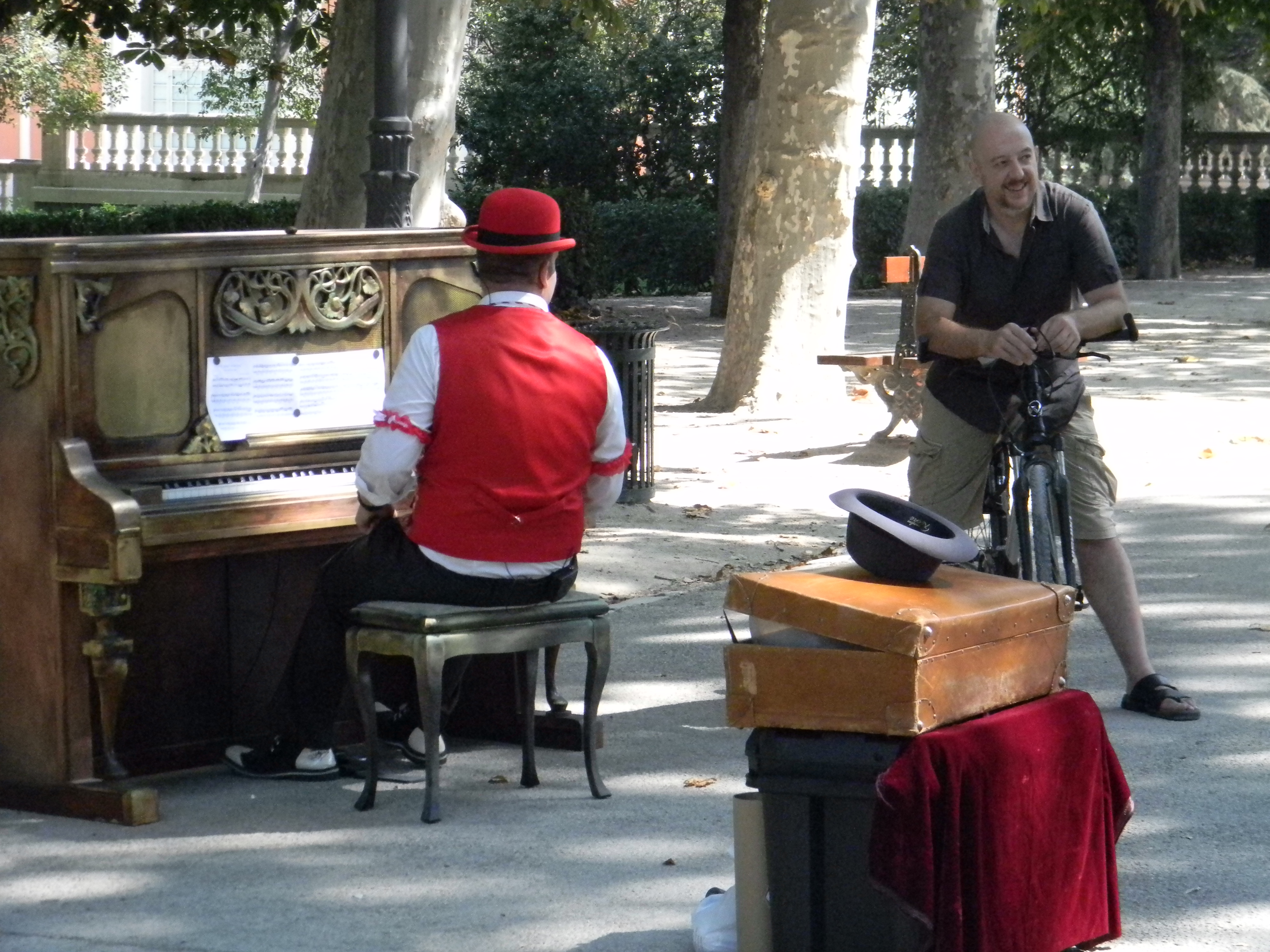
For music in the Retiro on a sunny Sunday.For the infinite capacity of our imaginations.
For the beauty of all living things.For the many beautiful vistas of this world.
No man is an island, Entire of itself, Every man is a piece of the continent, A part of the main. If a clod be washed away by the sea, Europe is the less. As well as if a promontory were. As well as if a manor of thy friend’s Or of thine own were: Any man’s death diminishes me, Because I am involved in mankind, And therefore never send to know for whom the bell tolls; It tolls for thee.
John Donne
For the dearness of home.For afternoons in cafes with wine and good friends.For the art and literature and music and theater that feeds our souls.For the people we love.And more people we love!For the things that make us laugh.
“If a cluttered desk is a sign of a cluttered mind, of what, then, is an empty desk a sign?” Albert Einstein
While chatting to a service rep at my local bank, I marveled at her clean desk. It truly was impressive: a mammoth horizontal surface with nothing on it. She told me a memo had recently come down from the higher-ups: No papers. No knickknacks. Not even a photo of the kids. She said she missed the photos. I sympathized. Personal touches remind us we are dealing with humans. They transform a faceless routine business matter into an interaction between people. But I got the message behind the memo: We are efficiency. On top of things, ahead of things. Enviably perfect.
My desk, by (severe) contrast is an item-diary of my life. One of those old oak banker affairs, it is the Velveteen Rabbit of desks—worn corners and sun-bleached surfaces, “finished” in a charmingly random pattern of coffee cup rings. Its topography shifts almost daily, but the volume of items remains fairly constant. Today, this includes:
A boxed hard copy of a completed manuscript.
Two large binders of spiral notebooks filled with research for my W-I-P.
A kitschy Shakespeare action figure (with detachable quill and book).
A guide to literary agents.
A smooth, round clay Buddha that fits in my hand and has no purpose but to be wonderful.
A rolodex from a bygone era stuffed with still-important phone numbers, memos, and a matchbook bearing the name of a fabulous Spanish Rioja I’ve never been able to find in the States.
My plug-in Passport Ultra for “Files That Must NEVER Be Lost.”
A waterfall of Post-its (descending in order of critical importance).
A thick folder detailing every aspect of my website/blog and its attendant social-networking sites.
A jar of Pilot gel pens (love these!)
Legal pads for the psychology textbook I’m editing.
Invoice for same (essential to life support systems like food and shelter).
A scattering of little “wish stones”—Dream, Grow, Hope, Magic, Love.
A pair of truly decent Sony headphones.
In this space, I daily strive to give the characters in my head a vibrant world on the page that is worthy of their story. It is a messy, marvelous struggle, but it is light years away from anything resembling perfection. The two don’t even share a universe.
I must confess here that I have often been attracted to the clean, absolute symmetry of perfection. That illusion of a tabula rasa without past baggage, on which one may write the future free of mistakes—it’s a siren song with a powerful allure. And yet . . .
Several years ago, when my husband and I were house-hunting, the realtor took us to a newly built home. It was all sparkling bathrooms, unscuffed hardwood floors, and pristine appliances, but the real shocker was the basement. I had never encountered a new basement. It was beyond clean. You could have literally eaten off its floor. I stood there gaping, awed. But we didn’t buy that house. Didn’t even make an offer. Instead, we threw in our lot with the 1895 Victorian, a house of clanking radiators and a list of “ailments” long enough to suck up the contents of our bank account for years. Why did we pass up 2,200 flawless square feet for this money pit? Because it felt like an old friend, weathered and full of endearing idiosyncrasies. It called to us: Come bring your crazy lives and wayward cats, your jumbled furniture and dreams-in-progress to flourish within my crooked walls.
Perfection, I have come to realize, is something I flirt with in those moments when life threatens to overwhelm, when the way ahead seems a path I must beat in the wilderness with nothing more than the compass of my own experience. Perfection promises a sense of clarity. Like a clean desk. But a clean desk is also an empty desk. Its uncluttered surface a suggestion of a life lived in small, controlled increments with precise beginnings, ends, and no dovetails. That’s one kind of life, but it’s not mine. I will always be writing one book and revising another while building shelves in the attic and baking tins of Christmas cookies for friends. I’ll be planning next year’s garden and packing for a trip to London or Paris while reading a book on Venetian history and a Gillian Flynn thriller.
So here I am, in the middle of this big messy life, embracing it more and more, exactly for its colorful chaos, its jumble of demands. A to-do list seemingly without end.
“In spite of everything, I still believe that people are really good at heart.” Anne Frank
In the rearview mirror of history, everything emerges with razor-sharp clarity. Villains do their evil deeds. Heroes leap forth to foil them and save at least some part of the day. The present is always hazier, less certain. Millions of refugees from Syria, Nigeria, and Iraq flee across our TV screens, their children pressed close, hearts beating wildly. And, as people around the globe did in 1939, we look on and wonder: Who will stop this?
Recently, I shared a friend’s post on Facebook (thanks, Wayne). It concerned a man, Sir Nicholas Winton, who saved 669 children from the Nazi death camps. Moved, I dug around for more stories. Below is a small sample of what I found, but it suggests that the impulse for good is a global human quality. These men and women had nothing to gain and everything to lose. They did what they did because they could not look away from the wrongs of the world and the suffering of others. If you ever despair of the human heart, I think this list is proof that Anne Frank got it right. I have provided a link for each person at the end of their story, in case you would like to read more.
Sir Nicholas Winton
David Levene for The Guardian
Winton was a young London stockbroker when he received a call from a friend in December 1938, asking him to come to Prague. There, he was introduced to the British Committee for Refugees from Czechoslovakia. Prague was teeming with a quarter million people fleeing Germany, Austria, and the Sudetenland, most of them Jews. When Winton decided he could at least help the children, he was besieged by families anxious to get their sons and daughters on his list. He and his colleagues took photographs and details of each child, and began to organize their evacuation to England. The first 20 left in January 1939. Winton returned to London where he procured more travel permits. Frustrated by the slowness of British bureaucracy, which still thought war unlikely, he made newspaper appeals and organized the children’s placements himself. Following the Nazi invasion of Czechoslovakia in March, he began forging Home Office entry permits. Eight rail transports of some 600 children made it through, but the Germans cancelled the ninth transport, sending its 250 children to concentration camps.
Winton’s heroic work was not widely known until his wife found the book with the children’s names decades later. She encouraged Winton to try to locate them, which he did with the aid of the BBC. In 1988, a TV program was made about the rescue operation. Winton was in the audience when the program’s presenter said, “Stand up if you owe your life to Nicholas Winton!” Everyone stood. They were the adults whose lives he had saved nearly 50 years before. (Learn more)
Raoul Wallenberg
Having observed the Nazi state in action during a business trip, Swedish architect and businessman Raoul Wallenberg accepted an offer from President Roosevelt’s new War Refugee Board to serve as Sweden’s envoy in Budapest, with the aim of helping Hungary’s Jews escape. By the time he arrived in July 1944, some 400,000 Jews had already been sent to the death camps. Intent on saving the rest, Wallenberg designed a protective pass that identified the carrier as a Swede awaiting transit out of Hungary. Observing the German and Hungarian authorities’ love of the flashy, he printed the passes in bright colors and emblazoned them with Sweden’s coat of arms, adding a bevy of official stamps and signatures. The passes had no actual legal value, but Wallenberg used bribery and extortion when necessary. In this way, he was able to increase the number of permitted passes from 1,500 to 4,500. Off the record, he tripled that number, and hired a “staff” of several hundred Jewish workers. One of his drivers remembers Wallenberg climbing atop a trainload of Jews bound for Auschwitz, ignoring commands to halt and dodging Hungarian officers’ bullets as he handed out passes through the doors. He then led the pass holders off the train to a caravan of cars, marked in Swedish colors.
When the Hungarian Nazis officially seized power in October 1944, they declared the passes invalid, but Wallenberg befriended the foreign minister’s wife who helped reverse the decision. He also rented out 32 buildings under the Swedish diplomatic umbrella, declaring them Swedish territory. These buildings, which sheltered 15,000 Jews, were draped in Swedish flags, and bore labels such as “The Swedish Library” and “The Swedish Research Institute” on their doors.
In January 1945, just before the Soviet Army occupied Budapest, Wallenberg threatened Eichmann with prosecution for war crimes in order to stop his plan to blow up the Budapest ghetto, home to 70,000 Jews. Wallenberg is said to have saved 100,000 Hungarian Jews from the death camps. (Learn more)
Irena Sendler
Despite being Catholic, Irena Sendler’s family had a history of fighting anti-Semitism. Sendler herself got into trouble as a student at Warsaw University for opposing the institution’s segregationist policies. When the Nazis invaded Poland, she was working for the Warsaw Social Welfare Department which provided services to the poor and infirm. She extended these services to the Jews in the Warsaw Ghetto, where thousands of people were dying each month from hunger and disease, by finagling permission from the Epidemic Control Department to check refugees for infectious diseases. Inside the Ghetto, Sendler began arranging for the children to be smuggled out and sent to Polish foster families. She recruited people for each of the ten SWD centers to work with her. Together, they issued hundreds of forged documents and transported the children out in ambulances. It was painful for their families to part with them and dangerous for the families who took them in—Poles aiding Jews were executed—but 2,500 children were saved.
Sendler, who always wore the yellow star to show her solidarity with the Jews, was caught by the Nazis, tortured, and sentenced to death, but her friends helped her to escape. She was nominated for the Nobel Peace Prize in 2007. (Learn more)
Aristides de Sousa Mendes do Amaral e Abranches
Aristides de Sousa Mendes do Amaral e Abranches, the Portuguese consul to Bordeaux was not a man who trembled before power. Despite the Portuguese government’s stern directive to all its diplomats to deny safe haven to refugees—especially Jews—Sousa Mendes began issuing visas in late 1939, shortly before the Nazi invasion of France. The visas granted Jews and other persecuted peoples safe passage across Spain to Lisbon, where they would be free to travel to other parts of the world. Time and again, the Portuguese dictator Salazar warned him to stop. Sousa Mendes ignored him and began issuing visas off the books, making up whatever details he thought necessary. “From now on, I’m giving everyone visas,” he told his son. “There will be no more nationalities, races, or religions.”
As the German occupation took hold, the number of refugees increased dramatically. The consulate was packed with hungry, frightened people, all of them needing transit visas to escape death. When Portugal tried to stop the Spanish from letting Sousa Mendes’s refugees through, he countered by personally leading groups to a border post that had no telephone to report his actions. He was stripped of his position in June 1940, and ordered to leave France. He ignored the directive for weeks, eager to save every life he could. On his return to Portugal, he was forced to rely on Jewish relief charities to feed his family. Sousa Mendes died in poverty, but his daring had opened an escape route that was to save millions of refugees throughout the war. (Learn more)
A few more:
After the Kristallnacht attacks in 1938, the situation for Austrian Jews became critical. That’s when Ho Feng-Shan, a Chinese diplomat in Vienna, went against the express orders of his boss–China’s ambassador in Berlin, who wished to curry Hitler’s favor–and issued thousands of visas to Jewish families to travel to Shanghai. At the time, Shanghai did not require entry visas, but one could not leave Austria without such a permit. (Learn more)
Lise Børsum was a Norwegian housewife who smuggled Jews out of Nazi-occupied nations into Sweden, often through her own home. She was arrested and sent to Ravensbrück, but survived the war and went on to write about her experiences. (Learn more)