In the depths of winter, watching my cats chase
their tails, and regretting that I have no tail to chase, I ponder how I’ll
survive still more months of boots
and snow and frigid gray, knowing dark day after dark day remains before I can
break out my flip flops and tank tops, before I can roll down the car windows
and crank up Dylan’s Like a Rolling Stone.
And TheRUMP’s still sitting in the Oval.
Gary Kramer: U.S. Fish & Wildlife Service
As Thomas Paine noted, These are the times that try
men’s souls.
So, this month I’m blowing off some steam, indulging
in a grouse-fest. No, not those funny little birds with the nifty tails, but grumbles
about what are, admittedly, First World problems. We have not yet surrendered
our right to kvetch.
Here, then, in no particular order are:
10 Things I Can Do Without in 2019
1. Sloooooow
right-turning drivers. I don’t know if this is endemic to my little town in
the Northeast or if it’s a national epidemic, but what is so complicated about
making a right turn? I’m sitting there, four cars back, say, when the light
goes green. I rev my engine hopefully but nothing happens. No one moves. Is the
driver at the front breezily chatting on their phone? Chowing down on a
take-out taco? Are they napping? Dead?
Just as I’m fantasizing about mounting a loudspeaker
on my car roof like Jake and Elwood in The
Blues Brothers—Okay folks, let’s whip
it up here. Turn! Turn! Turn!—the green light changes to yellow, and I see
the front car slowly, slowly making that right turn, a maneuver it completes
just as the light goes red.
2. Clueless and/or
surly salesclerks. Okay, I’ve worked my share of humdrum jobs and I’m
familiar with the adage Minimum work for minimum
wage, but when I ask what aisle the gingerbread is in, I don’t want a smirk
and a shrug. I don’t want to be told “Beats me.” I want clarity: You’ll find that in aisle three. I want a
pro-active attitude. I’m not sure but I’ll
find out. I want you to live up to the snappy words on your company tee-shirt:
Friendly, Helpful, Knowledgeable, Courteous. (And what kind of acrostic
is FHKC???)
3. Retail
Seasonal Disorder. While we’re dealing with retail, why is it that when I’m
searching for Halloween decorations in September, the seasonal aisle is filled
with Christmas stockings? Then two months later, when I want Christmas stockings,
I’m greeted by shelves stacked high with Valentine’s candy boxes? Better grab
one now (however stale the candy will be on February 14) because by
mid-January, the only thing on offer will be plastic picnic tablecloths and citronella
candles. Chill, retail people. Don’t rush the seasons. Be where you are.
4. Password Frenzy. Speaking of the need to chill, what is it with all these websites that demand you change your password every time you log in? Don’t they realize that the average Internet user already has something like a zillion passwords to juggle, each of them with a dozen characters—numbers, capitals, ampersands and pound signs? Okay, maybe this level of hyper vigilance makes sense for credit card accounts, but Rewards card sites? Box-office aggregators? Healthcare billing systems? The stated purpose for this ever-shifting quicksand of passwords is to keep cyber-thieves in the dark. Well, I’m in the dark. My passwords are a mystery to me. And if some hacker really feels like picking up the tab for my dental insurance, I say let them go right ahead.
5. Wise-a$$ printers. Since we’re in the land of cyberspace, I’ll mention a recent come-on I received from Staples, a sign-up for something called “Smart Ordering.” Ink and toner automatically ordered by your printer before you run low, the promo ran.
Ink and toner ordered at the whim of my printer?
Charged automatically to my credit card? I’ll give this the same response I
gave my (former) pets’ vet team when they suggested I leave my credit card on
file at their clinic—a clinic that loved nothing more than to think up all the possible tests, lab work,
procedures, et cetera it could perform on my cats. After collapsing in a
helpless heap of laughter, I told them: Not. On. Your. Life.
6. Auto automatons. Following up on the mania for granting technical gizmos human powers, is anyone else hyperventilating about all this near-future hoopla over self-driving cars? And not only self-driving cars, but TheRUMP is now pushing for self-driving buses and trucks.Big trucks.
According to the Washington Post, Transportation Secretary Elaine Chao is “extremely concerned” about the impact these autonomous vehicles will have on the nation’s workforce. Hell, I’m concerned about the impact they’ll have on human life. The day 18-wheelers start cruising the Interstate under their own steam is the day I burn my driver’s license and become a full-fledged pedestrian. A pedestrian who avoids the shoulder. Who maybe cuts through backyards and wooded lots. I read Stephen King’s Christine.
Okay, take a deep breath. Onward.
7. Days full
of errands and appointments. Do I need to say more? Is there anyone out
there who jumps out of bed and shouts Whoopee!
I’ve got to go to the hardware store and the supermarket, then straighten out
that billing mess with the electric company, and after lunch, it’s the dentist!
rawpixel
My idea of nirvana is a blank calendar. A month of
pristine days, unsullied by boring places to go and annoying things to do. Don’t
worry—I’ll think of some way to fill those long, lovely hours.
8. Life revisionists. The tendency to paint a picture-perfect life in holiday letters, or on Facebook and Twitter has reached epic proportions. You know, the gentle fictions where the writer goes from success to success—a volley of promotions, a whirlwind of exotic vacations. All is happiness and the kids are geniuses, enrolled at Harvard or Georgetown.
Matt Lamers@lamerbrain
These narratives remind me of Garrison Keillor’s fabled town Lake Wobegon, “where all the women are strong, all the men are good-looking, and all the children are above average.” For anyone out there who feels the temptation to gild the lily, know that we’ll still love you even if you admit to being warty humans like the rest of us. In fact, we’ll probably love you more.
Kreefax fotolia
9. Robotic interrogation. When I call a company regarding a problem with their product or service, I want to talk to a REAL PERSON. I do not want to suffer an hour of robotic interrogation, while shouting YES! and NO! into my phone, only to be disconnected (arrrggghhhh!) during the transition to an actual person (if such a person exists) who might have helped solve my problem.
Jason Bedrick
10. Rudy Giuliani. I want him to stop explaining why Mueller and/or Hillary should be investigated. I want him to stop bragging that he can produce 20 witnesses to defend TheRUMP’s hush money payments (he can’t). I want him to stop pretending he has a working brain. Just … shut … up.
My daughter Lauren wrote a scathing letter to this charlatan
when she was in second grade and he was mayor of New York, lambasting him for his
reactionary racist policies. If an 8-year-old can see through you, it’s time to
stop the charade and remove yourself to some remote island where you can’t
annoy anyone.
Okay, I’m stepping down from my soapbox. As the
patient in one of my favorite cartoons says (having just tossed his shrink out
the window), “Gee, I feel better already.” Spring is nearer than it was when I
started this post. I can almost smell the lilacs blooming. Feel the warm,
gentle breezes caressing my toes.
How little do they see what is, who frame their hasty judgments upon that which seems. (Robert Southey)
As a kid growing up in the Baby Boom that followed World War II, I was indoctrinated in what was to become the “official” American view of the French in that devastating conflict. The narrative went something like this:
With Hitler on their doorstep in the summer of 1940, the French turned cowards at Dunkirk, leaving in dire peril the 350,000 or so British soldiers who had come to their aid. Too lazy to fight for their country, the French let the Germans overrun Paris. But what could one expect, really? They were pretty much Nazi-sympathizers and collaborators, who after the war hid their cowardice and complicity by claiming some mythically high number of French Resistance members.
The anti-democratic and collaborationist policies of Marshal Pétain’s Vichy government, who signed an Armistice with Germany in June of 1940, only served to reinforce this unflattering portrait of cowardice and collusion.
Of course, this neat narrative, like all pat explanations, is woefully simplistic and more than a tad xenophobic. Whole libraries have been written about World War II, and to read even a small portion of this documentation is to quickly grasp the thick tangle of issues and personalities involved.
Nazis March into Paris (AP Photo)
The rapid and unexpected collapse of the Maginot Line, which the French had built in the 1930s, believing it would significantly slow any invading force and protect their industrial basin in Alsace-Lorraine.
The struggle for control of France’s overseas empire between the collaborationist Vichy government and the Free French forces aided by Britain and the United States. A sort of war within a war.
Concerns about preserving Paris from the utter annihilation that artillery, tanks, and bombs would bring.
And, of course, the continual disagreements among the various political and military leaders—French, British, and (eventually) American—about best responses to any and all these issues.
A description of Oxford historian Robert Gildea’s bookFighters in the Shadows illustrates the knotty muddle of just one part of this mix:
“[The] French resistance was part of a Europe-wide struggle against fascism, carried out by an extraordinarily diverse group: not only French men and women but Spanish Republicans, Italian anti-fascists, French and foreign Jews, British and American agents, and even German opponents of Hitler. In France, resistance skirted the edge of civil war between right and left, pitting non-communists who wanted to drive out the Germans and eliminate the Vichy regime while avoiding social revolution at all costs against communist advocates of national insurrection.” [My italics.]
So, what are we to believe here? How do we separate the strands of fact from fiction? Is there some larger question we should be asking before we rush to judgment?
This past September, I viewed an exhibit, “Renewal: Life After the First World War,” at London’s Imperial War Museum. A section of the exhibit focused on the impact of that war on France. Like many people, I’ve seen countless movies about the fighting in the Somme, at Verdun and Amiens. The endless stretches of gut-ripping barbed wire. The hand-to-hand fighting in the trenches. The shell-shock and gassing. Brutality on steroids. But it wasn’t until I saw the dozens of photos in the IWM exhibit that I understood how thoroughly France had been devastated. They took a drubbing like no other country in that war. The photos looked like the images we see of Syria today. Whole towns and cities reduced to rubble. Acres and acres of farmland and countryside blackened, barren.
Gazing at these photos—casting a wider eye—a light bulb went on. I realized the deeper, pertinent question was not were the French cowards in the face of the Nazi onslaught, but given the utter devastation to their country, the mind-numbing loss of people and towns, the years and resources it took to rebuild after that first war, who in their right mind would be eager to rush into a second annihilation?
To cast a wider eye in search of a deeper understanding is not to court “alternative facts,” but to consider the full scope of a situation, what the law calls the “mitigating circumstances.”
Mitigating Circumstances
Some years ago, a friend of mine, a case worker in social services, told me about a Vietnamese family she knew, a single mother and her ten-year-old son.
The family came to her attention after an incident at the child’s school. The boy became ill in class one morning. When the school called the mother’s workplace, they learned that she had not been employed there for the past four months. No, there hadn’t been a problem with her work. Staff had simply been cut by a third. It was 2008. People were being laid off everywhere.
Mom wasn’t at home either. When questioned as to where she might be, the boy eventually said she was with “Uncle.” What was his uncle’s name? The boy shook his head. “Uncle” was what his mother called the man who paid their rent and gave her some money for groceries. Pressed further, he admitted she left him alone 3-4 days each month to go off with “Uncle.” She left food for her son and told him not to let anyone in the apartment, but he got scared sometimes at night when she was away, he confessed.
Clearly, this was not a good situation. And the first response of many might be to call social services and report the mother as a delinquent parent whose child should be removed to foster care.
Fortunately, the person—a former teacher—who made the call cast a wider eye over the situation. Why would this woman—a devoted mother who never missed a parent-teacher conference, whose former part-time job had allowed her to be home when the boy returned from his after-school program each day, who slept on the sofa in their tiny apartment so that her son could have the single bedroom—why would this woman leave her child alone for days at a stretch to go off with some man?
She asked herself what were the mother’s choices? Laid off from her job, with a child to house and feed, as an immigrant with little education, what alternatives did she have?
And that question made clear the path forward. That the way to help this struggling family was not to tear it apart. That the relevant question here was not parental fitness but basic survival.
The mother was given help in finding a new job that would work with her son’s school hours. She was also encouraged to enroll in a GED program—which she did—with an eye toward doing a two-year degree at the local community college. She and her son moved to a new address, one unknown to “Uncle,” and she was advised she could get a restraining order if he ever approached her again.
The Complicated Sticky Stuff of Life
Many people would not take an action that put their job at risk. And fewer still would trust a roomful of six-year-olds to keep their secret. My first-grade teacher did both.
Back in the day when teachers ran copies of math problems and spelling worksheets on something called a mimeograph machine, we had three holiday parties each year in my school: Halloween, Christmas, and Valentine’s. Leave-it-to-Beaver type moms called “room mothers” baked cookies for these occasions, and we played games. They were the three best days of school, and every kid eagerly awaited them. Except Tim.
Like Rudolph the red-nosed reindeer, Tim didn’t get to join in any holiday games. His parents were strict Seventh Day Adventists and celebrating holidays was a no-fly zone. They kept him home while we played Musical Chairs in our Halloween costumes. They kept him home while we ate fancy Santa Claus cookies and drank cocoa. But they didn’t keep him home for the Valentine’s Day bash. That was because our teacher did not tell them about the Valentine’s party. And, with a finger to her lips, she asked us not to tell anyone about her omission.
Yes, yes, I know this is so not kosher. When I recounted this story during seminar in my M.Ed. program, I thought the instructors would faint on the spot just hearing it. We are talking a “fetch the smelling salts” level of horrification here. And I get that. The parents’ wishes must be respected. Kids should not be asked to keep secrets. It is serious stuff.
And yet.
When my teacher asked for our complicity, she explained it was so Tim could join in our Valentine’s celebration. If we blabbed, Tim would miss yet another party.
Six-year-olds are more savvy than they are often given credit for. There wasn’t a child in the room who didn’t understand the stakes for Tim. There wasn’t one of us who hadn’t felt the yoke of adult choices crushing our own power to choose. I believe no one said a word.
What I recall about that Valentine’s party is that it was the best of all my elementary school holiday parties. A normally quiet child, Tim laughed out loud throughout the festivities and hooted joyfully when he won the egg and spoon race. It was his day. And we were all witnesses to this miraculous event—the rebirth of a classmate.
Was the teacher right to ignore the parents’ wishes concerning their child?
Was she wrong to give a child a day of happiness and a sense of belonging?
Life is frequently much more complicated, more tangled, than yes and no. Rules do not admit of extenuating circumstances, and yet what of consequence does not involve extenuating circumstances? What are the exceptions and who decides?
Not the Whole Story
On my first—and last—summer home from college, I worked at the local mall. My favorite co-worker was a girl named Marion. Buoyant and bubbly like a 1960s sitcom Donna Reed, she made me laugh and I made her laugh and it was a very jolly way to pass the hours in a minimum-wage prison. After my last shift before returning to college, we hung out for an hour or so at a Labor Day weekend fair, set up in the mall parking lot. We rode the Scrambler, the Tilt-a-Whirl, and some other ride that took us stomach-lurchingly high in the air and turned us upside down. Then I gave Marion a lift home. We would not be seeing each other again that summer. And though I didn’t give it any real thought at the time, in all likelihood we would never see each other again. Which is, perhaps, what made the next thing possible.
As she got out of the car—moving quickly, beyond reach of a comforting hug, beyond hearing any possible reply I might give—Marion whispered over her shoulder, “My grandfather used to rape me every night.” With those words, she was gone, up the walk, onto the porch, the screen door banging behind her, leaving me stunned.
So much seems simple and clear—until you dig a little deeper. Until you pull the camera back and cast a wider eye.
Casting a wider eye doesn’t always make things clearer. In fact, it tends to muddy the neat narratives we seem to prefer, with their clear steps leading to tidy conclusions. In the judgments we make, we are often like the fabled blind men describing an elephant, drawing overarching conclusions about the whole from a limited experience/knowledge. What we have heard or seen may be part of the story, but not the whole story.
Judgment involves a willingness to look beyond what seems obvious, the patience to gather and sift seemingly contradictory facts, and compassion.
“We make a living by what we get. We make a life by what we give.” (Winston Churchill)
I was driving along in August—98˚ in the shade, rush-hour traffic inching forward, some Cars tune on the local oldies station—when I noticed a bumper sticker on the Honda to my left: Be kinder than is necessary. Something lifted in my heart. A breeze penetrated the mug. At the next opportunity, I pulled over to the side of the road and jotted down those words on the back of a grocery receipt. Be kinder than is necessary.
To say we live in divisive times is like saying arsenic will kill you. Duh. And there are real issues we must confront attached to these divisions—racism, immigration, misogyny, healthcare, the environment, democracy itself—but that’s in the aggregate. On a molecular level, each of us deals with the butcher, the baker, the candlestick maker—our neighbors and fellow community members. Not cardboard demographic representations. Not a frenzied TheRUMP rally mob screaming “Lock her up!” Or a deluge of polls dividing us 60/40, 40/60, 50/50. But real people with real faces. If we want to build a better world, this is an excellent place to start.
Wax and Wane
Homo sapiens are a quirky little species. We are both caring and cantankerous. Principled and sheeplike. Social and self-absorbed. Among our many tendencies is the kindness we demonstrate in moments of major crisis—natural disasters, wars:
Texas Military Department
Houston resident Jack Schuhmacher rescued numerous people trapped by the rising floodwaters of Hurricane Harvey, ferrying them to safety in his 17-foot fishing boat.
Hermine “Miep” Gies, her husband, and three other Dutch citizens risked their lives for more than two years to hide Anne Frank’s family and four other Jews from the Nazis. It was Miep who grabbed Anne’s diary in the mayhem of the arrests, keeping it safe until Anne’s father returned from Auschwitz in 1945.
International Auschwitz Komitee
Sadly, the sense that we’re all in this together tends to go dormant once a crisis wanes. People return to insular mode, making a living and looking after their own turf. Petty concerns predominate and rancorous rivalries erupt. Twitter wars ensue. But the reality remains: We ARE all in this together every day. If anything ultimately dooms us, it will be our failure to recognize the truth of this.
Beyond Necessity
Be kinder than is necessary. But, what is “necessary kindness”?Is it merely good manners—holding the door for someone carrying a child or packages, thanking someone who does the same for us? Is it mouthing the expected platitudes in certain situations? I was so sorry to hear that your father died/ I hope you’ll find another job soon/Wishing you a speedy recovery. Perhaps the word necessary here serves as a synonym for the minimum response required to not be thought rude or heartless. We are busy, busy people after all, and it’s just not possible to extend ourselves to all the need out there.
Until it’s us. Our sorrow. Our disaster. Our need.
Fortunately, being kinder than is necessary rarely involves the sort of mortal risk Miep took in hiding the Frank family. Sometimes it’s just—literally—going that extra mile.
In my student days, while doing a semester at the University of London, several of us decided to go to Paris for a long weekend via the Hovercraft from Ramsgate to Calais. Taking the train to Ramsgate was easy, but we had no idea where the docks were once we debarked. This was in the days before satnav, before the Internet and Mapquest. You got around mainly by asking the locals “Which way?”
The woman we asked for directions in Ramsgate could have reeled off a list of street names and left/right turns, as most people do. But she didn’t. Instead, she offered to walk us to the ferry landing, despite the fact that she was on her way home after a day of work, despite the fact that the docks were in the opposite direction of where she was heading. “It’s only a mile or so,” she said cheerfully, and off we went. I have never forgotten her.
A Simple Gesture Can Mean A Lot
Sometimes that extra shot of kindness is as simple as picking up your phone.
When I got into my VW Bug in the summer of 1983 and moved to Boston, I had just written my first novel. I had an IBM Selectric III, but nothing in the way of connections to editors or publishers. About a month after my arrival, I went for a haircut. During the usual salon banter, the hairdresser, Donna, asked what I did for a living. I explained I was the editor of a business publication for retailers, but what I really loved was writing fiction. Then I told her about my novel.
Now, she could have said that’s nice or I wish you luck or how exciting. But instead she said, “My cousin is an editor at Addison-Wesley. They don’t publish fiction but she might know someone working at another house. I’ll give her a call if you like.” I liked and she made the call right then. Her cousin invited me to have lunch with her in Reading (then-headquarters of A-W), at the end of which she called her old college friend, an assistant editor at Random House. My manuscript went out in the mail the next day. I received a lovely, enthusiastic note about the book from this woman. And though a senior editor later decided not to go with the manuscript, I was really grateful to my hairdresser, her cousin, and the RH assistant editor. It was my first experience wading into the often muddy waters of publishing, and their kind support kept me going.
A double-shot of kindness is walking the walk. Demonstrating our compassion by offering material assistance, or bending the rules when people need help.
After a health emergency put the kibosh on a trip to London and Sicily—just days before we were scheduled to leave—I was faced with cancelling a slew of theatre tickets or losing a lot of $$$. Our Air B&B reservations and flights were refunded because we had trip insurance for those, but theatre tix always come with the disclaimer that all sales are final, no refunds. I wrote the various box offices anyway, briefly explaining our situation and asking if anything could be done. All but one of the twelve theatres refunded our money, and many wrote words of sympathy, expressing hope that Ed would be better soon. I was deeply moved by their kind notes and willingness to respond in a human way to a human situation.
Paying It Forward: The Ripple Effect
And sometimes kindness with a capital K simply comes down to paying it forward.
Jerry took his first trip to America when he was just 23. Sent by his London employer to represent their firm at a meeting in New York City, he was cabbing to what he desperately hoped was the correct address. Upon sharing his anxiety with the cabbie, he was stunned to hear the man say, “Don’t worry. I’ll wait out front for you while you check it out. No charge.”
Jerry couldn’t believe it. After everything he’d heard about the stereotypical New Yorker—self-absorbed, indifferent—he was blown away by this man’s kindness. “I promised myself right then that I would always seek ways to do something nice for Americans visiting the UK.”
He told me this story as I was dining out with two friends in a cozy restaurant off London’s Baker Street. Jerry was a regular—knew the owner, the kitchen staff, loved to mix American-style cocktails for the diners. Overhearing us chatting, he came to our table to ask what part of the States we were from, a conversation that lasted well into the evening. And then he offered to take us to Pinewood Studios and show us around. He worked for Lloyd’s of London in their film insurance wing, and was scheduled for a meeting at Pinewood in the morning.
We were excited—Pinewood Studios is a legend in British filmmaking. Fiddler on the Roof. The Man Who Would Be King. All of the Bond films. Jerry picked us up from our dorm in Regents Park the next morning and drove us to the studio where we enjoyed a tour of all the major sets and lunch with Pinewood’s director. I have kept this photo of Jerry for decades, a memento of one man’s generous spirit.
Show a Little Faith
When I finally managed to make it through the drive-time traffic last August, I googled Be kinder than is necessary. The full quote, variously attributed, is Be kinder than is necessary because everyone you meet is fighting some kind of battle.
One of the bummer side-effects of our deeply-divided society is the suspicion and uncertainty it breeds among everyone. Rather than nodding and smiling at people we pass, we are now sizing them up at twenty paces—seeking clues from their clothing, hair, make of car, accent, job, vocabulary—and making snap assessments. Friend or foe? The anger out there becomes anger everywhere.
Is this making us happier? Is this solving our deepest, most pressing problems?
Categorizing comes easily to our species, but people as individuals are a lot more complicated than that. Yes, we have a swamp of BIG pressing issues and we need to fight for a more humane, just, sustainable world, but if we can’t show a little faith in each other, can’t open our hearts and stand by one another, what hope do we have?
Be kinder than is necessary. We must make that extra effort. Take that extra step. Open our generous hearts. Because we ARE all in this together. Every day.
We see the world not as it is but as we are. Most of us see through the eyes of our fears and our limiting beliefs and our false assumptions. (Robin S. Sharma)
Euclid taught me that without assumptions there is no proof. Therefore, in any argument, examine the assumptions. (E. T. Bell)
Assumptions are made and most assumptions are wrong. (Albert Einstein)
Let’s start with a basic truth: We all make assumptions. Assumptions are “corner-cutters.” They save us time from having to ponder every little thing in the universe. We can reliably assume the sun will rise in the east each morning, that spring will follow winter, and that you can’t make a dollar out of ninety-nine cents. If we couldn’t make assumptions, we’d be nuts by noon.
But assumptions about the behavior of the sun or the order of seasons are founded on FACT (no Kellyanne, you cannot have alternative facts, now quit your whining). To riff on Neil deGrasse Tyson, the good thing about facts is that they’re true whether or not you believe them.
We also make assumptions based on collective human experience: You don’t extend your hand to a snarling dog. You don’t dive into water that’s over your head unless you can swim. You don’t eat the Giant Bag of Hershey’s Kisses and expect to lose weight.
Generally wise and good advice, but this is where the slippery slope begins. Collective wisdom slops over into wishful thinking, oozing down from there into a quagmire of pestilence—racism, homophobia, misogyny, nationalism, and other nasty prejudices.
Wishful Thinking
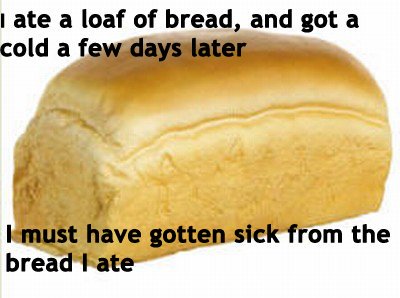
Wishful thinking encourages us to believe there are magical, no-fail formulas out there. To assume that if we follow a prescribed set of behaviors, the promised result is guaranteed. For example: Hard work and talent will be recognized and rewarded.
We want to believe this because it promises we’ll get the promotion, the contract, the luxe house, and loads of recognition if we just apply our natural gifts and devote our life to the grindstone. But a random stroll through any number of small live-music venues on a Saturday night will show you dozens and dozens of singer/musicians to rival Ed Sheeran or Lady GaGa. Community theatre is bursting with aspiring actors, directors, and set designers who will never see Broadway except from the balcony. And corporate cubicles are packed with dedicated folks who will never get the windowed office in top management. Why? Place, timing, luck—the vagaries of life. Or perhaps they didn’t go to Andover with the CEO.
Hard work and talent are good, but they’re not definitive in any individual case. And there’s a dark side to buying into believing they guarantee worldly success. What happens if you pull out all the stops, pour your heart and soul into your work, but the phone never rings, the promotion doesn’t happen, the glowing reviews fail to materialize in The New York Review of Books? Should you despair that you lack ability? Beat yourself up for not having worked 25 hours a day? For taking time “off” for family, friends, your health? Believing that the big payoff lies entirely within your control makes you the fall-guy no matter how gifted you are or what you’ve sacrificed.
So if some or all of the rewards for hard work and talent fall your way, revel in your good fortune, but do the thing you love because you love it, whatever the outcome.
More Wishful Thinking
Psychologist John Cohen, author of Chance, Skill and Luck, says, “Nothing is so alien to the human mind as the idea of randomness.” Our brain, it seems, continually seeks cause and effect, to the point where we routinely twist two unrelated events into the most far-fetched correlation: I didn’t wear my lucky red shirt today, so of course I didn’t get the winning lottery number. This constant quest for patterns is known as apophenia, and you can actually see evidence of it in magnetic resonance images.
Neuroscientists consider this search for cause and effect to be one of our most significant cognitive strengths, but like most strengths, it harbors a weakness: The assumption that everything happens for a reason.
Randomness feels threatening, so we employ Everything-Happens-for-a-Reason to explain and mitigate disasters that befall us, both personal and societal. To pair a disappointment or difficult struggle with a happy outcome. We want to believe there must be some positive point to all our suffering.
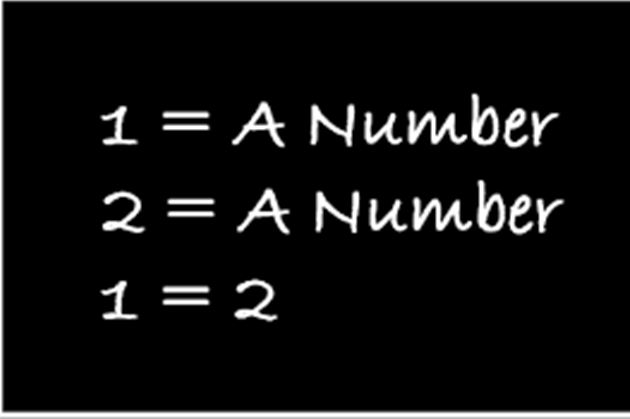
Example: I got dumped by my boyfriend so that I could meet someone better. Well, if your boyfriend was a mean-spirited SOB, hopefully you will meet someone better. The odds might even be in your favor. But you were not dumped by Mr. Wrong so that you could meet Mr. Right. There is no guarantee Mr. R’s in the wings. Whoever you meet next is random, although your decision to act or not on any potential relationship is within your control, and (hopefully) informed by prior experience.
On a really dark note, I have heard “everything happens for a reason” used to rationalize the gun death of a child: “She was just too beautiful for this world, so the Lord took her to be with him.” (Excuse me while I go bang my head against the wall, screaming NO, NO, NO!) Fatal shootings of children in the home are the result of one or more factors—lack of gun safety laws, a failure to properly lock away weapons, no one’s watching the kids—but they do not happen so that something desirable can occur, so the Lord can take a child who is “just too beautiful for this world.”
Addressing our innate need to assign every event a purpose, Paul Thagard, Ph.D. wrote in Psychology Today: “As In history, economics, biology, and psychology, we should always be willing to consider evidence for the alternative hypothesis that some events occur because of a combination of chance, accidents, and human irrationality.”
That’s Just the Way It Is
Here, that slippery-slope slide picks up a little steam. These are the assumptions we make because our particular culture says they’re true and so we seldom bother to challenge them. For example, the widely-held notion that competition brings out the best in people. That competing, rather than collaborating, puts us on our toes, thus raising our performance.
The underlying assumptions here are several: 1) That our drive to best others, to make ourselves look better, is our dominant drive. 2) That our highest achievements are reached when we work in opposition to others. 3) That collaboration stymies top talent by forcing the most capable to work with those of lesser ability. 4) That clever, competent people don’t need help to achieve.
Well, look around you. Is this world an example of the “best” that we can be?
Solving problems is almost never the work of an individual besting others in competition. Finding solutions and advancing knowledge usually result from one of two collaborative models:
1) Developing a solution over time through a chain of individual contributions. The germ theory of disease gained acceptance in the late 19th century, but it was first proposed by Girolamo Fracastoro in 1546 and was advanced by degrees over the next 350 years through the work of numerous physicians and scientists.
2) Myriad talents, faced with a puzzle, work out various bits of a solution and share their ideas/findings. French philologist Jean-Franҫois Champollion is often credited with deciphering the Egyptian hieroglyphics of the Rosetta Stone, while the British Museum likes to point out that it was British scholar and physician Thomas Young who gave him the key clues for that decoding. But digging a little deeper, research shows that “as important as Young and Champollion’s research was, it emerged in dialogue
Lorenzo Gritti
with other famous linguists and Egyptologists, such as A.I. Silvestre de Sacy, who both taught Champollion and tipped off Young that cartouches might be an interesting place to look.
Our penchant for competition is strangling the world on many fronts. If, for example, we are going to slow the rapidly escalating dangers of climate change, halt the savaging of our oxygen-producing rainforests, and clean up our polluted rivers, lakes, and oceans, we must cooperate because the problems are bigger than one country, one corporation, one set of regulations. It’s global collaboration that will rescue the planet, not Pepsi competing with General Mills for who can burn down the most square miles of rainforest for palm oil plantations.
Related Nonsense
Another pervasive assumption is that private is superior to public. Private colleges versus public universities. Private health insurance versus universal healthcare. Private transportation versus public—the subway, Metro, Tube. In the minds of many, anything privately run, i.e. for profit, is assumed to trump all public versions of the same.
Nowhere is this more true than in the U.S. Returning to the States in 1984 after six weeks in Europe, I was horrified by how hard and beat up middle-class Americans looked. Heads down, shoulders hunched, a sea of scowls. Did they realize how unhappy they appeared? Did they acknowledge the toxic pressure of trying to survive in a society that values neither the social nor the public, a society that, as one friend put it, is really just a get-rich-quick scheme? Everything for a buck—it just wears people down. We could really use a break. But can we get one?
Most countries, including Slovakia and Romania, have government-mandated minimums for annual paid vacation, often 3-5 weeks. The U.S. leaves the question of paid vacation up to individual employers. Paid maternity leave is another important perk mandated by all the industrialized countries—except the U.S. (although California, Rhode Island, New Jersey, and recently New York have enacted laws for this).
Of the top 51 highly-developed countries, only the U.S. lacks some type of universal healthcare systems. Is it any wonder that in a list of life expectancy by country, the U.S. comes in a shocking #43?
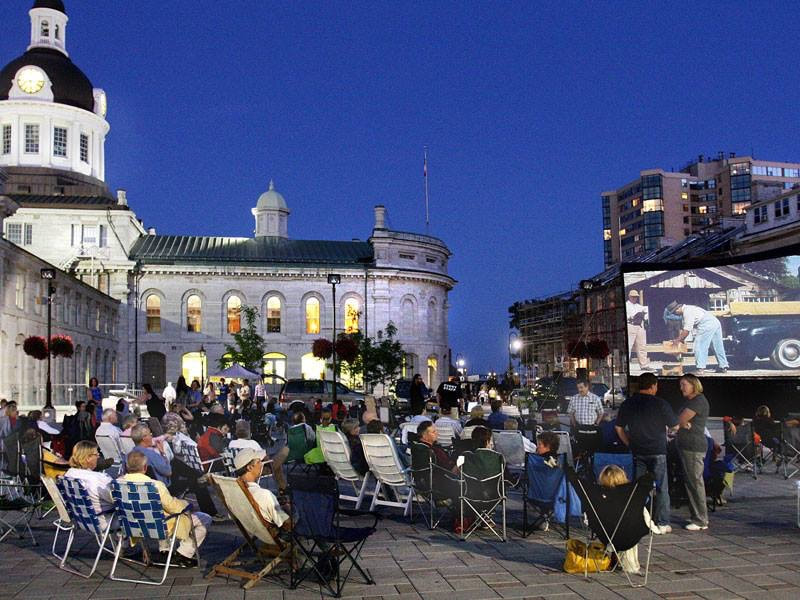
Traveling abroad, I am always impressed by the wide array of free cultural events, the vast number of beautiful parks and public gardens, available for the enjoyment of all. A society that collects and spends money for the public good has always seemed to me to have a better public, a more literate, happier, healthier people.
As we in the U.S. face the prospect of losing our public lands and national parks to private companies for drilling, the closing of our public libraries and schools, the privatization of Medicare and the abolishment of Social Security, we need to take a long, hard look at this assumption that private is superior to public, and ask ourselves: Where is the evidence?
Danger: Deadly Bias Ahead
That slippery slope where our assumptions cartwheel freestyle from the fact-based down, down, down into a nasty quagmire of prejudice? We’re here.
Perhaps, the most pernicious—and human—assumption we make is that we are the norm. Human, because we are all locked inside our own skin. While we can (and should) empathize with others, make the effort to walk a mile in someone else’s shoes, by default the view we see most clearly, and continually, is our own.
This biological/psychological tendency, however, does not make you or me “the norm.” There are 7.2 billion of us on the planet. Clearly, there cannot be 7.2 billion “norms.” And thinking we are the “norm” is dangerous because it’s a short hop from that assumption to believing who we are is the one true “right way” to be. LGBTQ people become “deviants” because one is not gay or transgender. Women can be treated as objects and denied equal rights or fair pay because one is not a woman. People of color don’t deserve access to education, jobs, or decent housing because one is not a person of color. It’s okay to rip immigrant families apart and jail their infant children because one is not an immigrant. People with pre-existing conditions can be tossed under the bus because one doesn’t (yet) have a pre-existing condition.
This is too often the world we live in, and it’s not working out so well, is it?
The Assumption of Privilege
It’s easy for people who have grown up in countries untouched by war and unravaged by famine—who have always enjoyed comfortable shelter, access to healthcare, and free public schools—it’s easy for these people, which likely includes most everyone reading this, to assume that just because they’ve always had these things, this life of relative privilege, they always will.
Wrong.
Regular readers of my scribblings here know I’m a BIG fan of history, and if history proves nothing else, it underscores the lightning swiftness with which one’s circumstances can change. Wiped out overnight with the whoosh of a tsunami or hurricane. Devastated in the space of a few days or weeks—the eruption of Mount Vesuvius that buried Pompeii, the Great Plague of 1665 that killed 100,000 Londoners, the bombing of Hiroshima and Nagasaki. Or annihilated in the slow but steady (two years, five years, ten) drip-drip of the Nazis’ Nuremberg Laws, the evictions of Jews from their homes, the loss of their businesses, and the violence of Kristallnacht as thousands, then millions of Jews, gays, Communists, Romani, blacks, and the mentally disabled were rounded up and sent to the gas chambers.
Agence France-Presse
CNN’s Sheena McKenzie writes of “How seven years of war turned Syria’s cities into ‘hell on Earth’”: Syria’s civil war, which marks its seventh year on Thursday, has transformed ancient cities into scenes of apocalyptic devastation… Architectural masterpieces dating back centuries have been annihilated. Bustling marketplaces turned ghostly quiet. And basic infrastructure — hospitals, schools, roads — has been pummeled into dust.
Everything you have can be taken from you. Healthcare, pension, breathable air, safe drinking water, a free press—the list goes on, grows daily. And if the right to protest in Washington, D.C. is outlawed, as TheRUMP would like, the way is paved for our voices to be silenced everywhere.
Perhaps the most dangerous assumption we can hold in this moment is that others will save our democracy. That we need do nothing. Someone will stop the threat—the courts or activist/advocacy groups like the ACLU, the Environmental Defense Fund, and Amnesty International.
When we assume that others will take care of things, however, we run the risk that no one will.
As I was doing the final edit on this post, news broke, first, of the bombs delivered to Barack Obama, Hillary Clinton, John Brennan, Maxine Waters and eight others (so far), followed by the shooting deaths of 11 members of Pittsburgh’s Tree of Life synagogue. Anyone who doubts we live in perilous times (and I mean this in the nicest possible way) needs to have their head examined, as my dear old Ma used to say.
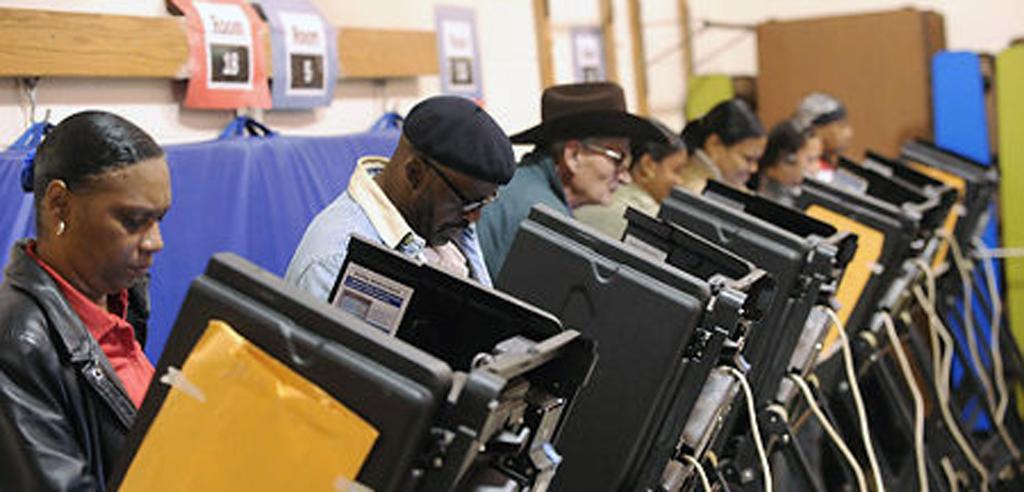
Two words: Go VOTE.
Yes, the Far Right is cleansing voter lists of blacks, Latinxs, Native Americans, and college students. All the more reason to double down.
There are more things in heaven and earth, Horatio, Than are dreamt of in your philosophy. Shakespeare, Hamlet (Act 1, Scene 5)
[NOTE: Yes, this is not new, but then who among us is? So, enjoy the opp to revisit this immortal post and let yours truly go lie on the beach for a few weeks, with nothing more pressing to worry about than the fate of the characters in the book she’s reading and the amount of rum punch she’s consuming.]
Alert readers of this blog may recall a post (“Everything Takes as Long as it Takes”) where I shared a sample of the stuff I scribble on scraps of paper which I then leave all over the house. That particular scribbling noted that One day you’re 30; the next, you’re 60, and yet 10 minutes can seem like forever.
Observations like this take up not inconsiderable real estate in my head. I call them “mysteries.”
I thought it might be a nice diversion from the current journey we seem to be embarked on—going to hell in a handbasket—to share some of these musings with you. Also, I’m packing for a trip and penning advance blog posts at a rate Stephen King would envy. I don’t have time to research, say, the validity of Einstein’s theory of relativity or to follow up on a CNN article Drinking more coffee leads to a longer life, two studies say. I’m willing to take CNN at its word. The press in NOT the enemy of the people, and coffee is our friend.
Excuse me, while I get a refill.
Okay, I promised you mysteries.
Mystery #1: How Can We See the Sky?
I was sitting out on the lawn at Tanglewood (summer home of the Boston Symphony Orchestra) in July, sharing a picnic with Ed and listening to Mozart’s Piano Concerto No. 24 in C minor. As it was early evening in high summer, the sky above me was still amazingly blue, feathered with clouds that looked like someone just ran a comb through them. Cirrus clouds, I think (I’m a writer, not a scientist). They arced overhead, a perfect dome, the sky meeting the ground in a complete circle around the Tanglewood lawn, our chairs at the exact center. How cool is that?
It’s rare to have such an open vista without buildings or other debris clogging up the sightlines. I hadn’t quite realized before that wherever we are, it’s like we’re inhabiting part of a snow globe. That Earth appears to be a ball inside another ball (the sky) which encompasses it completely.
Actually, we never experience Earth as a ball. More like a plane, bisecting a sphere. (To clarify this gibberish, see illustration.)
The Boston Symphony Orchestra moved on to a Tchaikovsky symphony (the Fifth, in E minor—I was paying attention, more or less) while I jotted a note on my program: How can we see the sky?
I pondered this through the Andante-Allegro movement and soon realized that, like Pandora’s Box, this question opens up a slew of thorny conundrums:
If Earth is a ball inside the SkyBall, why can we never touch the sky, even with a very tall ladder or, say, from the roof of the Empire State Building? We can’t even touch the sky where it meets the ground at the horizon because, like a pesky older sibling, the horizon taunts us, moving away as we move toward it.
Samuel Zeller
And where oh where is outer space? How does this blue, cloud-scraped sky—a visually opaque ceiling—obscure the cosmos of stars and planets that glitter and spin on a decidedly black background?
This is not as stupid a question as it may first appear. Recall the photos of Earth from outer space—there is no “sky barrier” in the way. Maybe a wisp of cloudy looking stuff but you can still see Earth—the oceans, the continents.
By the Finale (Andante, Allegro, Moderato), the SkyBall had vanished, leaving me to view a sprinkling of stars light years away. Where did that opaque blue barrier go? Is there a day-to-night transparency button somewhere operating on a timer? And when the night is overcast, does that mean the transparency gizmo is out of juice and needs new batteries?
Like I said, it’s a mystery.
Mystery #2: Are We Right-Side Up or Upside Down?
Okay, gravity is the stuff that keeps us sticking to the earth—our feet squarely glued as sure as Newton’s apple to whatever patch of turf we’re standing on—but are we right-side up or upside down?
Like most of us, I grew up with those cartoons of little kids holding hands encircling the globe, so popular on UNICEF holiday cards. Being from the northern part of North America, I wasn’t too worried because Michigan was fairly high on the top side of the EarthBall. But those kids in Algeria are living at a perilous slant, and the ones from New Zealand and Patagonia have blood rushing to their little skulls 24/7.
As my age advanced to double digits, I began to question such two-dimensional representations. Was north always up and south always down? Up compared to what? Down from where?
We are citizens of the universe, a multi-dimensional space without end, as scientists tell us (and questions within questions—how do they know this?). So, what exactly is “right-side up” in outer space? Does it change with the movement from day to night, the seasons, the place where we live?
thiswayupmag.co.uk
And if there is no right-side up in space, are we always upside down or only sometimes?
Is it this constant switch in equilibrium that creates the need for Excedrin, Prozac, a lobotomy? Or just these constant questions?
I don’t know. Do you?
Mystery #3: How Do We Go to Sleep, and How Do We Get Back?
The word on the street is that even the most exciting things—chocolate, sex, bungee jumping—lose their allure, their mystery, if they are repeated routinely.
Well, it’s hard to find a more enduring routine in life than sleep, and yet sleep remains a great mystery. How do we get there? How do we get back? What exactly is there?
If you think this is just me inventing puzzlers in an effort to slap a blog together so I can get out of town on time, try this experiment: 1) Place a notepad and pen by your bed. 2) Tonight, write down the exact time you “go to” sleep.
Not as easy as you thought, eh?
We don’t consciously relinquish our consciousness. It just sort of “happens.” Like walking backwards unawares toward a steep drop-off. That last step… We don’t know what hit us. And we don’t know we aren’t awake wherever it is we “go to.” Except once in a while we realize, “Hey I’m in a dream. I can behave as badly as I like and it doesn’t count.” Which realization is almost as weird as going to sleep itself (though it does show a marvelous talent for taking advantage of unexpected opportunities).
When we’re in dreamland, how do we tune out the burps and beeps of the real world around us? While we sleep, life certainly continues on its merry, noisy way. Thunderstorms thunder. Fire engines siren past. But nothing registers unless it’s REALLY LOUD. Like the time I was awoken by the bedroom radiator CLANGING in a way it had never clanged before. The sweet oblivion of sleep dropped away in a heartbeat as I realized geysers of boiling water were shooting up from that radiator, at 5:14 a.m.
Do you know how hard it is to get a plumber at five in the morning? Those 24-hour emergency services listed online? Just phone check-ins that contact a plumber when he or she rises at a more civilized hour.
We surrender our consciousness each night never doubting it will mysteriously “return” in the morning. Now that’s the kind of deep faith most religious proselytizers would envy.
But how is it we do “return” to the real world each day? And why don’t we fall out of bed in our sleep? We certainly move around in our sleep, so why aren’t we hitting the floor in great numbers, regularly? This has never happened to me, but it did happen to Ed once when we were taking a weekend in NYC. Believe me, it was frightening—waking up suddenly to see him tumbling over the edge of the bed, with a nanosecond to hope he didn’t take his eye out on the corner of the nightstand (he didn’t, though he did suffer a nasty cut on his cheek).
Sleep—there’s a Gordian knot of mysteries involved here.
Mystery #4: How Do Cats Know Where to Go?
As mentioned in my August post (“I Always Wanted an Orange Kitten”), I have had many cats in my life. Most of them were indoor/outdoor creatures, which means there came a day in their young lives when I opened the back door and allowed them to explore the wide world beyond. Without exception, they all returned after a few hours. No one got confused about which house was theirs—the mock Tudor in need of a paint job, or the Cape with the sagging steps and the rusting swingset?
How do they do it—how do cats unerringly zero in on their house wherever they’ve wandered? I mean you wouldn’t want to try this with your three-year-old.
This mystery deepens as I recall an afternoon in my college days. I went with a carload of friends to a party, a cookout hosted by a couple who lived in the university’s married student housing.
Several hours into the event, my hosts asked if someone would ride down to the convenience store six blocks over to pick up some more drink mixers. They offered the use of their bicycle. I volunteered and off I went. Finding the Mini-Mart was easy. It was up on the main drag. Finding my hosts’ house again—that was the challenge.
Like cats released into freedom for the first time, I was operating on limited information. Having hitched a ride to the party with friends, I hadn’t bothered to check the house number. Or the street name. Married student housing was laid out in nothing resembling a grid, and all the houses were identical. All 500 of them.
I rode around for a while, Cokes and tonic water warming, bagged ice melting in the bike’s basket. I would probably still be riding if one of my hosts hadn’t chosen the moment I was circling his circle for the hundredth time to set out an empty keg on the front porch. I have rarely been so glad to see anyone.
Cats. Mystery is their milieu. The Egyptians held them sacred. Believed they guarded Egypt from invaders. Next time you see a cat, bow your head in acknowledgment of the inexplicable powers they hold, including the ability to always find home.
Mystery #5: What Are We?
Okay, one more.
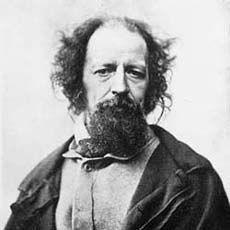
Some years back, a friend invited me to an art exhibit at Smith College. I can’t recall exactly what the theme of the show was, but it included a photograph of the poet Tennyson taken after his death.
In the photo we see Tennyson’s head resting on a pillow, eyes closed, a peaceful expression on his face, as if he were just napping (recall Mystery #3). But he’s dead.
I stared and stared at that still face. Looked at some more of the exhibit. Returned to Tennyson. There he was—head, shoulders, torso—all of him except the thing that was him. The “Tennyson thing.” The thing that was a poet rather than a cab driver or a hip-hop artist. The thing that preferred Skittles to Milk Duds, or favored the Yankees over the Mets. Okay, I’m improvising here—well, fabricating wildly—but the question is: Where did the mind-personality-heart that was Tennyson go? How was it there one moment and—poof!—gone the next?
I relate all this as background to the greatest mystery of all: What are we?
The startling glimpse I had into this most amazing of riddles came while I was visiting London twelve years ago with my daughter. As well as enjoying galleries and museums, parks and pubs, Lauren was talking to admissions people at several UK universities. This particular day, she was talking to someone at King’s College London about studying microbiology (she wound up majoring in public policy in the States, but that’s a completely separate mystery and nothing to do with the topic at hand).
While she was chatting with the admissions folks, I wandered around and discovered a little anatomy “museum” on one floor. A kind of 19th century exhibit of spare parts—like a Victorian penny dreadful. Among the displays I recall were stomachs and brains, lungs and large intestines, hearts and kidneys. There was even a set of fetal Siamese twins. All floating in some murky preservative in voluminous glass jars.
It brought me smack up against all my assumptions about the species Homo sapiens, and changed my head 180.
Up to that moment, I thought of human beings in the lofty, ethereal way you might expect from a lit major/writer/daydream believer. We were ideas and dreams, philosophical meanderings and heart-throbbings. But as I stood, gazing at these jars of stuff that looked nothing so much as a lot of cruddy dilapidated hot water bottles and crusted tubing, I had to admit: That’s us.
And when that junk stops working, the game’s over.
The mystery is how something as mentally and emotionally complex, as creative and resourceful as us emerges from what appears to be about five dollars’ worth of spare parts.
You can see how a Hitler or a Trump might come out of this muck, but a Tennyson or a Van Gogh? A Nelson Mandela or a Frida Kahlo?
And yet it is the truth of us.
Mysteries. Life is full of them. I embrace them. I like the way they keep my brain on a Socratic buzz—asking and answering questions, which then generate more questions—as I puzzle out the oddities of this world.
It all comes down to this: When the SkyBall goes transparent tonight, giving way to a universe of stars, I’ll be thankful that whichever way my head is facing, I don’t fall off the planet. And when I come back from the land of sleep tomorrow morning, however that happens, I’ll be grateful for another day, crossing my fingers that the mucky parts and crusty tubing keep on ticking.





















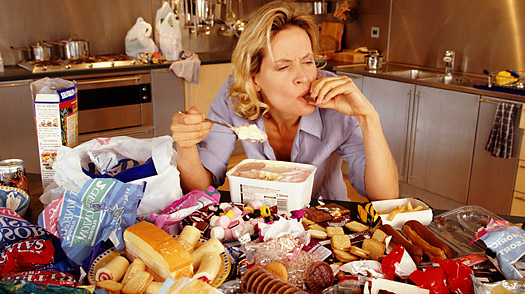 We also make assumptions based on collective human experience: You don’t extend your hand to a snarling dog. You don’t dive into water that’s over your head unless you can swim. You don’t eat the Giant Bag of Hershey’s Kisses and expect to lose weight.
 n The New York Review of Books? Should you despair that you lack ability? Beat yourself up for not having worked 25 hours a day? For taking time “off” for family, friends, your health? Believing that the big payoff lies entirely within your control makes you the fall-guy no matter how gifted you are or what you’ve sacrificed.
 winning lottery number. This constant quest for patterns is known as apophenia, and you can actually see evidence of it in magnetic resonance
  odds might even be in your favor. But you were not dumped by Mr. Wrong so that you could meet Mr. Right. There is no guarantee Mr. R’s in the wings. Whoever you meet next is random, although your decision to act or not on any potential relationship is within your control, and (hopefully) informed by prior experience.
 them. For example, the widely-held notion that competition brings out the best in people. That competing, rather than collaborating, puts us on our toes, thus raising our performance.
 Traveling abroad, I am always impressed by the wide array of free cultural events, the vast number of beautiful parks and public gardens, available for the enjoyment of all. A society that collects and spends money for the public good has always seemed to me to have a better public, a more literate, happier, healthier people.
 public schools—it’s easy for these people, which likely includes most everyone reading this, to assume that just because they’ve always had these things, this life of relative privilege, they always will.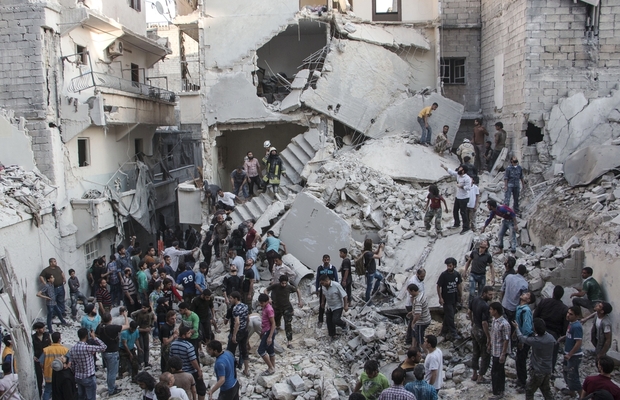

 don’t have time to research, say, the validity of Einstein’s theory of relativity or to follow up on a CNN


 America, I wasn’t too worried because Michigan was fairly high on the top side of the EarthBall. But those kids in Algeria are living at a perilous slant, and the ones from New Zealand and Patagonia have blood rushing to their little skulls 24/7.
 We don’t consciously relinquish our consciousness. It just sort of “happens.” Like walking backwards unawares toward a steep drop-off. That last step… We don’t know what hit us. And we don’t know we aren’t awake wherever it is we “go to.” Except once in a while we realize, “Hey I’m in a dream. I can behave as badly as I like and it doesn’t count.” Which realization is almost as weird as going to sleep itself (though it does show a marvelous talent for taking advantage of unexpected opportunities).
 confused about which house was theirs—the mock Tudor in need of a paint job, or the Cape with the sagging steps and the rusting swingset?
 I stared and stared at that still face. Looked at some more of the exhibit. Returned to Tennyson. There he was—head, shoulders, torso—all of him except the thing that was him. The “Tennyson thing.” The thing that was a poet rather than a cab driver or a hip-hop artist. The thing that preferred Skittles to Milk Duds, or favored the Yankees over the Mets. Okay, I’m improvising here—well, fabricating wildly—but the question is: Where did the mind-personality-heart that was Tennyson go? How was it there one moment and—poof!—gone the next?
 amyhenrybooks