Living Up to Your Potential: Who Decides?  

During a recent chat with some friends, one of them recalled a high school teacher who embarrassed him in class by saying “you aren’t living up to your potential.”

Not living up to one’s potential—an arresting and, for me, rather dubious notion. What does it really mean, and who decides what your or my or anyone’s potential might be?

Let’s start with this teacher’s basis for 1) assessing my friend’s potential, and 2) deciding he wasn’t living up to the mark. Was the teacher comparing his classroom performance with his prior academic record? Measuring the gap between his output and his score(s) on academic knowledge tests like the Iowa Assessments, or IQ evaluations like the Stanford-Intelligence Scales?

Are there other factors outside the school setting that might have influenced how this teacher thought about my friend’s potential?

What Do Standardized Tests Really Measure?

The term “IQ” (intelligence quotient) was coined by German psychologist William Stern in the dawn of the 20th century. It was almost immediately adopted by Alfred Binet who, together with Theodore Simon, created the Binet-Simon intelligence scale, the first modern test of its kind. Rather than measuring what a child had learned, the test assessed mental abilities through such items as the child’s reply to an abstract question or their verbal definition of a known object such as money. The child’s IQ would then be calculated as a quotient of their mental age (estimated by the test) divided by their actual age and multiplied by 100, e.g., a six-year-old who performed at the average level for six-year-olds would score 100. If that child performed at the average level of a nine-year-old, their score would be 150.  

In everyday parlance, one’s IQ quickly became a shorthand for classifying people as brilliant, average, or not-so-swift—labels that can color teachers’ attitudes toward a child, especially the low performers, and prove difficult to shake. But Stern and Binet both cautioned against using IQ as a sole means for categorizing intelligence. They felt that intelligence is multi-faceted, individual differences are highly complex, and comparing two people in any qualitative way is a near-impossible task. Perhaps most significantly, Binet, who intended his test as an aid to identify kids who need an extra boost in the classroom, believed that intelligence is not fixed or inborn.       

Despite these disclaimers, the then-new and rapidly growing eugenics movement (Hitler would become a big fan) seized upon IQ testing as a method for identifying the “feeble-minded” who they hoped to eradicate by preventing such people from “breeding.” Indeed, in the closing years of the nineteenth century, Sir Francis Galton, who coined the term eugenics, suggested in his book, Hereditary Genius, that these people be sent to celibate monasteries or sisterhoods in the interests of improving the race.

Tests of Knowledge. Whose Knowledge?

On even shakier grounds in defining a child’s potential are knowledge-based tests like the Iowa Assessments or the Stanford Achievement Test. These tests are designed to measure specific skills and track a student’s progress. But what is knowledge really? It can only be what we have been exposed to, not what we are capable of achieving. And the experiences of American children (indeed, children everywhere) are so widely divergent as to make any truly meaningful comparisons, let alone pronouncements on a child’s potential, ludicrous. Though testing companies—responding to criticisms of bias—are quick to assure us their updated tests are more culturally inclusive, can you truly compare the scores of students from an underfunded, overcrowded school that lacks many basic materials with the scores of kids in an affluent suburb where the schools have state-of-the-art science labs, a fine arts wing, and the latest textbooks?

All children have knowledge, i.e., every child has experienced, observed, and taken in a ton of info about the world around them. But the child who shares a one-bedroom flat with three siblings and a single parent doing the Mickey D shift has a very different understanding of how things work than the child whose financially-secure family provides dance lessons, visits to science museums, and trips abroad. Both have knowledge. And they both know that the social order values one kind of knowledge over the other.      
Even if we remove economic inequality from the picture for a moment, the child whose experience is a sprawling family farm in Idaho has a very different view of the world from the child growing up in New York City whose daily life is the subway, skyscrapers, and a rainbow of diverse cultures. Even Binet acknowledged that measures of intelligence were not easily generalizable and could only apply to children with similar backgrounds and experiences.

The Many Shades of Intelligence

The brain is a many-splendored thing. As Yasemin Saplakoglu, writing for livescience.com, says, “The brain tells us what to do, how to act, what to think and what to say… We depend on this organ to live and learn, but much about this organ still remains as mysterious to us as the inside of a black hole.” 

One of those mysteries is what motivates each of us to pursue certain paths and reject others. We now know a lot about the brain’s neurons and synapses, its frontal lobe and the amygdala, but that “thing” that is each of us, what drives it, how it manifests itself in our individual capabilities? Our “test score” on that is about zero. So, how can we measure a child’s potential? Yet, there is something in our collective society that always wants to measure stuff—gender norms, quality of life—quantify it, label it, then tuck it away all neat and tidy. No confusions. No uncertainties.

Yet, human beings are full of mysteries. For example, I can make good connections between seemingly disparate events, I’m fluent in literature and history, facile with words, creative, but I could never have invented the computer. My head just doesn’t work that way. Does this make me less intelligent than someone who dwells in the land of IT? Turn it around. Is a geneticist who understands human genome sequencing but can’t read music more or less intelligent than a composer who writes symphonies but barely passed biology in high school? Or are they simply different? 

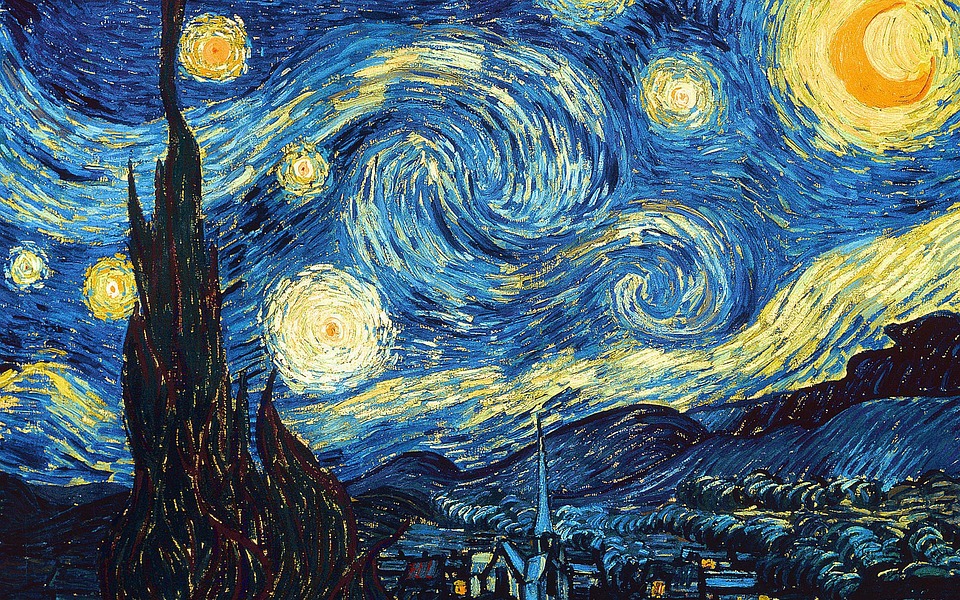
The theory of multiple intelligences, proposed by Harvard psychologist Howard Gardner in 1983, comes closer to admitting the immense complexity that is each of us, but even it cannot predict or codify how these various types of intelligence—combined with our individual experiences and that undefinable thing that makes you you—stamp us with a potential that can be expressed in numbers, percentages, grades. The thing that made Van Gogh paint in the way he alone painted; the “spark” that inspired Alan Turing to build the Bombe machine that broke the German Enigma code, a major turning point in the Allies’ road to victory in World War II.

The First Rule of Status Quo: Thou Shall Not Buck One’s Social Class

Those “other factors” I mentioned up top that influence our beliefs about a child’s potential? In my experience as both student and educator, none is more likely to bias a teacher’s (school’s or community’s) assessment than the socio-economic status of a child’s family.

Expectations flow from certain well-defined “norms” (a word that, in my opinion, one must always approach with a certain wariness), e.g., a “bright” child from a “comfortable” home, “of course” dreams of a degree from Harvard, Princeton, or MIT, and a future in medicine, law, investment banking, engineering, or IT. They would “naturally” aspire to a large airy home, a yacht, and a vacation house in some trendy beach area (where one can hang out with all the other people who have lived up to their potential).

The affluence a family commands is no small lever in the world. Just look at George W. Bush. Dumb as all get-out, but rich and once the most powerful public figure in America. Did he ever dream of anything other than politics? Was he ever allowed to even have dreams that were driven by something other than his social status, family connections, and dynastic wealth? It’s worth noting that such factors in determining potential are all slanted toward the white, the Christian (or at least the non-Muslim and non-Jew), and men. A woman may choose to seek a high-status position. But if the “little lady” decides to stay home or volunteer her time or make bracelets to sell on Etsy, she’s not deemed a failure. We didn’t expect that much from her anyway. And society rarely asks of the Black man running the gas pumps if he has other aspirations or talents.   

The (Hidden) Tyranny of You Can Be Anything You Want

“You can be anything you want to be.” Sounds like a great thing to tell a child, right? And to be fair, many parents and teachers who say this mean it simply to be an encouragement, an ego boost. But sometimes there are hidden parental agendas. You can be anything (I want you to be). You can be anything (appropriate to our family’s social class). You can be anything (that has prestige/earns big bucks—a neurosurgeon, a corporate CEO—and if you’re not, then you’re a royal f#&k-up).

It can be difficult for a child to see this hidden agenda until the backlash comes. I wanted to be a writer from the start. I penned my first poems at age five, my first short stories at six. But the first time I pitched an article to a magazine at age 19—and yes, I made many mistakes in that initial effort—my mother (without even reading the pitch) said, “Oh, they won’t want that.” It was discouraging, confusing—and angering—for me. Why was she trying to crush my first attempt at giving my dreams flight in the larger world?

Sometimes the efforts to direct a child’s dreams involve more than simply maintaining the family’s social status. Several years after I pitched that first article, college over, I took a job waiting tables while I wrote my first novel. That’s when the hidden agenda really emerged. “You could be anything you want!” [Mom again] “If I’d had your intelligence and your opportunities…” Yadda, yadda, yadda. It emerged through many painful repeats of this scene that what I could have been—what she wanted me to be (because she gave up a career she loved at my father’s insistence)—was the CEO of a prestigious marketing firm. Never mind that I loathe the whole corporate thing. I was born to live out her dreams. I was her “second chance.” Sadly, I think this is more common than many parents would like to admit.

Getting Encouragement Right

Encouragement is great when it’s for goals the person being encouraged has freely chosen. Not being allowed to feel okay about our own choices and dreams is a set-up for frustration, anger, depression, and pain. Parents and teachers need to step back, take the time and effort to discover what floats a child’s boat—and this can change many times as kids grow up and become adults—and provide opportunities/support for those young dreams. This is never wasted. Supporting a child in their search for who they are and what matters to them—providing materials or lessons (if that’s feasible), introducing them to mentors, or just simply learning more about the things that engage them—can have rewards that last a lifetime. For the child, for the parent, for their relationship.    

For the adults in the room who refuse to do that, I can only paraphrase Bob Dylan: Please get out of the way if you can’t lend your hand.

Upward Isn’t the Only Kind of Mobility

For a world that offers a breathtaking array of possibilities in life, from dog surfing instructor (yes, this is a real job in California) to rocket recovery technician, robot tester to alligator wrangler, it seems a bit myopic to assume that the only definition of a well-lived life comes down to a prestige title, a corner office, and a high six- or seven-figure salary. One size has never fit all. Thank god.

I know more than one person who has turned down promotion to a high-level management position at their company—said no thank you to the increased pay, perks, prestige—because they did not want to manage people. They did not want the endless rounds of meetings, the oversight of resources and personnel. They just wanted to continue doing the job they already enjoyed. A well-known children’s author once told me that many editors at publishing houses dread a promotion because it takes them away from the work they became editors for—to read manuscripts, discover new talent, and edit books.

Are these people not living up to their potential, or are they exactly where they should be—honing their skills at a job they love? Of course, turning down a promotion usually means you have to look elsewhere for a job—so “unimaginable” a thing, so damning, is it to reject “the American Dream”, you can find yourself increasingly shut out of all the good projects going, the stuff you do love, as punishment for bucking the status quo.

Coloring Outside the Lines

So, what about you? Who are you? What floats your boat? What if your dreams don’t accord with what others label your potential?

First of all, you are far from alone. John Steinbeck, the great American novelist, attended Stanford but left without a degree to pursue his writing. He picked fruit and worked on the construction of Madison Square Garden while penning his first three novels, all which sank with barely a trace. At 33, he got a taste of success with a short story, “Tortilla Flat”, but it would be another four years before the publication of The Grapes of Wrath, and he would be 50 by the time East of Eden saw print.

Stephen King served as a high school janitor, among a host of other odd jobs, while struggling to get his fiction published. His time wheeling the cleaning cart through the halls, though, inspired him to write the opening girls’ locker room scene in Carrie, which would become his breakout novel. Perhaps nothing is ever truly wasted.

Only one thing seems more audacious than someone determining what another person’s potential is—and that is telling them they’re not living up to that potential. So, follow your passions whether or not they fit the pigeonhole others have pegged for you, whether or not they bring you public recognition and status symbols. We do the things we love for an intrinsic reward that has no neat, quantifiable measure. You will never be happier than being who you truly are.   

TALK TO PEOPLE

During the long seeming decades of living life behind a mask (and, sigh, now we’re back there again, indoors anyway), one of the things I missed most were the little random chats people have in passing. The exchange of smiles. At a time when we most needed the comfort of contact with our fellow human beings, we had to make do with the occasional nod.

Talking to people bridges the gap created by absorption in our personal cares/woes/busy-ness, creates warm fuzzy feelings that foster a desperately-needed civility, reminds us we are part of something larger than ourselves, a community. We need to talk.

What happens when we stop talking was painfully illustrated recently when a California teacher wound up in the hospital with head and face lacerations after an enraged parent attacked him. The reason for the beating? The parent had just discovered the school, following a new state mandate, was making the children wear masks in the classroom.

Whatever happened to “use your words”? Even the most heated discussion would have been better. I guess it’s just fortunate the parent didn’t pull out a gun.

Talking Down Your Fears

In my notes for this post, I jotted down a line I found on the Internet: We text constantly, but we talk less. While there may be myriad reasons for this—e.g., wishing to convey a quick, brief message without becoming ensnared in a long, chatty conversation—a 2020 report in the Harvard Business Review suggests deeper issues may underlie our preference for texting over talking. In a string of experiments, people were given the choice to get in touch with an old friend by either phone call or email. Most chose email, despite the fact that they expected to feel more connected to their friend if they actually spoke to them. So why not pick up the phone? Because they also imagined—and feared—they would feel more awkward. Typing seemed the “safer” route. 

Afraid to talk to our friends??? Worried about letting others glimpse the “real” us? Is this the fallout from a decade-plus of Facebook relationships where we paint a perfect, enviable picture of our life to the world, all the warts (and human need/frailty) removed?

Well, the good news is, as so often happens, our inflated fears are all out of proportion to reality.  When people were randomly assigned to contact an old friend by email or phone, those who made phone calls reported feeling more connected than the e-mailers—as they’d anticipated—but also far less awkward than they had feared beforehand. This finding held up even when people were asked to talk to a stranger to discuss a given issue. “This is consistent,” the research notes, “with other findings suggesting that a person’s voice is really the signal that creates understanding and connection.”    

Cat Litter Chat

Talking to other people, especially in passing, doesn’t have to be brilliant or witty or deep. One of the easiest ways to connect is through the simple commonalities of life.

Recently, on my daily stroll, I passed a house where two women were carrying their shopping from the car. One had a gigantic box I recognized. Cat litter. For those of you not blessed with cats, I will reveal that pre-COVID, cat litter came in 20 lb. bags. Not featherweight, but doable. Since the pandemic, however, it is only available in my local supermarket in THIRTY POUND boxes. While bags have some friendly “give”, boxes are blocky. They have hard corners—ouch! To top it off, this woman—a tad over 5” tall—was carrying this boulder of a box up a steep incline.

In solidarity, I called out, “I can’t believe how heavy they’re making those boxes of cat litter now.”

“Don’t I know it,” the woman called back. “It’s a killer. My arms are numb.”

That was it. They entered their house and I went on my way, but my spirits were lifted. I felt good, a part of my larger neighborhood, my town, humanity. I hope I left them feeling the same.    

The Shortest Distance Between Two People

My first mask-free walk occurred about three weeks after my second dose of Moderna. It was harder than I thought to give up that mask—I hated that I hadn’t talked to anyone on the street in over a year, hated that I couldn’t beam a smile in anyone’s direction, but I also associated the mask with safety, with staying alive. After some inner tussle, I braved the streets barefaced one sunny May morning.

Unsplash: Luis Villafranca

Five or six blocks along, I passed a house where half a dozen people were chatting, sprawled across two sofas, an armchair and a rocker on the lawn. This seating was grouped around a large dining table and separated by end tables of various sizes and woods. A hand-lettered piece of cardboard—TAG SALE—was propped against a garbage can.

I loved it. It was just such a funny, fantastical scene, I couldn’t pass it by unremarked.

Now, humor is always a bit of a risk—it can fall flat, can be met with puzzled looks—but I’ve got a magnet on my fridge that says Laughter is the shortest distance between two people, and I tend to chance it, so I called out, “You’ve done it! You’re all set up for outdoor living.”

They all laughed, and I laughed. We chatted for a few minutes—about how good it felt to see people’s faces again, how great it was that we’d made it to summer. I walked on clouds all the way home.

Peace, Love & Understanding: It’s Just a Few Words Away

As noted up top, we need to talk to people because not talking is the quickest route to misunderstandings, anger, and unhappiness. When you’re feeling slighted or wronged, though, it can be hard to remember. I was reminded of this recently when Ed and I had dinner at a local Mexican bistro. The set-up here was you ordered your food/drinks at the counter/bar, then selected a table and a server would bring your meal.

Unsplash: Nathan Dumlao

As I waited in line, I noticed there was no listing for the beers available at the bar, so I asked the woman who took my order if I could see a list of their brews. She was very short with me: “We don’t have a list.” Okay, could she maybe tell me what was available on tap/in bottles? “I don’t know,” she said and tallied up my dinner order. “If you’ve got anything like Corona or an IPA, I’ll take one.” She shrugged and gave me my food total.

By the time I was seated at our table, my happy spirits at a night out had plummeted into the annoyed zone. “What kind of restaurant counterperson has no idea what beer is available?” I asked Ed. “Why was she so hostile? I wasn’t rude.”

“I heard her tell the man in front of me that the power was out for a couple of hours,” Ed said, “but orders for pick-up kept pouring in online, and there was no way to prepare them. Then everyone showed up, expecting their food.”

Okay. Reset. The woman has just spent two hours in the no-fun zone, sorting out late orders among a crowd of hungry customers. She’s having a Bad Day.

When she brought our order to the table, I commiserated with her about the power outage. Gave her a chance to unload a bit about the frustrating evening. In the end, she brought me a delightfully “hoppy” beer. Sometimes, all people need is someone to ask how it’s going. Someone to listen.  

Unexpected Connections

One of the great joys of talking to people is finding unexpected connections. We pass by “strangers” every day with whom we share much more than we guess. Never has this felt truer than in the darkest days of COVID, when we were all suffering the same fears, frustrations, and the loss of everything that felt “normal.”   

Unsplash: Sigmund

During one of my daily strolls last August, on a street I’ve walked down 11,892 zillion times in the past eighteen months, a boy called out to me: “Do you want to look at the cards I made?” A sandy-haired kid of 8 or 9, he had a display of some two dozen handmade cards on a folding table edging the sidewalk. We exchanged names and I began perusing his stock—a truly impressive and highly original assortment of cards that expressed friendship, humor, love. I asked him how long he’d been making cards and where he got his ideas. Then, I showed him my four or five favorites and told him what I especially liked about each one.

I was honestly sorry I didn’t have any money on me. When I asked if I could come back the next day, the woman who was sitting on the porch steps said he would be going back home to Boston the next morning. She introduced herself as his aunt, and we swapped the sort of basic bio details people offer on meeting. Turned out, she’s a writer, too. We chatted a bit about the state of the publishing industry, the kinds of writing we each do, the markets we’ve published in, and how frustrating querying agents can be.     

Before saying good-bye, I asked the boy if he would be selling his cards in Boston. He said he had sold a few there earlier in the summer. “But some days no one buys anything,” he sighed.    “I hear you,” I said, “I don’t sell everything I write either. But I hope you keep going because your cards are amazing. You have real creative talent.”

I like to think all three of us felt we’d connected through our work as artists of various stripes. I know I did.

More Than A Transaction

Unsplash: Brooke Cagle

Call me weird, but I like to talk to the people I come across in the daily transactions of life: shopkeepers, salespeople, restaurant staff, the guy behind the deli counter, the woman bagging my groceries. Not long-winded discussions on the state of the universe—I understand that people on the job have multiple responsibilities to juggle—but something beyond a curt “I’ll have the Salad Niçoise” or “Please bring the check.”

One of my concerns about the fallout from COVID is the dramatic increase it spurred in what was already an asocial trend: buying everything online, ordering take-out via GrubHub, streaming films at home rather than viewing them on the big screen at the local cinema. Of course, before the vaccine, this was absolutely necessary, but I hope we rally from our sofas and easy chairs, stop ordering everything online, put on our glad rags and go downtown, as Petula Clark advised.      

When the restaurants re-opened in my town in June, one of our first dinners out was at a much-loved Italian restaurant. After the long shutdown, everyone was nodding to and smiling at each other. As the crowd thinned and the pace relaxed, we started chatting with our server, a woman in her early forties, about how wonderful it was to be dining out again and the great need people feel for community. The conversation led her to talk about a related tragedy concerning her daughter. At one point, her eyes filled with tears. She paused, unable to go on. I reached out, put a hand on her arm in consolation. After a moment, she placed her hand atop mine. It was such a basic human connection.  

We are so much more than the outward face we show, the public role we play. Not just a server. Not just a customer. Those simple friendly greetings, those brief exchanges about the day, a humorous remark, a kind word—in those moments, we acknowledge the other person’s humanity and demonstrate our own.

What The World Needs Now

Nothing is more natural than talking to people at an event you’ve both attended. It’s a slam-dunk opportunity to build on the commonalities that brought you there. To strengthen that sense of community. Yet, my observation has been that few people do. When a concert or play or ballgame ends, we tend to rush to the exits, jump in our cars or onto the subway and … flee in silence.

Legendary violinist Joshua Bell is always a BIG draw at Tanglewood, and because he’s such a favorite, the exodus from the lawn afterwards is always s-l-o-w. Everyone lugging their coolers, lawn chairs and tables. Everyone stopping by the restrooms before heading out on the highway.

Never one to waste an opportunity, while Ed was in the loo, I started talking to a woman who was also waiting for her husband. I mentioned how great Joshua Bell is, and that I’d never missed a performance of his since my kids started playing violin. Same here, she said. I told her that when my kids were violin students, all the tween-age female violinists used to crush on Josh, and I’d tease them, saying they didn’t stand a chance because Bell (a very handsome man) was much closer to my age and therefore, I had first dibs.  

The woman laughed and said her daughter had played violin with a group of student musicians following one of Bell’s performances. It became a family joke that Joshua Bell had “opened” for their daughter’s concert. The woman’s husband appeared, wearing a Mets tee shirt, and I mentioned that Ed and I are big baseball fans, he, the Red Sox and me, the Yankees. The couple laughed and asked, “How does that work?” By this point, Ed had joined the conversation, and he related a funny story about a cop in NYC asking us the same question. It was a lovely cap to a wonderful evening.  

Talk to people. It’s not rocket science. It’s not Shakespeare. It’s often not even so much the content of the words as it is the human connection. As the research mentioned earlier noted, it’s our voice—the act of speaking to others—that fosters understanding and creates a bond. The world could really use that now.  

And me? I talk to people because—like most of us—I need them to talk to me.


Everything Takes as Long as It Takes

“A happy man is too satisfied with the present to dwell too much on the future.”

Albert Einstein

[THIS post first ran in May 2018. I’m dropping it in here because I’m off to The Big Apple for a little vacay! And because it has relevance to the continued distress many of us experience: That we’ve “lost” some chunk of our lives during COVID that we can never “get back.” This post is here to remind me, and you, that it’s OK. If we’re still here, we’ve still got time.]

Note jotted to self on the edge of a cryptic crossword: One day you’re 30; the next, you’re 60, and yet 10 minutes can seem like forever.

Time. The thing that waits for no man. The tyrant that keeps on ticking, ticking, ticking into the future. A specter that haunts, often causing us to feel when we’re doing X, we really should be doing Y.

Case in point: Being a writer, I have a zillion connections to other writers out there. Mostly what I hear falls into one of three camps.

1. I’m not writing right now.

2. I’m not writing enough right now.

3. I’m writing 2,000 words a day right now, but the rest of my life is going right down the toilet.

These may read like mere declarative sentences. Trust me, they are not. Each one is packed with enough angst to blow the pin right out of a grenade. What’s missing from these words, but explosively present is: Time.

Let’s take another look at these statements and give voice to the elephant in the room.

1. I’m not writing right now. It worries me that so much time is going by without my writing. How much more of my life will I waste not writing?

2.  I’m not writing enough right now. I write too slowly. Stephen King writes like 200 pages a day. I’ll be 90 when this book is done.

3. I’m writing ten pages a day right now, but the rest of my life is going right down the toilet. I don’t have time to write and have a family. What am I going to do with the kids? The dog? We can’t live on take-out forever. Oh god, I missed the car payment again. And I don’t have friends anymore. No time.

Well, other than the fact that Stephen King writes six pages a day, not 200, the stress about time expressed here is very real. I hear it often from others. I feel it every day myself.  

Tick, tick, tick. Time is fleeting. Tempus Fugit—there it goes!

In the Age Before Time

When I was a kid, in that golden era after the invention of the wheel and before the advent of Facebook, my friends and I used to spend whole afternoons in the garage looking for the little key that tightened our roller skates. If we found it before dinner and got time to actually skate, that was a bonus. We were together, hanging out. What more mattered?

Sometimes we rode our bikes around all day, just seeing what was up at our regular haunts: the school playground, the little park six blocks over, the drugstore, the ravine. We weren’t disappointed by what we found—usually nothing. We were just cycling through our world, enjoying the freedom of independence.

Like most kids, I had a few chores. Setting the dinner table. Cleaning my room. I didn’t enjoy them, but I didn’t dread them. My mom would call, “Time to set the table,” and I’d have to put down the book I was engrossed in, or pack up the game I’d been playing with a friend, and go slap down those knives, forks, and spoons. But I never watched the clock. I never thought, “Oh crap, I’ve just blown ten minutes setting the table.” And I certainly never thought about those tasks when I wasn’t doing them. I just did them and resumed what I’d been doing or started something new.

Just taking things as they come—when does that change?

The Responsibilities

Does time start to feel like the enemy when our responsibilities expand beyond laying out the flatware?

I carried a full load of courses throughout college and worked 30 hours a week, but I don’t recall ever feeling harried by the clock. I didn’t even own a watch. When I was at work at the Student Union Grill, I was at work, chatting with customers as I flipped their burgers and fried their fries. When I was in class, I was in class, talking literature and history, psychology and feminist philosophy, enjoying making connections among the zillions of new ideas bombarding my brain. If I had a paper due, I started in around midnight and worked through the wee hours until I handed it in at class the next day. No biggie. Occasionally, I slept. I didn’t count the hours.       

There’s a cartoon from those days. A friend clipped it for me. “This is exactly you,” she said.

But really, it was all of us. I never heard anyone angst about time. There was a healthy sense of We’re here to explore life. We worked. We played. Wherever we were, we were there.

Out in the “Real World”

Entering the REAL WORLD: Is that when time lays a stranglehold on us?

I remember going for my first big-girl job interview. You know, the one where you suit up and park your personality in neutral. The interviewer began with this zinger: Where do you see yourself in five years?

Five years? I didn’t “see” myself at the end of next week. I knew I was a writer. I knew I wanted to always be writing. But I had no timeline for my dreams.

I also knew the interviewer expected me to detail how I planned to climb some ladder I hadn’t constructed and didn’t care about. So, I gave him some garbled gab about ambitions, probably cobbled together from TV shows and articles I’d read about bright young things “going places.” Then I left. Quickly.

After that, I went out west for a while, where I discovered I need deciduous trees and seasons. Then, I came back east for grad school, which I left two years later after some serious #MeToo harassment from a prof, in a time when women were still being advised to “suck it up.” I wrote my first novel. None of this felt like wasting time.   

 At my second “real world” interview, for an editor’s job, the company focused on my skill set and portfolio—in short, my ability to do the work—and didn’t ask ridiculous questions. (Wherever you see yourself in five years, I can almost guarantee that’s not where you’ll be.) I got that job, and the job came with strict deadlines. I was responsible for planning, sourcing, and writing a monthly publication.  

Surely, I must have felt the pressure then—time as an anvil waiting to drop on my head, like Wile E. Coyote in a Road Runner cartoon.

Not really. When I was watching Late Night with David Letterman in, say, March, I never worried that I wouldn’t make deadline on the April issue. When the company started sending me on the road to give seminars for our client subscribers, I didn’t panic about finding the extra hours to prepare a presentation. I was psyched about the travel, meeting new people and staying at legendary hotels like The Palmer House in Chicago. Bring it on. Everything was an adventure.

Of course I didn’t have kids yet. Is it family responsibilities that send us into a tailspin, time spiraling out of control like a plane losing fuel fast?

Parenthood: Who Has Time to Think About Time?

I don’t think there are many parents out there who would argue that having kids is the busiest thing you’ll ever do. There’s something going every minute, and that’s on a slow day. Often, it’s a three-ring circus. You’re making dinner and baking cupcakes for the school fundraiser while helping with homework and maybe adding the finishing touches to a Halloween costume. I recall the blissful peace of doing my work (I was a copyeditor for El Sevier at the time) at the kitchen table after the kids had gone to bed.

Actually, kids keep you very much in the present. Their needs are of the immediate kind, rising in one moment, taken care of in the next. I never had time to worry about time. I took care of them, played with them, ferried them to friends and activities. Once they were in school, I went back to school, too, and became a teacher. By the time I had a classroom, the kids were able to do their own laundry and clean their shared bath. We did takeout one night a week. Everything still felt manageable. When I was doing one thing, I wasn’t tortured by the feeling I should be doing something else. That would come later.     

What the Hell is Time Anyway?

It seems like a good moment to pause here and consider the nature of this beast we call Time. A brief Google search informs me that:

“Time is a very curious thing. Ask anyone on the street if they know what time is. They are sure to answer yes. But then, ask them to explain it to you and they will almost certainly be at a loss for words.”   (David Lewis Anderson)

“The only reason for time is so that everything doesn’t happen at once.” (Albert Einstein)

“Time is the measurable unit of movement concerning a before and an after.” (Physica IV, 11, 219, b1)

Now that we’ve got that all cleared up, I’d like to offer a little perspective here.    

The Earth came into being a tad over 4.5 billion years ago. Geologically violent in its infancy, and constantly bombarded by meteorites, it took 2 billion years for things to settle down and the continents we know to materialize. Latecomers to the party, it would take another 2,499,800,000 years for us to show up, and then we took our sweet time—another 145,000 years of it—to invent the wheel.

Things take time. Some things take massive amounts of time. Even on our puny human scale, it takes a long time to become a virtuoso at the violin, write a book, lose 20 pounds. We need to find a way to not only accept that, but to embrace it, enjoy the journey, and stop looking over our shoulder at all the things we haven’t done, aren’t doing, still have to do.

The hour we fuss and worry that we should be doing X while we’re doing Y is an hour we won’t get back again.  

For my birthday last month, my husband gave me a writing retreat. I booked four days at a hotel in the Berkshires, packed my laptop plus my current read, and left home. I set no goals—word count, number of pages. I just wrote. Not only was the time highly productive, it was tremendously relaxing. The real gift, I discovered, was not feeling like there was anything else I should be doing. I was where I was.

An Hour is an Hour

The hour we had as a child is the same hour we have now. It has neither expanded nor shrunk. So the difference in our perception—this perpetual sense of being squeezed—must lie in our expectations.

Maybe it’s not our life stage or chronological age that makes us feel we should be moving through everything at lightning speed, but the age we live in.  

Less than a hundred years ago, the journals kept by farmers recount a day’s events as what happened in the morning, the afternoon, the evening. They had much to do and few “labor-saving” tools to help with the load. But they just plowed or planted or harvested as the seasons dictated and understood that when night came, the workday was over. They had to accept their limitations.  

And there’s no evidence in their accounts that they fretted about what they weren’t getting done. No Oh god, I’m out here hoeing and I should be churning butter. But how am I ever going to get the peaches canned if I churn the butter? They went with the rhythm of the year—a much larger, more forgiving time unit.

I grew up in a more exacting age. We moved through life by the hours. The school day started at 8:30. We went home for lunch at 12:15 and had to be back at our desks by 1:00. Bonanza was on Sunday nights at 9:00, and the library closed promptly at 5:00.  

My children grew up with the nanosecond. Their sense of timecrunch is manifest in the way they watch a movie—while texting, Facebooking, chugging down dinner, and prepping for a work conference call.  

But we are still just people, and an hour is still an hour. If we try to cram three hours of to-do stuff into every hour, then we’ll always fail. If we insist on doing it all perfectly, we’ll go flaming nuts.

Very likely, there isn’t time to do everything. But doing everything is a mad goal anyway. So, forget about covering all those bases. Ignore the benchmarks “everyone else” is measuring themselves against. Stop watching the clock. Everything takes as long as it takes. Perhaps, fretting about time is the only true waste of it.

A passage from a childhood book about life in the 1860s sticks with me. The 11-year-old heroine goes to talk something over with her father. He’s repairing a clock. Scattered over his work table are springs and cogs and levers. “He was absorbed in the task at hand.”

The word on the street is that when you’re dead, you’re dead a long time.

Time is not the enemy. Time is life. It’s all we’ve got.

Joy Can’t Wait

Last month, I mentioned that I walked my hood daily during COVID as a healthy alternative to going completely bonkers (for which there is no vaccine), and that I continue to do so even though my local gym has re-opened. Yes, the gym has a range of equipment that exercises all of me, large flatscreen TVs with a zillion channels, regulated comfy year-round temps, and fluffy towels, but after nine years, it’s… boring. Not so the varied streets of my town, where every day brings something new and interesting to my view: 

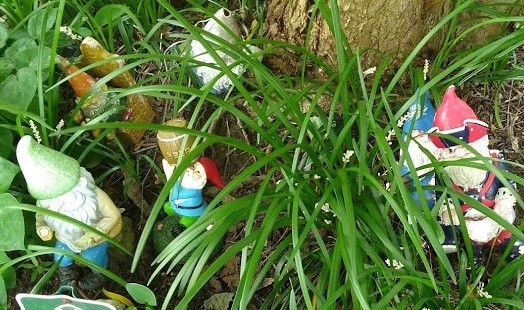
A jumble of tiny painted clay gnomes set beneath a maple tree.

An interweave of hedge branches so intricately constructed, so heartstoppingly beautiful, I paused in mid-stride, certain British nature sculptor Laura Bacon had snuck in and arranged it all moments before.

An eye-popping purple gate leading to a hidden garden.

The May morning everyone’s tulips bloomed, cued by some perfect mystery mix of rain, sun, and good karma.        

An eye for the little things, an appreciation for the details. Certainly as a writer, it’s a necessity. But does it contribute something larger, more profound—an essential ingredient to our well-being?    

The Measure of Happiness

As a species, we tend to measure our happiness in terms of the BIG splashy moments. The summer we rented a villa in Italy and traipsed through the vineyards, the day we bought the house of our dreams, the year we made CEO, were nominated for Teacher of the Year, won a Pulitzer.

All grand, memorable stuff. The trouble is, such events come rarely in a lifetime, and for many of us, may never come at all. So, do we entrust something as precious as joy to such precarious possibilities?   

Joy is much bigger, more significant than this prize or that acquisition. Joy can carry us through the toughest of times, the most difficult struggles. It sustains strength and offers solace, but the secret is you need a steady feed to maintain your energy, your love, your hope. That’s where the “little stuff” comes in—joy is in the details. It’s in the seemingly “ordinary” things we encounter every day, if we can just slow down enough in our pursuit of the big stuff, the grand goals, to notice it, breathe it in.

The burst of color in the garden.

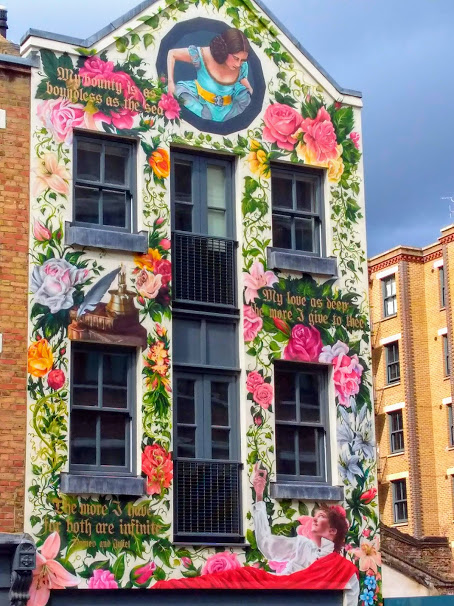
A house someone painted to celebrate the words and scenes of Romeo and Juliet.

A hummingbird fluttering over a cluster of pink asters.

A bowl of water some kind soul left on their lawn for passing dogs in the heat of summer.

Hearing a song that takes us back to some long-ago cherished moment—the people, the place, the emotions.

What is Possible Begins With Joy

If joy feels like a stretch in a moment when greed-fueled climate change is cranking temperatures sky-high around the globe and burning large swaths of the western U.S., while the pandemic continues to rage in Africa, the Middle East, Florida, Texas, and Missouri, maybe we need to view joy through a wider lens.

Yes, the joy we derive from the “little things” feeds our hungry soul, but its reach, like a stone cast in a pond, ripples far beyond ourselves. The joy each of us brings to the table becomes a powerhouse when multiplied by many. A powerhouse of unity that could change the world. This is the message of Contra-Tiempo, a self-described “bold, multilingual Los Angeles-based activist dance theater company creating physically intense and politically astute performance work that moves audiences to imagine what is possible.”

In early July, Ed and I went to see Contra-Tiempo at Jacob’s Pillow. Not a summer’s sojourn in Italy or a penthouse on Manhattan’s Upper East Side, but it was our first visit since the pandemic wiped out live performances last year, and we were itching to go. The show was staged on a large platform outdoors, the trees around hung with colorful tapestries celebrating the rich diversity of cultures across the globe, the green forested slopes of the Berkshires serving as backdrop. And it was one of the few days in the whole of that month when it did not rain in the Northeast. All these “little things” added up to a very joyful afternoon.

As Contra-Tiempo salsa-ed and hip-hopped to Afro-Cuban music in a work titled joyUS justUS, they encouraged us to see our possibilities as agents of social change, to realize that “our power comes from the relationships that we have with each other as human beings.” Sadness, fear, depression, hate—they zap our energy and isolate us. But joy nourishes our compassion and confidence. Joy, Contra-Tiempo reminded us throughout the afternoon, is at the heart of building a better world for all of us.

Community is Everywhere WE Are

One of the delights of life, for me, is discovering the links between people, ideas, events—something strikes you and, suddenly, like a motif, it’s popping up everywhere. Just days after our trip to the Pillow, I was reminded of Contre-Tiempo’s powerful message about the convergence of joy, art, and community in creating a more loving and just world.

Unsplash: Dedu Adrian

July, as I noted, was rain, rain, and then—surprise!—more rain in my neck of the woods. Not a day passed that I didn’t reflect on the insanity of the western half of the U.S. suffering killer heat waves and drought, while we in the Northeast were awash in a gazillion inches of rain. Scrap those deadly oil pipelines wreaking destruction on the planet and build a clean conduit to California—we have enough water to float the Ark! But luck occasionally literally shines down on us, and we managed a lawn concert at Tanglewood on the evening of July 10, the late afternoon sun sparkling on the river that runs beside the backroad to Lenox.

The Tanglewood “parking lot”, being a vast grassy field, was a tad mucky, but the worst mudholes had been roped off. So, shouldering our chairs, the portable table and cooler, the sweatshirts-for-later, Ed and I trekked up the road, across another parking swamp, and waited in line for tix. When, at last, we passed through the gate, the scene was amazing. The vast lawn was filled with people, gathered to celebrate the return of the Boston Symphony Orchestra after the long COVID hiatus.

Unsplash: Jojo Yuen

People of all ages, all cultures, and every walk of life were chatting, picnicking, relaxing—united in the common love that draws them to this spot: Music. Tanglewood is joy. Always. But this evening was especially magic. From the moment the featured soloist, pianist Emmanuel Ax, stepped onto the stage to greet us until Andris Nelsons, the BSO’s music director, took up his baton at the podium, we cheered and clapped and whistled. Wave after wave of applause. For the musicians of the BSO, for the return of live music, for the incredible beauty that is this spot in the Berkshires. But more than that, bigger, deeper, we were cheering the reunion of a community that survived to unite in this space once again.

Community, I think, may be the link between the little moments of joy and the profound power it bestows to move the universe.

The buzz of the BIG stuff—the awards, the promotions, the luxury this and that—wears off more quickly than we imagine beforehand, and the reward for a job well done is … another job. But joy, you can find it everywhere. Even on the crappiest day, the one with a zillion troubles to bulldozer through. Even in the most godforsaken, arid landscape, life rises—exuberant, unstoppable—and with it, joy.

Until I win the Pulitzer for literature, I’ll settle for that.


The Noise Within

During my son’s recent visit, we drove up to Vermont. The centerpiece of this daytrip was lunch at my favorite summer eatery—the Marina, in Brattleboro. The restaurant boasts a sizable deck overlooking the Connecticut River. In the soft hazy heat of a June afternoon, you can enjoy a lazy meal to the sound of water lapping and birdsong. The word somnolent comes to mind.

I first dined at the Marina eons ago, scant weeks after moving from the heart of Boston. The restaurant’s deck was smaller then, but the tranquility factor was just as high. Sitting there, I was startled to realize the only noise was me. All around was serene—the agitation, the angst, the tumult was all within me. I love cities. Love the diversity, the wide array of culture, the energy, but in the chaos and rush of the urban, you may never hear your own heartbeat.   

A Discordant Jangle of Uncertainty 

The noise within: You’ve got a zillion things to do—a zillion things you want to do—but you can’t settle on what to tackle first. Whatever you turn your hand to, you find yourself spinning your wheels, repeating the same steps without making any discernible advances. Busy doing nothing, as a friend once put it, leaves you exhausted but unfulfilled. In this state of paralysis, hours and days melt away as you frantically row but get no closer to land.

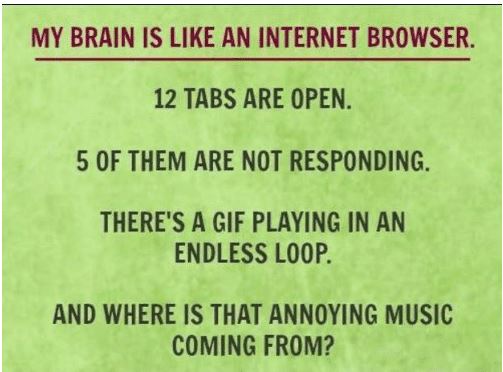
The noise within distracts us from what matters most in the moment, leaves us confused and uncertain about our true feelings—Am I doing what I want? What do I want? It blurs our focus and renders us immobile. Should I go this route? But what if I went the other way? What if I miss something vital? The possibilities overwhelm. The problems feel insurmountable. Fear spirals wildly, an endless loop of anxiety. What if I fail? What if I fail because I fear failing? We are swamped in a deluge of despair.

What is Making All That Racket?

The still calm of that long ago afternoon on the Connecticut River revealed the noise within me, but Boston didn’t create that noise. You don’t have to be standing in Times Square to be rendered deaf to your inner voice. We live on Planet Earth, home of Social Media A to Z, the Worldwide Web, and the 24-hour news cycle. An unceasing parade of pundits forecast doom and gloom. Experts—true and false—spout their wisdom(?) freely everywhere. “You should do this.” “You mustn’t think that.” “Everyone knows…” The subtext: Whatever you’re doing, you’re doing it wrong. Like the increasingly contaminated air we breathe that pollutes our lungs, the constant, often contradictory, mumbo jumbo from these talking heads offers lots of anxiety but little affirmation.

The din of the outside world—a cacophony of voices, often strident and discordant—may drown out the most essential voice, our own. Getting away from that din long enough to tune in to our true inner state is the first step toward reducing the noise within. The good news is, we can choose to decrease the time we spend on, take breaks from, or entirely turn off this media circus. We can limit the authority we grant to others, especially strangers.

You don’t have to hide away in a yurt in the Himalayas to hear your own voice. You just need to create space and trust yourself. While it’s wise to take in and weigh new or differing viewpoints, it’s healthy to remember—and value—your own experience, your needs, your hopes. If anyone tells you they know you better than you know yourself, don’t believe them. And if someone says, this is the one right way to do/approach/achieve this, ignore them. In every field, for any endeavor, history proves there are many paths to any goal.

Mute the Noise: Mind Cleansers

During the pandemic, shut out from my usual visits to the gym, I took long walks. The gym has re-opened but I’ve put off signing up, preferring these daily rambles that both empty and “clean” my head, leaving space for new ideas, insights, calm. Some people, I know, swear by meditation, but I get fidgety sitting still. For me, the mind/body catharsis of a good walk works best.

Other mind cleansers I’ve discovered or borrowed and tweaked include:

1. Get ready… Jigsaw puzzles! Yes, those BIG 1000- to 2000-piece babies. Absorbed, focused solely on finding and fitting pieces, it’s my “dessert” at the end of a workday. Unlike the inner push many of us feel to have a finished product—a new chapter on the book, the entire garage cleaned—to show for a day’s effort, jigsaw is all about process. No one expects to complete a jigsaw in an afternoon. There’s no “right” number of pieces to fill in. There’s no success/failure pressure. It just feels great to make whatever progress you can. If we could adopt this attitude about all our endeavors, the sanity quotient would skyrocket around the globe.

Okay, I hear you saying, but what about real deadlines? The kind the boss imposes. Believe me, writers get deadlines, too. All the time. I think it’s possible, though, that more gets done—and better—when we focus more on the work itself and less on watching the clock. Anxiety is not conducive to either creativity or productivity.

Unsplash: Hello I’m Nick

2. The stuff that nags. The seemingly endless—and changing—list of troubles and woes we can’t fix at the moment—or maybe ever—but must wait for the answer or leave to fate. This is an old trick—one the experts got right—but it has worked for me (when I’ve taken the time to do it). Make a list of the stuff your mind keeps churning over to no avail. Just brainstorm it without pause or judgment. Then tuck that list in a folder or a drawer—I tape mine to the far side of my file cabinet where I can’t see it—and let those suckers go. Get on with life. You might get a shock from revisiting this list in a month. How many items have resolved themselves or simply don’t matter anymore? And how much energy have you freed up in the meantime? Repeat as often as necessary.

3. Of course, there are BIG valid worries aplenty in our world. Our climate is in chaos—June saw 115 degrees in Las Vegas. Geo-politics are trending toward the fascist. Here in the States, we’ve watched the rise of violent militaristic groups and white supremacy. Voting rights are on the chopping block. Whole lotta noise out there.

Unsplash: Mika Baumeister

I confess to struggling with these fears—I like to get out in front of troubles and act to prevent them. But when we’re talking about problems of this scale, it’s just not possible for any one person to eradicate or correct them. They are systemic and well-funded by Big Money. Allowing them to endlessly rattle around in our brain drains us of hope and energy. Worrying doesn’t empty tomorrow of its sorrow, it empties today of its strength, writer and Dutch watchmaker Corrie Ten Boom cautioned. And she walked the talk on that one. Cornelia “Corrie” ten Boom and her family hid many Jews in their home during World War II, aiding them in escaping the Nazis.

Like Corrie, what each of us can do is act from where we are. We can make phone calls, write letters, register voters, join local environmental groups, protest, and donate. Every dollar helps. Every voice raised swells the whole. As Corrie Ten Boom’s life shows, action gives strength. Empowers rather than depletes us.

Unsplash: Jonathan Kemper

4. Once you’ve freed up some mental real estate, you can direct your energy. Choose your focus. What are the basic areas where you want to expend your time and effort? My list includes: Writing (novels/short fiction/blogging), playing guitar, gardening, house projects, reading, walking and, of course, family/friends. These are things I strive to do with great frequency because they matter to me—in the case of writing, almost daily.

What my list does is provide a road map, a general direction, when I start to feel lost or overwhelmed. Say, if I have six hours today, I might spend two on my current work-in-progress, and one hour each on blogging, walking/guitar, and gardening. The sixth hour? Maybe I’ll throw those boxes of clothing for the Salvation Army into the car. Ed and I will drop them off, then enjoy a summer lunch at a favorite café.   

I don’t do these things with a stopwatch. It’s just a loose guideline. If I should get bitten by the neighbor’s dog—which happened two weeks ago—and have to spend my morning in the ER, c’est la vie. No self-recrimination. As John Lennon wrote: “Life is what happens to you while you’re busy making other plans.”

5. Mental health days. Take them regularly. Play is as essential to our well-being as the loftiest purpose. Got a full-time job? Kids to care for? Ask a spouse/partner/relative/friend to step in for an afternoon. Even a daily mental health hour—like the walks I took during COVID and continue to enjoy—can reset your head.  

Your True Voice: Let it Rip

Unsplash: Clay Banks

“The sky is falling in!” Henny-Penny cries in the classic children’s fable, after an acorn falls from the tree above and bonks her on the head. While it’s never pleasant to get hit on the head, I think if you look up, you’ll find the sky is still there. It’s always been there. It will always be there—at least in terms of any timeline that concerns us.

The noise within, maybe it’s just a whole lot of acorns pelting us from one direction and another. If we let them take seed and sprout, we’ve got a forest so dense, it muffles our true voice. But we can choose to cast those babies aside one by one and keep focused on what really matters to us. Whether that’s work or play, if it doesn’t hold some kind of real satisfaction, I don’t want to waste myself on it.

I hope you’ve found something in these observations and ideas that will help vanquish the noise within. I also hope you’ll take a moment to comment and share any “tricks” you use to turn down that din. Our possibilities are too wondrous and our hours too precious to let our true voice be muffled in the roar of the crowd.