The days are getting longer. The skies are growing bluer. The sun is shining brighter. Time to muck out those dark corners of the mind, vanquish the cobwebs, let in the light. And the joy.
According to the Whirlpool Corporation, “Spring cleaning is an annual deep cleaning tradition that allows you to get a fresh start for the upcoming season.” Who knew that a home appliance company would nail it so precisely, or wax philosophical? Or have a blog?!
So, let’s get on with it. We’ve got LIVING to do!
Clean Out the Cobwebs
First, absolve yourself of all guilt regarding the 100 things you meant to do over the winter, the past year, the last decade, but for various reasons haven’t yet gotten around to. They’ll keep, LOL.
Seriously, though, how many things can you do at a time? One. How many things can you conceive of doing in that time? Zillions. For the sake of your own sanity, know your priorities—the activities and people who matter most to you—then do what you can as best you can. And move on. The greatest time-waster in life is beating yourself up for what you haven’t (yet) accomplished.
Forgive yourself, too, for whatever mistakes you feel you’ve made. Doing X when you should have done Y. Taking Job A when you think you might have been happier in Job B. Failing to look before you leaped. Case in point: I recently ordered a series of theatre tickets for our upcoming jaunt to London. Using a ticket sales site that’s worked well for me over the years, I later discovered I could have gotten a better deal on several plays by going directly to the theatre’s website. The difference for the four plays involved totaled close to $200. Bummer. But now I know, and for the remaining plays I booked, I compared prices and got the best deals. Okay, lesson learned. No need to beat myself over it. Just move on.
Mend Fences and Make a Fresh Start
Had a falling out with a friend or family member? Now’s the time to mend fences. Yes, you may get rebuffed—ouch—but the chances are good that the other person has been fretting over the rift, too, wanting to make things right but fearing rejection. My guess is your overture will be greeted warmly by a very relieved pal or relative. And if not, then it’s down to that person. You will have done your best.
If there’s a dear friend you’ve been out of touch with for a while just because life gets soooo crazy-busy, give them a call. Now. Ten to one, they’ll be truly happy to hear from you. A friend you’ve had for 10, 20, 50 years? They are precious. Don’t wait.
Clear the Decks and Create Space for What You Love
I don’t know about you, but I get around 2,000 emails a day. Yes, each day. Much of it truly good stuff. Petitions to sign. Letters to my senators and reps, both state and national. Support for environmental concerns, civil rights, healthcare, public education, the rule of law, voting rights, animal welfare (to name but a few) and the groups that champion these essential causes. Like I said, all good things, but I struggled to keep up last year. Reading every message left me scant time for any other kind of reading and squeezed the hours available for working on my current novel. Or house and garden projects. Playing my guitar. Or just goofing off. Daily, I wistfully recalled the peaceful pre-MAGA years of Obama when the emails—and the threats to our democracy—were far, far fewer. When I had time to write, time to relax with friends and family. Time, period.
Solution: Now I deal with about half that load, mostly while watching All in with Chris Hayes, and allow myself to simply mass-dump the rest for that day. I mean, how many times do I need to petition my House and Senate members to get rid of Pete Hegseth? Surely, 3-4 times a week will do.
If you can’t entirely offload an onerous or time-eating task, at least develop a plan to lighten that load. Make room for what is most important and let joy play a major role in that choice.
Let Light into the Dark Corners
Unsplash: Leo_Visions
Anxiety about the present. Fear for the future. It’s a scary time out there. Even the folks who say they don’t want to know, they know (which is why they’re trying so hard to shut out what’s happening).
Instead of fretting—which changes nothing and raises your blood pressure—turn those worries into action. Sign up to help with voter registration drives. Volunteer to make phone calls and/or write postcards to voters for candidates who champion democracy and civil rights, healthcare and public education. In 2020, I was one of over 40,000 volunteers who donated time and effort to getting Georgia Democrats Jon Ossoff and Raphael Warnock elected to the U.S. Senate. I wrote 300 postcards to voters telling them how Ossoff and Warnock would strive to make their lives better and asking for their vote. Just three lines per postcard. They both won. It felt GREAT! [With the all-important 2026 midterm elections in mind, I’ve appended a list of links to volunteer ops like this at the end of the post. Check it out.]
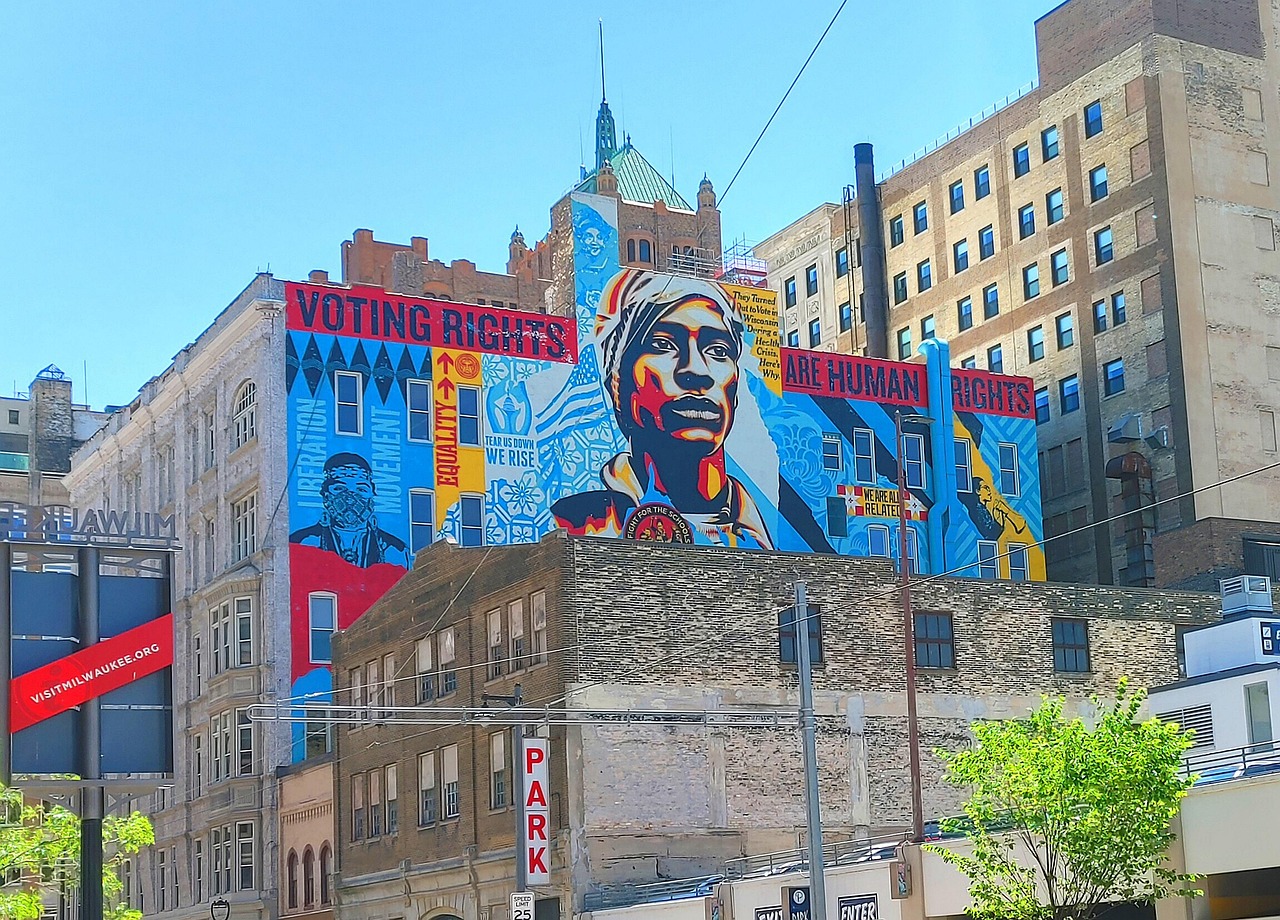
Another way to banish the blues? Get up on your feet and into the street! The recent No Kings protest held in over 3,300 locations across the country was the largest single-day action ever in U.S. history. More than 8 million Americans gathered to say NO! to Dictator Don and the fascists. Joining in such demonstrations both conquers fear and changes outcomes. We would never have gotten the Civil Rights Act of 1964 or the Voting Rights Act of 1965 if millions of ordinary Americans had not taken to the streets—again and again—to say ALL of us are human beings, deserving of full rights and freedoms.
Open the Windows Wide and Bask in the Serenity
The idea of this post began back in early March. After a spectacularly harsh winter—banks of snow five feet high, roads and walkways that more nearly resembled an ice rink, our democracy dangling by a thread, the threat of world war in the wings—the temperature suddenly shot up to a sunny 60 degrees. The next day, it topped 70! The ice and snow melted. Oh, what a difference a day can make. I was out for a walk, basking in this welcome reprieve from the dark and cold, when it came to me: I want a saner life. And on the heels of that, the realization: I (and only I) can give that to myself. One cannot change the times one lives in—though we can each take actions to create a better, more humane world—but we can choose what to keep and what to let go of. What we want to spend our hours, our days, and ultimately our lives doing. What will give us the joy and strength to stay the course whatever comes.
Volunteer Opportunities to Turn Out the Vote in 2026
https://turnoutpac.org/postcards/ Progressive turnout project: Postcards to Swing StatesScroll down to Program 2 “Get Out the Vote” (starts May 26)
https://www.lwv.org/about-us/membership-local-leagues Our vote is our power. Through our votes, elections make our voices heard. The League protects and empowers millions of voters every year to ensure that our elections are fair, accessible, and representative of all Americans
https://postcardstovoters.org/Postcards to Voters are friendly, handwritten reminders from volunteers to targeted voters giving Democrats a winning edge in close, key races coast to coast. Sign up and they’ll send you an email with instructions.
https://www.activateamerica.vote/ Scroll down the page until you see Impact Key Races/Reach Out to Voters for info on postcard writing and phone-banking opportunities.
https://www.fairfight.com/ Scroll down the page and learn about Fair Fight’s work, then click on Become a Volunteer, which takes you to a page where you can choose how you’d like to help elect pro-democracy candidates.
This post is dedicated to the memory of Renee Good and Alex Pretti, and all the brave people of Minneapolis who came together day after day in the frigid winter temperatures to defend that most precious of treasures: Our democracy. And to the late, great civil rights activist, the Reverend Jessie Jackson who taught millions of children to say “I am SOMEBODY” and to believe its truth.
Time magazine called it “an exuberant act of resistance.”
Rolling Stoneproclaimed “Super Bowl half-time performance draws in 128 million viewers.”
The Hillnoted the show’s star had won a Grammy award just the week before and that he was the most-streamed artist on Spotify for 2025.
Unless you’ve been living on some remote, uninhabited island, you probably know who we’re talking about here: Puerto Rican singer-songwriter Benito Antonio Martínez Ocasio, popularly known as Bad Bunny, this year’s headline star for the NFL Super Bowl halftime show.
While millions were cheering what The Nation called “Bad Bunny’s Stunning Redefinition of ‘America’”—an all-inclusive America, an America stretching from the far north of Canada down to the U.S. and Mexico, through all the countries of Central and South America to the southern tip of Chile—the dude in the White House was penning one of his endless Truth Social harangues. It is printed here as it appeared in The Hill.I’ve taken the liberty of inserting a few questions and facts in brackets in red where I felt they begged to be asked or noted.
Trump: “The Super Bowl Halftime Show is absolutely terrible, one of the worst, EVER! It makes no sense, is an affront to the Greatness of America, [How?] and doesn’t represent our standards of Success, Creativity, or Excellence [As defined by you?]. Nobody understands a word this guy is saying [And yet he’s the most streamed artist on Spotify], and the dancing is disgusting, especially for young children that are watching from throughout the U.S.A., and all over the World. [Here, I believe he’s referring to the 1.5 seconds where two men, fully-clothed, their lower torsos hidden behind a truck door, appear to be “grinding” on each other—part of a larger wedding dance scene that also briefly included a bridesmaid and groomsman “grinding” on each other. The BBC described the same scene this way: “Family also featured heavily – from a young couple getting married in a crowd full of Latino dancers…” Bad Bunny’s message? Everyone matters. Everyone is included.] This “Show” is just a “slap in the face” to our Country, which is setting new standards and records every single day — including the Best Stock Market and 401(k)s in History! [CNN cautions us to view this “best stock market” in a larger context: “US stocks had a stellar 2025, but global markets stole the show. A major index tracking stocks outside the US, the MSCI All Country World ex-USA, gained 29.2% in 2025, handily outpacing the S&P 500’s gain of 16.39%… The US dollar index, which measures the dollar’s strength against six major currencies, fell by roughly 9.4% in 2025, its worst year since 2017.” Gee, anyone recall who was in the White House then?] There is nothing inspirational about this mess of a Halftime Show and watch, it will get great reviews from the Fake News Media, because they haven’t got a clue of what is going on in the REAL WORLD — And, by the way, the NFL should immediately replace its ridiculous new Kickoff Rule. MAKE AMERICA GREAT AGAIN! President DONALD J. TRUMP”
Do you think any of that rant might have been influenced by the fact that Bad Bunny denounced the first Trump Admin’s response –or lack of—to Puerto Rico in the wake of 2017’s disastrous Hurricane Maria? Or maybe it was Bad Bunny’s endorsement of Kamala Harris in the 2024 elections? Or perhaps he just hated the central message of Bad Bunny’s show—the world belongs to ALL of us. A message that should have resonated with the grandson of immigrants.
It’s interesting to note here that Turning Point USA, the ultra-right non-profit org co-founded by the late Charlie Kirk, hosted a competing halftime show on its YouTube channel. “The All-American Halftime Show”, as it was billed, featured Trump buddy Kid Rock and had “no agenda other than to celebrate faith, family, and freedom,” according to a TPUSA spokesperson.
Whose faith? Whose family? Whose freedom? “The All-American Halftime Show” was dedicated to Charlie Kirk, a man who was fond of saying the Civil Rights Act of 1964 had been a mistake.
Well, Americans voted with their eyeballs. As The Chicago Tribune headline noted: Bad Bunny nets 135M viewers to Kid Rock’s 6M. And Daily Kos deemed TPUSA’s Kid Rock “All-American” extravaganza “a bummer from start to finish.”
So, who are these “all-Americans” Trump and Turning Point USA are championing? Certainly not the many peoples of all the Americas Bad Bunny was celebrating. Not even all the people of the United States. Not the Black voters the GOP is trying to silence with their gerrymandered maps. Not the LGBTQ+ Americans—TPUSA performer Lee Brice complained of “wokeness” and lamented children learning about trans people in his song “Country Nowadays.” Not the Indigenous peoples who were here long before the first European immigrants arrived. No, the “all-Americans” of the All-American Halftime Show, the only Americans who count in our brave new world are straight, white men and to a lesser extent, white women, as long as they “know their place”, which is to service and support the straight, white, men.
What Racism Reveals About the Racist
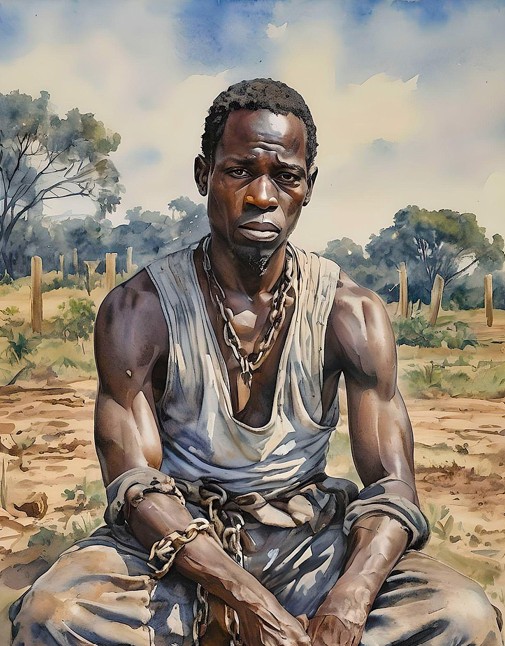
What does racism tell us about the racist? Historically, it speaks to greed. For hundreds of years, wealthy White European and American investors oversaw the kidnapping of African peoples who were then transported to the Americas to do the heavy work of harvesting the sizeable tobacco, sugarcane, and later—after the invention of the cotton gin—cotton plantations. In the first days, these unfortunate hostages were treated as indentured servants, meaning they had some legal standing and a contract of service after which they might be freed. That lasted but a nanosecond in historical terms. Until the very wealthy human traffickers and plantation owners came up with the scheme of making the people they kidnapped the property of their masters. No more legal rights. No more chance of freedom somewhere far down the road. And all children born of slaves would automatically become the property of those masters.
While the 13th Amendment to the Constitution in 1865 abolished slavery throughout the United States, it did not end the exploitation of Black and Brown peoples by greedy Americans seeking ever more riches, as Bad Bunny brilliantly displayed in the NFL Halftime Show scene where he performs amidst a crowd of Puerto Rican men and women working the sugarcane fields.
Spain may have introduced the crop to the island nation and the slave labor that harvested it some 500 years earlier, but it was the United States that seized Puerto Rico in 1898 and it was U.S. corporations who made millions off the labor of the Puerto Rican people. While Puerto Ricans were no longer slaves under U.S. rule—and indeed became U.S. citizens in 1917—the “free labor” market they shifted to with its low pay and meagre living conditions was often compared to servitude. Even today, the disparity in income is striking—and telling. The per capita income of Puerto Ricans ($17,981) remains far below that of Americans as a whole ($44,673).
I wonder how many Puerto Ricans—U.S. citizens—have ended up in ICE raids and been dumped into prisons. After all, to the White racist, all non-White people look alike. Just last month, LatinoJustice highlighted a statement made by Power 4 Puerto Rico’s director, Erica González Martínez: “ICE’s targeting of Latinos—including Puerto Ricans— for mass deportation is racial profiling. Racial profiling does not make an exception for the U.S. citizenship of Puerto Ricans, a situation all the more alarming under this white supremacist, oligarch takeover. Whether Boricuas [a person from Puerto Rico by birth or descent] are stateside or in our Caribbean country, we must stand united for the rights of our people and those of vulnerable Black and Brown immigrants.”
Fragile Egos
Another thing racism reveals about the racist is a deep insecurity. A truly secure person has no need to belittle others, to boast about their own “natural” superiority. To lie about the size of their inauguration crowd, for example, if they are a White president, in comparison to that of their predecessor, a Black president. But that’s exactly what Trump did during his first term, beginning on the very first morning of his presidency in 2017 when he became obsessed with the prior day’s inauguration photos, now making the rounds on social media. That great stretch of empty space on The Mall behind those who had come to watch him take his oath of office. A space that had been filled when Barack Obama was inaugurated. Something must be done! After all, his (Trump’s) inauguration crowd had been the largest! Ever! And certainly larger than Obama’s! A government photographer later admitted to investigators that, yes, he had cropped photos of Trump’s inauguration to remove empty space and make the audience look larger.
And who can forget the ceaseless quest for a Nobel Peace Prize for anything—anything—because that same Black president was awarded a Nobel Peace Prize in 2009 for his “extraordinary efforts to strengthen international diplomacy and cooperation between peoples.”
And then there was the president’s recent racist AI-generated video of Michelle and Barack Obama as apes…
What’s Up Next: Massive Prison Camps
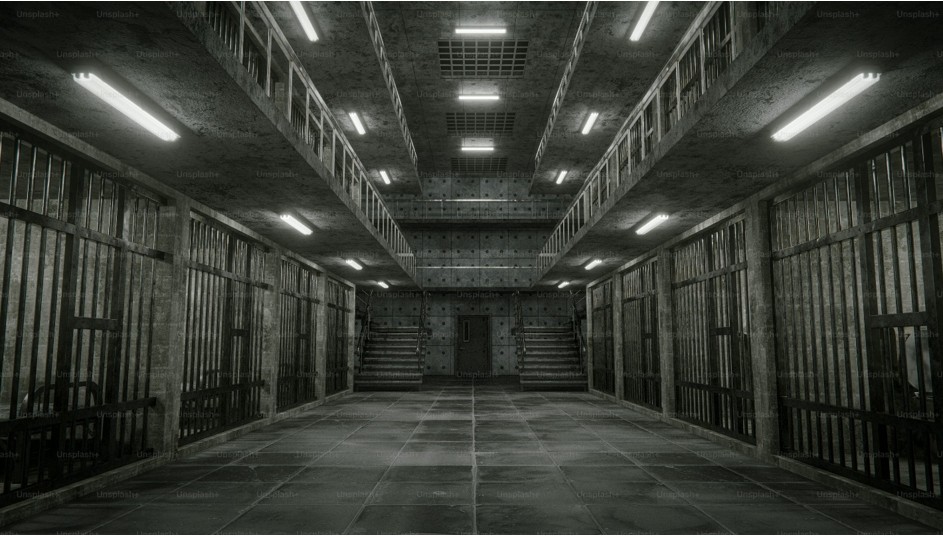
At a time when Medicaid is facing significant cuts and ACA premiums are skyrocketing, the Republican-controlled Congress allocated more than $170 billion in additional funding for the Department of Homeland Security, the bulk of it going to Customs and Border Protection and ICE. Forty-five billion of that has been allocated for detention expansion including eight new detention warehouses that would hold up to 10,000 detainees each.
Unsplash: A Chosen Soul
Currently, the largest ICE detention facility in the country is Fort Bliss, a tent camp on an El Paso military base that holds about 3,000 people on any given day. Fort Bliss (oh, the irony of that name!) began detaining people six months ago and already it’s racked up an alarming number of violent incidents— violence committed by ICE overseers against the detainees. including the death of one detainee after he was choked by an officer. Indeed, violent assaults and sexual abuse by those in authority were reported in interviews with more than 45 detainees. Neglect, too, is a kind of violence. An immigrant from Guatemala, detained at Fort Bliss, died of kidney and liver failure after he was denied medical care at the camp.
Now, imagine this horror on a scale of 80,000 immigrants locked up in ICE’s proposed mega-facilities. And because so many humane and caring Americans can imagine it all too well, we are seeing protests wherever these massive detention centers and the smaller processing centers that serve them are planned. Protests that are achieving results.
We Say NO!
When news of a proposed ICE detention center in Kansas City, Missouri went public, local residents took to the streets to say NO! In response, their elected officials quickly passed an ordinance to block it. Soon after, development company Platform Ventures announced it was cancelling the sale of its massive warehouse to ICE in that city.
Unsplash: Meg
Hundreds of people gathered for a public hearing held by the Hanover County Board of Supervisors to voice their strong disapproval of a proposed ICE facility near Richmond, Virginia. Heeding their citizens, the HC Board of Supervisors pushed back against the DHS plan to convert a local warehouse into an immigration detention processing center.
When it was discovered that DHS was planning to open a 324,000-square-foot regional detention center for ICE detainees in Merrimack, New Hampshire, protestors lined the streets leading to the town hall. “NO ICE” their signs declared and numerous cars honked their agreement. Their voices were heard. On February 23, MS NOW’s Rachel Maddow announced that DHS abandoned its Merrimack mega-prison after so much kickback from protesters.
Mayors in Oklahoma City, Oklahoma and Salt Lake City, Utah have vowed property owners in their city won’t be selling facilities to ICE after citizens in both locations made their opposition clear.
Across the U.S., the fight has taken on a greater goal: To shut down ICE altogether. Protests, walkouts and economic strikes occurred in more than 300 cities in late January, after the ICE murders of Renee Good and Alex Pretti drew enormous crowds. “We’re here to say we want ICE out of all of our communities around the country,” University of Utah student Benji Park declared. To that, I can only add: Amen.
A recent email from the Massachusetts Teachers Association declared: “The more we show up for one another, the greater the power we generate for local and statewide campaigns.” And MS NOW’s Chris Hayes noted in his February 12 edition of All In with Chris Hayes, “The people with the better, more humane vision have the numbers on their side.”
We must never lose sight of that because what our government is doing, the horror ICE is unleashing, is inhumane in the extreme. It is wrong. IT MUST STOP NOW!
“Let us not talk falsely now. The hour’s getting late.” Bob Dylan (All Along the Watchtower)
Note: Yours truly is taking a short much-needed vacation, so I’m leaving you with a post I wrote in March 2019. A post I believe is even more relevant today than it was when I first penned it. But as the French say, “La plus ça change, plus c’est la même chose.” The more things change, the more they remain the same.” See you next month with a new post.
Perhaps, with the title of this post, I’m setting
the bar too high, implying that we are anywhere in the same galaxy, let alone
neighborhood, of something approximating a true democracy, a swamp-less
America. On the other hand, at this point almost any little uptick in our nation’s health,
unprompted by greed or outright corruption, would be a step toward a better, if
still far from perfect, union. It’s gotten so that when I hear some pundit put
two coherent sentences together, I find myself thinking they could be president.
Well, if any clown can grow up to be
president, as TheRUMP proves daily, then I feel it’s only fair that I get my 2¢
in and deliver my own State of the Union address here. Without the hyenas who
applauded every syllable, garbled or not, out of the OrangeOne’s mouth. Without
their annoying, puerile chant USA, USA,
USA!
Actually, my SOTU is not so much about
what is (sad, as our twittering POTUS
likes to tweet), but more about what could be. Therefore, having established my
right to blather on (isn’t that how things are done these days?), I’m
delivering my 10-point plan for an America that represents the many rather than
the few, a more humane and democratic nation and, by extension, a better world.
1. Number one, front and center, VOTERS RULE, and everyone gets to vote. The Voting Rights Act of 1965 will be fully restored, Citizens United will be dumped outright, and anyone caught gerrymandering districts or closing polling stations (as happened with Dodge City in the 2018 elections) or “tinkering” with voting machines will find themselves booked on a one-way trip to Deep Space. Byeee! The days when a thug like Brian Kemp could delete some 800,000 voters from the rolls as Georgia’s Secretary of State, thereby stealing the governorship for himself, are OVER. In my America, Stacey Abrams is the rightful governor of the Peach State.
One person, one vote. No more electoral college (which, hilariously enough, was designed in part to prevent “unqualified” persons, like the one we have now, from becoming president). No more voter suppression: No impossible/ridiculous ID requirements. No lines out the door and around the block at polling stations. No intimidation tactics.
And I want to see a big, clear PAPER
trail. No white-out.
2. We can achieve #1 because all citizens will be first-class citizens, and everyone will enjoy EQUAL RIGHTS and OPPORTUNITIES. Gay, black, brown, Muslim, female, Jew, atheist, transgender, teacher, garbage collector, unemployed steel worker, 7-11 counter person. We will stop this nonsense about a level playing field and officially recognize, and legislate for the fact that billionaires and their kids, jetting off from their private helipads to one of their many homes, don’t quite face the same hurdles in life that, say, a single mom working at Mickey D’s and her kids must navigate. We will do everything we can to knock the support props out from under the privileged few and level that damn field for the struggling many.
Equal rights for everyone also means
that everyone enjoys EQUAL PROTECTION
under the law. The next racist cop who shoots a black teen for looking at his
cell phone funny, that cop is going to Sing-Sing for life. Without parole. [I
do want to note that I have met many a decent cop, most touchingly, a couple of
officers in New York’s Little Italy, who were very protective of and
sympathetic to the poverty, addictions, and visible struggles of their peeps. If
we want good community policing, we should use them as our model.]
3. FREE PUBLIC EDUCATION for everyone through college or trade school. If we throw up our hands at people so ignorant/uninformed that they continually vote against their own true interests, consider this: We are a country who puts up road blocks to a literate, thinking citizenry at every juncture of education. Underfunded public schools. Overcrowded classrooms staffed by underpaid teachers. Ridiculous college costs, which leave students staggering under debt for years, and prevent many more from even attending.
And it’s getting worse. The push for charter schools at the expense of public schools by the DeVos wing of TheRUMP regime has closed many of our public schools already, and tends to favor no separation of church and state. At least six states—Florida, Indiana, Missouri, North Dakota, Virginia, and West Virginia—have pending legislation that would make “Bible literacy classes” part of the public school curriculum.
An uninformed electorate may be easier to control through prejudice and baseless fears, but it doesn’t make for a strong, innovative society, and it doesn’t make for happiness either, if our high rates of depression and substance abuse are anything to go by.
4. We need to stop monkeying around and slap on MASSIVE MANDATORY ENVIRONMENTAL PROTECTIONS NOW. Nothing else matters if we don’t do this. Without this, we might as well be ordering donuts for our last cup of coffee.
The Green New Deal outlines broadly how the U.S. should combat climate change over the next decade, but we need specifics today. Here’s a few:
Zero tax breaks for companies who 1)
directly pollute our land, water, or air; 2) whose production methods harm the
planet (think anything that uses palm oil, which is created by destroying large
swaths of rain forest and animal habitats); 3) whose end products pose peril to
the earth and its oceans—plastic bags or straws, for example.
All corporations must transition 20% of
their total operation each year to green energy
and green/sustainable practices, for a 100% transition within five years, or we
SHUT THEM DOWN. No more drilling,
fracking, coal production, or factory farms. No more toxic chemicals used in
the manufacture of so many products from foods to plastics to cosmetics. We
need stuff we can eat, handle, and wear without fearing for our lives.
It’s insane that we’re not already doing these things, considering scientists are saying we have only a decade left to avert the worst climate disasters (our extinction being one of them), and the ice at both poles is melting like a DQ snow cone at the height of July.
What gives with these high-pollutin’ fossil fuel billionaire morons, anyway? They could have transitioned to solar and wind power and every other green thing forty years ago. Become leaders in the green-tech field, and still raked in the big $$$. (QED: Being rich does NOT equal being smart.)
But they (and many other corporate entities) seem to be stuck in the 1950s, when steel was “king” and coal was the leading fuel for generating electricity. Stuck in the time-warp of a fabled all-powerful America where (white men) ruled the roost while (white) women fixed their dinners and birthed their babies, and all people of color rode under the bus.
Wake up boys. The heyday of the steel mills that employed 700,000 workers in 1948 is over. Today, those mills are down to 83,000 people. Other countries, less afraid of introducing new, more efficient technology, got the jump years ago. And burning coal, besides being an environmental nightmare, is no longer economically feasible. In mid-February, against TheRUMP’s expressed wishes, the Tennessee Valley Authority voted to close a large coal-fired power plant, Paradise #3, in Muhlenberg County, Kentucky—a plant made famous by John Prine’s song “Where Paradise Lay.”
We need to be training coal miners and
other displaced workers for the clean-energy jobs of the future. A future we
must adopt NOW if we don’t want life on the planet to be just a memory
tomorrow.
And no whining about how unaffordable it is to retool for a green planet. When Joy Reid asked Senator Ed Markey how the Green New Deal would be paid for, he reminded her that the cost of cleaning up from the rising number and worsening damage of climate-caused disasters will be in the trillions. And that doesn’t include the indefensible cost of lives lost. In short, we can’t afford not to go green.
I also don’t want to hear any lobbyist
yammering about free enterprise or government interference in corporate rights.
As far as I’m concerned, their rights end where endangering our lives begins.
Clean energy. Clean water. Clean air.
5. UNIVERSAL HEALTHCARE. I feel like I have been shouting this for 40 years (probably because I have been shouting this for 40 years) but AMERICA IS THE ONLY DEVELOPED COUNTRY IN THE WORLD THAT LACKS UNIVERSAL HEALTHCARE.
Everyone else is free to sleep
peacefully and go about their day joyfully in these other countries, at least
when it comes to knowing that they won’t be dumped by the wayside and left to
rot, or completely bankrupted and made homeless if they develop something more
serious than, say, a cold.
The U.S. ranks the highest in healthcare spending among the developed nations. Universal healthcare will bring down the cost for everyone. I’m betting the increase in my tax bill wouldn’t begin to equal the increase in my healthcare premiums since TheRUMP’s monkeyed with the ACA. And I’d rather pay taxes to fund healthcare than the slaughter of children in Yemen or building TheRUMP’s “mini-nukes.”
By the way, if you’ve ever wondered why our healthcare is so expensive, I have a little story a friend told me some 20 years ago. He was playing piano in a trio at a dinner bash for insurance company execs, who were merrily washing down their filet mignon with bottle after bottle of cognac—at $750 a pop. I’m guessing with inflation, those bottles now go for a grand-plus.
So, no more Big Pharma billing us twice what we earn in a month for a drug they sell elsewhere in the world at a fraction of the price (nearly all countries except the U.S. have policies, price controls, and regulations limiting drug company profits). No more pushing drugs on us we don’t need, thus rendering half the country opioid addicts. (The US makes up 5 percent of the world’s population and consumes approximately 80 percent of the world’s prescription opioid drugs.)
Our reps and senators enjoy stellar
healthcare and we foot the bill for it. The way I see it, what’s good enough
for them is good enough for the rest of us.
6. It’s beyond appalling how many two-faced GOP duffers, themselves the children and grandchildren of immigrants, are railing on about the (bogus) “threat at our southern border,” backing ICE, and denying people their legal right to apply for asylum. Way beyond appalling that thousands and thousands of children were ripped away from their families (with little or no record-keeping or a plan to reunite them). Unconscionable that ICE is dumping people in prison camps hastily erected by, and highly profitable for private company buddies of TheRUMP—an outright crime that has resulted in the deaths of several children.
So, listen up, we are having a total rededication to old Lady Liberty. In the words of Emma Lazarus:
“Give me your tired, your poor, Your huddled masses yearning to breathe free, The wretched refuse of your teeming shore. Send these, the homeless, tempest-tossed, to me: I lift my lamp beside the golden door.”
As for anyone seeking asylum, if you can
make a reasonably compelling statement, whether it’s in English, Spanish, Mayan,
Garifuna or Ewokese—say, Because U.S. foreign
policy and CIA knavery of the past 60 years have made my country a hellhole—well,
as far as I’m concerned, you’re in. Welcome to America. Care to learn the
skills for a new green-energy job? We need you.
7. The issue of immigration, as I suggested in #6, brings up the whole question of foreign policy. So listen up, mighty OrangeOne and Blackwater and Exxon: No, you can’t take another country’s oil, topple their elected officials, suppress their protests, or cut off their trade with other countries. You can’t bomb other nations so you can steal their wealth or install your own dictators. After a century of talking up the right of nations to self-determination, we will finally walk the walk, honor self-determination, and keep our hands to ourselves. And our hands will not sell bombs and guns to nations who suppress other nations, commit genocide, or behead journalists.
8. “Guns don’t kill people. People kill people.” Well, begging the trigger-happy NRA’s pardon, the more than 1.5 million Americans who have died a gun-related death since 1968 might wish to differ, if only they could. One-point-five-million. That’s more Americans than have died in all the wars we’ve fought, including World War II.
There were 346 mass shootings in 2017—not 346 deaths, but 346 mass shootings. Another 340 occurred in 2018. Night clubs. Schools. Movie theaters. Concert venues. And then there’s those little domestic scenarios where the toddler shoots her mother, or the brother shoots his baby sister. Or Dad shoots the entire family. So, hear me good: No assault rifles. No handguns. No open carry. No concealed carry. No “stand your ground” laws. NO GUNS. AT ALL.
9. Total government TRANSPARENCY. No one we elect and/or pay the salary of hides from us what they spend our money on, or the findings of special investigations into, say, the corruption of the president, his cabinet cronies, fellow criminally-inclined congresspersons, and their various fixers. We are your constituents. We are your BOSSES. We elected you to represent us and to serve our best interests. We demand to know exactly what’s going on. And if you were appointed rather than elected, you were appointed to serve the interests of the country and uphold the Constitution, NOT to massage TheRUMP’s rump. Got that, William Barr?
One More Thing
Okay, I know what you’re thinking:
Geeze, Ame, you sound like the Green New Deal on steroids. How many decades and
decades of Congressional sessions would it take to write up, introduce, and
vote on all these proposals, and would there be anyone left on Earth by the
time we got all this done, even if Mitch McConnell only lasts another 200
years?
Good question. Of course, we could knock
most of this into a hat if we just adopted my tenth proposal, and went global
with it:
10. NO ONE gets more than a million dollars until EVERYONE on the planet has a decent home and full healthcare. Until EVERYONE receives as much education/job training as they care to pursue. Until EVERYONE has clean water to drink, clean air to breathe, and plenty of healthy food. Until EVERYONE has some fun money, time for regular vacations, and a secure retirement.
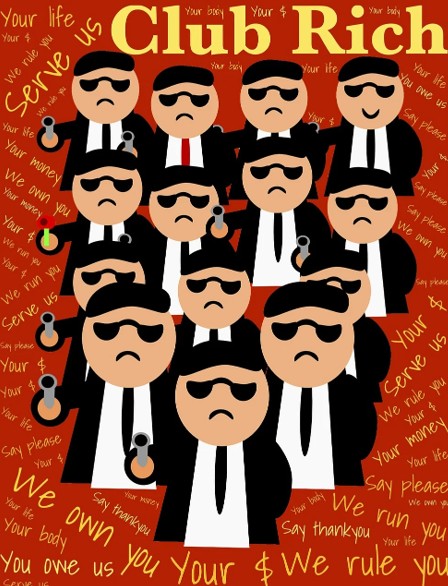
The main reason we are in such a huge mess domestically and globally is because a handful of billionaires are dictating the terms—no taxes for the rich, freedom to pollute the planet to death, low wages for workers, endless war—and choosing who gets into office and how they will vote. I guarantee you that if NO ONE is allowed to have more than a million dollars, our campaign finance problems—the Koch brothers/Shel Adelson/DeVos-family et al.—will be solved. You can’t donate $300 million or even $30 million if you have zero millions.
A couple of stats to underscore my point
here:
The 400 richest Americans now have more wealth than the bottom 61 percent of the nation.
Globally, 42 people have as much wealth as the 3.7 billion poorest folks. Yes, 42 people have as much wealth as the poorest HALF of the WORLD.
So, I repeat. No one gets more than a million dollars until everyone has what they need. All income over $1 million will be taxed, retroactively, at 99.99%. So sell those extra dozen houses, private jets, helipads, and pay up, you billionaires. There will be no more off-shore accounts. No tax havens. No tax loopholes like the ones that gave Amazon a free pass for federal taxes this year, despite the $11.2 billion in profits the company reaped for 2018.
The billions and billions and billions that we who work have made for the planet’s richest 42 people? That money comes back to us. Then we won’t have to worry about Social Security or Medicare or public school funding or the cost of infrastructure. The people in the world’s poorest countries will have running water and homes and schools and healthcare—a chance to live their lives rather than merely trying to survive starvation day to day.
Perhaps it is the Green New Deal on steroids. I make no apologies. Instead, I’ll sign off with the words of George Bernard Shaw, tweaked by Bobby Kennedy: “Some men see things as they are and say, why; I dream things that never were and say, why not?”
The title of this month’s post comes from Thomas Jefferson’s Canons of Conduct in Life—ten rules for living he cultivated over his decades on the planet, sharing them with family and friends. I’ve had a copy hanging by my desk for years.
In these ten rules, Jefferson, the leading author of the Declaration of Independence and America’s third president, demonstrates a remarkable grasp of human foibles and offers us guidelines for living more happily, less stressfully, and more harmoniously with others. Alot of ageless wisdom packed in ten short sentences.
No doubt about it, we live in difficult times and none of us needs to make life more stressful than it already is. So, as we start the new year, I’ve been pondering what gets in our way of “taking things by the smooth handle” (Rule #9). After all, why would any of us wish to compound our anxiety? But several very human tendencies often make us do just that. Trust me, I know these tendencies all too well.
The Idée Fixe
The Cambridge English Dictionary defines idée fixe as a “belief that someone refuses to change their mind about, even though it may be wrong” or in this instance, impractical. Just because we’ve always done something in a certain way does not mean we must continue to do so if circumstances prove it to be driving us bonkers.
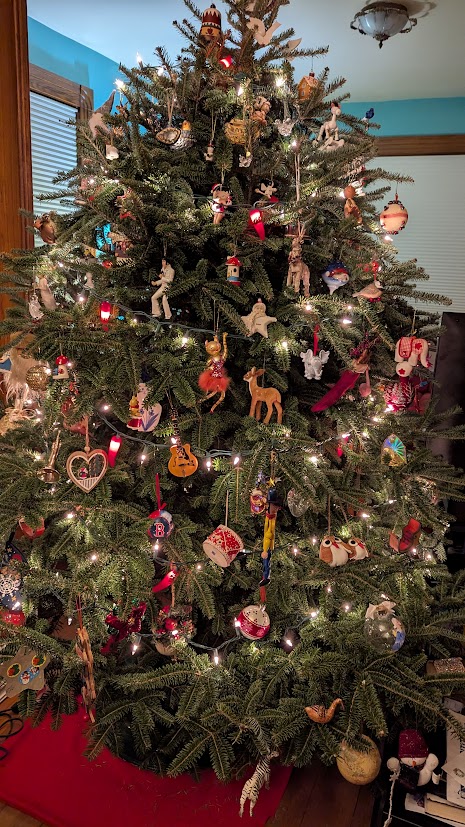
Case in point: Every year, going back to the dawn of time—well, my time anyway—I have hung each and every one of my ornaments on the annual Christmas tree. As Ed and I purchase a new ornament each year, and have been gifted with new ornaments along the way, and have the collection of my childhood ornaments going back to my first Christmas—well, it adds up to an effing LOT of ornaments. Still, not one of them has ever been left in the box and there are now nine good-sized boxes. No matter, every December I crawl around the tree and under the tree and reach way atop, placing these decorations, then changing them and changing some more until every ornament has a spot. And not just any spot, but the perfect spot.
Until this year.
Two days after Thanksgiving, we drove out to our favorite Christmas tree farm on a sunny mountainside just fifteen minutes down the road. As tree farms always are, this one is in a state of transition. The type of tree we usually buy had been pretty much picked over and the new ones needed another year to reach maturity. So, we bought a different pine, one nearly identical in appearance. A big, fat tree, sure to easily accommodate all our ornaments. Except it didn’t.
The branches, while plentiful, frequently bent under the weight of all but the lightest decorations. The medium and heavy ones proved challenging, as in extremely so. My youngest, home for the holidays, and I hung ornaments. And hung ornaments. Or tried to. The boxes were still half full.
The kids went home, but I continued my quest to find a spot for each and every ornament, switching one out for another, searching for the right branch. There had to be one. “You don’t have to hang them all,” Ed said gently. I nodded, smiled, and went right on trying. Three more days passed. Desperate, I sifted the remaining 57 ornaments for my “must-haves”. Found places for four of them, but at the cost of removing two others. Eventually, I had to concede. My idée fixe would have to be “unfixed.” There simply was NO…MORE…SPACE on the tree. No more branches that would take anything heavier than a butterfly. I boxed up the 45 ornaments still lying on the dining room table and carried them up to the attic, admitting defeat.
And guess what? I survived. The tree looked fine. Christmas still came. How much time and maddening effort might I have saved if I’d just accepted the truth on Day 1: They weren’t all gonna fit? The smooth handle. Just because one has always done something is not a good enough reason to keep doing it when circumstances change.
The Straitjacket of Perfectionism
Closely related to the idée fixe—dizygotic twins in fact—is perfectionism, “the refusal to accept any standard short of perfection” (thank you, Oxford Languages Dictionary).
As a writer, I fully appreciate the folly of perfectionism. You can’t revise what you haven’t written is my mantra. A less-than, sometimes far-from-perfect first draft? Totally to be expected. “Polishing” one’s writing is part of the trade. But not everything in life has to be polished, and rarely is there anything that merits the anguish perfectionism exacts upon its adherents. Striving to be perfect at everything will wear you out and drive you nuts. Trust me, I know. If I had a dollar (or even a dime—do they make those anymore?) for every routine task I’ve agonized over, I’d be able to buy a couple of left-leaning, Constitution-upholding justices for the Supreme Court to counteract the current far-right fascist judges Leonard Leo and his merry band of Federalist Society billionaires bought. But, alas, I just have the angst I too often spend on projects like this year’s “bake-a-thon.”
For the past 44 years, I’ve baked, packaged, and sent tins of holiday cookies and candy to far-flung friends. It’s generally been an upbeat, lighthearted project. For three days in December, I bop to Christmas tunes while baking 20 dozen cookies and two batches of fudge. For 43 of those years, everything went swimmingly—cookies came out great, the fudge was melt-in-your-mouth fabulous. I thought of it as a fun time. A time when I blocked out everything else and baked! And then the 2025 holidays arrived…
Squeezed between a late-in-the-calendar Thanksgiving and Christmas, with a dental appointment to boot on Day 3, I knew I would have to work from dawn to dusk to make my (self-imposed) deadline.
Day 1 started off well enough. I prepared my ginger and sugar cookie doughs and put them in the fridge to chill. Then I made a pan of fudge. I was a tad concerned about how I was going to get six dozen sugar cookies frosted and roll out the 48 candy cane cookies by hand—both big time-consumers—in addition to prepping the dough for and baking five dozen shortbread cookies while whipping up a second batch of fudge, all before my appointment on Day 3. But, I decided to just plow ahead and see what happened. So, I popped a pan of ginger cookies into the oven, put “Rockin’ Around the Christmas Tree” on the CD player, and took five to dance around the kitchen.
When I checked on the gingers ten minutes later, I was shocked to find that they had all bled into each other. No longer the lovely circular cookies from the perfectly-rolled balls of dough I’d prepared, but lopsided squares and rectangles with maybe one rounded edge! How could this happen? I had prepared them exactly as I had for decades, the same number of cookies per baking pan as always!
I was definitely not taking things by the smooth handle.
I can now see how silly my distress was. Despite their appearance, they tasted great. And I got my four dozen candy canes rolled just before the dentist. I even made my deadline for packing the tins and boxing up the goodies for the post office…by working until midnight when, exhausted, I surveyed the lot and said: Screw it, they’re fine just the way they are. THAT’s the attitude I should have taken from the start. And honestly, if I’d extended my deadline one day longer than usual, would the world have exploded?
Part of taking things by the smooth handle is being able to distinguish what truly matters from what doesn’t. I’ll give you a hint here: Most things are not worthy of the angst perfectionists spend on them.
The What-ifs…
I don’t need to tell you we live in trying times. As in, extremely trying times. Which gives rise to perhaps the most stressful—and utterly useless—attempts to prepare for disasters we fear may be impending. What if this goes wrong? What if that goes wrong? Not a smooth handle in the bunch as far as we can see.
Trying to get out in front of possible catastrophes before they materialize is impossible and exhausting. We must save our strength for that which is happening. Threats to immigrants, for example, are real. They require resistance and a firm response from us in the now. But trying to foresee every possible bump in the road ahead and prepare for it just zaps our energy—exactly what Jefferson meant when he warns us in Rule #8: How much pain the evils have cost us that have never happened.
Case in point. My son flew in to spend Thanksgiving with us this past November. A long flight, requiring a change of planes halfway. Everything has to run on schedule to make it all work. Though the day he arrived was pleasant, I started looking well in advance at the weather forecast for his return home. Early December can harbor some nasty “surprises” in the Northeast. It wasn’t looking great 8-10 days out. Of course, there was nothing I could actually do. Nothing was at all certain. So I crossed my fingers and silently fretted. And checked the forecast daily. And fretted some more because it still wasn’t looking good. Major snowstorm beginning in the early morning.
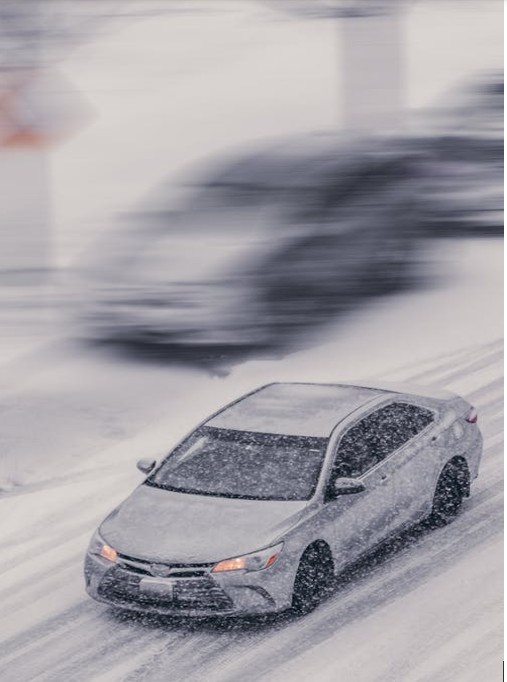
The day of departure came. By 7:30 a.m., the morning train to the airport had been canceled. So had the Greyhound bus my son had booked as a back-up. I hurriedly dressed and, with visions of the car careening wildly off the highway or into the path of an eighteen-wheeler, I drove him the hour’s journey to the airport, trying to appear lighthearted while mentally rehearsing all my options should the road become impassable. There weren’t many. Basically, pull off the road at the nearest exit…and do what? Spend the day and maybe the night there? Where?
Just as I dropped my son off, the first flakes began. Lucky so far, but with each mile back, the snowfall picked up substantially. Eight miles from home, conditions were not good. Snow choked the road and the pavement was icy slick. Traffic was down to one lane and moving at a crawl. No one was driving over 20 miles an hour. I prepared myself for the hairpin exit turn and hoped everyone else was as familiar with that sharp curve as I was. Fortunately, the whole long line went into brake-pump mode. Gentle. Gentle. At last, I was off the highway.
The upshot? My son made his flight and the connecting flight. Obviously, I made it home. But how much less stressful it would have been to take things as they came. To not have fretted for days in advance. To have truly relaxed in the first part of the journey before the snow began falling. To have reminded myself on the return that each mile was bringing me closer to home. That I could, if necessary, exit the highway and then make a plan from there. Not everything needed to be settled in advance. I could have, should have taken the developing blizzard by the smooth handle.
As I write this, my son’s home for Christmas. I have a medical appointment scheduled for the same day he leaves. I need the train to the airport to be running that day. I need the weather to be clear. But what if it isn’t? What if we have a repeat of his journey home after Thanksgiving and I miss my appointment? Mindful of Jefferson’s sage words, I searched for the “smooth handle.” It was this: Somehow, whatever happens, I’ll cope.
Jefferson nailed it. You get no extra points for driving yourself mad. Life is finite. Spend it on that which really matters. That which brings you joy.
Like most people, the holidays hold a very special place in my heart. For me, those holidays are Thanksgiving and Christmas. For you, the holidays might be Ramadan or Kwanzaa, Hanukkah or Diwali. As is true of so many, many things, the different holidays we celebrate speak much more to what we treasure, what we share in common—the decorating of homes, the lighting of candles or oil lamps, the exchange of gifts, the singing of songs, a time for reflection and charitable actions—than to what divides us. But number one among these things we share and celebrate—the most precious gift of all—is gathering with family and friends for a festive meal. Family and friends—nothing matters more than the people we love.
Reflecting on that, I started thinking about other things many of us hold dear in common. I hope you will find much of what you treasure among them. I welcome any additions you’d like to make in the comments section.
Our Health and the Health of Those We Love
New York Times bestselling author Augusten Burroughs (Running with Scissors among others) famously said, “When you have your health, you have everything. When you do not have your health, nothing else matters at all.”
Exercise is often touted as the best medicine. Running, biking, swimming, dancing the night away, traveling across the globe, which means lots of walking once you get off that plane. Ed and I regularly clock 10,000+ steps a day in cities like London and Copenhagen. Many of our friends enjoy hiking in the mountains. And one of my neighbors is big on white-water rafting. Did I neglect to mention we are all Boomers? I hope we can do these things for many years to come. These activities enrich our lives and by their very nature, strengthen our bodies, but no one is immune to injury or stroke or cancer. What’s needed to protect our health—the health of each of us and the people we hold dear—is quality healthcare. Affordable quality healthcare. We in the U.S. are now feeling the truth of this like never before.
Though America was a come-lately to government funding for any kind of healthcare, President Lyndon Johnson’s Social Security Amendments of 1965 gave health insurance through Medicare to Americans 65 and older, and sliding scale coverage through Medicaid for people under 65 with a limited income. I remember how grateful my grandmother was for Medicare. A woman who had lived in poverty all her life, working in a factory while raising five children, she knew what a great and sorely needed gift Medicare was to the American people.
Forty-five years later, President Barrack Obama signed the Patient Protection and Affordable Care Act into law. Prior to the passage of the ACA, commonly referred to as “Obamacare”, people with pre-existing conditions could be refused health coverage or charged a higher rate for their plan. Sometimes much higher. The ACA put an end to that. It also reduced the costs of healthcare for those eligible and established limits on out-of-pocket expenses. At one point, I was on the ACA and it was a significant help in time of need.
We all need healthcare, and in a country as wealthy as the U.S., that should not be an issue. Almost 70% of the world’s population has some kind of universal healthcare, including 27 European Union countries and the United Kingdom. For a brief moment, in 2023, when fourteen Democratic senators co-sponsored Bernie Sanders Medicare for All bill, it seemed we might get our own single-payer system, with the government providing healthcare for all Americans,. But the measure stalled in Congress and then the 2024 elections happened. Though 100 Democratic House members tried to revive it last spring, their efforts failed. Now, some states have cut Medicaid (more may follow) and ACA premiums are predicted to skyrocket. Our healthcare—and thus, our health—is under threat by the president, his GOP-dominated Congress and the billionaires who literally make a killing, perhaps many killings, from private healthcare.
The Natural World
“I go to nature to be soothed and healed, and to have my senses put in order.” — John Burroughs, 19th century naturalist (No relation to Augustin Burroughs quoted above.)
As I write this, I’ve just returned from my daily ramble through the streets of my town. It’s a grey November afternoon, but the Japanese maples are a lustrous red and from the high point of my wandering, I paused to look out across the valley to the mountains beyond. It’s a magnificent view, one I never tire of. I walk to savor such beauty as much as I do to keep my body strong and healthy.
But nature offers yet another benefit, one that often goes unremarked, and the J. Burroughs quote above captures it perfectly. In its vastness, the natural world tends to dwarf our human struggles, or at least put them in perspective. A balm for troubled thoughts or an aching heart. When you sit beneath a tree that’s centuries old, as Ed and I have done at London’s Kew Gardens, you remember that the human experience has been a long and varied road, far from smooth and sometimes downright horrifying, but also one of great learning and achievement, of astounding creativity and, at many moments, one of goodness and generosity to others. The Earth truly is our mother and we must protect her.
Literature
We have a card on our kitchen wall, a hunched-up geezer in a crumpled coat with an armload of books, captioned: Wear the old coat and buy the new book. Oddly enough, the quote is from Austin Phelps, an American clergyman born in 1820. I know nothing more about him, but I do know he nailed it on this one. Our house attests to the veracity of his words. Books fill every available space, even spaces that weren’t meant for books, e.g., next to chairs, piled on stairwells, spilling over dresser tops. It’s a lifetime love affair. For me, it began at age two when I got my first little Golden Books—nineteen cents apiece—each week at the grocery store for “being good.” Since I was always “good”, my Golden Books stacked up quickly. By age five, I was taking out books from the local library and reading them myself. Tell me a story—a request, a need, almost as old as language itself.
Indeed, storytelling has existed for thousands of years. Tens of thousands if we count the cave drawings discovered in France at Lascaux and Chauvet, some of which appear to represent visual narratives. In ancient Greece and Rome, people gathered by the hundreds on the hillsides to hear the adventures of Odysseus, Homer’s epic poem The Iliad, and the animal fables spun by Aesop himself.
Around 700 BCE, many of these stories and poems began to be written down. Though the first printing press was still two-thousand years away, recording the stories helped spread them to new audiences around the globe. The importance of this journey—storytelling to story writing to mass printing of stories—cannot be overstated. Literature allows us both to reflect on our own “odyssey” and to step beyond ourselves. To understand our place in the human condition—those most basic shared experiences and emotions that define what it is to be alive in this world: Birth, growth, joy, sorrow, fear, hope, disappointment, love, anger, death.
Now that books are increasingly featuring AI-generated content—the details on this are murky, and sources disagree over how much and in what manner—the future of literature feels uncertain. I can only say that AI books will not—cannot—give us the truth of the human condition. Humans: It takes one to know one.
Theatre
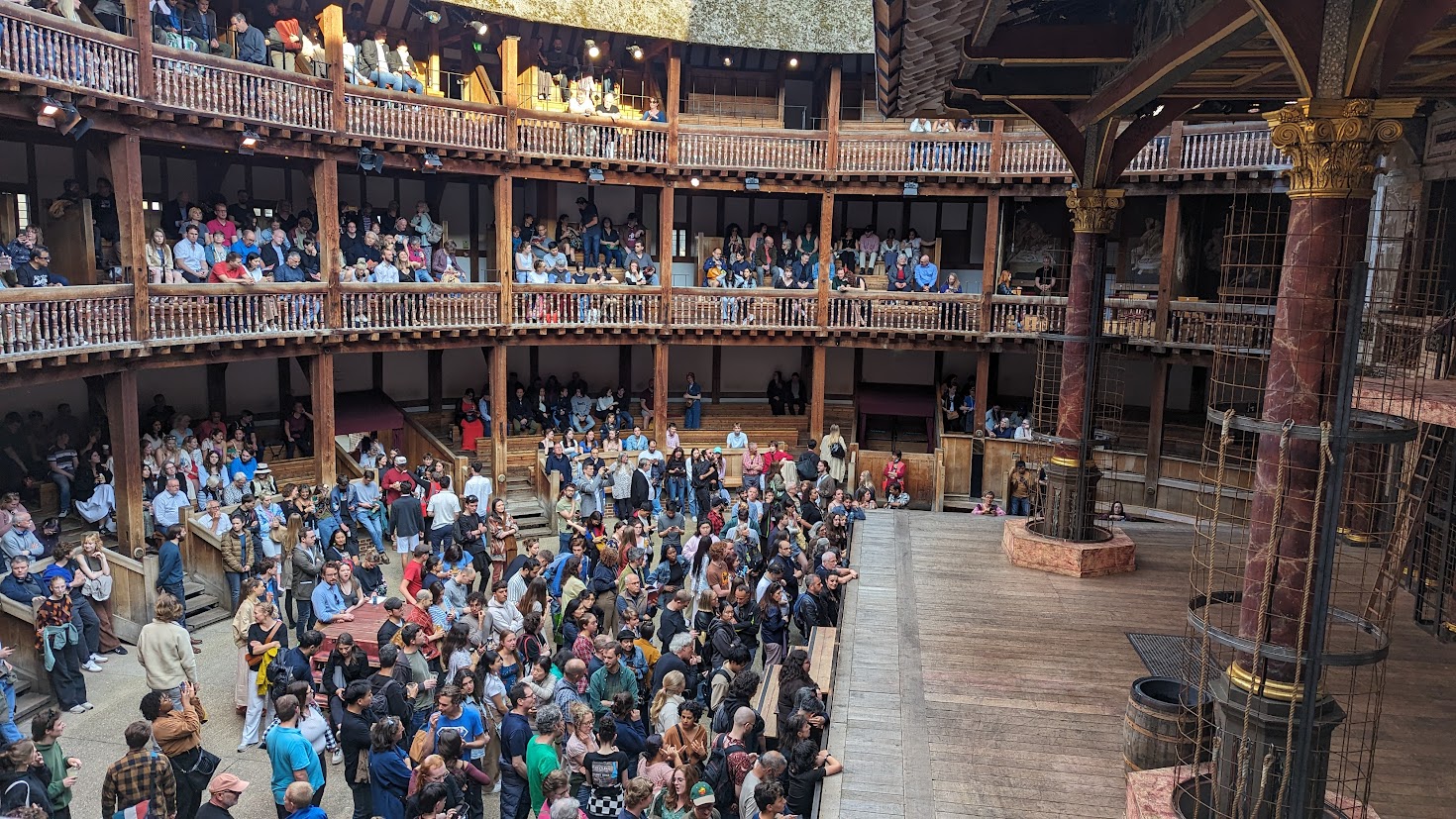
One of the greatest writers to ever capture the essence of human experience was William Shakespeare. His narratives were acted out on stage, but their veracity is proven by the audiences that continue to pack the Globe Theatre in London for every performance of his work more than four-hundred years later.
The power of theatre lies in its immediacy, its face-to-face connection between actors/story/audience. The story begins, building and building to its climax—wham!—before continuing to its resolution. With the exception of a brief interval for longer works, there is no “putting the play down” as we do multiple times when reading a book. At the close of an especially electrifying performance, an audible second of silence occurs before the house goes wild with applause.
There was some real concern that COVID would be the end of theatres. Thankfully, this has not turned out to be true. There are some 240 theatres in London and more than 100 (including off-Broadway venues) in New York City. And great playwrights continue to emerge. Kate Hamill, Rajiv Joseph, Jeffrey Hatcher, Eboni Booth.
Music
“Music is the universal language of mankind.” — Henry Wadsworth Longfellow
I cannot remember a time when music was not core to my being, a state that only catapulted into the wild blue after my dad gave me a transistor radio with earphones when I was six. Suddenly, I could listen to music (clandestinely, tee-hee) until the local radio station went off the air at midnight. And I did, all the way into high school. The Beatles. Bob Dylan. The Supremes. The Temptations. The Byrds. Simon & Garfunkel. The Mamas and the Papas. Smokey Robinson. And about a zillion others. Has there ever been such an explosion of brilliant music before or since?
When the Beatles released their “White Album” on Nov. 22, 1968, I hiked most of a mile in the late fall chill through a field of briars—in the fashion of the time, capri jeans and flats with no socks, which left my ankles to the mercy of the thorny plants—to get a copy from a local department store. A small price to pay, I thought as I placed the first record on the turntable, for having these 30 new songs by the rock group that flipped my world and defined a generation.
In college, I took a class in playwriting. The professor spoke of musical theatre as well and introduced us to opera. He played a recording of Puccini’s “O mio babbino caro” (“Oh, my dear Papa”) from the opera Gianni Schicchi. I. Was. Hooked. At just a hair over two minutes, it’s one of the most incredibly beautiful, emotional pieces of music I have ever encountered. After many decades, I still can’t hear it without tearing up.
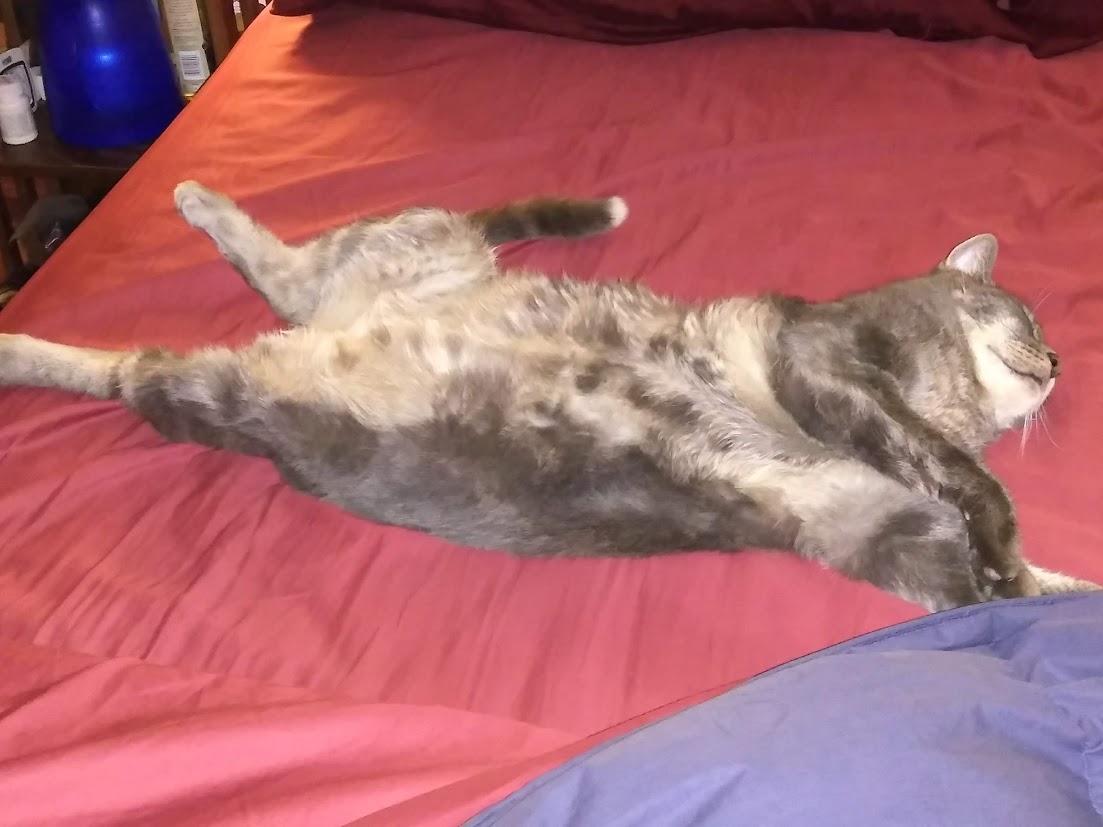
And, altering Longfellow’s quote a tad, music also has charms to soothe the savage “beast.” When my dear kitty, Coosh (Mercutio), was alive, we had a nightly routine I dubbed “Music with Mommy.” This ritual occurred during what I call my “decompression time”—a half-hour at the end of the day when I sit on my bed and play solitaire, letting the pressures of life slide off me, while I listen to music—Mozart, Tchaikovsky, Dvorak, Schubert and other classical masters, played by brilliant musicians like Joshua Bell. Cooshy always jumped up on the bed and rested beside me for the duration. If I was a little behind on getting started, Coosh would stand by the staircase until I got the message.
Art
When, as a college student, I first encountered several of the great art galleries of the world—the Louvre in Paris, the Tate Britain and the National Gallery in London, the Uffizi Gallery in Florence—I had to see everything (though even I could not cover all 35,000 artworks in the Louvre). And it wasn’t that I had never seen art before. My mother had trained as an artist, so we did the two-hour drive every few years to visit the fabled Art Institute of Chicago. But having stood spellbound before Van Gogh’s The Bedroom and Dante Gabriel Rossetti’s Beata Beatrix and Toulouse-Lautrec’s At the Moulin Rouge, I craved more. Much more. So, even as I journeyed beyond that semester in Europe, beyond college, into the wide world, I continued to seek out the great art galleries both at home and abroad. I still do.
One might imagine being a writer, dealing in words rather than images, I would not be so deeply affected by paintings, but the best works of art speak as eloquently to the human condition as any work of literature or theatre. Writers, painters, dancers, musicians, actors—we all deal heavily in emotion because before we are artists we are human beings, and who among us has not known the majesty and the wonder expressed in van Gogh’s The Starry Night or experienced the utter despair portrayed so movingly in John William Waterhouse’s The Lady of Shalott?
Democracy, Social Justice, Peace, Generosity
“Whatever happened to the idea…that we all do better when we all do better?” –Paul Wellstone, progressive senator from Minnesota (1991-2002), addressing a sheet metal workers’ union.
Our democracy has chugged along for 236 years, imperfectly—yes—but intact. And through the decades, now centuries, “we the people” have made progress toward that “more perfect union” outlined in the Constitution, though not infrequently in the style of a two-steps forward, one-step back foxtrot. For example, the 19th Amendment gave women the right to vote in 1920, but Black and Indigenous women were restricted from exercising this right by a tangle of state laws that also prevented the men in these populations from voting. And Native Americans were not even recognized as full citizens until The Indian Citizenship Act of 1924!
But despite the muddles—inherent in a true democracy where many voices contend—those of us who believe that all people are created equal have continued to press for the full realization of that highest of ideals. With the passage of the Civil Rights Act of 1964 and the Voting Rights Acts of 1965, it seemed we were finally getting somewhere. Even when Nixon’s role was revealed in the 1972 Watergate scandal, masterminding the cover-up for the break-in at the Democratic National Committee headquarters by CREEP—that darkly comic and amazingly accurate acronym for Tricky Dick’s Committee to Re-Elect the President—even then, justice prevailed and Nixon resigned one step ahead of his certain impeachment.
And now, we who hold dear our Constitution, our First Amendment rights to freedom of speech, to “peaceably assemble and petition the Government for a redress of grievances”, we must continue to rise up and say NO! to what is, in fact, a dictatorship by the billionaires, for the billionaires and to hell with the rest of us. The millions of Americans who have come out to protest at the “No Kings” rallies this past year is heartening, but our system of checks and balances established by the founders remains in grave danger. The majority of the Supreme Court is in the pockets of the uber rich and there’s a president at the helm who believes no one can restrain his power—Congress be damned.
We must continue to stand together and stand up for each other, including our immigrants, for are we not—with the exception of the badly-treated Indigenous Americans—all immigrants?




























 amyhenrybooks