Well, as I’m off on another trip to London, I’m leaving you with a post penned after my trip two years ago to that wonderful city. And a very salient post it is. A post about those who bravely fought for freedom in the face of fascism. Who put themselves at risk to save the lives of their fellow human beings. I found their stories incredibly uplifting. I hope you will, too.
During my recent trip to London, I saw a new play, Glory Ride, about a remarkable Italian cyclist, Gino Bartali, two-time winner of the Tour de France. But it wasn’t Bartali’s athletic achievements that made him remarkable. Or worthy of the tribute this play bestows. It was something far more significant. Courage. Bartali cycled thousands of miles across his native Italy during World War II, smuggling falsified ID documents that enabled Jews and other persecuted peoples to flee the country, escaping certain death at the hands of the Nazis.

Courage. Google’s English Dictionary defines it as the ability to do something that frightens one. We celebrate those who can summon such bravery, who literally lay their life on the line for their principles. And wonder if we would come up to the mark in the face of such a daunting challenge.
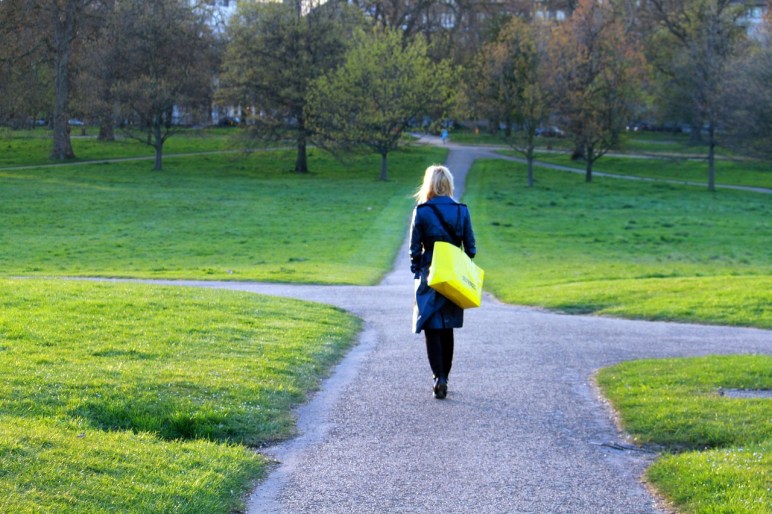
Courage. One stands at the crossroads at a moment in time, without any assurance of the outcome, and commits to this: Do or die. In those fleeting minutes, when a decision must be made, what factors determine the path we will take?
Because We Possess The Ability
Gino Bartali, a native Florentine, won his first Tour de France in 1938, the year Italian dictator Benito Mussolini began to enforce antisemitic legislation based on Nazi Germany’s Nuremberg Laws. When Italy entered World War II on the side of the Fascists in 1940, Bartali was called up to serve, but an irregular heartbeat saved him from combat duty. Instead, he served as an army messenger, bicycling across Italy to deliver military missives. This not only allowed him to continue training and racing, it made him the ideal candidate to carry secret documents that would save hundreds of lives, the majority of them children.
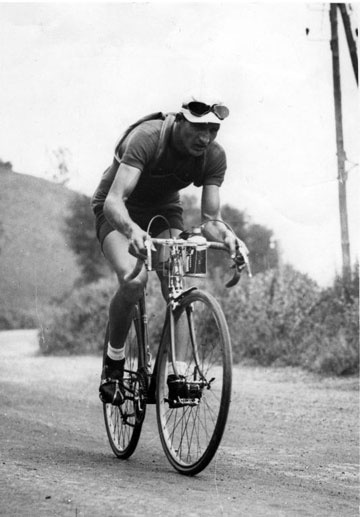
The Cardinal of Tuscany, Elia Dalla Costa, approached Bartali in 1943. The Jewish families and children he was hiding in various Franciscan convents needed forged travel papers to escape. His friend, Giorgio Nissim, a Jewish accountant, could produce the documents, but he needed photographs of the fugitives. Could Bartali regularly bike to Assisi, under the guise of training, to collect the photos, bring them back to Nissim, then deliver the finished docs to the escapees?
Now, having won the Tour de France, Bartali was a beloved son of the Italian people, but it had not escaped the authorities’ notice that he was no fan of Mussolini or Hitler. German troops were not anxious to incur the riots his arrest would arouse, but they were keeping a close eye on him. And the cardinal’s request would bring certain death were Bartali’s real mission discovered.
In the play, Bartali has his moment of wishing that the cup might pass from him, that he be spared this choice. We cannot know what he actually experienced, but he was a healthy 29-year-old, recently married with, as they say, everything to live for. Still, he understood the situation: Many innocent people would be savagely murdered without his help. So, he figured out a way to hide the photos, the forged ID cards, the exit docs inside the frame of his bike. And off he rode. Day after day.

In July 1944, disaster struck as the organization the Jewish accountant Nissim worked for was rounded up by the Nazis and sent to concentration camps. Only Nissim escaped arrest. He immediately went to work rebuilding the network. Soon after, Bartali himself was hauled in by the Germans. Why was Bartali riding all over Italy? They demanded. The war had cancelled virtually all cycling races, so what exactly was he training for? Why should he not be killed here and now?
Bartali admitted nothing. Not the photos or the forged travel docs. Not the dozens of Jews he’d driven to freedom in the Swiss Alps, stowed away in a secret compartment of the small wagon he claimed to pull for “strength training.” Nor the Jewish family—old friends—he was hiding in his cellar.

We will never know whether his silence would have bought him more time or been the last straw that prompted some Nazi officer to pull the trigger then and there, because that day, one of the men among Bartali’s interrogators was his former army commander. They had been friends of a sort during Bartali’s service and the man convinced the Nazis that the cyclist was innocent.
Bartali would go on to save some 800 lives during the war and win a second Tour de France (1948) before dying peacefully at age 85.
Because We Are In The Right Place
When Miep Gies set up an interview with Otto Frank for a position in the company he managed, she had no idea what the job would one day ask of her.
It was 1933, and Frank himself had just moved to Amsterdam from Germany to run the new Dutch arm of Opekta, a pectin and spice company. Adolf Hitler had come to power, the Nazi movement was growing rapidly, and Frank, a Jew, desperately wanted to get his family out of their native country, a goal he realized the following year when his wife and two daughters, Margot and Anne, joined him in the Dutch capital.

For five years, the plan worked, but then World War II exploded and eight months later the Germans invaded the Netherlands. They began rounding up Dutch Jews and shipping them to Nazi concentration camps. Though Miep was not Jewish, the Nazis took her passport after she refused to join the Nazi women’s association, and she was told she would be deported back to her native Austria (which had been annexed by Germany in 1938.) Determined to remain in the Netherlands, Gies and her Dutch lover, Jan, decided to marry so she would be granted Dutch citizenship. They were wed in July 1941.
It seemed disaster had been averted. Until the following June, when papers arrived for Margot Frank, Anne’s sister, ordering her to report for forced labor in Germany. To save their elder daughter, the Frank family, along with the family of Otto’s business associate and a local dentist—all Jews—hid themselves in an attic apartment adjacent to the Opekta operation. Their survival would now depend on help from others who would also risk arrest—and worse—if discovered.

What could Miep do? Otto Frank had been good to her. They had been neighbors, too, before the Franks were forced to hide. And she hated everything the Nazis stood for. She was scared, but everyone was scared. She and Jan, along with three other Opekta employees put their own lives on the line, smuggling food and other supplies to the secret apartment. For the next two years, Miep made multiple shopping trips daily, sourcing food from different places, delivering her supplies only after the Opekta workers had left for the day—not everyone was unsympathetic to the Nazis or willing to risk their lives. As the months became a year, then two years, the tension must have been exhausting, but Miep never wavered.

And then the hammer fell. On August 4, 1944, a Gestapo officer stormed into Miep’s office, waving a gun. Someone had tipped him off about the Jews hiding in the apartment. The Franks and their friends had been arrested. The officer now arrested Miep and two of her co-workers who had been assisting the family. Miep recognized the officer’s accent—he was Viennese. When she told him she, too, had been born in Vienna, he took pity on her and let her go. It was a one in a million chance, but it saved her from prison and the labor camps.
As soon as the Gestapo left, Miep rushed to the Frank’s apartment to rescue Anne’s diaries—the ones Miep knew she had been keeping throughout their confinement. The Franks were sent to Auschwitz. Later, Margot and Anne would be sent on to Bergen-Belsen. The only one to survive the war was Otto Frank when Auschwitz was liberated in 1945 by Soviet soldiers. On his return to Amsterdam, Miep gave him his daughter’s writings. These would become the book Anne Frank: The Diary of a Young Girl, a book that would be translated into more than 70 languages and sell over 30 million copies. It remains one of the most widely-read non-fiction books in the world.
Because There is No Other Choice
As noted up top, courage is about acting when the stakes are high but the outcome of our effort—at great personal risk—uncertain. Will we be able to change anything about the situation, or are we potentially sacrificing ourselves for nothing when we might have escaped the ordeal altogether? But let’s ratchet up the stakes another notch: What if there is no possible escape, only a temporary postponement of the inevitable if we don’t find the courage to act?

That’s the question Alexei Ananenko, Valeri Bespalov, and Boris Baranov faced on May 4, 1986, just days after one of the four nuclear reactors at the Chernobyl Nuclear Power Plant exploded, releasing radioactive fallout 400 times more deadly than the atomic bomb dropped on Hiroshima in World War II. Two of the plant’s workers died instantly. Another 28 would succumb from acute radiation syndrome by month’s end, and 350,000 people from the surrounding area had to be evacuated.
Within six hours of the explosion, all the fires had been extinguished. Everything seemed under control, the damage contained. But then it was discovered that the water firefighters had pumped into the reactor had also flooded the basement beneath. That water was now radioactive. And the Unit 4 reactor was continuing to melt down, burning its way through the concrete slab that divided it from that radioactive water. If the melting reactor came into contact with the water, the resulting explosion would wipe much of Europe off the map for the next half-million years. The stakes don’t get much higher than that. Nor does the risk.

The only hope was to find the valves in the flooded basement and manually turn them off, thus draining the toxic pool of water beneath the reactor before the concrete slab was breached. Ananenko, Bespalov, and Baranov did not know what they would find in the basement, the extent of the damage, or whether their efforts could affect the outcome, but dressed in wetsuits, wearing respirators, and carrying flashlights, down they went, with assurances their families would be looked after if they perished. It was not reassuring.
The water was not deep, but the basement was a dark, twisting maze of pipes and valves. Seconds stretched to minutes—each minute bringing the molten reactor core closer to burning through the slab. Where was it—this one valve that would prevent total disaster if they could only find it in time?
Well, obviously, they did find it. Turned it off. Saved a significant portion of the world. And all three lived to tell the tale. In recent years, Ananenko, asked to recall the moment, has tended to downplay the heroics of what they did. We were doing our job, he has said.
In my book, that’s still courage.
Because We Can No Longer Remain Silent
Malala Yousafzai was born in Pakistan in 1997. When she was ten, the Taliban seized power in her section of the country. By 2009, they had outlawed education for females and blown up more than a hundred girls’ schools to make their point. Malala, who had dreamed of becoming a doctor, was furious. Her father, Ziaudin, empathized with his daughter’s anger at this huge injustice. As a teacher, he had founded a co-educational school. It was his vision that every woman who wanted an education should have one. He deplored illiteracy. Hated the idea that women should be hidden from the public eye, trapped at home to cook and clean for their brothers, fathers and, eventually, husbands. He wanted more, much more, for Malala.
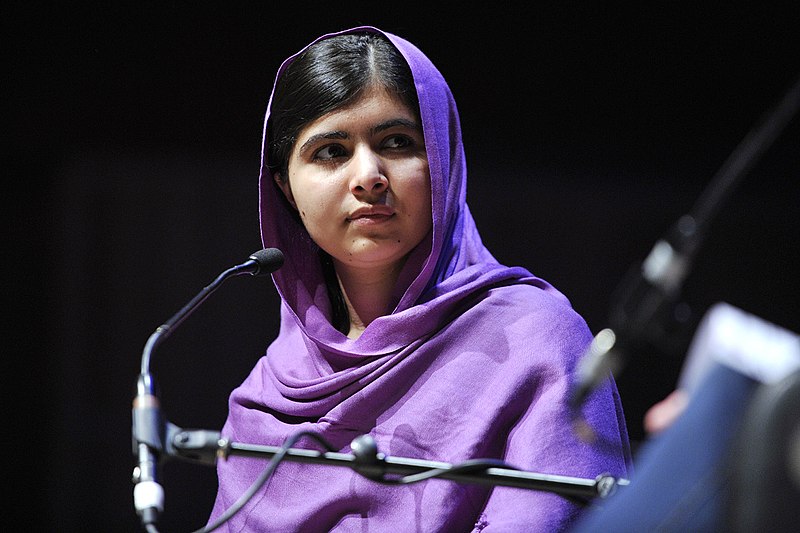
“Speak out,” Ziaudin told his daughter. So Malala began taking her crusade to the people. “How dare the Taliban take away my basic right to education,” she declared in 2008, during a speech to the local press club in Peshawar. The newspapers and TV stations ate it up. Soon after, BBC Urdu, a digital TV station covering India and Pakistan, came looking for a school-age girl to blog anonymously about her life under the Taliban. Their Peshawar correspondent got in touch with one of the local teachers—Malala’s dad, Ziauddin. Did he know any female students who would agree to be their blogger? Ziauddin asked around, but the girls’ families were fearful. Too risky, they said. And that was how Malala began blogging for BBC Urdu. She wrote notes under the pseudonym Gul Makai and gave them to a BBC reporter to post. As she penned her first post in January 2009, her school has just been forcibly shut down:
I had a terrible dream yesterday with military helicopters and the Taliban. I have had such dreams since the launch of the military operation in Swat. My mother made me breakfast and I went off to school. I was afraid going to school because the Taliban had issued an edict banning all girls from attending schools. Only 11 out of 27 pupils attended the class… My three friends have shifted to Peshawar, Lahore and Rawalpindi with their families after this edict.
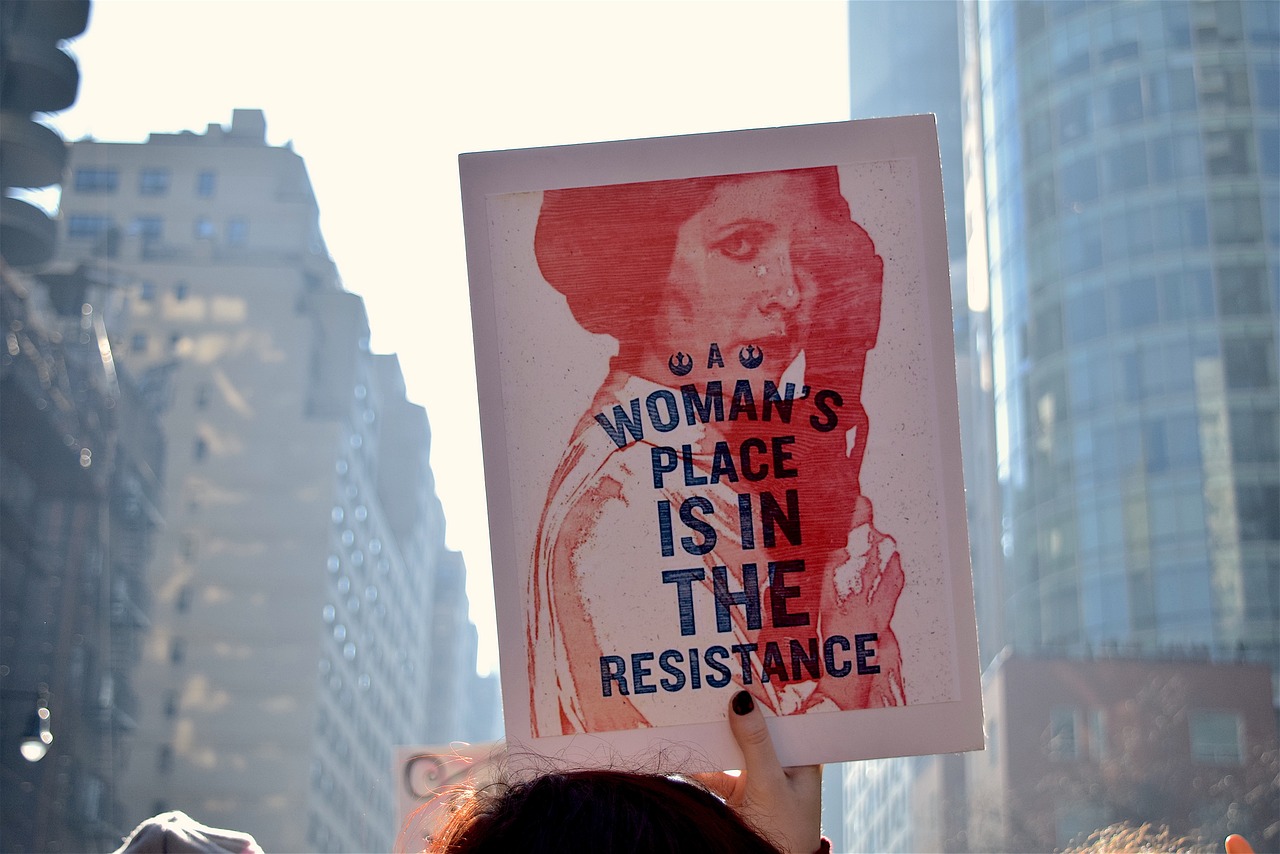
It was an amazingly courageous act for a girl still shy of her twelfth birthday, but it was just the beginning of Malala’s public campaign. The year 2009 saw the Pakistan Armed Forces wage a protracted battle to drive out the Taliban. Spring became summer as the fighting continued. Many local people had fled the area, but Malala and her family remained. She became a peer educator for the Institute of War and Peace Reporting’s “Open Minds Pakistan” youth program, working with local students to help them engage in thoughtful discussion, via journalism, discourse and public debate, on the issues they faced. That same summer, a New York Times’ correspondent, Adam B. Ellick, made a documentary, Class Dismissed, about Malala’s life and work. Her public profile mushroomed. No more hiding behind a pseudonym. Now, Malala gave interviews in print and on TV. Desmond Tutu nominated her for the International Children’s Peace Prize, and she was awarded Pakistan’s National Youth Peace Prize.
The Taliban, suppressed but not eradicated, watched in fury from the sidelines. Lessons of History #1: Armies may be defeated (for a time), but ideas do not die. Just as there are those who will always champion democracy and a just world for all people, there are those who will always promote fascism and a fierce tribalism. On October 9, 2012, fifteen-year-old Malala was riding the bus on her way home from school when a member of the Taliban forced his way onto the vehicle and shot her in the head. She was airlifted to a hospital in Peshawar, then moved to an intensive care unit in Birmingham, England for surgery. For a while, it was touch and go as to whether she would survive, but Malala pulled through.

The attempt on her life brought an immediate and global wave of support for her and condemnation of the Taliban. Some two million people signed a petition, leading to the ratification of Pakistan’s first Right to Education Bill. The Taliban threatened a second assassination attempt to “finish the job”, but Malala was not deterred. Nine months after the shooting, she gave a speech before the United Nations urging world leaders to champion the rights of women, especially their right to an education. She and her father launched the Malala Fund, an international non-profit org to fight for this goal. In 2014, Malala became the youngest person ever to receive the Nobel Peace Prize. A year later, the Malala Fund opened a school in Lebanon for Syrian refugee girls ages 14-18.
Malala finished high school in England and went on to earn a B.A. in Philosophy, Politics and Economics from Oxford, but she has not forgotten the millions of girls around the globe who are prevented from making their own choices and determining the course of their lives. She continues to speak out for their rights.
Because It Is The Right Thing To Do
All the heroes in this account were born “ordinary” people. Even Gino Bartali, who gained renown as a cyclist, was born a poor man’s son and worked the fields alongside his family. What they did possess in common was an unshakeable sense of right and wrong—what is fair, what is just—and the determination to act on their beliefs. That is what made them extraordinary.
One stands at the crossroads at a moment in time, without any assurance of the outcome or guarantees for their personal safety, and commits to this: Do or die. Leaving unspoken the most pressing question: If not me, then who?
 amyhenrybooks