
Forty years ago, when I was a young twenty-something, I wrote a poem that began with the question: What motivates one man to build a bomb while another plants a garden?
The question was not meant to isolate a gender. Man could just as easily have been person. Nor was it confined to the activities of weapons-making and horticulture. I might have asked what motivates one person to start a private equity firm that systematically destroys the livelihood of tens of thousands of workers, while another person creates a non-profit charity that has fed hundreds of millions of people in crisis worldwide?
Greed vs. Generosity

In this case, the first person is Mitt Romney (former Utah senator and one-time presidential candidate who lost to Obama in 2012), co-founder and former CEO of Bain Capital, a private equity firm that bought up companies in trouble for cheap, in deals that then loaded up those companies with more debt, resulting in many of the businesses being stripped down for parts, and the assets sold off at a profit—a profit for Bain—not infrequently leaving workers without jobs, healthcare coverage, or the pension funds they’d earned, as Romney and his partners reaped millions.

The second person, the “gardener”, is José Andrés, born in Spain where he trained as a chef before coming to America at the age of 21. Soon after settling in Washington, DC, Andrés began volunteering at DC Central Kitchen, an org whose mission states: We believe that hunger is a symptom of the deeper problem of poverty, and that food is our chosen tool for changing individual lives while addressing systemic failures. Andrés credits DC Central Kitchen with inspiring him to do philanthropy on a BIG scale. In 2010, he started World Central Kitchen in the aftermath of a massive earthquake in Haiti, bringing in supplies and making huge vats of food for the many people who had lost everything in the disaster. That was Andrés’s first foray into charitable work on a global scale but not his last. WCK has kept right on feeding hungry, destitute millions around the world in areas decimated by natural disaster or war for fifteen years. Last year, alone, Andrés and company provided more than 109 million meals in 20 countries.
Destroying vs. Healing

I could also have asked:
What motivates the CEOs of Big Oil to continue exploiting Earth’s fossil fuels, knowing from their own research, from their own scientists, that climate change is real and that the continued burning of these fuels will cause—is causing—severe damage to the planet? To then bury that research and create a counternarrative, a wildly dangerous lie, to confuse people and block climate action by Congress…

While Alaskan paramedic-turned-nurse Teresa Gray and her team of licensed medical volunteers travel the globe to provide free medical care to victims of natural disasters and political upheavals. Mobile Medics International, as Gray’s nonprofit is called, even went to Romania to treat some of the 4.6 million Ukrainian war refugees forced to flee their homes in what the United Nations has called “the world’s fastest-growing refugee crisis since World War II.”
But poetry demands an economy of words, a concise symbolic representation of a larger concept: evil versus good, greed versus generosity, a disregard for those who suffer versus a desire to work for the common welfare.
Four Traits of the Kindhearted
So, the real question my poem asks could be posed thus: What motivates one person to be grasping and greedy, heedless of who they hurt or how, while another person seeks to alleviate suffering wherever and to whomever it occurs? From observation and experience, I believe the person who feels no need to crush others, no need to “outdo” them in wealth or power, who is generous with their time, resources, and talents—I believe that person possesses four key certainties or traits:

- They know what is enough. That if you have a safe place to live, three square meals a day, access to medical care, and some income, you have enough.
- They know what truly matters. Life matters. People, the health of the planet—its oceans, forests, lakes, rivers, and all its living creatures. These are what matter, not the money or the power to rape the planet and crush others.
- They know the real source of joy. Family, friends, neighbors, community.
- They know they are enough. They don’t need to provoke envy—look at me!—or diminish others to make themselves appear more powerful, more important.
In gathering examples of generosity and avarice, I came across a definition of greed and its causes I believe hits the proverbial nail squarely on the head: Greed is the desire to have everything for yourself and to prevent others from having a fair share. And just below that: Causes of greed include egocentrism, insecurity, and individualism.
Yep, that about sums it up, but it begs the question: How do we, as individuals, grow up to be the destroyer or the nurturer? Are we hard-wired from Day 1 to be grasping or generous? It’s a question psychologists and neuroscientists have long been interested in, and as brain research has advanced in the past decade or so, we are starting to get some answers.
When All Is Said And Done

In researching that question, I waded through about a zillion pages of findings on the subject—for example, The Neuroscience of Generosity: Synchronization of specific brain regions predicts generous behavior in monkeys. This Yale University study shows the marked suppression of neural synchronicity between the amygdala and medial prefrontal cortex in monkeys when they engage in selfish and antisocial behavior. Generous behavior occurs when these same regions of the brain show synchronization. Reflecting on the findings, senior author and assistant professor of psychology and neuroscience at Yale, Steve Chang, observed: “We all know there are individual differences in levels of generosity. Maybe Scrooge did not have high levels of synchrony after all.”
And this insightful tidbit from the study, A neural perspective on when and why trait greed comes at the expense of others, where co-authors Patrick Mussel and Johannes Hewig write: “Here, we show that trait greed predicts selfish economic decisions that come at the expense of others in a resource dilemma. This effect was amplified [my emphasis] when individuals strived for obtaining real money, as compared to points, and when their revenue was at the expense of another person, as compared to a computer.”
It’s fascinating stuff, but at the risk of running to thousands of words here, I will close this post with two observations I believe get to the heart or, rather, the heartlessness of the matter:
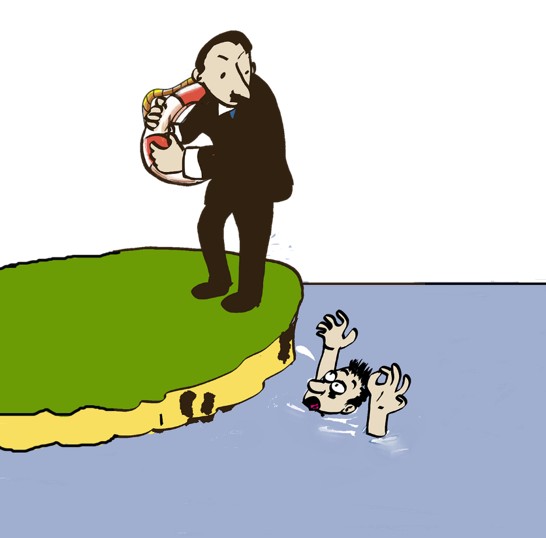
#1 Big Oil knows what fossil fuels are doing to the planet, the threat they pose to all living creatures. They simply don’t care.
#2 I believe Dr. Seuss [Theodor Geisel], in his beloved children’s classic How the Grinch Stole Christmas!, nailed the root of the problem in words any five-year-old could understand regarding why the Grinch hated Christmas and all the happy revelers down in Whoville:
“It could be his head wasn’t screwed on just right.
It could be, perhaps his shoes were too tight.
But I think that the most likely reason of all
May have been that his heart was two sizes too small.”
Thank you, Dr. Seuss, for the answer to my poem.
 amyhenrybooks
Humans sure are complicated creatures. Living peacefully with and sharing with one another seem like behaviors that just about everyone would want to be onboard with. But it hasn’t and doesn’t pan out that way. Things would be a lot worse were it not for organizations like WCK, Save The Children, Doctors Without Borders, and all the many others doing good work.
LikeLiked by 1 person
I do not understand how some people can be totally heartless, completely consumed by greed and crushing others, BUT I am very grateful that many other people dedicate their talents and time to helping those who greed has crushed and left stranded. Thanks for stopping by, Neil. May better, more compassionate times come round again SOON.
LikeLiked by 1 person
Thanks, Amy. Interesting: This morning’s NY Times has a piece about how Elon Musk is destroying the global health apparatus that Bill Gates has spent decades building. I thought this piece would be about them. And in a way it is.
Thanks again.
LikeLiked by 1 person
Interesting piece about Musk destroying what Bill Gates built–and as you observed, EXACTLY what this essay is about; I wouldn’t have seen the NYT piece before I wrote this, but I appreciate your mentioning it here. And, as always, I appreciate your taking the time to read and comment. Take care.
LikeLike
Another great read. Thank you, Amy.
LikeLiked by 1 person
Thanks, Lori. I always appreciate your taking the time to read and stop by.
LikeLiked by 1 person
late to comment – but what a good read – and it’s a subject growing more important by the day (sadly), Linda xx
LikeLike