
Over the past year, as the most critical test of our democracy since the ink dried on the Declaration of Independence draws closer—the November elections—I’ve repeatedly asked myself why, how is it even possible, that we whose fathers and grandfathers fought on the beaches of Normandy and in the forests of the Ardennes to stop the mad fascist Hitler, are now considering electing another mad fascist? What is the benefit to any American, except the top 1% of the richest people in the country? The very people with their hedge funds and private equity groups who are already strangling our housing market, destroying our hospitals and healthcare, polluting our planet. The authors of Project 2025 and their chosen puppet to oversee the dismantling of our democracy, the trashing of our Constitution: Trump.
How Did We Get Here?

I’d like you to consider for a moment what democracy means to you. The right of the people to elect those who govern our nation? The right of every American to peaceful protest, guaranteed in the First Amendment to the Constitution? An equality under the law of all Americans whatever their gender, race, ethnicity, sexual orientation, religion or lack of same? This last, I know, is a long work in progress, but it has been in progress. Or was until the Supreme Court lifted decades of campaign finance restrictions with their 2010 ruling (5-4) in Citizens United v. Federal Election Commission, a decision that essentially gave corporations and other outside groups free rein to spend unlimited dollars—millions, billions—to influence our elections.
Until SCOTUS largely gutted the Voting Rights Act of 1965 in 2013.
Until 2022, when the six conservative members of the court overturned Roe v. Wade, taking away the freedom of women to control their own bodies even in cases of incest, rape, and endangerment to the woman’s life. That last especially underscores the truth that it’s not life the far-right cares about, but putting women back in their “place”—under men’s thumbs.
Until 2023 when those same justices declared affirmative action in college admissions unconstitutional, thus ending a highly successful program of nearly half a century that sought to redress the wrongs perpetrated against Black and Latino Americans.
Until 2024, when the far-right SCOTUS majority gave the president (Trump v. United States) the powers of a king. Not the current president, you understand. Not Joe Biden. Just one year earlier, on June 30, 2023, the conservative justices ruled against Biden’s student loan forgiveness program in Biden v. Nebraska—a program that would have erased up to $400 billion in educational loans for some 40 million Americans, most of whom have been paying off these loans at exorbitant interest rates for over 20 years. The conservative majority said the program “overstepped” the President’s authority. Apparently, only Trump, or any other dictator-puppet selected by far-right billionaires to do their bidding, has the conservative Court’s blessing to act as they please.

To their credit, the Biden-Harris administration has fought back, to date finding legal loopholes to grant loan forgiveness to over 4.8 million Americans. In mid-October, they were able to get through another $4.5 billion for student debt relief to 60,000 public service workers—teachers, first responders, social workers, and nurses. They worked this miracle through the Public Service Loan Forgiveness Program, a 2007 Bush-era initiative that, before Biden, had rescued less than 10,000 borrowers due to poor management and low acceptance rates.
U.S. Secretary of Education Miguel Cardona said, “I want to send a message to college students across America that pursuing a career in public service is not only a noble calling but a reliable pathway.”
The School-to-Factory Pipeline?

Speaking of education, much has been written, and rightfully so, about the school-to-prison pipeline many poor children of Color face in our inner cities, but little attention has been paid to a new threat: Trump’s promise to eliminate the U.S. Department of Education. A four-alarm disaster under any conditions, it is especially troubling in light of the GOP’s attacks on child labor laws in state after state. Since 2021, 28 state legislatures have introduced bills to weaken such protections, and 12 states have enacted them. This year, the Florida House voted to eliminate state guidelines regulating work hours for teens, while also banning meal and rest breaks. In Mississippi, a 16-year-old was working nights as a cleaner at a chicken processing plant when one of the machines drew him in and killed him. His employment clearly violated a federal law that requires meatpacking facility workers to be at least 18 years of age, in recognition of the dangers of the job. Iowa, however, passed a bill expanding such hazardous employment for kids as young as 14, federal law be damned.

In the U.S. House, when Democrats sought a committee hearing on strengthening child labor protections, Republicans (with the backing of numerous business groups, including the U.S. Chamber of Commerce, the National Restaurant Association and the National Retail Federation) ignored their several requests.
Reading these reports—Trump’s promise to dismantle the Department of Education at the same moment child labor laws are being weakened in much of the country, I was reminded of Hitler’s labor camps like Dora-Mittelbau (originally a sub-camp of Buchenwald) in Germany’s Harz Mountains where the Nazi’s “untermenschen”—Jews, Poles, Communists, gays—were forced to build Hitler’s V-weapons until the prisoners literally dropped, at which time they were tossed into ovens. Next.
Climate Change: Not “One of the Great Scams”
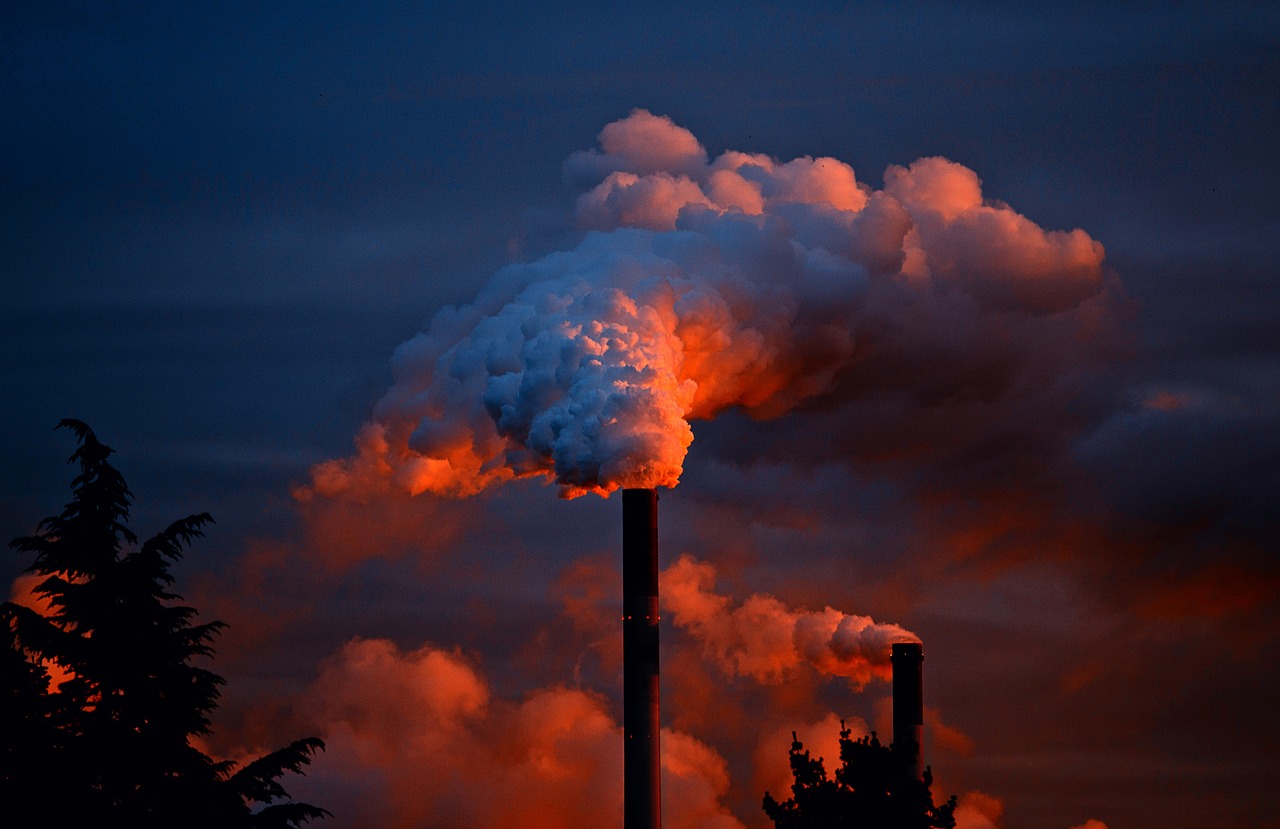
Despite the horrific loss of life and massive damage caused by recent back-to-back hurricanes Milton and Helene, Trump has also promised to dismantle the Environmental Protection Agency—in line with Project 2025’s goals. Trump has repeatedly called climate change a “hoax”, “one of the great scams.” Oil, he says, is the “liquid gold under our feet.” Not only has he no interest in taking action to reduce America’s carbon footprint, he’s openly pledged to approve all permits to “drill, baby, drill” on our public lands and waters, allow more gas pipelines to be built, and keep those coal plants burning. Such policies will fill our air, and lungs, with “greenhouse gas emissions equivalent to another billion cars,” The New York Times reports.

Kamala Harris calls climate change an “existential threat” that our country must combat and has promised to build on the billions of dollars the Biden Administration has already invested in clean energy. Indeed, as vice president, hers was the tie-breaking vote in the Senate for the Inflation Reduction Act, which aims to reduce greenhouse gas emissions to 40 percent below their 2005 levels by the end of this decade. Her dedication is proven. In her role as California’s attorney general, she went after Big Oil for environmental violations.
A Very Public Enemy: Social Media Conspiracy Theorists and Their Lies
Charlie Warzel, in his recent piece for The Atlantic, “I’m Running Out of Ways to Explain How Bad This Is”, laments: The truth is, it’s getting harder to describe the extent to which a meaningful percentage of Americans have dissociated from reality. As Hurricane Milton churned across the Gulf of Mexico last night, I saw an onslaught of outright conspiracy theorizing and utter nonsense racking up millions of views across the internet.
It’s no secret that QAnon, Infowars’ Alex Jones, Steve Bannon’s War Room, and a host of other conspiracy theorists have been spreading lies and outrageous propaganda since the rise of Trump in 2016. Infowars’ Alex Jones recently claimed that Hurricanes Milton and Helene were “weather weapons” unleashed on the East Coast by the U.S. government.

Indeed, purposely seeding lies on social media has the potential to be deadly as happened in Chimney Rock, North Carolina in the wake of Hurricane Helene. A rumor rapidly spread that FEMA rescue workers were not really there to help the people of this village, but to destroy what remained of the town and bury the bodies beneath the rubble. Yes, I know. Utter madness, right? But enough people bought the lie to bring FEMA rescue efforts to a halt for 24 hours as threats of a local armed militia—raised to murder the government workers— persisted despite authorities and news outlets insistence that the rumors about FEMA were 100% false. What was true, apparently, was that National Guard troops, called in, came across several trucks of armed militia claiming they were hunting down FEMA workers.
FEMA workers did return the next day to clear roads for search-and-rescue teams, but due to the death threats, they abandoned their normal practice of going door to door. A Forest Service official from Asheville said that people have been shouting “We don’t want your help” at rescue workers delivering aid.
This Is Not Who We Are
How is it that the values, opinions, and wishes of the majority of Americans are increasingly not reflected in our laws, our courts, or the GOP platform? Most Americans oppose a federal abortion ban. Indeed, an increasing number of us support access to abortion for any reason.

Two-thirds of Americans also believe we should make developing renewable energy—wind, solar—a priority, and cut back on oil, coal, and natural gas. In a 2022 Pew survey, 69% of Americans supported the U.S. taking steps to become carbon neutral by 2050, a goal President Biden called for at the outset of his administration.
The majority of Americans, 71%, approve of labor unions and support workers’ right to organize.
So why are we always having to fight for what the vast majority of us want? It’s time to revisit the Supreme Court.
Dark Money: Lights Out for Democracy
While conservative justices have dominated the Supreme Court for all of the new century, two of their decisions stand out as having special relevance—and a potential threat—to the 2024 elections. First, the Court’s 2000 decision to reverse a Florida Supreme Court order that mandated a manual recount of the states’ ballots for presidential candidates Al Gore and George W. Bush. Instead, SCOTUS simply stopped the recount and handed the election to Bush. The Supreme Court (5-4) chose the president of the United States!

Second, the enduring damage to our elections and, thus, our democracy was rendered in the 2010 decision I mentioned up top, Citizens United v. Federal Elections Commission (FEC). Big money is nothing new in elections. The wealthy have always been able to open their wallets wide to the candidates of their choice, but as a 2019 report from the Brennan Center for Justice notes: “That sway has dramatically expanded since the Citizens United decision, with negative repercussions for American democracy and the fight against political corruption.” The decision opened the door, via two other decisions in the months following, for a vast flood of “dark money” through the creation of super PACs, those shadowy orgs that keep their donors’ identities secret. By the 2012 elections, more than $300 million of dark money was in play compared to less than $5 million in 2006. Dark money groups also allow foreign countries to invest in our elections “under the radar.” Russia. China. Saudi Arabia. Anyone with an interest in the outcome.
In that same report, author Daniel I. Weiner laments that a very small group of super-wealthy Americans now wield vast power “while many of the rest [of us] seem to be disengaging from politics”, perhaps believing that our vote doesn’t really matter.
Vote Up and Down the Ballot
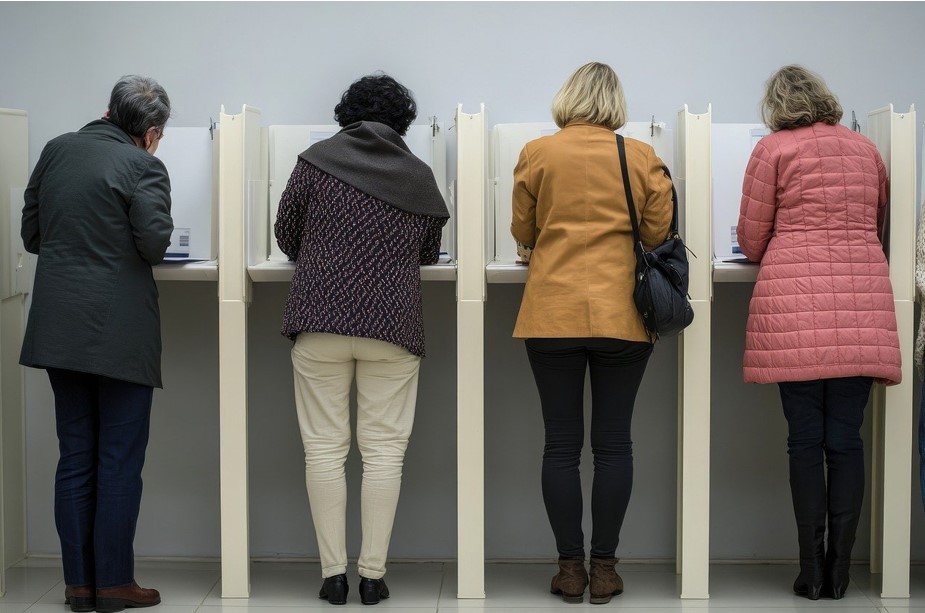
Believing our vote doesn’t really matter. If anyone reading this feels that way, I beg you to reconsider. Nothing could be more false. Our participation—every one of us—has never been more crucial than it is right now. That’s not hyperbole. In our 248 years, we have never had a presidential candidate threaten to send the military after members of the opposition party or toss them into concentration camps as Trump is promising. Never had a candidate who repeatedly praises Hitler and wishes he had generals like the Führer. Everything is at stake on November 5—our democracy, our health and safety, our very survival as a country, our planet.
I would further implore you to vote up and down the ballot for democracy. Many good proposals in the past four years have been thwarted by a GOP House intent on wrecking Biden’s presidency in order to re-install Trump. When (putting a positive spin on it) Kamala wins, she’ll need a Congress—House and Senate—whose main objective is serving the American people, not acting as a roadblock to everything she proposes. State legislatures matter, too. Many of the efforts in the past decade to kill bills that would have helped their state’s citizens have come from right-wing state legislatures.
Democracy, it’s not a lost cause. Sophia Lin Lakin, director, ACLU Voting Rights Project, in a recent email wrote: I know many of us are concerned about what might happen on Election Day. I want to assure you: our legal team is working around the clock to protect voters and make sure every vote is counted. Lakin reminds us: In the wake of the 2020 election, our team filed more than 30 lawsuits to protect voters and safeguard the outcome of the election.
No Middle Ground
It takes decades, centuries, to build a true democracy. It takes only one election to lose it. To lose our right to speak up for what is humane, fair; to protest against injustice and cruelty; our freedom to worship as we choose or not to worship at all; to lose the opportunity to ever vote again. If you elect me, Trump has promised his followers, you’ll never have to vote again. Could any statement be more chilling in its implications? No need to ever vote again because you will not be given a choice again.
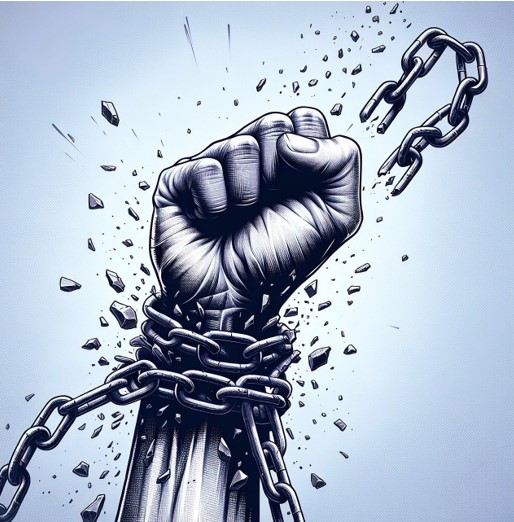
America was founded with the avowal that we would not be ruled by kings but by the people, a democracy. The Supreme Court’s decision to grant Trump unlimited powers should he become president again, though not unexpected, stunned millions, and not just Americans. As dissenting SCOTUS Justice Elena Kagan (an Obama appointee) remarked afterward: “Wasn’t the whole point of the Constitution that the president was not a monarch and was not supposed to be above the law?”
Abolitionist Wendell Phillips, speaking to the Massachusetts Anti-Slavery Society in 1852, cautioned: “Eternal vigilance is the price of liberty. Power is ever stealing from the many to the few.”
Between the threat of fascism and the promise of democracy there is no middle ground.

 don’t have time to research, say, the validity of Einstein’s theory of relativity or to follow up on a CNN


 America, I wasn’t too worried because Michigan was fairly high on the top side of the EarthBall. But those kids in Algeria are living at a perilous slant, and the ones from New Zealand and Patagonia have blood rushing to their little skulls 24/7.
 We don’t consciously relinquish our consciousness. It just sort of “happens.” Like walking backwards unawares toward a steep drop-off. That last step… We don’t know what hit us. And we don’t know we aren’t awake wherever it is we “go to.” Except once in a while we realize, “Hey I’m in a dream. I can behave as badly as I like and it doesn’t count.” Which realization is almost as weird as going to sleep itself (though it does show a marvelous talent for taking advantage of unexpected opportunities).
 confused about which house was theirs—the mock Tudor in need of a paint job, or the Cape with the sagging steps and the rusting swingset?
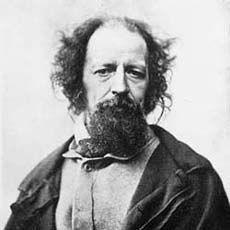 I stared and stared at that still face. Looked at some more of the exhibit. Returned to Tennyson. There he was—head, shoulders, torso—all of him except the thing that was him. The “Tennyson thing.” The thing that was a poet rather than a cab driver or a hip-hop artist. The thing that preferred Skittles to Milk Duds, or favored the Yankees over the Mets. Okay, I’m improvising here—well, fabricating wildly—but the question is: Where did the mind-personality-heart that was Tennyson go? How was it there one moment and—poof!—gone the next?
 amyhenrybooks