
In many ways, increasing the joy in your life is no different from building the strength of your abdominal muscles or biceps. The secret to both is daily exercise. The more time you devote to joy, the lighter your heart feels, the stronger you are when the going gets tough. The best part? You don’t need any special equipment or fancy workout gear. There are no fees. And you start to enjoy the results right away.
Exercise #1: Breathe Deeply and Reflect
Turn away from all distractions for a moment—social media, house and yard chores, errands that need running, problems that need solving. Then take a deep breath and think of all the things you love to do.
Now, jot them down, these things that bring you joy. (My list includes traveling with Ed, writing fiction, reading, art projects, walking and biking, visiting bookstores and art galleries, playing guitar, and neighborhood get-togethers—I have great neighbors).

Continue to breathe deeply and exhale slowly as you imagine yourself engaged in each of these various pleasures. Feel the happiness they bring, the sense of well-being, a lightness of spirit.
Then reflect on how much time in the last week, the last month, the last year you’ve spent enjoying each of these things you love? If you’re not engaging regularly with the activities and people you most enjoy, ask yourself: What’s stopping me?
What Gets in Our Way: The Joy Blockers
Endless red-tape: Ever since the pandemic, when real-people assistance vanished and most companies went to automated answering machines—those maddening robot “service reps” who demand you say “I’m a member” or “Question about my bill”, and then insist they don’t understand what you said—ever since then, everyone I know has spent hours and weeks, even months, trying to straighten out the simplest cockups. High frustration and a major waste of time. A real joy drain.

I recently racked up 16 hours in the course of one month trying to untangle incorrect dental billings. My dentist is fabulous, but the business office—whewee! They want you to pay every bill, in full, at time of service while they take their sweet time sending in the claim to your insurance. Since over a period of two months, this would have involved my shelling out thousands of dollars upfront, I resisted. And a good thing I did, as my insurance covered the sum in question and a bit more. But the 16-hour loss was real, and the accompanying aggro, stressful—all the mornings I woke up thinking about how I could fight their constant demands to pay now.
Mundane tasks: The weeds are taking over the garden. The cupboard is bare—someone must get to the grocery store pronto (you can only order so many take-out pizzas!). Your desk is buried beneath an ocean of papers. The laundry basket is overflowing and threatens to swamp the surrounding territory. It’s always something, as the saying goes. And days disappear, never to return, in the time-suck of our to-do lists as we dream of the things we would love to be doing. If only. Last week, my “Lazy Susan” broke down and an entire afternoon was lost to emptying the shelves, fetching stacks of books to leverage the top tray from beneath, and when that failed, tracking down a jack small enough to fit the space, then squeezing head and shoulders into the gap, groping for the pinhole at the back in near darkness, all the while hoping the top shelf wouldn’t collapse on my neck…
Work: In 1866, the newly-formed National Labor Union, a group composed of workers both skilled and unskilled, campaigned for Congress to enact a law limiting the workday to eight hours “in all States of the American Union.” The NLU disbanded seven years later, mission not accomplished. More than two decades would pass before the government even bothered to track workers’ hours. Among their findings? Full-time factory workers were racking up an average of 100 hours a week. Surely that would convince the powers-that-be. Nope. It would take almost another fifty years before Congress passed the Fair Labor Standards Act of 1938, limiting the workweek to 44 hours (amending it two years later to 40 hours) and mandating overtime pay for hourly workers.
And now here we are—84 years on—and that 8-hour day hundreds of thousands struggled for, even died for? The 40-hour week? The two-day weekend? All fading fast in the rearview mirror. Thanks to a combination of COVID, technology (smartphones and Zoom meetings), and just plain corporate greed, many professionals are clocking longer hours—in excess of sixty per week in a range of competitive industries, like tech, finance, law. Working from home—remember how great that sounded in the early days of the plague?—has erased all boundaries. You’re always “on call.” And it’s not only white-collar employees doing the grind. Many factory workers in the South, where unions have always been suppressed, are reporting twelve-hour days, and not just Monday through Friday.
Exercise #2: S-t-r-e-t-c-h The Way You Think About Time
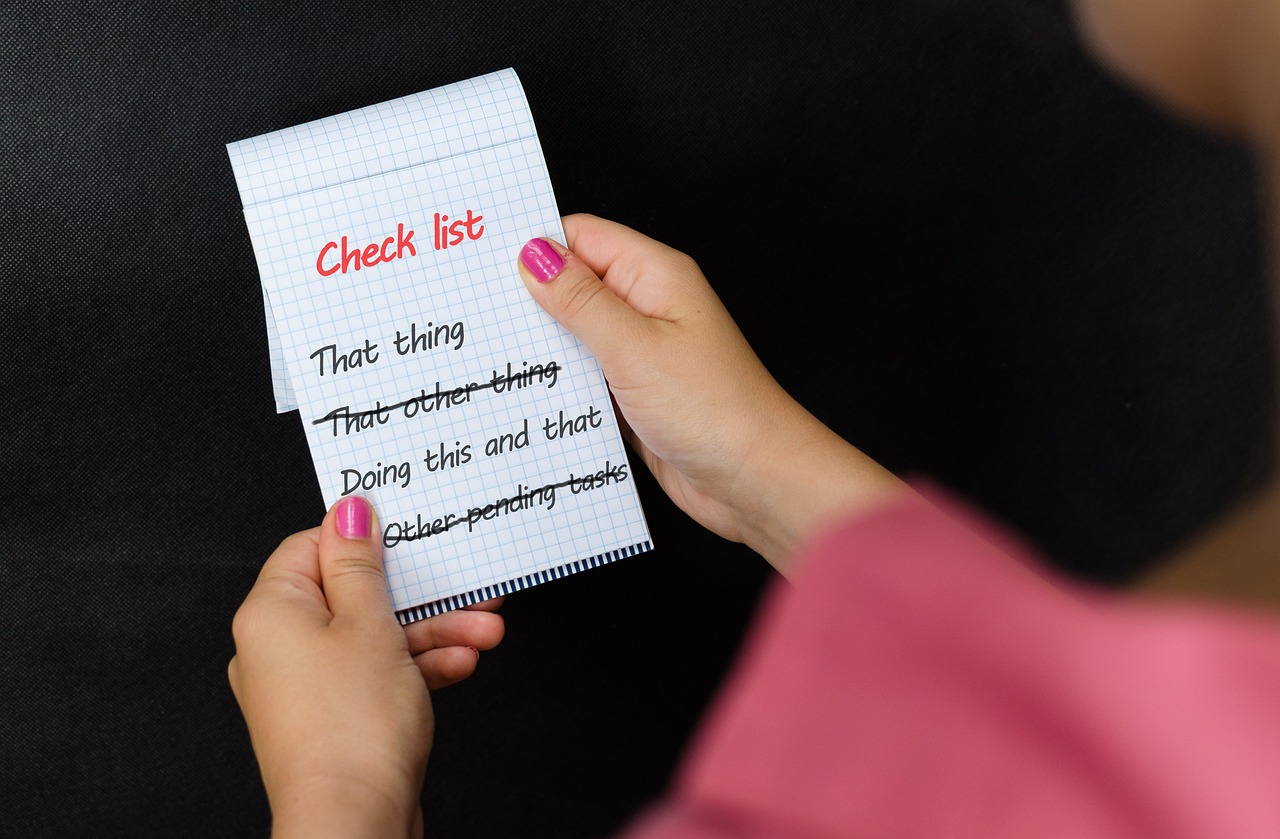
Many of us plan our days around a to-do list—a litany of work, errands, house and garden chores, phone calls to straighten out messes like the bollixed-up dental billing I mentioned earlier—promising ourselves day after day, month after month, year after year that we will get around to the things we love, the activities that bring us joy, the sense of a life well-lived… as soon as we finish that day’s to-do list. And then the day ends, and all we can do is hope for a happier outcome tomorrow.
But, just for a moment, s-t-r-e-t-c-h the traditional concept of the to-do list. Expand what must be done (according to whom?) to include what you’d love to do and start your list with those activities. Of course, you can’t do everything you’d love to do in any one day, but giving priority to 2-3 joyful things daily and limiting the “have-to” tasks—the mundane, the tedious, the downright irritating—to one or two items brings immediate relief. I began doing this last month and it instantly lifted my spirits. Which gave me more energy. Which made it easier to accomplish the “have-tos.” I also reframed larger chores—like gardening, which as all gardeners know, is never-ending throughout the growing season. But I put a time limit on the task. No more than three days a week, and then for only 30 minutes a day. There will always be weeds.

Among a number of activities I’ve long wanted to do is create a memorial vase for my cats, Tibby and Coosh. Tibby died three years ago. Coosh followed seven months later. But it took a whole year before I managed to purchase the vase, and another year lapsed before I got around to creating the design. It wasn’t until this summer—after committing to put joy at the top of my to-do list—that I actually put pencil and paintbrush to pottery. By working in half-hour spurts, I’ve nearly finished the job!
If you work for someone else, especially in those long-hour jobs where no one seems to have heard of the weekend, you still need joy. In fact, you especially need it. Break major work projects into steps. A day for X, a day for Y. List joy-boosting activities for the “down-times”—waiting for a client call, the half-hour gap before the Zoom conference. Without a list of joyful items at the ready, we tend to space out and waste those opportunities. And definitely tilt what days or half-days you do have free to the joy side. If you have one of those 6-days-a-week/12-hours-a-day factory jobs mentioned above, all I can say is vote for candidates who believe in labor unions. You have a right to a life, a right to personal happiness. You are so much more than a cog in a machine.
Of course, there will be the occasional, unavoidable time-eaters: dental and medical appointments, car repairs, the lazy-Susan fiasco I mentioned above. But making things you love to do a planned part of everyday life will give you the strength you need for the final exercise here…
The Heavy Lift

No getting around it—American democracy has taken a couple of brutal hits in the past month. Not from some outside aggressor bent on taking “the land of the free” down a couple of pegs but from our own Supreme Court. Foremost, on July 1, six of the nine justices charged with upholding our Constitution and protecting the rule of law, decided that a U.S. president has NO limits on their power. They simply cannot be prosecuted or held accountable in any way for breaking the law, including—and I am not making this up—ordering the murder of political rivals, which Trump’s legal team insisted would be his prerogative if re-elected. So much for the Ten Commandments far-right Louisiana governor Jeff Landry has declared must be posted in every public school classroom by 2025. As SCOTUS Judge Sonia Sotomayor so eloquently noted in her dissent: “In every use of official power, the President is now a king above the law…This majority’s [decision] will have disastrous consequences for the presidency and for our democracy…With fear for our democracy, I dissent.”

This thoroughly unAmerican and totally antidemocratic ruling was preceded by another dangerous decision just two days before when SCOTUS overturned the 1984 Chevron v. National Resources Defense Council ruling which said the federal judiciary must defer to a government agency’s interpretation of a law in cases of ambiguity. This new decision means that if, say, Big Oil wants to challenge the EPA over standards or practices that agency mandates, it will be SCOTUS who has the final word. As Chief Justice Roberts wrote, only the judiciary can “say what the law is.”
There are 438 U.S. Government agencies and sub-agencies including the Food and Drug Administration, Health and Human Services, and the Nuclear Regulatory Commission. Do we really believe SCOTUS has the expertise to make better judgments about the risks any particular drug poses than FDA officials? And—show of hands—who wants the far-right, bribe-hungry (at least in Thomas’s and Alito’s cases) SCOTUS majority to override the authority of the NRC concerning the use of nuclear materials?

Then, there’s Project 2025, the 900-page wet dream waiting-to-come-true of the far-right Heritage Foundation (in conjunction with over 100 other conservative orgs). Self-described as a “wider crackdown on ‘woke’ ideology,” Project 2025 seeks to gut environmental regulations, dissolve the Department of Education, dismiss thousands of government employees, dump the FBI, and—wait for it—place the Department of Justice under the president’s direct control! And that’s just for starters. The progressive public policy advocacy group, Move On, has described Project 2025 as a: …plan for a white Christian nationalist takeover of America…written by at least 140 former Trump staffers in an effort to ensure that…Trump will have a meticulously, thoroughly detailed plan that can be implemented on Day 1 to dismantle our democracy and give him absolute power.
Add to all this the nerve-wracking, nail-biting weeks we endured after the June 27 Biden/Trump debate and, as Robert Reich (professor, lawyer and former Secretary of Labor under the Clinton administration) put it in his excellent Substack post, “You’d have to be nuts not to be going nuts.” Like many of us, all I can say is thank you, thank you, thank you for Kamala!
So, how do we tackle the Heavy Lift? How do we keep our fears from destroying our hopes?
Using Our Joy to Fight Hate with Love

Stress, sadness, fear—they agonize the mind, break down the body. But joy lifts our heart, gives us strength. Energizes us to fight for our community, our country, our world. I’ll close this post with a couple of paragraphs from my 2016 post-election blog, Fighting Hate With Love, written in the dark days following that debacle:
As a force in the world, I’m not certain love is stronger than hate. But it certainly is healthier. Hate maims, kills, sucks all the oxygen from our lives, from the planet. Love creates, rejuvenates, breathes life, breeds joy and connection. In the face of the fight ahead, we will need great quantities of love to fuel our efforts. Without love, how can we fight for a more loving world? Hate robs us of our humanity. Without our humanity, how can we build a more humane society? The signature of love is social justice. The signature of hate is revenge. I want to fight hate with all the love in my heart.
And when enough of us do that together, love will trump hate.
 amyhenrybooks